
If you just painted a bedroom, condo, or rental and the chemical odor is still hanging in the air, you're probably searching for a real paint smell remove solution, not another generic trick. In West Palm Beach and across Palm Beach County, humidity, AC-heavy homes, and coastal air make paint odors linger longer than people expect.
This is for homeowners, renters, Airbnb hosts, and property managers who need a space to feel livable fast. Whether you're getting a unit ready for a landlord walkthrough, turning over a vacation rental, or trying to sleep in a freshly painted room, local conditions matter.
Table of Contents
- That Fresh Paint Smell Is Not So Fresh
- Why Paint Smells Linger in Palm Beach County
- First-Response DIY Methods for Odor Reduction
- The Limits of Charcoal and Vinegar in Humid Homes
- The Professional Approach to Full Odor and VOC Removal
- Your Post-Paint Cleanup Plan and FAQ
That Fresh Paint Smell Is Not So Fresh
A room can look finished and still feel unusable. That happens all the time after interior painting in West Palm Beach, especially in bedrooms, nurseries, bathrooms, and smaller condos where the windows don't create much cross-breeze.
The usual story is familiar. The walls look clean, the trim is sharp, and then the smell settles in by evening. In South Florida, that heavy air doesn't always let fumes move out the way people expect, even when the weather looks breezy outside.
Practical rule: If the room still feels stuffy after painting, the problem isn't just the smell. It's the air exchange.
For many people, the biggest frustration is that the standard advice sounds simple. Open a window. Set out vinegar. Wait it out. That can help a little, but it often falls short in Palm Beach County homes where AC runs most of the day, doors stay shut, and moisture hangs in the air.
Who usually needs help fast
- Homeowners: A freshly painted room still smells too strong to use comfortably.
- Renters: A lease-end or move-in timeline doesn't leave much room to wait.
- Airbnb hosts: Tight turnovers don't work when one bedroom still smells like wet paint.
- Property managers: A unit can look ready on photos and still fail the sniff test in person.
Around here, this comes up after repainting bathrooms in Boynton Beach, touch-ups in Wellington rentals, and post-construction work in newer Westlake homes. The room may be clean visually, but if fumes have settled onto vents, sills, baseboards, and nearby surfaces, the space won't feel finished.
Why Paint Smells Linger in Palm Beach County
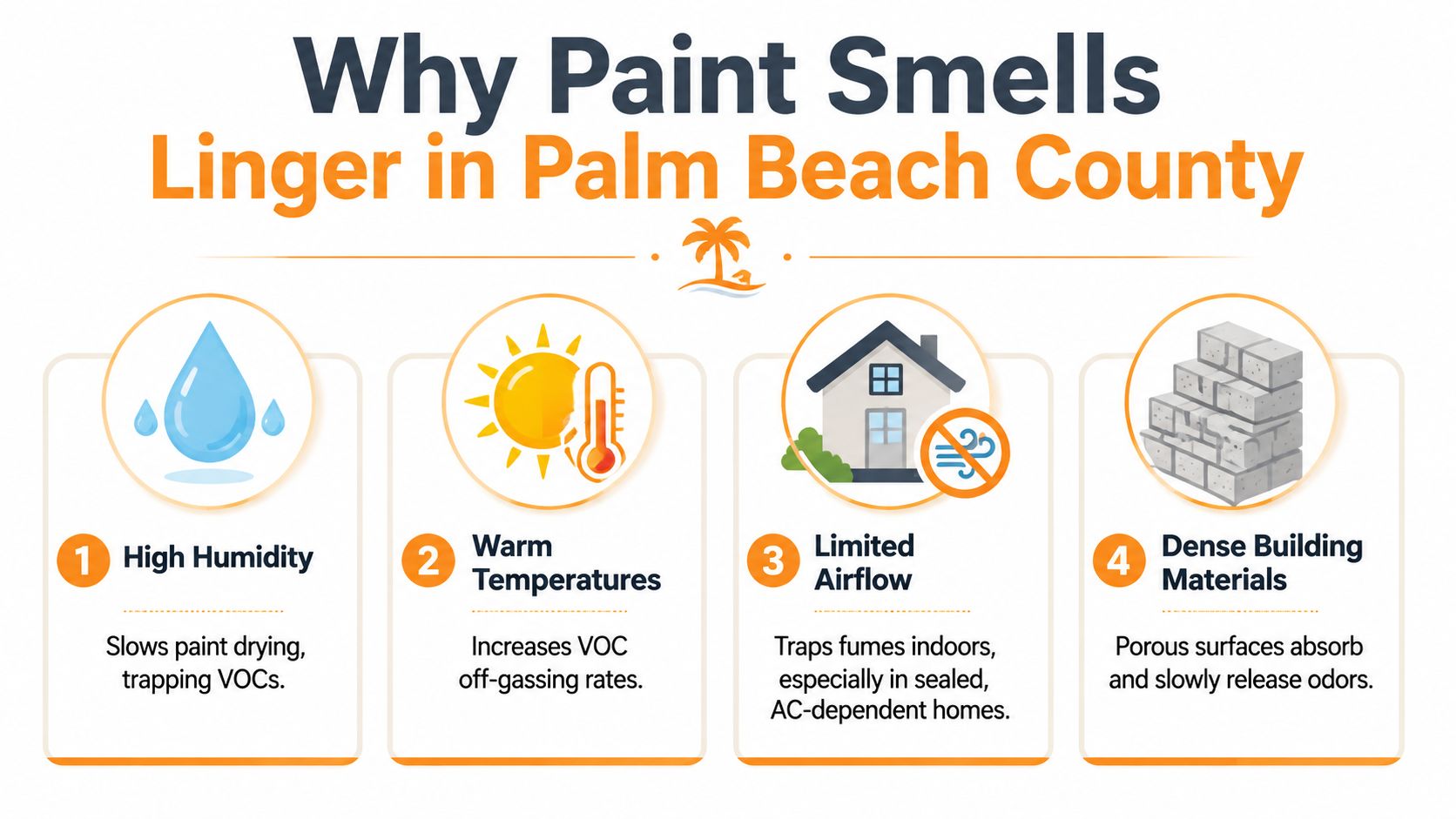
You paint a guest room in the morning, run the AC all day, and by night the house still smells sharp and chemical. That pattern is common in Palm Beach County because the odor is not only coming off the wall. It also hangs in damp indoor air, settles onto nearby surfaces, and keeps circulating through a closed house.
What shows up in local homes
In South Florida, humidity slows down what people expect paint fumes to do. VOCs do not leave the space efficiently if the room stays muggy, the windows stay shut, and the AC keeps recirculating indoor air. That is why a bathroom repaint in Lake Worth or a bedroom touch-up in Delray Beach can keep smelling longer than the label on the can suggests.
A lot of local houses and condos are managed for cooling first, not air exchange. That matters. If you have ever looked into what causes excess humidity in a house, you have already seen the same trouble spots where paint odor lingers the longest. Bathrooms, laundry rooms, closets, back bedrooms, and any room with weak return airflow.
Coastal conditions make it harder. Salt air leaves residue on metal vents, window hardware, and HVAC grilles. Sand gets tracked into window channels, floor edges, and baseboards. Fresh paint fumes can cling to that dust and grit, so the smell is no longer just in the paint film itself. It is in the room.
The Palm Beach County pattern
I see the same setup across West Palm Beach and the barrier island areas. Older condos have sealed windows and narrow layouts, so one painted room affects the whole unit. Newer homes stay closed up tightly for AC efficiency, which limits flush-out. Beachside properties add salt, sand, and damp air to the mix.
That is why standard advice often falls short here. Opening a window helps only if the house can move humid air out and bring drier air in. In many Palm Beach County homes, that never happens for long enough to clear the smell.
The practical problem is buildup. VOCs collect in stagnant air, then settle onto vents, blinds, soft goods, and dusty surfaces nearby. If those surfaces are not addressed, the room can smell "painted" well after the walls are dry to the touch.
In Palm Beach County, odor removal usually takes three things working together. Air movement, moisture control, and detailed cleaning of the surfaces holding the residue.
First-Response DIY Methods for Odor Reduction
You finish painting in the afternoon, shut the room for the night, and by breakfast the smell feels heavier instead of lighter. I see that a lot in West Palm Beach homes. The paint is drying, but the air is still damp, the AC is recirculating, and the odor has nowhere useful to go.
That is the point of first-response DIY work. Reduce the smell fast, keep it from settling deeper into the room, and give the paint film a better chance to cure cleanly.
Start with airflow that actually exits the room
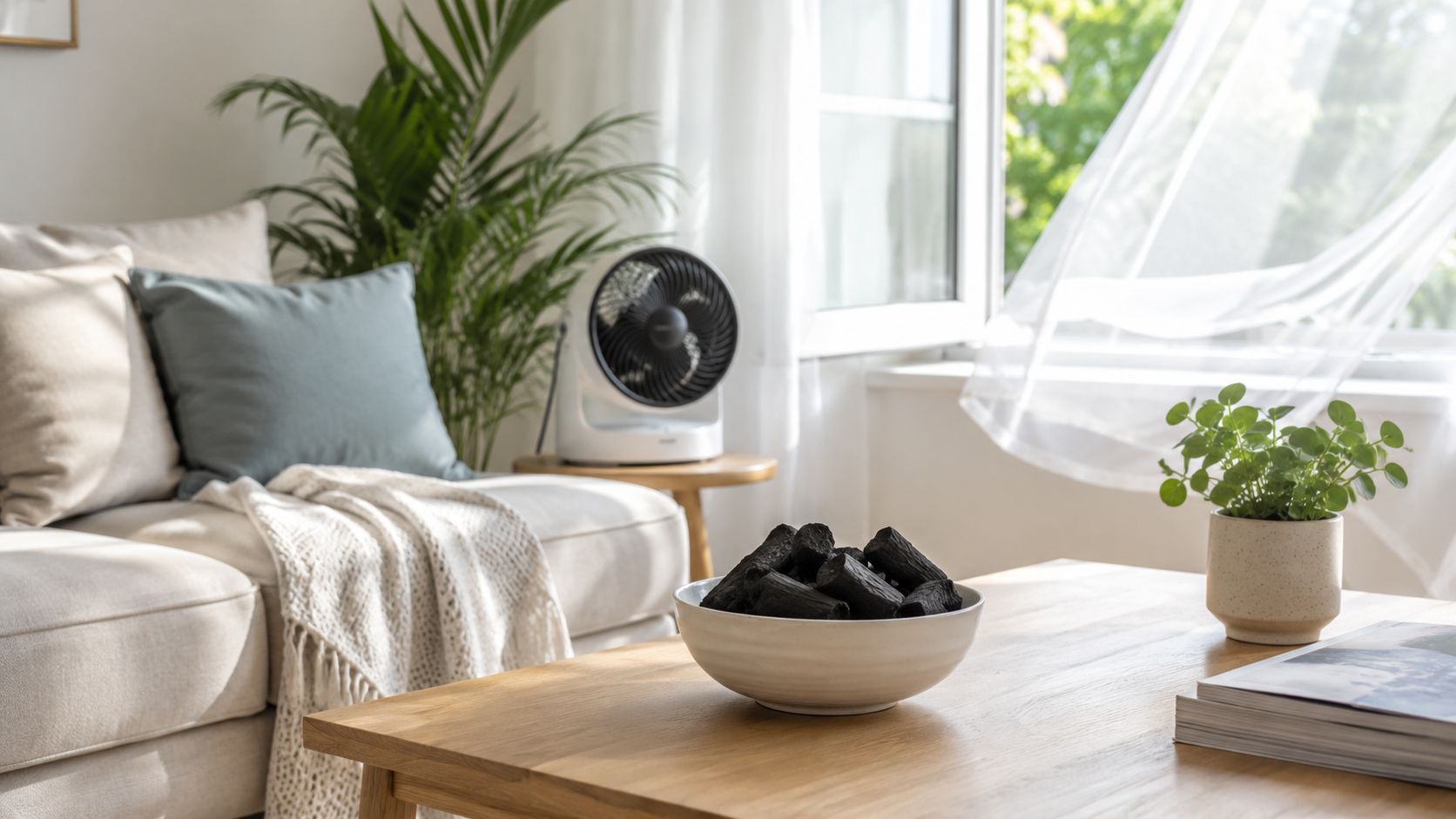
Open windows only if you can create direction. One cracked window in a humid house does very little. The better setup is one opening for make-up air, a box fan aimed outward at another opening, and interior doors positioned so the room can flush stale air instead of just stirring it around.
In Palm Beach County, that setup works best during the less humid part of the day. Midday moisture can slow the payoff, especially in bathrooms, back bedrooms, and condos that stay closed tight for AC efficiency.
Check the vents early. If supply covers and returns are dusty, the system can keep pushing stale odor back through the space. Cleaning AC vents and returns properly helps the room air out more effectively.
Use simple absorbers, but spread them out
DIY odor control works better when it covers the room instead of sitting in one corner. Put several shallow bowls around the space, especially near still-air edges, windows, and baseboards.
- Activated charcoal: Usually the best DIY option for stronger paint odor.
- Baking soda: Useful for mild lingering smell in smaller rooms.
- White vinegar: Can reduce what you notice, but the smell of vinegar itself bothers some people.
- Lemon or onion tricks: Short-term smell changers, not a real cleanup method.
Keep the room cool, dry, and moving. Hot, stuffy air usually makes the smell feel sharper.
Later in the process, this walkthrough gives a decent visual on room setup and air movement:
What to clean while the paint cures
South Florida homes hold odor on surfaces people miss. Salt film near windows, sand in tracks, and fine dust around trim all give paint fumes something to cling to. If the room is dry to the touch, wipe the non-painted surfaces nearby.
Focus on these spots:
- Window sills and tracks: Coastal dust, pollen, and salt collect here fast.
- Baseboards and door frames: Still air lets odor sit along the edges.
- Light-switch plates and vent covers: These hold dust and recirculated residue.
- Bathroom ceilings and grout lines: Damp surfaces keep the room smelling stale longer.
A room can smell stronger the next morning if it stayed closed, humid, and dirty overnight. DIY steps help. In Florida conditions, they work best as early control, not a full reset.
The Limits of Charcoal and Vinegar in Humid Homes
A West Palm Beach bedroom can smell better by bedtime and still hit you again the next morning. That happens all the time after painting in South Florida. The odor seems under control, then the AC runs overnight, humidity stays high, and the room feels closed up again by sunrise.
Charcoal, vinegar, lemon, and baking soda can all play a role, but they mostly reduce what people notice. They do not clear a room the way controlled airflow, drying, and carbon filtration do. In humid homes, that difference shows up fast.
Smell reduction is not the same as air cleanup
Vinegar changes the scent profile in the room. Lemon and onion do the same. That can make a space feel improved even while paint-related compounds are still hanging in the air and settling on nearby surfaces.
Charcoal is the better DIY tool, especially if the paint job was small and the room can stay dry. But in Palm Beach County homes, dry is often the problem. Moisture in the air slows dissipation, and year-round AC does not always solve it because many homes are recirculating indoor air instead of pushing polluted air out.
I see this most in condos, bathrooms, and newer sealed-up homes. Open a window for an hour, then close everything back up and the odor returns. Salt air near the coast, sand in tracks, and fine construction dust give those fumes more places to settle, especially after repaints that should really be treated more like post-renovation and new construction cleaning.
Where the home works against you
Some rooms hold paint odor longer even when the paint itself was applied correctly.
- Bathrooms and laundry rooms: Humidity stays high, and damp surfaces hold stale odor.
- Occupied condos: Airflow is limited, and shared or constantly running AC can keep recirculating the problem.
- Coastal homes: Salt film, grit, and fine dust collect around windows, vents, and trim.
- Fast turnovers: Rentals, move-ins, and sale prep jobs do not have the luxury of waiting several days to see if the smell fades.
The trade-off is simple. DIY absorbers are low-cost and worth trying early. They are not reliable for stubborn paint smell remove work in humid Florida conditions, especially after larger interior jobs or in homes with kids, pets, asthma, or anyone sensitive to chemical odors.
In Palm Beach County, paint odor is rarely just a scent issue. It is a humidity, ventilation, and residue issue at the same time.
The Professional Approach to Full Odor and VOC Removal
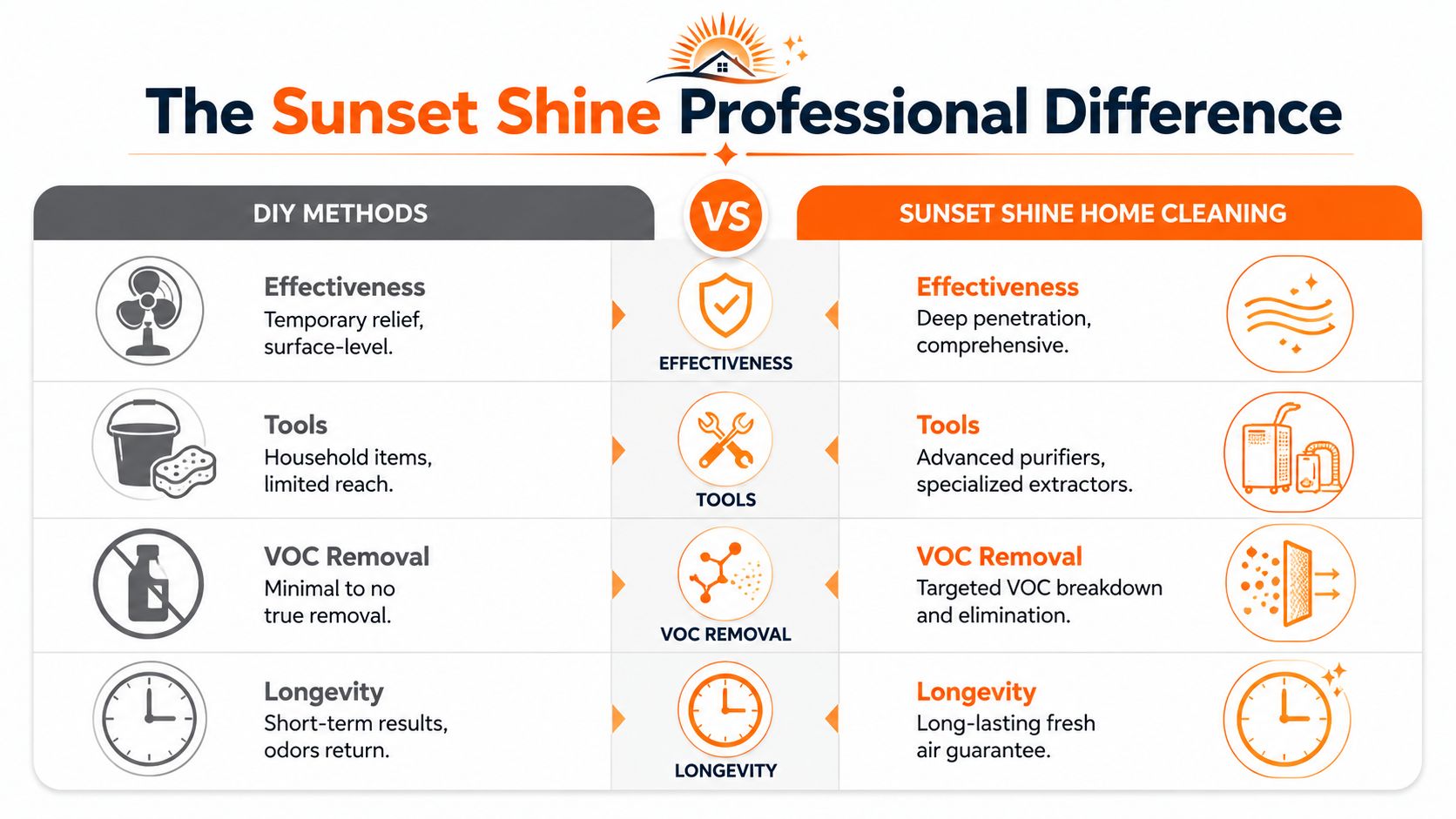
A professional paint smell remove job goes beyond setting out bowls and opening windows. The focus shifts from masking odor to physically improving the room's air and removing residue from the surfaces that keep releasing it.
That usually means using stronger air-moving equipment, activated carbon filtration, and detailed cleaning of the areas people skip. Walls, trim, baseboards, vent covers, sills, closets, and nearby hard surfaces can all hold onto fine paint particulates and odor.
What a deeper post-paint cleanup includes
For many homes, the ultimate win comes from treating the room like a post-construction or post-renovation environment. That means dust control, vent attention, surface wipe-downs, and odor-focused cleanup, not a basic maintenance tidy-up. This is especially relevant after larger interior repainting projects and new construction home cleaning where fine debris and residue settle beyond the painted wall itself.
A practical service checklist often includes:
- Bathrooms: Sinks, counters, fixtures, mirrors, grout-prone surfaces, and high-touch disinfecting
- Kitchen and adjoining spaces: Cabinet exteriors, counters, sink areas, and degreasing where residue holds odor
- Dust removal: Vents, baseboards, window sills, trim, and flat surfaces
- Floors: Vacuuming and mopping to remove settled particulates
- Optional add-ons: Inside oven, inside fridge, inside cabinets, wall spot cleaning, pet hair focus areas, interior window cleaning
A local example
In West Palm Beach move-out and post-paint cleans, bathrooms often look fine at first glance. The odor usually tells a different story. It tends to collect around baseboards, behind the toilet, on vent covers, and at the sill where damp air sits.
Local takeaway: In Palm Beach County, the room that smells "almost fine" is often the room that still needs the most detailed cleanup.
Your Post-Paint Cleanup Plan and FAQ
If you need the home ready for living, renting, or a walkthrough, speed matters. The goal isn't just less smell. It's a room that feels clean, ventilated, and ready to use in real life.
Schedule, Clean, Inspect, Enjoy
- Schedule: Book online or call and choose a time window that fits your move, turnover, or post-paint timeline.
- Clean: Cleaners arrive with supplies and follow a checklist-based clean designed for post-paint residue and odor-prone surfaces.
- Inspect: A quick quality check catches the spots that tend to hold smell, like vents, sills, trim, and bathroom edges.
- Enjoy: You return to a cleaner home that feels closer to move-in ready, guest-ready, or deposit-ready.
Pricing depends on bedrooms, bathrooms, square footage, condition, and add-ons. Most clients request a custom estimate.
Quick FAQ
How long does a post-paint cleanup take?
It depends on the home's size, the amount of painted area, and whether vent dust, bathroom humidity, or post-construction residue are part of the problem.
Are supplies included?
Yes. Professional cleaners typically arrive with their own supplies and tools.
Can this help with landlord walkthroughs?
Yes. This is especially useful for Wellington apartments, West Palm Beach rentals, and Palm Beach County move-outs where kitchens, bathrooms, floors, and baseboards get checked first.
What if I have pets?
Say that up front when booking so cleaners can plan around pet areas and odor-sensitive spaces.
South Florida humidity shows up fast in bathroom ceilings, grout lines, and closed bedrooms. Around here, paint odor problems are rarely just about paint.
Book your cleaning with Sunset Shine Home Cleaning – your trusted house cleaning service in West Palm Beach. Serving West Palm Beach, Palm Beach Gardens, Jupiter, Juno Beach, North Palm Beach, Riviera Beach, Royal Palm Beach, Lake Worth, Boynton Beach, Delray Beach, Boca Raton, Wellington, Westlake, Loxahatchee, Loxahatchee Groves, and The Acreage. Call 561-408-4020 or book online at sunsetshinehomecleaning.com.