
If you're staring at a dusty ceiling register in West Palm Beach and wondering how to clean vents without making a bigger mess, you're not alone. Around Palm Beach County, vents collect more than ordinary dust. They catch salt air residue near the coast, sand from daily foot traffic, and moisture from nonstop AC use that can turn a simple wipe-down into a mold concern.
This guide is for homeowners, renters, Airbnb hosts, and property managers who want cleaner vents, better airflow, and fewer surprises when the AC has been running all season.
Table of Contents
- Why Cleaning Vents in South Florida Is Different
- Your Toolkit for a Palm Beach County Vent Cleaning
- A Step-by-Step Guide to Cleaning Household Vents
- What We See in Palm Beach County Homes
- Signs You Need Professional Help with Your Vents
- Your West Palm Beach Vent Cleaning Solution
Why Cleaning Vents in South Florida Is Different
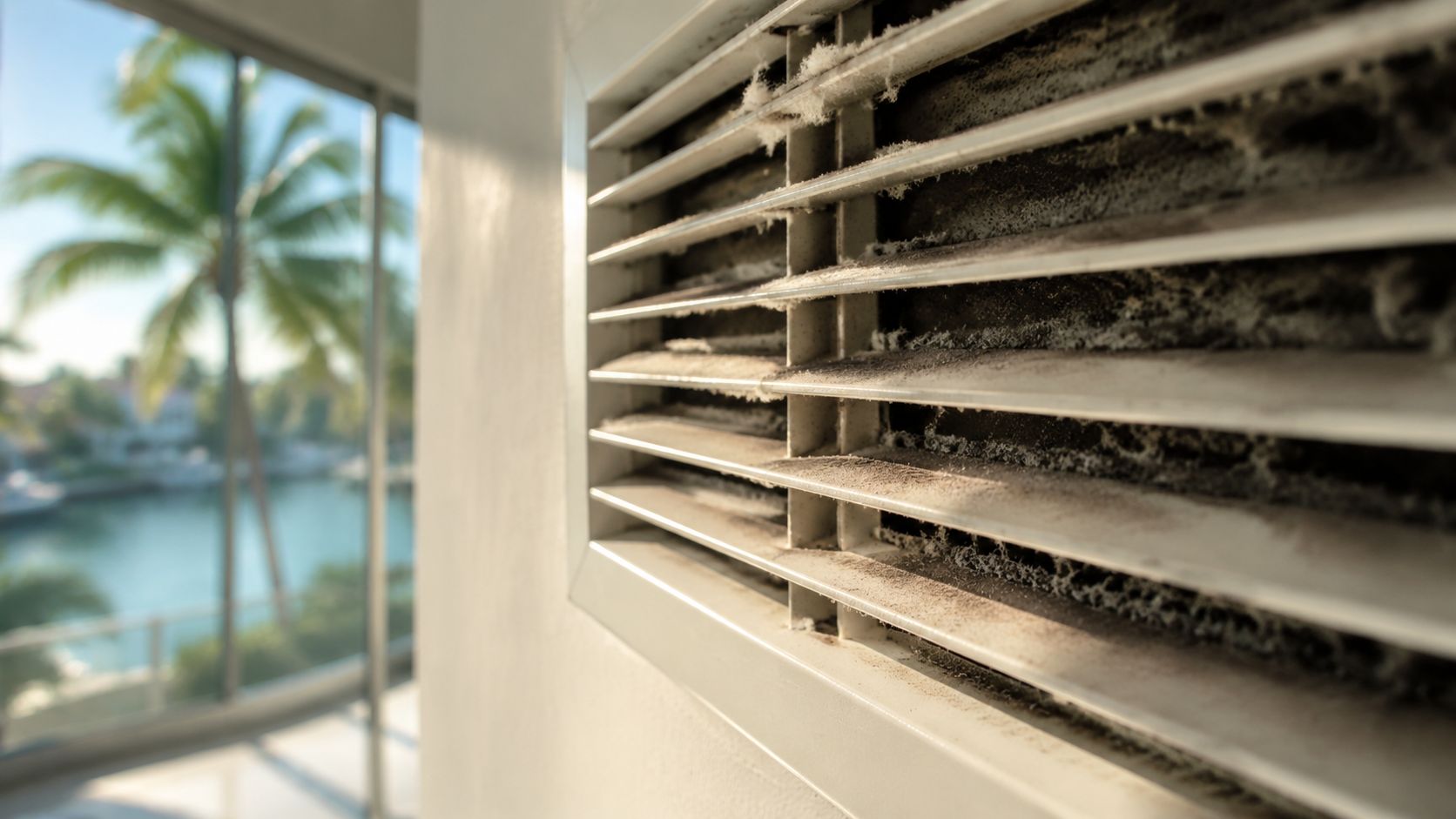
In Palm Beach County, the AC doesn't get much of a break. That constant airflow pulls in everyday dust, but local homes also deal with humidity, tropical pollen, and the fine grit that shows up after a beach day or a windy afternoon in Jupiter or Juno Beach. On coastal properties, salt air can also leave metal vent covers looking rough faster than homeowners expect.
A common call starts with a dark ring around a ceiling vent. Sometimes it's just surface dust. Sometimes it's the first sign that moisture has been sitting there too long, especially near bathrooms, laundry areas, or kitchens. The EPA says duct cleaning is needed based on condition, not a routine schedule, and points to large deposits of dust or mold, musty odor, or water damage as real signs to act.
What makes local vent cleaning trickier
South Florida homes have a few patterns that generic advice usually misses:
- Bathroom ceiling vents can collect grime fast because warm moisture rises into the grille.
- Floor registers in family homes pick up sand, pet hair, and fine debris from tile and vinyl floors.
- Coastal condos often show early rust or corrosion on metal covers.
- Homes with year-round AC use keep circulating whatever settles into the register area.
Practical rule: If a vent looks dusty but there's no odor, moisture issue, or visible buildup deeper inside, start with surface cleaning. If you see staining, smell mustiness, or spot growth inside the opening, treat it like a bigger problem.
If your house always feels damp, that moisture is part of the vent story too. This guide on what causes humidity in a house lines up with what many homeowners around West Palm Beach are already seeing indoors.
Your Toolkit for a Palm Beach County Vent Cleaning
You don't need a truck-mounted system for basic upkeep, but you do need the right tools. The difference between a decent vent cleaning and a dusty mess usually comes down to control. You want to loosen debris and capture it right away, not blow it back into the room.
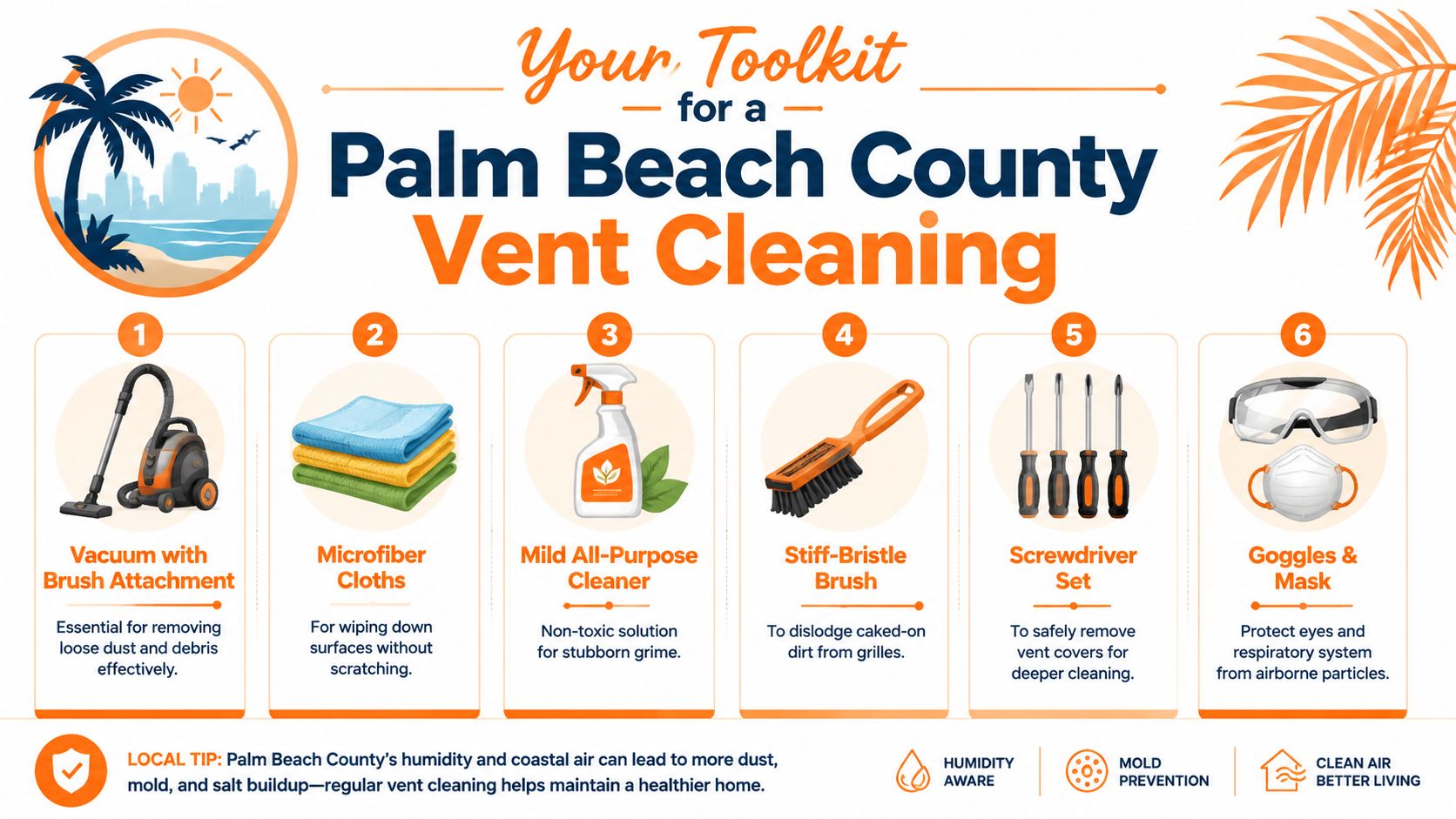
What to gather first
- Shop vacuum with hose attachments for better reach and suction at the opening
- Stiff-bristle brush to break loose packed dust on accessible duct walls and vent louvers
- Microfiber cloths for wiping covers and surrounding trim
- Mild cleaner for washing removable covers
- Screwdriver if the cover is fastened
- Gloves, goggles, and a mask especially for ceiling vents in bathrooms or kitchens
- Drop cloth or old towel to catch fallout on tile, wood, or laminate
A regular household vacuum can help with light dust, but it usually doesn't pull as well once you're reaching into the vent opening. That's why a shop vacuum tends to work better for this job.
Why each tool matters here
In Palm Beach County homes, a stiff brush matters because vent grilles often trap gritty debris, not just lint. Bathroom vents also need a careful approach because disturbing buildup overhead can send debris straight down onto your face and floor.
If you're already cleaning fans at the same time, this walkthrough on how to clean a fan pairs well with vent maintenance since those two spots collect the same airborne dust in many South Florida homes.
Don't spray liquid deep into a duct run. Clean the cover, loosen accessible debris, and extract it. That approach is safer and cleaner than trying to wash the inside.
A Step-by-Step Guide to Cleaning Household Vents
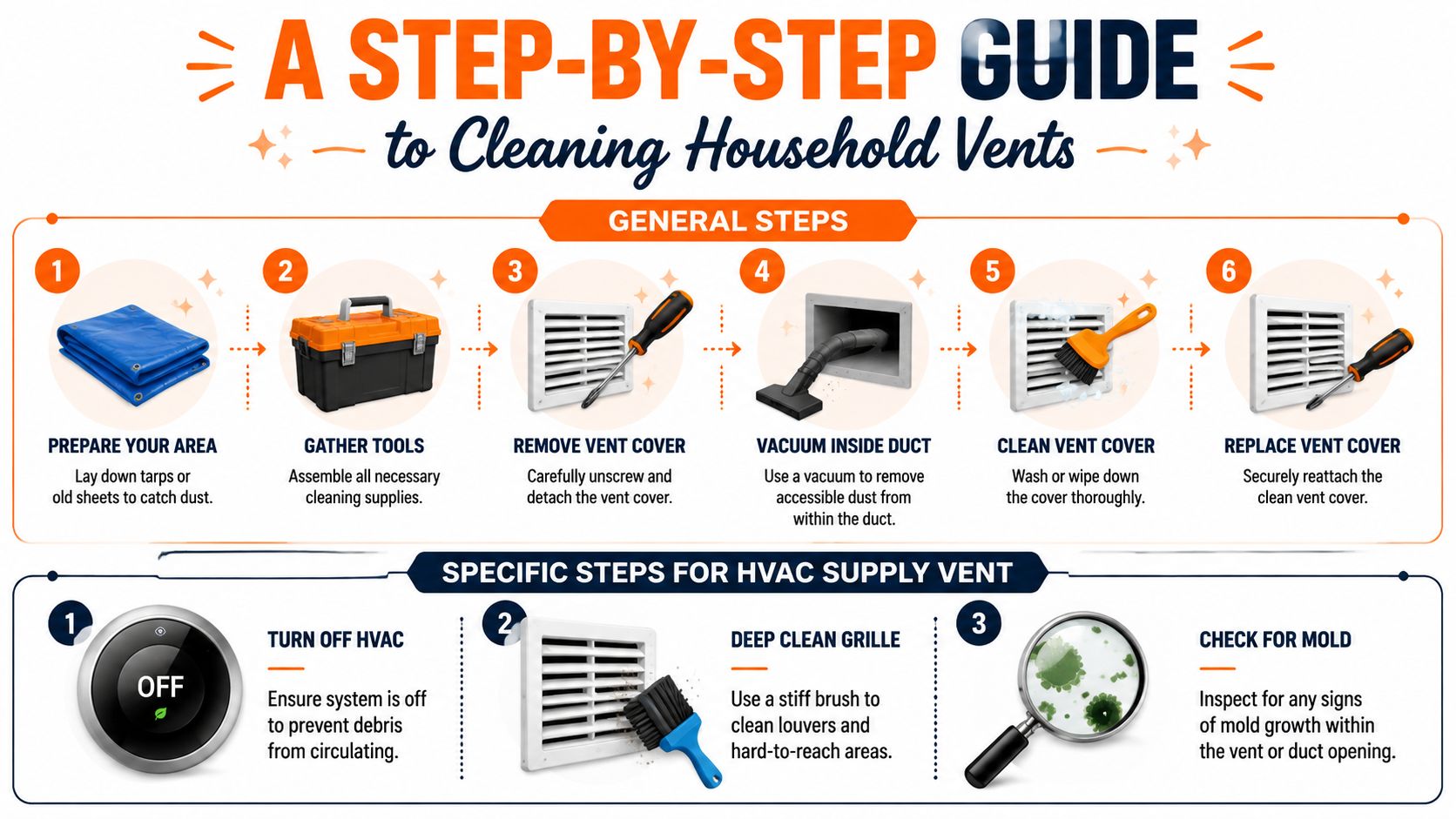
For most homes, the safest DIY approach is simple. Shut off power, remove the cover if you can, clean only what you can reach, and capture debris as you go. One published service guide notes that a proper DIY workflow includes shutting off power, washing vent covers, loosening debris with a stiff brush, and capturing it with a shop vacuum, with about 5 to 10 minutes per vent in many cases, as outlined in this step-by-step vent cleaning guide from COIT.
HVAC Supply and Return Vents
These are the vents individuals typically have in mind when asking how to clean vents.
- Turn off the HVAC system at the thermostat and, if needed, the breaker.
- Lay down a towel or drop cloth under the vent. Ceiling vents in particular will shed dust.
- Remove the vent cover if it's screwed in place.
- Wash the cover separately with mild cleaner and let it dry fully.
- Brush the accessible duct walls with a long-handled stiff brush.
- Vacuum immediately with the hose placed close to where you're loosening debris.
- Wipe the surrounding area including the wall or ceiling around the register.
- Reattach the cover once it's dry.
A few West Palm Beach homes have supply vents that look dirty on the face but are mostly fine inside. Return vents are different. They often look dustier because they're pulling air back through the system. That's normal to a point. Heavy buildup isn't.
If you only scrub the grille and don't capture the loosened dust, you've mostly moved the problem around.
A quick visual can help before you start deeper cleaning work.
Bathroom and Kitchen Exhaust Vents
These need a little more caution because moisture and grease change the job.
For bathroom ceiling vents, shut off power first. Remove the cover if possible, then clean the grille and vacuum the accessible opening. If you see suspicious staining, dark spotting, or material that looks embedded rather than dusty, don't dry-brush aggressively. In humid Florida conditions, ceiling vents can harbor mold, and disturbing it without proper protection isn't smart.
For kitchen exhaust vents, expect sticky buildup. Dust near cooking areas often clings to grease, so dry dusting alone won't do much. Clean the removable cover separately and wipe reachable surfaces carefully. If the buildup is thick or the vent is part of a more complex exhaust assembly, it's often better handled as a detailed cleaning task rather than a quick DIY wipe-down.
Dryer Vent
This one is about safety more than appearance. Dryer vents should generally be cleaned every 1 to 2 years for fire prevention, while HVAC air-duct cleaning is typically suggested every 3 to 5 years for normal households, according to the guidance summarized in this dryer and duct cleaning reference.
For a basic dryer vent cleanup:
- Unplug the dryer
- Pull the unit out carefully
- Disconnect the vent line if accessible
- Remove lint from the connection point and duct opening
- Vacuum loose material
- Reconnect everything securely before use
Dryer vent lint tends to build up faster in busy households, short-term rentals, and homes where laundry runs constantly through wet season.
What We See in Palm Beach County Homes
In Wellington and Royal Palm Beach, we often find return vents with a gray film that homeowners assume means the whole system needs major cleaning. Sometimes it doesn't. Sometimes the bigger issue is right around the register, where ceiling dust has mixed with humidity and slowly darkened the paint around the opening.
In Boca Raton and Delray Beach homes closer to the coast, we also see metal covers that start showing wear from salt air long before the homeowner thinks to replace them. In family homes with kids and dogs, floor vents are another story. Those collect sand, hair, and the fine debris that settles after doors keep opening all day.
One pattern that causes trouble fast
Bathroom ceiling vents above showers are the ones I tell people not to underestimate. A vent can look like it just needs dusting, then the cover comes down and you realize the buildup isn't ordinary dust at all. In humid climates like Florida, those vents can harbor mold, and many DIY cleaners disturb it without proper respiratory protection.
A lot of post-renovation vent messes show up the same way. Drywall dust settles where you can't see it at first, then keeps puffing back into the room. That's especially common after partial remodels and quick turnover work. If that sounds familiar, this page on dust from construction covers the kind of residue that tends to hide in vents and returns.
Signs You Need Professional Help with Your Vents
Some vent cleaning jobs are basic upkeep. Others are past the point where a brush and shop vacuum are enough. If the issue goes beyond loose dust on the cover and a little debris in the opening, calling a professional is usually the safer move.
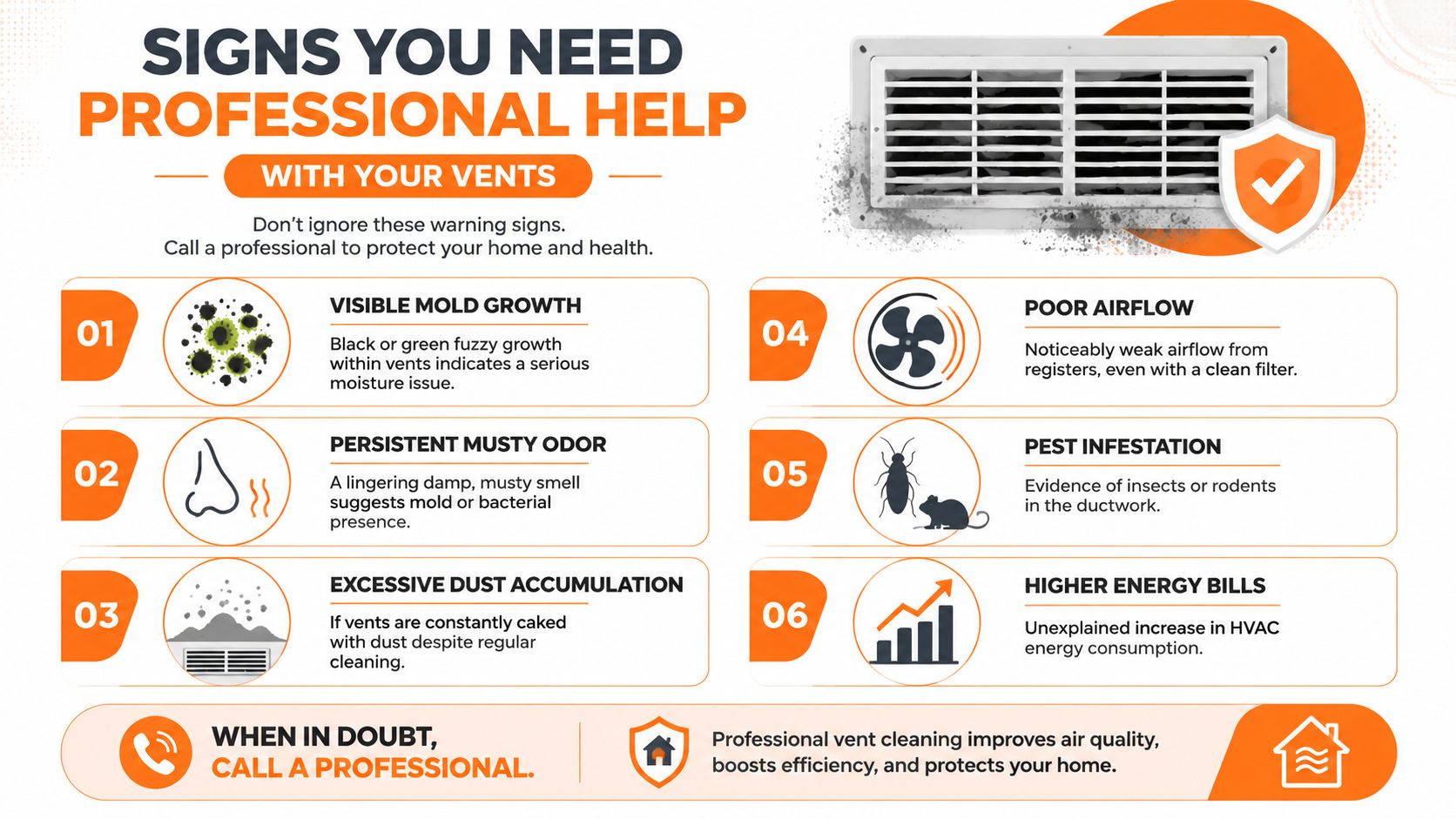
Red flags worth taking seriously
- Musty odor that keeps coming back even after you clean the cover and surrounding area
- Visible mold or heavy contamination inside the duct opening
- Debris blowing from supply vents when the system runs
- Airflow that seems restricted because material is blocking the run
- Water damage around the vent or inside the duct area
- Heavy buildup after renovation or storm-related work when fine dust has likely spread through the system
The reason professionals get better results isn't just stronger suction. The better process uses controlled debris extraction under negative pressure, where agitation tools loosen contaminants and a high-efficiency vacuum pulls material into containment instead of letting it drift back into the room, as described in this overview of the professional air-duct cleaning process.
When timing matters
If you're deciding whether to wait, use the type of vent as your guide. Dryer vents should be cleaned more often because of lint and fire risk. HVAC duct work is more condition-based. If you have pets, smokers, visible contamination, or recent renovations, service usually moves up the priority list.
A pro visit isn't about doing the same thing with bigger tools. It's for jobs where debris control, inspection, and safer extraction matter.
Your West Palm Beach Vent Cleaning Solution
A lot of West Palm Beach homeowners start with a simple vent wipe-down, then realize the underlying problem is what keeps coming back. In this climate, that usually means bathroom exhaust covers that spot up from humidity, AC vents that collect fine dust faster from constant system use, or high condo vents that are more trouble to reach than they look.
If the vent covers just need routine surface cleaning, the DIY steps you already read are usually enough. If you still notice musty smells, moisture staining, post-renovation dust, or buildup around hard-to-reach ceiling vents, it makes sense to bring in help. That is especially true near the coast, where salt air and sand work their way indoors and stick to vent surfaces faster than many homeowners expect.
For homes already due for a deep clean, vent covers and the area around them are smart add-ons. It is a practical choice in Palm Beach County, where year-round AC use means dust never really gets an off-season.
Schedule, Clean, Inspect, Enjoy
- Schedule a time that fits your day, whether you prefer to call or book online.
- Clean with a crew that brings supplies and follows a clear room-by-room checklist.
- Inspect the finished work before the job wraps up, so missed dust around the grille or ceiling edge does not get overlooked.
- Enjoy a home that feels cleaner, smells fresher, and looks better cared for.
Micro-FAQ
Do high ceiling vents need special equipment
Yes. In many Palm Beach County condos, foyers, and stairwell ceilings, safe access is part of doing the job right.
Can vent cleaning be part of a deep clean
Yes. Surface vent covers, surrounding dust, and reachable buildup are common add-ons during deep cleaning visits.
What about rental properties
If your lease limits maintenance or fixture removal, get approval before taking down vent covers. That comes up often in managed apartments and condo rentals.
Small vent issues build up fast here. A little bathroom moisture, everyday AC use, and beachside grit can turn a clean-looking cover into a recurring problem spot.
Book your cleaning with Sunset Shine Home Cleaning. Call 561-408-4020.