
If you're about to move into a freshly built house in West Palm Beach or anywhere in Palm Beach County, the last thing you want is lingering drywall dust, sticky window film residue, or fine grit blowing back through the AC. Clean new construction homes need more than a quick broom clean, especially in South Florida where humidity makes dust cling to surfaces and settle into vents, tracks, and trim.
This service is for homeowners, builders, and realtors who need a home that is move-in ready. Around here, that means dealing with humidity, tropical pollen, muddy jobsite footprints during rainy season, and the fine construction dust that shows up again after you thought the place was done.
Table of Contents
- Your New Home is Built But is it Clean?
- The Two Stages of Post-Construction Cleaning
- The Ultimate New Construction Cleaning Checklist
- Safety First Managing Construction Dust in Humid Climates
- DIY vs Hiring a Pro for Your New West Palm Beach Home
- Pricing Timelines and Booking Your Post-Construction Clean
Your New Home is Built But is it Clean?
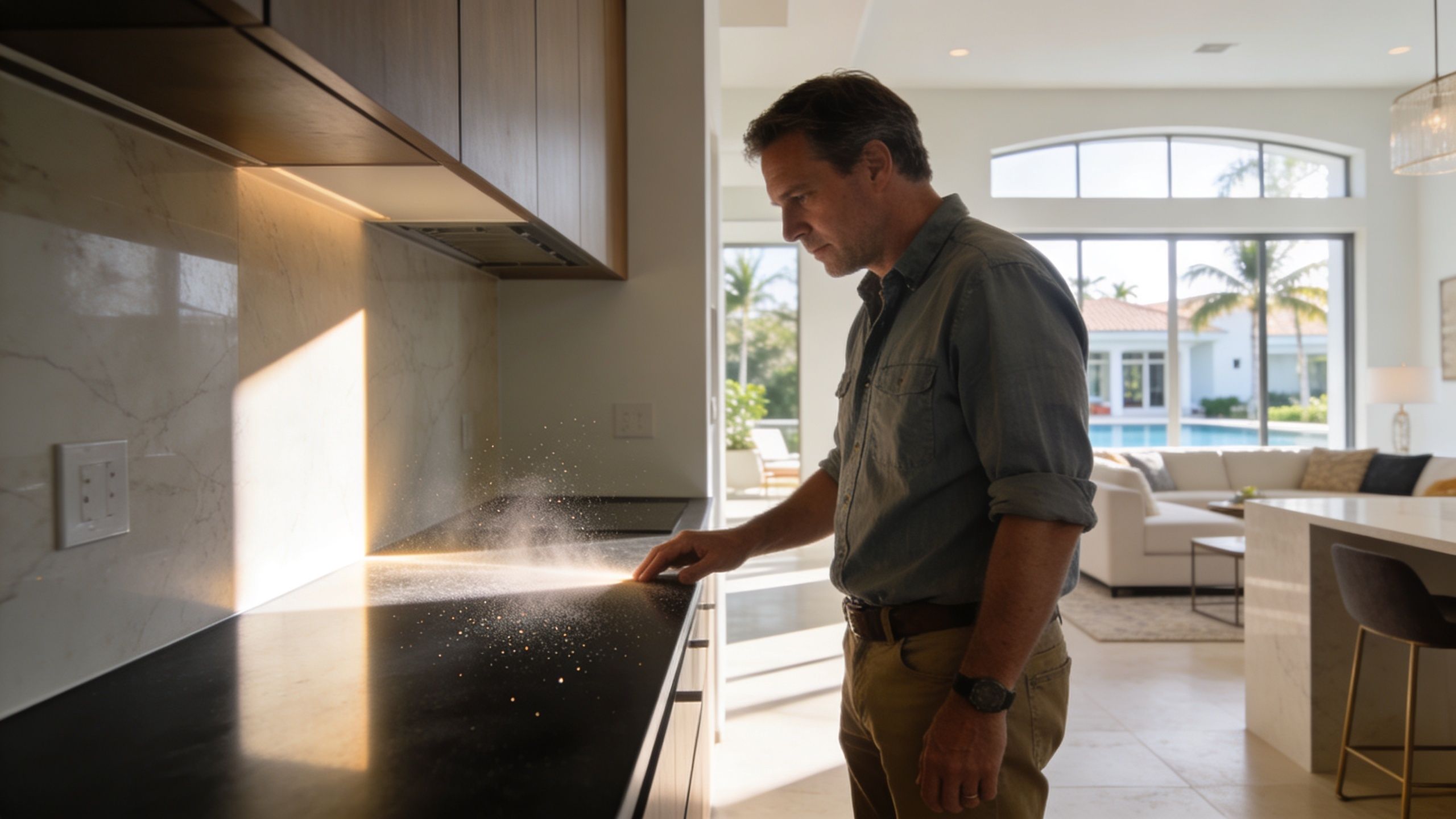
You get the keys, walk into a bright new kitchen, and everything looks finished. Then the afternoon sun hits the counters and you see the actual condition of the house. Drywall dust on the trim, film on the glass, grit in the slider track, and a light chalky layer on surfaces that should feel smooth.
That is common in Palm Beach County new builds. A home can pass a final walkthrough and still need serious cleaning before it is ready to live in.
In West Palm Beach and the surrounding areas, post-construction dust behaves differently than it does in drier climates. Humidity makes fine dust cling to painted walls, cabinet fronts, baseboards, and vent covers. Near the coast, salt air adds another layer to windows, metal fixtures, and glass. In homes with large sliders, lanais, or pool access, site grit and sand collect fast at thresholds and tracks.
What We See in Palm Beach County Homes
The pattern is familiar across Jupiter, Palm Beach Gardens, Wellington, and Boca Raton, even when the finishes are high-end.
- Window tracks packed with dust from drywall sanding and saw cuts
- Hurricane-impact glass stickers and adhesive left on too long and harder to remove cleanly
- Grout haze on new tile that flattens the color and sheen
- Dust on AC vents and return covers before the system has even been fully run
- Lanai doors and thresholds holding sand, mud, and job-site grit
A builder's broom clean usually clears obvious debris and loose scraps. It does not address the fine dust, residue, and detail work that show up after move-in. I tell homeowners to check a windowsill, the top edge of a door frame, or the inside lip of a cabinet. If your hand comes back chalky, the house still needs post-construction cleaning.
For buyers comparing this service to a standard move-in clean, the difference matters. This guide on cleaning a house before moving in covers the basics, but a newly built home needs more dust control, more residue removal, and more attention to surfaces that construction crews touch last.
The Two Stages of Post-Construction Cleaning
A new home can look finished at 5 p.m. and still leave a fine layer of dust on your feet by 7. In West Palm Beach, that happens fast. Humidity makes dust cling to trim and vent covers, and coastal air leaves a light film on glass, metal, and sliders long before the owner brings in furniture.
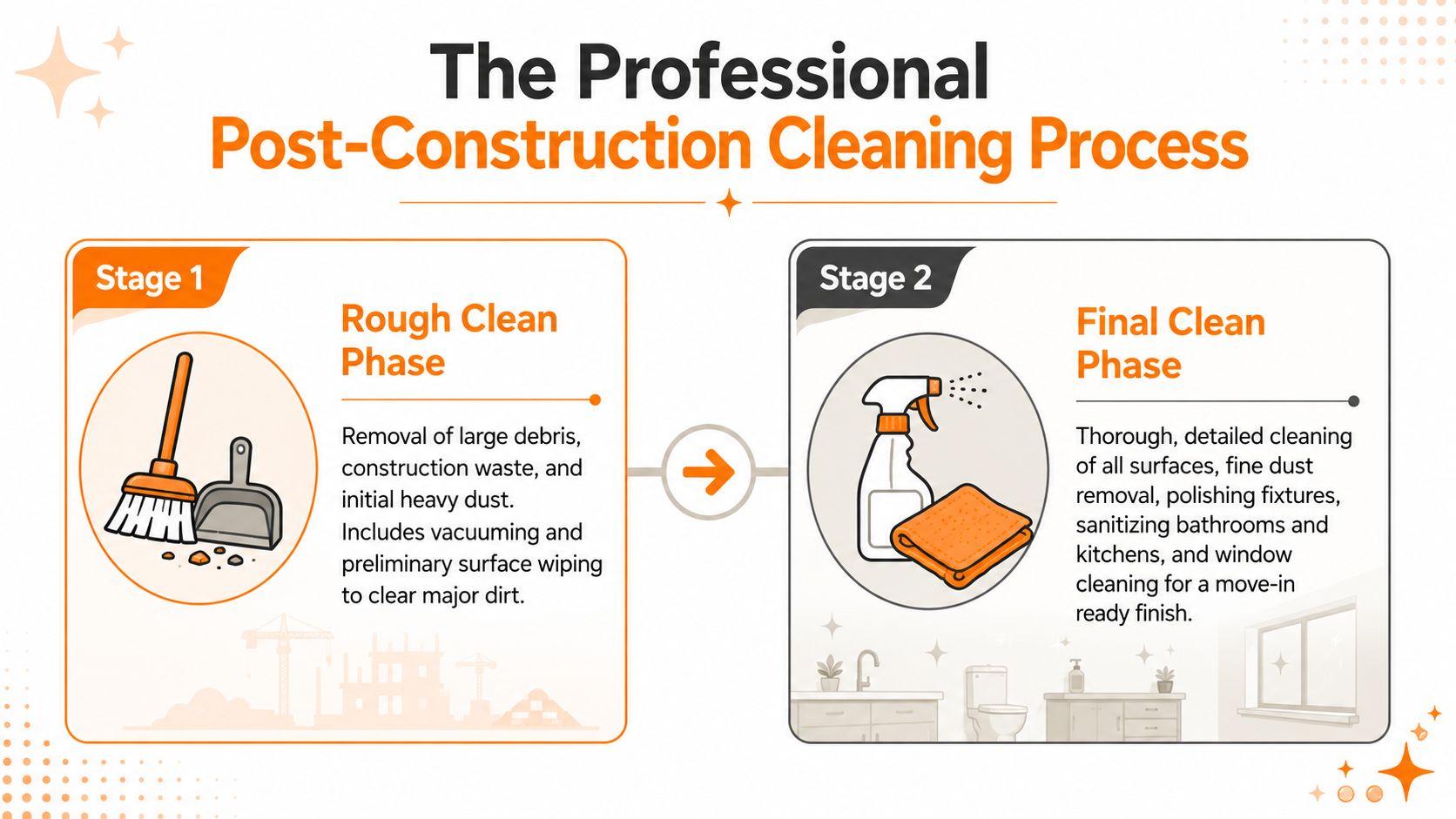
Post-construction cleaning works best in two passes. One pass removes the job-site mess. The second pass handles the fine dust, residue, and detail work that make the house feel ready to live in.
Rough clean
The rough clean resets the space so detail cleaning is not wasted on debris that should have been removed first.
On Palm Beach County jobs, this stage often means clearing muddy footprints near entry doors during the rainy season, pulling sawdust out of garage-adjacent rooms, and removing grit that blows in around lanais and sliders. Homes with large-format tile, impact windows, and wide open floor plans need extra attention because dust travels farther and settles in more places than people expect.
Typical rough-clean tasks include:
- Large debris pickup for scraps, cardboard, tape, plastic, and leftover protective materials
- Initial vacuuming on floors, corners, closet shelves, trim edges, and window channels
- Sticker and residue removal from appliances, fixtures, mirrors, and glass
- Track clearing in sliders and windows where sand, drywall dust, and job-site grit collect fast
- First-pass surface wiping so detail cleaning is done on clean surfaces instead of dusty ones
Final detail clean
The final clean makes the difference. Once the loose debris is gone and worker traffic has slowed or stopped, the home can be cleaned top to bottom in the right order.
That usually includes ceiling fans, AC vents and returns, door frames, trim, cabinet fronts, counters, bathroom fixtures, mirrors, baseboards, floors, and interior glass. In coastal neighborhoods, I also watch for early salt film on metal finishes and glass. In newer homes with textured trim or tall baseboards, dust sticks in profiles and corners that look clean from standing height but fail inspection up close.
Baseboards are a good example. On a standard move-in clean, they may only need a quick wipe. On a post-construction clean, they often need vacuuming first, then a damp wipe to pull out the packed dust sitting along the top edge and where the profile meets the wall. This guide on how to clean baseboards without spreading dust around shows the difference in approach.
A rushed one-pass clean usually leaves the house looking decent for photos but dusty in sunlight and around air movement. That is why professional crews use a sequence, not just more labor.
What works and what doesn't
| Approach | What works | What usually fails |
|---|---|---|
| Cleaning order | Top-to-bottom, room-by-room | Starting with floors, which forces re-cleaning them later |
| Dust removal | HEPA vacuum first, then damp wipe | Dry dusting that sends fine particles back into the air |
| Palm Beach jobsite realities | Clearing tracks, vents, thresholds, and lanai access points | Cleaning only visible counters and floors |
The Ultimate New Construction Cleaning Checklist
A new house can look finished and still fail a real clean. In Palm Beach County, that happens often after crews leave and the AC starts running full time. Fine dust lifts off wide tile runs, settles into trim profiles, and sticks around window frames once humidity and salt air get involved.
What We See in Palm Beach County Homes
The missed areas are usually small, but they are the spots homeowners notice after move-in. Door trim top edges, AC returns, cabinet tops, pantry corners, closet tracks, and the narrow line where wall meets baseboard tend to hold the last layer of dust. In homes near the water, metal finishes and interior glass can also pick up an early film that reads as smudging even after a standard wipe.
Floor appearance is another common problem. On light porcelain tile, grout haze and powdered drywall dust can leave a cloudy cast that shows up in afternoon sun. In stucco-heavy and coastal builds, open sliders and lanai traffic add another round of grit before the house is fully closed up.
Service Inclusions
Below is a practical breakdown of what homeowners usually expect from a post-construction clean, and what often gets priced as an add-on.
| Service Area | Core Service (Included) | Optional Add-On |
|---|---|---|
| Bathrooms | Dust removal, sink and counter cleaning, mirror polishing, fixture wipe down, toilet and shower detailing | Interior cabinet cleaning for drawer and shelf wipeouts |
| Kitchen | Countertops, cabinet exteriors, sink, faucet, backsplash wipe, floor cleaning | Inside oven, inside fridge, inside cabinets |
| Floors and trim | Vacuuming, mopping, baseboards, corners, thresholds | Wall spot cleaning where scuffs or handprints show |
| Windows and ledges | Window sills, tracks, frames, interior dust removal | Interior window cleaning for fingerprints, haze, and film |
| Living areas and bedrooms | Surface dusting, mirrors, doors, switches, vent covers | Pet hair focus areas if you're moving furnishings in right away |
Trim work deserves extra attention on new builds. These easy ways to clean baseboards show why a quick pass misses packed dust along edges and profiles.
Room by room practical checklist
Kitchen surfaces
Wipe cabinet fronts, handles, backsplash, counters, light switches, and appliance exteriors. Check for adhesive residue on new appliances and protective film that installers did not fully remove. On painted cabinets, use the wrong product and the finish can dull fast, so the cleaning method matters as much as the labor.Bathrooms
Clean shower glass, fixtures, vanity fronts, mirrors, sinks, counters, and toilet bases. In South Florida homes, moisture builds quickly once the air conditioning is on, so dust left around exhaust covers, grout lines, and caulk edges can turn into a grime problem within days.Living areas
Dust ledges, trim, fan blades, vents, door frames, closet shelving, and slider tracks. Open-plan homes in Westlake, Royal Palm Beach, and newer West Palm developments let fine dust travel farther than owners expect, especially across large-format tile and into recessed lighting trim.Bedrooms and closets
Wipe shelves, rods, trim, doors, and window ledges. Closet corners often hold sawdust, packaging debris, and hardware dust after final installs and punch-list work.
Check rooms in afternoon light. That is usually when leftover drywall dust shows up on dark floors, black hardware, glossy counters, and impact glass.
Smart home ready details
Newer luxury homes add another layer to final cleaning. As reported in this article about final post-construction cleaning, realtors note 60% of smart home listings delay closings for clean verification because post-construction nano-dust can cause sensors to misread by 25-30%.
That concern carries over to West Palm Beach homes with smart thermostats, touch panels, automated shades, leak detectors, and sensor-based lighting. Those areas need controlled dust removal and a careful finish. Overspray around a panel, residue at a sensor point, or fine dust left near supply vents can lead to small problems that become move-in day complaints.
Safety First Managing Construction Dust in Humid Climates
In Palm Beach County, dust isn't only a cleanup problem. It's an indoor air problem. What gets left behind after the build can hang in the air, settle into soft surfaces, and cling to damp areas once the house is closed up and cooled.
Why dry dusting makes it worse
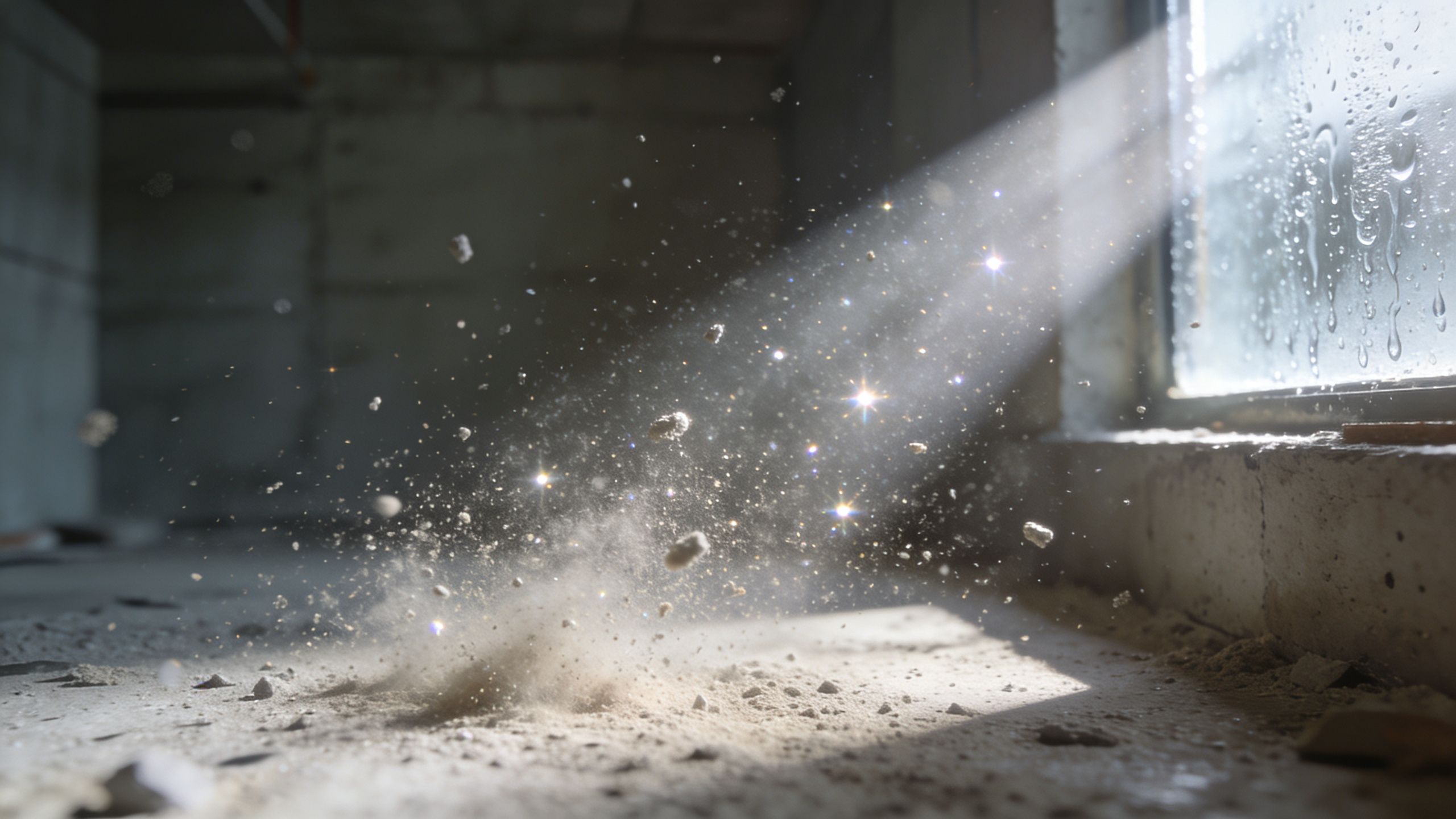
Construction dust is finer than ordinary household dust. According to this new construction cleaning checklist, it consists of PM2.5 particulate matter and can have silica content that exceeds 10-20%. That same source notes proper cleanup requires HEPA-filtered vacuuming with 99.97% efficiency before wet wiping, because dry dusting can redistribute up to 80% of particles back into the air.
That lines up with what works on real jobs. If you start with a dry rag, the room often looks better for a minute and worse later when sunlight catches the air again.
What We See in Palm Beach County Homes
Humidity changes the cleanup strategy here. Dust grabs moisture, especially around bathroom ceilings, AC vents, and window frames. In homes near the Intracoastal or the coast, salt air adds another layer to hardware and glass.
The problem isn't just visible dirt. It's residue that sits in the wrong places:
- Vent covers and returns before the AC runs full time
- Bathroom grout lines where moisture shows up fast
- Slider tracks and thresholds that trap damp grit
- Ceiling fan blades that spread fine dust once power is on
For homeowners who want to reduce circulation from overhead fixtures after a renovation or build, this guide on how to clean a fan is a helpful reference.
A quick visual helps explain why technique matters before occupancy:
The safest sequence is simple. Vacuum with HEPA filtration first, then damp wipe, then check vents, tracks, and horizontal ledges again after dust settles.
DIY vs Hiring a Pro for Your New West Palm Beach Home
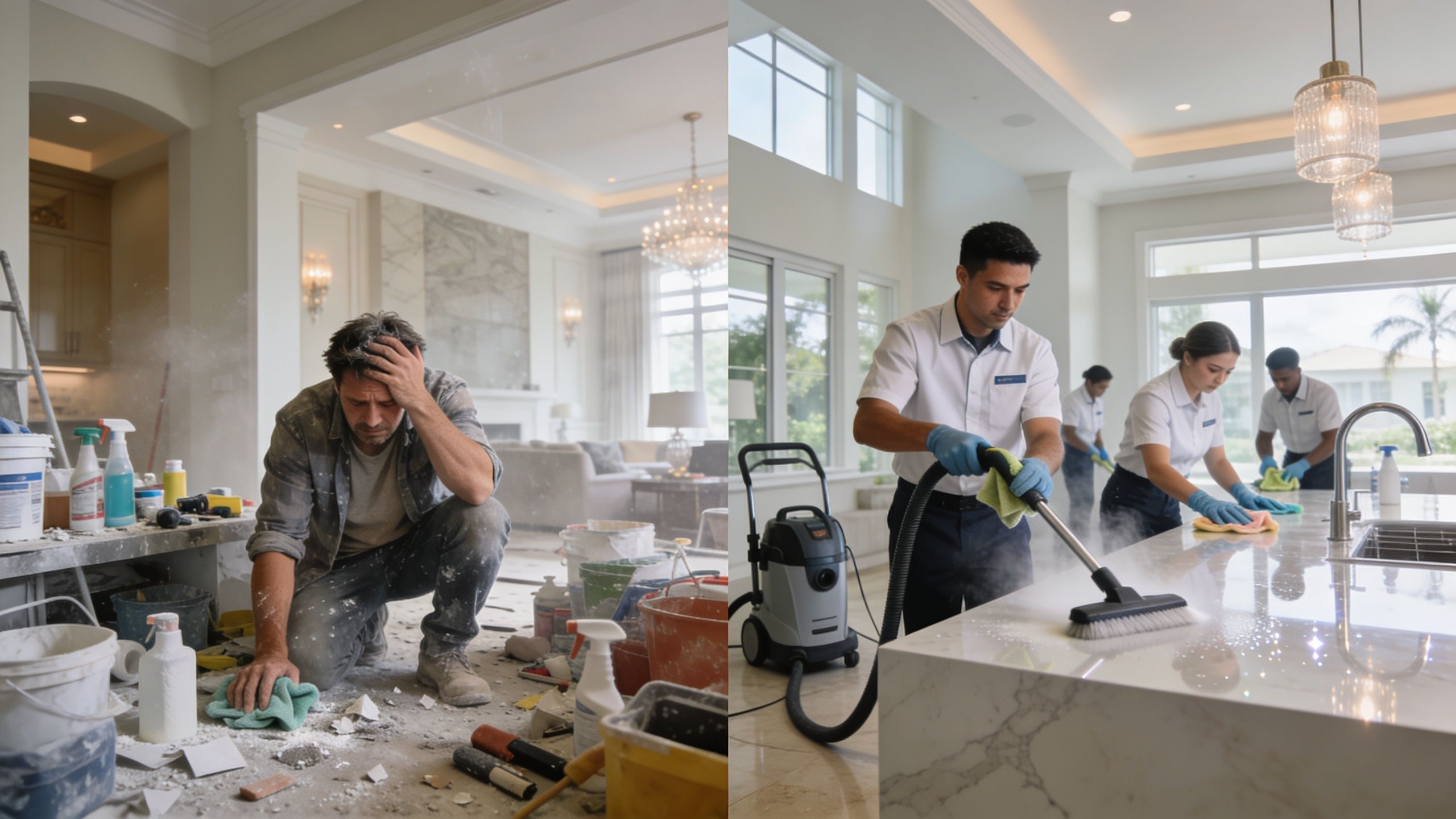
A lot of homeowners think about doing this themselves after closing because the house is empty and that seems easier. Sometimes that works for a light touch-up. It usually doesn't work well for a full post-construction clean.
Where DIY gets frustrating
A homeowner can sweep, wipe counters, and mop. The trouble starts with the details. Fine dust inside slider tracks, residue on impact window frames, haze on tile, dust on high trim, and particles that settle again after the first pass are what drag the job out.
In a new Wellington home, one common trouble spot is the large sliding glass door. Dust from sanding settles deep into the lower track. A regular shop vac often leaves enough grit behind that the track still feels rough when the door moves.
What a pro changes
A professional crew brings the right sequence and the right tools. That matters just as much as effort. New finishes scratch more easily than people expect, and the wrong pad or chemical can leave marks on glass, fixtures, or flooring.
Here's the practical trade-off:
- DIY makes sense if you only need a light wipe-down after a small punch-list visit
- Hire a pro if the home still has dust on trim, vents, tracks, window ledges, cabinets, or bathroom surfaces
- Hire a pro if you want the house ready before furniture, movers, or a walkthrough
- Hire a pro if anyone in the home is sensitive to dust or you don't want to spend your first weekend chasing resettling particles
New construction cleaning isn't hard because it's dirty. It's hard because the dust is fine, widespread, and easy to spread to the next room.
Pricing Timelines and Booking Your Post-Construction Clean
Most homeowners reach the same final set of questions after the builder wraps up. What will this cost, how long should it take, and how far ahead should it be booked?
Post-construction cleaning for new homes typically costs $0.15 to $0.60 per square foot, and a 2,000-square-foot new home in a market like Palm Beach County ranges from $300 to $1,200, according to HomeGuide's post-construction cleaning rates. HomeGuide also notes that a full post-construction clean often takes 8 to 12 hours with a 2 to 4 person crew.
In West Palm Beach and the surrounding parts of Palm Beach County, the final price usually depends on more than square footage. A clean, mostly finished model in Jupiter is a different job from a custom home near the water in Palm Beach Gardens with salt film on glass, dust packed into window tracks, and humidity already starting to grab onto bathroom surfaces. The timing matters too. If the clean is scheduled before all trades are done, fresh dust often settles right back onto floors, ledges, and trim.
The best booking window is usually after punch-list work is nearly complete but before furniture, movers, and blinds go in. That gives the crew clear access to floors, baseboards, cabinets, and interior glass.
Schedule Clean Inspect Enjoy
Schedule
Confirm the square footage, current condition, and any extras such as interior windows, inside cabinets, appliance interiors, garage cleanup, or detailed track work on large sliders.Clean
The crew brings the tools, vacuums, cloths, and products needed for post-construction residue and follows a room-by-room process that works from higher surfaces down.Inspect
A final walkthrough should catch the spots that get missed on rushed jobs, especially trim, sills, vent covers, light fixtures, shower corners, and impact door tracks.Enjoy
Ultimately, you come back to a home that feels ready to live in, not one that still feels like a jobsite.
Micro FAQ
How long does a post-construction clean take?
For a typical 2,000-square-foot home, expect a half-day to full-day appointment depending on dust level, crew size, and whether the home needs detailed interior glass, cabinet, or track cleaning.
Are supplies included?
Professional post-construction cleaning is usually done with company-supplied tools and products selected for fine dust, residue, and new finishes.
What affects the price most?
Square footage is one part of it. The bigger drivers are how much dust is left, whether trades are fully finished, the amount of interior glass, and add-ons such as inside cabinets, appliances, and garage areas.
Are the products safe for families and pets?
Many professional cleaners use low-residue, non-toxic options that make sense for homes about to be occupied, but it is smart to ask what will be used on glass, floors, counters, and new fixtures.
In Palm Beach County, timing and local conditions change the job. Humidity can make dust cling to surfaces instead of lifting cleanly, and coastal air leaves residue on windows and metal finishes faster than many national guides account for. A good post-construction clean is not just a final wipe-down. It is the step that gets the home ready for real living.
Book your cleaning with Sunset Shine Home Cleaning, your trusted house cleaning service in West Palm Beach. Call 561-408-4020 or book online.