
A Palm Beach County builder knows the moment. The flooring is in, the glass looks clear, the buyer walk is close, and then the light hits the kitchen island just right. Fine dust is back on the counters, powder is sitting in the window tracks, and the AC vent covers already look gray.
That's why cleaning new homes for builders isn't a basic maid service job. In West Palm Beach, Jupiter, Palm Beach Gardens, Boca Raton, and the rest of the county, new construction cleaning has to account for stucco grit, humidity, coastal salt residue, and the kind of dust that keeps settling after the trades leave.
Table of Contents
- The Builder's Challenge with New Home Cleaning
- The Three Phases of Post-Construction Cleaning
- Defining the Scope of Work for Palm Beach County Builds
- Essential Tools and Eco-Friendly Products for Florida Builds
- Post-Construction Cleaning Pricing and Estimates
- Navigating the Punch List and Final Walkthrough
The Builder's Challenge with New Home Cleaning
A new home can look finished and still not be ready for handover. The last stage is where builders lose time to small visual problems. Dust on flat paint, overspray on impact glass, grit in sliding door tracks, and residue on fixtures all show up during punch-list review.
In Palm Beach County, local conditions make that harder. Fresh stucco and drywall dust don't behave the same way. Stucco debris is grittier and more abrasive, which matters around glass, polished fixtures, and darker flooring. Coastal jobs in Juno Beach or Boca Raton can also pick up light salt film on exterior-facing glass and hardware before the property is even occupied.
Why builders get surprised at the end
The usual issue isn't that nobody cleaned. It's that the clean happened at the wrong stage, or the scope was too shallow for a builder handoff.
A standard residential cleaner may wipe visible surfaces and vacuum the floor. A post-construction crew has to think like an inspector. That means checking tops of door casings, cabinet interiors, vent covers, baseboard edges, grout haze, switch plates, and the fine dust that settles again after the HVAC runs.
Practical rule: If a home still has active punch work, protective film, or dusty return vents, it usually isn't ready for the final clean.
What Palm Beach County adds to the job
Humidity changes the timeline. In bathrooms and laundry rooms, damp air can make fresh grout lines and corners look dingy faster than builders expect. Rainy season traffic brings mud onto new tile at entries and lanais. In communities with a lot of indoor-outdoor living, sand and debris collect in sliders and thresholds almost immediately.
That's why the goal isn't just to make the house look clean for an hour. The goal is to make it stay presentable through the final walkthrough, photos, and key handoff.
The Three Phases of Post-Construction Cleaning
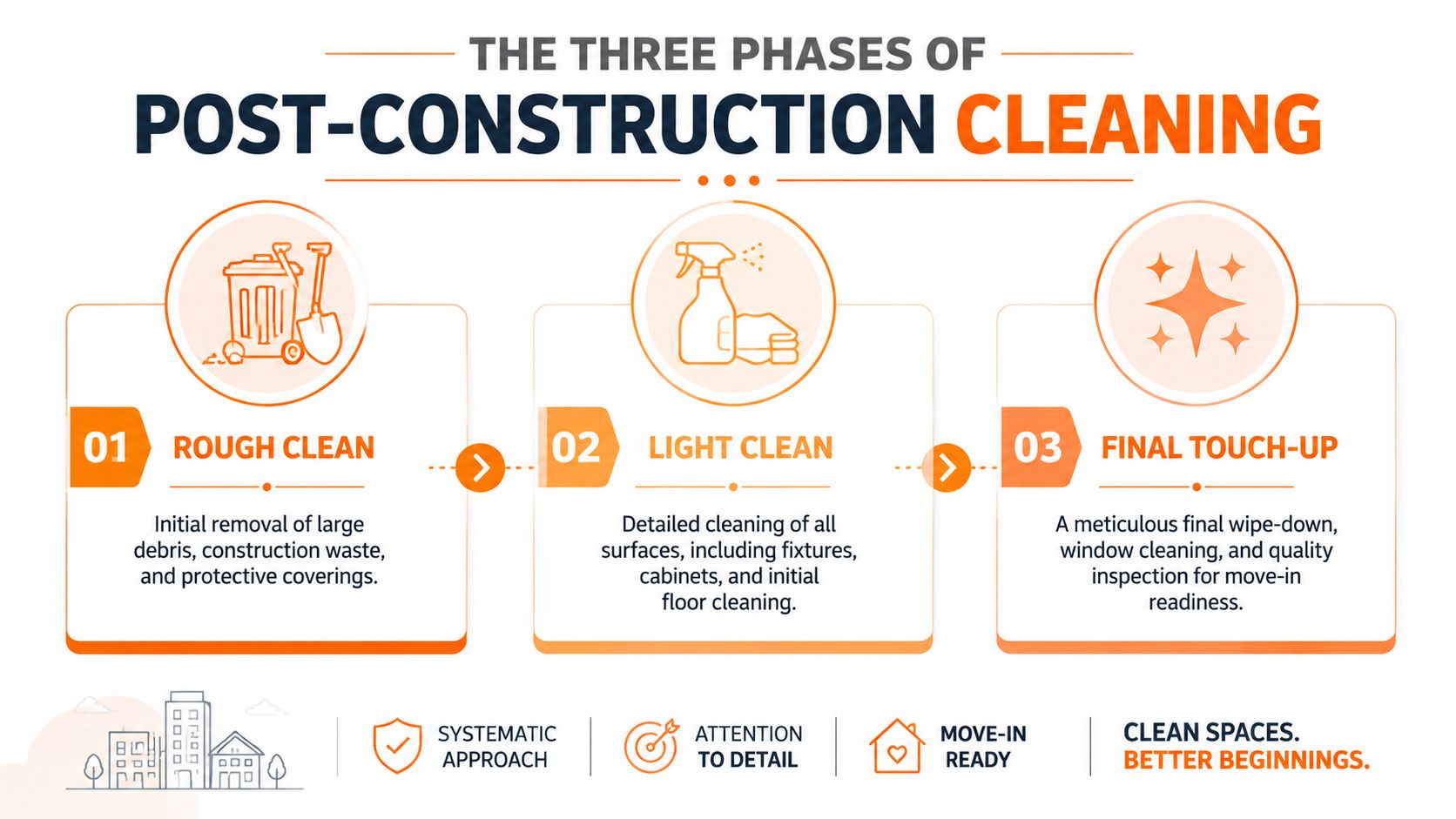
A clean handover usually takes more than one visit. The method that works on builder jobs is phased, not rushed.
Why one clean is rarely enough
Industry guidance on post-construction cleanup includes a final inspection 5 to 7 days later, and notes that approximately 85% of residual dust settles within the first week after construction ceases according to Pro Remodeler's overview of the post-construction cleaning phases. That lines up with what builders see in South Florida. Counters, sills, and closet shelves can look clean on Friday and dusty again after the weekend.
For that reason, the practical field version is three phases.
What each phase needs to accomplish
Rough clean
This is the prep stage. Remove debris, leftover packaging, tape, plastic, and obvious construction waste. Vacuum up loose dust before anyone starts wiping finished surfaces. If this step is skipped, crews drag grit across floors and smear dust into trim, shelves, and walls.
On Palm Beach County jobs, this is also where slider tracks, garage corners, and lanai thresholds need attention. Those areas trap heavier material that won't come up with a quick mop.
Final clean
This is the detail-heavy pass. It includes top-down dusting, wiping walls and door frames where needed, cleaning glass, vacuuming vents and tracks, washing cabinet interiors, and cleaning floors more than once if dust keeps releasing.
Industry guidance for new-build cleaning recommends working from the top down, vacuuming multiple times, and changing HVAC filters if the system ran during construction, because dust can resettle through vents and on finished surfaces, as outlined in this guide to cleaning new construction homes.
A strong final clean also means knowing what not to do. Scraping blindly at impact glass, flooding new grout, or using the wrong solvent on matte cabinetry creates a new problem right before turnover.
Clean the ceiling vents before the floors. Otherwise the floors become your dust catcher twice.
Final touch-up
This is the pass many crews leave out, and it's the one that saves the walkthrough. After a few days, settled dust shows itself on horizontal surfaces, dark vanities, window sills, and trim ledges. The touch-up visit catches those light returns and any smudges left by late trade activity.
In Florida, this phase matters even more on homes where the AC has been cycling, doors have stayed open for deliveries, or exterior work wrapped late. The house may be complete, but the dust cycle often isn't.
A builder who schedules all three phases gets a cleaner presentation and fewer last-minute calls about “one more thing” in the powder room, stair corners, or primary bath glass.
Defining the Scope of Work for Palm Beach County Builds
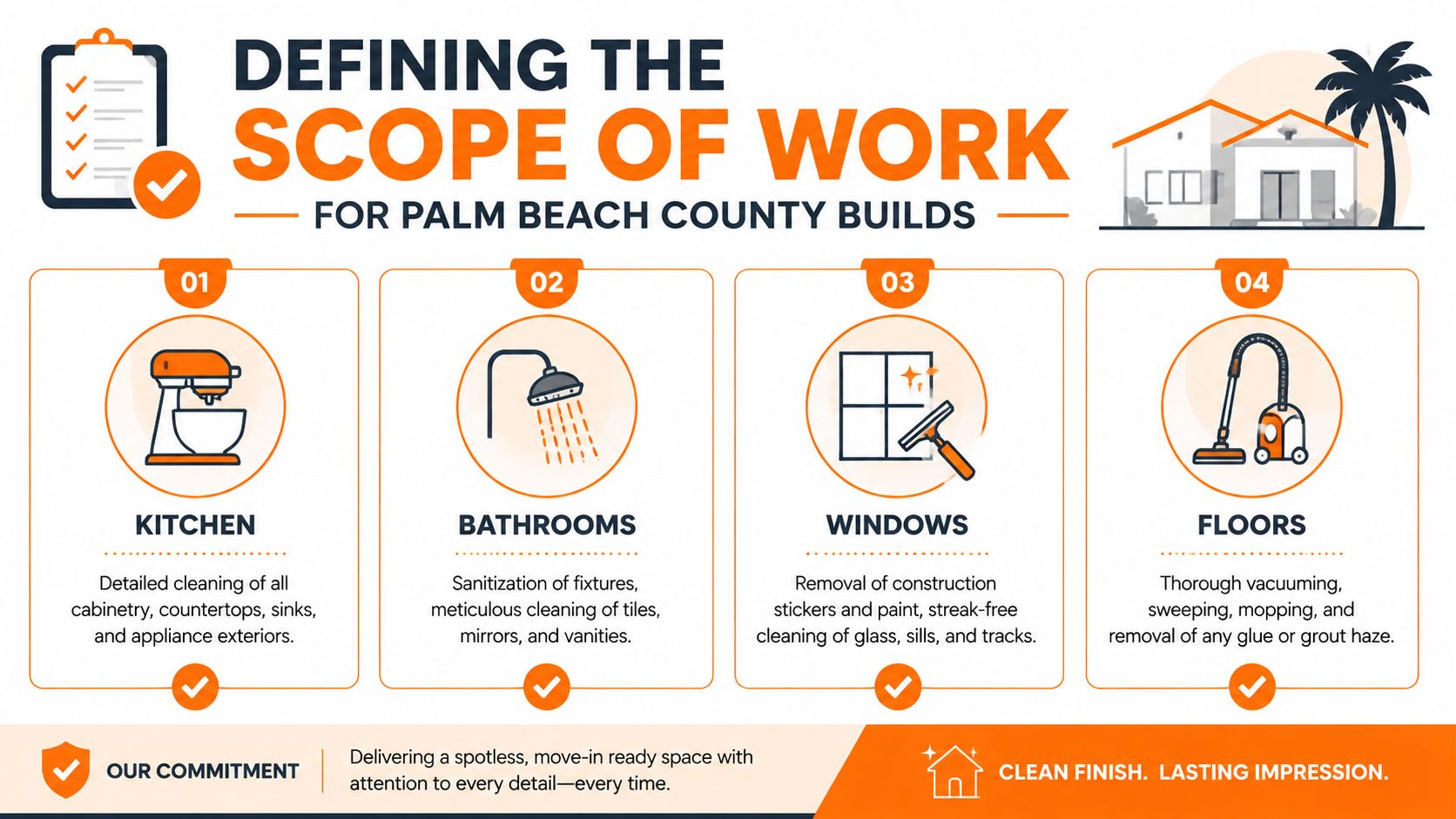
A good scope of work protects the builder as much as it guides the cleaning crew. If the scope is vague, the punch list gets vague too. That's when arguments start over whether sticker adhesive on impact windows, grout haze on porcelain, or dust inside closets was “included.”
Interior areas that fail walkthroughs
The basics still matter, but they have to be done at builder standard.
- Kitchen surfaces: Cabinet fronts, cabinet interiors, shelves, toe kicks, countertops, sink basins, faucet bases, appliance exteriors, backsplash dust lines, and light residue around hardware.
- Bathrooms: Vanity fronts, mirror edges, shower glass, tile faces, grout lines, toilet bases, under-sink cabinet interiors, and the top edges of doors and trim where powder collects.
- Windows and glass: Removal of stickers, tape residue, fingerprints, dust on frames, tracks, sills, and film left behind on newly installed panes.
- Floors: Vacuuming before mopping, edge work along baseboards, grout haze removal where needed, and detail cleaning in corners where sawdust and drywall dust collect.
- Closets and storage: Shelf tops, rods, corners, and baseboards. These are easy to miss and easy for homeowners to open first.
For many projects, builders also need a clear debris plan before the detailed clean. That's where a defined construction debris removal process helps separate haul-out tasks from finish cleaning.
Palm Beach County trouble spots
Local homes have recurring pain points that should be written into the scope.
Impact windows and coastal residue
Homes closer to the water often need more care on glass and frames. Impact glass can hold adhesive residue from labels and protective materials, but the wrong scraper or chemical can mark the surface. Coastal air also leaves light film on frames and hardware, especially if the property sits open for a while before final turnover.
Tile, grout, and lanai transitions
Palm Beach County builds use a lot of tile, and tile exposes sloppy final cleaning fast. Grout haze, dust in grout lines, and debris trapped at slider thresholds show up immediately in bright natural light. The indoor-outdoor transition at a lanai is one of the first places a buyer notices if the house wasn't detailed properly.
Vents, fans, and AC dust
If the HVAC ran during construction, the vents need more than a quick wipe. Dust clings to louvers, settles around vent covers, and drops back onto floors and furniture-grade surfaces after the clean. Ceiling fan blades and return grilles are also common misses.
A home can have spotless counters and still fail the eye test if the vent covers, slider tracks, and closet shelves still look dusty.
Cabinets, trim, and wall marks
New cabinets often arrive clean-looking but dusty inside. Trim work catches powder on top edges. Door casings, switch plates, and wall corners pick up fingerprints and smudges from late trade traffic. On white interiors, that residue can be subtle until daylight hits it.
A scope that names these areas removes guesswork. Builders don't need “general deep cleaning.” They need a turnover-ready list that matches how the home will be inspected.
Essential Tools and Eco-Friendly Products for Florida Builds
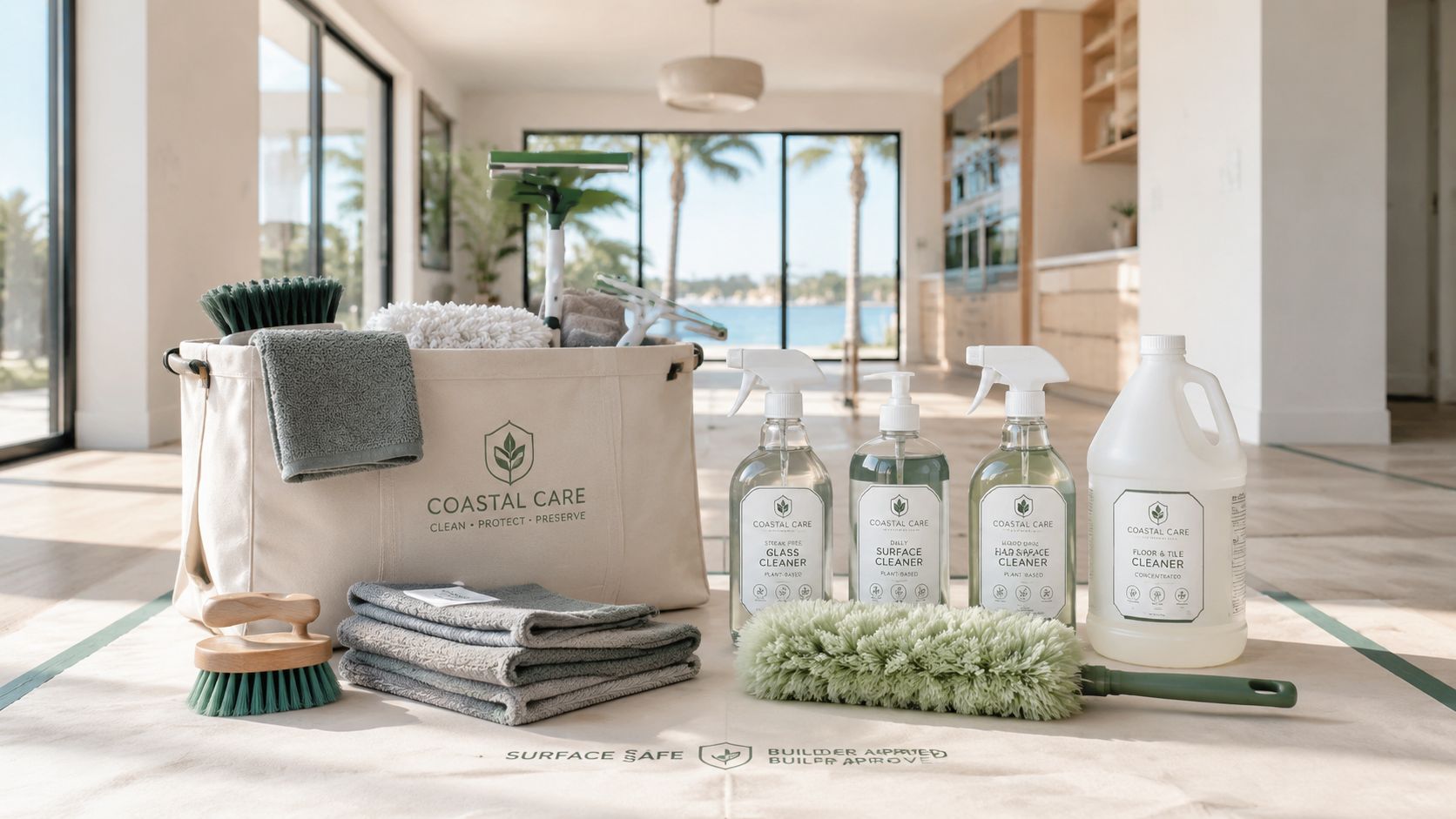
The right crew matters, but the tools and chemistry matter just as much. Post-construction cleaning is part cleaning and part finish protection.
Tools that control dust instead of moving it around
Drywall and stucco dust are where cheap equipment fails. A basic vacuum can spit fine particles back into the air or leave them behind in corners and grout lines.
Verified guidance on builder-focused cleaning specifies HEPA-filtered backpack vacuums for floor cleaning and microfiber cloths for dry particulate capture. That makes sense on Florida builds, where fine dust settles into vent covers, textured trim, and large-format tile joints. The goal is to trap the dust, not stir it up and spread it room to room.
A reliable kit for these jobs usually includes:
- HEPA vacuum setup: For floors, vents, tracks, and cabinetry toe kicks.
- Microfiber cloth systems: Better for grab-and-hold dust removal on trim, shelving, and fixture bases.
- Plastic scrapers: Safer than metal blades around laminate, cabinetry, and many finished surfaces.
- Extension tools for vents and ledges: Necessary in homes with high ceilings, tray ceilings, and tall foyer glass.
For builders or homeowners who prefer lower-residue products after turnover, natural cleaning products for home use are worth considering once the heavier construction-specific work is complete. Sunset Shine Home Cleaning uses non-toxic, eco-friendly products on residential work where that approach fits the finish and scope.
Products that protect new finishes
Some residues need more than soap and water. Adhesives, paint flecks, and silicone smears require targeted products and careful technique. According to Cleanlink's discussion of post-construction cleaning chemistry, correct residue removal depends on specialized chemical agents, and harsh industrial solvents can degrade warranties on new flooring and paint within 30 days of installation.
That's a big deal on new homes with matte cabinets, engineered flooring, fresh trim paint, and upgraded tile finishes.
Field note: If a product is strong enough to strip residue fast, it may also be strong enough to dull a brand-new finish.
For adhesive on windows or cabinetry, crews should lean toward pH-neutral options and non-abrasive tools. For grout and tile, aggressive acids are a bad gamble unless the surface and manufacturer guidance clearly allow them. Builders spend too much on finishes to let the cleaning phase create avoidable damage.
A quick video overview can help newer contractors understand how method and equipment affect the result.
Post-Construction Cleaning Pricing and Estimates
A builder in Palm Beach County usually asks the same question first. What will the final clean cost, and what will make that number move?

Square-foot pricing helps with early budgeting, but it is only a starting point. On new home work, labor intensity is the key factor. A clean CBS spec home with basic finishes prices one way. A custom waterfront house with salt film on exterior entries, fine stucco dust at sliders, and upgraded millwork prices another.
Why post-construction costs more than routine cleaning
A widely used industry benchmark puts post-construction cleaning at $0.15 to $0.75 per square foot, versus $0.10 to $0.30 per square foot for routine janitorial work, according to ServiceMaster Clean's overview of post-construction cost factors.
That spread makes sense in the field. Routine cleaning maintains a finished, occupied space. Post-construction cleaning removes drywall dust from returns, grit from window tracks, sticker residue from glass, sawdust in closet corners, and jobsite film from fixtures and baseboards. It also requires slower work on surfaces that scratch easily, which is common in newer Palm Beach County homes with matte black hardware, polished porcelain, quartz, and factory-finished cabinets.
Using that same pricing reference, a 2,000-square-foot home can fall anywhere from about $300 to $1,500 under a square-foot model. Around Westlake, Wellington, Jupiter, or The Acreage, the number usually depends on the condition of the house at turnover, not just the size.
What changes the estimate on a local build
Use a post-construction cleaning calculator for rough budgeting, then walk the job before locking the number. I would not price a final clean from plans alone unless the builder and I already know the finish level, site standards, and whether trades are completely done.
The estimate usually shifts for a few practical reasons:
- Dust load: Palm Beach County builds often hold fine drywall and stucco dust longer because humidity makes residue cling to sills, trim, and textured surfaces.
- Surface sensitivity: Fresh paint, soft metals, high-gloss tile, appliance panels, and dark cabinetry require more hand work and more caution.
- Residue removal: Paint specks, grout haze, silicone, protective film adhesive, and caulk smears add time fast.
- Schedule condition: If painters, electricians, or low-voltage crews are still in and out, the cleaner may need a phase clean plus a return visit.
- Layout and glass count: Open plans can move faster, but homes with many baths, built-ins, pocket sliders, and large window packages rarely clean at the low end of the range.
- Location exposure: Near the coast, salt air and windblown debris can affect entries, lanai areas, and exterior-adjacent glass even before handoff.
Builders' profitability hinges on this stage. The lowest quoted price frequently presumes the site is ready. If floor protection is still down, punch work is still active, or the house needs sticker and residue correction beyond standard scope, the job turns into a change order or a second trip.
A clear estimate should spell out what is included, what counts as extra detail work, and whether the price covers one final clean or a clean plus touch-up. That keeps the cleaning crew from becoming the catch-all fix for every trade that finished late.
Navigating the Punch List and Final Walkthrough
The last cleaning visit is where presentation, liability, and coordination all meet. Builders already know the awkward version of this conversation. The cleaner says the marble stain was there before. The painter says the smudge happened after cleaning. The homeowner only sees a flaw at key handoff.
Responsibility has to be clear before cleaning starts
The biggest gray area in post-construction work is responsibility for final clean quality and damage risk. That issue comes up often in trade discussions, especially around builder expectations, exclusions, and surface damage, as reflected in this industry forum discussion about who owns post-construction cleanup and risk.
The practical fix is simple. Document the condition before detailed cleaning starts.
That means noting things like:
- Existing scratches or chips: On glass, counters, stone, mirrors, and appliance panels.
- Active punch items: Caulk still open, paint still curing, missing vent covers, or flooring protection not fully removed.
- Scope exclusions: Exterior glass, sticker removal beyond standard adhesive, paint correction, or remediation-level cleanup.
If the site isn't punch-list ready, the cleaning crew shouldn't be treated as the last trade responsible for every mark in the house.
How to keep the final handoff smooth
A strong final walkthrough process is less about selling the clean and more about reducing friction.
Start with one point of contact from the builder side. Then walk the house in a fixed order, usually top floor to bottom or rear to front, so nobody doubles back randomly. Keep a short written list. Separate cleaning items from trade corrections. “Dust on primary closet shelf” is a cleaning item. “Paint nick on stair rail” is not.
In Palm Beach County, it also helps to check the areas that most often trigger last-minute comments:
- Window sills and tracks
- Vent covers and return grilles
- Primary bath glass and grout lines
- Lanai sliders and thresholds
- Cabinet interiors and pantry shelves
Builders don't need a cleaning vendor who disappears after the invoice. They need a crew that understands that the final clean is part of the handoff process, not an isolated service call.
Builders in West Palm Beach, Palm Beach Gardens, Jupiter, Boca Raton, Wellington, and across the county can book post-construction help with Sunset Shine Home Cleaning. If you need cleaning new homes for builders done with a clear scope and local awareness of Florida dust, humidity, and finish protection, call 561-408-4020 or book online at sunsetshinehomecleaning.com.