
You finished the remodel. The tile is in, the cabinets are set, and the room finally looks like what you paid for. Then you notice the old vanity in the side yard, broken drywall stacked in the garage, sand and sawdust tracked across the hallway, and that fine white dust settling on every ledge in the house.
That's where construction debris removal usually gets underestimated in Palm Beach County. Around here, cleanup isn't just about hauling away rubble from a Boca Raton kitchen remodel or old shutters from a Jupiter upgrade. It's also about getting humid, dusty, lived-in South Florida homes back to normal without grinding grit into tile, pushing drywall dust into AC vents, or leaving debris where HOA rules or local disposal rules can turn a small mess into a bigger problem.
Table of Contents
- Your Renovation's Final Hurdle Is the Cleanup
- Assess Your Debris and Choose Your Path DIY or Pro Hauler
- A Homeowner's Guide to Renting a Dumpster
- Sorting Debris for Recycling and Safe Disposal in Palm Beach
- The Final Step Professional Post-Construction Cleaning
Your Renovation's Final Hurdle Is the Cleanup
The hard part should be over once the contractor leaves. In reality, that last phase is where many homeowners lose a full weekend. The job splits into two very different tasks. First, you have the bulky mess like tile, drywall, trim, cardboard, broken fixtures, and scrap lumber. Second, you have the invisible mess, especially fine dust that spreads into bedrooms, closets, vents, and cabinet interiors.
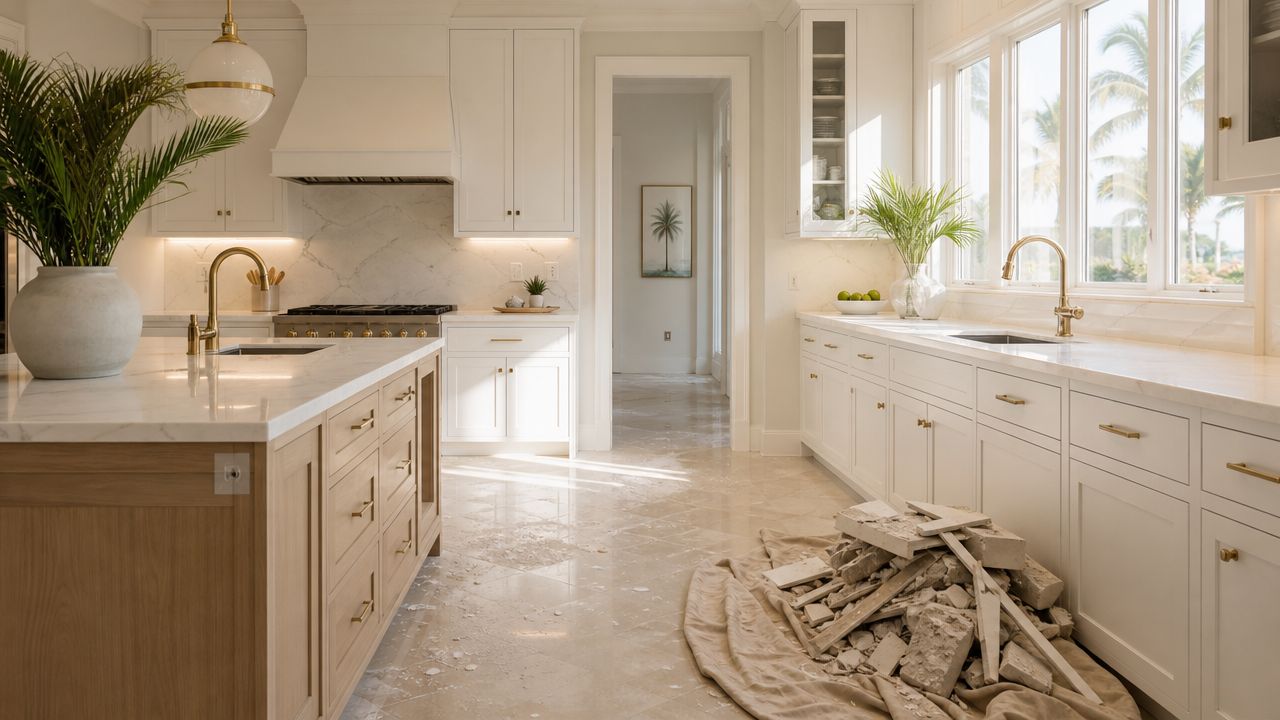
Heavy debris is only half the job
The scale of this waste is often underestimated. The U.S. Environmental Protection Agency says construction and demolition debris reached 600 million tons in the United States in 2018, more than twice municipal solid waste, and includes steel, wood products, drywall, and concrete. That matters at the homeowner level because even a single-room renovation can produce mixed, awkward, heavy material that regular curbside pickup won't touch.
In Palm Beach County, the mix is what creates the headache. Old ceramic tile from a Wellington bathroom hits differently than cardboard and cabinet wrap from a condo refresh in Juno Beach. One load is heavy enough to challenge your truck suspension. The other takes up more space than expected and blows around if it sits outside during a stormy afternoon.
Practical rule: If your cleanup plan only covers the pile you can see, it's incomplete. The dust is usually what keeps the house from feeling finished.
Fine dust spreads farther in Florida homes
South Florida homes add their own complications. Humidity makes dust cling to baseboards and textured walls. Sand already sitting in entryways gets mixed into renovation residue. If the AC runs during or after the job, dust settles onto vent covers, fan blades, and window sills fast.
That's why homeowners usually need two services, not one. Hauling removes the waste. Detailed post-renovation cleaning removes the film left behind. If you're dealing with the second part, this guide to cleaning new construction homes helps show what a proper final cleanup involves.
Assess Your Debris and Choose Your Path DIY or Pro Hauler
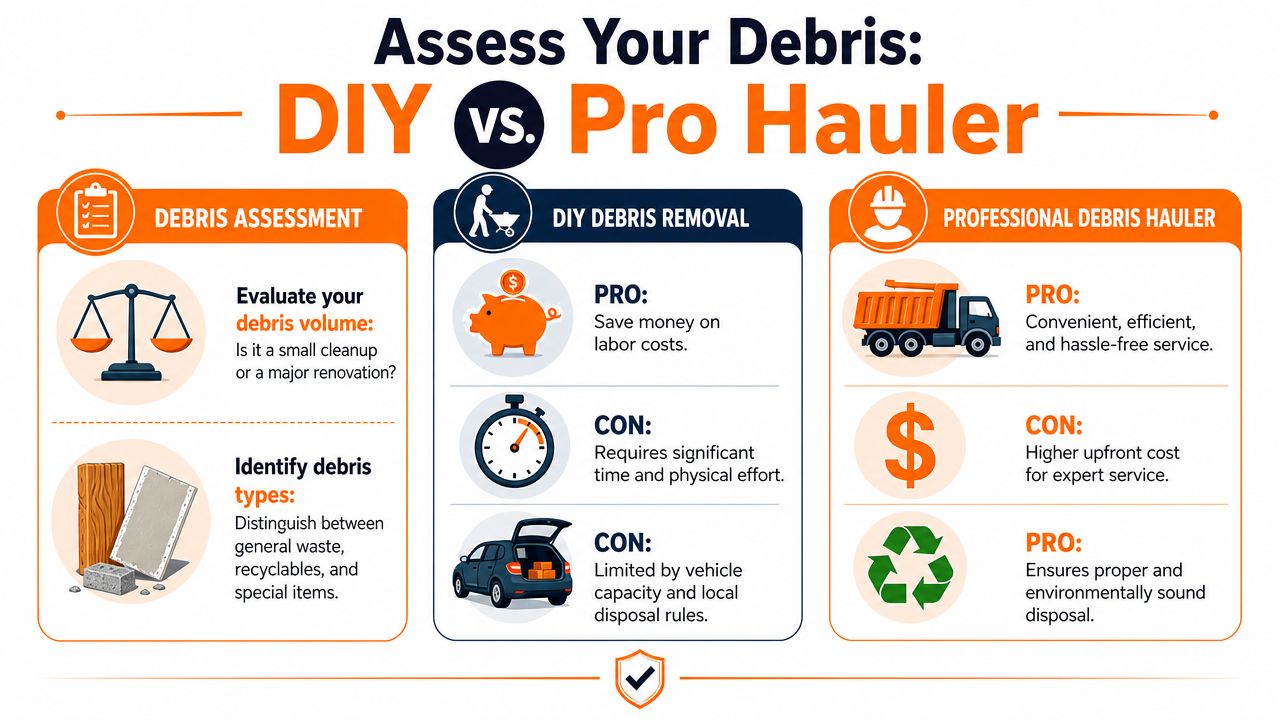
Some jobs are manageable with gloves, contractor bags, and a pickup. Others turn into a sweaty, expensive loop of loading, unloading, sweeping, and making disposal calls. The right choice depends on material type, volume, access, and how quickly you need your house back.
Start with a rough debris estimate
A practical sizing rule for residential renovation work is 1-3 cubic yards of debris per 100 sq ft of renovated area, according to the EPA guidance on sustainable management of construction and demolition materials. It's not perfect, but it helps you decide whether you're looking at a quick self-haul, a dumpster, or a scheduled hauling service.
That estimate gets more useful when you pair it with material type:
- Light but bulky debris like cardboard, trim, insulation wrap, and cabinet packaging fills space fast.
- Dense material like tile, concrete, mortar, and old countertops may look like a smaller pile but creates bigger hauling and disposal issues.
- Mixed renovation debris is the hardest category because it needs more sorting and usually costs more to handle properly.
When DIY makes sense
DIY works best when the pile is small, easy to load, and clearly non-hazardous. Think a vanity swap in a North Palm Beach condo, a few doors, broken shelving, and bagged demo scraps from one bathroom.
DIY usually fits if:
- Access is simple: Debris is already near the driveway or garage.
- Your vehicle can handle it: You're not trying to haul dense tile in a family SUV.
- You know the disposal rules: You've already checked where the material can go.
- Time isn't tight: You can spend part of a day loading and making drop-off runs.
The downside in Palm Beach County is predictable. Heat, humidity, afternoon rain, and HOA visibility all work against slow cleanup. A pile left on the side of the house for “one more day” tends to stay longer than planned.
Small debris piles invite procrastination. Heavy debris punishes it.
When a pro hauler is the better call
A professional hauler is usually the better route for full kitchen demos, flooring tear-outs, garage-staged debris after a multi-room update, or any project where materials are mixed and awkward. That's especially true when your timeline is tied to a move-in, an Airbnb handoff, or contractor punch-list work.
A useful way to think about it:
| Situation | DIY | Pro hauler |
|---|---|---|
| One small bathroom refresh | Often workable | Optional |
| Full kitchen gut | Usually frustrating | Better fit |
| Heavy tile or concrete | Risky for self-haul | Better fit |
| Tight HOA or condo access | Harder to manage | Often easier |
| Need it gone fast | Time-heavy | Faster |
If you're trying to estimate the cleanup side after the debris is gone, this post-construction cleaning calculator can help you think through the next phase before dust gets tracked through the rest of the house.
A Homeowner's Guide to Renting a Dumpster
For larger projects, a dumpster is often the cleanest solution. It keeps debris contained, reduces repeated trips, and gives contractors or homeowners one place to stage waste instead of spreading it across the driveway, side yard, and garage.
Questions to ask before delivery
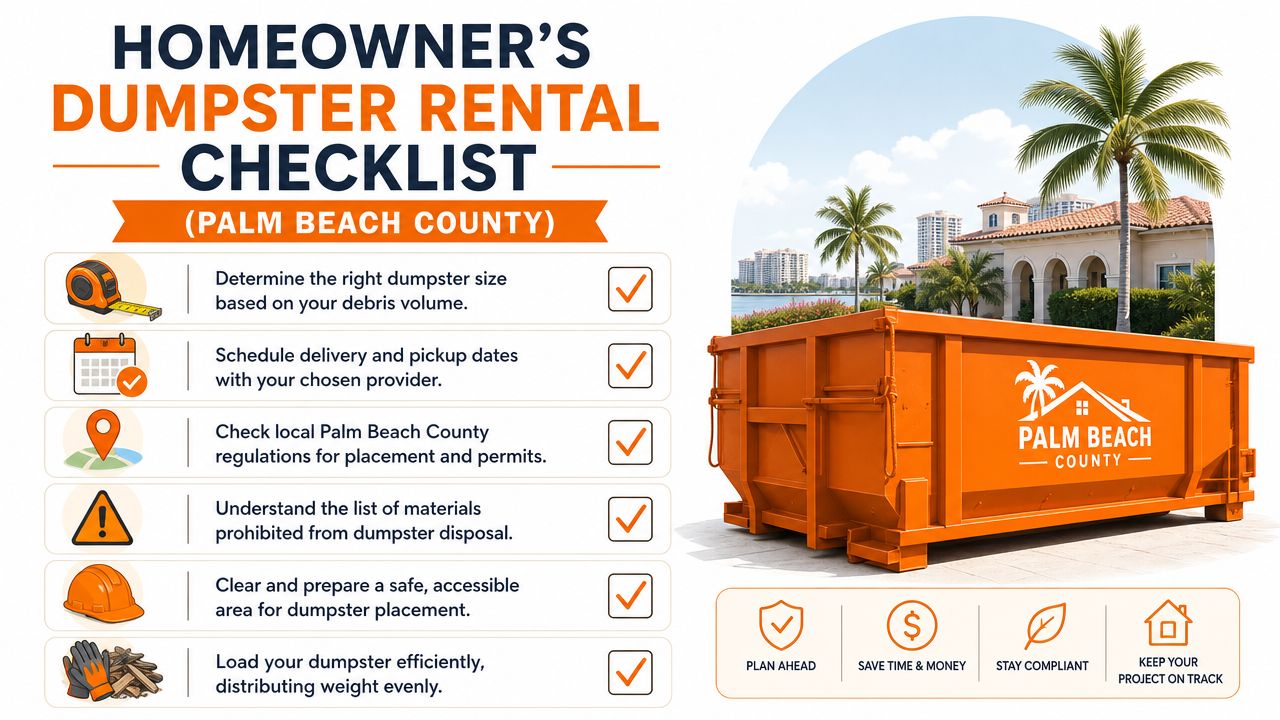
Before you book, get clear answers on the basics. In Palm Beach Gardens, Wellington, and many gated communities, placement rules matter almost as much as size.
Ask the rental company:
- Where can it sit: Driveway only, street placement, or other restrictions?
- What materials are restricted: Don't assume paint, adhesives, or treated materials can go in with everything else.
- How is pricing measured: Some jobs are more sensitive to weight, others to volume and labor.
- When is pickup scheduled: You don't want a full container sitting through a rainy stretch.
- What happens if you overfill: Overfilled dumpsters create both safety and pickup problems.
This video gives a useful overview before you place the order:
Local placement problems homeowners run into
The driveway sounds simple until you remember the practical details. Some Palm Beach County homes have narrow drive approaches, decorative pavers, low tree canopies, or shared access that makes delivery harder. In condo communities and tighter neighborhoods, HOA approval can matter even if the dumpster is only staying briefly.
A few practical checks help:
- Protect the surface: Ask what's placed under the dumpster if you're worried about pavers or finished driveways.
- Measure gate clearance: Backyard placement usually sounds easier than it is.
- Leave swing room: Delivery trucks need more room than most homeowners expect.
- Plan for rain: Wet debris gets heavier and messier fast.
A dumpster solves clutter only if the placement is legal, accessible, and timed to the work.
Why disclosure matters
The biggest mistake isn't ordering the wrong size. It's failing to identify restricted material before delivery. A helpful industry guide notes that licensed and insured handling reduces compliance risk because improper disposal can trigger fines, and poor upfront classification can delay crews or lead to special-handling charges if hazardous waste isn't isolated and disclosed, as explained in this construction debris removal cost guide.
If you're unsure about a material, ask before it goes in. That one phone call is a lot easier than unloading a container later.
Sorting Debris for Recycling and Safe Disposal in Palm Beach
Most homeowners think about hauling first and sorting second. On renovation jobs, that order usually costs more. Mixed piles are harder to load, harder to recycle, and more likely to create disposal problems when drywall, concrete, wood, metal, and leftover chemicals all end up together.
Sort on the ground, not at the end
A better approach is source separation. Keep separate piles or containers for clean wood, metal, concrete or masonry, cardboard, and residual mixed waste. Even in a modest home project, that simple setup makes the final haul easier and keeps recyclable material from getting contaminated.
One reason this matters: a common gap in construction debris removal advice is the lack of practical sorting guidance for concrete, wood, and metals on-site, even though the EPA emphasizes reuse and recycling to reduce disposal volume, as noted in this overview of source separation logistics for construction debris.
What usually belongs apart
In Palm Beach County homes, these categories are the ones worth separating early:
- Clean metal: Old fixtures, metal studs, fasteners, and framing offcuts.
- Concrete, tile, and masonry: Heavy and best kept out of lighter mixed debris.
- Untreated wood: Easier to recover when it isn't mixed with painted or wet material.
- Cardboard and packaging: Common after cabinet, appliance, or flooring installs.
- Residual waste: Dirty, broken, or mixed material that doesn't fit recovery streams.
Don't leave these mixed into general debris if you can help it:
- Paints and solvents
- Adhesives and chemical products
- Anything you suspect may need special handling
Palm Beach County safety note
For homeowners here, the local move is simple. If you have leftover paint, thinners, adhesives, or similar household hazardous waste from the remodel, check the Solid Waste Authority of Palm Beach County before disposal. Don't guess, and don't bury those items in general debris bags.
Keep the dangerous stuff visible and separate. Hidden chemicals are what slow a pickup or create disposal trouble later.
The cleaner your separation, the easier the haul and the less likely you are to pay landfill-style handling for material that could have been diverted.
The Final Step Professional Post-Construction Cleaning
Once the debris leaves, the house still isn't done. This is the part homeowners in West Palm Beach notice the next morning. White dust on dark floors. Grit on window tracks. Powder inside drawers that were closed during the work. A haze on baseboards and sills that keeps the room looking unfinished.
Hauling and cleaning are different jobs
Globally, construction and demolition waste made up 30-40% of the total solid waste stream in 2022, according to this construction waste statistics summary. At the household level, that scale shows up as specialization. The crew that removes broken tile and scrap lumber usually isn't the same crew that detail-cleans vent covers, cabinet shelves, grout haze, switch plates, and fine dust on ceiling fans.
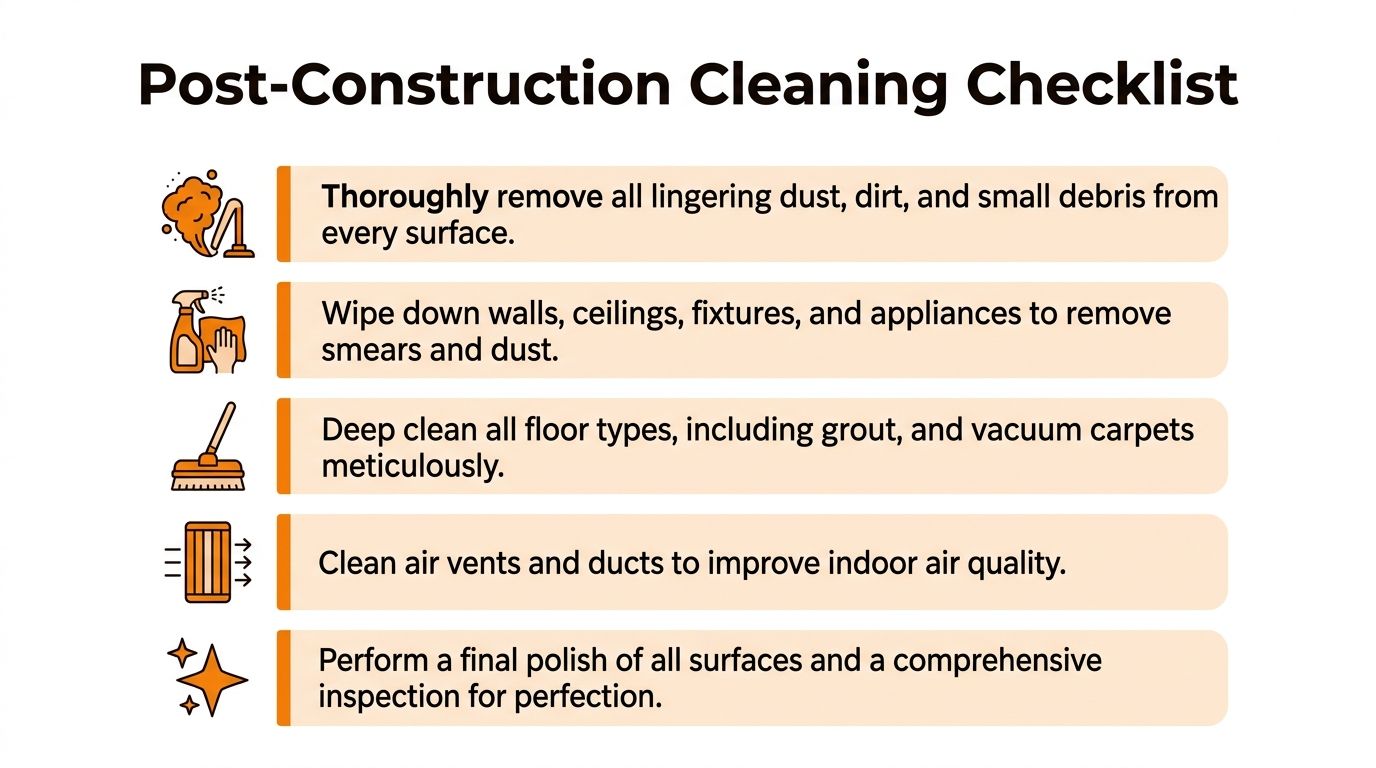
A proper post-construction clean usually includes:
- HEPA vacuuming: Floors, baseboards, sills, trim, vents, and soft surfaces.
- Damp wiping: To lift dust instead of spreading it.
- Detail work: Inside cabinets, around hinges, on door frames, and along ledges.
- Floor-specific cleaning: Especially important for tile, grout lines, and hard floors that show residue fast.
- Final inspection: Looking for film in changing light, not just visible scraps.
What to ask before hiring a cleaning crew
In Palm Beach County, ask direct questions. Do they handle drywall dust specifically? Do they clean inside cabinets and closets after construction? Will they address vent covers, window sills, and baseboards where fine dust settles after the AC has been running?
One local option for that final phase is post-construction cleaning through Sunset Shine Home Cleaning, which focuses on residential cleanup after renovations and build work.
If the room looks clean but your sock bottoms turn white, the cleanup wasn't finished.
A strong hiring checklist is simple: ask about tools, ask about scope, ask what's included beyond floors and counters, and make sure the crew understands South Florida homes. Humidity grabs dust. Sand at the thresholds makes floors abrasive. Coastal air leaves residue on fixtures. The final cleaning has to account for all of it.
If your remodel is finished but the house still feels dusty, cluttered, or not ready to enjoy, book help for the last step. Sunset Shine Home Cleaning provides post-construction cleaning in West Palm Beach and across Palm Beach County so your renovation feels complete. Call 561-408-4020 or book online at sunsetshinehomecleaning.com.