
For natural cleaning products for home use in Palm Beach County, you're probably not looking for another vague DIY list. You want a home that feels clean, safe, and under control, even when bathroom ceilings spot up from humidity, sand keeps showing up on tile, and coastal air leaves a film on fixtures.
For homeowners, renters, Airbnb hosts, and property managers around West Palm Beach, Jupiter, Delray Beach, and nearby communities, the goal is simple. Keep the home guest-ready, family-safe, and easier to maintain without using harsh products where they aren't needed.
Table of Contents
- What Natural Cleaning Products Really Mean for Your Palm Beach Home
- The Pros and Cons of Going Green in a High-Humidity Climate
- Decoding Labels and Sourcing Effective Products
- DIY Recipes vs Professional Cleaning for Local Grime
- How We Use Natural Cleaning Products in Your Home
- Your Questions Answered and How to Get Started
What Natural Cleaning Products Really Mean for Your Palm Beach Home
In Palm Beach County, the same home can deal with ceiling mildew in the guest bath, salty residue on exterior-facing glass, and fine AC dust settling on vents and sills. That mix changes how smart homeowners choose cleaning products.
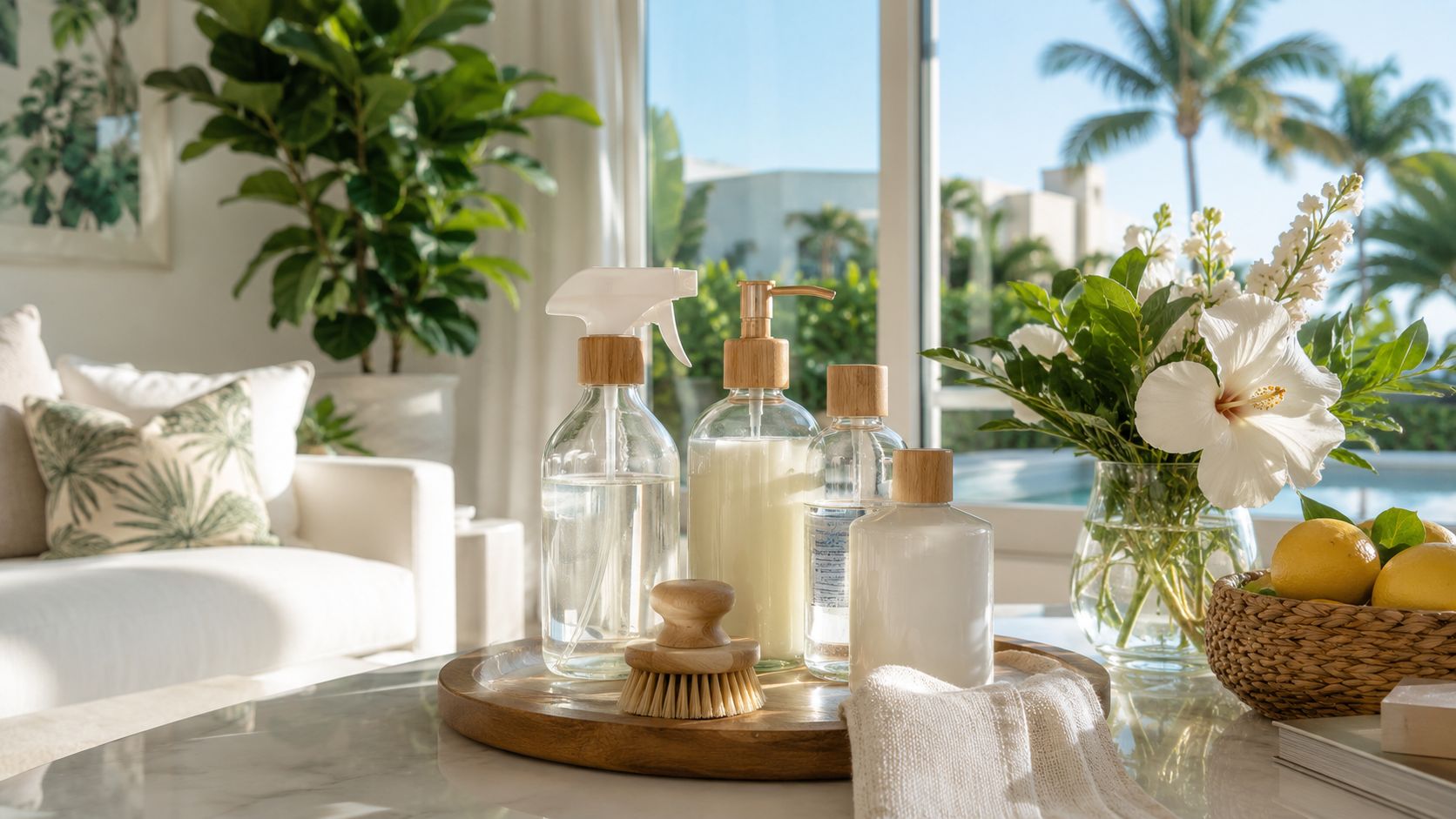
Natural does not mean one thing
A lot of labels sound reassuring, but natural isn't a technical safety or performance standard. The American Cleaning Institute explains that consumers shouldn't assume a product is safer or more effective just because it says natural, and should review ingredient-level safety information instead.
That matters in real homes around West Palm Beach and Palm Beach Gardens. One bottle may be fine for a quick wipe of painted baseboards, while another may struggle on shower buildup or leave streaks on glossy cabinet fronts.
Practical rule: Judge a cleaner by its active ingredients, concentration, and surface fit. Don't judge it by leaf graphics on the label.
What matters more in local homes
For Palm Beach County homes, product choice comes down to a few practical questions:
- Surface safety for stone counters, sealed wood, shower glass, chrome, and painted trim
- Residue control on floors that already collect sand, pollen, and rainy-season grit
- Air quality comfort in homes with AC running most of the year
- Performance on soap scum, kitchen grease, and repeat moisture in bathrooms
A cleaner that works in a dry climate on one surface may not be the right call here. In Wellington and Royal Palm Beach, we see larger family homes where bathroom rotation is constant. In Juno Beach and Boca Raton coastal properties, fixtures and glass often need more attention because the air itself leaves a trace behind.
The useful definition of natural cleaning products for home use isn't "plant-based equals perfect." It's choosing lower-impact products that still match the job, the room, and the finish you're cleaning.
The Pros and Cons of Going Green in a High-Humidity Climate
The appeal of greener cleaning products is easy to understand in South Florida. Windows stay shut for AC, pets nap on tile all day, and families want a clean home that doesn't smell harsh right after service.
Where greener products help
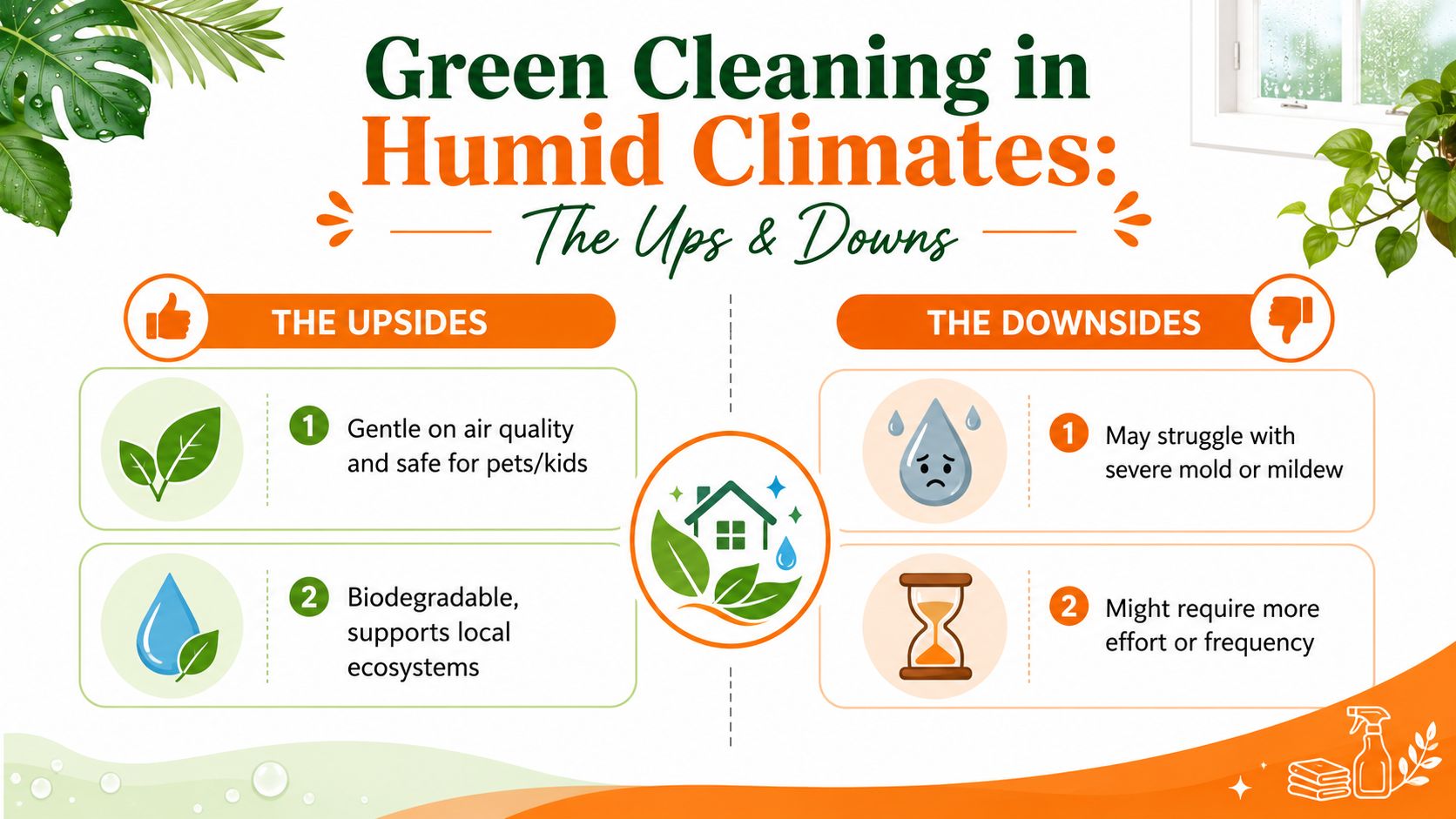
The EPA notes that some conventional cleaning products can emit volatile organic compounds, and that greener products are formulated with low VOC content and may use renewable, biobased solvents such as citrus, seed, or pine oils, as outlined in the agency's guidance on identifying greener cleaning products.
In practical terms, that can be a good fit for homes where the air circulates indoors most of the day.
- Bathrooms and bedrooms benefit from products that don't leave an aggressive chemical smell hanging in closed rooms.
- Pet households often prefer lower-odor cleaning routines around bowls, crates, and nap spots.
- Frequent maintenance cleans work well with gentler products because surfaces are being cared for regularly instead of being hit only after heavy neglect.
If humidity is a constant battle in your home, it's also worth understanding what causes humidity in a house so the cleaning plan and moisture control plan work together.
Where they fall short
This is the part a lot of articles skip. Greener products aren't magic, and common DIY versions often run out of steam on South Florida buildup.
In Palm Beach County bathrooms, mildew spotting on ceilings and upper grout lines keeps coming back because the environment feeds it. In beach-area homes, salt-air film can cling to metal and glass. In vacation rentals, kitchen residue after back-to-back stays usually needs more than a mild spray and a paper towel.
A product can be the safer choice for routine maintenance and still be the wrong choice for a neglected shower, greasy stovetop, or heavy turnover clean.
The trade-off is usually time and frequency. Lighter products often do well when the home is already on a consistent cleaning schedule. They do less well when a room has been allowed to build up through humid months, storm season traffic, or repeated short-term rental use.
That doesn't mean green cleaning isn't effective here. It means the job has to match the chemistry, the dwell time, and the surface.
Decoding Labels and Sourcing Effective Products
The fastest way to shop smarter is to ignore the front label for a moment. Turn the bottle around and look for the active ingredients, the intended use, and whether the product is meant for cleaning, sanitizing, or disinfecting.
What to read on the bottle
If you're buying natural cleaning products for home use, start with these checks:
- Look for the active ingredient. "Fresh" and "botanical" don't tell you much. Hydrogen peroxide, citric acid, and alcohol do.
- Check whether it's a cleaner or a disinfectant. Many products remove visible soil but aren't meant to disinfect.
- Match it to the surface. Stone, wood, laminate, stainless, chrome, and glass don't respond the same way.
- Read dilution and dwell instructions. Even a good product underperforms if it's wiped off too fast.
For disinfection, concentration matters more than branding. Consumer Reports notes that safer disinfecting ingredients include hydrogen peroxide at least 3%, ethanol at least 70%, or citric acid at least 0.5%.
What local buyers often miss
A lot of retail products are fine for touch-up cleaning. They aren't always strong enough for a humid primary bath in Boynton Beach, a turnover kitchen in West Palm Beach, or sand-heavy floors in a Juno Beach rental.
Homeowners also run into trouble when they use one product for everything. Glass cleaner ends up on natural stone. Degreaser lands on a delicate finish. Vinegar goes on a surface that shouldn't get acid exposure at all.
For glass and mirror maintenance, especially in homes that pick up coastal haze or AC dust, it helps to compare options before you buy. This guide to eco-friendly glass cleaner gives a good starting point for what to look for.
The best bottle is rarely the one with the nicest label. It's the one with a clear active ingredient, realistic instructions, and a surface match that won't create a second problem.
DIY Recipes vs Professional Cleaning for Local Grime
DIY has a place. For light upkeep between visits, a simple homemade mix can help keep fingerprints, splash marks, and everyday dust from piling up.
A simple recipe for light daily messes
For a basic wipe-down, many homeowners use a mild mix built around castile soap and water for counters, cabinet exteriors, and other washable surfaces. That kind of cleaner can be useful for quick maintenance if you test first and avoid soaking finishes.
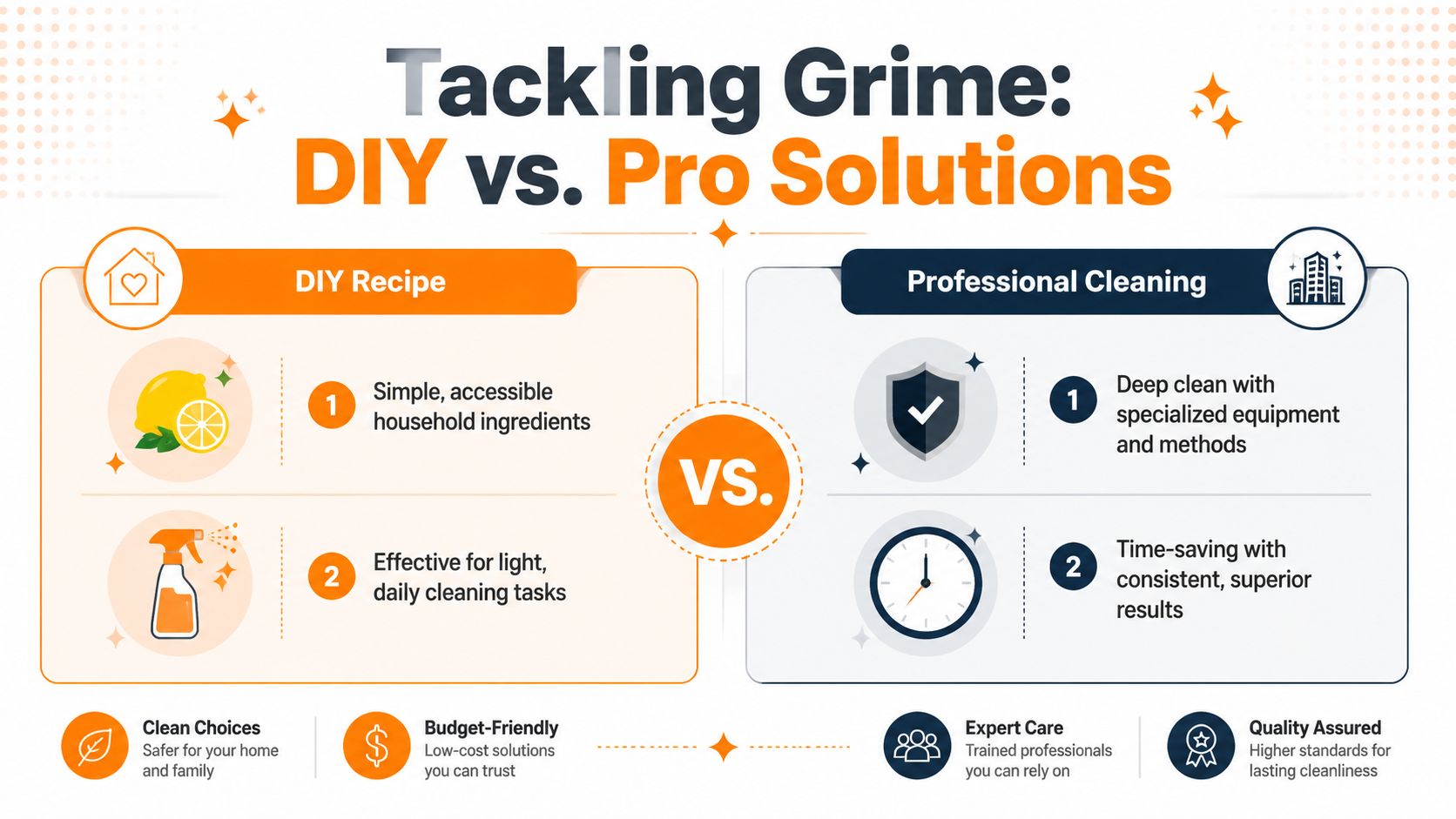
The problem starts when a light cleaner gets assigned a heavy-duty job.
Where DIY goes wrong in Palm Beach County
University extension guidance points out that DIY cleaner performance depends heavily on surface and soil type, and warns that ingredients such as vinegar can damage certain finishes if used carelessly, with rinsing and application method also mattering to avoid problems, as noted in this homemade cleaner guidance from the University of Arkansas System Division of Agriculture.
That warning shows up in local homes all the time.
A common example is stone. In Wellington and Palm Beach Gardens homes, it's not unusual to see marble or similar stone in baths or kitchens. A vinegar-based DIY spray may seem harmless, but acidic products can be a bad fit for that kind of surface. The counter might look clean in the moment and still lose its finish over time.
Another example is rental turnover grime. In West Palm Beach Airbnb kitchens, the issue usually isn't one spill. It's stacked residue: cooking film on cabinet faces, fine dust around vents, splash marks near backsplashes, and tracked-in grit by the entry.
Here's the side-by-side reality:
| Task | DIY approach | Professional approach |
|---|---|---|
| Light counter wipe | Works if the surface is compatible | Works, with the right product for the finish |
| Shower soap scum | Often slow and repetitive | Better results when chemistry and tools match buildup |
| Coastal glass film | May streak or smear | Better when residue is broken down in the right order |
| Sand and rainy-season dirt on floors | Can push grit around | Better with proper removal before wet mopping |
If the surface is expensive, porous, polished, or already showing wear, guessing is risky.
DIY is useful for maintenance. It isn't always the right answer for mildew-prone bathrooms, post-storm dust, or neglected buildup that needs a reset without damaging the home.
How We Use Natural Cleaning Products in Your Home
The strongest case for natural cleaning products for home care isn't marketing. It's daily use in real houses where families, guests, and property managers want a clean result without unnecessary harshness.
The market reflects that shift. The global natural household cleaners market was valued at USD 6.97 billion in 2024 and is projected to reach USD 13.28 billion by 2030, with an 11.1% CAGR, and surface cleaners accounted for 55.3% of revenue in 2024. That lines up with what we're seeing locally. Homeowners aren't asking for fringe products. They're asking for safer, effective maintenance that makes sense for everyday living.
What We See in Palm Beach County Homes
In Palm Beach County homes, the repeat issues are familiar:
- Bathroom humidity shows up on ceiling corners, grout lines, and around exhaust covers
- Salt-air residue affects coastal fixtures, shower glass, and window tracks in communities closer to the water
- Sand and fine grit collect along baseboards, under dining chairs, and near sliders after beach days
- AC dust settles on vents, returns, and high ledges because systems run so much of the year
- Turnover kitchen buildup hits short-term rentals fast when check-out and check-in windows are tight
One option for homeowners who want this style of service done for them is eco-friendly house cleaning services, which focuses on routine and deep residential cleaning using lower-toxicity products and brought-in supplies.
What's Included
For our local clients, a typical service may include:
- Bathrooms with attention to soap scum, sinks, counters, mirrors, toilets, and exterior fixtures
- Kitchen degreasing on counters, stovetop exteriors, sinks, cabinet fronts, and appliance exteriors
- Floors vacuumed and mopped with special attention to sand-prone zones
- Dust removal from window sills, blinds, reachable vents, ledges, and baseboards
- High-touch areas such as handles, switches, and frequently used surfaces
- Add-ons like inside oven, inside fridge, inside cabinets, wall spot cleaning, pet-hair focus areas, and interior windows
In West Palm Beach move-out cleans, bathrooms often look passable from the doorway. Up close, the trouble is behind the toilet base, around fixture edges, and along the lower trim where moisture and residue settle.
A quick look at our approach helps make that practical:
Schedule, Clean, Inspect, Enjoy
The process is straightforward.
- Schedule by booking online or calling for a time window that fits your home, rental, or turnover needs
- Clean with supplies brought in and a checklist matched to the service type
- Inspect with a quick quality check before wrapping up
- Enjoy coming back to a home that feels reset, not just lightly tidied
Your Questions Answered and How to Get Started
If you're close to booking, the usual hesitation isn't whether cleaning helps. It's whether the products will be strong enough, whether the crew will understand South Florida surfaces, and whether the service will cover the details that matter.
Micro FAQ
How long does it take?
It depends on the size, condition, and service type. A recurring clean moves differently than a deep clean, move-out, or turnover.
Are supplies included?
Yes. Cleaners arrive with supplies, which is especially helpful when the job calls for surface-safe products instead of one all-purpose bottle.
Can you handle tough mildew without loading the house with harsh smells?
For many homes, yes. The key is matching the product and method to the level of buildup instead of assuming one natural product solves every bathroom issue.
What if I have pets or beach sand everywhere?
That's normal in this area. Homes with pets, tile, and steady foot traffic need extra attention around edges, under furniture lines, and at entry points.
South Florida humidity shows up in grout lines and bathroom ceilings surprisingly quickly. Beach homes from Juno Beach down through Boca Raton also collect residue that inland homes don't deal with as often.
Pricing and next step
Pricing depends on bedrooms, bathrooms, square footage, condition, and add-ons. Most clients request a custom estimate.
If you need natural cleaning products for home care applied by a local team that understands Palm Beach County conditions, this is the right time to book. Whether you're dealing with bathroom humidity, salt-air film, sandy floors, move-out stress, or an Airbnb turnover clock, getting the right service now is easier than chasing the same buildup all month.
Book your cleaning with Sunset Shine Home Cleaning – your trusted house cleaning service in West Palm Beach. Call 561-408-4020 or book online at sunsetshinehomecleaning.com.