
A candle tips during dinner, wax lands on the floor, and someone reaches for a butter knife before the spill has even cooled. In a Palm Beach County home, the safest answer to how to get candle wax off hardwood floor is usually slower: harden thick wax, lift it with plastic, and treat only the remaining film with gentle heat.
This guide is for homeowners, renters, Airbnb hosts, and property managers who need a clean, guest-ready, deposit-ready, or walkthrough-ready floor without turning a small spill into a refinishing project. It also helps with the conditions common from West Palm Beach to Boca Raton, including humid rooms, salt air near coastal properties, sand tracked through beach homes, and older floors with open seams.
Table of Contents
- Why Candle Wax Damages Hardwood and What to Do First
- Hardening and Scraping Fresh Wax Spills
- Using Gentle Heat to Remove Thin Wax Residue
- Handling Layered Buildup and Residue in Floor Seams
- Protecting Your Hardwood Finish After Wax Removal
- When to Call a Professional Cleaner for Wax Removal
Why Candle Wax Damages Hardwood and What to Do First
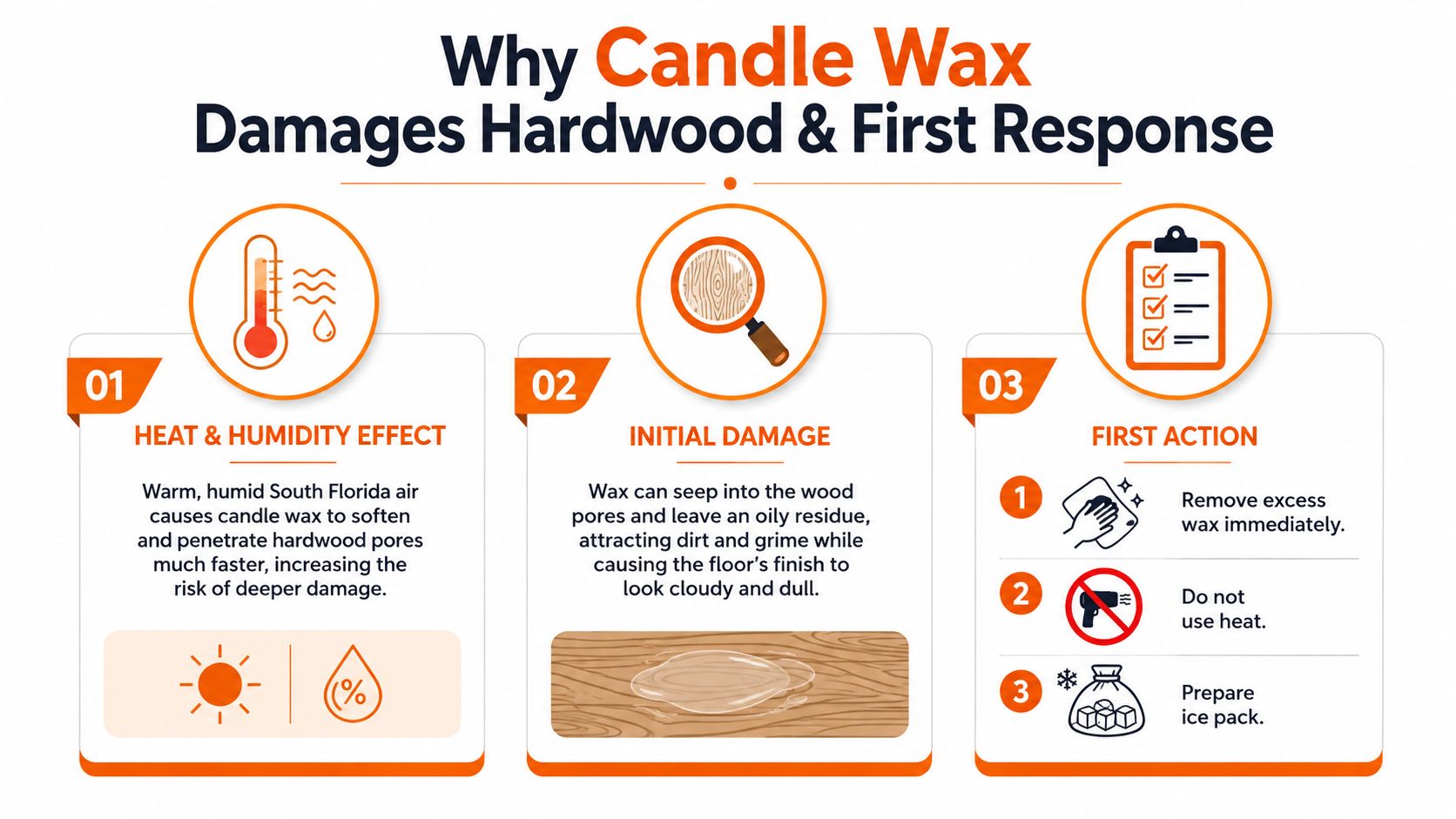
In a Palm Beach County home, the same spill can behave differently from one room to another. Humidity may soften residue and help it settle into textured grain or open seams. Salt air near coastal properties can also leave finishes more vulnerable, while air conditioning may harden the surface before deeper wax is removed. Oak, maple, and older reclaimed hardwood floors each respond differently, so avoid treating a finished floor like unfinished wood.
Paraffin-style wax softens with heat. Remove thick deposits only after they have hardened, and use gentle reheating only for a thin surface film. Scrubbing while the wax is tacky spreads it across the finish and presses it farther into the grain. HGTV's hardwood wax-removal guidance supports a cool-first approach followed by careful lifting.
Make the decision before touching the spill
- Fresh, thick pool: Let it cool completely, then use ice and plastic.
- Hard, raised drip: Test whether it lifts cleanly with a plastic scraper.
- Thin cloudy film: Apply a hairdryer on medium heat briefly, then wipe at once.
- Wax in seams or textured boards: Stop before scraping aggressively.
- Layered, discolored, or recurring residue: Professional stripping may protect the finish better than repeated spot cleaning.
If the wax has bonded to an older finish, DIY removal can leave a dull patch. For routine care afterward, follow a hardwood floor cleaning resource suited to the existing coating, especially in humid or salt-air rooms.
Hardening and Scraping Fresh Wax Spills
The cold method is the safest starting point for most thick spills. Put ice in a sealed bag or hold an ice cube carefully against the wax, keeping meltwater away from the boards.
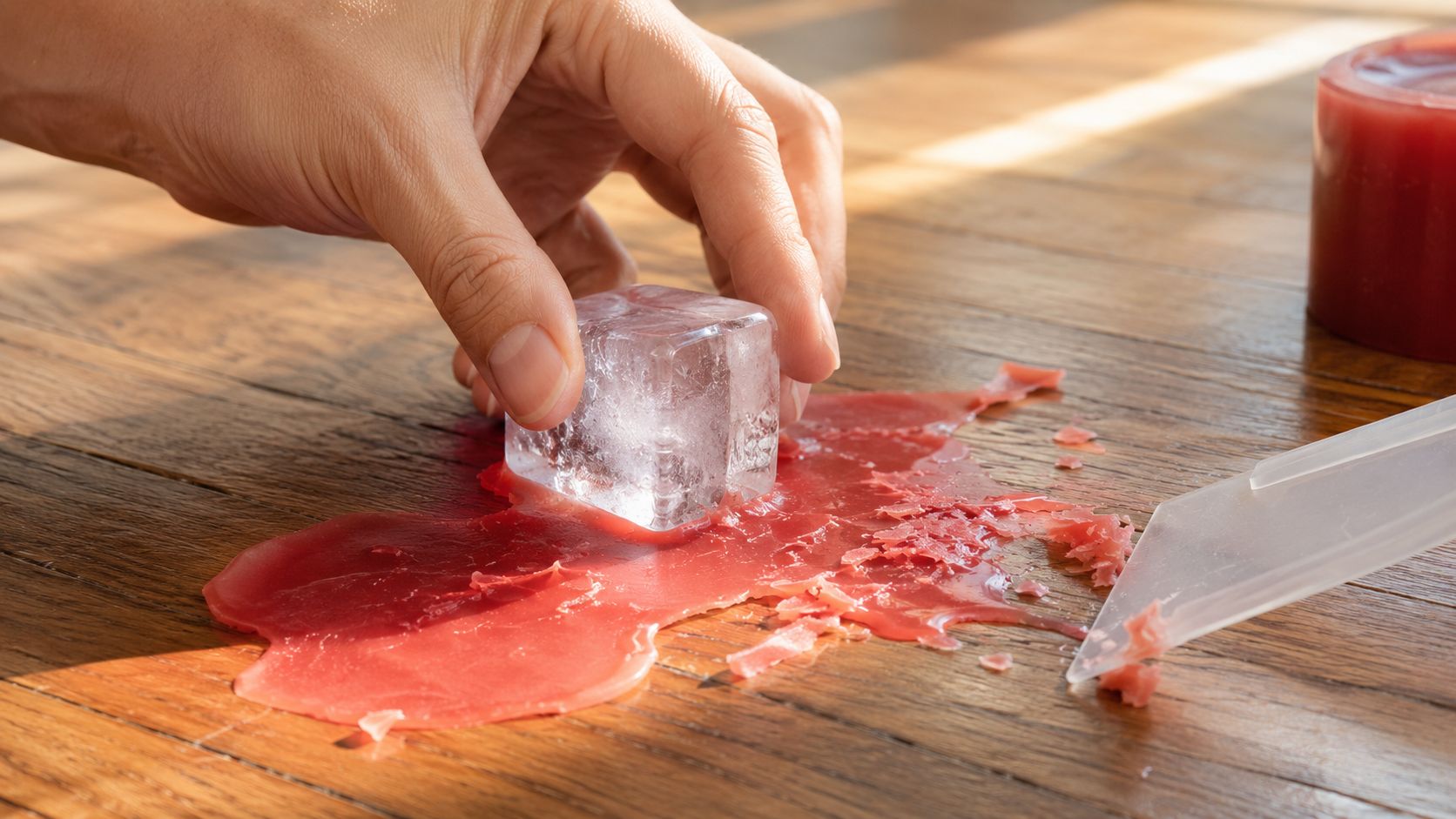
HGTV advises holding an ice cube on the wax for about 30 seconds, or 1 to 2 minutes when the spill is still fresh and malleable, before lifting it with a credit card or plastic razor blade. The goal is brittle wax that breaks away, not soft wax that smears.
Lift the bulk without scratching
Start at the outside edge and slide an old credit card, plastic razor blade, or plastic putty knife underneath the spill. Keep the tool nearly flat and use short movements along the grain. Metal putty knives, butter knives, and razor blades can gouge softer wood and scratch polyurethane finishes.
Pick up fragments instead of sweeping them across the floor. A dry microfiber cloth or vacuum with a soft floor attachment works well once the larger pieces are gone. Don't add water until you're sure all loose wax has been removed.
If wax has fallen between older, wider planks, don't force a sharp tool into the gap. Remove only what sits above the seam, then leave embedded material for a professional assessment if the boards are unfinished, damaged, or visibly separating.
For another practical walkthrough, see how to clean spilled wax.
Using Gentle Heat to Remove Thin Wax Residue
After scraping, a dull or slightly oily film may remain. Gentle warmth can loosen surface residue on smooth engineered hardwood or sealed oak, where the wax has not entered open grain. In humid South Florida rooms, softened residue may spread quickly, so work in a small area and wipe as soon as it loosens.
Use a hairdryer on medium heat, held about 12 inches above the floor, and keep it moving. This hairdryer method for hardwood wax residue warms a thin film without concentrating heat on one spot.
Work in small, visible sections
Test an inconspicuous area first. Warm a small patch until it looks slightly glossy, then wipe immediately with a clean, lint-free microfiber cloth. Turn to a clean part of the cloth as wax transfers, and follow the grain instead of spreading residue across the board.
Avoid heat guns, irons, and high settings. Older West Palm Beach and Lake Worth homes may have wax-based coatings or aged finishes that soften unevenly. Newer floors can cloud, discolor, or lose sheen when overheated. Salt air can also leave finishes more vulnerable around worn edges.
Keep the hairdryer moving.
South Florida air-conditioning circulates dust that settles along board edges and beneath furniture. If gentle warmth does not lift the film, stop raising the temperature. The residue may be bonded to an aging finish, or the finish itself may be damaged. Professional stripping is safer for widespread dullness, softened coatings, or wax lodged in textured wood.
Handling Layered Buildup and Residue in Floor Seams
A single drip is a spot-cleaning job. Layered buildup around a dining table, fireplace, or repeated Airbnb staging area is a stripping problem, particularly when wax has bonded with old polish or settled into hand-scraped texture.
Neutral mineral spirits can be appropriate for larger buildup, but solvent work needs control. Professional guidance recommends treating small sections of roughly 1 foot by 3-4 boards, working along the grain while the area is wet, and wiping repeatedly until a clean rag shows no discoloration. Another detailed method recommends about 1 quart per 25 square feet, 5-10 minutes of dwell time, and a 24-48 hour drying period before sanding, as described in this hardwood wax-stripping guide.
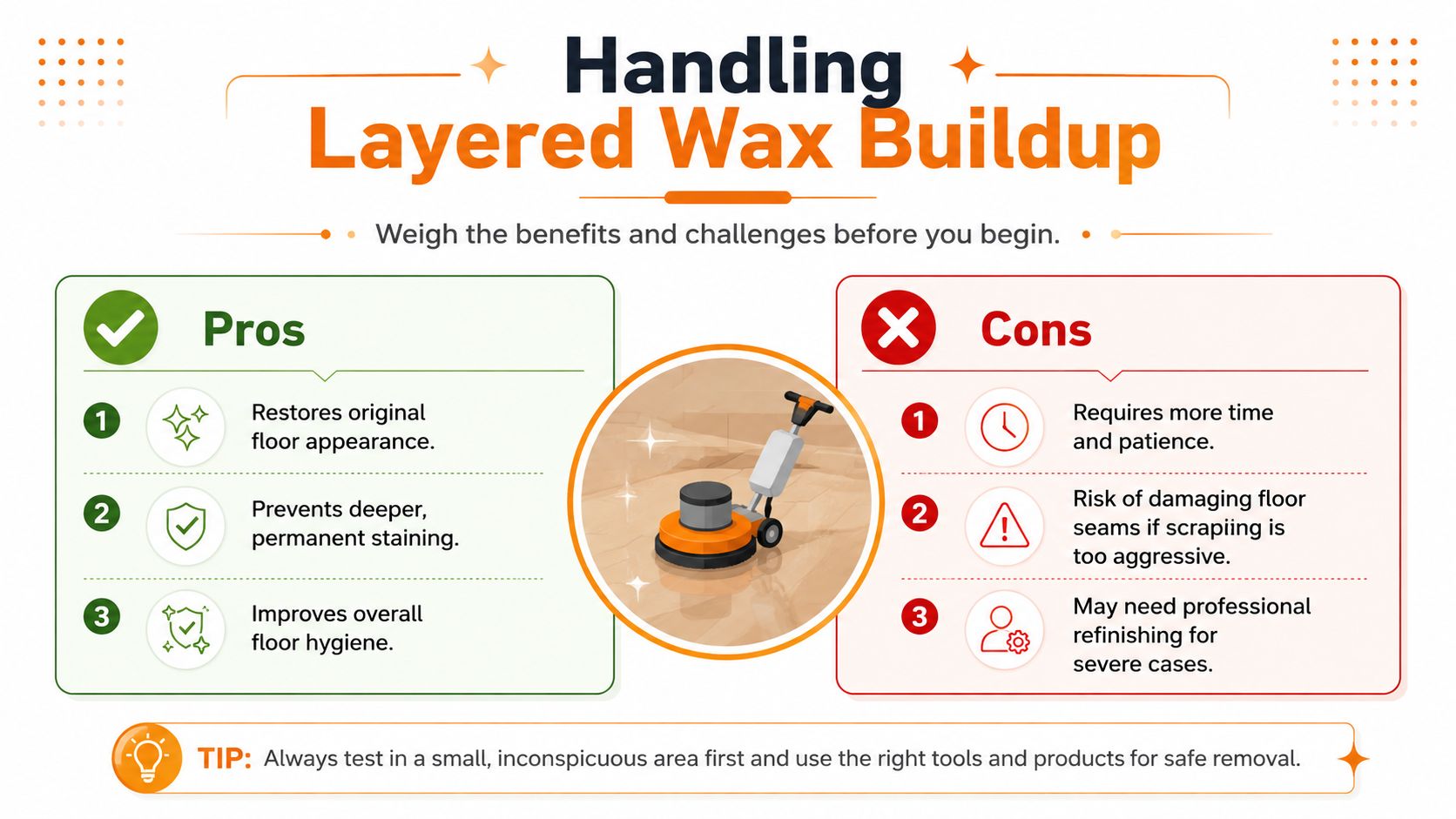
The main risk is too much moisture and solvent
Over-wetting can push softened wax into seams and increase refinishing risk. Don't flood the boards, pour solvent directly onto the floor, or run a buffer before identifying the finish.
Stop DIY work if you notice:
- Clouding: The finish turns milky after warming or solvent use.
- Discoloration: The cleaned patch no longer matches surrounding boards.
- Recurring wax: Residue reappears after wiping because it remains below the surface.
- Seam contamination: Wax is packed between boards or inside textured grooves.
- Finish failure: The coating is already peeling, worn through, or visibly damaged.
Recent practical guidance increasingly favors ice, plastic tools, low heat, and small-section testing over steam, high heat, acetone, vinegar, or aggressive scraping. That gentler approach matters in humid Palm Beach County homes, where spreading residue can create a larger floor-care problem than the original candle spill. A professional discussion of hardwood wax removal risks offers useful context for deciding when the floor needs more than a household wipe-down.
Protecting Your Hardwood Finish After Wax Removal
Wax removal doesn't automatically restore the finish. The treated spot may look dull because the surrounding floor has a different level of polish, or because the wax had been masking wear in the coating.
Dry-buff gently with a clean microfiber cloth first. If you use a floor refresher or polish, test it in a hidden area and confirm that it matches the existing finish. High humidity can affect curing, and salt air from coastal properties between Jupiter and Boca Raton can contribute to finish wear on floors near open windows and entry doors.
For a deeper understanding of stripping and sealing practices, professionals may find it useful to browse hard floor sealing course from Star Cleaner Australia Pty Ltd. Homeowners should avoid applying a new coating over uncertain residue. If the surface is varnished or already failing, review how to remove varnish from wood before applying any product.
Prevention is easier than correction:
- Use candle holders with drip-catching rims.
- Place candles on trays, not directly on hardwood.
- Choose flameless LED candles in high-traffic areas or homes with children and pets.
When to Call a Professional Cleaner for Wax Removal
DIY is reasonable for a small, fresh drip on a sound, sealed floor. Call for help when wax covers multiple boards, has entered unsealed or damaged wood, or sits on a finish that's already cloudy, peeling, or worn through.
A professional can distinguish removable surface residue from a coating that needs stripping or refinishing. Commercial-grade products, controlled buffer equipment, and finish-aware techniques reduce the chance of spreading wax into seams. That assessment is especially valuable for older Palm Beach County properties, textured floors, coastal condos, and rental homes between guests.
A cleaning provider can also address the surrounding work that often exposes the residue in the first place, including deep cleaning, move-in and move-out cleaning, Airbnb turnover, property-management make-ready service, and post-construction floor care. In a West Palm Beach move-out clean, the wax spot may be only one part of what a landlord checks, alongside kitchen floors, bathroom edges, baseboards, and dusty AC vents.
South Florida humidity shows up in grout lines, bathroom ceilings, and floor seams faster than many residents expect. When the wax doesn't lift cleanly, protecting the finish matters more than forcing a quick result.
Sunset Shine Home Cleaning handles detailed floor care as part of deep cleaning, move-in and move-out service, Airbnb turnovers, property-management cleans, and post-construction cleanup across Palm Beach County. Visit Sunset Shine Home Cleaning, or call 561-408-4020 to request an assessment for candle wax, buildup, or a full home clean in West Palm Beach, Palm Beach Gardens, Jupiter, Juno Beach, North Palm Beach, Riviera Beach, Royal Palm Beach, Lake Worth, Boynton Beach, Delray Beach, Boca Raton, Wellington, Westlake, Loxahatchee, Loxahatchee Groves, or The Acreage.