
Hardwood floor cleaning in Palm Beach County isn't the same job it is in a dry climate. If you're looking at dull boards after a week of beach sand, AC dust, and sticky humidity, the fix is less about fancy products and more about using the right method for South Florida homes.
Homeowners, renters, Airbnb hosts, and property managers usually call when they want floors that look clean now and still hold up later. Around West Palm Beach, Palm Beach Gardens, Jupiter, and Boca Raton, that matters because moisture, tracked-in grit, and fast turnovers can wear hardwood down faster than people expect.
Table of Contents
- Why Your Hardwood Floors Need Special Care in Florida
- Know Your Finish Before You Clean
- Your Daily and Weekly Hardwood Cleaning Routine
- Deep Cleaning and Avoiding Common Mistakes
- When DIY Is Not Enough Book Professional Hardwood Cleaning
- Hardwood Floor Care Questions from Florida Homeowners
Why Your Hardwood Floors Need Special Care in Florida
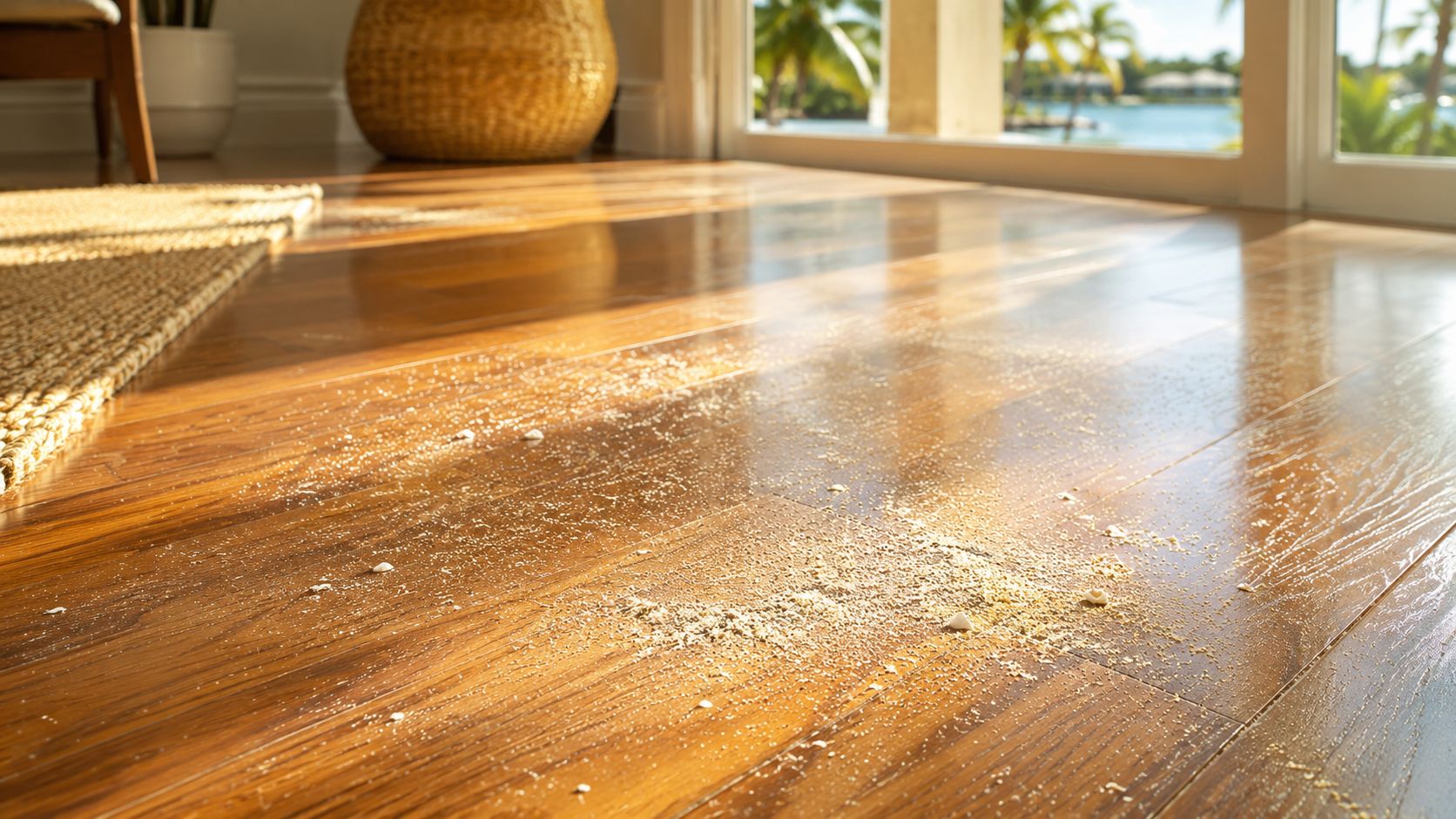
In Palm Beach County homes, hardwood usually gets hit from three directions at once. Fine sand comes in from patios, pool decks, and beach bags. Humidity hangs in the house even with the AC running. Near the coast, salt air settles onto surfaces and leaves floors looking dull faster.
What makes Florida harder on wood
Sand is the obvious one. In Juno Beach and Jupiter homes, it gets tracked from the front entry to the kitchen in one afternoon, and every step grinds it into the finish.
Humidity is quieter, but it does more damage. South Florida homeowners need to keep indoor humidity below 50% with a dehumidifier to help prevent warping and mold issues under or around flooring, according to Paul Davis on moisture control in Palm Beach County homes.
Practical rule: If your floor feels slightly sticky, looks hazy by the sliders, or seems harder to keep clean during rainy season, the problem often starts with moisture in the house, not just dirt on the boards.
If your home always feels muggy, it helps to understand what causes humidity in a house, especially in older West Palm Beach properties and coastal condos where airflow and AC performance aren't always ideal.
What we see in Palm Beach County homes
A few local patterns show up again and again:
- Coastal homes: Salt film near entry doors and balcony sliders leaves a flat, tired look on finished wood.
- Family homes in Wellington and Royal Palm Beach: Darker walk paths from kitchen to living room where socks, paws, and snack crumbs build up.
- Airbnb properties near the water: Sand packed into corners, under dining chairs, and along baseboards after short guest stays.
- Older homes in West Palm Beach: Boards that react fast to moisture because the finish is thin, worn, or inconsistent.
Good hardwood floor cleaning here is mostly preventive. Remove grit early, control moisture, and don't let a quick mop job turn into a finish problem.
Know Your Finish Before You Clean
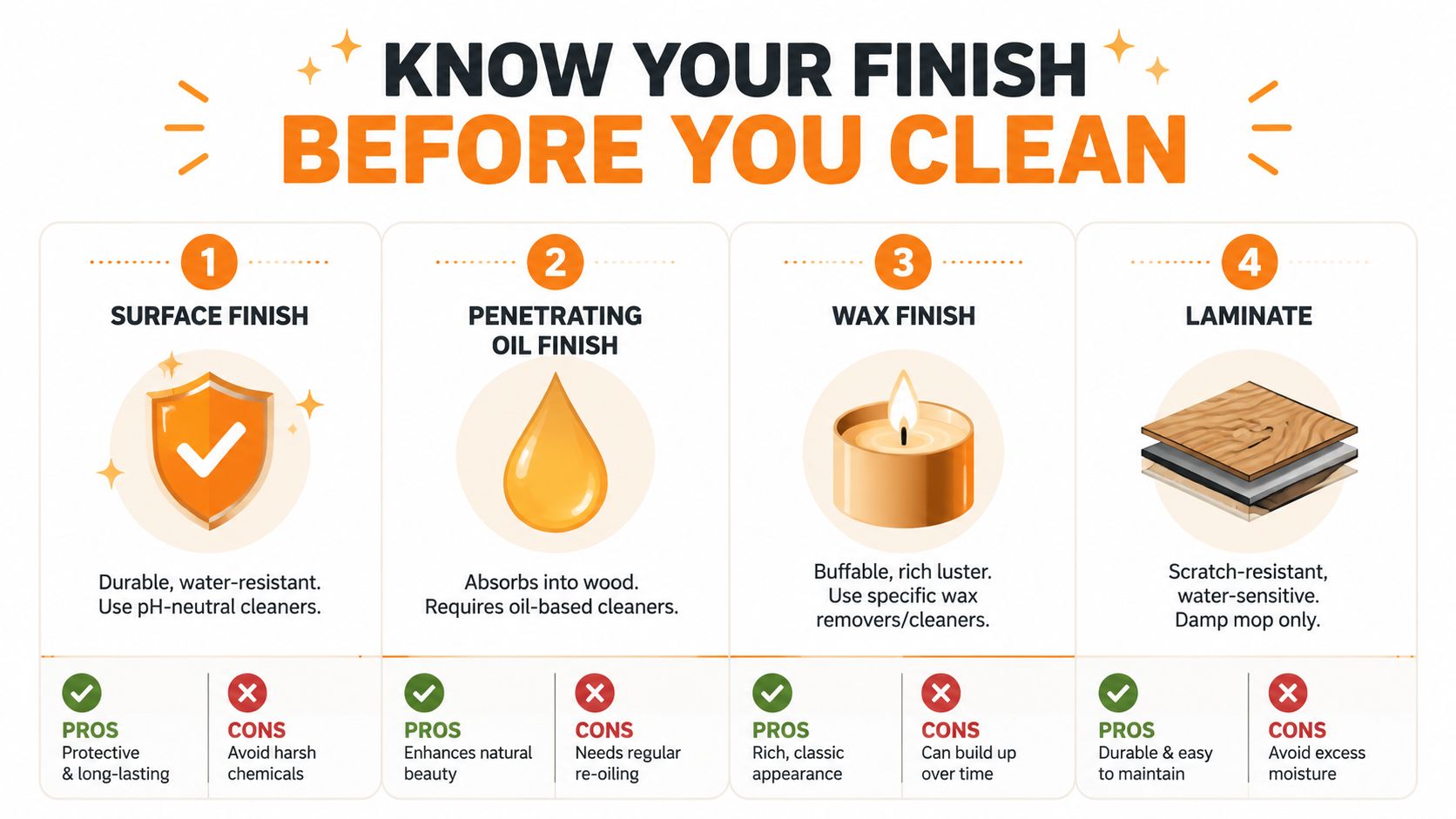
The first question isn't what cleaner to buy. It's what kind of floor you have.
A sealed floor in a newer Boca Raton or Palm Beach Gardens home can usually handle a proper wood-floor cleaner and a lightly damp microfiber mop. An older floor in a century home near downtown West Palm Beach may react very differently. That's where a lot of online advice goes wrong.
The two categories that matter most
Most homeowners only need to separate floors into two practical groups:
| Floor type | What it usually looks like | Cleaning approach |
|---|---|---|
| Sealed hardwood | Surface has a protective finish and often a slight sheen | Use low moisture and a pH-neutral wood floor cleaner |
| Unsealed or unfinished hardwood | Looks flatter, absorbs moisture faster, often found in older homes | Avoid excess moisture entirely and clean very carefully |
The neglected part of this conversation is unsealed wood. Guidance for it is often missing, even though it's common in older homes. The NWFA emphasis noted in this discussion of unsealed hardwood care is that unsealed wood requires avoiding excess moisture entirely, and that nuance is missing in 90% of general cleaning guides.
A simple test before you mop
Try a small water-drop test in a hidden area.
Place a tiny drop of water on the floor and watch it briefly. If it beads on top, the floor is likely sealed. If it darkens or absorbs quickly, treat it as unsealed until a flooring pro says otherwise.
If you misread the finish, you can turn routine cleaning into avoidable damage. The wrong product isn't just ineffective. It can leave residue, dull the surface, or push moisture where it doesn't belong.
Local field note
In older West Palm Beach and Lake Worth homes, it's common to find mixed conditions in the same house. The hallway may still be sealed, while a bedroom addition or patched area behaves more like unfinished wood. That's why one-size-fits-all hardwood floor cleaning advice usually falls apart in real homes.
For sealed floors, the routine is simple. For unsealed floors, keep moisture to a minimum and work in small sections with care. If you're not sure which you have, assume the more cautious method first.
Your Daily and Weekly Hardwood Cleaning Routine
The best routine in South Florida is the one that keeps sand moving out before it starts acting like sandpaper. A floor that's cleaned lightly and often usually looks better than one that gets soaked with the wrong product every couple of weeks.
Daily work that saves the finish
For day-to-day upkeep, remove dry debris first. Use a soft-bristled broom, a microfiber dust mop, or a vacuum with a hardwood attachment. Avoid beater bars because they can scratch the surface, as noted by Capitol Carpet & Tile in its Florida floor maintenance guidance.
Daily is ideal for high-traffic spots, especially:
- Front entries: Beach sand and rainy-season grit collect fast.
- Kitchen lanes: Crumbs and fine debris get pressed in by foot traffic.
- Slider areas: Tropical pollen, dust, and outdoor residue build up around tracks.
- Pet zones: Hair drifts into corners and grabs onto sticky residue.
If you want a safer product approach for routine mopping, this guide to the best non-toxic floor cleaner is a good place to compare options.
Weekly mopping that doesn't over-wet the floor
For sealed hardwood, the reliable weekly method is straightforward. Bruce recommends sweeping or vacuuming first, then using a pH-neutral wood floor cleaner with a microfiber mop, moving gently with the grain. The mop should be only lightly damp, not wet, and spills should be cleaned right away. Bruce also advises avoiding oil-based soaps, vinegar, ammonia, and steam mops, while keeping indoor humidity between 35% and 55% in general wood-floor care. That full method appears in Bruce's hardwood floor care guide.
A good mop pass should leave the floor barely damp for a moment, not shiny-wet.
What we see in local homes
In Palm Beach County, the trouble spots aren't usually the middle of the room. It's the edges. Under breakfast stools, around bed frames, near balcony doors, and along baseboards where sand and AC dust collect in a thin gritty line.
A smart weekly routine handles those zones on purpose. That's the difference between floors that look clean at a glance and floors that still look good under afternoon sun.
Deep Cleaning and Avoiding Common Mistakes
A floor can be swept regularly and still not be clean. Residue builds slowly. You see it most in houses with kids, pets, vacation traffic, or older products that were meant to "add shine" and ended up leaving a film.
When hardwood starts looking cloudy even after mopping, deep cleaning needs a different approach. The goal isn't more liquid. It's better soil removal with less moisture.
What deep cleaning should look like
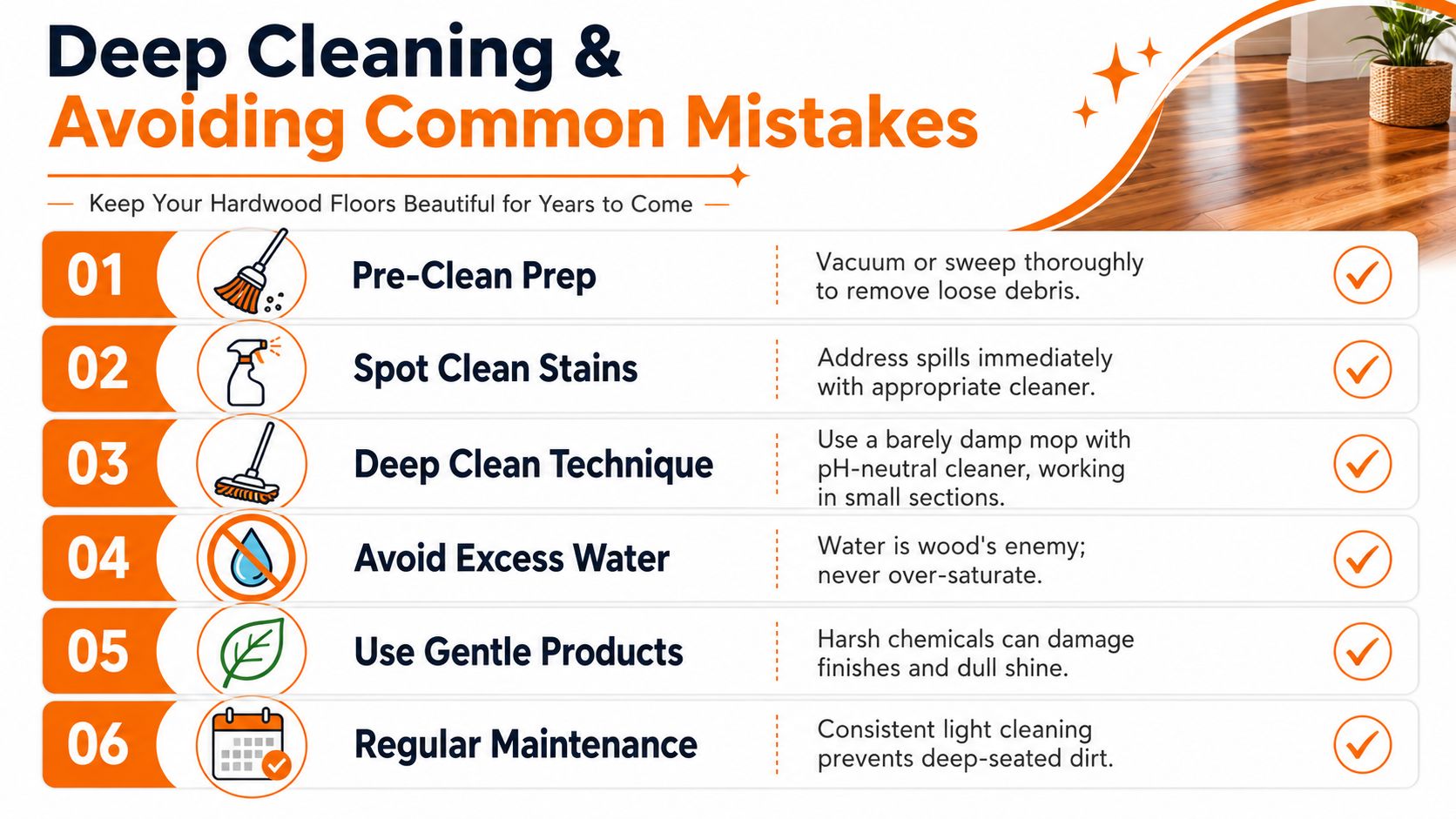
Deep cleaning works best when you break it into passes instead of flooding the room.
- Dry remove first: Sweep or vacuum thoroughly so loose grit doesn't drag.
- Treat sticky spots separately: Use a small amount of appropriate cleaner on a microfiber cloth.
- Work in sections: Mop a small area at a time with a lightly damp pad.
- Watch the edges: Baseboards, corners, chair legs, and thresholds usually need hand detail.
- Dry as you go if needed: If a section stays wet, you're using too much product.
This is also where maintenance timing matters. Bona notes that hardwood floors typically need refinishing every 7 to 10 years depending on wear, and a typical wood floor can be sanded 4 to 6 times over its lifespan in Bona's wood floor cleaning guidance. Good cleaning helps stretch that cycle instead of burning through it early.
Two mistakes that ruin floors in Florida
The first is vinegar. People like it because it sounds natural and cheap. The problem is the finish doesn't care whether the damage came from a store bottle or a pantry bottle.
The second is steam. In a humid place like Palm Beach County, adding heat and moisture to seams and cracks is asking for trouble. The NWFA and other industry institutes ban steam cleaners entirely, and recent consumer surveys showed a 35% increase in hardwood floor damage claims linked to steam mop misuse in IFCII's routine maintenance guidance for wood flooring.
Steam may make a floor look clean for the moment, but the risk is what gets pushed below the surface.
Local field note
In Delray Beach rentals and coastal condos, one of the most common deep-clean problems is product buildup layered over sand scratches. Owners think the floor needs more shine. What it usually needs is the old residue removed safely so its original finish can show again.
If you have unsealed wood, be even more conservative. Barely damp microfiber and careful spot work are safer than broad mopping.
When DIY Is Not Enough Book Professional Hardwood Cleaning
You clean the floor on Saturday, and by Monday the traffic lanes still look cloudy. The edges stay dark. Bare feet pick up grit again near the sliders, even after a careful pass with microfiber. In Palm Beach County, that usually means the problem is no longer routine maintenance. It is buildup, embedded soil, or detail work that needs more time and better technique than a quick home clean can give.

Signs it's time to bring in help
A professional visit makes sense when you notice patterns like these:
- Persistent dullness: The floor still looks flat after correct routine cleaning and dry dust removal.
- Move-out or turnover pressure: Entries, kitchens, and hallways need to look clean fast for landlords, guests, or showings.
- Built-up residue: Cleaner film, sticky patches, and grime along baseboards need slow detail work.
- Humidity-related housekeeping issues: Fine dust sticks to the surface, soil smears instead of lifting, and the floor never looks clean for long.
Professional wood floor cleaning is recommended every 12 months, and maintenance every 12 to 18 months may save thousands of dollars in premature refinishing or replacement costs, according to COIT's wood floor cleaning recommendations.
If you're comparing services, review a detailed professional deep cleaning checklist for Palm Beach County homes. The useful part is not the marketing. It is seeing whether the crew plans to clean edges, corners, baseboards, and the areas around furniture where hardwood usually looks worst.
What the process looks like
For booked service in West Palm Beach and across Palm Beach County, the process should be straightforward. Start with a quote and a time window. Then the crew works through the room with the right dry removal, careful damp cleaning where appropriate, and detail work along edges and transitions. A final check should catch residue, missed corners, and the sandy tracks that tend to hide near doors.
A short walkthrough helps show what proper floor care looks like in practice:
What else is usually included
Homeowners booking floor-focused service often ask for the surrounding detail at the same appointment, because clean hardwood looks better when the nearby surfaces are handled too:
- Bathrooms
- Kitchen degrease
- Floors
- Baseboards
- Dust removal
- Mirrors
- High-touch disinfecting
- Cabinet exteriors
- Sinks, counters, and fixtures
- Window sills
Common add-ons include inside oven, fridge, cabinets, wall spot cleaning, pet-hair focus areas, and interior window cleaning.
Pricing depends on bedrooms, bathrooms, square footage, condition, and add-ons. Most clients request a custom estimate.
Hardwood Floor Care Questions from Florida Homeowners
Can you clean hardwood during rainy season
Yes, but entry areas need more attention. In Palm Beach County, rainy season brings in grit and moisture together, so the first job is removing debris fast and keeping wet shoes, umbrellas, and damp mats from sitting on the wood.
Why do my floors look worse near sliding glass doors
That area usually gets a mix of humidity, outdoor residue, and repeated foot traffic. In coastal homes, it's also where salt film and fine sand show up first, especially if the door track isn't cleaned often.
What about pets
Pet hair isn't the biggest problem on hardwood. Grit stuck to paws is. Regular dry pickup matters more than over-mopping, and accidents should be cleaned immediately so moisture doesn't sit.
When do West Palm Beach clients usually call for help
A common one is before a landlord walkthrough, before guests arrive, or after months of "good enough" maintenance stopped working. In West Palm Beach move-out cleans, bathrooms and kitchens get the attention first, but floors, baseboards, and edges are often what change the overall impression of the space.
South Florida humidity shows up in wood floors faster than expected. Beach sand and AC dust don't look dramatic, but they wear finishes down little by little.
Book your cleaning with Sunset Shine Home Cleaning – your trusted house cleaning service in West Palm Beach. We serve West Palm Beach, Palm Beach Gardens, Jupiter, Juno Beach, North Palm Beach, Riviera Beach, Royal Palm Beach, Lake Worth, Boynton Beach, Delray Beach, Boca Raton, Wellington, Westlake, Loxahatchee, Loxahatchee Groves, and The Acreage. Call 561-408-4020 or book online at sunsetshinehomecleaning.com.