
If you're staring at a fresh renovation in West Palm Beach and wondering why every surface still feels gritty, you're dealing with dust from construction, not normal house dust. In Palm Beach County homes, humidity, year-round AC, coastal air, and tracked-in sand make post-renovation cleanup a different job than a quick wipe-down.
This guide is for homeowners, renters, Airbnb hosts, and property managers who want the space ready to live in. Not "looks clean from the doorway" clean. Clean enough that vents stop blowing dust, cabinet shelves feel smooth, and your new floors don't turn chalky again by the next morning.
Table of Contents
- The Hidden Challenge After Your West Palm Beach Renovation
- Essential Supplies and Safety Gear for a Proper Cleanup
- A Top-to-Bottom Strategy for Tackling Dust From Construction
- Cleaning the Hidden Dust in Vents, Cabinets, and HVAC Systems
- Know When to Skip the DIY and Call Sunset Shine
The Hidden Challenge After Your West Palm Beach Renovation
The room looks finished until late-day sun cuts across the floor and shows what the remodel left behind. A pale film sits on countertops, fan blades, baseboards, window tracks, and the inside lip of cabinet doors. In West Palm Beach, that dust rarely stays light and fluffy for long.

Coastal humidity changes the cleanup. Fine drywall and grout dust pick up moisture from the air and turn chalky, then tacky. On painted trim, it can feel almost sticky. On quartz and polished tile, it leaves a dull film that smears if you attack it with a dry cloth. On black fixtures, mirrors, and glass near sliders, it often mixes with salt residue and pollen, so what looks like simple dust wipes into a gritty haze instead of lifting cleanly.
Air conditioning makes the problem bigger. If the system ran during sanding, cutting, or punch-out work, returns can pull that powder in fast and push it back through the house. I see this all the time in Palm Beach County homes. The kitchen renovation is done, but dust shows up on bedroom dressers, closet shelves, and bathroom vent covers on the other side of the property. Homeowners think the contractor missed one room. In reality, the AC helped spread fine particles everywhere.
What We See in Palm Beach County Homes
In coastal condos near Juno Beach and North Palm Beach, dust tends to settle as a thin gritty film on glass, stainless, and painted millwork because it combines with salt in the air. In larger homes in Wellington, Royal Palm Beach, and The Acreage, the bigger issue is reach. Long hallways, open floor plans, and constant cooling cycles carry dust far past the work zone and into rooms no one thought needed attention.
The part that frustrates people most is how deceptive it looks. A white countertop can seem clean while vent louvers, cabinet interiors, textured baseboards, and dark wood floors still hold a heavy layer of fine powder. Standard dry dusting advice from drier climates often makes that worse here because it skims the surface and sends the lightest particles back into the air.
A practical write-up on how post-project dust can remain a health concern after the work looks finished makes the same point many homeowners learn the hard way. Visible debris is only part of the cleanup. The harder part is removing the fine dust that settled into vents, corners, and surfaces that grab moisture.
Before deciding whether this is a quick DIY wipe-down or a full-house reset, use this post-construction cleaning calculator for Palm Beach County homes to size up the job.
Essential Supplies and Safety Gear for a Proper Cleanup
A proper cleanup starts with the right gear. If you use the same feather duster, dry Swiffer, and bargain vacuum you use for weekly cleaning, you'll move fine dust around more than you'll remove it.

What belongs in your setup
- A sealed vacuum with a true HEPA filter: Fine renovation dust is too light for a weak machine with poor sealing. You need strong suction, brush attachments, and a unit that won't puff particles back into the room.
- N95 masks: Silica dust is one of the biggest health concerns in renovation cleanup. About 2.3 million workers were exposed to silica dust in the workplace, and over 500 construction workers are believed to die from silica exposure every year, with typical exposure limits around 0.1 mg/m³ according to Chart Industries' summary of silica dust hazards.
- Microfiber cloths in bulk: In Palm Beach County humidity, you burn through cloths fast because once they load up with dust, they smear.
- Damp-wipe buckets: One for cleaning solution, one for rinsing. That keeps you from redistributing the chalky residue.
- Soft brush attachments: Useful on vents, trim, door casings, plantation shutters, and textured surfaces.
- Disposable gloves and knee pads: Cleanup is hard on hands and knees, especially in bathrooms, around baseboards, and inside lower cabinets.
What usually doesn't work
A lot of generic advice online is written for dry climates. In South Florida homes, dry sweeping often leaves a paste-like line once humidity hits it, especially on tile edges and LVP seams.
Short version:
| Tool | Works well | Usually fails |
|---|---|---|
| HEPA vacuum | Fine drywall dust, vent covers, edges | Doesn't replace damp wiping |
| Damp microfiber | Counters, trim, cabinet shelves | Smears if cloth isn't changed often |
| Dry dusters | Quick pass on light debris | Pushes fine dust into air |
| Basic mop first | Almost never | Turns leftover dust into slurry |
Practical rule: If your cloth is leaving a pale film instead of lifting it, it's loaded. Swap it out.
If you want to compare your plan against a room-by-room service standard, this professional deep cleaning checklist is a useful benchmark. It shows how much detail a real reset takes once dust has settled into edges, vents, and cabinetry.
A Top-to-Bottom Strategy for Tackling Dust From Construction
You finish a renovation, run the AC, and by late afternoon there is a pale film back on the dark furniture, the window trim, and the floor near the sliders. In West Palm Beach, that happens because post-construction dust does not stay loose for long. Humidity makes fine drywall powder cling to painted walls and trim, and the air handler can pull the lightest particles through the house before you ever get to the last room.
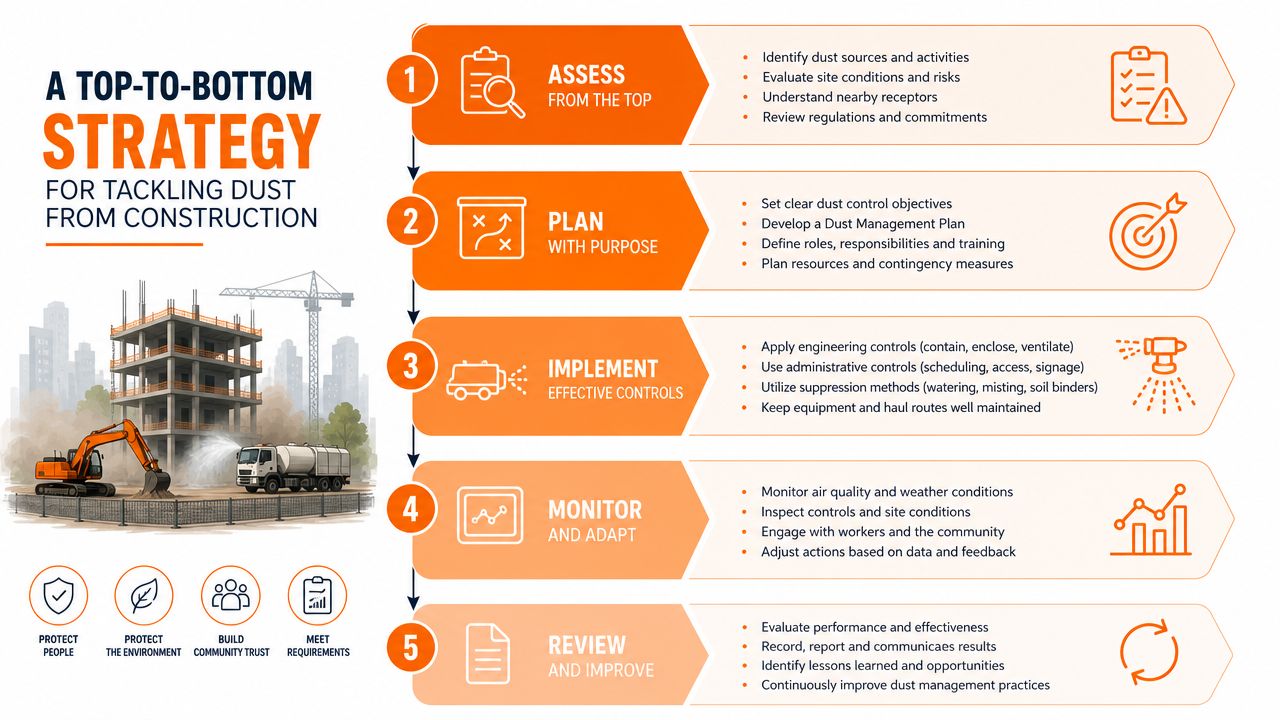
A workable cleanup follows gravity and airflow. Dust settles from the top down, then gets stirred back up by footsteps, ceiling fans, and AC cycles. If the order is off, you keep chasing the same residue.
Start with overhead dust
Handle ceilings, light fixtures, fan blades, tops of door frames, and upper trim before touching counters or floors. Use a HEPA vacuum with a soft brush so you lift the dust instead of flicking it into the air.
Textured ceilings need a lighter touch, especially after drywall or sanding work. Aggressive wiping can scar the finish and drop another round of grit across the room. This guide on how to clean textured ceiling surfaces without making a bigger mess is useful if the renovation left dust overhead.
In coastal homes, this upper pass matters even more. Fine dust mixes with moisture, a little salt in the air, and seasonal pollen. Once that blend sticks to ledges and textured paint, dry dusting usually smears it instead of removing it.
Clean surfaces in controlled passes
After the high work is done, move to walls, shelves, counters, baseboard tops, and horizontal trim. Vacuum first where you can. Then wipe with a damp microfiber cloth that is barely wet.
That moisture level makes or breaks the result. A dry cloth pushes powder around. A wet cloth leaves slurry in caulk lines, corners, and along paint edges.
Use a sequence that keeps the residue contained:
- Vacuum edges, corners, and baseboard tops
- Wipe flat surfaces with a folded damp microfiber cloth
- Turn the cloth often so you keep a clean face on the surface
- Repeat on dark cabinets, glossy counters, and glass where haze shows fastest
This is usually the point where DIY jobs start to drag. One room can look finished, then sunlight hits from another angle and shows handprints, swirl marks, and a chalk line you missed on the trim.
Leave floors for last
Floors collect everything you knocked loose above, plus whatever gets tracked from room to room during cleanup. In a house, foot traffic spreads fine dust fast, especially on tile grout lines, LVP seams, and along quarter round.
Work the edges first because that is where the heavier grit settles and packs in. Then vacuum the open floor slowly, with overlapping passes. Mop only after the vacuum has removed the dry material.
If you mop too soon, the dust turns into a paste. On South Florida tile, that paste likes to dry into a light border along edges and under cabinet kicks. On wood-look floors, it shows up as footprints and a cloudy film once the room dries.
A final check helps. Let the air settle, turn on the lights, and look across the floor from a low angle. In West Palm Beach homes, that last inspection usually tells you whether the room is clean or whether the AC has already started blowing hidden dust back out.
Cleaning the Hidden Dust in Vents, Cabinets, and HVAC Systems
A room can look finished by dinner, then the AC kicks on overnight and leaves a fresh film on the furniture by morning. In West Palm Beach, that usually means the dust was never only on the open surfaces. It settled inside supply covers, return grilles, drawer corners, shelf pin holes, and the cabinet voids above eye level. Add humidity, salt in the air, and seasonal pollen, and the dust grabs on instead of floating away cleanly.
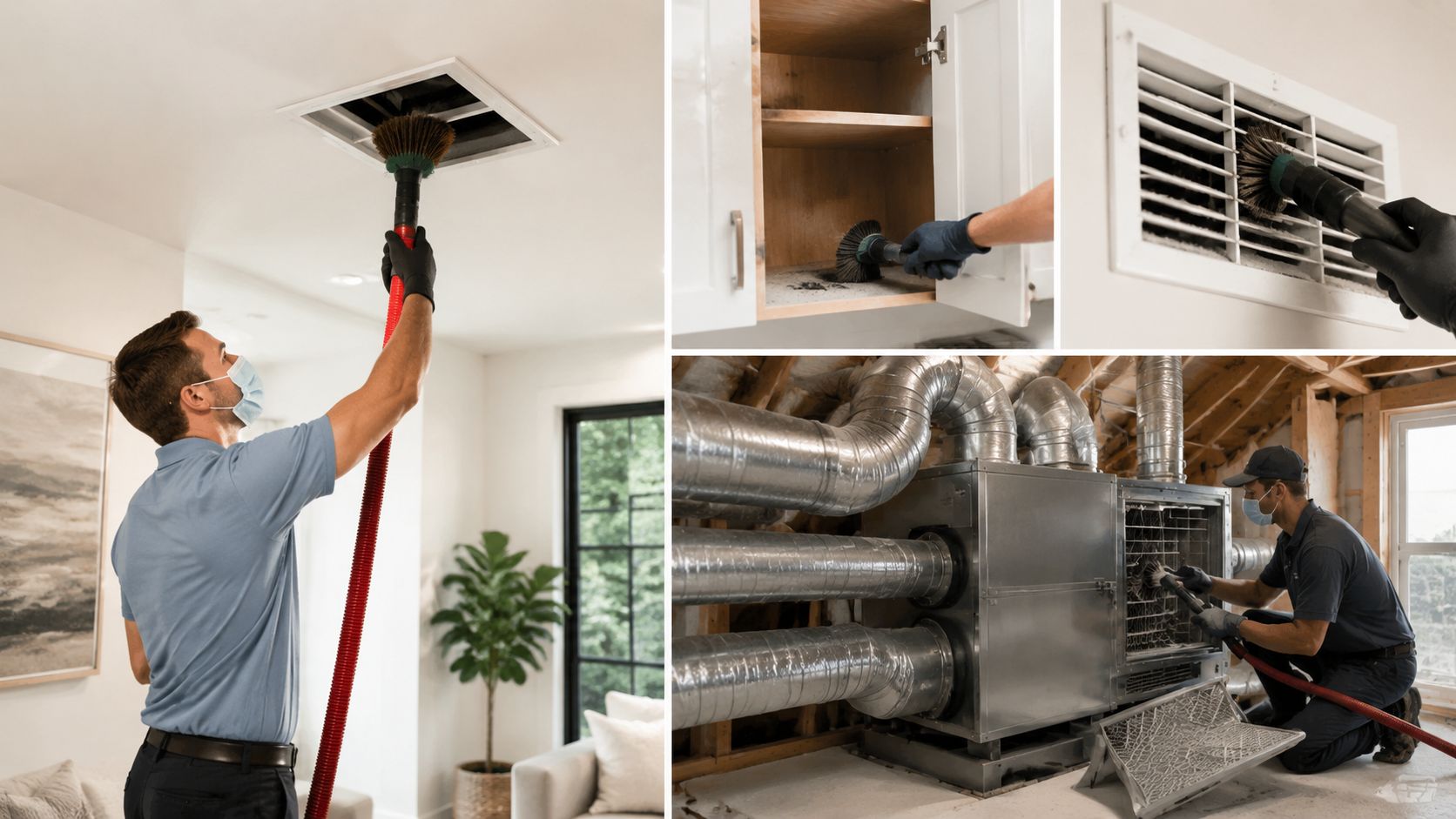
What gets missed most often
Cabinet interiors are high on the list. Fresh cabinets often look spotless on the outside, but the inside corners collect sawdust, drywall powder, and fine grit from installation. If you load dishes, pantry goods, or baby items too soon, that residue gets transferred right onto what you use every day.
Vents and returns are another common source of repeat dust. If the system ran during sanding, cutting, or texture work, fine particles were pulled into the return side and pushed back through the house. In South Florida, that dust can cling to the metal grille, the wall around it, and the first stretch of duct because the air is rarely completely dry.
Window channels and slider tracks also deserve attention. Near the coast, construction dust mixes with outdoor grit, pollen, and moisture. It packs into a stubborn line that dry wiping usually smears.
A better order for these hidden areas is:
- Remove and clean vent covers first
- Vacuum return grilles and the surrounding wall or ceiling area
- Empty cabinets and drawers before wiping them
- Hit shelf edges, closet ledges, and laundry-room storage
- Vacuum window tracks and slider channels before damp detail work
Why HVAC keeps recontaminating the house
The HVAC system spreads whatever the project leaves behind. That is the part many homeowners underestimate.
A new filter helps, but it does not fix dust already sitting on vent covers, around return openings, inside registers, or on surfaces the airflow keeps disturbing. In humid weather, the fine powder behaves more like residue than loose dust. Dry dusting advice that works in Arizona or Colorado often fails here because the material sticks, cakes in corners, and smears into a chalky film.
What you can usually handle yourself:
- Replace the HVAC filter after the project
- Wash or wipe vent covers on both sides
- Vacuum around return grilles with a brush attachment
- Clean inside drawers, shelves, and cabinet hinge areas before loading them
- Leave cabinets open for a while after cleaning so trapped dust and odor can air out
What often needs professional help:
- Dust that keeps showing up on furniture after you already cleaned
- Multiple rooms that were open during the renovation
- Returns and vents that are visibly loaded with fine white buildup
- A home with asthma concerns, pets, or small children
- Condos and occupied homes where the AC ran through most of the job
Fine white film reappearing after a day or two usually points to hidden reservoirs, not a missed tabletop.
Sunset Shine Home Cleaning handles this kind of post-construction detail work for homes, condos, rentals, and make-ready properties across Palm Beach County. That room-by-room reset matters because hidden dust rarely stays hidden once the air starts moving again.
Know When to Skip the DIY and Call Sunset Shine
Some renovation cleanup is manageable. A single bathroom refresh with contained work and no HVAC spread is one thing. A kitchen remodel, flooring project, or multi-room update is different.
If you're dealing with dust from construction in West Palm Beach, the hard part isn't finding the first layer. It's removing the second and third layers that keep settling from vents, trim, ledges, cabinet interiors, and floor edges. In humid weather, that fine dust sticks to surfaces instead of lifting cleanly, and every shortcut shows.
When hiring out makes sense
- You need the home move-in ready, not eventually clean
- The AC ran through the project
- You have kids, pets, asthma concerns, or sensitive tenants
- The property is a rental, listing, or Airbnb with a tight timeline
- You already cleaned once and the dust came back
A lot of Palm Beach County clients reach this point after spending a full day wiping surfaces only to notice haze on dark floors and grit inside drawers the next morning. That's normal. Post-renovation cleanup is detailed, repetitive, and easy to underestimate.
If you're in West Palm Beach, Palm Beach Gardens, Jupiter, Boca Raton, Wellington, or nearby and want the space finished properly, hand off the last dirty part and get to enjoy the remodel instead.
Book your post-construction cleaning with Sunset Shine Home Cleaning if you're dealing with dust from construction and want a house cleaning service in West Palm Beach that understands humid coastal homes, AC dust spread, and the difference between a quick wipe-down and a true move-in-ready clean. Call 561-408-4020 or book online at sunsetshinehomecleaning.com