
The AC is running, but the room still feels off. In West Palm Beach, that usually means one of two things. The air is too damp, or the fan that's supposed to help is pushing around dust, sticky film, and whatever the humidity glued onto the blades.
You see it all the time in South Florida homes. A ceiling fan over the bed with gray fuzz on the edges. A tower fan in the office pulling in pet hair and pollen. A bathroom exhaust fan with that speckled buildup that starts looking suspiciously like mildew. In Palm Beach Gardens and the surrounding areas, fans don't get much of an off-season, so they collect grime faster than most homeowners expect.
Knowing how to clean a fan the right way matters here. A quick swipe with a duster often makes a bigger mess. The better approach depends on the fan type, where it's located, and whether you're dealing with dry dust, kitchen grease, or moisture-related buildup. South Florida homes need methods that handle humidity, salt air, and year-round use without damaging motors or electronics.
Table of Contents
- Beat the Florida Heat with a Cleaner Fan
- Essential Prep and Safety for Any Cleaning Job
- The No-Mess Method for Cleaning Ceiling Fans
- Deep Cleaning Your Box, Pedestal, and Tower Fans
- Fighting Grime and Mold on Kitchen and Bath Fans
- Your Fan Maintenance Plan and When to Call a Pro
Beat the Florida Heat with a Cleaner Fan
A dirty fan doesn't just look bad. It changes how a room feels. When a ceiling fan in a Palm Beach Gardens bedroom is coated with dust and tacky residue, it starts moving stale air instead of helping the room feel fresh.
That buildup happens fast here. Homes near the coast collect a mix of fine dust, pollen, moisture, and a light sticky film that clings to blades and housings. In kitchens, grease joins the party. In bathrooms, steam turns small dust patches into grime that sticks harder every week.
A lot of homeowners make the same mistake. They grab a feather duster, swipe once, and send dust onto the bed, dresser, and floor. It feels like cleaning, but it usually creates another job.
Clean the fan before the room feels dusty. Once buildup turns sticky, every pass takes more effort.
The good news is that most fans clean up well if you match the method to the fan. Ceiling fans need dust containment. Box and pedestal fans need partial disassembly for a real deep clean. Bathroom and kitchen fans need more attention to moisture and residue than generic cleaning guides usually mention.
If you live in West Palm Beach, Jupiter, or Palm Beach Gardens, it's worth treating fan cleaning like part of routine home care, not a once-a-year reset. The work is simpler when you catch buildup early, and the results are immediate. Cleaner blades, less circulating dust, and a room that feels lighter the minute the fan turns back on.
Essential Prep and Safety for Any Cleaning Job
Before you clean any fan, cut the power and set yourself up so you don't rush. Most fan-cleaning mistakes happen at the start. People balance awkwardly on a chair, spray cleaner where it shouldn't go, or forget that moisture and electrical parts don't mix.
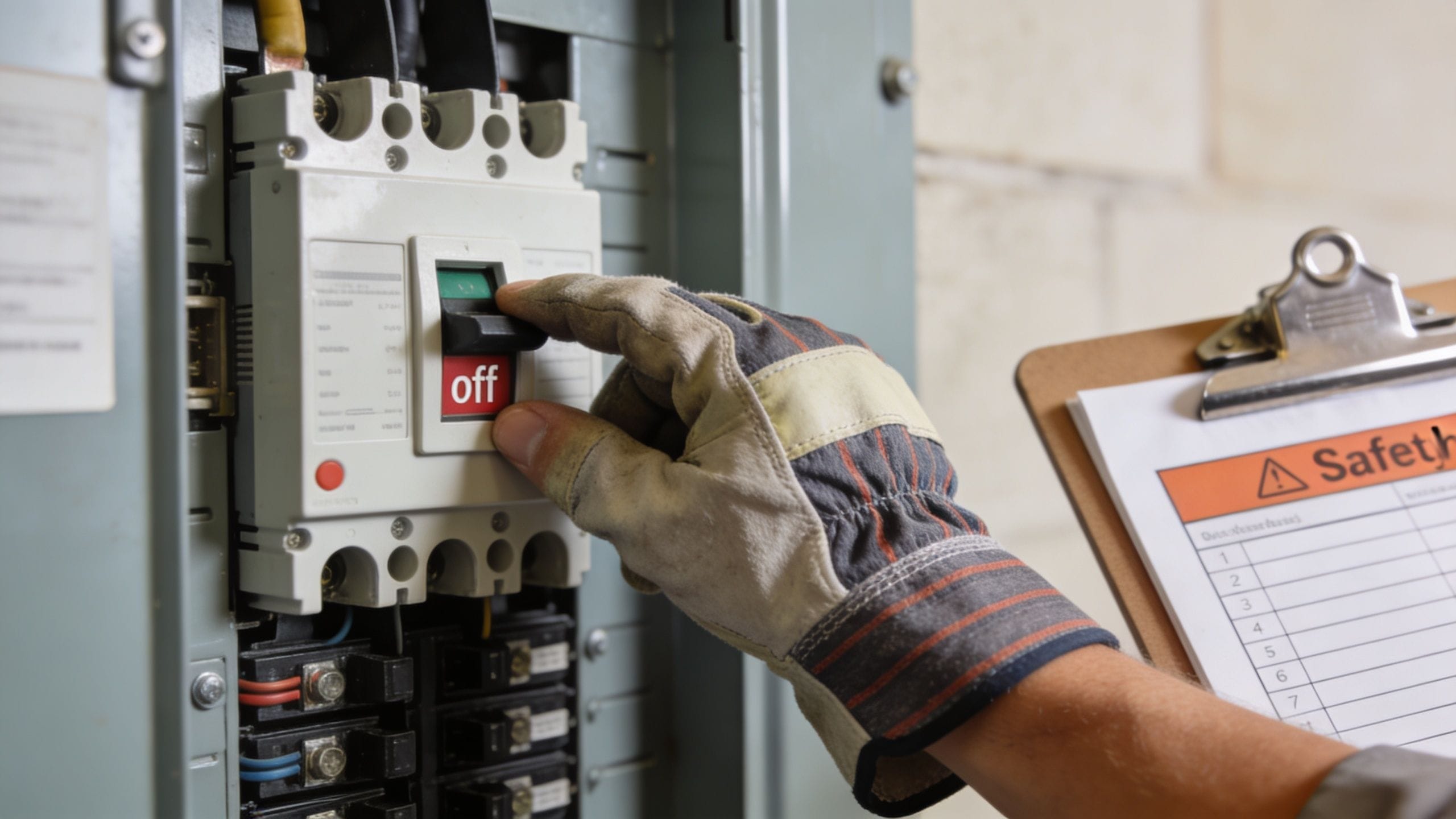
Start with power and footing
For a ceiling fan, switch it off at the wall. If you want the safest setup, shut off power at the breaker before you touch the blades or housing. For portable fans, unplug them and move them to a bright area with enough room to work.
If your home has high ceilings, use a real stepladder on a flat surface. Don't stand on the top cap, and don't lean so far to one side that you have to catch yourself. In a lot of West Palm Beach homes, especially newer builds and condos, the fan is just high enough to tempt people into unsafe shortcuts.
Use this checklist before you start:
- Kill the power: Breaker or unplugged cord first.
- Protect the area: Put down an old sheet, towel, or drop cloth.
- Get stable: Use a stepladder, not a dining chair.
- Work dry around motors: Cleaner goes on the cloth, not into the fan.
What to keep in your cleaning kit
The most useful tool is a microfiber cloth. According to Parrot Uncle's fan cleaning guide, a microfiber cloth can remove 90% more grime than traditional dusters and can cut 15 minutes per session by reducing secondary cleanup. That makes a real difference in West Palm Beach, where dust and pollen stick fast in humid air.
A simple cleaning kit looks like this:
- Microfiber cloths: Best for trapping dust instead of knocking it loose.
- Old pillowcase: The easiest way to contain blade dust on ceiling fans.
- Vacuum with brush attachment: Handy for grills, vents, and heavy loose dust.
- Spray bottle with equal parts white vinegar and water: Good for light grime and routine wipe-downs.
- Soft brush or old toothbrush: Useful around vents, screws, and trim.
- Dry cotton cloth: Good for a final buff on hard surfaces.
For homeowners who like practical cleaning guides, Sunset Shine has more home care ideas in its cleaning guide collection.
Practical rule: If a fan has a motor housing, control board, or light kit, never spray it directly. Wet the cloth first, then wipe.
The No-Mess Method for Cleaning Ceiling Fans
Ceiling fans create the biggest mess when they're cleaned the wrong way. One quick swipe and the dust lands on the bedding, sofa, rug, and anything else underneath. The cleanest method is simple, cheap, and much better suited to South Florida homes where dust often clings instead of floating off cleanly.
Why the pillowcase method works
The best tool for ceiling fan blades is an old pillowcase.
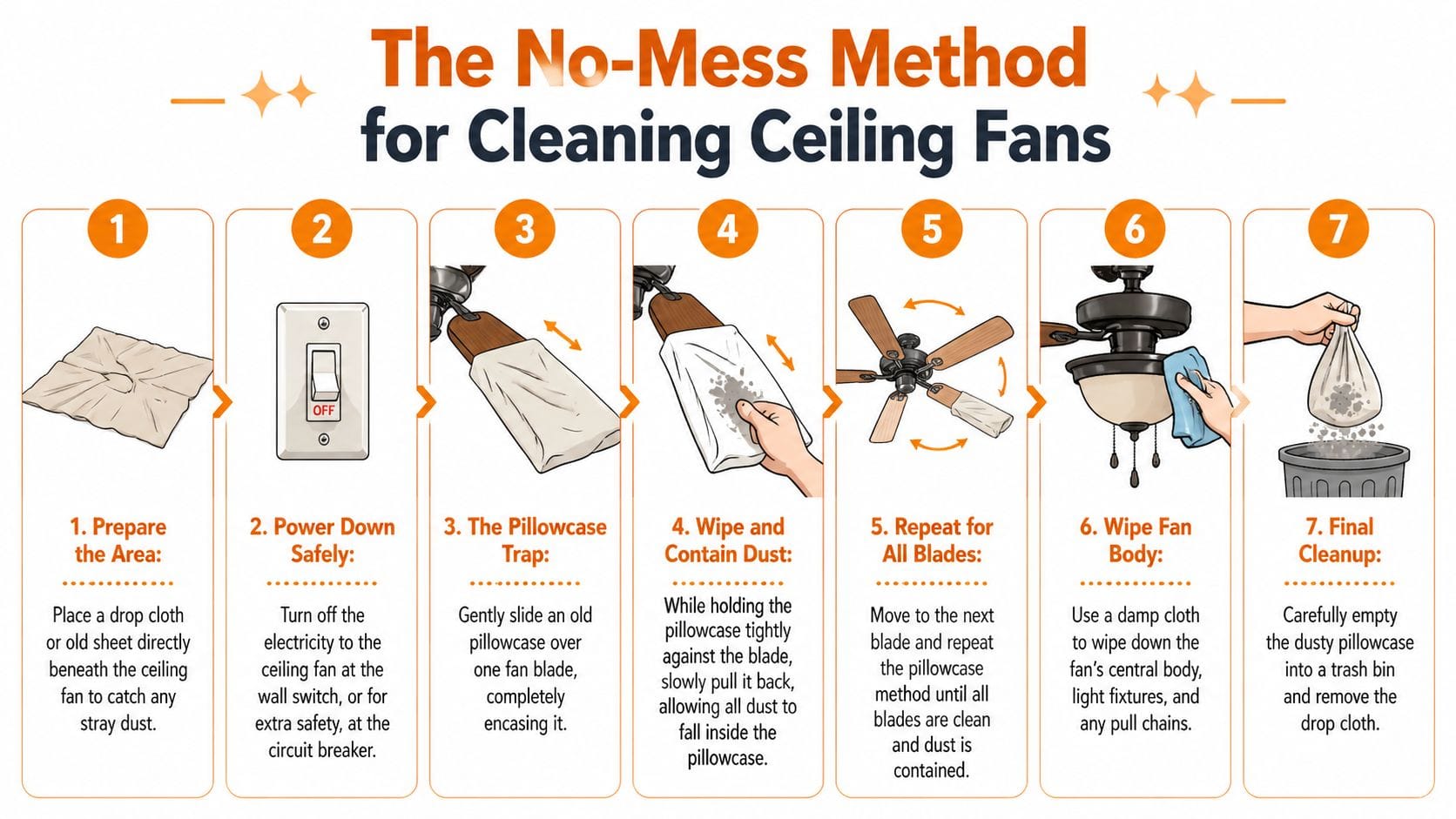
According to Kosmos Cleaning's ceiling fan guide, the pillowcase containment method cuts dust dispersal by about 90% compared to traditional dusting and saves about 15 minutes of post-cleaning floor vacuuming per room. It also takes only 2 to 3 minutes per fan when done correctly.
Use it like this:
- Turn the fan off and make sure the blades have stopped completely.
- Place an old sheet or drop cloth under the fan.
- Slide the pillowcase over one blade until it covers the blade length.
- Press gently on both sides of the blade through the fabric.
- Pull the pillowcase back slowly so the dust stays inside.
- Move to a clean section of the pillowcase for the next blade.
That last part matters. If you keep using the same dusty spot, you smear grime back onto the next blade.
How to handle sticky Florida buildup
In many West Palm Beach homes, ceiling fan dust isn't dry. It mixes with humidity, cooking residue, or salt in the air and leaves a tacky layer on top of the blade. The pillowcase removes the loose material first, but you may still feel a film afterward.
When that happens, follow up with a lightly damp cloth. Wipe the top, bottom, and blade edges. Then dry the blade with a second cloth so moisture doesn't sit on the finish.
A few spots deserve extra attention:
- Kitchen ceiling fans: Expect more grease and darker residue.
- Covered patios: Outdoor air leaves more pollen and grit.
- Light kits and pull chains: Dust collects where people rarely look.
- Blade brackets: Grime gathers where the blade meets the housing.
Pull the pillowcase back slowly. Rushing is what sends dust over the room.
Don't use direct spray on the fan body or motor housing. That shortcut causes drips, and drips have a way of ending up where they shouldn't. A controlled wipe gives you a cleaner finish and keeps the job contained.
Deep Cleaning Your Box, Pedestal, and Tower Fans
Portable fans get dirty in a different way. Instead of dust collecting mainly on exposed blades, it packs into front grills, rear vents, motor covers, and bases. In apartments and condos around West Palm Beach, pedestal and tower fans often run for long stretches, so they pull in a surprising amount of lint, hair, and fine debris.
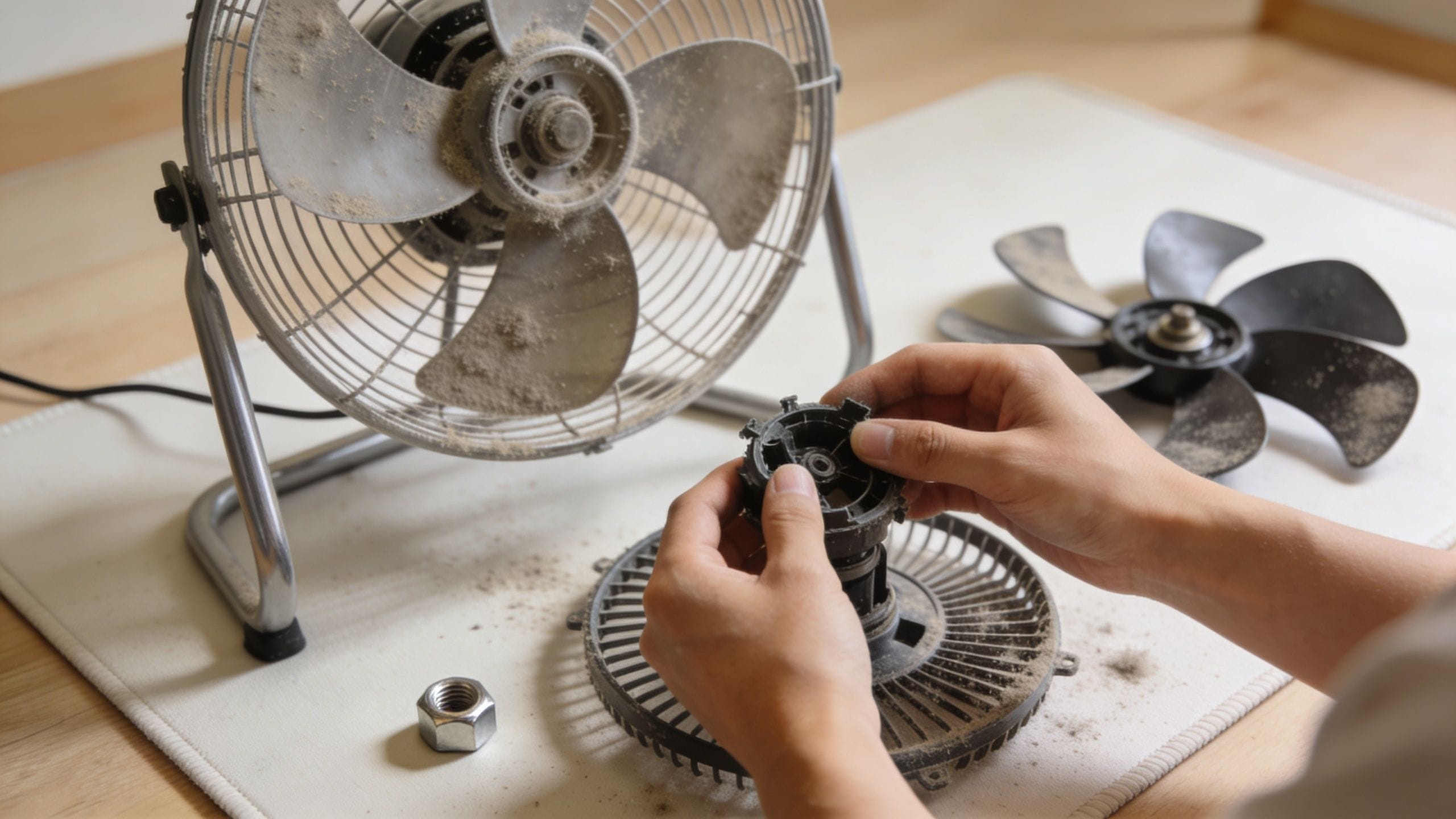
Portable fans need two levels of cleaning
A quick clean is for visible dust. A deep clean is for buildup you can see inside the grill or smell when the fan starts up.
For a box fan or pedestal fan, unplug it first and check how the grill comes off. Some have clips. Others use small screws. Once the front grill is off, vacuum the loose dust, then wipe the blades, grill, and rear guard with a damp cloth.
If the fan has stubborn sticky residue, water alone won't do much. According to Speed Cleaning's guide to cleaning ceiling fans like a pro, professional-grade alkaline degreasers can dissolve sticky residue in seconds, while DIY options like dish soap may take up to 20 minutes of scrubbing. The same practical rule applies to portable fans. Spray the cleaner onto the cloth, not onto the fan, to avoid motor damage.
For routine maintenance, this is usually enough:
- Vacuum first: Use the brush attachment to remove loose dust.
- Wash removable grills: Mild soap and water work well if you dry them fully.
- Wipe blades carefully: Support the blade as you clean so you don't bend it.
- Dry before reassembly: Any trapped moisture can cause problems later.
A visual walkthrough can help if you're opening a portable fan for the first time.
Tower fans and sealed units
Tower fans are easier to maintain but harder to deep clean. Most aren't designed for full homeowner disassembly, and forcing panels open usually leads to broken tabs or rattling parts later.
The safer approach is controlled exterior cleaning:
- Use a vacuum brush attachment over intake and exhaust vents.
- Loosen vent dust with a soft brush.
- Wipe the exterior shell with a barely damp microfiber cloth.
- Use compressed air lightly if the manual allows it.
Skip anything that floods the vents with moisture. Tower fans hide more internal parts than people realize, and once dust mixes with dampness inside the unit, cleanup gets harder, not easier.
Fighting Grime and Mold on Kitchen and Bath Fans
Kitchen and bathroom fans are where South Florida humidity really changes the job. Generic fan-cleaning advice usually stops at dust. In West Palm Beach homes, that misses the bigger issue. Moisture and grease turn ordinary buildup into a clingy mess that can smell stale and look worse every week.
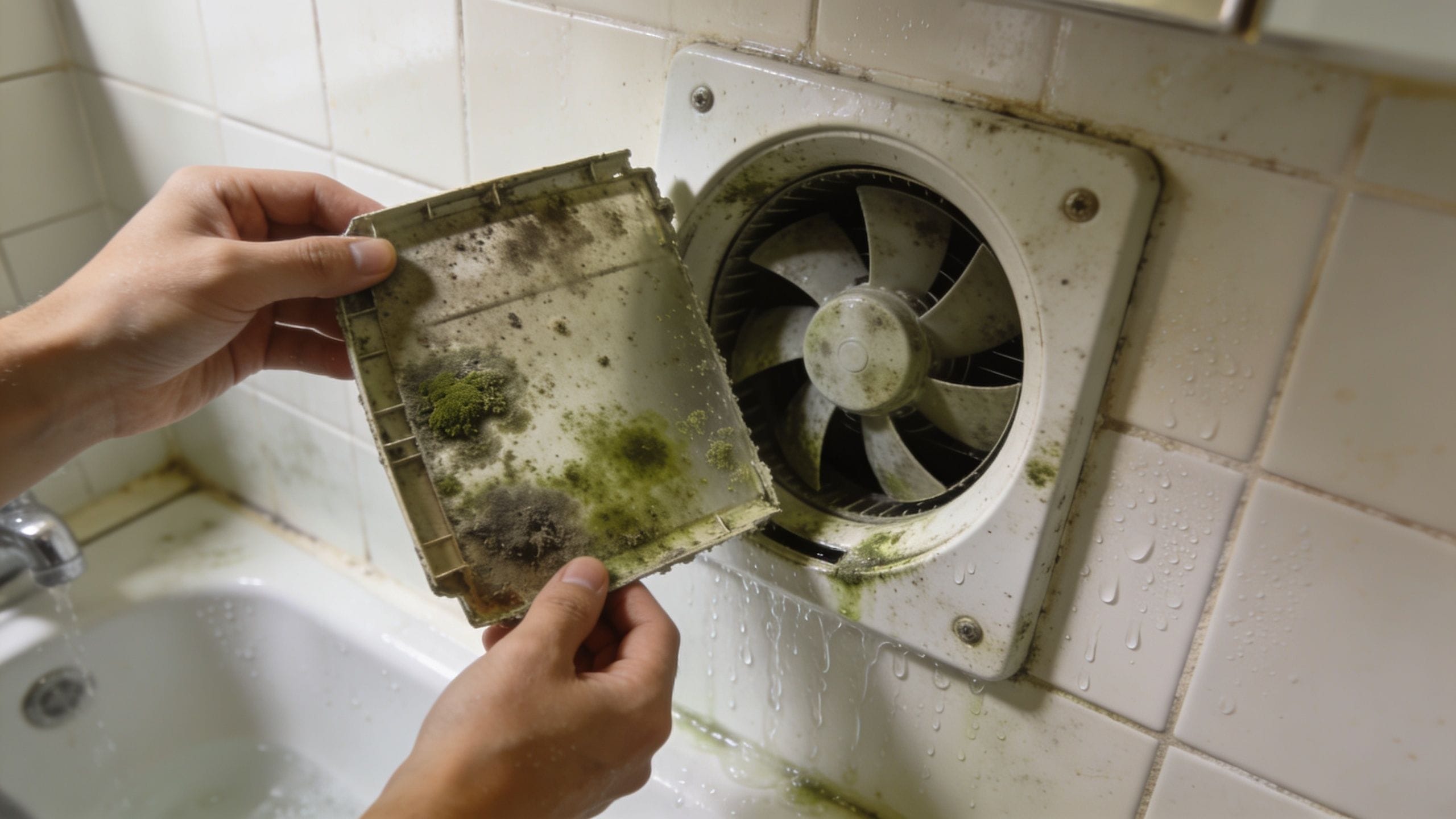
Bathroom fans in a humid house
Bathroom exhaust fans catch lint, dust, and moisture at the same time. That combination is why the cover often shows dark spotting or fuzzy buildup before the rest of the room does.
According to Lowe's cleaning guidance for ceiling fans, in humid climates like West Palm Beach where relative humidity exceeds 70%, fans can foster mold, and a 1:1 white vinegar-water solution can kill 99.9% of mold spores on fan housings without harsh chemicals. That's a practical option for households with kids, pets, or anyone sensitive to heavy fragrances.
A solid bathroom-fan routine looks like this:
- Turn off power to the fan.
- Remove the vent cover if it comes off easily.
- Vacuum loose lint and dust from the cover and surrounding opening.
- Wipe the cover with the vinegar-water mix.
- Let the cover dry fully before reinstalling.
- Wipe accessible exterior housing surfaces without soaking anything internal.
In a humid bathroom, the fan cover should dry completely before it goes back up. Trapped moisture invites the same problem back.
If you're dealing with musty smells elsewhere in the house, these odor removal tips for Florida homes are also useful.
Kitchen exhaust fans and greasy residue
Kitchen fan buildup is different. Dust is only part of it. Cooking oils turn the fan cover and filter into a sticky surface that grabs every bit of lint floating by.
For a kitchen exhaust fan or range hood filter, remove the filter if the unit is designed for it. Soak it in hot, soapy water or use a degreasing cleaner appropriate for the filter type. Then scrub gently with a soft brush, rinse, and dry completely before reinstalling.
If the housing itself feels tacky, don't spray into the unit. Put cleaner on the cloth and wipe the exterior surfaces in sections. In South Florida kitchens, regular light cleaning beats occasional heavy scrubbing every time because grease hardens when it sits.
Watch for these warning signs:
- The fan cover looks yellow or brown
- Dust sticks instead of lifting off
- You smell stale air when the fan runs
- The vent area feels damp long after use
Those signs usually mean it's time for more than a quick dusting.
Your Fan Maintenance Plan and When to Call a Pro
A good fan-cleaning routine keeps the work small. Ignore it for too long, and every fan in the house turns into a project. In Palm Beach County, where fans run often and humidity never fully backs off, a simple schedule helps more than a marathon deep clean once in a while.
Simple Fan Cleaning Schedule for Florida Homes
| Fan Type | Frequency | Task |
|---|---|---|
| Ceiling fan in bedroom or living room | Weekly or biweekly light maintenance | Dust blades and wipe visible buildup |
| Ceiling fan with heavier use or sticky residue | Every few months deep cleaning | Full blade cleaning, housing wipe-down, detail work |
| Box or pedestal fan | Regular light maintenance, deeper cleaning as buildup appears | Vacuum grill, wipe blades, wash removable parts |
| Tower fan | Regular exterior maintenance | Vacuum vents, brush openings, wipe shell |
| Bathroom exhaust fan | Routine check and cleaning | Remove cover, clear lint, wipe moisture-related buildup |
| Kitchen exhaust fan | Frequent light attention | Clean cover and filter before grease hardens |
That schedule is practical because it matches what Florida homes deal with. Bedroom fans usually collect dust. Kitchen fans collect residue. Bathroom fans deal with moisture. They don't all need the same approach.
If a fan starts wobbling, clicking, or throwing dust right after you cleaned it, stop and check the basics:
- Loose blade screws: Common on ceiling fans.
- Dust left in the housing: Often the issue with portable fans.
- Bent blade or grill: Easy to miss during cleaning.
- Moisture where it shouldn't be: A sign the cleaning method was too wet.
When DIY stops being worth it
Some fans are better left to a professional. High foyer fans, delicate finishes, and smart fans with electronics all carry more risk than a standard bedroom ceiling fan.
According to this discussion of cleaning modern fan electronics, professional services can reduce the risk of damage claims by 60% compared to DIY attempts on smart or electronic-equipped fans. That matters in newer condos and higher-end homes around West Palm Beach, where app-controlled fans and integrated lighting systems are more common.
Call for help when:
- The fan is too high to reach safely
- The fan has smart controls or sensors
- There is visible mold around the housing or vent
- The buildup is thick, greasy, or keeps coming back
- You want recurring upkeep instead of adding another weekend chore
For homeowners who want that deeper reset done professionally, deep cleaning in West Palm Beach is often the easiest way to get fans, vents, and other neglected surfaces back under control.
If you'd rather skip the ladder, the dust, and the trial-and-error, Sunset Shine Home Cleaning helps homeowners across West Palm Beach and Palm Beach County keep their homes fresh with detailed, eco-friendly cleaning. Whether you need a one-time deep clean or recurring service that keeps ceiling fans, vents, kitchens, and bathrooms under control in Florida's humidity, their local team can handle the dirty work so your home feels lighter, cleaner, and easier to maintain.
Authored using the Outrank app