
Drywall dust removal is one of the most frustrating parts of finishing a renovation in Palm Beach County. If you're staring at white film on floors, vents, window sills, and baseboards in West Palm Beach, Jupiter, Boca Raton, or anywhere nearby, the goal is simple: get the home clean again without spreading that dust deeper into the house. In South Florida, humidity and year-round AC make that mess harder to clear and easier to recirculate.
This is for homeowners, renters, Airbnb hosts, and property managers who aren't casually researching. You're trying to get back to normal, pass a walkthrough, prep a guest-ready property, or move someone into a clean space without drywall powder showing up for days afterward.
Table of Contents
- That Renovation Dust That Gets Everywhere
- Why Drywall Dust Is a Unique Challenge in South Florida
- Your Professional Supply and Safety Checklist
- A Step-by-Step Guide for Drywall Dust Removal
- The Final Inspection and When to Call the Pros
- Palm Beach County Drywall Dust FAQs
That Renovation Dust That Gets Everywhere
If you're dealing with drywall dust removal right now, you already know the problem. The sanding is done, the painter may be finished, and the room looks close to ready, but every step kicks up that chalky white film again. In Palm Beach County homes, that dust doesn't stay politely in one room. It drifts onto tile, settles on trim, sneaks into closet shelves, and leaves a haze on anything dark or glossy.
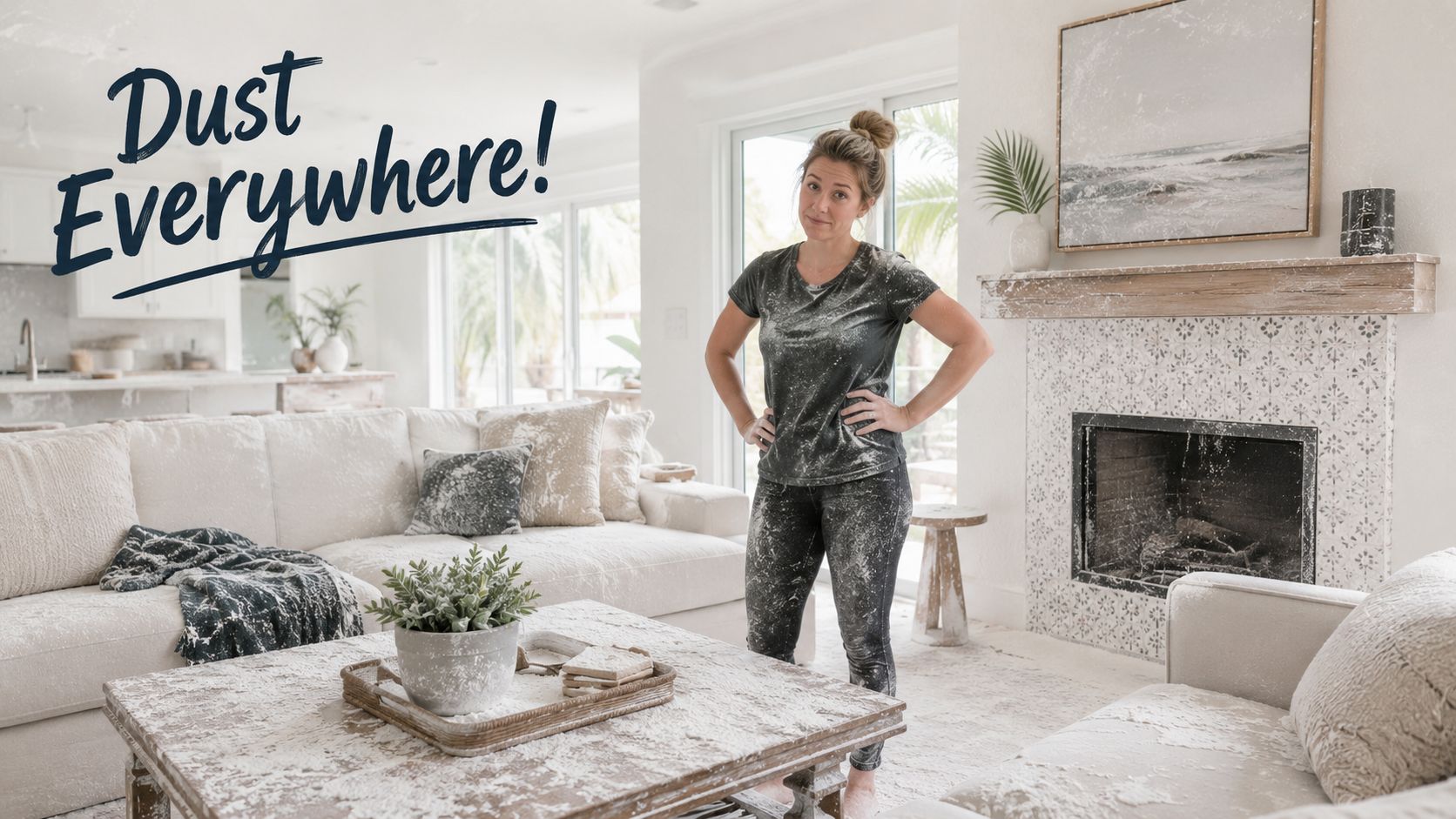
A lot of people in Jupiter, Palm Beach Gardens, and Boca Raton tell us the same thing after a remodel. They used plastic, they swept once, maybe twice, and the house still feels dusty. That's normal with drywall powder. It isn't like regular household dust, and it doesn't respond well to rushing.
What usually goes wrong
- Dry sweeping first makes the fine particles airborne again.
- Starting at the floor means dust from walls, shelves, and fans drops right back onto what you just cleaned.
- Skipping edges and trim leaves a visible line of residue, especially along detailed woodwork and baseboards after renovation cleanup.
Practical rule: If the room looks clean but your sock bottoms turn white, the dust is still there.
Around here, this matters fast. Families want their living room back. Condo owners need the space ready before furniture arrives. Airbnb hosts can't have guest luggage rolling through white powder on tile. The fix is methodical cleanup, not speed.
Why Drywall Dust Is a Unique Challenge in South Florida
Drywall dust is annoying anywhere, but Palm Beach County homes add a few local complications.
The first is humidity. Even when the house is air conditioned, South Florida air carries moisture. That fine powder can cling to painted walls, stick in grout lines, and leave a paste-like film when someone uses too much water too soon. In homes near Juno Beach or along the coast, you can also see residue collect on glossy fixtures and glass faster because every surface already seems to catch a little salt air.
What we see in Palm Beach County homes
In West Palm Beach ranch homes and newer Wellington builds, the trouble spots are often the same:
- Tile grout and textured floors where white residue settles into low spots
- AC returns and supply vents that pull dust into circulation
- Ceiling fan blades and vent covers that look clean until the system runs
- Cabinet tops and window sills where dust sits above eye level
- Bathroom edges and laundry rooms where moisture turns fine dust into a stuck-on film
The second challenge is year-round HVAC use. Renovation cleanup guidance recommends creating negative air pressure by exhausting air out a window with a box fan and sealing the opening, which helps keep dust from migrating to other rooms, especially when your AC is trying to circulate air through the house, as noted in Lowe's drywall dust cleanup guidance.
In South Florida, AC doesn't take a season off. If sanding happened while the system was running, dust rarely stays limited to the room where the work happened.
That is why drywall dust removal in this area often becomes a whole-home issue. Even a small repair in a Boynton Beach bedroom can show up later on hallway floors, vent covers, and bathroom counters.
Your Professional Supply and Safety Checklist
The right tools make the difference between trapping drywall dust and just moving it around. For this kind of cleanup, the pro kit isn't fancy for the sake of being fancy. Each item solves a specific problem.
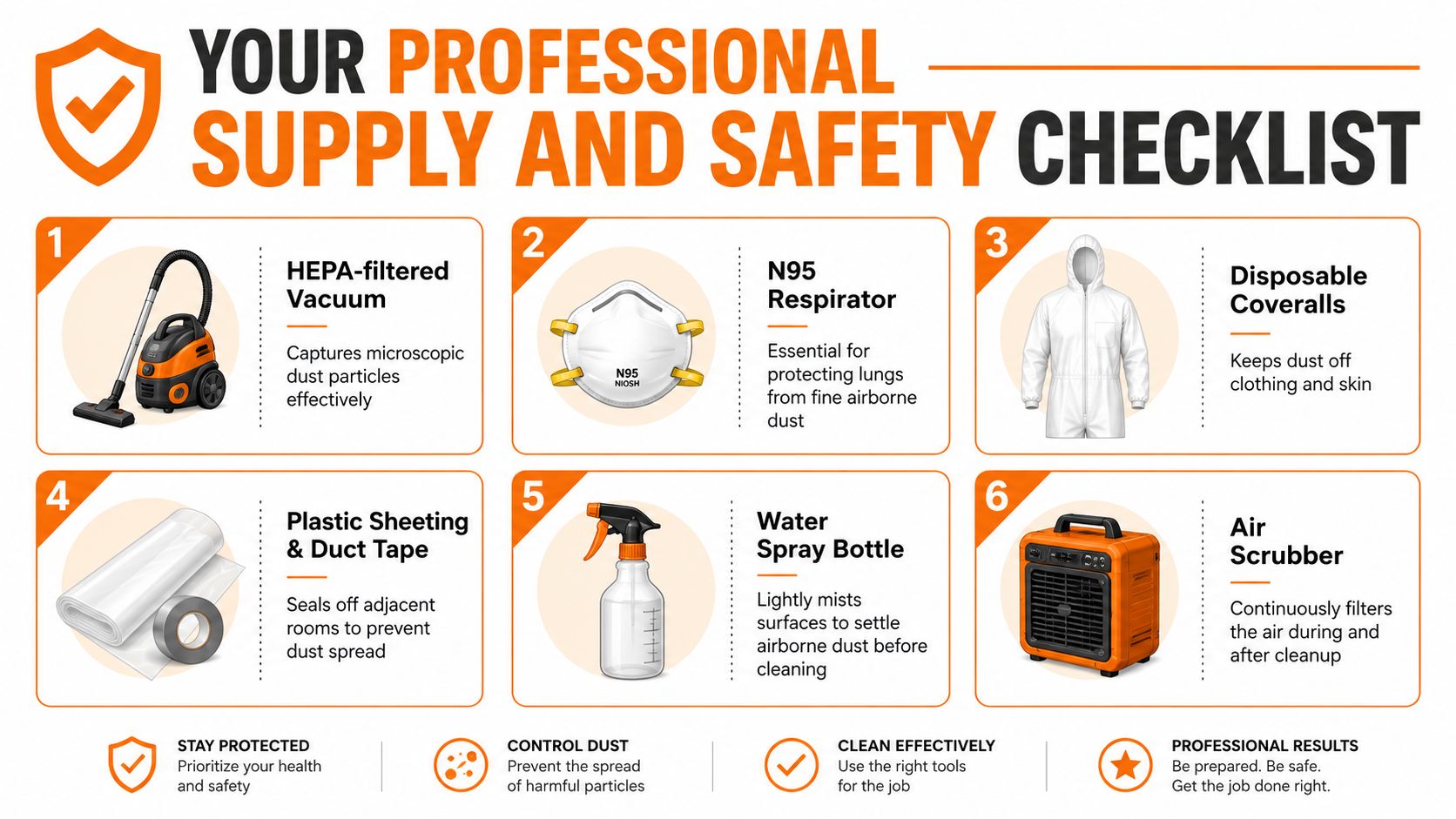
What to have on hand
- HEPA-filtered vacuum for the first and final passes on walls, trim, vents, and floors
- N95 respirator so you aren't breathing fine airborne dust while you work
- Plastic sheeting and tape to isolate the work area and cover vents
- Microfiber cloths for capturing the remaining film after vacuuming
- Soft brush attachments for walls, door casings, and delicate painted surfaces
- Slightly damp mop pads or cloths for the final floor pass
- Disposable coveralls or work clothes you can remove before walking through the rest of the house
What works and what doesn't
A standard household vacuum usually isn't enough for drywall powder. According to CDC/NIOSH testing of vacuum sanding systems, five commercially available vacuum sanding systems reduced drywall-sanding dust exposures by 80% to 97%, and four of the five reduced exposures by nearly 95%. That testing was about source capture during sanding, but the takeaway for cleanup is clear. Fine drywall particles need better filtration and better containment than a basic sweep-and-vac approach.
For occupied homes in Palm Beach County, an air scrubber or portable air filtration unit can help after cleaning, especially if the AC was running during the job. If you'd rather skip assembling equipment and doing repeat passes yourself, post-construction dust cleanup support is one practical option.
The biggest mistake isn't missing a speck on the first pass. It's using tools that put the dust back into the air.
A Step-by-Step Guide for Drywall Dust Removal
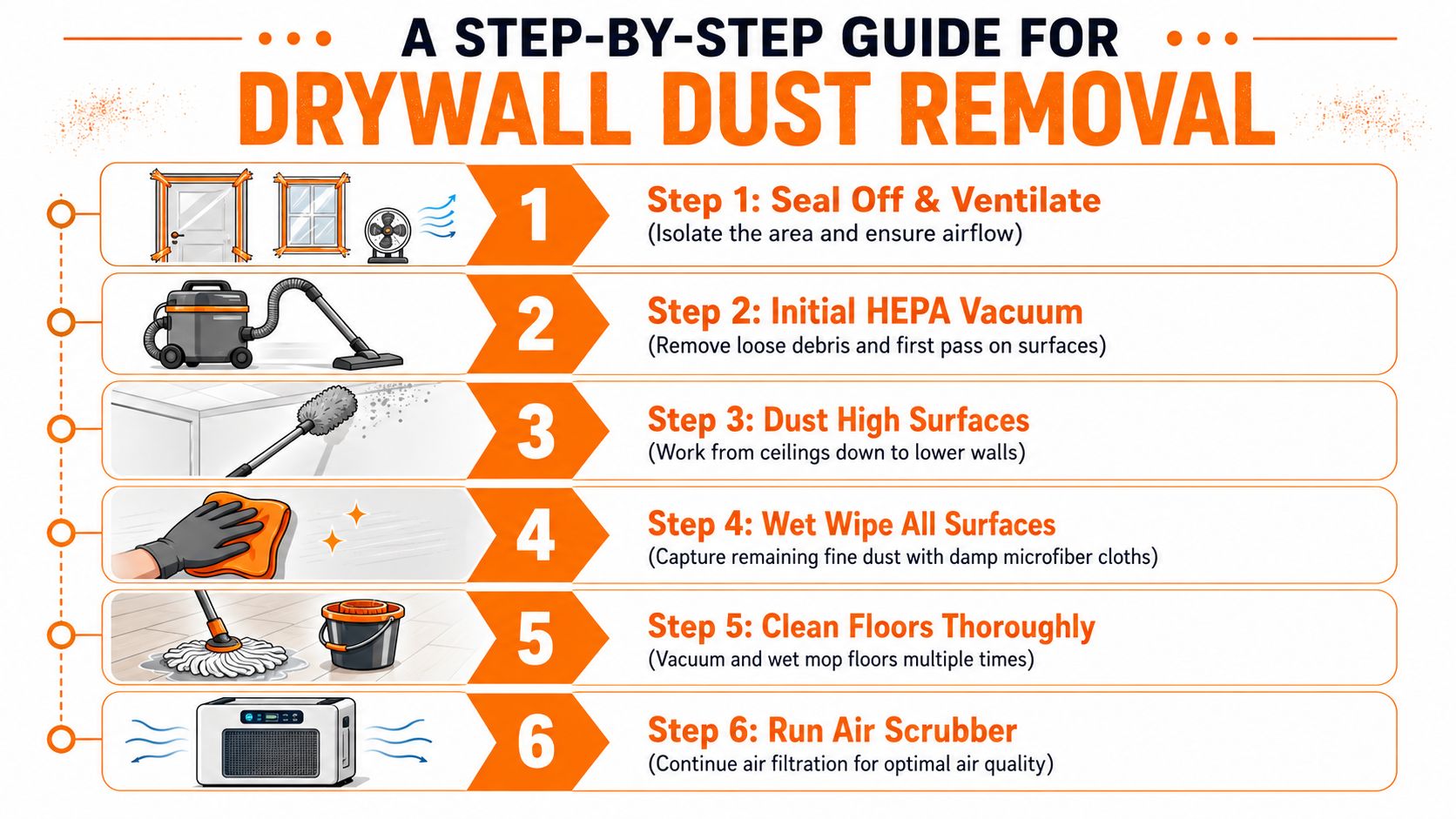
The safest approach is controlled, slow, and top-to-bottom. Don't try to make the room look finished in one quick sweep. That usually adds another layer of airborne dust.
Containment and Ventilation
Contain the area first. Put plastic over nearby floors and vents, and keep traffic through the space to a minimum. If possible, create negative air with a box fan exhausting outward through a sealed window opening.
Then wait. An expert workflow recommends waiting 15 to 30 minutes after activity so heavier particles can settle before cleaning, as explained in this drywall dust cleanup workflow.
This visual shows the overall process in action:
First Pass on Walls and Ceilings
Start high. Walls, upper corners, door frames, vent covers, fan blades, and any ledge above eye level come first. Use a soft brush or vacuum attachment so you lift dust off the surface without scraping fresh paint or soft compound.
In a Delray Beach condo after a small kitchen renovation, the floor looked like the obvious problem. It wasn't. The top edge of the upper cabinets, the fan blades, and the cabinet hinges were holding onto more dust than the tile. That's common in local condos where airflow pushes dust upward and sideways more than people expect.
Clean the room in the order gravity works, not in the order your eyes notice the mess.
Wiping Down Surfaces and Fixtures
After the first pass, go back with a slightly damp microfiber cloth. Slightly damp matters. Too wet, and the residue turns pasty. Too dry, and you're just polishing dust.
Work across:
- Counters and shelves
- Window sills and trim
- Mirrors and glossy surfaces
- Cabinet fronts and hardware
- Light switches and door handles
On South Florida tile homes, I also pay close attention to the transition from wall to baseboard. That's where drywall powder hides, especially in homes with textured paint and narrow grout lines.
The Final Floor and Baseboard Cleanup
Save floors for last. Vacuum them carefully, including corners and along baseboards. Then make a damp pass to pick up what the vacuum missed.
If the room opens directly into the rest of the house, check the adjacent hallway too. In Palm Beach Gardens and Royal Palm Beach homes with open layouts, one dusty room often means a faint trail through the next two rooms, especially if contractors were walking in and out all day.
A proper final pass should also include checking vent covers and replacing the air filter after cleanup, which is one reason drywall dust removal often takes longer than people expect.
The Final Inspection and When to Call the Pros
Before you call the job done, inspect the room in angled light. Morning sun in an east-facing Boca Raton room or late afternoon light in a West Palm Beach living area will show dust that overhead lighting hides.
Final inspection checklist
- Window sills still have a chalky line when you run a finger across them
- Mirrors or dark appliances show white haze
- Baseboards and door trim have dust in the top edge or corners
- AC vents show residue on covers or inside the first visible section
- Cabinet interiors still have powder in corners and hinge areas
- Tile grout looks lighter because dust settled into the joints
If any of those are showing up, the room needs another controlled pass.
When DIY stops making sense
Call for help when the project covered multiple rooms, the AC ran during sanding, you have a move-in deadline, or the property needs to be guest-ready on a tight schedule. That's especially common with Airbnb turnovers near the coast, rental homes between tenants, and post-renovation cleanups before furniture delivery.
For larger jobs, many homeowners choose a full new construction and post-renovation cleaning service because the work isn't just about visible dust. It's about vents, trim, corners, floors, and the details that show up days later.
Schedule – Clean – Inspect – Enjoy
Schedule
Book online or call. You'll get a confirmation window so you know when to expect the team.
Clean
Cleaners arrive with supplies and follow a checklist-based clean built for post-construction dust, not standard weekly maintenance.
Inspect
A quick quality check catches haze on surfaces, leftover residue along trim, and spots that need one more pass.
Enjoy
You return to a home that feels livable again instead of looking finished but still dusty.
Pricing depends on bedrooms, bathrooms, square footage, condition, and add-ons. Most clients request a custom estimate.
South Florida humidity shows up in grout lines and bathroom edges faster than expected. In Palm Beach County, post-renovation cleaning often comes down to what the AC moved, what the dust settled into, and what still shows when sunlight hits the room.
Palm Beach County Drywall Dust FAQs
How long does drywall dust removal take
It depends on the size of the project, how much sanding happened, and whether the dust spread through vents or nearby rooms. A single-room cleanup is very different from a full post-construction clean in an occupied home.
Are supplies included with professional cleaning
Yes. For post-construction work, the crew brings the supplies needed for detailed dust removal.
My AC was running during sanding. What should I do
Check vent covers, replace the air filter after cleanup, and expect dust outside the work area. In Palm Beach County homes, year-round AC often turns a one-room mess into a larger cleaning job.
Can you handle Airbnb or rental turnover after renovation dust
Yes. This is common with guest-ready properties in West Palm Beach, Delray Beach, and Boca Raton where the unit has to be clean on a short timeline.
Book your cleaning with Sunset Shine Home Cleaning – your trusted house cleaning service in West Palm Beach. Call 561-408-4020 or book online – sunsetshinehomecleaning.com