
If you're wiping the same sticky cabinet doors over and over and they still feel tacky, you're dealing with more than surface dust. In Palm Beach County, the best cleaner for kitchen grease often isn't one magic bottle. It's the right method, the right dwell time, and in heavy buildup cases, a professional deep clean that gets past the film collecting on cabinets, range hoods, backsplash lines, and around stove knobs.
This is for homeowners in West Palm Beach, renters in Boynton Beach, Airbnb hosts in Delray Beach, and property managers across Palm Beach County who need a kitchen that feels clean now, not after another weekend of scrubbing. If you're trying to get ready for a landlord walkthrough, a guest arrival, or just want your kitchen back, it helps to know how grease builds up on kitchen cabinets and why some common DIY advice falls flat.
Table of Contents
- Introduction – Beyond That Tacky Feeling on Your Cabinets
- Why Kitchen Grease Is Different in South Florida
- The Real Chemistry Behind Cutting Kitchen Grease
- How We Safely Clean Different Kitchen Surfaces
- Our Simple Process for a Grease-Free Kitchen
- When to Stop Scrubbing and Call a Professional
- Kitchen Cleaning Questions We Hear in Palm Beach County
Introduction – Beyond That Tacky Feeling on Your Cabinets
The worst kitchen grease isn't the splatter you see right away. It's the thin, sticky layer that settles on upper cabinet faces, around the microwave vent, and along the trim above the stove. In South Florida homes, that film grabs dust fast, so a kitchen can look dull even right after a quick wipe-down.
For clients who are ready to book, the main question isn't just what the best cleaner for kitchen grease is. It's what effectively works on buildup without damaging painted cabinets, stainless steel, stone, or vent covers. That's especially true in busy family homes in Wellington, coastal condos in Boca Raton, and turnover properties where the kitchen has to be guest-ready on a tight schedule.
Practical rule: If the cabinet feels sticky after wiping, the grease layer is still there.
A lot of people start with vinegar because it's already under the sink. That makes sense for mineral spots and soap residue. It doesn't solve heavy kitchen grease.
Why Kitchen Grease Is Different in South Florida
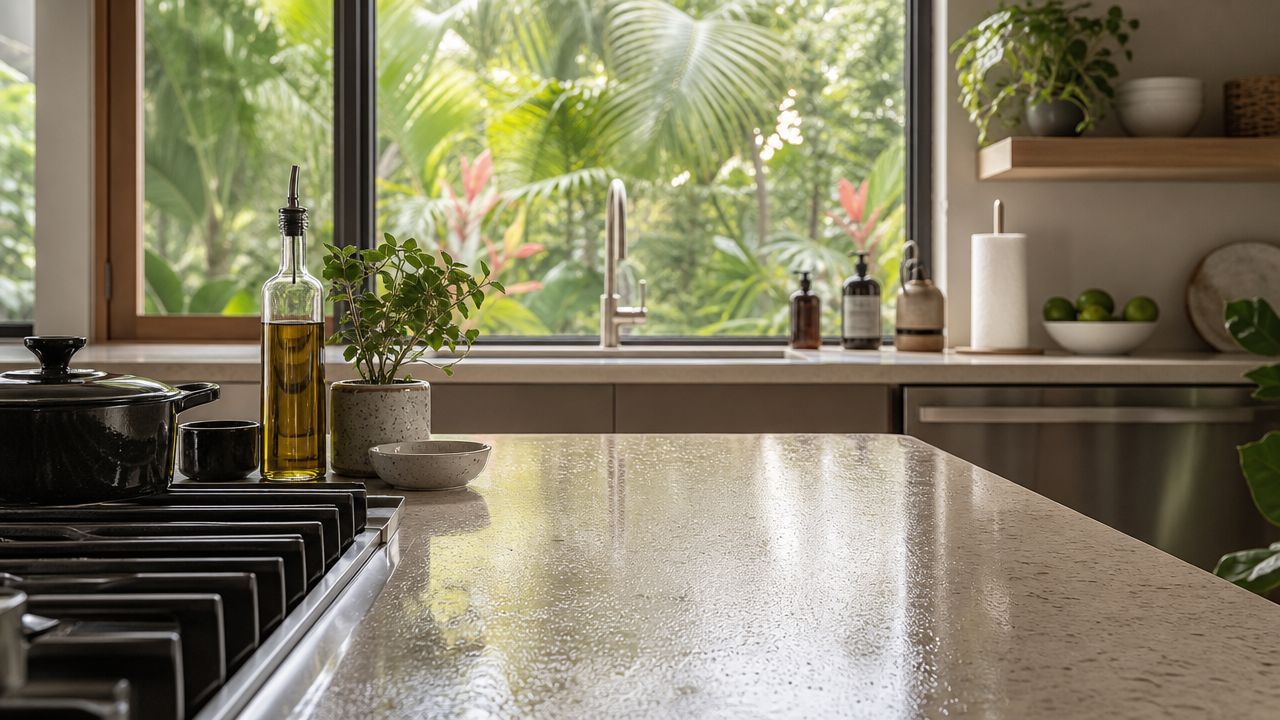
Palm Beach County kitchens have their own pattern. Grease doesn't stay isolated near the cooktop for long. With year-round A/C, humidity, open floor plans, and regular cooking, it drifts and settles in places people don't expect.
What We See in Palm Beach County Homes
In West Palm Beach and Palm Beach Gardens, we often find grease collecting on cabinet uppers and mixing with fine A/C dust. In Wellington and Royal Palm Beach family homes, it usually shows up around handles, light switches, and cabinet edges where hands hit every day. In Delray Beach and Boca Raton vacation rentals, short turnovers can leave behind that invisible film that makes a kitchen feel used even when counters are cleared.
Coastal homes from Juno Beach down through Boca Raton add another layer. Salt air settles on metal surfaces, and when that mixes with cooking residue, range hoods and stainless trim can develop a stubborn film that needs a gentler but more deliberate approach than a standard spray-and-wipe.
Where It Shows Up First
The first problem spots are usually:
- Cabinet faces near the stove where airborne oil lands and hardens over time
- Range hood filters and trim where grease builds in layers
- Backsplash grout lines that trap residue
- Window sills and ledges where kitchen film catches tropical pollen and dust
- Airbnb kitchens where fast resets leave upper surfaces untouched between stays
In Palm Beach County, grease rarely travels alone. It grabs dust, salt, and humidity, then turns into a tacky film that spreads beyond the stove area.
The Real Chemistry Behind Cutting Kitchen Grease
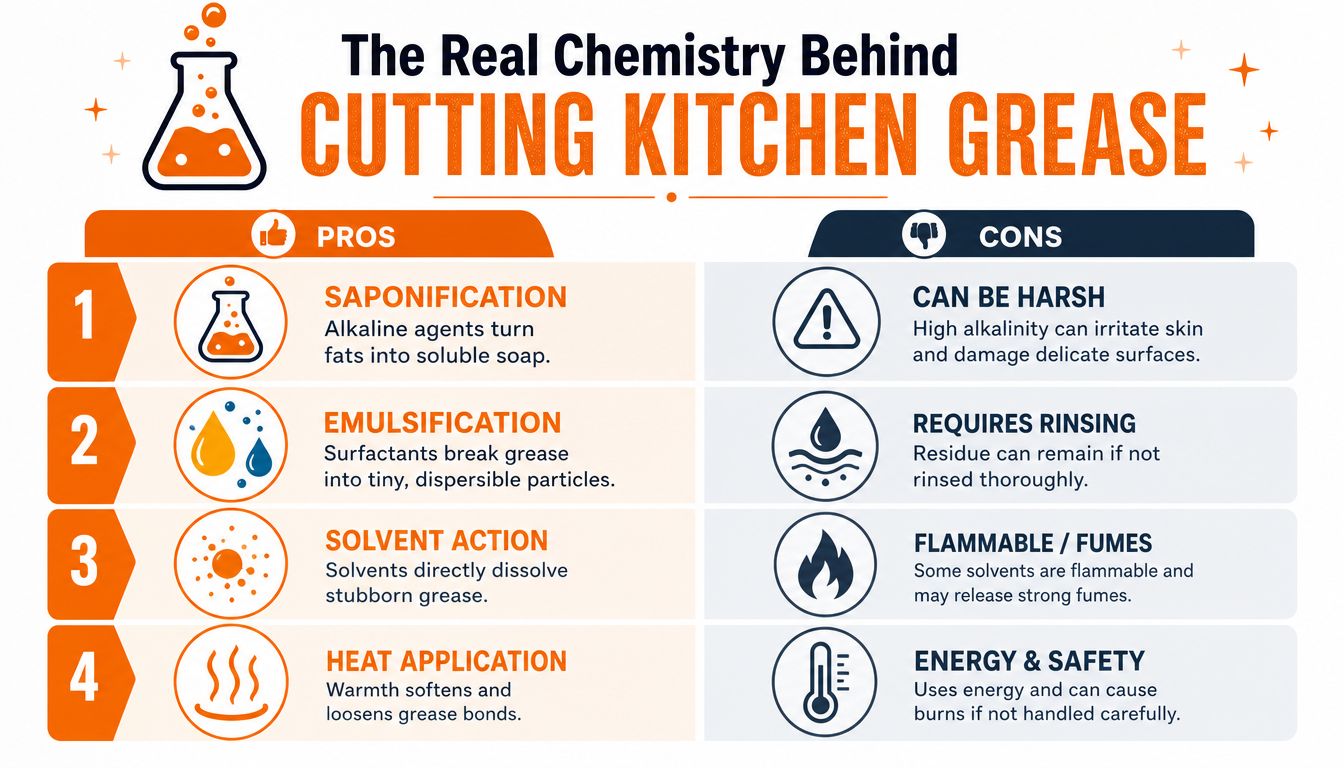
Kitchen grease is mostly fat and oil, and that matters because water by itself does very little to remove it. In Palm Beach County kitchens, that greasy film also sits in warm, humid air, so it stays tacky longer and grabs onto dust instead of drying out cleanly.
Why Vinegar Misses the Mark on Grease
Vinegar has its place. It helps with mineral residue, hard water spots, and some dull film left behind by soap. It is a weak choice for oily kitchen buildup.
Grease responds better to surfactants, light alkalinity, agitation, and enough contact time to loosen the bond. That is why dish soap in hot water often outperforms a straight vinegar spray on cabinet fronts, hood trim, and the sticky band that forms above the stove. If the surface also deals with mineral spotting, such as stone near a sink, use a product matched to the material. Acid can create its own problems on some finishes, especially as explained in this guide on what causes water spots on granite and how to clean them safely.
One simple test proves the point. Rub cooking oil between your fingers, then rinse with plain water. It smears. Add soap, and it releases.
Why Dwell Time Matters
A lot of grease-cleaning failures come down to rushing. Spray-on, wipe-off sounds good, but older residue usually needs a few minutes to soften before a cloth can lift it cleanly.
I see this constantly in Boca Raton condos and Wellington family kitchens. Homeowners scrub harder when the product really needed more time on the surface. Extra force often leaves scuffs on painted cabinets or streaks on stainless, while the grease is still sitting in the corners and around hardware.
Even lower-waste cleaners can handle everyday buildup if they contain effective surfactants and are given time to work, as noted in this low-waste kitchen grease testing overview. For thicker residue, stronger degreasers can reduce the amount of scrubbing needed, according to this Dawn Professional Degreaser demonstration.
The trade-off is straightforward. Stronger chemistry can save labor, but it also raises the risk of dulling finishes, leaving residue behind, or damaging a sensitive surface if it is used carelessly.
That is why grease removal is rarely about finding one magic spray. It is about matching the cleaner, moisture level, and dwell time to the buildup you have.
How We Safely Clean Different Kitchen Surfaces
Grease does not land evenly in a Palm Beach County kitchen. In a Boca condo near the water, salt air and humidity leave stainless steel looking smeared fast. In a busy Wellington family kitchen, the heavier buildup usually shows up on cabinet faces, trim edges, and the floor line below the stove.
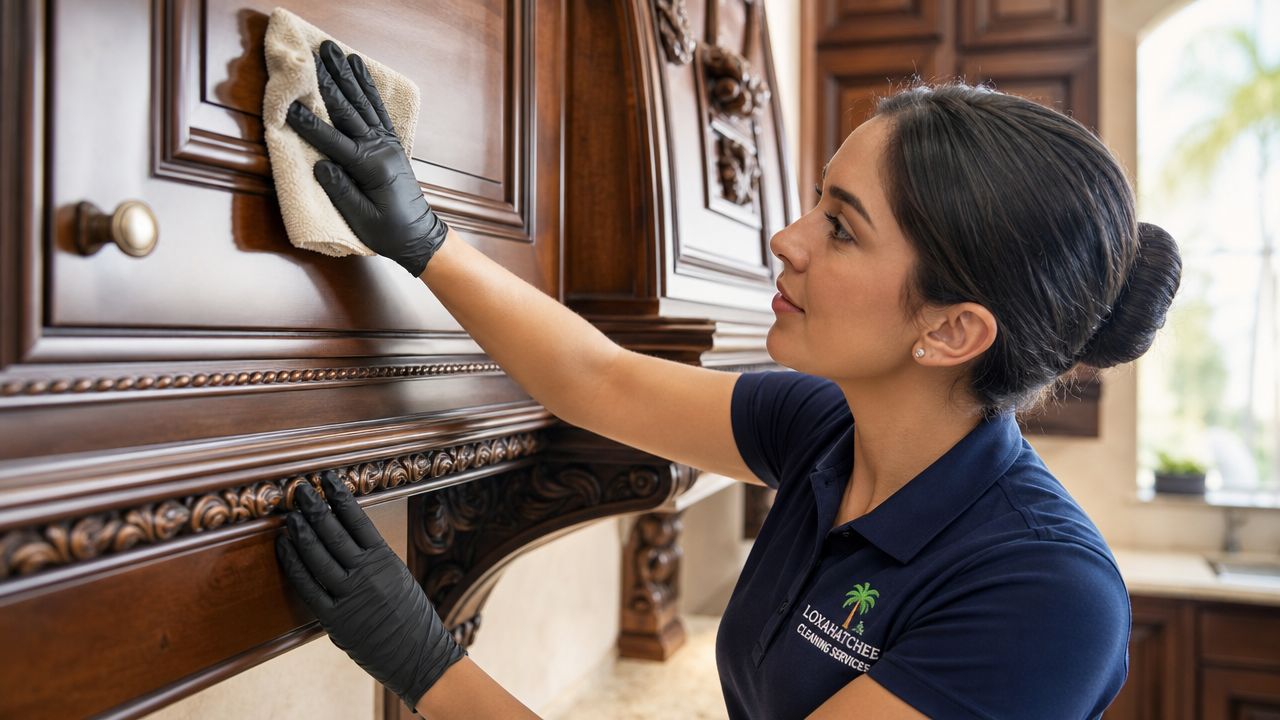
The cleaner has to match the surface, but so do the cloth, the moisture level, and the amount of pressure. That is where DIY jobs often go sideways. Homeowners use one strong spray everywhere, then end up with swollen laminate seams, hazy stone, or fine scratch marks on metal.
One Surface Does Not Fit All
Here is how we approach the surfaces we see most often in local homes:
| Surface | Best approach | Main caution |
|---|---|---|
| Painted wood cabinets | Light degreaser, soft microfiber, controlled moisture, detailed hand work around pulls and grooves | Excess water and aggressive scrubbing can soften or dull the finish |
| Laminate cabinets | Surfactant-based cleaner with careful wiping along edges and seams | Water left sitting at joints can lead to lifting or swelling |
| Stainless steel backsplash or hood trim | Non-abrasive degreasing, then a dry buff with the grain | Scratch pads and circular scrubbing leave visible lines |
| Natural stone counters | Stone-safe cleaner only, with fast wipe-up of oily residue | Acidic products can etch or cloud some finishes |
Painted cabinets usually need the most patience. Grease settles into panel corners, around knobs, and along the top edge where warm cooking vapors rise and stick. In older homes in The Acreage and Loxahatchee Groves, I often find a mix of cooking film, dust, and humidity that turns into a gummy layer if it has been building for months.
Stainless is different. The soil may be lighter, but every streak shows, especially in bright condo kitchens with lots of natural light. On stone, the challenge is misreading the problem. Homeowners often treat grease haze like hard-water residue, or the other way around. This guide on how to tell grease film from water spots on granite helps clear that up.
What a Kitchen-Focused Deep Clean Usually Includes
A kitchen-focused deep clean usually covers the places where grease travels, not just the spots that are easy to see at eye level.
- Cabinet exteriors to remove sticky film, fingerprints, and buildup around hardware
- Counters and sinks cleaned with products chosen for the specific material
- Backsplashes with extra attention near cooktops and small appliance zones
- Floors and baseboards where airborne grease settles with dust
- Mirrors, fixtures, and window sills where film, pollen, and kitchen residue collect
- High-touch points such as pulls, switches, knobs, and handles
Add-on work can include:
- Inside oven cleaning
- Inside fridge
- Inside cabinets
- Wall spot cleaning
- Pet hair focus areas
- Interior window cleaning
Range hood filters deserve separate treatment. They trap the grease that never makes it to the countertop, and in many homes they are a major contributor to that stale, sticky kitchen feel. We soak metal mesh filters in very hot water with dish soap long enough to loosen the buildup, then scrub with a non-abrasive tool and rinse thoroughly before reinstalling. If the grease has baked on for years, Sunset Shine may need more than one round to get them fully clean without damaging the mesh.
In Boca Raton condos, the filter is often the hidden culprit. The counters may look decent, but the hood above tells you how much grease the kitchen has really been carrying.
Our Simple Process for a Grease-Free Kitchen
Hiring help should feel straightforward, especially when you're juggling kids, work, guests, or a move.
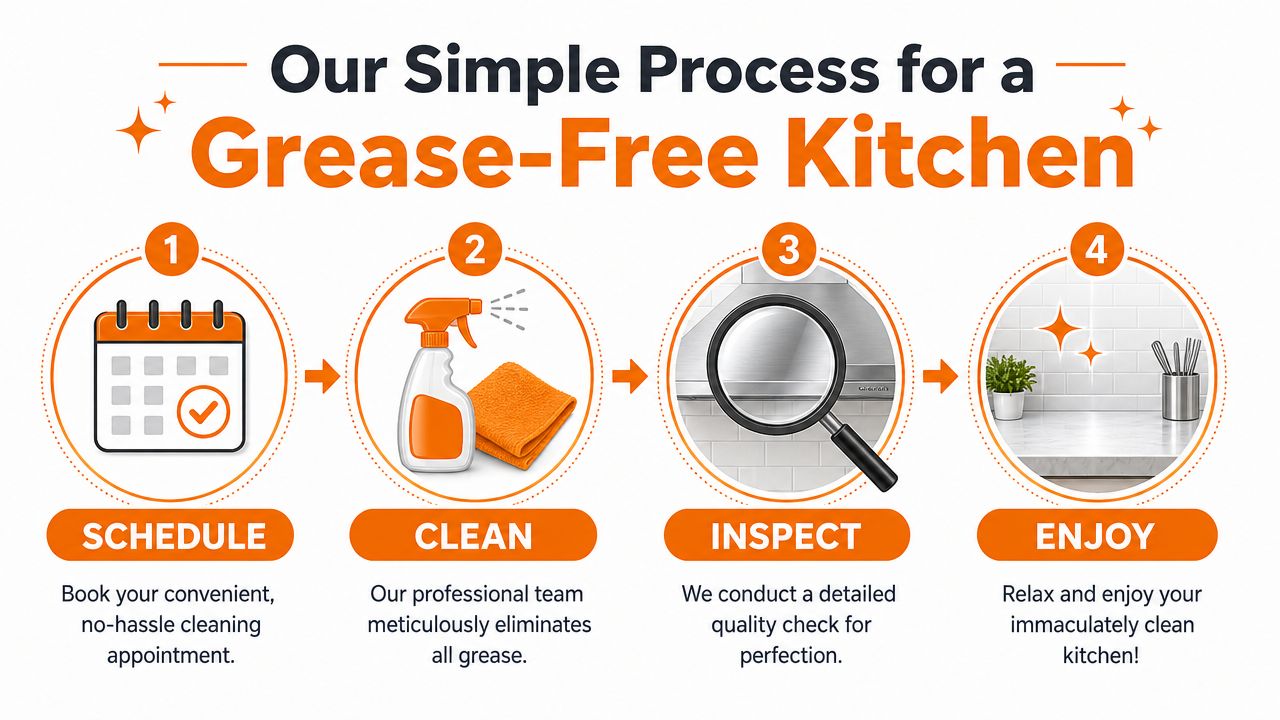
Schedule – Clean – Inspect – Enjoy
Schedule
Book online or call. You'll get a confirmation window so you know when to expect the team.Clean
Cleaners arrive with supplies and work from a checklist. If your kitchen has sticky cabinet faces, range hood film, floor-edge buildup, or greasy backsplash lines, those areas get focused attention.
A lot of homeowners ask whether homemade mixes are enough before they book. This explainer on using vinegar and baking soda for cleaning helps show where DIY methods fit and where they don't.
This quick video gives a simple look at the process:
Inspect
A quick quality check catches missed smudges, streaks, or leftover residue.Enjoy
You come back to a kitchen that feels clean when you open a cabinet, touch a handle, or run your hand along the backsplash.
A common local scenario is the Airbnb turnover in Delray Beach or Jupiter where the kitchen looks decent in photos, but the cabinet fronts feel gummy by the next guest arrival. That's where checklist cleaning beats rushed wipe-downs.
When to Stop Scrubbing and Call a Professional
At some point, more elbow grease just means more frustration. If the buildup is old, spread across multiple surfaces, or tied to a move-out or rental turnover, it's usually faster to bring in help.
A Few Habits That Help
Daily prevention doesn't need to be complicated:
- Wipe around the stove early before splatter fully hardens
- Use the vent fan while cooking to reduce how much oil settles
- Clean cloths often so you aren't spreading residue back across the surface
One important note for Palm Beach County homes. Using hot water and soap doesn't eliminate cooking oils from surfaces. It can push them into drains where they harden and cause clogs, which is why degreasing methods rely on surfactants that break grease down, as explained by Palm Beach County Public Utilities on fats, oils, and grease.
The Point Where DIY Stops Paying Off
It's time to call a pro when:
- Cabinets still feel sticky after repeated wiping
- The grease has spread beyond the stove area
- You're facing a landlord walkthrough or move-out deadline
- You manage an Airbnb with tight turnover windows
- There was a storm or power outage and the kitchen sat humid and closed up
Pricing depends on bedrooms, bathrooms, square footage, condition, and add-ons. Most clients request a custom estimate.
South Florida humidity shows up fast on kitchen surfaces, especially where grease and dust meet. In Palm Beach County rentals and move-outs, kitchens, floors, baseboards, and cabinet fronts are often the areas people notice first.
Kitchen Cleaning Questions We Hear in Palm Beach County
How long does a kitchen deep clean take?
It depends on the size of the kitchen and how built up the grease is. Heavier cabinet and hood buildup takes longer than a routine reset.
Are supplies included?
Yes. Cleaners arrive with supplies, including eco-friendly products suited to household surfaces.
Can you work around pets or kids at home?
Yes. Let the team know in advance so they can plan around gates, nap schedules, or pet routines.
Can you help after a storm or power outage?
Yes. Those jobs often need extra attention because closed-up homes in humid weather can leave kitchens feeling grimy fast.
Stop fighting that stubborn grease. Book your cleaning with Sunset Shine Home Cleaning – your trusted house cleaning service in West Palm Beach. Call 561-408-4020 or book online – sunsetshinehomecleaning.com