
Sticky cabinet doors, greasy pull areas, and a dull film near the stove are common in Palm Beach County kitchens. This guide on how to clean kitchen cabinets without damaging the finish is built for South Florida homes dealing with humidity, salt air, rental turnovers, and busy family kitchens.
Homeowners, renters, Airbnb hosts, and property managers usually want the same outcome. Cabinets that look clean, feel smooth, and don't end up swollen, streaked, or scratched a week later. Around West Palm Beach, that matters even more because moisture hangs in the air, coastal residue settles on surfaces, and grime tends to stick harder than people expect.
Table of Contents
- Your Guide to Cleaning Kitchen Cabinets in South Florida
- Gathering Your Supplies for Florida's Climate
- Cleaning Methods for Common Cabinet Materials
- When to Call the Professionals at Sunset Shine
- Maintaining Your Cabinets and Final Questions
Your Guide to Cleaning Kitchen Cabinets in South Florida
By the time many West Palm Beach homeowners notice cabinet buildup, the problem has already settled in. Grease collects first near the cooktop, fingerprints build around knobs and pulls, and dust on the tops of upper cabinets turns sticky once it mixes with cooking residue. In homes closer to the Intracoastal or the ocean, that film often hangs on longer because the air stays damp and salt can cling to surfaces.
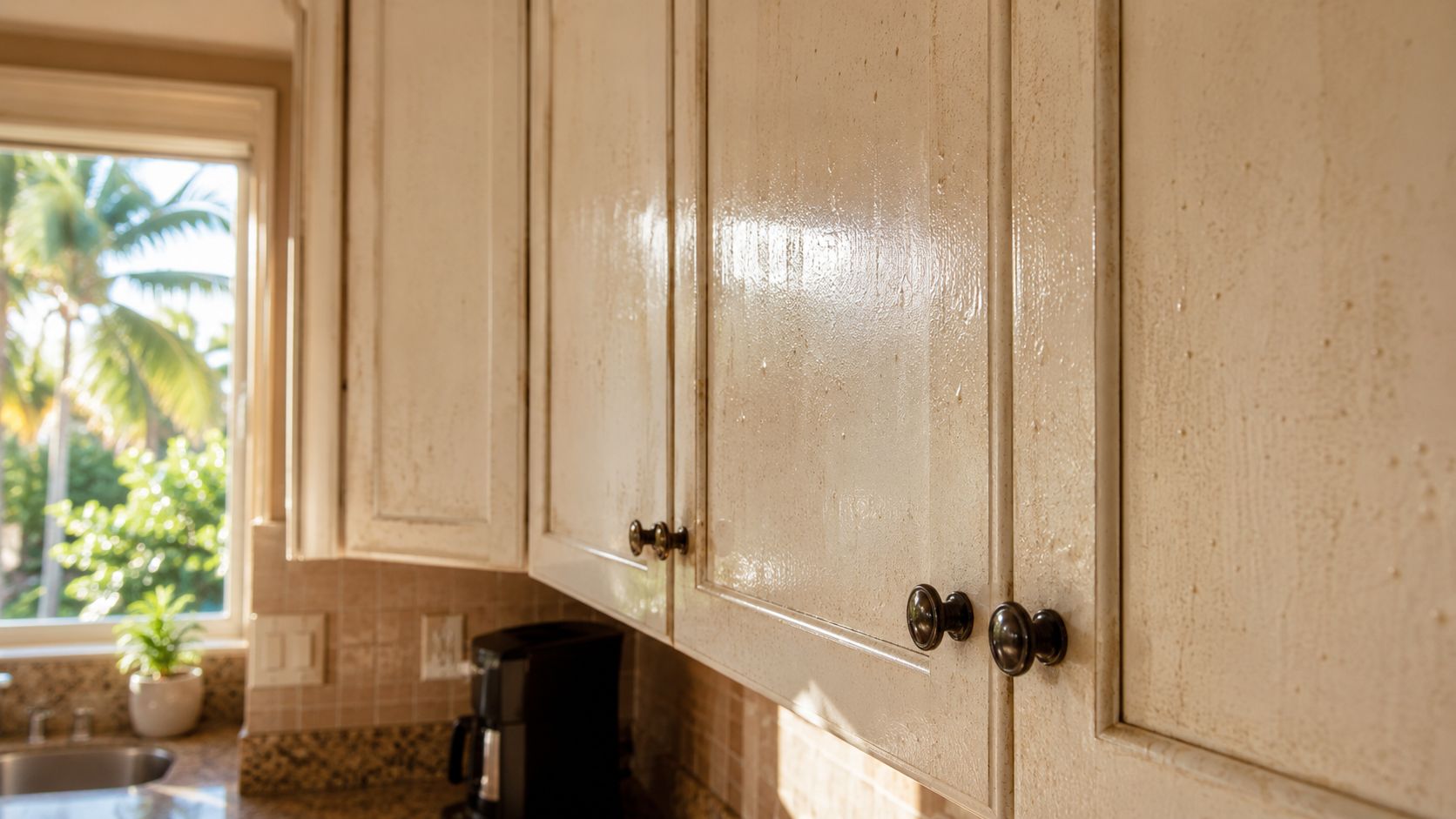
That is why cabinet cleaning in South Florida needs a different approach than standard online advice. Methods that work in dry climates can leave too much moisture behind here, especially around seams, panel edges, and hardware bases. I see this often in Jupiter, Juno Beach, Delray Beach, Boca Raton, and West Palm Beach kitchens where the finish still looks good, but the corners start swelling, softening, or trapping grime because previous cleaning left surfaces wet too long.
The main job is not scrubbing harder. It is removing grease while keeping water exposure under control.
That trade-off matters even more with the cabinet materials common in Palm Beach County homes. Wood doors can absorb moisture at joints. Painted finishes can turn dull or tacky if cleaner residue sits on them. Laminate and thermofoil usually handle light washing well, but once water gets under a lifted edge, the problem gets more expensive to fix.
Indoor moisture also affects how cabinets soil and dry. If the kitchen feels clammy, windows fog, or wiped surfaces stay tacky, check what causes humidity in a house before assuming the cabinet finish is failing. In South Florida, the right cleaning method protects the cabinet investment just as much as it improves how the kitchen looks.
Gathering Your Supplies for Florida's Climate
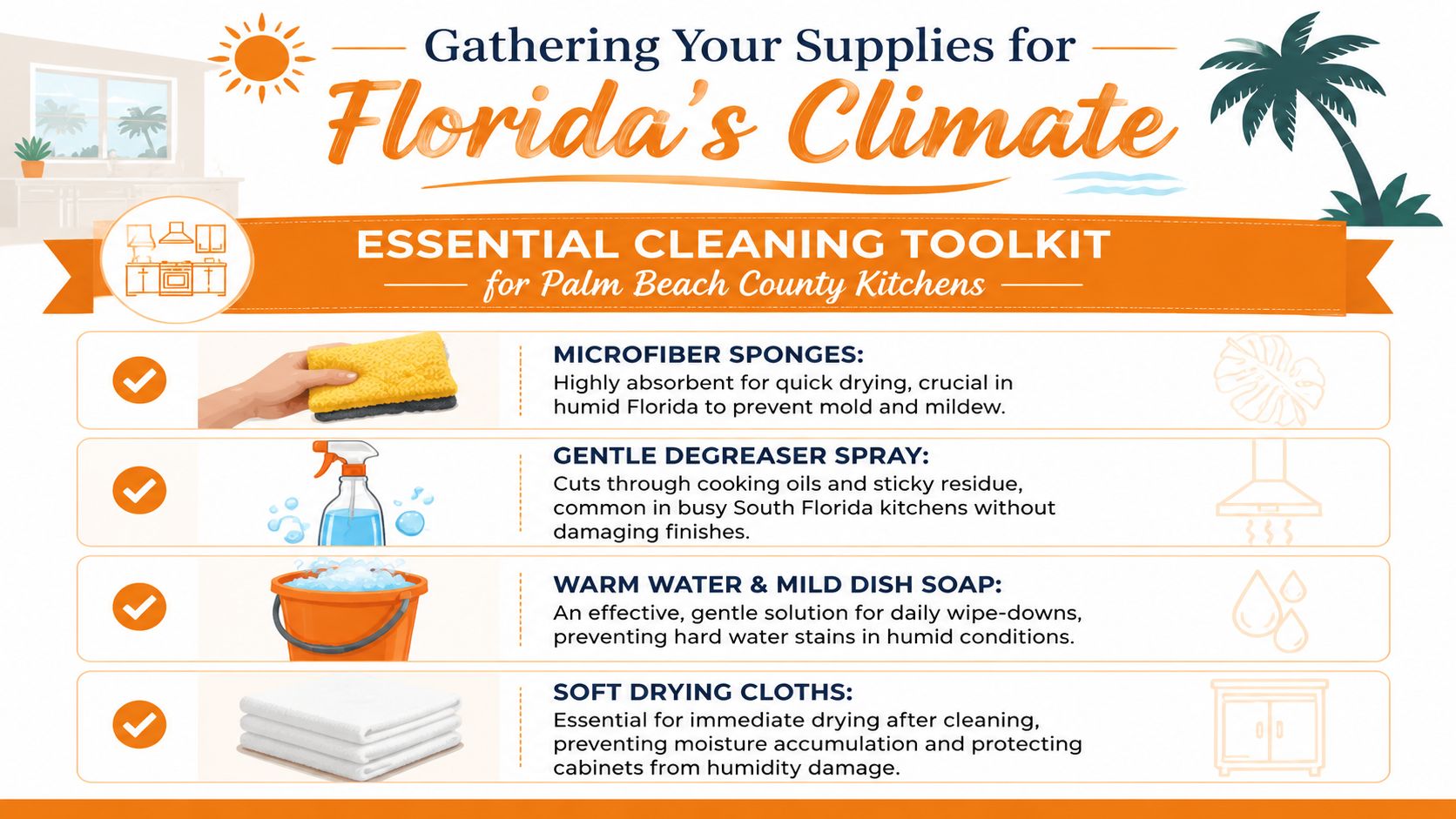
Open a cabinet door in a West Palm Beach kitchen in August and you can feel the difference right away. The air is heavier, surfaces stay damp longer, and any cleaner left in corners or around hinges takes its time drying. Your supply kit needs to account for that if you want clean cabinets without haze, swelling, or sticky residue.
The core kit
Start with cloths. In humid coastal homes, one rag is never enough because a cloth that begins slightly damp can turn into a grime-spreading towel by the second run of cabinets.
Keep these on hand:
- Microfiber cloths: Set aside one for cleaner, one for a light rinse, and one for final drying. This keeps grease, soap, and moisture from getting pushed back onto the finish.
- Soft dry towels: Helpful for cabinet faces, door edges, and around hardware where moisture tends to sit.
- A small bucket of warm water: Warm water helps loosen kitchen film without forcing you to use a stronger product than the finish can handle.
- Mild dish soap: Use a small amount in warm water. The goal is light cleaning power with low residue, followed by prompt drying.
- Soft-bristle brush or toothbrush: Good for profiles, trim lines, hinge areas, and the grime ring that forms near pulls and knobs.
- Vacuum with brush attachment: Cabinet tops, toe-kicks, and shelf edges should be dusted dry first so you do not make paste out of loose debris.
That basic setup handles routine cabinet cleaning in most Palm Beach County homes.
A safer workflow for Florida kitchens
Use a dry-to-damp-to-dry sequence. I recommend it often because it solves two common South Florida problems at once. It lifts greasy buildup and limits the time moisture sits on the cabinet.
Work in this order:
- Dry removal first: Vacuum or wipe away dust and crumbs.
- Cleaner on the cloth: Never spray the cabinet face directly.
- Light rinse pass: Use a separate cloth with plain water, wrung out well.
- Dry and buff right away: Pay extra attention to bottom edges, panel corners, and hardware bases.
This method matters more near the coast, where salt air and indoor humidity can leave painted doors tacky and can work moisture into seams over time. It is also safer for the cabinet materials common in local homes, especially painted wood, stained wood, laminate, and thermofoil.
If you prefer lower-residue options, these natural cleaning products for home can work well for routine cabinet care if the formula is mild and you still dry every surface thoroughly.
What to avoid
The wrong tool causes damage faster here than many homeowners expect.
- Paper towels on glossy or painted finishes: They can leave lint and fine scratch marks.
- Steel wool or abrasive pads: These dull the finish and can cut through protective topcoats.
- Heavy degreasers or strong DIY mixes: They may strip sheen, soften paint, or leave a film that attracts more grime in humid conditions.
- Overwet cloths: If water runs at the corner of the rag, it is too wet for cabinet cleaning.
- One cleaner for every cabinet type: Painted finishes, natural wood, veneer, laminate, and thermofoil each have different limits.
For routine cleaning, simple works better. Mild soap, controlled moisture, clean cloth rotation, and full drying usually protect the finish better than stronger products do. If the cabinets still feel sticky after that, or you see dark buildup near hinges, swollen edges, or mildew at seams, that is usually the point where professional help saves the cabinet from a more expensive repair later.
Cleaning Methods for Common Cabinet Materials
Cabinet material decides how much moisture, agitation, and product the surface can handle. In South Florida, that matters more than many homeowners expect. Humidity lingers in kitchens long after cooking, and homes closer to the water often pick up a fine salt film that makes cabinets feel dull or tacky faster.
The safest habit across all cabinet types is simple. Put cleaner on the cloth, not on the cabinet. Direct spray tends to collect around panel joints, under lower edges, and beside hardware, which is where swelling, lifting, and mildew usually start in Palm Beach County homes.
Wood Cabinets
Wood needs the most restraint.
Solid wood, veneer, and stained finishes can all look tough, but they react quickly to excess water. I see the first signs at the lower rail, around the sink side of the kitchen, and near doors that stay closed long enough for trapped humidity to sit.
Start by removing dry soil from cabinet tops, trim, toe-kicks, and shelf edges. Then wipe with a lightly damp microfiber cloth, following the grain so you are lifting residue instead of pushing it into pores and corners.
Use this order:
- Cleaner cloth: Lightly damp with mild soap solution
- Second cloth: Barely damp to pick up any residue
- Dry cloth: Immediate hand-dry around edges, seams, and hardware
That last step protects the finish. On wood cabinets in coastal homes, leaving even a little moisture behind can lead to hazing, edge darkening, or minor swelling over time.
If the finish is older or the stain looks dry, reduce pressure and make extra passes instead of scrubbing harder. Aggressive cleaning can wear through the topcoat long before the cabinet looks clean enough to justify the risk.
Painted and Lacquered Cabinets
Painted cabinets are common in newer kitchens across West Palm Beach, Palm Beach Gardens, and Wellington. They brighten a room, but they also show hand oils, cooking film, and splash marks faster than stained wood.
Use a soft microfiber cloth and keep it clean. A dirty cloth drags grit across the paint and leaves faint scuffing that stands out in Florida sunlight. Spot-test on an inside edge first, especially if the finish is matte or factory-sprayed.
For sticky areas near pulls and drawer fronts, work in small sections and dry as you go. Painted and lacquered surfaces usually respond better to two or three gentle passes than one heavy cleaning attempt.
Homes near the Intracoastal or the beach need extra attention here. Salt air can settle on smooth finishes and mix with kitchen grease, which creates a film that feels stubborn but still should not be attacked with abrasive pads or strong degreasers.
Laminate and Thermofoil Cabinets
Laminate and thermofoil are practical choices for condos, rentals, and many make-ready properties. They clean up faster than wood in many cases, but their weak point is the edge. Once moisture gets under a seam or lifted corner, the repair is no longer a cleaning issue.
Keep the process quick and controlled.
| Surface area | Best approach | Main risk |
|---|---|---|
| Flat door fronts | Mild soapy cloth, then dry buff | Streaking |
| Edges and seams | Soft brush or detail cloth with very light moisture | Moisture intrusion under the surface |
| Pull areas | Focused wipe with cleaner on cloth | Sticky residue left behind |
Detail work matters on these cabinets. Grease often collects in routed corners, around hinge plates, and at the underside of door pulls. If a cabinet still feels grimy after careful hand cleaning, compare it against a professional deep cleaning checklist for high-touch kitchen detail work so you can tell whether it needs more than routine maintenance.
Thermofoil also has a heat trade-off. Cabinets near the oven, toaster, or coffee station may show lifting long before the rest of the kitchen does. Clean those spots gently and keep moisture away from any edge that already looks loose.
When to Call the Professionals at Sunset Shine
Some cabinet jobs are still DIY jobs. Others turn into half a Saturday, a pile of dirty cloths, and cabinets that somehow still feel sticky near the handles.

What We See in Palm Beach County Homes
In local homes, the hardest cabinet grime usually isn't on the flat center panel. It's on top edges above eye level, around pulls, inside routed grooves, beside the stove, and near the sink where moisture and cooking residue mix. In Airbnb kitchens near the beach, we also see a fine layer of sand and dust stuck into lower cabinet trim after quick guest turnovers.
Experts note that difficult grime builds up in cabinet edges, grooves, and around hardware, and a simple wipe often isn't enough. Soft brushes or a towel-wrapped putty knife can help reach those spots, as described in this guide to cleaning cabinet detail areas.
If the buildup is old, the finish is delicate, or the property is heading into a landlord walkthrough, sale listing, or guest arrival, professional help usually makes sense. For reference, this is the kind of detail level many clients compare against in a professional deep cleaning checklist.
What's Included
For cabinet-related kitchen cleaning, typical service requests include:
- Kitchen degreasing: Cabinet exteriors, handles, visible edges, counters, sink area, and backsplash wipe-downs
- Dust removal: Window sills, baseboards, vent dust, shelf edges, and upper cabinet tops when accessible
- Floors and detail work: Vacuuming, mopping, corners, and toe-kick buildup
- High-touch cleaning: Pulls, knobs, switches, and frequently touched surfaces
- Add-ons when needed: Inside oven, inside fridge, inside cabinets, wall spot cleaning, pet-hair focus areas, interior windows
For homes that need ongoing upkeep, Sunset Shine Home Cleaning also offers recurring and deep cleaning services that include kitchen cleaning with supplies brought by the team.
Schedule Clean Inspect Enjoy
The process is straightforward.
- Schedule: Book online or call. You'll get a confirmation window.
- Clean: The team arrives with supplies and follows a checklist-based clean.
- Inspect: A quick quality check catches missed smudges, residue, or streak-prone spots.
- Enjoy: You come back to a cleaner kitchen without spending your weekend on cabinet detail work.
A quick look at the service setup helps if you're comparing local providers.
A real local scenario
In Wellington move-out cleans, cabinets often look fine from the center of the room. Up close, the problems show up fast. Sticky pull areas, dark buildup along shaker edges, and greasy dust sitting on upper cabinet tops that a landlord or property manager will notice during the final walkthrough.
Pricing depends on bedrooms, bathrooms, square footage, condition, and add-ons. Most clients request a custom estimate.
Maintaining Your Cabinets and Final Questions
If you want cabinets to stay clean longer in South Florida, the goal isn't aggressive cleaning. It's steady maintenance before grease and dust harden into a sticky film.
A Simple Maintenance Rhythm
A workable routine looks like this:
- Weekly: Wipe pull areas and spots near the stove with a lightly damp microfiber cloth, then dry.
- As needed after heavy cooking: Check the cabinets closest to the range and sink.
- Periodically: Do a fuller top-to-bottom wipe of cabinet exteriors, including edges and hardware.
- For tougher buildup or before key dates: Book a deeper clean before guests arrive, before a move, or ahead of a property walkthrough.
South Florida humidity shows up on cabinet surfaces faster than many people expect. In coastal homes, salt air and moisture can make a kitchen feel clean at a glance but still leave the cabinet finish dull or tacky.
Micro FAQ
How long does cabinet cleaning take?
It depends on kitchen size, buildup, cabinet style, and whether you're cleaning just exteriors or interiors too.
Are supplies included with professional service?
Yes. Professional teams typically bring their own cloths, tools, and cleaning products.
Can old sticky grease be removed from cabinets?
Often, yes. The method depends on the cabinet material and how long the buildup has been sitting.
What add-ons matter most for move-out or rental turnover cleans?
Inside cabinets, inside the fridge, inside the oven, wall spot cleaning, and detail work around kitchen hardware are common requests.
Move-out cleans around West Palm Beach often come down to what people notice first. Kitchens, bathrooms, floors, baseboards, and cabinet fronts.
Book your cleaning with Sunset Shine Home Cleaning – your trusted house cleaning service in West Palm Beach. Call 561-408-4020 or book online at sunsetshinehomecleaning.com.