
Florida homes can look clean while humidity keeps bathrooms, closets, HVAC areas, and window edges damp enough for mold to take hold. If you're searching for how to prevent mold in Florida homes, the practical answer starts with moisture control, ventilation, fast drying, and regular cleaning designed for Palm Beach County conditions.
Homeowners, renters, Airbnb hosts, landlords, and property managers all want the same outcome: a fresh, dry, guest-ready or move-in-ready space without musty odors and surprise mold around the next walkthrough. In West Palm Beach and nearby coastal communities, salt air, tropical pollen, rainy-season mud, year-round AC dust, and tightly closed homes make routine prevention especially important.
Table of Contents
- Recognizing the Mold Risk in Your Florida Home
- Controlling Humidity and Ventilation Effectively
- Identifying and Fixing Common Moisture Sources
- Creating a Seasonal Mold Prevention Routine
- When to Call a Professional for Mold Prevention
Recognizing the Mold Risk in Your Florida Home
A bathroom in a Palm Beach Gardens condo may feel cool after the air conditioner runs, yet the grout can remain damp from showers. In a beach rental in Juno Beach, sand and moisture collect near entryways, while kitchens in busy Airbnb units hold onto cooking steam long after guests leave. These conditions don't always produce visible mold immediately.
Florida's warm, humid weather creates recurring moisture opportunities. Bathrooms with weak exhaust fans, kitchens where steam isn't vented outdoors, and windows with condensation deserve close attention. The Florida Department of Health recommends keeping home humidity below 60% and venting moisture from showering and cooking outdoors, while the EPA identifies 30% to 50% relative humidity as the ideal indoor range. (Florida mold guidance and humidity prevention)
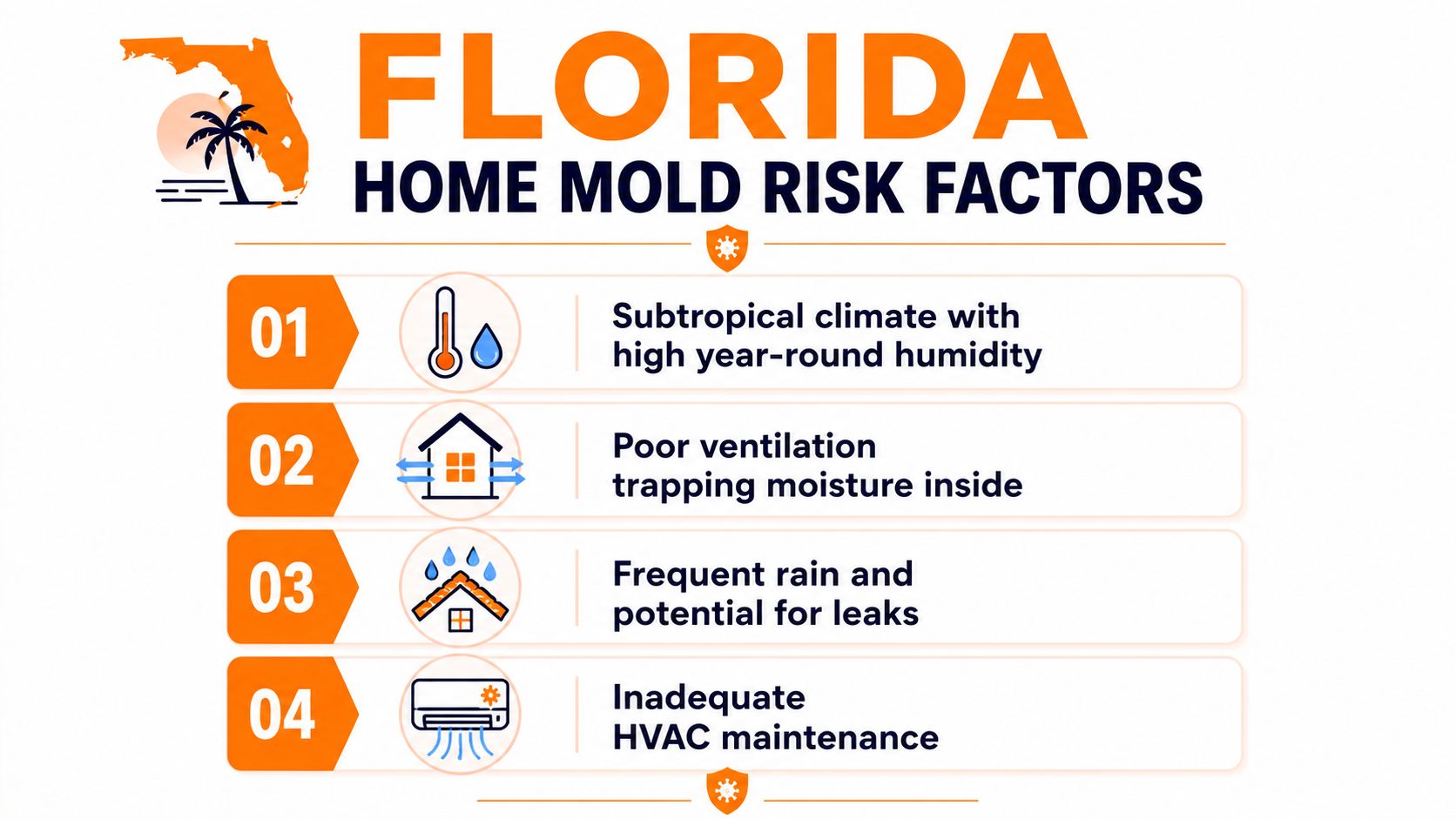
Early warning signs worth checking
Look beyond the center of a wall. Check grout lines, ceiling corners, the underside of sink cabinets, window sills, closet walls, and the area around AC vents.
- Musty smell: An earthy odor that returns after cleaning can point to ongoing dampness.
- Damp surfaces: Walls, trim, or stored items shouldn't feel wet inside an air-conditioned home.
- Small discolorations: Specks near ceilings, caulk, grout, or vents deserve attention before they spread.
- Recurring condensation: Moisture on windows or cold duct surfaces signals that indoor air is carrying too much water.
For a deeper look at indoor moisture causes, review what causes humidity in a house. A hygrometer is more useful than guessing from temperature. A cool home can still have mold-friendly moisture levels.
Controlling Humidity and Ventilation Effectively
Humidity control works best as a daily system, not a reaction after mold appears. Place a hygrometer in bathrooms, bedrooms, laundry areas, and rooms that stay closed for long periods. Keep readings below 60%, with 30% to 50% preferred according to the EPA's mold guidance.
A practical operating routine is to set HVAC controls or a dehumidifier around 45% to 55% relative humidity, then verify readings during humid weather and after showers, cooking, or storms. The CDC recommends keeping home humidity as low as possible, no higher than 50% all day, and identifies air conditioners and dehumidifiers as useful tools. (CDC mold prevention guidance)
Use fans and equipment with purpose
Run the bathroom exhaust fan during a shower and continue afterward long enough to clear lingering steam. In the kitchen, use the range hood whenever cooking creates visible vapor or strong heat. Fans that only recirculate air can improve comfort, but they won't remove moisture unless the system exhausts outdoors.
Keep AC returns and supply vents clear of furniture, dust, and stored items. Have an HVAC professional inspect condensate drainage when you notice ceiling staining, water near the air handler, or a musty odor when the system starts. Attic ventilation can also affect the rooms below, and these Paletz Roofing attic vent photos offer useful visual context when discussing attic airflow with a contractor.
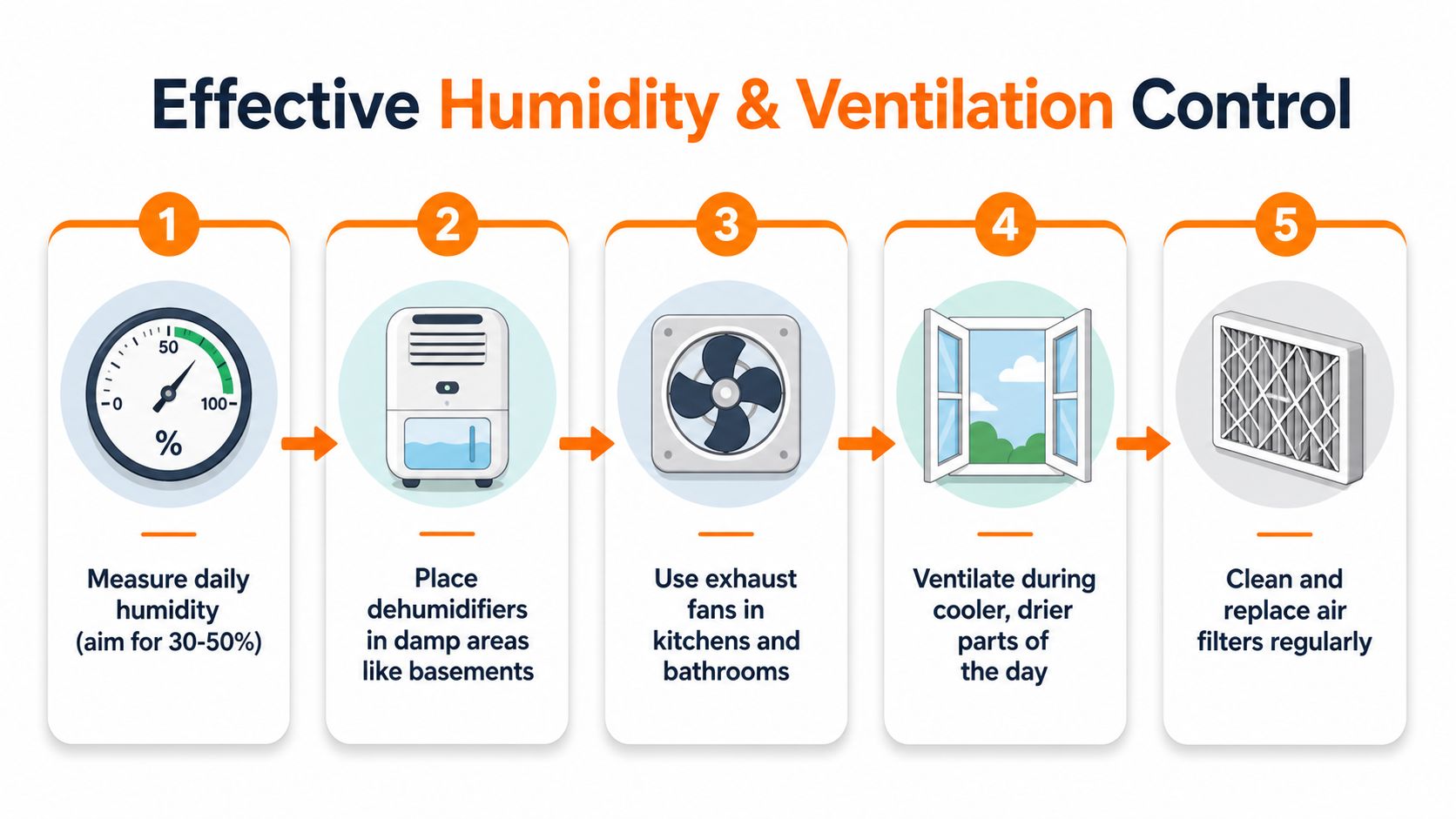
Practical rule: Opening windows only helps when outdoor air is actually drier. During a muggy Palm Beach afternoon, it can bring more moisture inside.
For room-by-room strategies, see how to reduce humidity in a house. Don't rely on temperature alone. Moisture readings tell you whether the system is working.
Identifying and Fixing Common Moisture Sources
Mold prevention begins with finding where water enters, collects, or fails to dry. Palm Beach County homes face different risks depending on construction and location. Tile roofs can develop leak points after severe weather, older plumbing can drip inside vanity cabinets, and poorly directed irrigation or downspouts can keep exterior walls and entry areas wet.
Inspect under sinks, around toilets, behind washing machines, beside refrigerators with water lines, and near AC drain components. After a storm, check ceilings, window edges, closets on exterior walls, and flooring near sliding doors. A small stain may be less important than the active moisture behind it.
Stop small leaks before they become cleaning problems
Dry wet materials promptly. EPA guidance emphasizes repairing leaks, increasing ventilation when outside air is cold and dry, and dehumidifying when outside air is warm and humid. Remediation guidance commonly uses 24 to 48 hours as the drying benchmark for affected materials, as explained by the Florida Department of Health mold guidance.
Clothes dryers should vent outdoors, not into a laundry room or garage. Keep gutters and drainage paths clear, correct water that pools against the home, and avoid overwatering plants beside exterior walls. Houseplants can add localized moisture, especially in closed rooms, so don't cluster them beside cold windows or AC returns.
If a leak or storm has already soaked materials, Georgetown water damage cleanup guidance provides a useful reminder that drying and documenting affected areas should happen before routine cleaning begins. Cleaning a damp surface without correcting the source only hides the problem temporarily.
Dust also carries moisture and residue into overlooked spaces. Use how to clean vents as a practical reference for keeping vent covers and surrounding areas from becoming neglected buildup zones.
Creating a Seasonal Mold Prevention Routine
Palm Beach County homes need maintenance that follows weather and occupancy patterns. A vacant winter condo, a year-round family home in Wellington, and a vacation rental near Boca Raton won't collect moisture in exactly the same places, but each benefits from a repeatable inspection routine.
During the rainy season, check roof areas, window seals, gutters, closets, and exterior-facing baseboards after heavy weather. Run dehumidification consistently when indoor readings rise, and dry tracked-in water near entrances before it reaches grout or flooring edges.
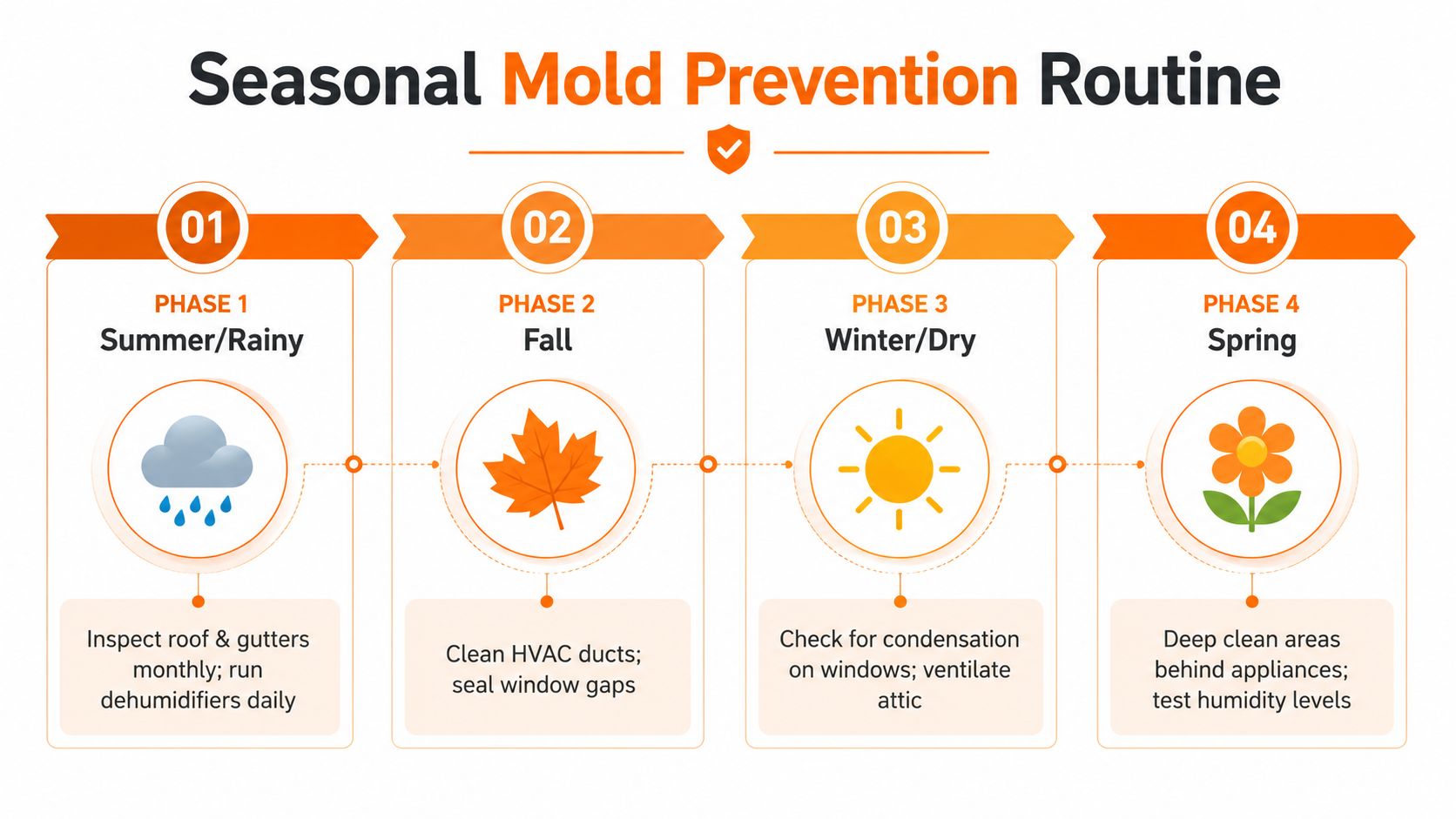
A simple recurring checklist
- Rainy-season checks: Look for roof or plumbing leaks, wet closets, damp rugs, and mud at entryways.
- Storm follow-up: Inspect ceilings, window tracks, flooring edges, and HVAC areas after wind or water intrusion.
- Dryer and HVAC review: Confirm the dryer vents outdoors and make sure AC airflow and condensate drainage are unobstructed.
- Pollen-season cleaning: Remove tropical pollen from window sills, screens, ledges, and AC-adjacent surfaces before residue becomes sticky buildup.
- Monthly room scan: Open rarely used cabinets and closets, check behind appliances, and compare hygrometer readings across rooms.
Deep cleaning matters because mold risk often begins in places regular tidying misses. Baseboards behind furniture, bathroom ceiling edges, fan covers, and window tracks can hold dust and moisture together. For Airbnb hosts, a consistent turnover checklist is especially important because tight checkout windows leave little time to notice damp towels, wet bath mats, or residue around kitchen sinks.
When to Call a Professional for Mold Prevention
Call for professional help when moisture keeps returning, mold appears in multiple rooms, or a musty odor comes from the HVAC system. Hidden growth can sit behind drywall, beneath flooring, inside cabinets, or around an air handler where surface wiping can't reach it.
A homeowner can clean a small, accessible surface after fixing the moisture source, but widespread growth, storm damage, sewage contamination, or suspected HVAC contamination requires a qualified assessment. Don't disturb concealed material aggressively, because spreading dust and debris can make the situation harder to control.
Know what a cleaning service can and can't do
A residential cleaning team can remove dust, soap residue, tracked-in sand, pollen, and ordinary surface buildup. That service supports prevention by keeping bathrooms, kitchens, floors, baseboards, sills, and high-touch areas easier to inspect.
It can't replace roof repair, plumbing work, HVAC diagnosis, structural drying, or licensed mold remediation. If water has reached drywall or insulation, contact the appropriate restoration or building professional first, then schedule cleaning after the area is dry and cleared for normal occupancy.
For routine upkeep, Sunset Shine Home Cleaning serves homes and rentals across West Palm Beach, Palm Beach Gardens, Jupiter, Juno Beach, North Palm Beach, Riviera Beach, Royal Palm Beach, Lake Worth, Boynton Beach, Delray Beach, Boca Raton, Wellington, Westlake, Loxahatchee, Loxahatchee Groves, and The Acreage. Services include recurring standard cleaning, deep cleaning, move-in and move-out cleaning, post-construction cleanup, Airbnb turnover, and property-management make-ready work.
Before booking, ask whether supplies are included, whether the team follows a room-by-room checklist, and whether add-ons such as inside the oven, refrigerator, cabinets, wall spot cleaning, pet-hair focus areas, or interior windows are available. Pricing depends on bedrooms, bathrooms, square footage, condition, and add-ons, so most clients request a custom estimate.
South Florida humidity shows up in grout lines and bathroom ceilings faster than many people expect. After storms, landlords and guests notice the details first, especially kitchens, bathrooms, floors, baseboards, odors, and visible dust around vents.
Sunset Shine Home Cleaning can help keep your Palm Beach County home, rental, or Airbnb cleaner and easier to inspect with recurring, deep, move-in, move-out, and turnover cleaning. Book your Sunset Shine Home Cleaning service online or call 561-408-4020 to request an estimate and create a practical cleaning routine for your property.