
Construction clean up pricing in West Palm Beach usually starts with a $274 to $708 residential total, with an average around $477, and many guides also quote $0.15 to $0.60 per square foot for interior post-construction cleaning. For a West Palm Beach homeowner, that usually means the quote you get should reflect the stage of cleanup, the amount of dust and debris, and whether the job is a light final pass or a full reset after remodel work.
If you're staring at a renovated kitchen, a fresh bathroom, or a rental that needs to be guest-ready by tomorrow, that range is the starting point, not the whole story. In Palm Beach County, humidity, salt air, and the kind of fine dust that settles into vents and window tracks can push a job toward the higher end, especially when the cleaner is doing detail work instead of a quick wipe-down.
Table of Contents
- What Construction Clean Up Pricing Actually Means
- What Drives the Cost on Your Quote
- Rough Clean, Final Clean, and Touch-Up Explained
- Sample Estimates for West Palm Beach Homes
- What Is Included and What Costs Extra
- Five Ways to Lower Your Construction Clean Up Bill
- How Sunset Shine Builds and Delivers Your Quote
- Pricing Questions Homeowners Ask Before Booking
What Construction Clean Up Pricing Actually Means
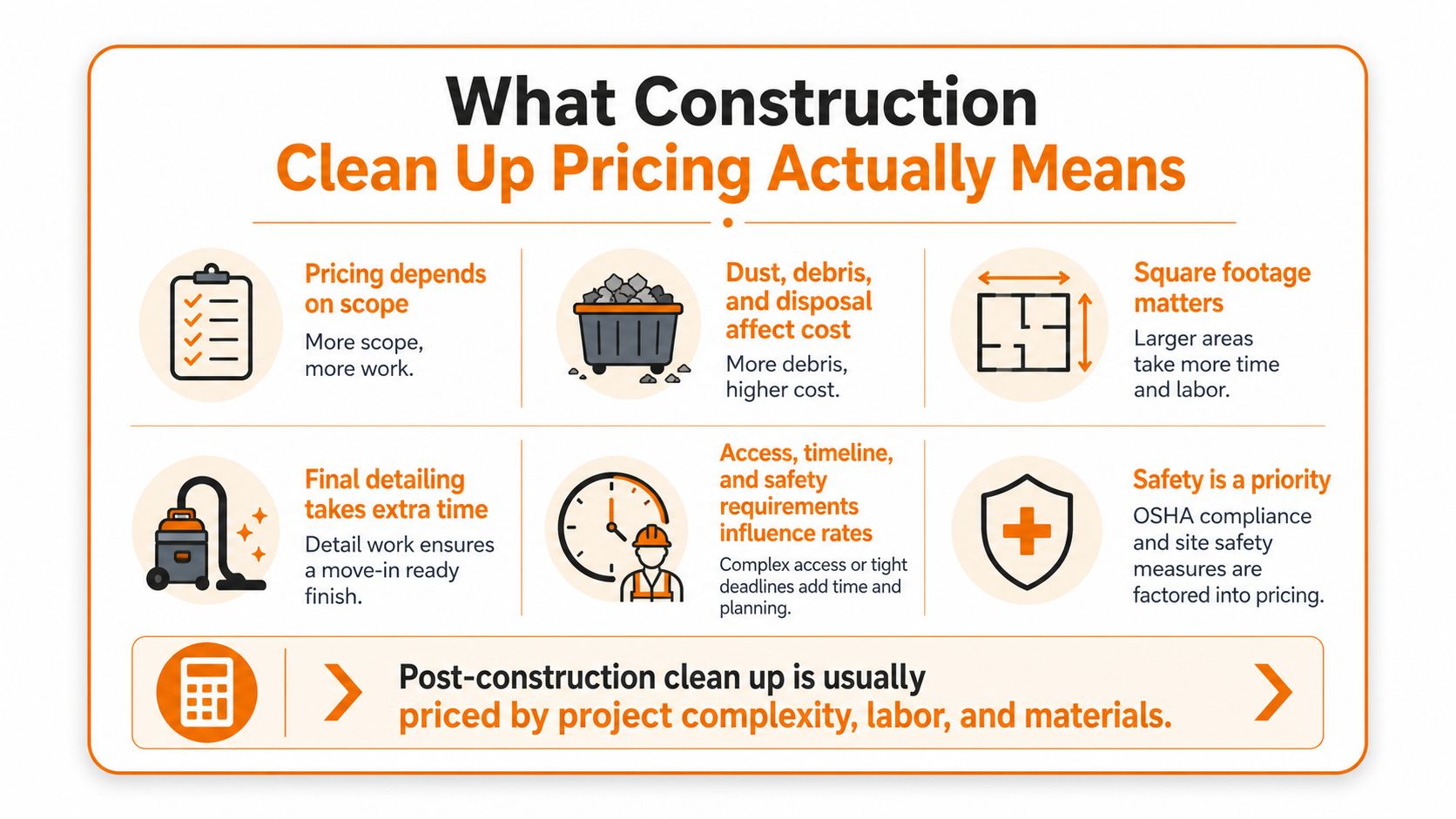
Construction clean up pricing is the labor, supplies, and disposal cost tied to removing construction dust, debris, stickers, film, and residue after a remodel or new build. It's not the same as regular house cleaning, because the crew has to deal with drywall dust, grout haze, paint specks, and the kind of residue that shows up after trades are done but before a home is livable.
The national residential benchmark most often cited is $274 to $708, with an average around $477 and extreme cases reaching $1,300 depending on home size and project scope. Another common way to quote the work is by square footage, and interior post-construction cleaning typically lands at $0.15 to $0.60 per square foot nationally, which is why two homes that look similar from the outside can get very different numbers on paper. HomeAdvisor's construction site cleaning cost guide shows how broad the market range really is.
Why the same house can price differently
A tight, well-contained job with light dust is one thing. A renovation with plaster dust in the AC returns, sticky residue on glass, and sand tracked in from crews coming and going is another. In South Florida, humidity makes bathroom film and mildew show up faster, and salt air can leave coastal fixtures needing more detail than a standard wipe.
Practical rule: if the quote sounds flat and vague, ask what stage of cleaning it covers. The right price always follows the right scope.
A good quote should make sense before anyone opens a bucket. If it doesn't tell you whether you're paying for rough cleanup, a final clean, or a touch-up pass, you're not comparing the same service.
What Drives the Cost on Your Quote
A post-construction quote usually comes down to five things, and each one changes how long a crew stays on site. Labor is the biggest driver, because pricing is usually built from phase hours, burdened hourly rate, overhead, supplies, disposal, and risk margin. One guide notes hourly rates of roughly $25 to $50 per worker, and labor can account for roughly 90% of the total bill in this kind of work, which is why a low quote can leave out the detail work that makes the space usable. GetBidClean's pricing breakdown and FlexCrew USA's cost-per-square-foot guide both point to labor as the main cost center.
For more detail on how fine dust changes the workload, see our breakdown of dust from construction.
The five drivers that move the number
- Scope of work: A simple dust pass is not the same as a full reset with windows, fixtures, and trim. If the proposal does not spell out what gets cleaned, the quote is incomplete.
- Debris level: A room with light film is fast. A room full of packaging, drywall dust, and leftover adhesive takes more time and more supplies.
- Square footage: Bigger homes take longer, but the bigger issue is often detail density, not just size.
- Site access: Tight stairwells, limited parking, or an HOA that limits arrival windows can slow a crew down. That matters in places like Westlake and in condo work where every trip in and out takes planning.
- Specialty cleaning: Sticker-covered tracks, second-floor haul-out, coastal fixture detailing, and fine dust in vents all push the quote upward because they take more time than routine janitorial work.
In Boynton Beach renovations, window tracks loaded with stickers and residue can add a lot of hand work. In Wellington, second-floor debris move-out can eat time before the cleaning even starts. Near Juno Beach, salt-fogged fixtures and glass need more care than a basic interior reset.
A homeowner can get a better number by walking the cleaner through the home room by room and pointing out the worst areas. That gives the crew a real picture of the job, not a guess based only on square footage.
Rough Clean, Final Clean, and Touch-Up Explained
The biggest pricing mistake is asking for the wrong phase. Rough clean, final clean, and touch-up clean are different jobs, and each one has its own price band and purpose. A contractor who needs the job site cleared for trades wants rough clean. A buyer walking in on closing day wants final clean.
| Stage | National Per-Sq-Ft Range | What It Delivers |
|---|---|---|
| Rough Clean | $0.10 to $0.30 | Bulk debris, leftover materials, packaging, and the first pass after trades leave |
| Final Clean | $0.30 to $0.75 | Move-in-ready finish with detailed dust removal, floors, fixtures, and visible surfaces |
| Touch-Up Clean | $0.10 to $0.20 | Punch-list cleanup, smudge removal, and final polish before handoff |
These stage prices show up in multiple pricing guides, including Zters' construction cleanup guide, Ziva Cleaning's cost guide, and Fixr's post-construction cleaning pricing page. The spread matters because each phase uses a different amount of labor and detail.
Which stage should you request first
A West Palm Beach condo buyer who needs the place ready for closing should usually be asking for final clean, not rough clean. A Wellington spec build often needs rough clean first, then final clean, then touch-up if the punch list changes after inspection. That sequencing keeps the crew from repeating work and keeps the quote cleaner.
Sunset Shine's new construction cleaning page lines up with that same logic, because the stage has to match the handoff date.
A final clean is what gets a space ready for living, not just empty.
If you're comparing bids, ask which phase is included and whether a touch-up visit is part of the plan. That one detail often explains why two quotes look close but deliver very different results.
Sample Estimates for West Palm Beach Homes
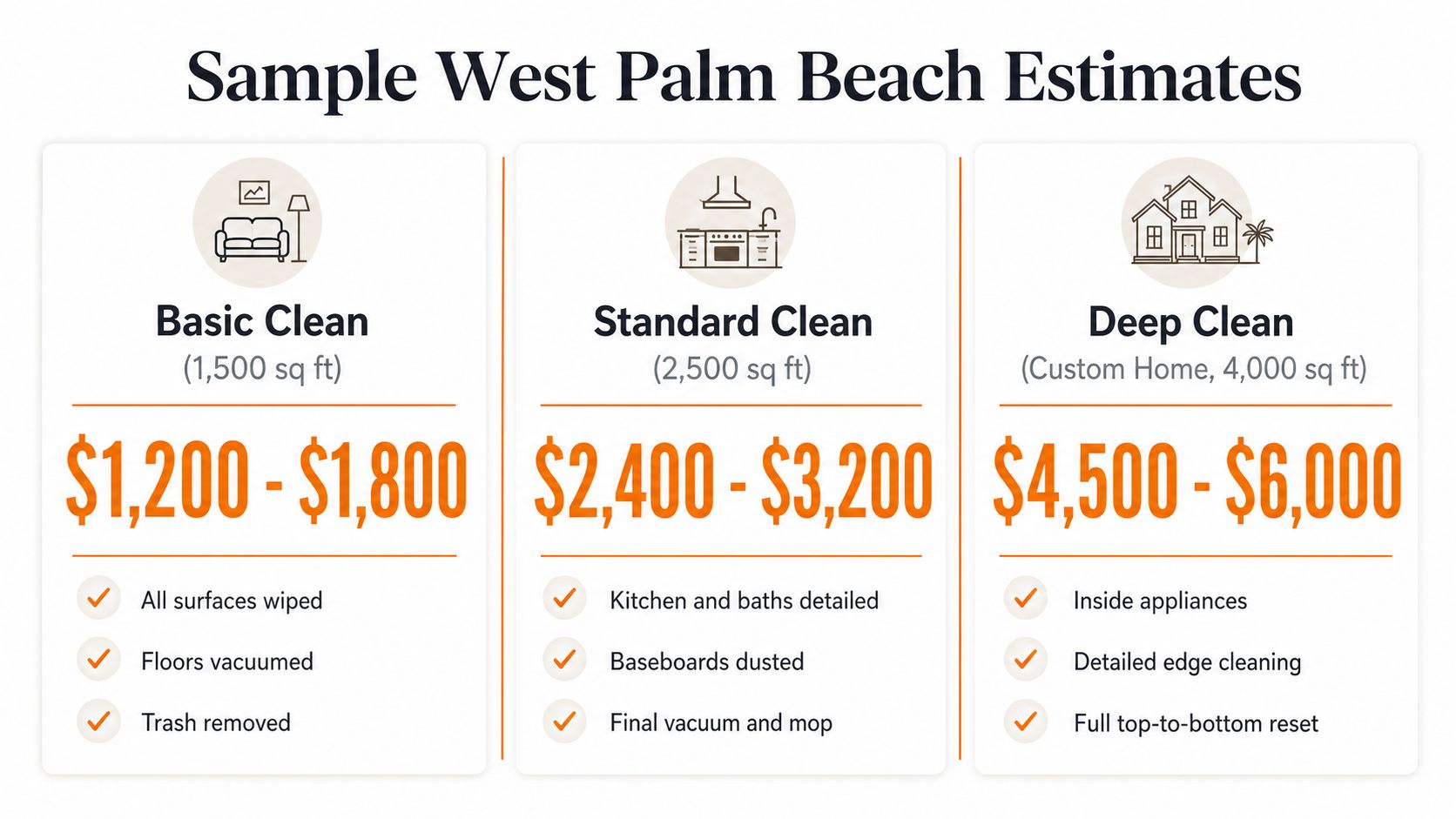
A quote makes more sense when you put a real home shape around it. The same pricing mechanics can land in a very different place depending on whether the job is a condo remodel, a single-family renovation, or a coastal build with more finish work.
Three common West Palm Beach scenarios
A 1,200-square-foot Jupiter condo after a remodel often sits in the final-clean range of about $180 to $720 when you apply the national per-square-foot pricing model. That kind of job is usually less about debris volume and more about detailed dust removal from trim, glass, and hard surfaces.
A 2,400-square-foot West Palm Beach single-family renovation can require both rough and final clean, which puts the combined work roughly in the $480 to $1,800 span using the national rough and final stage ranges. The gap comes from how much of the job still needs to be removed before the final detailing begins.
A coastal Juno Beach build can price higher when salt exposure means more attention to fixtures, glass, and the kinds of surfaces that pick up residue quickly. That doesn't change the math of the stages, but it does change how much labor goes into the finish.
Sunset Shine's post-construction cleaning calculator is useful when you want a quote tied to rooms, finish level, and the amount of cleanup left behind.
What these examples tell you
- Condo jobs usually price by detail, not just size.
- Single-family renovations often need phase sequencing.
- Coastal homes tend to need more careful finish work on fixtures and glass.
The practical takeaway is simple. A small condo can still cost more than expected if the surfaces are delicate and the dust is fine. A larger home can stay reasonable if the debris was contained and the scope is tight.
What Is Included and What Costs Extra
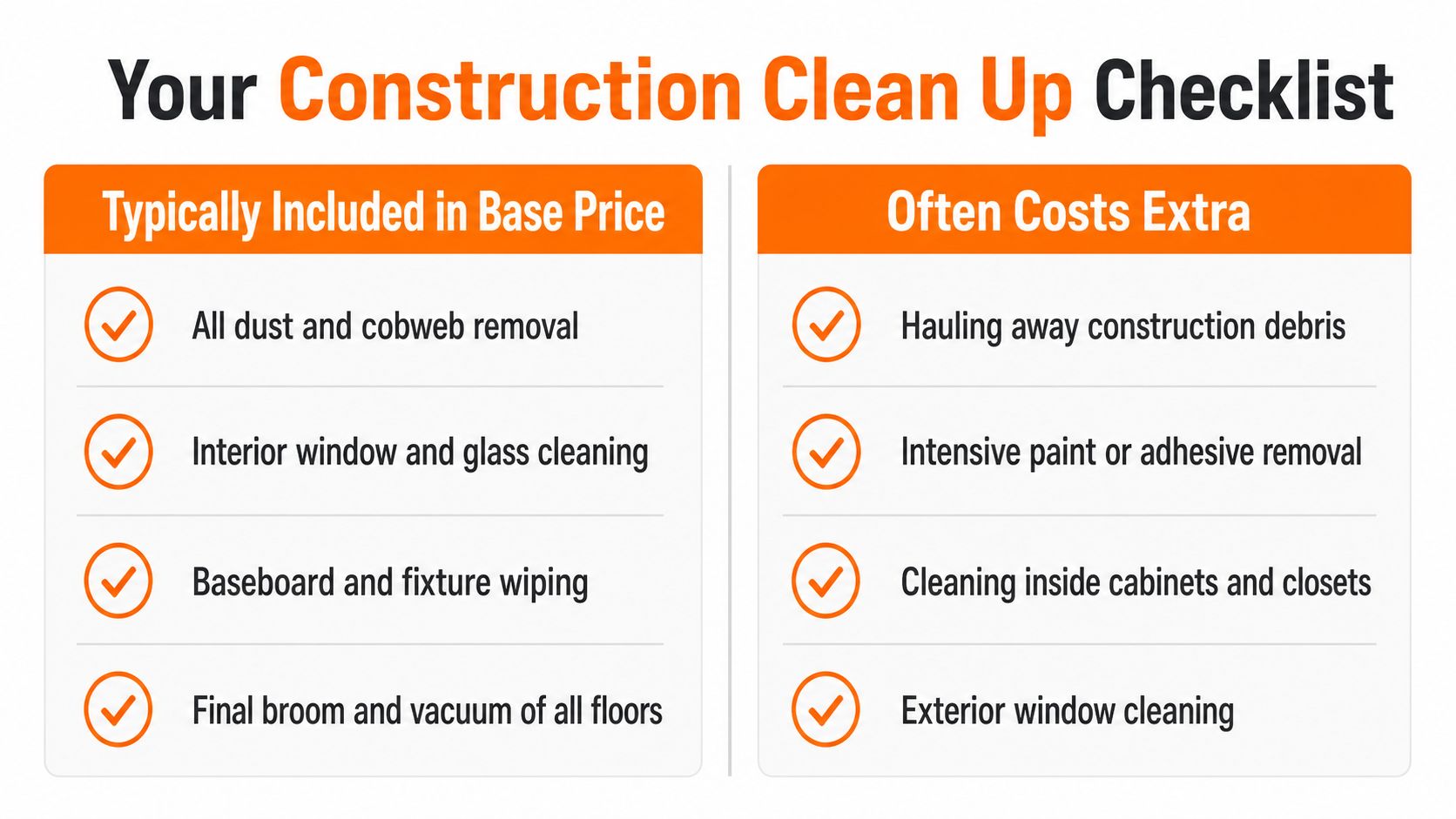
A base post-construction quote usually covers the dust and finish work that makes the space presentable. It normally includes bathrooms, kitchen degreasing, floors, baseboards, dust removal, mirrors, high-touch disinfecting, cabinet exteriors, sinks, counters, fixtures, and window sills.
What's usually in the base price
- Fine dust removal: Drywall dust, settling dust, and surface dust from open areas.
- Bathrooms and kitchens: Sinks, counters, fixtures, mirrors, and exterior cabinet faces.
- Floor care: Vacuuming and mopping for hard floors, plus a final cleanup pass.
- Detail surfaces: Baseboards, sills, vents, and high-touch points.
What often costs extra
Inside oven, inside fridge, inside cabinets, wall spot cleaning, pet hair focus areas, interior window cleaning, adhesive removal, grout haze removal, and contractor debris haul-away often land outside the base quote. Those tasks take longer, need more specific products, or require extra time in rooms that were already cleaned once.
That split is exactly why a quote should be read line by line. If the estimate says “final clean” but doesn't mention interior appliances or cabinet interiors, you're probably looking at a lighter scope than you expected.
In Palm Beach County, move-out jobs often need the kitchen and bathroom extras most. Rental turnovers, especially in Airbnb units, can also need a stronger focus on sticky residues, fridge interiors, and wall spots left by luggage, spills, and fast guest turnover.
Five Ways to Lower Your Construction Clean Up Bill
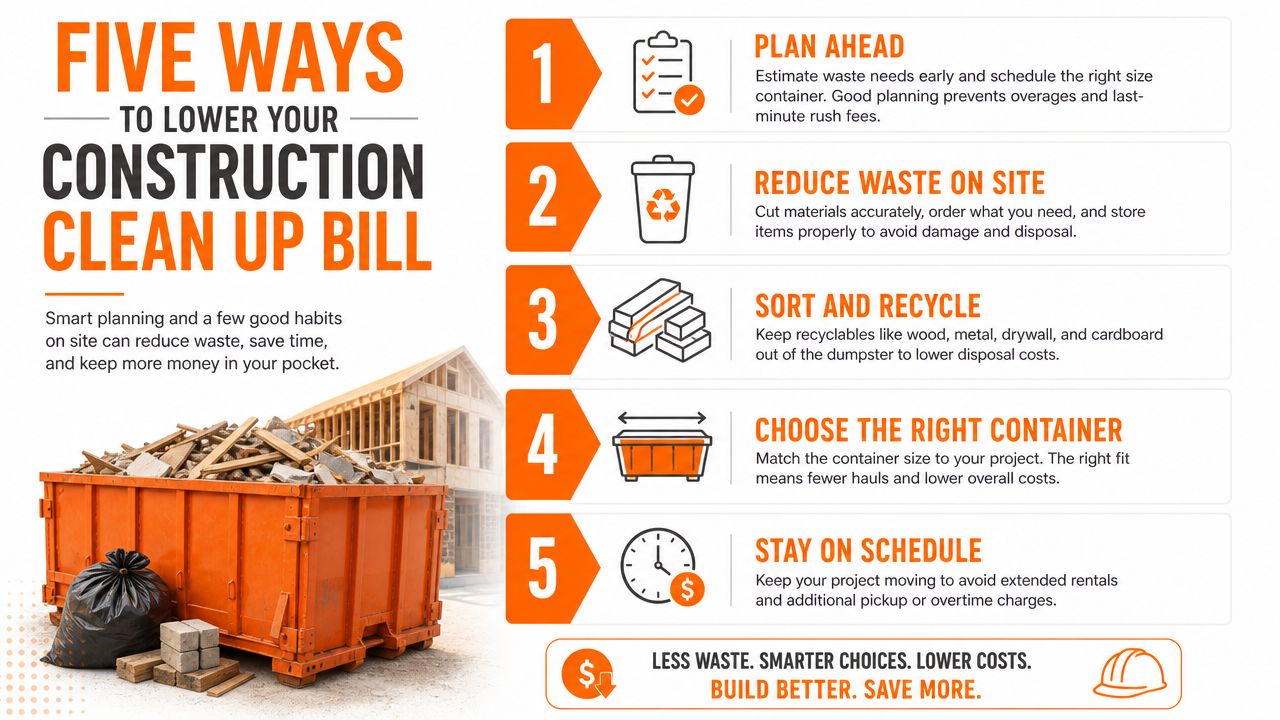
The cheapest quote is not always the smartest one. The better move is to reduce wasted labor so the crew spends time cleaning, not sorting.
Five moves that keep the bill under control
- Pre-haul large debris. If the contractor can pull out lumber scraps, boxes, and heavy waste before the cleaners arrive, the crew can start on the actual cleaning instead of doing hauling.
- Label trouble spots. Point out grout haze, sticker residue, paint specks, or a bad room before the estimate. That helps the quote reflect actual labor instead of a broad guess.
- Group the phases. If rough, final, and touch-up are all needed, plan them together when possible so the crew doesn't have to mobilize twice for the same site.
- Clear the surfaces. A kitchen island covered in tools, hardware, and boxes takes longer to clean because the crew has to move around clutter instead of wiping down finish surfaces.
- Book with some flexibility. Midweek scheduling is often easier for crews than tight same-day rushes, especially for jobs that involve multiple rooms or detailed finish work.
A Boca Raton kitchen flip is a good example. If the contractor clears the heavy debris and the homeowner flags cabinet stickiness before the walk-through, the cleaner can work the checklist efficiently. The same goes for a Lake Worth bath remodel where grout haze and fixture film are the primary problem, not the tile itself.
How Sunset Shine Builds and Delivers Your Quote
For a post-construction job, a good quote starts with the details that change the work. Square footage matters, but so do debris level, finish quality, target move-in date, and whether the space needs a final-ready pass or just a reset after the trades leave. Sunset Shine Home Cleaning takes that information through a simple Schedule, Clean, Inspect, Enjoy flow so the quote matches the job before anyone arrives.
Schedule, Clean, Inspect, Enjoy
- Schedule: Book online or call, then give the basics, room count, stage of cleaning, and timeline. You get a confirmation window so the visit lands where it should.
- Clean: Cleaners arrive with supplies, tools, and a checklist built for the scope. That matters on post-construction jobs because drywall dust and residue need different handling than routine home cleaning.
- Inspect: The crew does a quick quality check before wrapping up, which helps catch missed dust, leftover smudges, or corners that need another pass.
- Enjoy: You come back to a cleaner home, whether that's a move-in ready house, a guest-ready rental, or a property that can finally pass the walkthrough.
If the renovated home later needs recurring standard cleaning or a deep clean, that same property can shift into a maintenance plan without starting over from scratch. That's common in West Palm Beach when a remodel is finished and the owner wants the place kept that way.
The best post-construction quote is the one that tells you what happens before the crew arrives and what gets checked before they leave.
Pricing Questions Homeowners Ask Before Booking
Can rough and final clean be combined? Sometimes, but only when the site is far enough along that the cleaner won't waste labor on work that gets destroyed by the next trade. What if you need a same-week closing in Boca Raton or Jupiter? Expect the schedule to matter as much as the scope, because rush timing can tighten availability. A deposit may be needed to lock a date, especially for larger jobs that block out a full crew. If you want to keep the space fresh after the post-construction clean, bundling a follow-up standard clean is usually smarter than letting the first clean fade and starting over.
South Florida humidity shows up in grout lines and bathroom ceilings faster than expected. Move-out cleans around West Palm Beach often come down to what gets checked first, kitchens, bathrooms, floors, and baseboards.
Book your cleaning with Sunset Shine Home Cleaning, your trusted house cleaning service in West Palm Beach. Call 561-408-4020 or book online at Sunset Shine Home Cleaning if you need a post-construction cleanup that's ready for a walkthrough, a move-in, or a guest turnover.