
Stop Mold Before It Starts: A Palm Beach County Homeowner's Guide
In Palm Beach County, our beautiful tropical climate comes with a relentless guest: humidity. That dampness is the number one cause of mold in our homes, from Jupiter to Boca Raton. The musty smell in a bathroom closet, the dark spots on a shower grout line, or the dust on AC vents that seems to grow back overnight are all signs of a battle against moisture.
At Sunset Shine Home Cleaning, we see this every week in West Palm Beach condos, coastal Juno Beach homes, Airbnb turnovers in Delray Beach, and family homes in Wellington where bathroom ceilings and closet corners stay damp longer than people realize. Good mold prevention strategies aren't complicated, but they do require speed, consistency, and attention to the spots South Florida homes struggle with most.
This guide gives you practical steps that work in real Palm Beach County conditions, especially if you're trying to protect a primary home, a rental, or a guest-ready property before the next walkthrough, turnover, or rainy stretch.
Table of Contents
- 2. Proper Ventilation and Air Circulation
- 2. Proper Ventilation and Air Circulation
- 4. Proper Surface Sealing and Caulking
- 4. Proper Surface Sealing and Caulking
- 6. Strategic Use of Antimicrobial Products and Treatments
- 6. Strategic Use of Antimicrobial Products and Treatments
- 8. Material Selection and Home Construction Choices
- 8. Material Selection and Home Construction Choices
- 8-Point Mold Prevention Strategy Comparison
- Take Control With Your Local Mold Prevention Experts
2. Proper Ventilation and Air Circulation
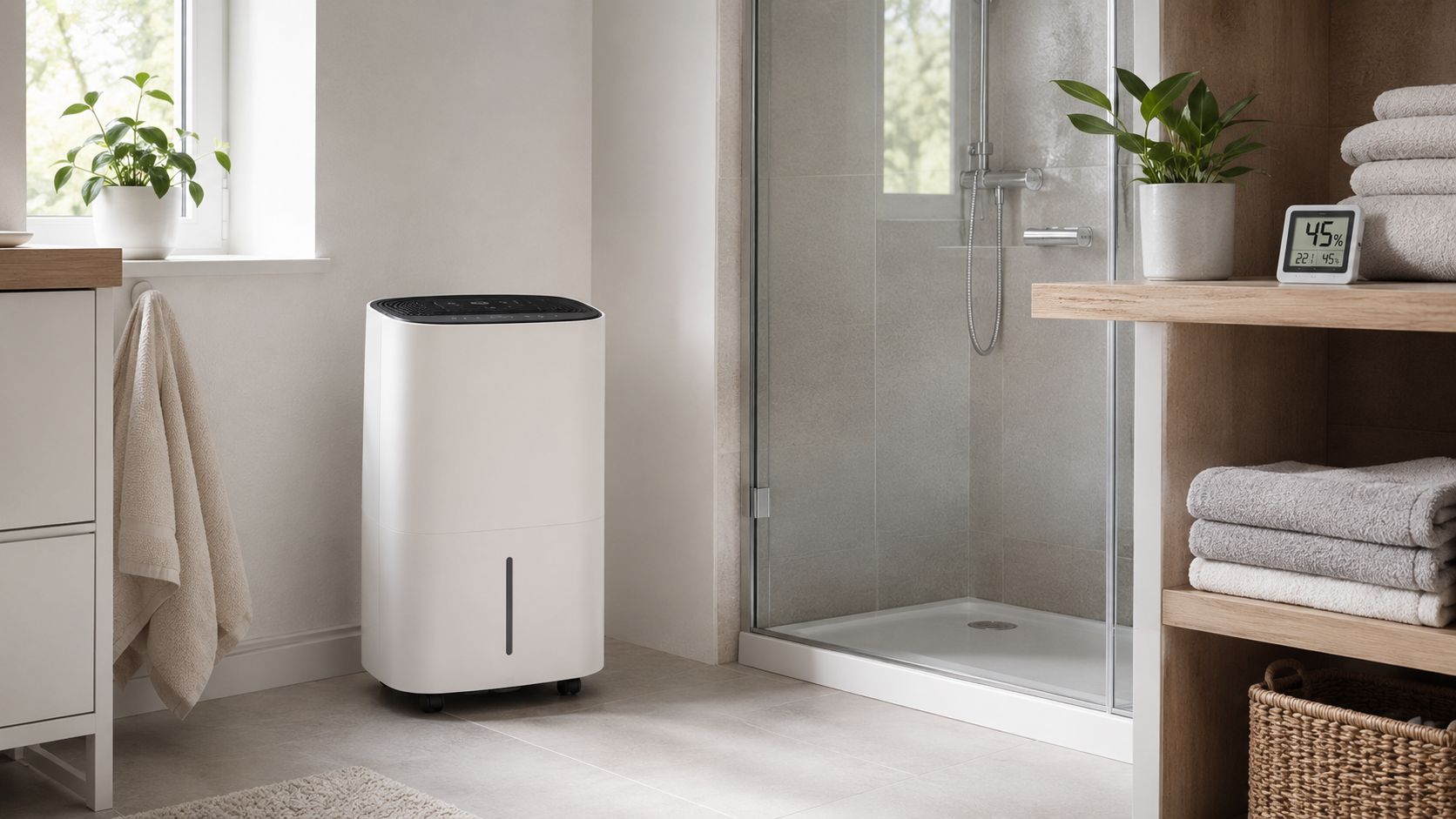
A lot of Palm Beach County mold problems start in rooms that look clean and dry. I see it in older Lake Worth apartments, under-sink cabinets in Boca rentals, and guest bedrooms in West Palm homes that stay shut for days at a time. The issue is trapped air that keeps moisture sitting in place.
Move damp air out fast
Bathrooms, kitchens, and laundry areas need to push humid air outside, not into the attic, soffit, or another enclosed space. In South Florida, that shortcut catches up fast. The moisture usually shows up later as a musty smell, ceiling staining, or mold around vents and framing.
The EPA recommends venting dryers and stoves directly outside, and that matters more here than in drier climates. During rainy season, one poorly vented dryer can keep feeding moisture into the house even when the AC is running.
A simple check helps. Turn on the bath fan, hold a tissue near the grille, and see if it pulls and holds. If the fan sounds loud but barely moves air, the duct may be clogged, too long, or venting poorly. Dirty grilles also cut performance, which is why regular vent cleaning and maintenance makes a real difference in older homes and coastal condos.
Hidden dead zones matter
In Palm Beach County condos, the mold isn't always in the center of the room. It's often behind the dresser, inside a packed closet, or along an exterior wall where cool air and humidity keep meeting.
Housing guidance from HUD points to several low-tech airflow fixes, including opening closet doors, leaving interior doors open at times to improve circulation, and keeping furniture away from exterior walls and baseboards in damp areas, as explained in this mold prevention housing guide. These are small adjustments, but they help in rooms that stay closed up all week.
That trade-off is real. Keeping doors open improves airflow, but it may not work for every family, especially in homes with pets, kids, or roommates. In those cases, focus on the worst spots first. Closed guest rooms, linen closets, and cabinets under sinks are common starting points.
What works best in local homes is targeted airflow, not just more AC. Ceiling fans can help keep air moving, but they do not remove moisture on their own. Exhaust fans, clean vents, and room layouts that let air circulate do more to prevent mold in the places we see trouble most often.
2. Proper Ventilation and Air Circulation
Some homes don't have a leak. They have stale, trapped air. That's common in older Lake Worth apartments, under-sink cabinet bases in Boca-area rentals, and guest bedrooms that stay closed all week.
Move damp air out fast
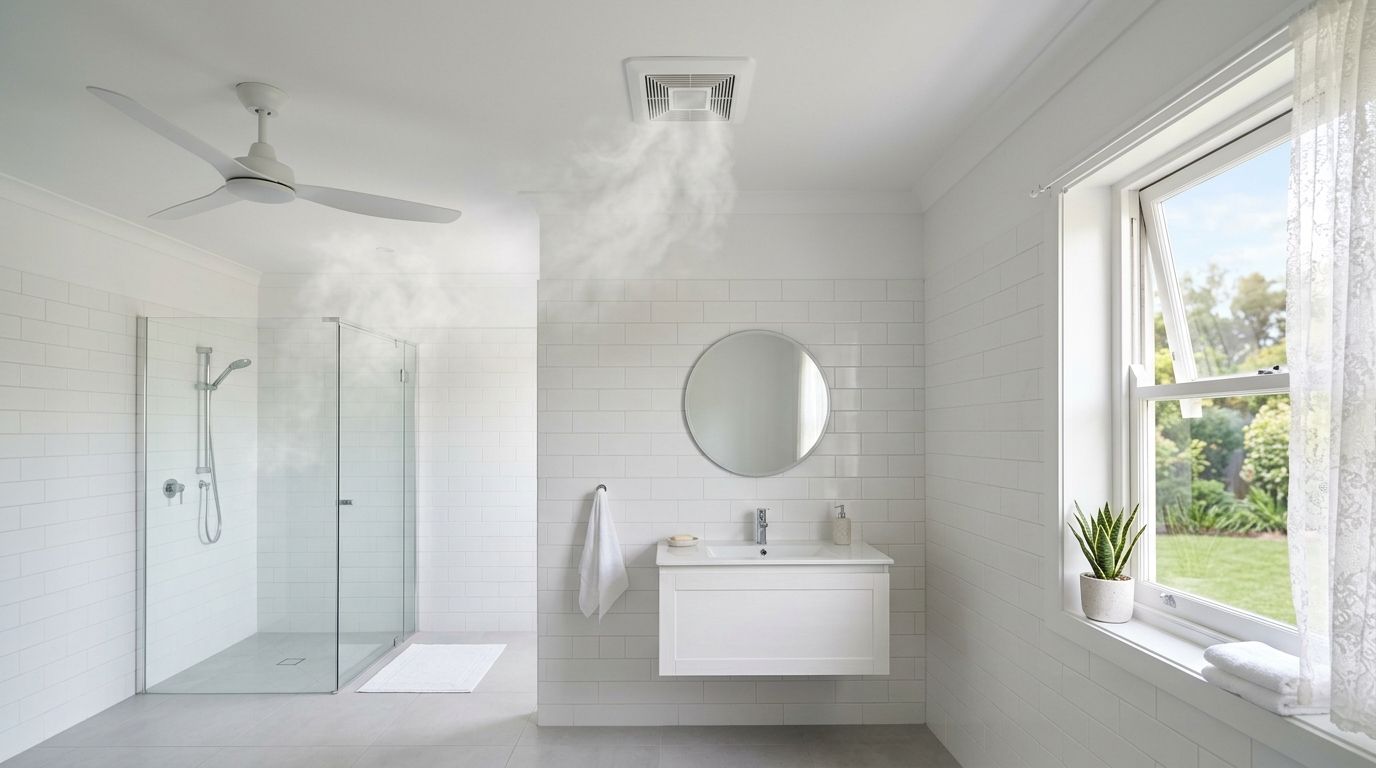
OSHA says indoor relative humidity should be kept below 70%, with an ideal target of 25% to 60% for indoor spaces, according to OSHA mold prevention guidance. In real South Florida homes, aiming lower is usually smarter because bathrooms, kitchens, and laundry areas swing upward fast.
The EPA also recommends venting dryers and stoves directly outside, and that matters here more than people think. In Palm Beach County, venting into attics or enclosed spaces just moves the moisture where you won't see it until staining or odor shows up.
Hidden dead zones matter
Health-focused housing guidance also points out overlooked airflow fixes, including keeping closet doors open, leaving interior doors open to improve circulation, and keeping furniture away from outside walls and baseboards in moisture-prone areas, as explained in this mold prevention housing guide. That's one of the most missed mold prevention strategies we see after move-out or post-tenant cleanings.
In Palm Beach County condos, the mold isn't always in the center of the room. It's often behind the dresser, in the hall closet, or under the sink where air never moves.
For bathrooms and kitchens in coastal homes, exhaust fans need to vent outside, not into attics. If you're also dealing with dusty vent covers and buildup, Sunset Shine has a practical local guide on how to clean vents.
4. Proper Surface Sealing and Caulking
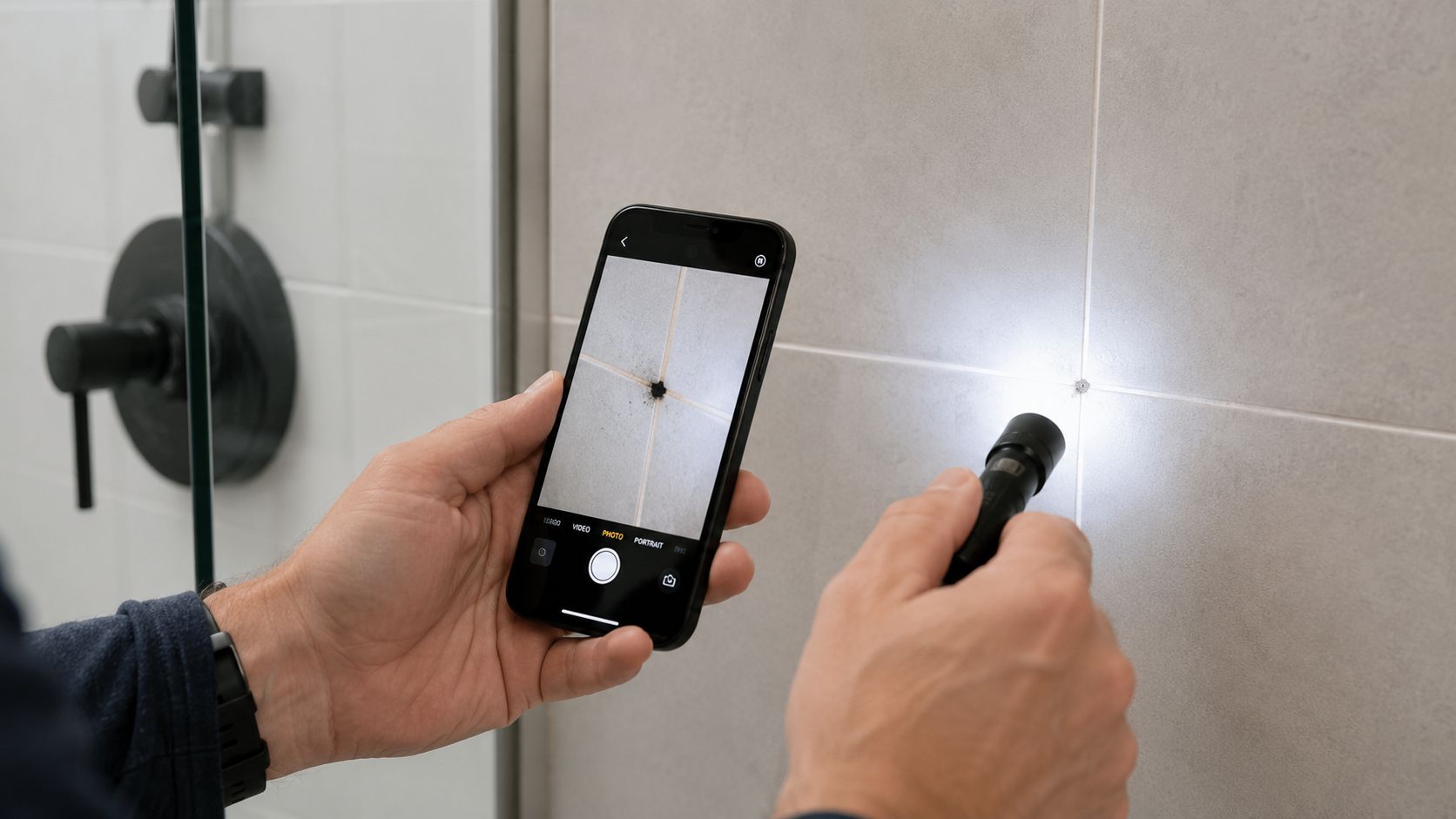
A shower can look clean and still feed mold behind the wall.
That is a common South Florida problem, especially in older West Palm Beach bathrooms with original tile work, aging caulk lines, or window frames that take a beating from rain, salt air, and daily humidity. Once the seal fails, water slips behind the surface and stays there. By the time staining or odor shows up, the moisture has usually been sitting for a while.
Seals fail before homeowners notice
We see the same failure points again and again in Palm Beach County homes. Cracked caulk at the shower base, gaps around faucet trim, loose grout in tile corners, and separation where the tub meets the wall are easy to miss during routine cleaning.
The trade-off is simple. Recaulking early is a small maintenance job. Waiting often turns it into drywall repair, baseboard replacement, or removal of water-damaged materials that never fully dried out.
Coastal condos usually wear faster in these areas. Salt air, heavy AC use, and bathrooms that stay damp well into the afternoon put extra stress on caulk and grout, especially in rooms without much natural drying.
What to reseal first
Start with the spots that get wet often and dry slowly:
- Shower corners and seams: These tend to open up first in busy bathrooms.
- Tub edges and sink backsplashes: Small gaps let water move behind the finished surface.
- Window frames: In bathrooms, laundry rooms, and older Florida rooms, condensation and wind-driven rain can break seals down fast.
- Counter-to-wall joints: Kitchen and bath splash areas often fail in a thin line that is easy to overlook.
- Around plumbing penetrations: Pipes under sinks and behind toilets need tight sealing where moisture and hidden leaks can meet.
Use the right product, not the cheapest one
For tubs, showers, and other wet zones, use a mold-resistant kitchen-and-bath caulk that is made for high-moisture areas. Paintable latex products are easier to work with, but they usually do not hold up as well inside shower enclosures. Silicone or siliconized products last longer there, though they take a little more care to apply cleanly.
Surface prep matters as much as the product. Old caulk has to come out fully, the joint has to be dry, and any hidden residue or mildew needs to be cleaned before resealing. If you caulk over a damp gap, you trap the problem instead of fixing it.
In Palm Beach County, that shortcut fails fast during rainy season.
4. Proper Surface Sealing and Caulking
When grout and caulk start failing, cleaning alone won't solve the problem. Water gets where your sponge can't reach, then South Florida heat and humidity do the rest.
Seals fail before homeowners notice
In West Palm Beach bathrooms, we often see cracked caulk at the shower base, around faucet trim, and along the back edge of tubs long before the homeowner notices it. In coastal condos, salt air and constant moisture tend to wear these areas faster.
If porous materials stay wet beyond 48 hours, they're much more likely to become a persistent mold source, and industry reporting also notes that porous items wet for more than 48 hours often need removal rather than surface cleaning, according to this mold prevention services market report. That's why failed caulk lines matter more than they look.
What to reseal first
Start with the places that get daily moisture and poor drying time:
- Shower corners and seams: These are the first failure points in many Palm Beach County bathrooms.
- Tub edges and sink backsplashes: Small cracks let water travel behind the finish.
- Window frames: Especially in rooms where condensation forms.
- Around toilets and under sink penetrations: Plumbing openings often get overlooked.
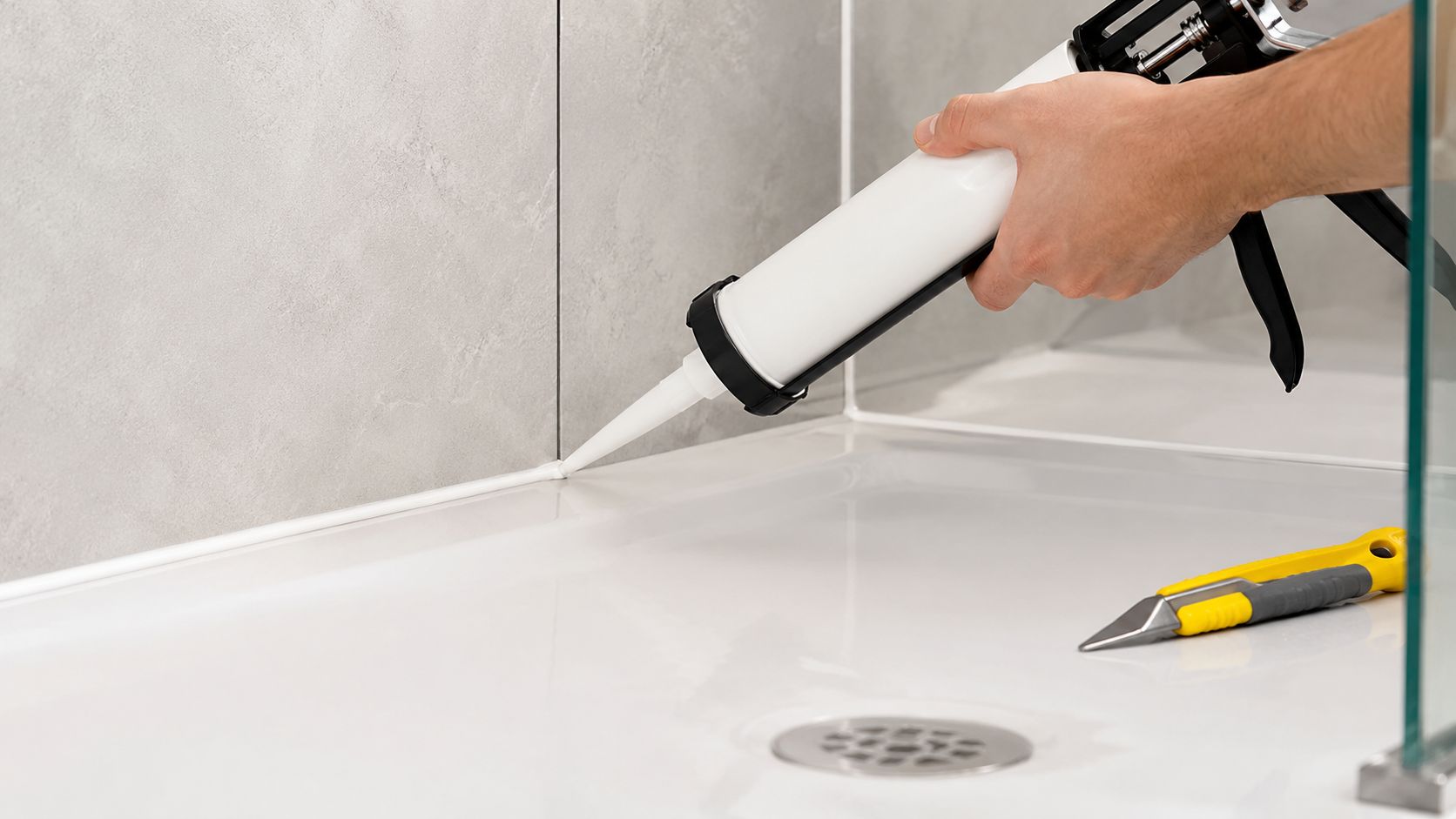
Old caulk needs to come out completely before new caulk goes in. Covering a bad seal with a fresh bead traps moisture underneath.
A visual walkthrough helps if you're not sure what proper application looks like.
6. Strategic Use of Antimicrobial Products and Treatments
Walk into a Palm Beach County bathroom in August and you can usually tell within a minute whether the owner has been treating mold or preventing it. If the grout haze is still in place, the exhaust cover is dusty, and the ceiling corner keeps spotting back up, the product was never the main fix.
Antimicrobial products have a place. They work best after the surface is cleaned well and the moisture source is already under control. In our work around West Palm Beach, Jupiter, and coastal condos farther south, the repeat problem is usually residue. Soap film on tile, dust on vent covers, and body oil around shower seams give mildew something to cling to, so treatment on top of buildup only goes so far.
Clean first, then treat
On hard, non-porous surfaces, start with physical cleaning. Scrub off the film, rinse, and let the area dry before applying any antimicrobial product. That order matters. A disinfecting or mildew-control product cannot do much if it never reaches the surface under the grime.
Bathrooms near the Intracoastal and ocean need extra attention because salt air leaves its own residue, especially on metal trim, louvers, and exhaust grilles. I see this a lot in older condo baths where the room never fully dries out between showers.
Use products with the right expectations
Antimicrobials help slow regrowth on the right surface. They do not solve an active humidity problem, a hidden leak, or a shower that stays damp half the day. If mold keeps returning in the same spot, that usually points to moisture getting trapped behind paint, around trim, or inside a wall cavity.
For families who want lower-toxicity options for routine upkeep, we also use probiotic cleaning products for lower-toxicity home cleaning when the surface and situation make sense.
A few rules keep this approach practical and safe:
- Match the product to the material: Tile, painted drywall, stone, and metal finishes all react differently.
- Read dwell-time instructions: Wiping too soon cuts the product's effectiveness.
- Never mix chemicals: That mistake is common in small South Florida bathrooms and laundry rooms with poor airflow.
- Avoid over-wetting the area: Too much liquid around baseboards, drywall edges, or unsealed grout can create a new moisture problem.
- Treat visible growth as a symptom first: If the room stays humid, the mold usually comes back.
The trade-off is simple. Stronger products may give faster cosmetic results, but they can also be harsher on finishes, indoor air, and daily use areas. In many Palm Beach County homes, the better long-term plan is steady cleaning, targeted treatment, and moisture control that fits the room.
6. Strategic Use of Antimicrobial Products and Treatments
Products can help, but they don't replace moisture control. The best use of antimicrobials is after the area is properly cleaned and the moisture source is under control.
Clean first, then treat
For hard surfaces, OSHA says a bleach solution of no more than 1 cup of household laundry bleach in 1 gallon of water can be used, and bleach must never be mixed with ammonia because it creates poisonous gas, according to OSHA's prevention document. That's a safety rule worth repeating in any Palm Beach County home, especially where homeowners are trying to attack bathroom staining fast.
A lot of mildew on tile, vent covers, and shower trim in South Florida isn't just a stain problem. Soap film, dust, and residue give it something to hold onto. That's why treatment works better after a detailed deep clean.
Use products safely and realistically
For families who prefer lower-toxicity options, Sunset Shine also follows a practical approach around probiotic cleaning products and other non-toxic choices when the surface and situation allow for it.
A few ground rules matter:
- Match the product to the surface: Hard tile and painted walls don't behave the same way.
- Never mix chemicals: Fast fixes can create dangerous air inside a closed bathroom.
- Treat after residue is removed: Product on top of grime isn't doing the full job.
- Use this as support, not the whole plan: If the room stays damp, no spray will solve it.
Some Palm Beach County bathrooms need stronger chemistry. Others need airflow, recaulking, and a good scrub more than anything in a bottle.
8. Material Selection and Home Construction Choices
Walk into two Palm Beach County bathrooms after the same July storm cycle and the difference is obvious. One dries out by lunch. The other still feels damp at dinner, with swollen trim, tacky paint, and that faint musty smell starting near the vanity. Cleaning habits matter, but the materials and build choices often decide which room keeps giving you mold trouble.
Choose materials that dry fast and absorb less
In South Florida, absorbent finishes create extra work. Painted MDF trim, paper-faced drywall in the wrong spot, cheap caulk, and builder-grade grout tend to show wear faster in bathrooms, laundry rooms, kitchens, and closed-up condos near the water. Salt air and year-round humidity do not give those materials much grace.
Harder, less absorbent surfaces usually hold up better. Tile, properly sealed grout, solid-surface counters, moisture-rated paint, and trim materials that do not swell easily are often the safer bet in Palm Beach County homes. I see the difference most in older homes west of I-95 and in coastal condos where bathroom exhaust is weak and windows stay shut for months.
Renovation choices matter here. A beautiful finish that traps moisture behind it or breaks down after one rainy season is not a bargain.
Build for drying, not just for looks
Good material selection works best when the room can release moisture. Tight furniture placement, heavy drapes, cabinets packed against exterior walls, and decorative choices that block airflow can turn a mold-resistant surface into a damp one.
That shows up all the time in beach-area properties.
A dresser pressed against an outside wall, a bed frame tight to a corner, or a vanity with no room for air movement can create cool, stale pockets where condensation lingers. In cinder block homes and older ranch layouts around West Palm Beach, those hidden spots are common, especially during rainy season when AC runs hard and indoor-outdoor temperature differences stay sharp.
Match the material to the room's real use
Guest baths, primary baths, laundry rooms, and seasonal properties do not fail in the same way. A full-time family bathroom needs surfaces that can take daily moisture and frequent cleaning. A part-time condo needs materials that can sit closed up without holding damp air after the owners leave.
A few practical choices tend to age better here:
- Use moisture-tolerant trim and wall finishes: They hold shape better in damp rooms.
- Choose better grout and keep it maintained: Weak grout becomes a sponge.
- Skip overly porous finishes in splash zones: They stain, trap moisture, and take longer to dry.
- Avoid dense room layouts that trap air: Pretty rooms still need breathing space.
- Plan renovations around maintenance: If a surface is hard to clean or hard to dry, it usually becomes a problem later.
The homes that stay cleaner longer in Palm Beach County are usually not the fanciest ones. They are the ones built or updated with local humidity in mind.
8. Material Selection and Home Construction Choices
Cleaning helps, but materials matter. Some surfaces dry faster, absorb less moisture, and hold up better in Palm Beach County's climate.
Choose materials that don't hold moisture
The mold prevention services market is projected to grow at a CAGR of 7.78% from 2023 to 2032, according to this market projection, and that tracks with what homeowners are doing locally. More people are paying attention to prevention, not just cleanup.
In bathrooms, laundry rooms, and kitchens, moisture-resistant materials make life easier. Tile and better grout choices usually outperform finishes that soak up moisture or break down faster in damp air. When clients renovate older Palm Beach County baths, the homes that stay cleaner longer usually have fewer absorbent surfaces and better ventilation to match.
Layout choices matter too
The best material choice still loses if the room traps moisture. Health-focused guidance for mold prevention also stresses keeping baseboards clear and reducing trapped condensation around windows and furniture, which is especially relevant in South Florida homes with heavy curtains and tightly packed rooms.
A mold-resistant surface isn't a free pass. If air can't move and moisture keeps landing there, you're still building a problem.
That shows up a lot in beach-area homes with furniture pressed against exterior walls, in closets packed floor to ceiling, and in bathrooms where every surface is technically washable but nothing dries well.
8-Point Mold Prevention Strategy Comparison
| Strategy / Item | Implementation Complexity 🔄 | Resource Requirements ⚡ | Expected Outcomes ⭐📊 | Ideal Use Cases 💡 | Key Advantages ⭐ | Key Limitations 📊 |
|---|---|---|---|---|---|---|
| Humidity Control and Dehumidification | Moderate, install/monitor units; AC servicing | Dehumidifiers, increased energy use, hygrometers, AC maintenance | Lower indoor RH to 30–50%; prevents mold initiation and musty odors | Coastal homes, master baths, laundry rooms, high-RH zones | Prevents mold at source; improves air quality; protects materials | Higher energy costs; won't remove existing mold; needs upkeep |
| Proper Ventilation and Air Circulation | Low–Moderate, install/upgrade fans; habit-dependent | Exhaust fans, ceiling/portable fans, ductwork, occasional upgrades | Immediate reduction of localized moisture and condensation | Bathrooms, kitchens, crawl spaces, post-storm drying | Low cost; immediate effect; reduces condensation without heavy energy use | Only effective when running; outdoor humidity limits benefit; undersized fans fail |
| Regular Inspection and Early Detection | Low, routine checks and documentation | Time, flashlight, camera, simple checklist | Early identification prevents escalation; lowers remediation costs | Homeowners, property managers, Airbnb turnovers, humid season monitoring | Cost-effective prevention; enables targeted fixes | Misses hidden/in-wall mold; requires discipline and knowledge |
| Proper Surface Sealing and Caulking | Moderate, best done professionally for durability | Epoxy/urethane grout, silicone/latex caulk, sealants; periodic reapplication | Creates waterproof barriers; reduces surface mold and staining | Showers, tubs, backsplashes, coastal properties | Long-lasting surface protection; easier cleaning; extends finishes | Sealants degrade (2–3 yrs); improper application can trap moisture |
| Effective Drain and Plumbing Maintenance | Moderate–High, professional diagnosis and repair | Professional plumbers, drain cleaning, HVAC condensate service | Eliminates standing water sources; prevents hidden structural mold | Older homes, sandy-ground areas, slow drains, HVAC systems | Addresses root moisture; prevents costly water damage | Ongoing maintenance cost; some issues require replacement |
| Strategic Use of Antimicrobial Products & Treatments | Low–Moderate, applied during professional cleaning | EPA-approved antimicrobials, trained applicators, periodic reapplication | Inhibits regrowth for weeks–months; extends mold-free intervals | High-turnover rentals, post-cleaning protection, HVAC vents | Extends time between recurrences; eco/pet-safe options available | Not permanent; reapplication needed; extra cost and possible odors |
| Professional Cleaning & Mold Remediation Services | High, specialized techniques, trained staff | HEPA vacuums, antimicrobial solutions, remediation tools, certified techs | Removes existing mold and organic food sources; uncovers moisture issues | Move-outs, heavy contamination, post-construction, rental turnovers | Thorough removal; expert detection and recommendations | Higher upfront cost; won't solve underlying humidity without follow-up |
| Material Selection & Construction Choices | High, planning during build/renovation | Mold-resistant drywall, epoxy grout, moisture-resistant paints, higher material costs | Long-term reduction in mold susceptibility; lower maintenance needs | New builds, major renovations, crawl spaces, coastal construction | Durable, long-term prevention; increases property value | Higher upfront cost; limited retrofit options; still needs ventilation/humidity control |
Take Control With Your Local Mold Prevention Experts
Winning the fight against mold in Palm Beach County comes down to habits that work in real South Florida conditions. Keep moisture under control, move damp air out, inspect often overlooked spots, and act fast when a leak or water event happens. Those are the mold prevention strategies that make the biggest difference in homes from West Palm Beach to Jupiter, Delray Beach, Boca Raton, and beyond.
For many homeowners, renters, hosts, and property managers, the hard part isn't knowing mold is a problem. It's getting ahead of it before a walkthrough, before guest check-in, before family arrives, or before that faint bathroom smell becomes a full remediation issue. That's where a local cleaning team helps. We know what Palm Beach County homes deal with year-round: bathroom mildew from humidity, salt air on coastal fixtures, sand tracked through beach properties, AC dust gathering around vents, tropical pollen on window sills, and rainy season moisture that settles into grout lines and corners.
Our Simple Process:
- Schedule: Book online at sunsetshinehomecleaning.com or call us at 561-408-4020 for a free, custom estimate.
- Clean: Our trained, insured professionals arrive with all the eco-friendly supplies needed to perform a thorough, checklist-based deep clean, focusing on mold-prone areas.
- Inspect: We perform a quick quality check to ensure our work meets the highest standards.
- Enjoy: You return to a home that's not just visibly clean, but healthier and more resistant to mold.
Micro-FAQ
How long does a deep clean take?
It depends on home size and condition.
Are your cleaning products safe for pets and kids?
Yes. We use non-toxic, eco-friendly products.
Can you focus on bathrooms and kitchens?
Absolutely. We tailor the clean to your priorities, especially for mold prevention.
Pricing depends on bedrooms, bathrooms, square footage, and condition. Most clients request a custom estimate for an accurate quote.
South Florida humidity shows up in grout lines and bathroom ceilings faster than expected. If you're seeing mildew in bathrooms, musty closets, dusty vents, or damp buildup after rain, don't wait for it to spread. Book your cleaning with Sunset Shine Home Cleaning – your trusted house cleaning service in West Palm Beach. Call 561-408-4020 or book online at sunsetshinehomecleaning.com.
Ready for real help, not generic advice? Sunset Shine Home Cleaning provides practical, local house cleaning in West Palm Beach and throughout Palm Beach Gardens, Jupiter, Juno Beach, North Palm Beach, Riviera Beach, Royal Palm Beach, Lake Worth, Boynton Beach, Delray Beach, Boca Raton, Wellington, Westlake, Loxahatchee, Loxahatchee Groves, and The Acreage. If you need deep cleaning, recurring service, move-in or move-out cleaning, post-construction cleanup, Airbnb turnover support, or property management cleaning with mold-prone areas addressed carefully, call 561-408-4020 or book online today.