
If you're in West Palm Beach wiping mildew off the shower ceiling again, dusting AC vents again, and still catching that faint damp smell by the laundry room, you're not imagining it. South Florida homes stay under pressure from humidity, salt air, sand, tropical pollen, and year-round air conditioning, so the same spots get dirty in a different way here than they do in a dry climate.
Probiotic cleaning products are getting attention because they tackle that cycle differently. Instead of relying only on harsh chemicals, they use beneficial microbes to keep breaking down grime after the initial wipe-down. For homeowners, renters, Airbnb hosts, and property managers across Palm Beach County, that matters when you want a home that feels clean longer, not just for one afternoon.
Table of Contents
- Beyond Green A Smarter Clean for South Florida Homes
- How Probiotic Cleaning Products Actually Work
- Probiotic vs Conventional Cleaners in a Humid Climate
- Are Probiotic Cleaners Safe and Effective The Evidence
- A Homeowners Guide to Using Probiotics in Palm Beach County
- Your West Palm Beach Probiotic Cleaning Questions Answered
Beyond Green A Smarter Clean for South Florida Homes
A lot of people first hear about probiotic cleaning products as the "green" option. That's not wrong, but it misses the practical reason local homeowners care. In Palm Beach County, the primary problem isn't just surface dirt. It's the grime that comes back fast in damp bathrooms, around sink drains, on shower tracks, and near AC vents where dust sticks to moisture.
In homes from Jupiter to Boynton Beach, the pattern is familiar. Bathroom grout looks clean after scrubbing, then darkens again. Kitchen sinks start smelling off even when the counters are wiped daily. Condo owners near the coast fight residue on fixtures because salt air keeps settling back onto metal surfaces.
That helps explain why this category keeps expanding. The MarkNtel Advisors probiotic soap and detergent market outlook projects approximately 9.2% CAGR from 2023 to 2028, showing that demand for eco-friendly, non-toxic alternatives isn't a passing trend.
Why local homeowners are paying attention
A product can sound modern and still be useless in a humid house. What makes probiotics worth considering is their fit for recurring maintenance. They don't just give you the sharp "just disinfected" smell. They target the organic material that feeds recurring odor and film.
For families trying to reduce harsh chemical exposure without letting bathrooms or kitchens slide, these cleaners particularly shine. That's also why many homeowners looking for eco-friendly house cleaning services in Palm Beach County start asking about probiotic options specifically, not just generic "natural" cleaners.
Practical rule: If your home looks clean but starts smelling stale again within a day or two, the issue is usually leftover organic buildup, not a lack of fragrance.
What this looks like in real Palm Beach County homes
- Coastal bathrooms: Salt air, hard water marks, and humidity stack up on shower glass and faucet bases.
- Year-round AC homes: Dust on vents and returns doesn't stay isolated. It recirculates.
- Beach households: Sand works into grout lines, entryway corners, and rug edges, then traps residue.
That's where probiotic cleaning products make sense as a smarter maintenance method, especially when the goal is a fresher home between deep cleans.
How Probiotic Cleaning Products Actually Work
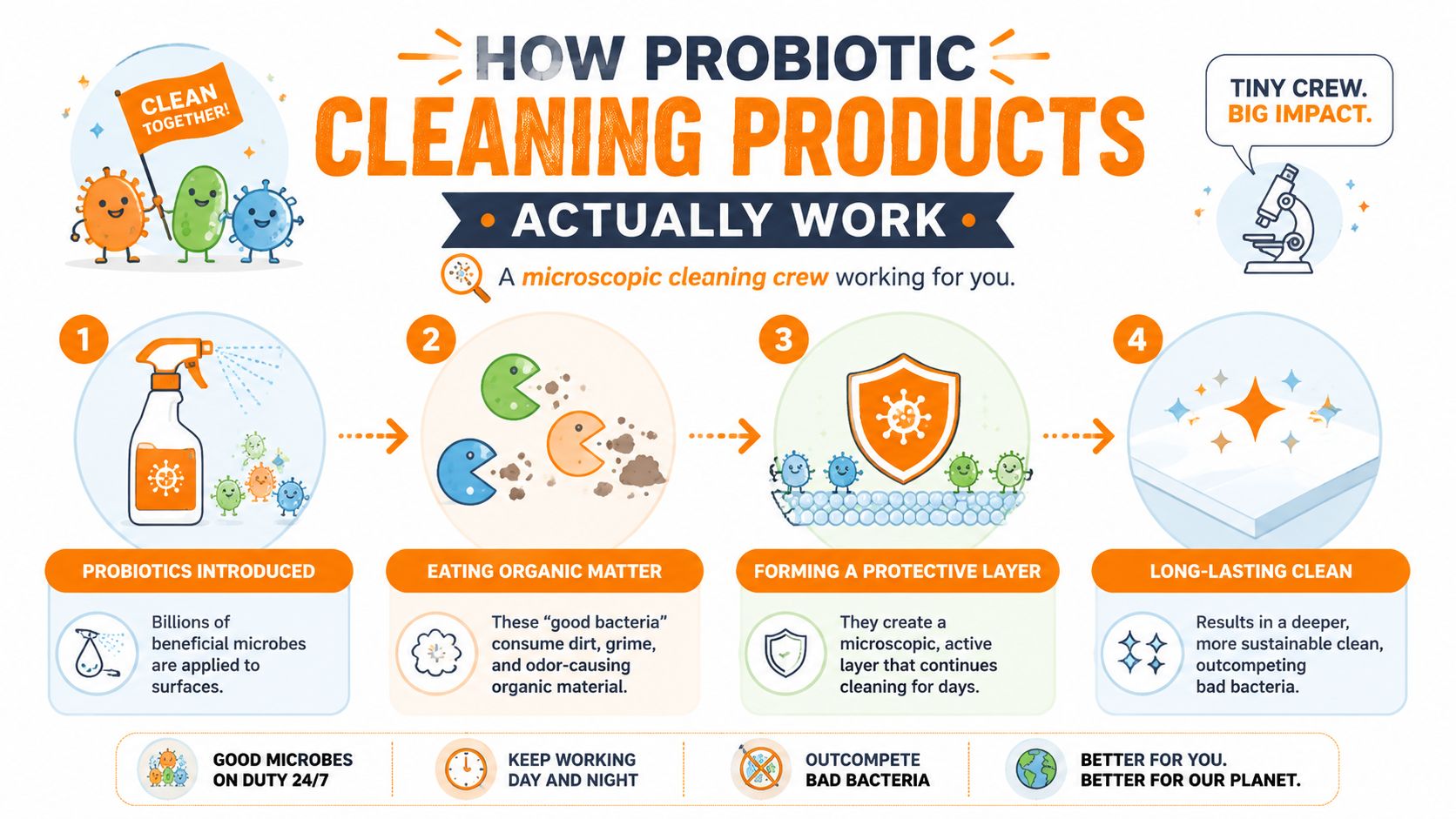
Probiotic cleaners work best when you understand their job on the surface. They are a maintenance product that leaves beneficial bacteria behind after you spray, mop, or wipe, and those bacteria feed on the organic residue that causes recurring odor, film, and grime.
That matters in South Florida because surfaces rarely stay fully dry for long. In homes dealing with persistent indoor moisture, especially the issues covered in this guide on what causes humidity in a house, leftover residue tends to come back fast on bathroom tile, around drains, near AC vents, and by entries where damp sand gets tracked in.
Right after application, the organisms settle onto the surface and begin working as moisture and residue become available. According to the IPAC Canada presentation on probiotic cleaners, they work through competitive exclusion and quorum sensing, remain active on surfaces for up to 3 days, and produce enzymes that metabolize dirt.
What they do after you finish wiping
Here is the practical version.
- They stay on the surface: After application, beneficial bacteria remain in place instead of disappearing the moment the towel passes over.
- They consume organic residue: Soap scum, food film, body oils, and pet-related messes give them something to break down.
- They reduce the food source for odor-causing microbes: That is the part many homeowners notice first. Spaces smell fresher longer.
- They keep producing enzymes for a period after cleaning: Those enzymes continue breaking down grime in joints, edges, and other spots your cloth did not fully reach.
In my experience, this is why probiotic products make the most sense in bathrooms, laundry rooms, kitchens, trash areas, and around pet spots. Those are the places where moisture and organic residue keep meeting each other.
A quick visual helps:
Why this matters in real homes
The benefit is not theoretical. It shows up in shower corners, around toilet bases, sink overflows, trash can lids, grout lines near exterior doors, and the tile strip by a slider where salt air, condensation, and fine beach sand collect.
Probiotic cleaners perform best where the same kind of residue keeps returning. Soap film, food splatter, damp buildup, and drain-related odor are common examples.
They do not replace scrubbing, and they do not remove heavy scale, thick mildew, or long-neglected buildup on their own. A surface still needs proper physical cleaning first. Once that residue is knocked down, probiotics help slow the rebound, which is a useful advantage in West Palm Beach homes where humidity, salt air, and tracked-in sand keep adding work back onto the same surfaces.
Probiotic vs Conventional Cleaners in a Humid Climate
Walk into a West Palm Beach bathroom at 5 p.m. after the AC has been fighting the heat all day, and the pattern is familiar. The room looks clean, but the grout still feels damp, the shower corners start to smell musty again, and a little film comes back faster than it should. That is a key difference in a humid climate. Surfaces do not stay dry for long, and residue keeps feeding the next round of buildup.
Where conventional products still make sense
Conventional cleaners still have a clear role in South Florida homes. For toilet accidents, raw chicken juice, floodwater, vomit, or post-illness cleanup, use a disinfectant that is labeled for that job and follow the contact time. Fast sanitation matters more than long-term residue control in those moments.
They also do better on jobs that need strong chemical action right away, like heavy hard-water scale, rust staining, or greasy buildup that has been sitting for months.
Where probiotic cleaning fits better
Probiotic cleaners earn their place in the repeat-problem areas. Bathrooms, kitchen floors, laundry rooms, trash pull-outs, pet zones, and the tile near exterior doors all collect a mix of moisture and organic residue. In West Palm Beach, that cycle gets worse because humid air slows drying, sand grinds grime into floor texture, and salt air leaves surfaces sticky enough to hold dust.
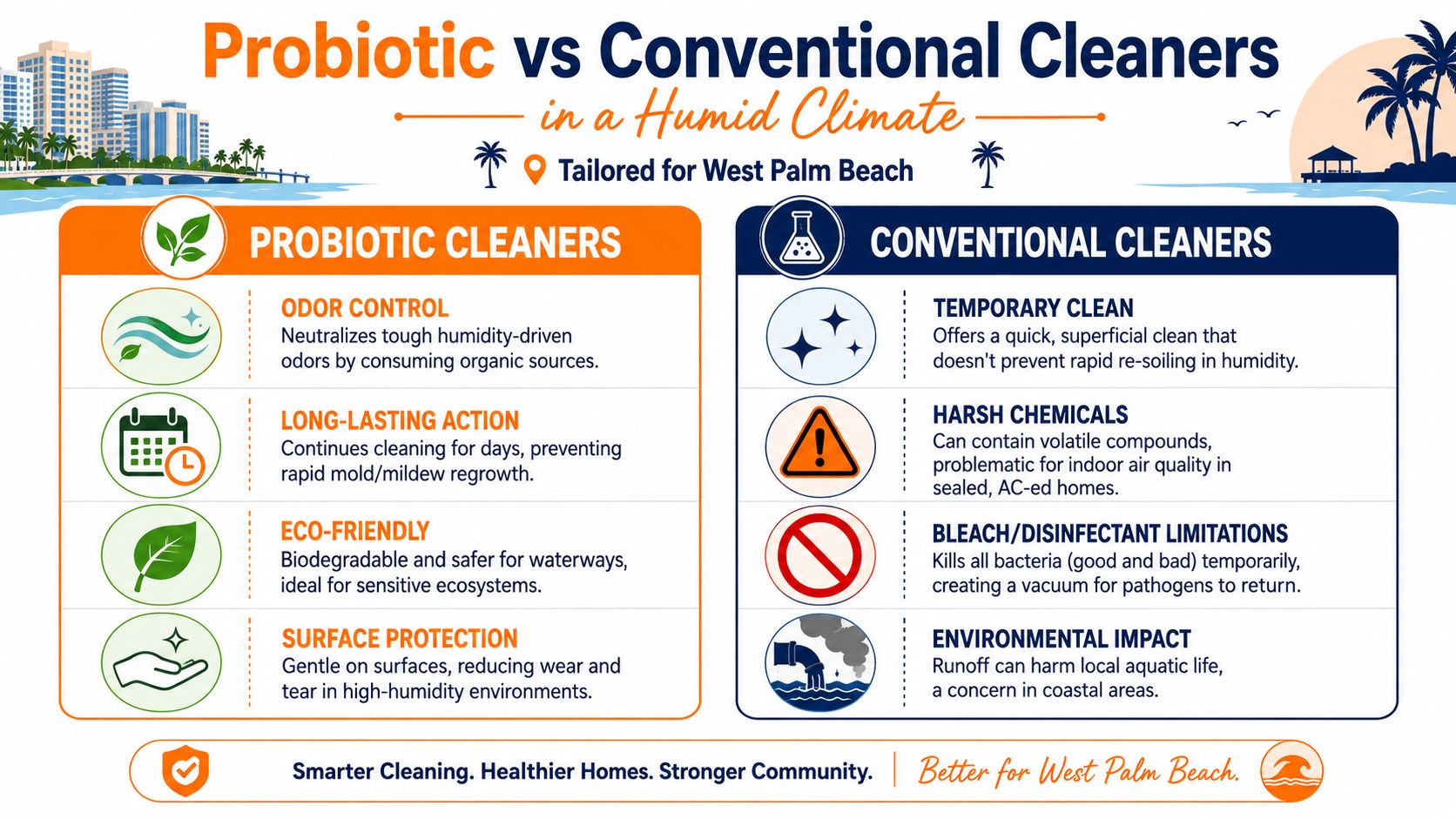
That creates a practical trade-off. Conventional products usually work fast and then stop once the surface dries. Probiotic products are slower, but they keep working on the leftover organic material that helps odor and film come back.
A side-by-side view makes the choice easier:
| Cleaner type | Best fit in Palm Beach County homes | Main limitation |
|---|---|---|
| Conventional cleaners | Immediate cleanup, targeted disinfection, one-time high-risk messes, mineral or grease removal | Often finish working after the wipe-down |
| Probiotic cleaners | Ongoing maintenance in bathrooms, kitchens, floors, drains, and odor-prone areas with repeat moisture exposure | Not appropriate as the only response for high-risk sanitation needs |
Indoor air is part of the same conversation. A clinical review on probiotic cleaning in indoor environments reported lower airborne pathogens and allergens in studied settings using probiotic cleaning systems. That matters in closed-up homes where AC runs most of the year and fine dust, pollen, and tracked-in debris keep recirculating.
I would not present this as an either-or decision. Most South Florida homes need both approaches. Use conventional chemistry for disinfection and heavy correction work. Use probiotics to help hold the line in the damp areas that never seem to stay clean for long.
If a house constantly feels sticky, smells musty, or shows repeat mildew around vents, windows, or bath surfaces, cleaning alone will not solve it. The better approach is to pair the right cleaner with moisture control, especially if you are dealing with the common causes behind high indoor humidity in South Florida homes.
Are Probiotic Cleaners Safe and Effective The Evidence
Homeowners usually ask two fair questions. Do they work, and are they safe enough to use around kids and pets? The short answer is yes for routine cleaning and maintenance, but only if you stay realistic about what they're designed to do.
Healthcare research gives the strongest evidence because the standards are stricter there than in residential cleaning. A review of probiotic-based cleaning in healthcare settings found statistically significant reductions in healthcare-associated infections compared with conventional chlorine-based cleaning in included studies, along with lower pathogen counts on environmental surfaces. That matters because it shows these products can do more than sound good on a label.
What the evidence supports
What probiotics do well is ongoing environmental cleaning.
- Maintenance cleaning: They help lower recurring surface contamination over time.
- Biofilm control: They work on the organic matter that supports regrowth.
- Lower-toxicity routines: They offer a gentler alternative for day-to-day use in occupied homes.
That makes them useful for regular bathroom upkeep, kitchen maintenance, and whole-home cleaning where people want less chemical exposure. Homeowners who already prefer low-VOC cleaning products for indoor spaces often see probiotics as the next step, especially in closed-up homes with AC running all day.
What matters most: Use probiotic products for cleaning and prevention. Use disinfection when the situation actually calls for disinfection.
What they do not replace
This is the part many articles skip. Household probiotic cleaners do not achieve the 99.999% kill rate of disinfectants and work through bacterial interference, not direct kill, according to this guide on probiotic cleaning limitations and use cases.
That means they are not the right stand-alone solution for:
- Post-flood cleanup
- Sewage backup
- Medical-risk sanitation
- After certain contamination events
If a West Palm Beach home has hurricane-related water intrusion, visible mold spread, or contaminated standing water, the right sequence is remediation and disinfection first. Probiotics can support maintenance later, but they shouldn't be treated like an all-purpose replacement for every sanitation problem.
A Homeowners Guide to Using Probiotics in Palm Beach County
Walk into a Palm Beach County bathroom in August and you can usually tell where a standard cleaner stopped working. The shower corners darken first, grout stays dingy even after scrubbing, and the area around the toilet starts holding odor again because moisture never really leaves the room. Probiotic cleaners fit best in those repeat-problem areas, especially in homes that stay closed up with the AC running and humidity hanging around all day.
Best places to use them
Use them where organic residue keeps coming back and where South Florida conditions make that residue harder to control.
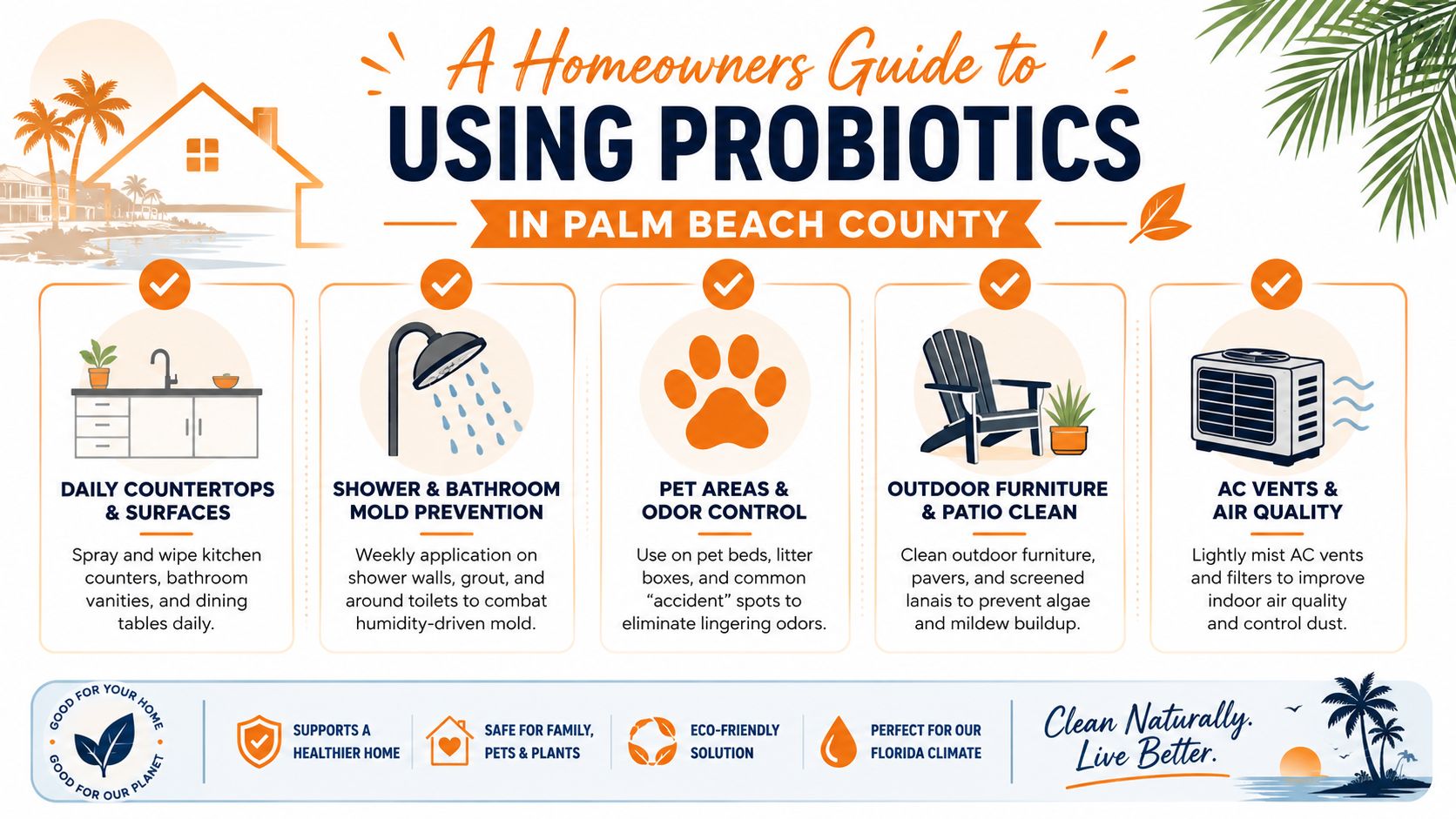
- Bathrooms: Shower walls, grout lines, around toilet bases, vanity surfaces, and the caulk line where dampness lingers.
- Kitchens: Sink edges, trash pull-outs, cabinet fronts near the stove, refrigerator handles, and floors near the dishwasher.
- Entryways and tile floors: Especially in coastal homes where wet feet, sand, and fine grit get tracked in from the driveway, patio, or beach.
- Pet zones: Bedding areas, crate floors, and repeat accident spots after the soil and odor source have been fully cleaned up.
- AC-adjacent surfaces: Vent covers, nearby walls, closet shelves, and other spots where dust collects and moisture can build up.
Beach homes need one extra step. Remove the sand and grit first. On floors and lower surfaces, probiotics work as a follow-up product, not as a substitute for vacuuming, sweeping, or rinsing away abrasive debris. That matters in West Palm, Juno Beach, and Riviera Beach homes where salt air and tracked-in sand wear on finishes over time.
What to look for before using them
Application matters more than the label hype.
Spraying a probiotic cleaner onto heavy soap scum, greasy film, or gritty tile usually wastes product. The surface needs a basic reset first so the cleaner can stay in contact with the residue that feeds odor and buildup. In practice, that means removing visible mess, then using the probiotic product as part of the maintenance cycle.
A practical routine looks like this:
- Remove visible buildup first. Scrub away soap residue, grease, food spills, and sand.
- Apply to the right surfaces. Target bathrooms, kitchens, pet areas, and other repeat-moisture zones.
- Give it dwell time. Let the product sit long enough to stay active on the surface.
- Use it on a schedule. Consistent use gets better results than occasional rescue cleaning.
Probiotic cleaners do their best work after the heavy mess is gone. They help keep surfaces from slipping back into the same cycle.
For South Florida homes, that steady approach is usually what makes the difference. A probiotic product can support everyday cleaning in damp bathrooms, busy kitchens, and coastal entryways, but it still needs solid fundamentals under it. Good ventilation, regular floor care, and quick cleanup after wet traffic matter just as much as the bottle you choose.
If you're comparing products, skip vague "natural freshening" claims and look for clear probiotic labeling with plain instructions for dwell time and surface use. The better products tell you exactly how to apply them in a real home.
Your West Palm Beach Probiotic Cleaning Questions Answered
Local homeowners usually don't ask whether probiotic cleaning products are trendy. They ask whether they're worth using in a real South Florida house with salty windows, dusty AC vents, wet pool traffic, and a bathroom ceiling that spots up again by the weekend.
Local questions that come up most often
Do they help with salt air in coastal homes?
Yes, especially as part of maintenance cleaning. In coastal homes like West Palm Beach and Jupiter, chloride deposition can reach up to 500 mg/m²/day, and the enzymes in probiotic cleaners can break down those deposits without harsh acids that may damage fixtures, according to Sunset Shine Home Cleaning's local coastal cleaning guidance.
Are they good for Airbnb turnovers?
They can be part of the routine, but speed matters. Palm Beach County vacation rentals often work inside 45-60 minute turnover windows, so hosts need a tight sequence that prioritizes high-touch sanitization first, as described in this Palm Beach County turnover cleaning overview. Probiotics fit best as part of ongoing maintenance, not as the only step between guests.
Will they fix a musty smell overnight?
Sometimes odors improve quickly, but recurring smells usually mean residue remains in drains, grout, laundry areas, or soft surfaces. The better question is whether the product is being used after proper removal of the source.
What about homes farther inland like Loxahatchee or The Acreage?
They still help, but the problem shifts. Inland homes often deal more with tracked mud in rainy season, pet traffic, and pollen on sills and floors than with heavy salt residue. The cleaning method should match the house.
If a home has both moisture and repeated organic buildup, probiotics usually make the most sense as a maintenance layer after a proper deep clean.
Book your cleaning with Sunset Shine Home Cleaning if you're looking for practical help from a local team that understands West Palm Beach homes. For probiotic cleaning products used the right way in real South Florida conditions, call 561-408-4020 or book online at sunsetshinehomecleaning.com.