
You've probably had this moment already. You wipe down the kitchen floor, your dog trots in from the patio, and suddenly you're watching every paw lick and nose-to-tile sniff wondering if that cleaner was safe.
For Palm Beach County pet owners, dog safe cleaning products aren't just about reading a friendly label. They matter in homes dealing with humidity, mildew-prone bathrooms, salt air on fixtures, sandy floors near Juno Beach and Jupiter, and rainy season mess tracked in from the yard. If you want a clean home in West Palm Beach without exposing your dog to the wrong residue or fumes, the details matter.
Table of Contents
- Beyond the Label What Dog-Safe Means in South Florida
- The Most Wanted List Common Cleaners Harmful to Dogs
- Decoding the Green Aisle How to Choose Truly Safe Products
- The Smart DIY Cleaning Kit and What to Never Mix
- The Post-Clean Protocol When is it Safe for Your Dog to Re-Enter
- The Sunset Shine Standard Professional Pet-Safe Cleaning in Palm Beach County
Beyond the Label What Dog-Safe Means in South Florida
A product counts as dog-safe only when you think about how dogs move through a home. They walk barefoot on wet floors, lick their paws after stepping on residue, press their noses into baseboards, and breathe closer to the ground where spray particles settle.
That matters more in South Florida than many people realize. In Palm Beach Gardens, West Palm Beach, and coastal homes in Juno Beach, surfaces often stay damp longer because of high humidity, while salt air can leave a film on metal fixtures and nearby tile that makes people want stronger cleaners than they really need.
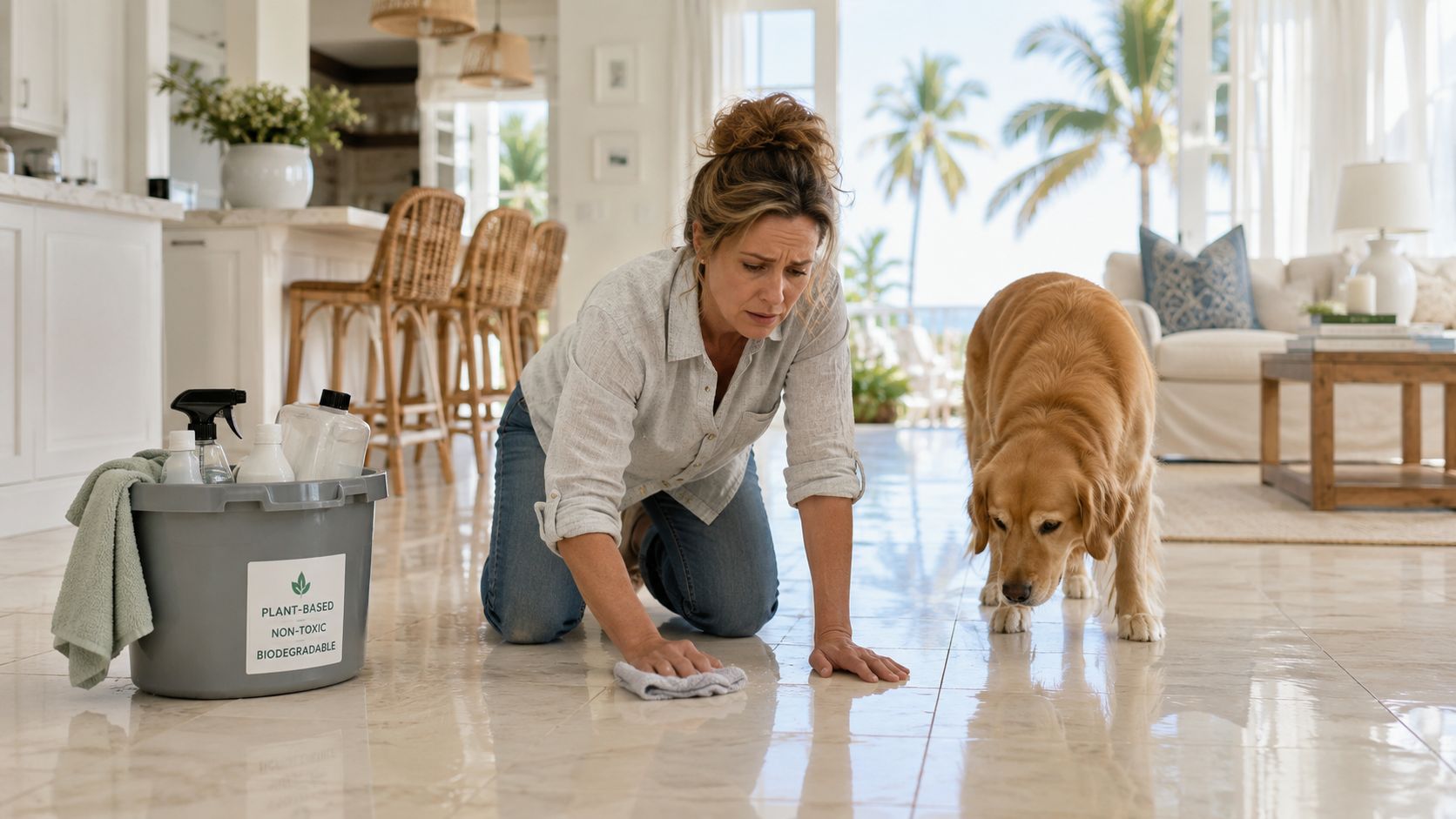
What dog-safe actually means
A dog-safe product should be judged by more than the front label. In practice, I'd look at four things:
- Low-risk contact. If a dog brushes against a baseboard or lies on a recently cleaned floor, the product shouldn't create obvious irritation risk from ordinary household contact.
- Low-risk fumes. Dogs don't choose to avoid strong vapors. In smaller bathrooms or laundry rooms, harsh products can linger.
- No harsh masking agents. Heavy fragrance often gets mistaken for cleanliness, but it can make an enclosed condo or townhouse feel worse, not better.
- Appropriate use on the right surface. Tile, grout, laminate, sealed stone, and washable wall paint all respond differently.
Why Florida changes the equation
A generic blog might say, “Use a pet-safe cleaner and let it dry.” That's not enough here.
On a dry day, a tile floor may clear quickly. On a muggy afternoon in Boynton Beach or Lake Worth, that same floor can stay tacky longer, especially if the AC is running but the home still holds moisture from outside traffic, shower steam, or storm weather.
Practical rule: In South Florida, “dry to the touch” and “safe for a dog to lick a paw after walking through it” are not always the same thing.
The same goes for airborne spray. In homes that already fight AC dust on vents, mildew in bathroom grout, and sandy grit from beach runs, it's smarter to use methods that clean thoroughly without loading the air with more irritants.
The Most Wanted List Common Cleaners Harmful to Dogs
Some products get used in Palm Beach County homes for understandable reasons. Bleach gets pulled out for mildew. Ammonia gets used on glass or heavy grime. Scented disinfectants get sprayed after wet dog smell, food spills, or Airbnb guest turnovers. The problem is that the ingredients doing the “heavy lifting” can be exactly what puts dogs at risk.
According to the PetMD summary citing the ASPCA Animal Poison Control Center, 8.3% of all pet poison calls involve household cleaning products, and common toxic ingredients for dogs include ammonia, bleach, chlorine, formaldehyde, and isopropyl alcohol.
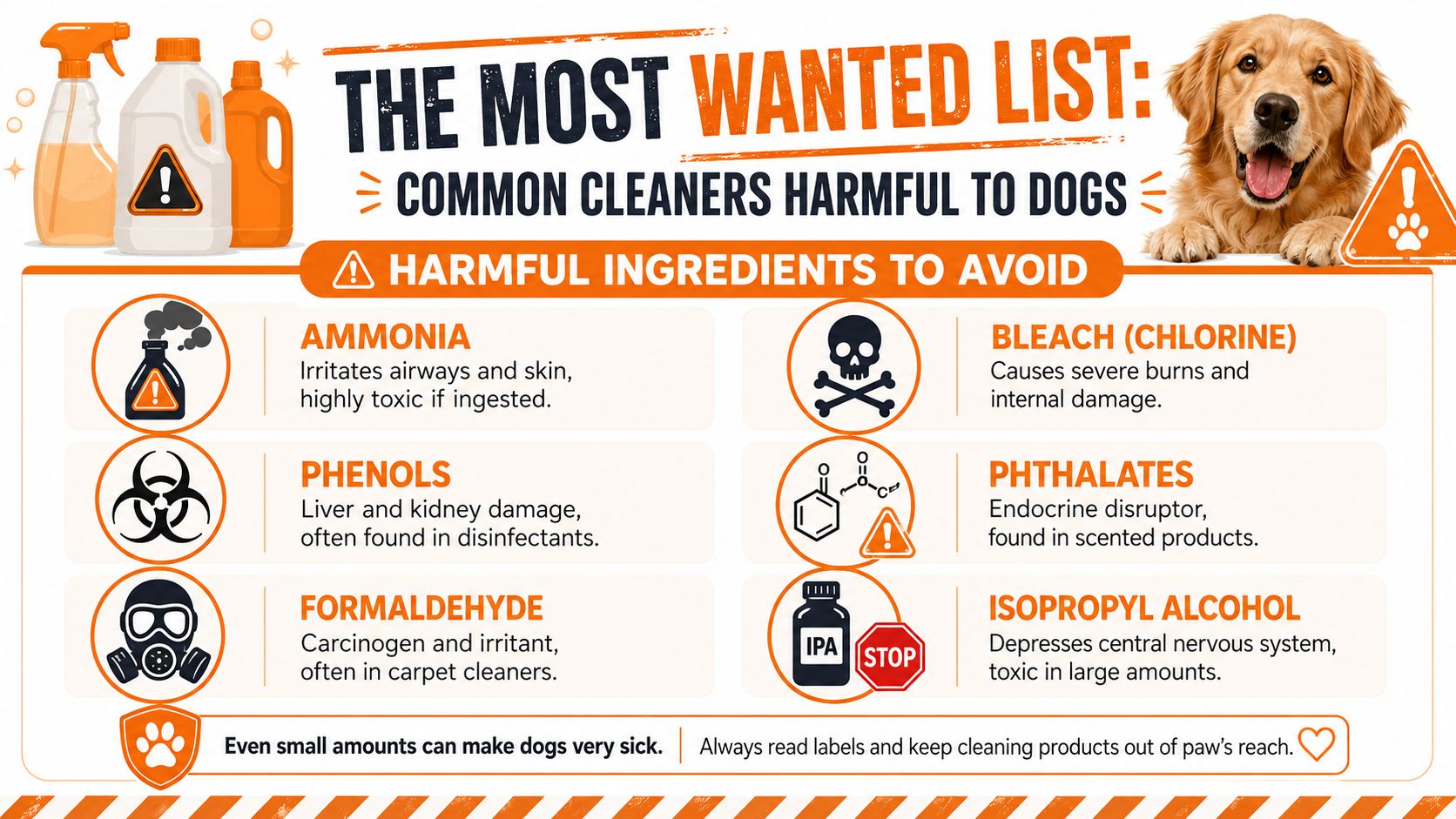
Ingredients I'd keep out of a dog home when possible
- Ammonia. This is rough in enclosed spaces and can irritate airways and skin. In a Jupiter bathroom where you're already battling humidity and shower buildup, ammonia fumes are a bad trade-off.
- Bleach and chlorine. People often reach for bleach on grout, shower edges, and outdoor entry tile after rainy season mud. It can cause severe irritation and bigger problems if a dog walks through residue or breathes concentrated vapors.
- Formaldehyde. Some carpet and specialty cleaning products can contain ingredients that create a real concern for dogs that nap, sniff, or roll on treated surfaces.
- Isopropyl alcohol. Often overlooked because it seems common and familiar, but it still belongs on the caution list in homes with curious dogs.
- Phenols. Many pet owners don't recognize this word on a label, but it's one of the first things I'd watch for in stronger disinfecting products.
- Heavy synthetic fragrance and phthalates. If a product smells “fresh” for hours, that's not always a benefit in a closed-up South Florida home.
Local situations where people get into trouble
In North Palm Beach and Boca Raton condos, I often see people use stronger disinfectants in small bathrooms with weak airflow because mildew returns fast. In beachside properties, owners may overuse products on entry tile and baseboards because sand sticks to damp residue and makes floors look dirty again almost immediately.
Stronger isn't safer, and it often isn't cleaner once dogs, humidity, and repeat exposure enter the picture.
If your dog might have contacted a questionable cleaner, calling your veterinarian promptly is the safe move. Prevention is easier than dealing with a respiratory or ingestion issue after the fact.
Decoding the Green Aisle How to Choose Truly Safe Products
The hardest part of shopping for dog safe cleaning products is that the label can sound reassuring while telling you very little. “Natural,” “green,” and “eco-friendly” don't automatically mean a product is a good fit for a dog household in Delray Beach, Wellington, or The Acreage.
A 2025 analysis found that over 60% of products marketed as “pet-safe” contain undisclosed volatile organic compounds or synthetic fragrances that can trigger respiratory distress in dogs, yet no universal certification exists to verify claims. That's the gap most homeowners don't realize until they start reading ingredient lists closely.
What I'd look for first
Skip the marketing language and look for practical signals:
- Enzymatic cleaner. This matters most for organic messes like drool, vomit, urine, food spills, and tracked-in grime. Enzymatic formulas work by breaking down the mess instead of covering it up.
- Unscented or fragrance-free. If you're cleaning a home that already traps humidity, less airborne scent is usually the better choice.
- Clear ingredient transparency. If the label hides behind vague wording, I'd move on.
- Surface fit. Products should match your actual flooring and finishes, especially if you have tile throughout, LVP in bedrooms, or sealed counters.
The practical advantage of enzymatic cleaning is chemistry, not branding. Proteases, amylases, and lipases break down organic waste through hydrolysis rather than using the kind of harsh alkaline or acidic action that can irritate tissue. That's why enzymatic products are usually a smarter answer for pet accidents and odor-heavy cleanup than old-school “disinfect everything” solutions.
What I'd ignore
A label saying “botanical,” “earth-friendly,” or “plant powered” doesn't settle the safety question by itself.
Shopping rule: If the front of the bottle makes broad promises but the back doesn't clearly explain what's inside, I wouldn't trust it around a dog.
For homeowners who want a lower-residue approach throughout the house, natural cleaning products for the home can be a useful starting point, especially when you're trying to reduce unnecessary fragrance and harsh chemical exposure in everyday maintenance.
A real Palm Beach County example is post-storm mud in Loxahatchee or The Acreage. That mess needs something that removes organic residue and odor without leaving behind a harsh film your dog picks up on paws the second they circle back through the room.
The Smart DIY Cleaning Kit and What to Never Mix
DIY can work well in a dog home if you keep it simple. The trouble starts when internet advice turns a safe pantry ingredient into a dangerous chemical reaction.
For everyday upkeep, I like simple tools and narrow use cases, not “miracle” mixtures. Microfiber cloths, a dedicated mop head, baking soda for odor control, and plain vinegar used correctly can handle a lot of routine mess in homes dealing with wet paws, patio dirt, and sandy entryways.
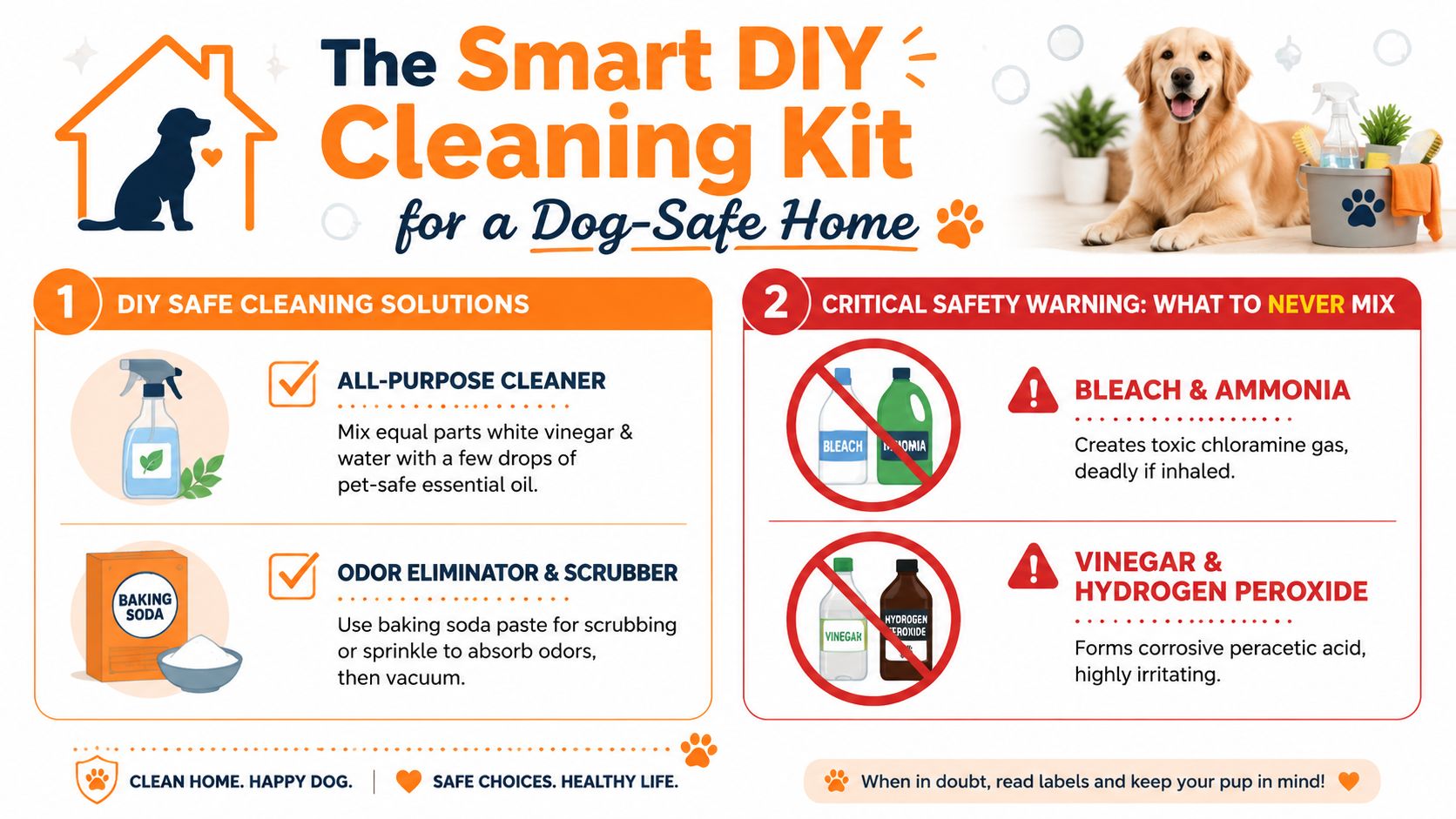
A simple DIY kit that makes sense
- For glass and light wipe-downs. A diluted vinegar solution can help with smudges and film when used appropriately on compatible surfaces.
- For odor absorption. Baking soda works well as a short-term deodorizer before vacuuming.
- For pet accident cleanup. An enzymatic product is a better choice than trying to improvise with strong DIY combos.
- For routine maintenance. Clean water, microfiber, and fast drying matter more than complicated recipes.
If you want a lower-residue approach for mirrors and glass, eco-friendly glass cleaner options are worth comparing with whatever you keep under the sink now.
The mix I never want in a dog household
The biggest DIY mistake I still hear about is combining hydrogen peroxide and vinegar in the same cleaning routine as if they become stronger together. They do. That's the problem.
The inadvertent creation of peracetic acid, from mixing hydrogen peroxide and vinegar, releases vapors causing acute exposure toxicity to the canine respiratory tract. Professional protocols require those ingredients to be kept and used separately, not layered together in one bottle or on one just-sprayed surface.
Keep hydrogen peroxide and vinegar in separate, clearly labeled containers. Never combine them.
A separate safety point matters here too. Hydrogen peroxide should stay at 3%, and vinegar should stay at 5% acetic acid when used individually in careful home cleaning routines. That's where many “homemade cleaner” posts get reckless.
Here's a helpful visual walkthrough on safer pet-focused cleaning habits:
In practice, the smartest DIY kit is boring. That's a good thing.
The Post-Clean Protocol When is it Safe for Your Dog to Re-Enter
Most advice falters here. “Wait until dry” sounds reasonable, but it doesn't account for Florida conditions or how dogs interact with floors and fabric.
Emerging 2025 data reveals that 35% of household pet exposures to cleaning agents occur not during application but within 1-4 hours post-cleaning, when residual moisture or airborne particulates are still present. That lines up with what many pet owners miss. The risk window often starts after the mop bucket is put away.
What changes the safe window
In Palm Beach County homes, these factors matter most:
- Surface type. Tile usually clears faster than carpet or grout lines. Upholstery and rugs can hold moisture and cleaner longer.
- Humidity. A rainy afternoon in Riviera Beach or Boynton Beach can stretch drying time well beyond what you'd expect.
- Air movement. Ceiling fans, AC return flow, and open airflow help. Closed bathrooms stay risky longer.
- How the product was applied. A lightly damp microfiber pass is different from a soaked floor or heavily sprayed baseboard.
Practical re-entry guidance
I'd use common-sense staging, not one blanket rule.
| Surface | Safer approach in Palm Beach County conditions |
|---|---|
| Tile and sealed hard floors | Wait until fully dry, then give extra time if the air feels muggy or the floor still feels cool and tacky |
| Grout-heavy bathrooms | Keep dogs out longer because grout and corners hold moisture |
| Carpet and rugs | Assume a longer wait because fibers trap both moisture and residue |
| Upholstery and pet beds | Don't allow reuse until there's no dampness and no lingering cleaner smell |
If you can still smell the cleaner strongly at dog level, I wouldn't invite your dog back into that area yet.
In South Florida, humidity changes the answer. A hallway tile floor in winter might clear relatively fast. A bathroom floor after shower use in July won't.
The Sunset Shine Standard Professional Pet-Safe Cleaning in Palm Beach County
Pet-safe cleaning isn't one trick. It's a chain of decisions. Product choice, surface match, ventilation, residue control, and re-entry timing all have to work together.
That's one reason more homeowners are paying attention to this category. The global pet-safe cleaners market was projected to reach approximately USD 6,492.1 million in 2025, reflecting stronger demand for products and services built around pet health concerns, according to Future Market Insights on the pet-safe cleaners market.
What professional pet-safe cleaning should look like here
In Palm Beach County, a real protocol should account for:
- Humidity and mildew pressure in bathrooms that need cleaning without overloading the room with harsh fumes
- Salt air residue on coastal fixtures and nearby hard surfaces
- Sand and grit tracked through tile, LVP, and entryways after beach trips
- AC dust on vents and sills that keeps circulating through the house
- Pet hair zones along baseboards, under furniture edges, and around dog beds
That's also why many clients who need recurring maintenance, deep cleaning, move-out work, or Airbnb turnover look for eco-friendly house cleaning services instead of trying to patch together a safe routine on their own.
How this works in a real home
A dog-friendly cleaning plan in West Palm Beach or Palm Beach Gardens should include thoughtful product selection, microfiber-based soil removal, targeted bathroom cleaning, careful floor finishing, and enough dry-down time before pets re-enter cleaned zones.
That applies whether you live in a coastal condo, a family home in Wellington, or a rental in Delray Beach with muddy paws coming in during the rainy season. The goal isn't only a home that looks clean. It's a home your dog can safely live in right after the work is done.
Sunset Shine Home Cleaning serves West Palm Beach, Palm Beach Gardens, Jupiter, Juno Beach, North Palm Beach, Riviera Beach, Royal Palm Beach, Lake Worth, Boynton Beach, Delray Beach, Boca Raton, Wellington, Westlake, Loxahatchee, Loxahatchee Groves, and The Acreage.
Need help keeping your home clean without gambling on residue, fumes, or rushed dry times around your dog? Sunset Shine Home Cleaning provides house cleaning throughout Palm Beach County with pet-conscious methods for everyday maintenance, deep cleaning, move-in and move-out work, and fast turnover situations. Call 561-408-4020 or book online at sunsetshinehomecleaning.com.