
If your home feels sticky even with the AC running, you're not imagining it. In Palm Beach County, humidity shows up fast in bathrooms, on vents, around window sills, and in that musty smell that makes a place feel dirty even after you wipe things down. For homeowners, renters, Airbnb hosts, and property managers who want a fresh, guest-ready, or move-out-ready space, understanding what causes humidity in a house helps you fix the source instead of chasing the symptoms.
Deep cleaning matters here because moisture leaves behind more than discomfort. It feeds mildew on grout, grime on baseboards, dust on damp vents, and that film you notice on cabinets and mirrors in South Florida homes.
Table of Contents
- The Sticky Situation Humidity in Your South Florida Home
- Understanding What High Humidity Really Means
- What Causes Humidity in a House Here in Palm Beach County
- The Unseen Damage of Lingering Home Humidity
- How to Measure and Control Your Home's Humidity
- Your Next Step to a Fresher Palm Beach Home
The Sticky Situation Humidity in Your South Florida Home
A lot of homes in West Palm Beach, Jupiter, Boca Raton, and the rest of Palm Beach County have the same complaint. The AC is on, the floors are clean, but the house still feels damp.
That usually shows up first in the rooms that work the hardest. Bathrooms hold shower steam, kitchens trap cooking moisture, laundry areas stay muggy, and closed-up rentals start to smell stale. In South Florida, that damp feeling doesn't stay hidden for long.
Practical rule: If a home feels sticky day after day, the problem usually isn't just the weather. It's moisture getting created indoors, trapped indoors, or not removed well enough.
The people who usually need answers fast aren't doing casual research. They're trying to get a condo ready before guests arrive, reset a home after rainy season buildup, clean up a rental before a walkthrough, or finally deal with mildew that keeps coming back on ceilings and grout.
This matters locally because Palm Beach County homes have their own mix of challenges. Coastal condos deal with salt air on fixtures. Family homes in Wellington and Royal Palm Beach often have constant bathroom traffic and year-round AC dust on vents. Airbnb properties near the beach pick up sand, damp towels, and tight turnover schedules all at once.
Understanding What High Humidity Really Means
What relative humidity feels like indoors
Humidity gets overcomplicated. The easiest way to think about it is air acting like a sponge. When the sponge is dry, it can hold more water. When it's already soaked, it can't take on much more, so moisture starts showing up on surfaces and in the air you feel.
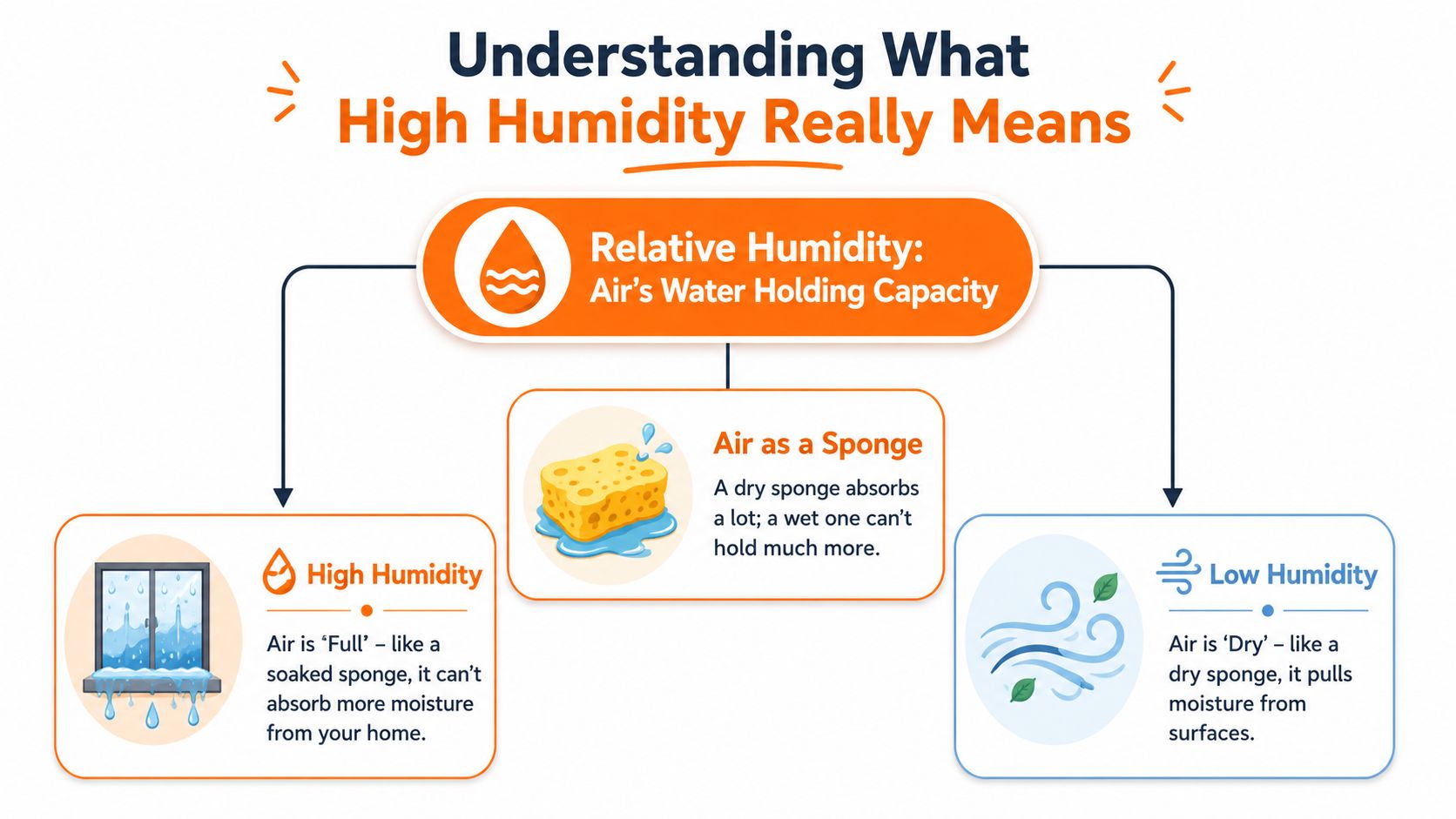
The EPA recommends keeping indoor relative humidity in the 30% to 60% range, and says levels above 60% are high humidity in the home. In practical terms, that upper range is where mold risk rises and indoor air starts feeling heavy, especially in bathrooms, kitchens, and laundry spaces, according to the EPA's moisture control guidance.
In South Florida, you don't need standing water to have a humidity problem. A house can look mostly fine and still feel off. Mirrors stay foggy longer. Towels don't dry right. Closet air smells stale. Vents collect damp dust instead of dry dust.
What We See in Palm Beach County Homes
In Palm Beach County homes, high humidity has a look to it.
- Bathroom ceilings: Faint spotting above the shower in older West Palm Beach and Lake Worth homes where steam lingers after back-to-back showers.
- Grout lines and caulk: Darkening around the lower tile lines in Boca Raton and Delray Beach master baths, even when the tile itself looks clean from a distance.
- Kitchen cabinet film: A tacky layer on cabinet fronts in coastal condos near Juno Beach and the Intracoastal where cooking moisture and everyday residue cling faster.
- AC vent dust: Dust that sticks to vent covers and around registers because the air feels damp instead of crisp.
- Swollen doors and musty closets: More noticeable in closed-up seasonal properties and guest rooms that don't get much airflow.
That combination is why humidity makes a house feel dirty before it looks obviously dirty.
What Causes Humidity in a House Here in Palm Beach County
Everyday moisture adds up fast
A lot of people blame the weather first. The weather matters, but indoor moisture often starts with normal daily living.
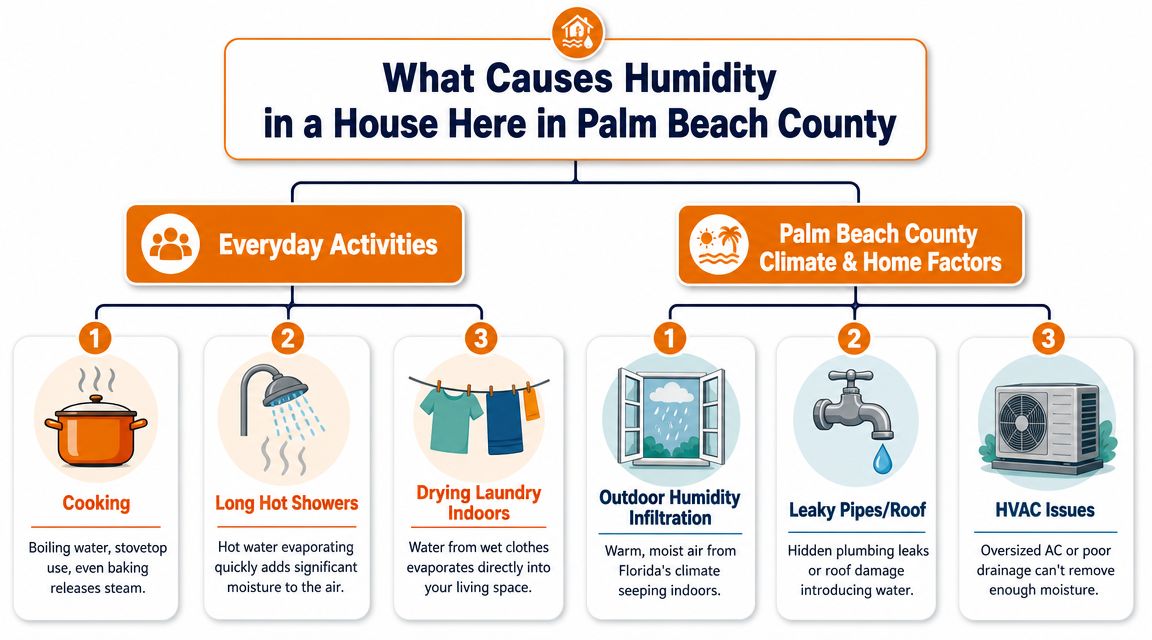
Cooking, bathing, dishwashing, and drying clothes indoors all add water vapor to the air. Even breathing contributes. One source cited in New Zealand building guidance says an awake person exhales about 200 mL of water vapor per hour, which helps explain why a busy household can overwhelm weak ventilation, as noted in Level's humidity and condensation guide.
In real homes, that looks simple. A long shower in the morning, pasta boiling at night, dishwasher running after dinner, and wet towels hanging inside. If the bathroom fan is weak or never used, the moisture doesn't disappear. It spreads.
A common move-out example in West Palm Beach proves the point. A bathroom can look acceptable at first glance, then deeper trouble shows up in grout lines, behind the toilet base, around caulk edges, and along baseboards where trapped shower steam and daily moisture settled over time. That's the kind of buildup that can stand out during a final walkthrough.
The house may be pulling moisture inside
Sometimes the answer to what causes humidity in a house isn't the shower at all. It's the building.
Humid outdoor air can enter through small leaks around windows, doors, and other gaps. That matters in Palm Beach County because homes stay closed up for AC much of the year, and small infiltration problems can keep feeding moisture indoors. The harder part is that homeowners often mistake infiltration for a cleaning problem because they first notice sticky surfaces, musty smells, and repeat mildew.
If the same room keeps feeling damp after you clean it, there's usually a source problem behind the mess.
This shows up differently by neighborhood and home type. A coastal condo may have worn seals and constant humid air pressure. An older home in Riviera Beach may have weaker airflow in bathrooms and laundry areas. A newer house in Wellington may be tightly sealed but still feel muggy if ventilation isn't balanced well.
Air conditioning can cool without drying enough
This is one of the biggest South Florida trade-offs. A house can feel cool and still be too humid.
Neutral home performance guidance points out that indoor humidity can come from humid outdoor air entering the home and from AC that isn't dehumidifying properly. The fix depends on whether the issue is infiltration, ventilation, or HVAC performance, as explained in Sealed's guide to why a house feels humid.
What doesn't work well is treating every damp-feeling room the same way. Sprays, fragrance plugs, and repeated wipe-downs only handle the result. If the AC short-cycles, the fan setup is wrong, or moisture keeps leaking in, the sticky feeling returns.
The Unseen Damage of Lingering Home Humidity
What starts in the bathroom spreads through the home
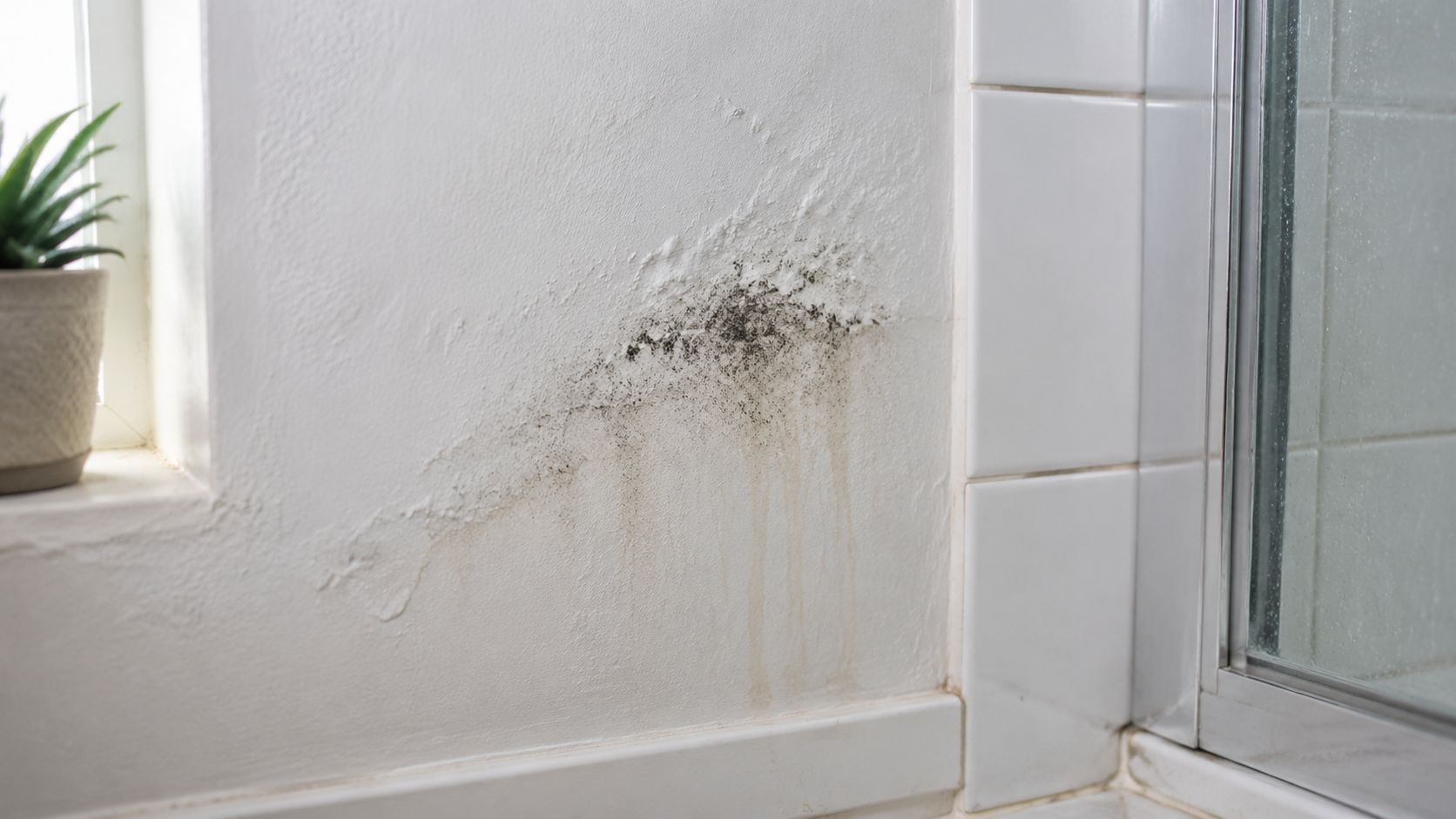
Humidity rarely stays in one neat corner. In Boca Raton bathrooms, it often starts as black speckling in grout or faint spotting on the ceiling. In a closed-up rental property, it may hit you first as a musty smell when the door opens.
Then it spreads into the details people notice during cleaning. Mirrors haze faster. Baseboards collect grime. Closet air feels stale. Metal fixtures near the coast can look dull sooner because moisture and salt air work together.
For bathroom surfaces, grout is usually where the problem gets obvious first. If you're dealing with that kind of buildup, this guide on how to clean grout in bathroom tiles is a useful starting point.
When the problem is bigger than surface dirt
Humidity isn't just about visible water. It's often tied to humid outdoor air getting in through leaks or an AC system that isn't drying the home properly. When that happens, the cleaning keeps getting undone because the source never changed.
That matters in Palm Beach County because different properties fail in different ways. A condo in Riviera Beach may trap damp air in small bathrooms and utility closets. A larger property in Loxahatchee Groves may hold moisture in less-used rooms, mudroom corners, or around window sills after long wet stretches.
A quick visual can help connect the dots between hidden moisture and visible damage.
A home can smell clean and still be carrying moisture problems in the air, on vents, and inside porous surfaces.
How to Measure and Control Your Home's Humidity
Start with a reading, not a guess
The best shift in recent humidity advice is simple. Measure it.
Modern guidance focuses on targets instead of vague advice like just opening a window. One current source says keeping indoor humidity between 30% and 45% during hot summers is ideal, while levels over 60% raise the risk of mold and material damage, according to Airthings' home humidity damage guide.
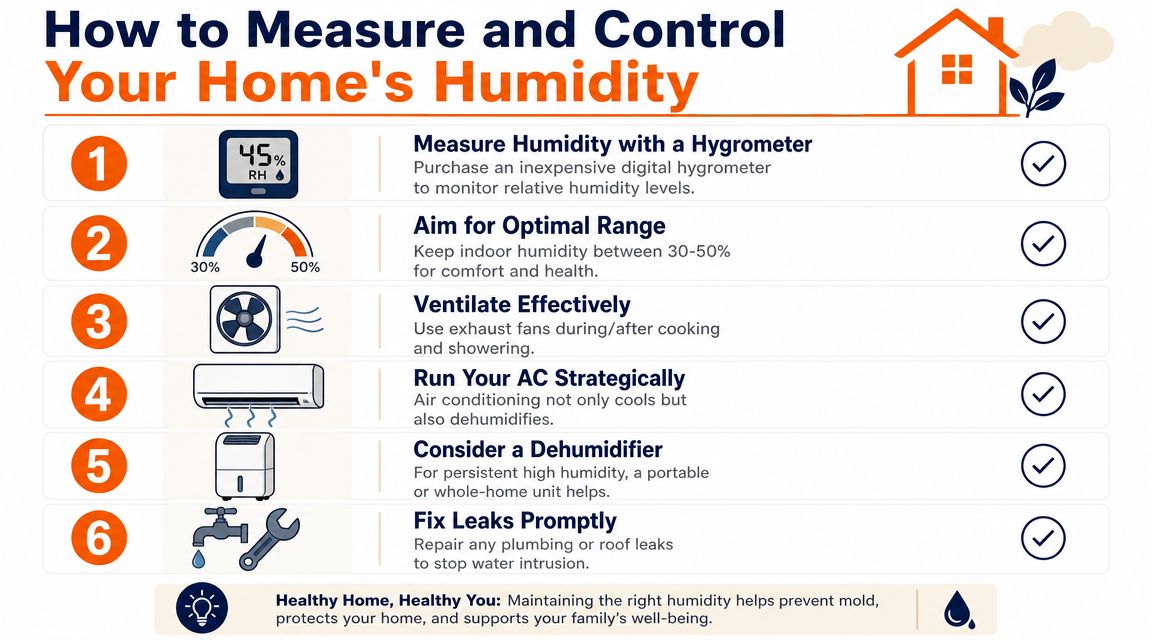
A simple hygrometer can tell you whether the house is humid or just feels warm. Check the rooms that usually struggle first:
- Bathrooms: Especially after showers and again later, once the fan has had time to work.
- Bedrooms: Closed guest rooms and seasonal rooms often hold stale air.
- Kitchen and laundry: Good places to spot hidden moisture from cooking and appliance use.
What works better than just opening a window
Opening a window can help in the right moment, but it's not a full plan in South Florida.
Better fixes usually look like this:
- Use source capture: Run bathroom exhaust fans, range hoods vented outside, and dryers that vent outdoors.
- Check for leaks: Under sinks, around windows, and anywhere you smell dampness.
- Watch the AC performance: If the house feels cool but clammy, ask whether the system is drying the air well enough.
- Clean the places that trap dust and moisture: Vents, fan blades, window sills, and baseboards all hold onto buildup.
Ceiling fans and vent covers are often overlooked, even though they collect dusty residue fast in humid homes. This guide on how to clean a fan helps with one of the most common trouble spots.
What a humidity-focused deep clean should include
When moisture has already left its mark, a good reset should cover the areas that daily tidying misses.
- Bathrooms: Scrub showers, tubs, toilets, grout lines, mirrors, sinks, counters, and fixtures where mildew likes to linger.
- Kitchen degreasing: Clean cabinet exteriors, sink areas, counters, and appliance fronts where sticky moisture films build up.
- Floors and edges: Vacuum and mop floors, then detail baseboards and corners where dust clumps in damp air.
- Dust removal: Hit vent covers, reachable fans, window sills, and ledges that collect AC dust and pollen.
- High-touch disinfecting: Wipe handles, switches, and frequently touched surfaces.
- Optional add-ons: Inside oven, inside fridge, inside cabinets, wall spot cleaning, pet-hair focus areas, and interior window cleaning.
Your Next Step to a Fresher Palm Beach Home
South Florida humidity shows up in grout lines and bathroom ceilings with surprising speed. In Palm Beach County, a home can look almost clean and still feel damp, stale, and harder to keep under control.
If you're moving, hosting guests, settling into a new place, or trying to get ahead of recurring mildew, it helps to pair the right cleaning with the right home checklist. For a practical reset after closing or before move-in, this new homeowner checklist is worth saving.
Schedule Clean Inspect Enjoy
The simplest process is the one people follow.
- Schedule: Book online or call and choose a time window that fits your household, rental turnover, or property schedule.
- Clean: Cleaners arrive with supplies and work from a checklist-based plan.
- Inspect: A quick quality check catches missed dust, damp bathroom detail work, and touch-up items.
- Enjoy: You come back to a home that feels lighter, smells fresher, and is easier to maintain.
Pricing depends on bedrooms, bathrooms, square footage, condition, and add-ons. Most clients request a custom estimate.
Quick answers before you book
Are supplies included?
Yes. Professional cleaners typically arrive with their own supplies and tools.
Can you clean humidity trouble spots like bathrooms and vents?
Yes. Those areas are usually part of a deep-clean priority list because that's where Palm Beach County homes show buildup fastest.
What if I have pets?
Pet hair can be a focus area, especially on baseboards, upholstery edges, and corners where damp dust sticks.
Do rainy-season cleans make sense?
Yes. That's often when entryways, bathrooms, window sills, and floors need more attention.
Book your cleaning with Sunset Shine Home Cleaning – your trusted house cleaning service in West Palm Beach. If you're dealing with the effects of what causes humidity in a house, from mildew-prone bathrooms to sticky dust on vents and baseboards, call 561-408-4020 or book online at sunsetshinehomecleaning.com.