
You flip on the kitchen light in your Palm Beach County condo and notice a gray haze across the glass. In a humid coastal home, dust, salt air, sand, pollen, and year-round AC circulation can dull fixtures faster than expected. This guide to how to clean light fixtures shows homeowners, renters, Airbnb hosts, and property managers how to get safer, brighter results without damaging glass, metal, fabric, or electrical parts.
Table of Contents
- Why Light Fixtures Get Dirty Faster in Palm Beach County
- Safety Prep and the Right Eco-Friendly Tools
- The Core Method for Glass Shades and Bulbs
- Fixture-by-Fixture Approach for Ceilings, Pendants, and Recessed Lights
- Stubborn Coastal Grime and When to Call a Pro
- A Simple Maintenance Schedule for Brighter Fixtures
Why Light Fixtures Get Dirty Faster in Palm Beach County
Salt-laced humidity settles on glass and metal, while constant AC cycling moves fine dust toward warm bulbs and ceiling fixtures. Open windows and lanai doors add beach sand and tropical pollen, especially in coastal homes from Juno Beach through Boca Raton.
You may notice a gray film on shades, dark rings around recessed trim, greenish buildup on outdoor-rated fixtures, or oxidation on brass hardware. That isn't neglect. It's the local environment working overtime. Humidity also helps mold and mildew appear in bathroom grout and around fixtures, a problem explained further in this guide to what causes humidity in a house.
What this guide helps you do
You'll learn how to:
- Clean safely: Shut off power, cool bulbs, and keep moisture away from sockets.
- Match the method: Use dry dusting, hand-washing, or fabric care according to the fixture.
- Choose gentler products: Cut coastal residue without stripping coatings or painted finishes.
- Know when to stop: Bring in a pro for high, fragile, antique, or electrically damaged fixtures.
The 1999 EPA-funded NALMCO study found that cleaner indoor environments often experienced about 10% light loss from dirt over a two- to three-year period, rather than the older assumption of about 20% (EC&M). The practical lesson is simple. Dust buildup can dim light gradually, so routine care beats waiting for visible grime.
Safety Prep and the Right Eco-Friendly Tools
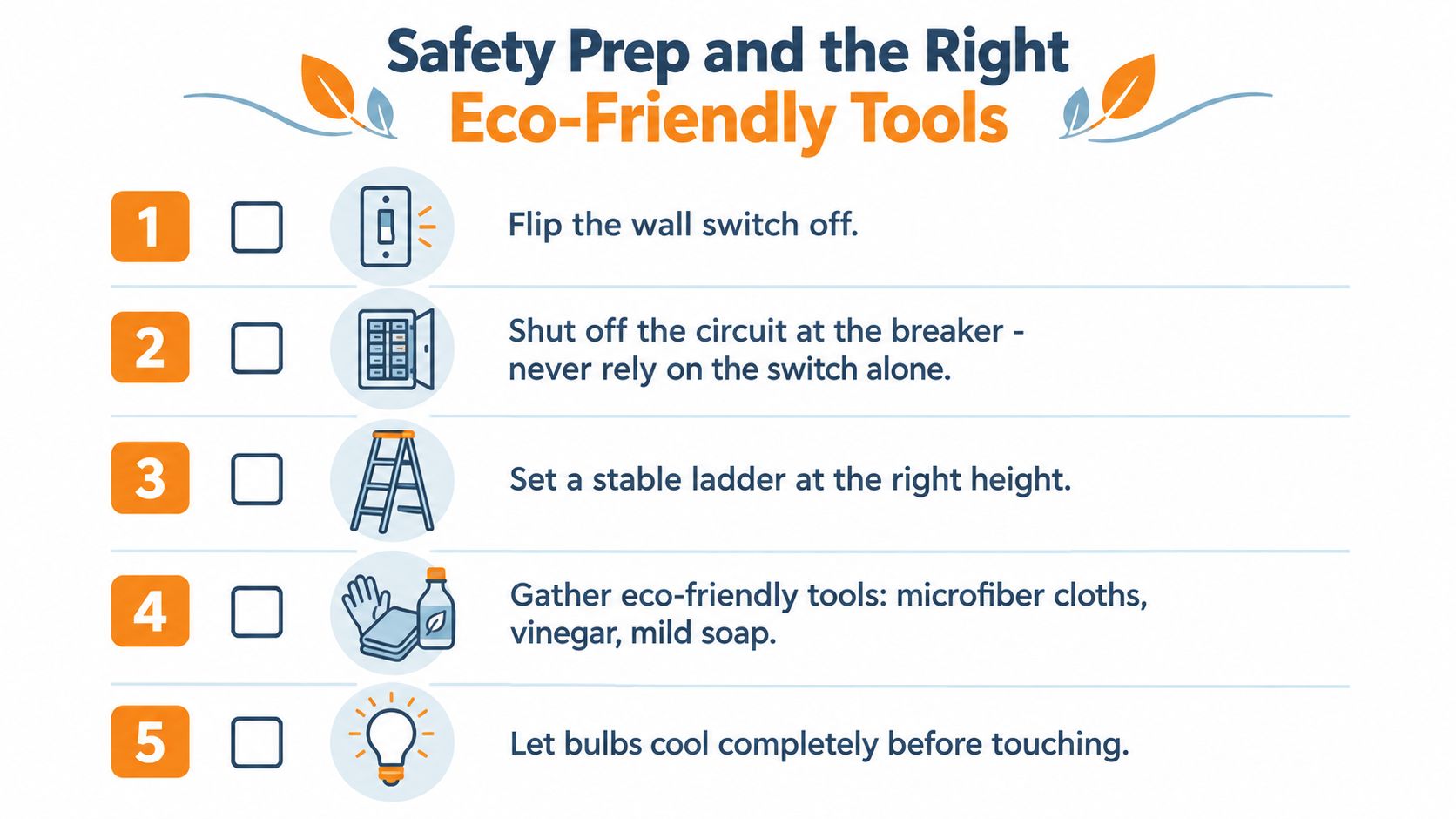
Start at the wall switch, then shut off the circuit at the breaker whenever possible. A switch can be mislabeled or fail, and ceiling work puts your hands close to wiring. Let incandescent and halogen bulbs cool for at least 10 minutes, LEDs for 5 minutes, and follow manufacturer guidance when the bulb or shade still feels warm.
Put a drop cloth beneath the fixture and set up a stable ladder. Keep removed parts on a towel, not directly on tile or a stone counter.
Gather the equipment first
- Microfiber cloths: Use separate dry and damp cloths so grit doesn't spread.
- Soft boar-bristle brush: Loosen dust from grooves, crystal, and textured metal.
- Plant-mister bottle: Lightly dampen a cloth instead of spraying the fixture.
- Cotton gloves: Handle clean glass and polished metal without fingerprints.
- Bulb-shaped duster: Reach recessed trims without pressing into the housing.
- Paint tray on the ladder: A stable place for small parts, never a loose tool balanced overhead.
For glass and compatible metal, try white vinegar mixed 50/50 with distilled water. A few drops of castile soap help with kitchen grease. A baking soda and water paste can assist with tarnished brass, but test any finish in an inconspicuous spot first. Avoid ammonia, bleach, alcohol, vinegar, and abrasive pads on coated, painted, textured, or manufacturer-restricted finishes. The natural cleaning products guide offers additional household-safe options.
The Core Method for Glass Shades and Bulbs
The reliable sequence is dry first, then hand-wash. Dust the shade while it's still installed with a soft duster or dry microfiber cloth. If you wet coastal grit immediately, it turns into muddy streaks and makes the shade harder to clean.
After the bulb and shade have cooled, remove the shade only if the fixture allows it. Place it on a towel-lined tray, then wash it in warm distilled water with a small amount of castile soap and a soft microfiber cloth. Never use a scouring pad, even on marks that look baked on.
For a stubborn film, mist the cloth with a 50/50 vinegar solution, or apply it only where the finish permits. Let it sit for about 2 minutes, wipe gently, rinse with clean distilled water, and dry completely. Hand-washing is safer than a dishwasher, which can expose shades to heat, vibration, and finish damage. Manufacturer guidance also warns against ammonia, alcohol, abrasive cloths, and unsuitable glass cleaners (Kichler).
Practical rule: Keep every liquid on the shade or cloth, never in the socket.
Air-dry the shade upside down on a towel so water doesn't pool. Wipe the bulb with a dry microfiber cloth only. Never spray a bulb, reinstall damp glass, or restore power until every removable part is fully dry. For another practical reference on how to clean your light fixtures, use a guide that follows the same gentle, dry-first approach.
Fixture-by-Fixture Approach for Ceilings, Pendants, and Recessed Lights
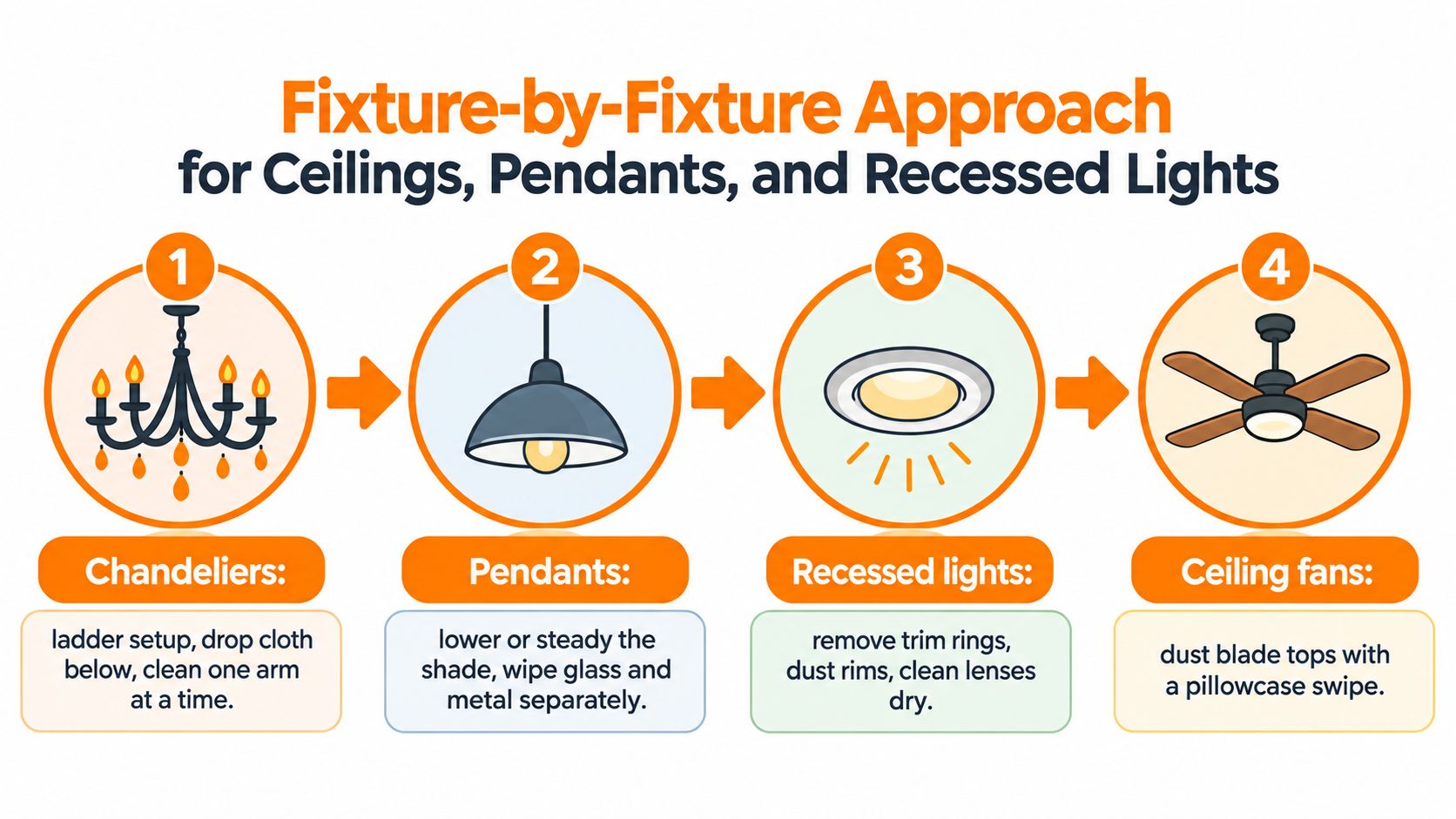
Different fixtures need different handling. The shared rule is to work slowly, support anything you remove, and keep moisture away from electrical components.
Chandeliers
Place a drop cloth below and position a stable ladder at the correct height. Work one arm at a time so crystal strands stay organized. Use a soft microfiber mitt on the frame, then lower individual crystal pieces into a towel-lined wash bucket.
For older leaded crystal, warm water with a teaspoon of castile soap and a lint-free cloth is safer than ammonia, which can damage delicate surfaces. If the chandelier is antique, unusually high, or has loose crystal, review guidance on when to call a pro for chandeliers before attempting the job.
Pendants and fabric shades
Support a pendant globe with one hand while unscrewing it with the other. Wash removable glass in the sink, dry it completely, and wipe the canopy and cord with a barely damp cloth.
For drum or fabric shades, use an upholstery brush on low suction first. Spot-clean with a barely damp cloth and a drop of dish soap. Don't soak fabric, rattan, or bamboo because excess moisture can warp the material or encourage mildew in humid rooms.
Recessed and flush-mount fixtures
After the bulb cools for at least 10 minutes, pull recessed trim down gently. Dust the reflector with a dry microfiber cloth and keep wet products away from the housing.
Flush-mount glass often develops a brown ring from AC dust and indoor residue. Remove the glass, hand-wash it, then wipe the base while it's accessible. For ceiling fans, use a pillowcase or soft duster on blade tops so dust doesn't fall across the room. Sunset Shine also covers fan care in this guide to how to clean a fan.
Stubborn Coastal Grime and When to Call a Pro
Salt residue can stay behind after ordinary dusting. For compatible hazy glass, use equal parts white vinegar and warm water with a drop of castile soap, allow the shade to sit briefly, then rinse and buff dry with microfiber. Check the manufacturer's finish guidance first, since vinegar can harm some coatings.
Yellowed bulbs usually need replacement rather than cleaning. Choose warm-white LEDs rated for enclosed fixtures when appropriate. For rust or tarnish on compatible brass or steel, test a baking soda and lemon juice paste on a hidden area, apply it with a soft toothbrush, wipe clean, and dry immediately.
Stop and call a licensed electrician or specialty cleaning professional when:
- Height creates fall risk: The fixture is over 12 feet high without safe ladder access.
- Wiring looks damaged: Cords or wiring appear cracked, brittle, or discolored.
- Crystal is unstable: Loose pieces hang from an antique chandelier.
- Metal is severely corroded: Rust has pitted the housing around a recessed light.
Don't trade a safe cleaning fee for a fall, short circuit, or broken fixture.
A Simple Maintenance Schedule for Brighter Fixtures
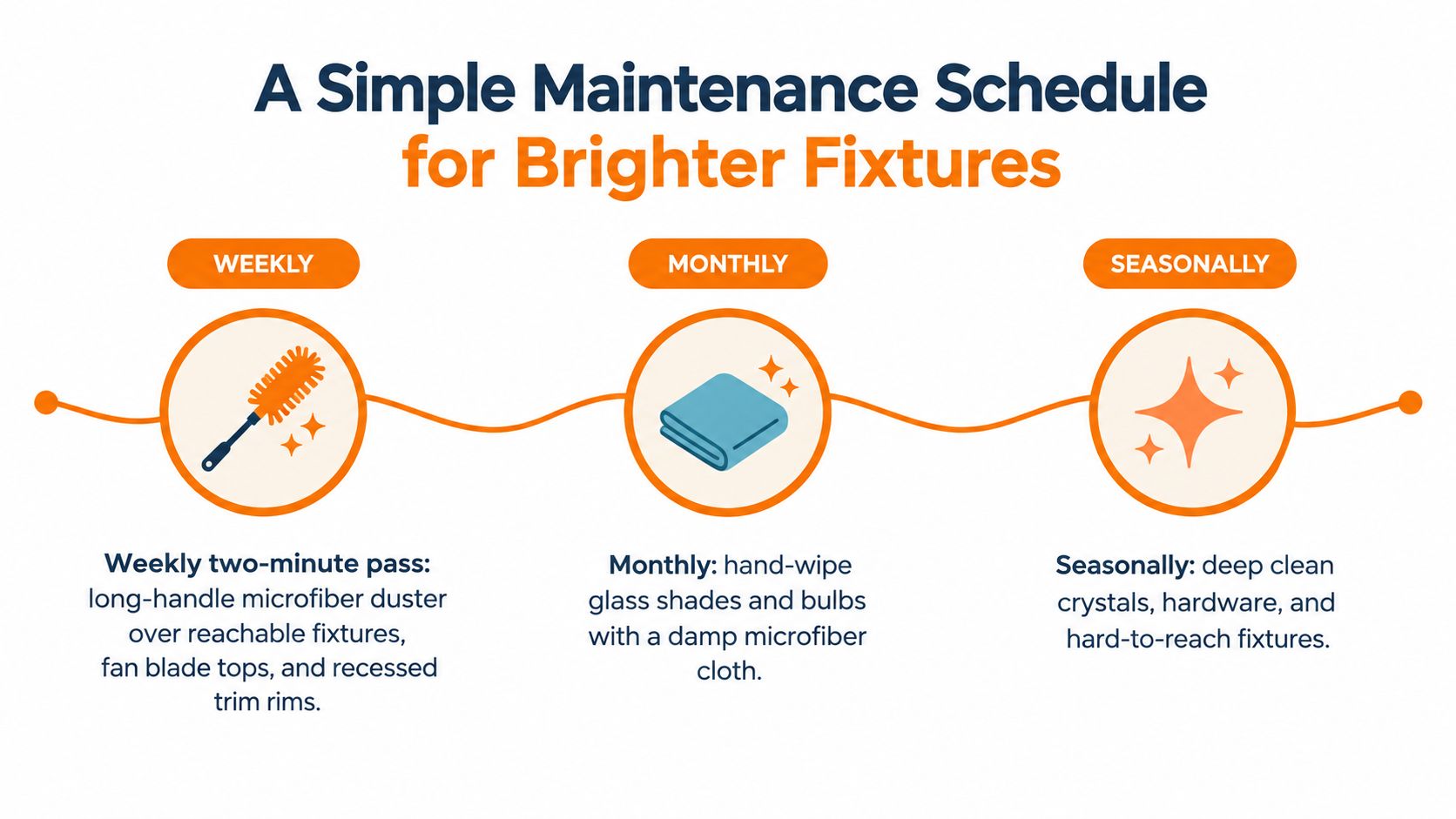
A small routine keeps Palm Beach County dust from becoming a half-day project. Do a weekly two-minute pass with a long-handle microfiber duster over reachable fixtures, fan blade tops, and recessed trim rims.
Once a month, wipe glass shades with a dry microfiber cloth. Every three months, complete the hand-wash routine for removable shades and pendants, and vacuum chandelier crystals in place with a soft brush attachment.
Seasonal reset
Schedule a deeper clean in spring and fall, before humidity peaks and after hurricane season, when homes may stay closed and indoor dust can build up. This cadence suits houses and condos dealing with salt air, sand, tropical pollen, and constant AC cycling.
Manufacturers and lighting professionals also recommend regular dusting and periodic deep cleaning, with suggested intervals varying by room use and dust levels (Buildings). If you're replacing bulbs during maintenance, this guide can help you choose LEDs for your home.
South Florida humidity shows up in bathroom ceilings, grout lines, and fixture finishes faster than many homeowners expect. Sunset Shine Home Cleaning can handle the surrounding deep-clean work, including bathroom fixtures, AC dust, baseboards, window sills, kitchens, and floors.
Sunset Shine Home Cleaning provides recurring, deep, move-in and move-out, post-construction, Airbnb turnover, and property-management cleaning across West Palm Beach and Palm Beach County. Visit Sunset Shine Home Cleaning or call 561-408-4020 to request a quote and return to a cleaner, guest-ready home.