
You're looking at a ceiling fan that seems harmless until it starts sending a soft cloud of dust across the room. In Palm Beach County, ceiling fan blade cleaners need to do more than make the visible underside look neat. They need to trap the heavy layer on top, protect the finish, and keep dust out of your furniture, floors, and indoor air.
For homeowners, renters, Airbnb hosts, and property managers, the desired result is straightforward: a cleaner home, a guest-ready rental, a deposit-ready apartment, or a safer way to handle fans over stairwells and vaulted ceilings. High humidity, year-round AC use, tropical pollen, pet dander, coastal salt air, and beach sand all make dust control a practical part of home maintenance.
Table of Contents
- Why Dusty Ceiling Fan Blades Deserve Attention Now
- What You Need Before You Start Cleaning
- How to Clean Ceiling Fan Blades Without Spreading Dust
- Choosing the Right Approach for Your Blade Material and Ceiling Height
- Keeping Blades Cleaner Longer in Humid Homes
- Mistakes That Spread Dust and When to Call a Professional
Why Dusty Ceiling Fan Blades Deserve Attention Now
A dusty fan often reveals itself after a restart. The blades begin turning, and particles that collected on the upper surfaces drift down onto beds, sofas, tile floors, and freshly cleaned counters. In a coastal West Palm Beach condo, that dust may mix with salt residue. In a Jupiter beach home, it may settle alongside sand and pollen. In a house with pets, dander can become part of the same layer.
One independent cleaning article reports that a neglected ceiling fan may circulate up to 80% more dust particles than a clean fan, while a single blade can collect over 100 grams of dust annually. The same article says a well-maintained fan can reduce airborne dust by nearly 50%, and recommends cleaning every 2 to 3 months, or monthly in homes with pets, allergies, or especially dusty conditions. See this practical guide to reducing dust with the best cleaning method.
Practical rule: If you can see a gray line along the blade edge or feel a gritty film on top, a quick underside wipe won't solve the problem.
The issue isn't only cosmetic. Research on variable-thickness leading-edge dust accumulation found that buildup can degrade fan performance and increase power consumption by up to 23.38 kWh, according to the academic discussion of ceiling-fan dust accumulation. Clean blades won't remove every source of indoor dust, but they can reduce one overlooked reservoir.
A contained clean should leave the blade top, underside, edges, and nearby housing free of loose dust, with no damp residue left behind. The safest methods start by capturing particles before moisture or friction spreads them.
What You Need Before You Start Cleaning
The right setup prevents the familiar Palm Beach County cleanup problem, dust falling onto a polished floor just after you've finished mopping. Gather a clean old pillowcase or a fitted microfiber sleeve, several microfiber cloths, a drop cloth, a stable ladder for reachable fans, and an extension-pole microfiber duster for higher installations.

A feather duster may look convenient, but it often lifts dust into the room instead of holding it. A pillowcase works because the fabric surrounds the blade and keeps the debris contained. For a high foyer or vaulted living room, a quality extension tool is safer than leaning sideways from a ladder. If you need a reach option, this guide to buying a Ryobi extension pole provides a practical starting point.
Prepare the room first
- Switch the fan off. Wait until every blade has come to a complete stop. Manufacturer guidance recommends using a soft or lint-free cloth and avoiding water or chemical cleaners around the motor to reduce electric-shock and motor-damage risks, as explained in this ceiling-fan use-and-care guide.
- Protect the area below. Place a drop cloth under the fan, especially over beds, sofas, rugs, or dark tile where dust is easy to see.
- Choose stable access. Put a ladder on a flat, dry surface. Don't use a chair, countertop, or moving furniture, and don't overreach.
- Keep liquids controlled. Cleaner belongs on the cloth, never directly on the blade, housing, light kit, or motor openings.
Wood blades need a particularly light touch. Excess moisture can warp wood, while damp surfaces can collect fresh dust quickly.
How to Clean Ceiling Fan Blades Without Spreading Dust
The pillowcase method is the most reliable low-mess approach for ordinary reachable fans. It also works well in bedroom fans, where loose dust would otherwise fall directly onto bedding.
Start with the upper surface, because that's where the main dust reservoir forms. Slide the pillowcase completely over one blade, supporting it gently from beneath. Pinch the fabric around the base, then pull from the motor end toward the tip in a slow, controlled motion. The dust stays inside the case instead of dropping across the room.
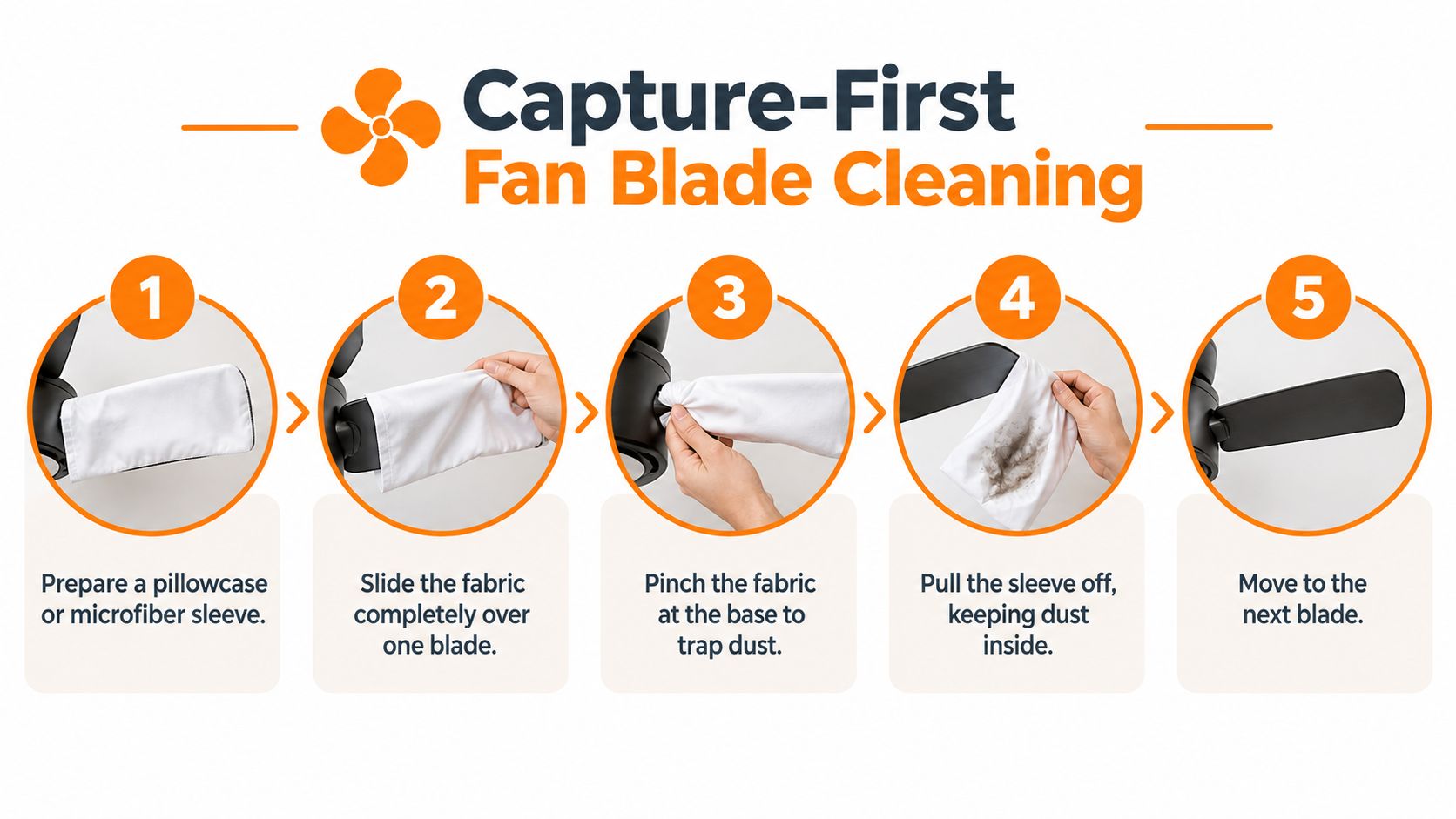
Use a capture-first sequence
- Contain the first pass: Treat one blade at a time. Don't swing a dusty pillowcase around between blades.
- Use light pressure: Press firmly enough to contact the surface, but not enough to bend, break, or warp a lightweight blade.
- Clean both sides: After the top is captured, wipe the underside and edges with a fresh section of microfiber.
- Finish damp, not wet: Put a small amount of gentle cleaner on the cloth only after loose dust is gone. A lightly damp microfiber removes film without sending spray toward electrical parts.
- Check the base and tip: Dust often remains where the blade meets the bracket and along the outer edge.
For high ceilings, use a microfiber sleeve on an extension pole rather than stretching from a ladder. Work from the center outward with overlapping passes, keeping the tool aligned with the blade. A dust-removal guide from Eco Clean Solutions also reinforces the value of trapping dust rather than redistributing it.
Don't spray directly onto the fan. Moisture can reach electrical components, and it may warp wood blades or leave a sticky surface that attracts more dust. For a room-by-room reference, use this guide to cleaning a fan.
A blade is clean when the top no longer leaves a visible trail on microfiber, the edge has no gray buildup, and the underside looks even rather than merely less dusty.
Choosing the Right Approach for Your Blade Material and Ceiling Height
The best method changes with the finish and the reach. A sealed painted blade can tolerate a lightly damp cloth, while natural wood needs much less moisture. Metal handles a broader range of gentle cleaners, but streaks can show clearly in bright Florida rooms.
Match the tool to the finish
Sealed or painted blades are usually the simplest. Capture dry dust first, then use a barely damp microfiber cloth. Avoid soaking the surface or allowing moisture to sit near the bracket.
Natural wood blades deserve a dry microfiber sleeve for routine dusting. For residue, use a cloth that is only slightly damp, then dry immediately. Don't use harsh chemicals, abrasive pads, or heavy pressure that could dull or mark the finish.
Metal blades can accept a gentle all-purpose cleaner applied to microfiber, provided the product is compatible with the finish. Wipe in consistent passes and dry afterward to prevent streaks, especially where afternoon sun hits a coastal fixture.
Blade Material and Height Decision Matrix
| Blade Type and Height | Recommended Tool and Moisture Level | Key Caution |
|---|---|---|
| Sealed or painted, standard ceiling | Pillowcase, then microfiber; lightly damp | Keep moisture away from the motor |
| Natural wood, standard ceiling | Dry sleeve first; barely damp cloth only for residue | Don't warp or oversaturate the wood |
| Metal, standard ceiling | Pillowcase or microfiber; gentle cleaner on cloth | Dry fully to avoid visible streaks |
| Any material, vaulted ceiling | Extension-pole microfiber sleeve; dry capture first | Don't overreach or work from unstable furniture |
In Palm Beach Gardens homes with tall great rooms, the reach decision matters as much as the cleaner. If the blade is outside comfortable ladder height, a professional with proper equipment is a better choice than trying to stretch around a fan while balancing over tile.
Keeping Blades Cleaner Longer in Humid Homes
South Florida homes have a particular dust pattern. AC vents keep air moving year-round, tropical pollen settles on window sills, and humidity makes bathroom dust cling to surfaces. Near the coast, salt air can leave a fine film on fixtures, while beach homes bring sand through entryways and onto floors.
A workable rhythm combines light maintenance with contained deep cleaning. Expert home-cleaning guidance commonly recommends weekly dusting with a specialized fan duster or microfiber tool, while deeper cleaning is recommended every 2 to 3 months. Homes with pets, allergies, or dusty conditions may need monthly cleaning, based on guidance from the independent ceiling-fan cleaning article.
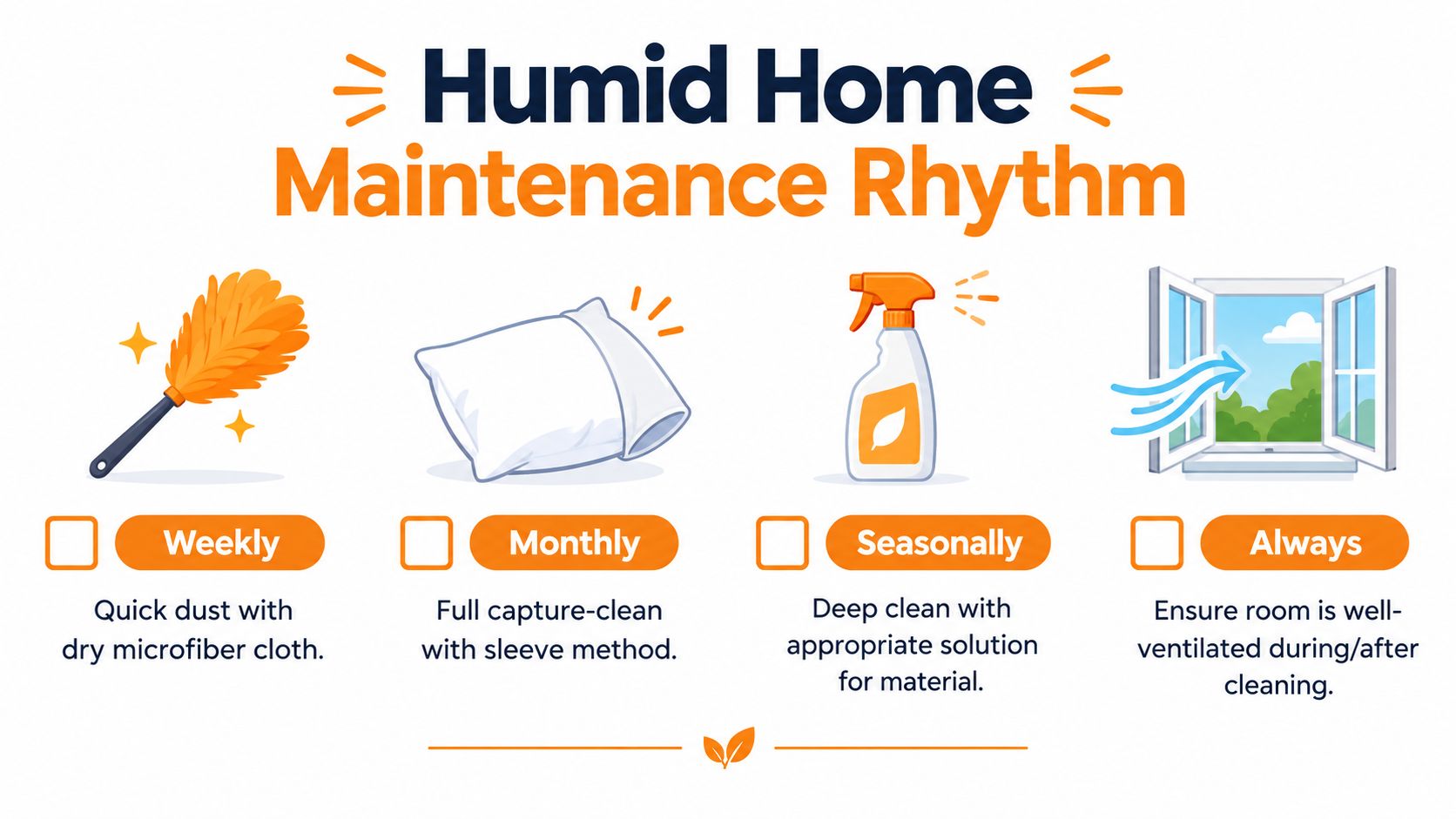
A simple maintenance rhythm
- Weekly: Make a quick dry pass when visible dust begins returning.
- Every 2 to 3 months: Use the pillowcase or sleeve method, then complete the damp microfiber finish.
- Monthly for higher-dust homes: Give extra attention to rooms with pets, allergy concerns, open windows, or heavy coastal exposure.
- Alongside fan care: Wipe nearby AC vents, window sills, and entry areas so the fan isn't drawing from an already dusty zone.
Keep the fan off while dusting, and ventilate the room after using any damp cloth. For broader moisture-control habits, see these practical ways to reduce humidity in your house.
Mistakes That Spread Dust and When to Call a Professional
The most common mistake is wiping only the visible underside. The upper surface holds the heavier load, so ignoring it leaves the main reservoir in place. A feather duster creates a similar problem by lifting particles into the air rather than trapping them.
Other avoidable errors include cleaning while the fan is moving, pressing hard enough to bend a lightweight blade, and spraying cleaner toward the motor. The contained alternative is simple: power off, full stop, dry capture, light pressure, then a controlled microfiber finish.
Clean the top before the underside. Capture loose dust before adding moisture.
Professional help makes sense when the fan hangs over a stairwell, sits in a vaulted foyer, has fragile vintage wood blades, or carries heavy post-construction or post-hurricane dust. It's also practical for Airbnb hosts working inside tight checkout windows, where ladder safety and a complete turnover compete with bathroom, kitchen, floor, and high-touch cleaning. Property managers can benefit from a consistent checklist across multiple units, including fan dusting and maintenance issue flagging.
For larger properties, this Facility Management Insights deep-cleaning guide offers useful context on organized maintenance work.
Sunset Shine Home Cleaning handles recurring, deep, move-in and move-out, post-construction, Airbnb turnover, and property-management cleaning across West Palm Beach and Palm Beach County, including careful ceiling-fan dust containment. Book your service through Sunset Shine Home Cleaning or call 561-408-4020 for a cleaner home without the ladder work and dust settling back onto your floors.