
If you're dealing with a trash bin that smells sour the second you lift the lid, you're not alone. In West Palm Beach and across Palm Beach County, trash can sanitation turns into a bigger issue fast because heat, humidity, salt air, and wet debris all work together. Homeowners, renters, Airbnb hosts, and property managers usually want the same thing. A bin that's clean, dry, odor-controlled, and not creating problems with pests, walkthroughs, or condo and HOA rules.
A neglected can doesn't stay "just a little dirty" for long in South Florida. It turns sticky, starts holding moisture at the bottom, and can pick up mildew around the lid and hinges. That's why local trash can sanitation matters here more than it does in drier places.
Table of Contents
- Introduction to Local Trash Can Sanitation
- Required Supplies and Preparation
- Step-by-Step Cleaning and Disinfection
- Effective Drying and Deodorizing Tips
- Maintenance Schedule and Eco-Friendly Options
- Hiring a Local Professional Service
Introduction to Local Trash Can Sanitation
In Palm Beach County, trash can sanitation usually becomes urgent after the smell starts drifting into the garage, side yard, or breezeway. A lot of local homes have bins parked on warm concrete, tucked beside AC equipment, or lined up near condo collection areas where airflow isn't great. Once food residue mixes with rainwater and humidity, the bottom of the can gets slick fast.
Beach communities add another layer. Sand from Juno Beach shoes and towels ends up in house bins. Salt air near the coast doesn't help metal hardware either. Lids, wheels, and handle points can wear down faster, and once a lid stops sealing well, odor escapes more easily.
What shows up locally
In West Palm Beach, Riviera Beach, and Lake Worth, the most common trouble spots aren't just inside the can. We also see grime under the lid lip, mildew around the hinge line, and residue baked onto the outside where drips ran down the sides and dried in the sun. At condos and townhome communities, a dirty can also becomes a shared-space issue because neighbors notice smell and pests before the owner does.
A clean bin isn't only about odor. In dense housing, it's also about avoiding complaints, keeping common areas presentable, and reducing the mess that spreads from one neglected container to the next.
This matters beyond convenience. In the broader waste picture, approximately 42% of global municipal solid waste was managed through uncontrolled dumpsites or openly burned in 2016, representing nearly 845 million tonnes out of 2.01 billion tonnes generated globally, according to global municipal solid waste research published by PMC. At the household level, basic containment and sanitation still matter.
If mildew is already a recurring issue around the garage, laundry area, or side yard, Palm Beach mold prevention strategies help address the bigger moisture pattern behind the bin problem.
Required Supplies and Preparation
Start with the setup, not the scrubbing. Around Palm Beach County, bad prep usually creates two problems. Dirty runoff turns into sludge in the driveway, and a bin that stays damp too long picks up mildew again fast.
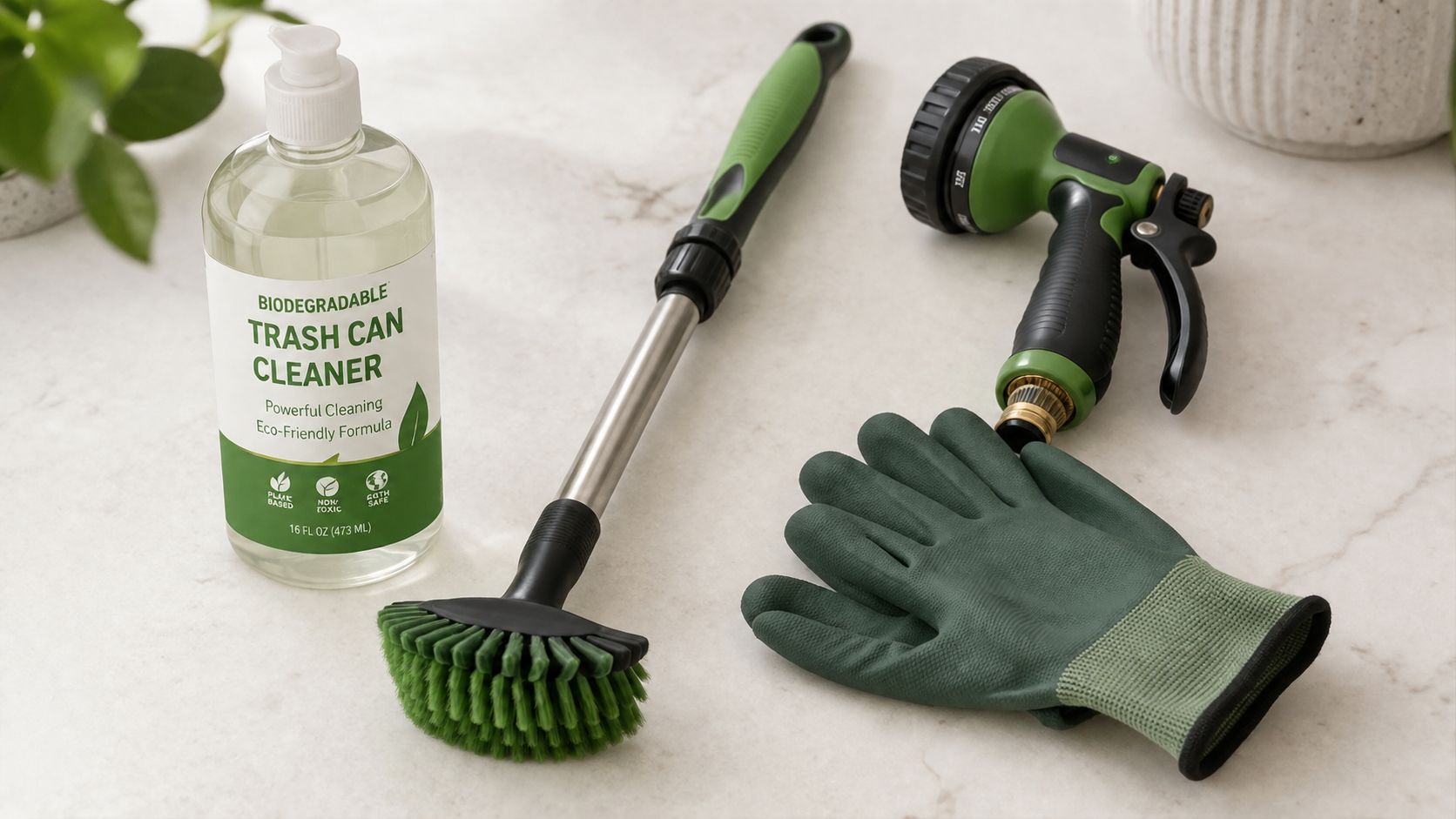
A solid kit does not need to be fancy, but it does need to match local conditions. Salt air can corrode cheap metal parts, sand from beach gear grinds into the bottom of outdoor cans, and our humidity punishes anything left wet.
What to gather first
- High-pressure hose or spray nozzle for flushing out grit, loose debris, and residue stuck in the bottom corners.
- Hot soapy water for the main wash.
- Nylon scrub brush or extendable brush that cleans well without gouging sun-brittle plastic.
- Rubber gloves for handling old residue and lid buildup.
- A simple spray bottle for your wash solution or follow-up treatment.
- Vinegar and water mix if you want a straightforward post-wash disinfecting option.
- Heavy-duty liners for putting the can back into service after it is fully dry.
- A towel or microfiber cloth for wiping handles, lid edges, and wheel areas where moisture likes to sit.
If you prefer lower-residue products around the house, these natural cleaning products for home fit well into a regular bin-cleaning routine.
Prep the area before you start
Pick a spot that drains well and gets sun. An open driveway or patio works better than a narrow side yard, especially during humid weeks when shaded bins stay wet for hours. In condo and townhome communities, check HOA rules before you start. Some associations care where rinse water runs, how long cans sit out, and whether cleaning can block shared walkways or parking areas.
Give the container a quick inspection before any water hits it.
- Empty it fully so loose scraps and soaked paper do not smear into the plastic.
- Pull out the liner and look for leaks that may have reached the bottom seam.
- Check the lid seal because a loose lid brings odor, flies, and rainwater back sooner.
- Look at wheels, handles, and hinge points for rust, cracking, or salt-air wear.
- Shake out sand and dry debris first so the rinse water does not turn everything into a muddy paste.
One more local trade-off matters here. Direct sun helps drying, but old bins that have baked outside for years can get brittle. If the plastic already feels chalky or cracked, use a softer brush and less force on the sidewalls and lid.
Practical rule: Never start scrubbing a bin that still has soggy trash residue sitting in the bottom. Clear the solids first, then rinse, then wash.
Step-by-Step Cleaning and Disinfection
A trash can can smell clean right after a rinse, then turn sour again by the next pickup day. In Palm Beach County, that happens fast. Humid air feeds mold, beach sand settles into the bottom seam, and salt air can rough up metal hinge parts so grime sticks harder than people expect.
The six-step method that works
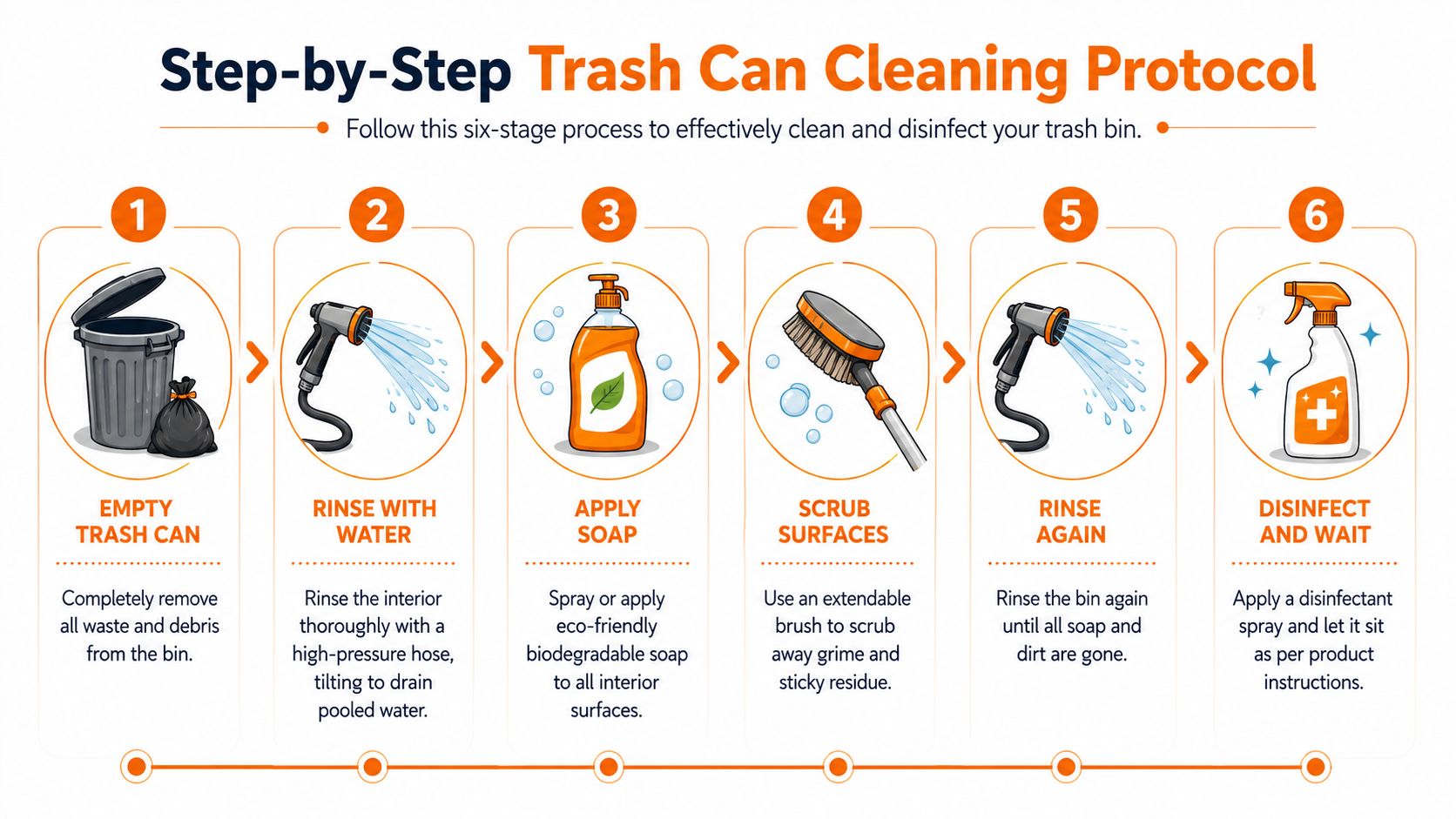
Use a simple order and stick to it. Empty. Rinse. Scrub. Disinfect. Rinse again. Dry fully. Changing that order usually leaves odor in the seams or dirty water trapped around the lid and wheel base.
Empty the can fully
Remove every bag, loose scrap, and wet clump from the bottom. Check corners and the bottom seam by hand with gloves on. In homes near the coast, I often find a mix of food residue and fine sand that acts like grit and holds onto grime.Rinse while tilting
Tip the can so dirty water runs out instead of pooling. A hose with decent pressure helps, but angle matters more than force. If you clean in a condo or townhome community, keep runoff controlled and off shared walkways so you do not create a slick mess or run into HOA complaints.Scrub the inside and outside
Use hot soapy water and a nylon brush. Scrub the floor, sidewalls, underside of the lid, handle area, and the front where drips dry down the face of the can. On older bins with salt-air wear, go a little lighter around metal hardware and cracked plastic so you clean it without snapping a hinge or gouging a brittle sidewall.
Before the final rinse, this walkthrough helps if you want a visual reference:
Where odor usually hangs on
The center of the bin is rarely the problem. The trouble spots are the tight areas that stay damp longer.
- Under the lid lip where splashback dries into a sticky film
- Hinge channels where grime collects around moving parts
- Wheel wells on outdoor cans that roll through wet grass, mulch, and sand
- The bottom seam where residue settles after pickup day leaks
- Exterior handles that pick up dirt from gloves and trash bags
Apply disinfectant
Coat the cleaned surfaces and give the product time to sit according to its label. Do not mist and rinse right away. If you prefer a lower-odor approach for routine upkeep, pair this step with a good household odor removal routine for kitchens, garages, and trash areas so smells do not keep coming back from the area around the bin.Rinse again thoroughly
Flush out soap, loosened debris, and any leftover disinfectant residue. Keep rinsing until runoff looks clear and the inside does not feel slick.Air-dry with the lid open in sun
Sun helps, but in South Florida the hidden moisture sits around the hinge line, handle mounts, and bottom edge. Let those areas finish drying before you re-line the can.
Let the bin finish drying before adding a fresh liner. Re-lining a damp can is one of the quickest ways to bring the smell back.
Effective Drying and Deodorizing Tips
A clean bin that's still damp isn't finished. In South Florida, drying is half the job. Humid air, brief rain bursts, and shaded side yards can keep a can wet long after the inside looks fine.
Why drying changes the result
If you're aiming for consistent trash can sanitation, dryness is what separates a fresh can from one that turns musty again in a day or two. According to commercial trash can care guidance from Trash Cans Unlimited, success rates average 85-90% when following weekly cleaning schedules with antibacterial soap, but drop to 40-50% with irregular cleaning due to bacterial and fungal multiplication in wet environments.
That same guidance also warns that failing to dry cans completely before reuse causes 70% of mildew cases, and using baking soda on cans cleaned longer than weekly can create clumping and mess in 60% of cases.
Better odor control for humid homes
Use methods that match the actual condition of the bin.
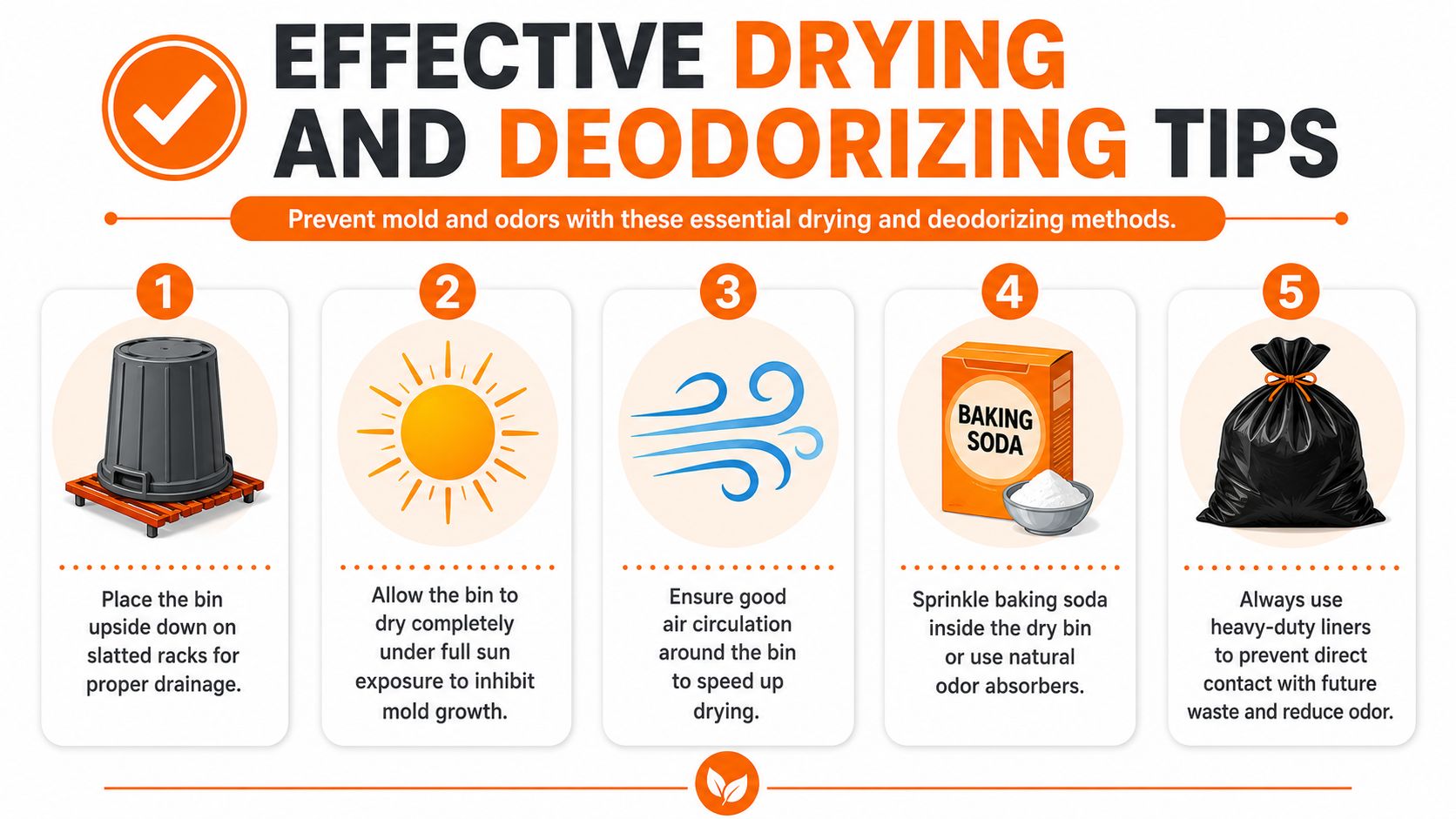
- Full sun first if possible. A breezy afternoon in Boca Raton or Delray Beach can help evaporate moisture faster than a covered side path.
- Keep the lid open until hidden moisture is gone.
- Set the can for drainage instead of flat on the ground.
- Use odor absorbers only after the can is dry. Otherwise they turn into one more layer of residue.
If indoor trash smells are spreading into the kitchen, laundry room, or garage, ways to eliminate household odors can help with the surrounding space too.
Local habit that works: Clean the can after pickup day, then leave it drying during the brightest part of the afternoon instead of waiting until evening when humidity climbs again.
For deodorizing, keep it simple. A dry bin with a heavy-duty liner usually outperforms a damp bin loaded with powders, scent packets, and improvised fixes.
Maintenance Schedule and Eco-Friendly Options
In Palm Beach County, the best routine isn't the most complicated one. It's the one you'll stick with. Outdoor cans near garages, pool decks, and condo collection pads usually need more attention than indoor office or bathroom bins because they deal with food waste, storm splash, and heat.
Cleaning Frequency Comparison
| Frequency | Tasks | Eco Options |
|---|---|---|
| Weekly | Empty fully, wipe rim and lid underside, check for leaks and odor | Use hot soapy water and a reusable brush |
| Monthly | Rinse and scrub interior, wash exterior drips, dry completely | Choose plant-based soap or vinegar-water disinfecting step |
| Seasonal or as needed | Deeper sanitation after leaks, storms, move-outs, guest turnovers, or pest issues | Reuse durable tools, replace only damaged liners, avoid overusing disposable deodorizers |
What works in local properties
A single-family home in The Acreage has different needs than a condo in West Palm Beach or an Airbnb in Jupiter. Homes with kids, pets, and frequent takeout usually need a tighter routine. Vacation rentals need checks between guest stays because seafood scraps, drink spills, and rushed bag changes can leave strong residue behind.
For condo owners and landlords, bin condition also ties into shared-space expectations. The strongest routine is usually:
- After pickup checks for leaks and stuck debris
- Regular wipe-downs around lid edges and handles
- Prompt cleaning after bag breaks
- Extra attention during rainy stretches when wet trash sits longer
Eco choices without making the job harder
Low-fragrance soap, vinegar-water disinfecting, durable brushes, and smarter liner use are usually enough. Reusable liners can sound appealing, but for many homes they add laundry and handling issues. In practice, sturdy disposable liners attached securely are often the cleaner option, especially in humid garages and multi-unit properties where leaks become everyone else's problem too.
Hiring a Local Professional Service
Some bins are easy weekend jobs. Others aren't. If you're dealing with condo rules, a move-out, an Airbnb turnover, or a can that sat through a rainy stretch with leaking bags, it often makes more sense to bring in a local cleaner who already understands Palm Beach County conditions.
When professional help makes sense
This usually comes up in a few situations:
- High-density housing where trash storage is visible and complaints escalate quickly
- Airbnb and vacation rentals with tight same-day resets
- Post-storm cleanup when outdoor bins picked up mud, standing water, or spoiled contents
- Property management turnovers where sanitation needs to be documented
One issue most online advice misses is compliance. As noted in NYC sanitation data stories tied to violations, missed collection, and pest conditions, the broader connection between collection problems and public health complaints is real. That gap matters locally because most existing content on trash can sanitation fails to address liability and health-code compliance for residential bins in high-density housing. In Palm Beach County, missed trash collection and pest complaints can lead to HOA fines, and local professionals document each sanitation to meet code and avoid liability.
What a solid local process looks like
A dependable service should feel simple:
- Schedule by phone or online and get a clear confirmation window
- Clean with supplies brought by the team
- Inspect the can, lid seal, and surrounding mess
- Enjoy a cleaner setup without spending your afternoon scrubbing driveway runoff
That kind of help is especially useful in coastal areas where salt air wears hardware down, and in neighborhoods where bins sit close to entries, garages, and shared walkways.
Book your cleaning with Sunset Shine Home Cleaning – your trusted house cleaning service in West Palm Beach. For homeowners, renters, Airbnb hosts, and property managers across West Palm Beach, Palm Beach Gardens, Jupiter, Juno Beach, North Palm Beach, Riviera Beach, Royal Palm Beach, Lake Worth, Boynton Beach, Delray Beach, Boca Raton, Wellington, Westlake, Loxahatchee, Loxahatchee Groves, and The Acreage, practical trash can sanitation starts with a team that knows South Florida homes. Call 561-408-4020 or book online – sunsetshinehomecleaning.com