
A red wine spill before guests arrive, pet urine in a carpet pad, or sticky residue left after an Airbnb turnover can turn a normal South Florida cleaning job into a surface-damage risk. A professional stain removal service looks beyond the visible mark, especially in homes affected by humidity, salt air, beach sand, year-round AC dust, and rainy-season mud.
Sunset Shine Home Cleaning helps homeowners, renters, Airbnb hosts, landlords, and property managers prepare spotless, deposit-ready, guest-ready, and move-in-ready spaces across West Palm Beach and Palm Beach County. The right treatment protects the carpet, upholstery, tile, grout, or hard surface instead of relying on the strongest product available.
Table of Contents
- What Professional Stain Removal Actually Involves
- Common Stains We Treat in Palm Beach County Homes
- The Professional Stain Removal Process Explained
- When to Try DIY and When to Call a Professional
- Understanding Stain Removal Pricing and What Affects Cost
- How to Prepare for Your Stain Removal Appointment
- Why South Florida Homes Face Unique Stain Challenges
- Getting Your Free Stain Removal Quote in West Palm Beach
What Professional Stain Removal Actually Involves
A homeowner notices a dark ring on the sofa just before company arrives. The first instinct is usually to spray, scrub, and keep adding product when the mark doesn't disappear. That approach can spread the stain, drive residue deeper, or damage a delicate fiber before anyone has identified what caused it.
A trained technician starts with diagnosis, not aggressive cleaning. The stain may belong to a protein, oil, dye, tannin, or combination family, and the surface may be carpet, microfiber, cotton, synthetic upholstery, tile, stone, or a coated finish. Each combination changes the safe treatment.
The work behind the visible result
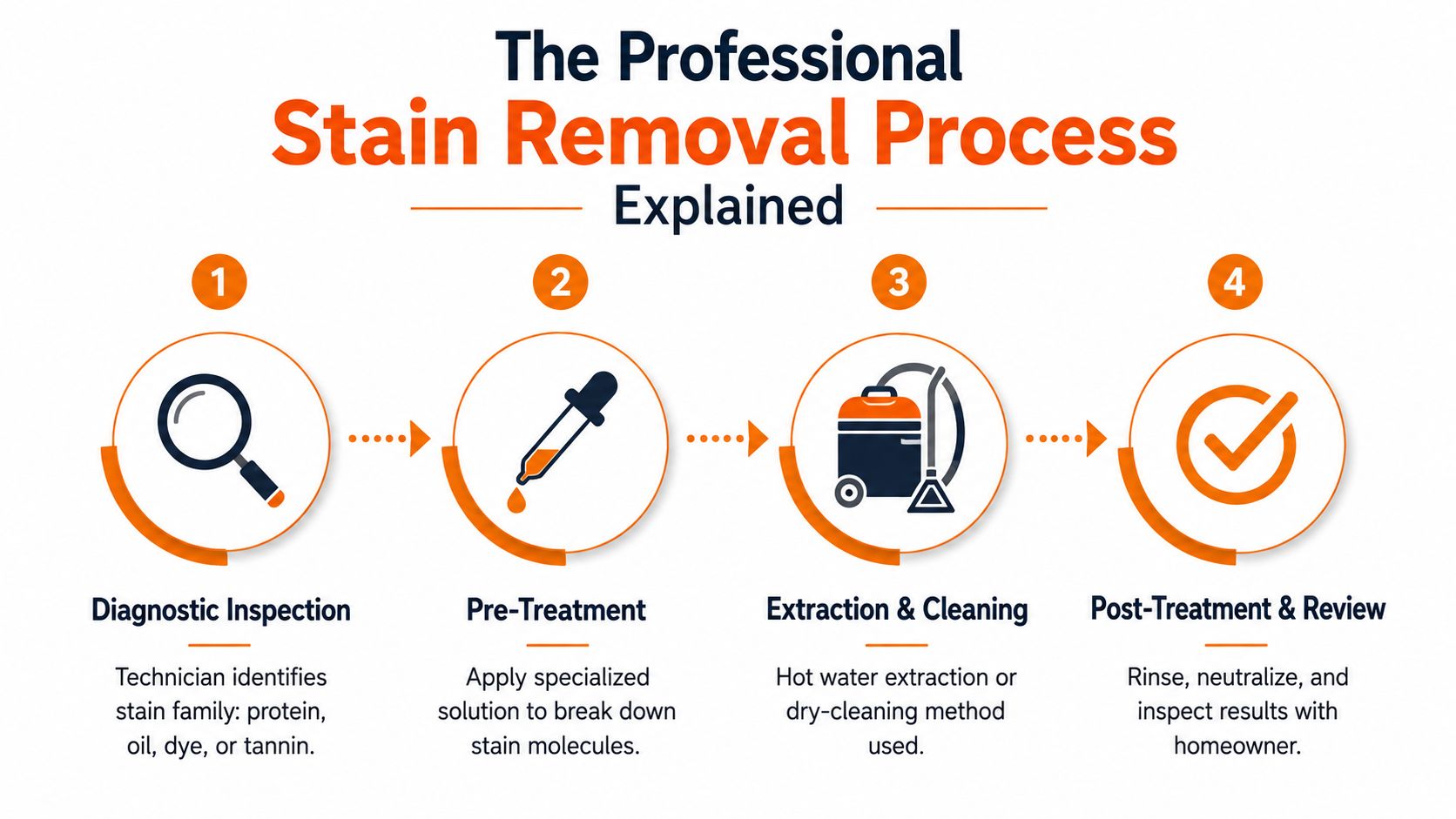
Professional treatment generally follows this sequence:
- Inspect the material: The technician checks color stability, fiber condition, texture, and whether the mark reaches padding or seams.
- Identify the chemistry: Enzymatic products suit many protein residues, while oils, dyes, and tannins require different approaches.
- Control application: The solution is applied to the affected area, then allowed to work for an appropriate dwell period instead of being wiped away immediately.
- Extract or rinse: Removing loosened residue matters as much as breaking it down. Leftover cleaner can attract new soil.
- Review the result: The technician checks the area after cleaning and explains whether discoloration, fiber damage, or fading limits the outcome.
The first response still matters. Blotting a fresh spill with a clean absorbent towel is safer than rubbing, but home treatment should stop when the material is delicate, the stain is unknown, or a previous product has already been applied.
Practical rule: A stain remover isn't a universal cleaner. The correct product, surface, temperature, dwell time, and rinsing method all matter.
Common Stains We Treat in Palm Beach County Homes
Palm Beach County homes collect stains through everyday routines. In Jupiter and Juno Beach, beach sand gets carried onto carpets and upholstery. In West Palm Beach entertaining spaces, wine, coffee, cocktail mixers, and oily appetizers land on light fabrics. In Boca Raton and Wellington, pet accidents, children's craft materials, and home-office ink often create more complicated spots than a quick wipe can handle.
Local patterns that change the treatment
- Wine and coffee: These can leave colored residues on pale carpet, especially after a party or open-house gathering. For a focused guide to a coffee spill, see how to clean spilled coffee on carpet.
- Pet urine: A surface mark may hide contamination in the carpet backing or pad. Odor and discoloration require different decisions, and repeated overwetting can create further problems in a humid home.
- Grease and cooking oil: Open-concept kitchens spread oily residue toward rugs, dining chairs, and nearby baseboards. A product that works on water-based soil may leave oil behind.
- Sand and tracked-in dirt: Fine beach sand works into carpet fibers and combines with body oils, sunscreen, and moisture. Vacuuming helps, but embedded grit may need deeper cleaning.
- Construction residue: Renovations in Palm Beach Gardens, Royal Palm Beach, and Westlake can leave drywall dust, grout haze, paint, or adhesive residue. These aren't ordinary food stains.
- Ink and paint: Home offices, children's rooms, and move-out properties often need careful spot work because colored fibers can react badly to bleach.
For families managing recurring spills between professional visits, this practical guide to stain removal for busy families offers useful prevention habits.
The Professional Stain Removal Process Explained
A professional stain removal service changes its method according to the stain, material, and conditions inside the home. In Palm Beach County, humidity, salt air, sand, and sunscreen residue can alter how a mark spreads and how quickly residue dries. A treatment that works on a dry inland carpet may leave an oily or gritty film here.
The surface often determines the equipment and rinse method. Carpet can usually tolerate stronger agitation and water recovery than delicate upholstery, where excess moisture may migrate into cushions. Stone requires attention to porosity and finish, while painted or sealed surfaces may need controlled spot cleaning rather than broad application. Rotary equipment can work through embedded soil on suitable carpet, but a technician may choose lower agitation and more precise extraction around seams, edges, or fragile fibers.
Consider a dining chair exposed to beach clothing and a spilled meal. On the fabric, the technician may use limited moisture and targeted agitation to remove oil without creating a tide mark. On a nearby rug, sand and grease may require slower passes with thorough recovery. After cleaning, the chair should feel consistent rather than damp or stiff, while the rug should show reduced tracking and no visible residue.
Product choice also follows the stain's chemistry. Protein residue needs a cooler approach, while oil and sunscreen require a product that can separate grease from fibers. Technical stain-removal guidance and stain-removal chemistry guidance explain why temperature and formulation affect results. Kansas State guidance and The Fabric Index also distinguish appropriate water temperatures for different stain types.
When to Try DIY and When to Call a Professional
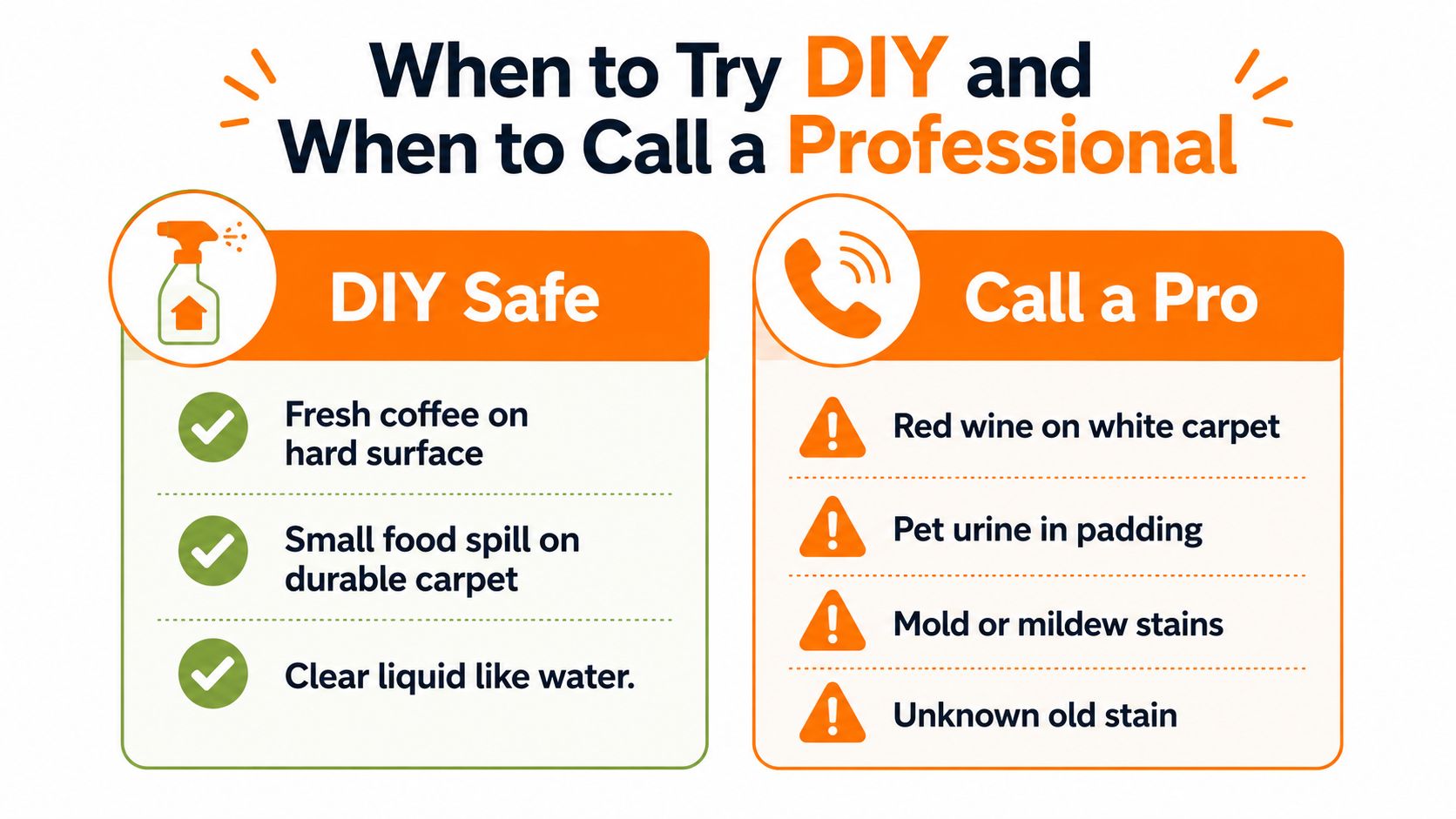
DIY makes sense when the spill is fresh, small, clearly identified, and on a durable, colorfast surface. Blotting a fresh coffee spill on a hard surface or lifting a small food mark from washable fabric is usually more reasonable than treating an unknown stain on delicate upholstery.
Stop experimenting when the risk of damage exceeds the likely benefit.
| Try careful home treatment | Call a professional |
|---|---|
| Fresh coffee on a durable surface | Red wine on white carpet |
| Small food spill on colorfast carpet | Pet urine that reached padding |
| Clear water-based spill | Mold or mildew staining |
| Washable fabric with clear care instructions | Unknown old stain |
| One controlled treatment | Any spot already treated with several products |
Bleach can permanently remove color from colored fibers. Hot water can set protein stains. Excess moisture can remain trapped in carpet or upholstery, an important concern in South Florida's humid conditions. Never mix cleaning products, especially bleach and ammonia. CDC and NIOSH guidance explains that spotting chemicals can expose workers through skin, eyes, and inhalation, and some rust-removal acids can cause severe burns. Their chemical hazard-control guidance is a useful reminder that stain work isn't risk-free.
For homeowners handling removable sofa covers, these DIY sofa upholstery cleaning tips can help with basic care. For fixed microfiber upholstery, see how to clean a microfiber couch.

Understanding Stain Removal Pricing and What Affects Cost
Pricing depends on bedrooms, bathrooms, square footage, condition, surface type, stain severity, accessibility, and add-ons. A reachable carpet spot costs less to assess and treat than pet urine in padding, grease absorbed into porous stone, or several stains spread through a furnished rental. Humidity, salt air, and tracked sand in Palm Beach County can also affect treatment time because residue and moisture behave differently than they do in a dry climate.
A useful quote identifies the affected material, approximate treatment area, proposed process, and whether the stain work is standalone or part of a larger cleaning. A move-out clean may cover bathrooms, kitchen surfaces, floors, baseboards, and cabinet exteriors. Oven interiors, refrigerators, cabinets, wall spot cleaning, pet-hair focus areas, and interior windows may be priced separately.
Sunset Shine Home Cleaning also handles recurring standard cleaning, deep cleaning, move-in and move-out cleaning, post-construction cleanup, Airbnb turnovers, vacation-rental resets, and property-management make-ready work. That service range helps when a stain is one task within a West Palm Beach turnover rather than an isolated spot.
Market estimates vary by methodology. Fortune Business Insights estimated the stain-remover category at USD 24.89 billion worldwide in 2025, projecting USD 39.27 billion by 2034. The figures indicate continuing household demand, though they do not determine a local service price. In practice, the material, access, stain chemistry, and required drying control matter more than broad market size.
How to Prepare for Your Stain Removal Appointment
Good preparation helps the technician reach the affected area and prevents important details from getting lost. Before the appointment, move small objects, toys, baskets, and loose décor away from the stain. Mark less obvious spots with removable tape if several areas need attention.
Write down what spilled, approximately when it happened, and every product already used. A cleaner needs to know whether the carpet has been treated with detergent, vinegar, bleach, a store-bought spray, or an odor product because residue can change the next treatment.
Before arrival
- Clear access: Move lightweight furniture and personal items when practical.
- Record the history: Photograph the stain and note previous attempts.
- Secure pets: Keep dogs and cats in a separate room while products and equipment are in use.
- Allow ventilation: Open suitable doors or windows when weather and AC conditions permit.
- Identify priorities: Tell the technician which areas matter most for a guest arrival, landlord walkthrough, or tight Airbnb checkout window.
After cleaning, keep people and pets off treated carpet until it's fully dry. Don't return furniture too soon, and place protective barriers under legs if the technician recommends them. Upholstery, mattresses, and rugs may have different drying and use instructions, so follow the specific aftercare guidance rather than judging by the surface alone.
A spot can look improved immediately while deeper moisture or residue is still being removed. Full results may become clearer after drying, and some discoloration may reflect permanent fiber damage or fading rather than removable soil.
Why South Florida Homes Face Unique Stain Challenges
Humidity changes how quickly carpet, upholstery, grout, and padding dry. If a DIY attempt leaves a carpet wet in a closed West Palm Beach room, the moisture has fewer opportunities to evaporate, so a professional must control application and extraction rather than adding more water.
Coastal homes face another problem. Salt air can accelerate corrosion on metal furniture and fixtures, leaving rust-colored marks on outdoor cushions and nearby fabrics. Beach sand also embeds in carpet and acts as an abrasive, grinding dirt deeper as people walk across it.
Year-round AC creates recognizable dust patterns around vents, returns, baseboards, and ceiling fans. When that dust combines with a spill, the result is a combination stain that doesn't respond like a clean water-based mark. Tropical pollen on window sills and rainy-season mud at entryways add more residue to tile, grout, and rugs.
Local conditions require restraint
Strong sunlight can fade some fabrics, making a cleaned area look different from the surrounding material even when the stain has been removed. Humidity can also encourage mold and mildew problems in bathrooms, especially around grout lines, shower ceilings, and damp upholstery.
Professionals should also consider chemical safety. Consumer guidance warns that stain removers may contain allergenic or environmentally damaging ingredients, and households with children, pets, or asthma concerns may prefer lower-toxicity options where they can perform adequately. For mineral buildup on fixtures and glass, review hard water stain removal instead of treating every mark as a fabric stain.

Getting Your Free Stain Removal Quote in West Palm Beach
Have the stain type, approximate size, surface material, room location, and any previous treatment details ready. Sunset Shine Home Cleaning can use that information to discuss the cleaning scope, scheduling window, supplies, family- and pet-conscious product options, and any related deep-cleaning or move-out needs.
In West Palm Beach move-out cleans, the bathroom may look fine at first glance, but grout lines, areas behind fixtures, and baseboards often reveal the humidity and soap-scum buildup that landlords notice during walkthroughs.
South Florida humidity shows up in grout lines and bathroom ceilings faster than many expect. A careful quote helps you choose treatment that protects the surface instead of chasing a perfect-looking result with overly strong chemistry.
Sunset Shine Home Cleaning provides targeted stain treatment alongside deep cleaning, move-in and move-out cleaning, Airbnb turnover service, and recurring home cleaning across West Palm Beach and Palm Beach County. Visit Sunset Shine Home Cleaning or call 561-408-4020 to request your quote and schedule a practical solution for your carpet, upholstery, floors, or high-priority areas.