
If you're staring at a shower door in Jupiter or a bathroom faucet in Boca Raton that still looks cloudy right after you cleaned it, you're dealing with hard water stain removal, not normal wipe-down work. Around West Palm Beach and the rest of Palm Beach County, that haze usually comes with humidity, salt air, and mineral-heavy water all working together.
This is for homeowners, renters, Airbnb hosts, and property managers who want surfaces to look guest-ready, walkthrough-ready, or clean again without wasting another weekend scrubbing spots that won't move.
Table of Contents
- The Unwinnable War Against Cloudy Glass in South Florida
- What We See in Palm Beach County Homes
- Eco-Friendly Hard Water Stain Removal Methods for Every Surface
- Troubleshooting and Preventing Future Buildup
- When DIY Is Not Enough Call Sunset Shine
The Unwinnable War Against Cloudy Glass in South Florida
A lot of local homeowners describe the same problem. The shower glass looked clean after a full scrub on Saturday, then by Monday it already had that chalky film again. The faucet shines at one angle and looks spotted at another. Window glass near sprinklers never quite clears up.
That's common from West Palm Beach to Boca Raton because the issue usually isn't just soap scum. It's mineral buildup sitting on top of daily bathroom moisture, and on some homes near the coast, salt air makes metal fixtures look tired even faster.
A simple glass spray often isn't enough. Surface-safe products matter, and so does using the right method for the right material. If you want a gentler day-to-day option for light haze, this guide to an eco-friendly glass cleaner is a good starting point before the buildup gets thick.
Practical rule: If the cloudiness comes back right after regular cleaning, stop treating it like ordinary dirt.
Around here, the worst buildup usually shows up on shower doors, around faucet bases, on guest bath mirrors, and on exterior-facing glass that catches overspray. In beach-area homes, you can also see dulling on chrome and brass that looks like tarnish but starts with mineral residue.
What We See in Palm Beach County Homes
The pattern in Palm Beach County homes is different from what a generic national cleaning blog describes. Local hard water stains don't just sit there as white spots. They mix with humid bathroom air, soap film, and in coastal areas, salt exposure that makes fixtures rougher and harder to restore.
Why local buildup acts differently
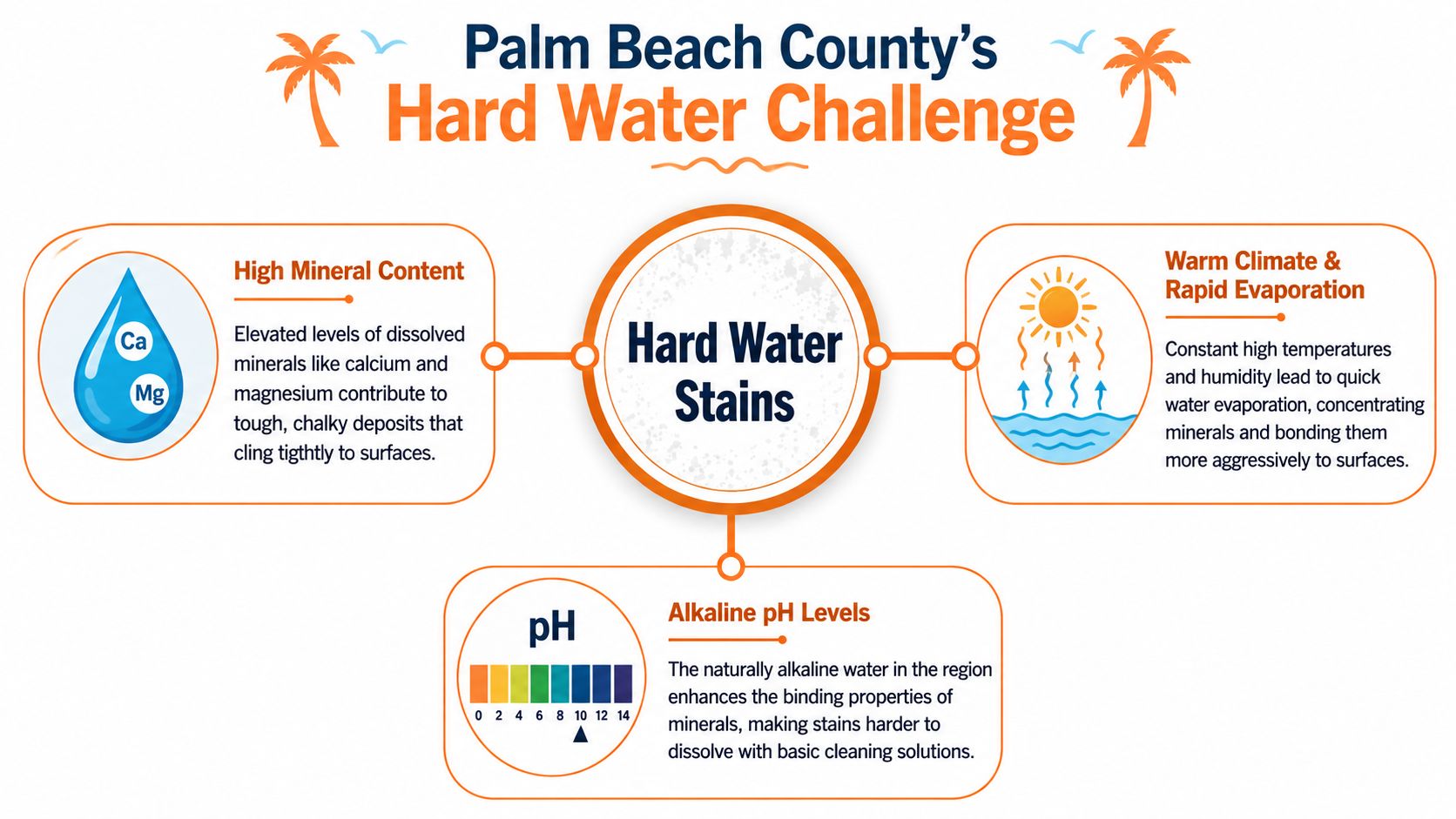
In coastal South Florida homes, hard water stains on chrome and brass fixtures are primarily caused by a combination of high mineral content in local well water and salt air exposure, with calcium carbonate deposits forming within 3-6 months if not treated weekly, accelerating corrosion in bathroom fixtures located within 10 miles of the Atlantic coast according to this South Florida fixture discussion.
That lines up with what shows up in homes around Juno Beach, North Palm Beach, and Palm Beach Gardens. The closer a property is to the water, the more often chrome trim, shower hardware, and decorative brass start looking dull around the edges first.
For tubs and showers, routine upkeep matters. This practical walkthrough on how to clean a shower and tub covers the kind of maintenance that helps before scale hardens into a bigger project.
Where it shows up first
Some of the most stubborn spots in local homes are easy to miss at first glance:
- Shower glass edges: Mineral lines build where water dries repeatedly near the bottom seal and handle area.
- Faucet bases: Water sits around caulk lines and escutcheons, then leaves a crusty ring that basic spray cleaners don't cut.
- Guest bathrooms: These often get less frequent wiping, so buildup has more time to set.
- Windows near irrigation: Sprinkler overspray bakes onto glass and can look etched.
- Coastal fixtures: Salt air adds another layer of wear on top of hard water residue.
In Palm Beach County homes, the problem isn't just the water. It's the way water, heat, and air exposure keep reloading the same surfaces.
Eco-Friendly Hard Water Stain Removal Methods for Every Surface
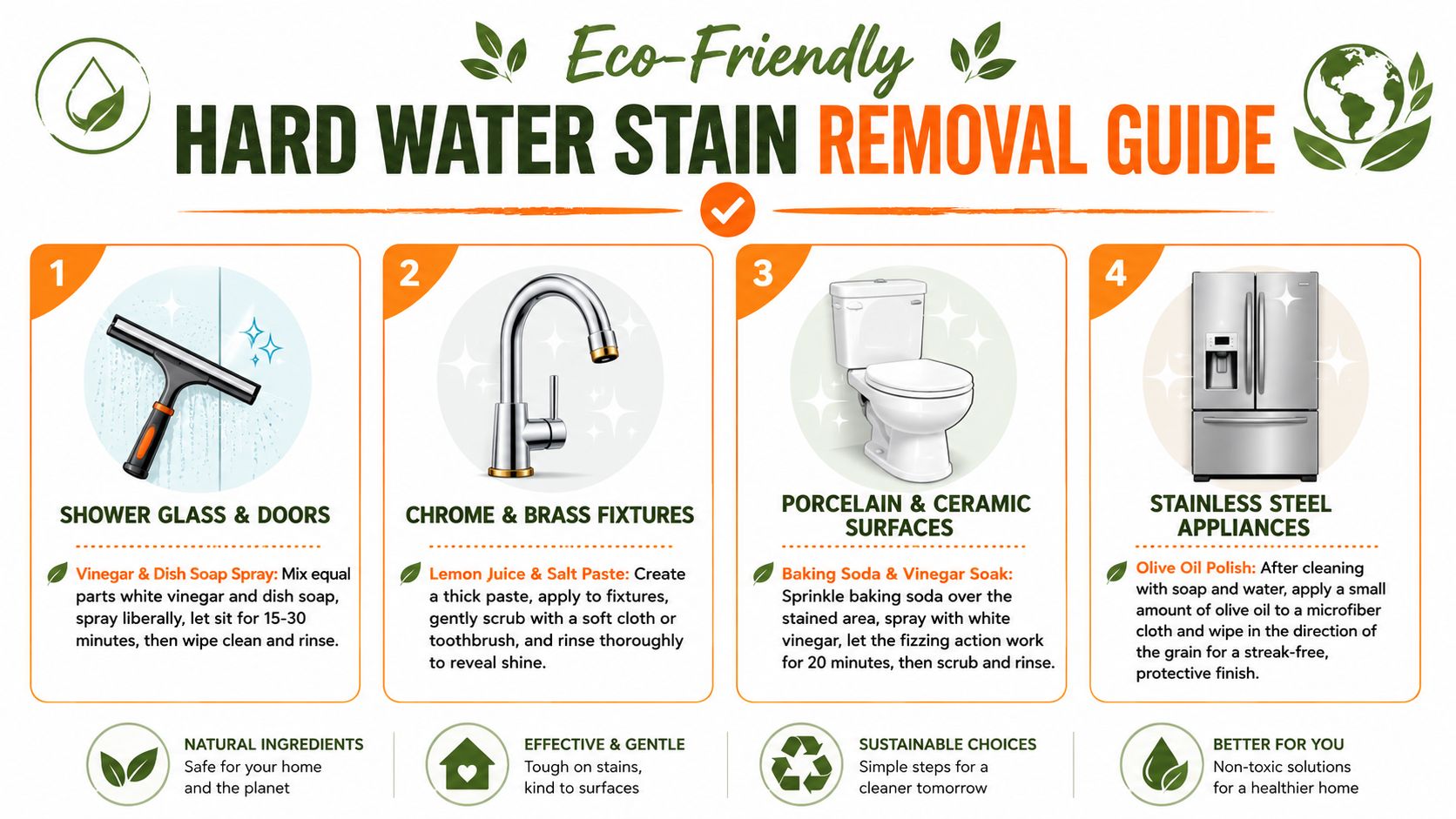
The first move should be the least aggressive one that still works. On most surfaces, that means giving the mineral deposit time to dissolve before you scrub. For faucets and fixtures, Aquasana's hard water stain guide notes that soaking an affected area with white vinegar for 15 to 30 minutes helps dissolve mineral buildup, and for tougher stains, a paste made from vinegar and baking soda adds extra cleaning power. The same guidance notes that commercial removers often need 10 to 15 minutes on glass, and toilet cleaning commonly uses vinegar or hydrogen peroxide for about 30 minutes before adding baking soda.
Shower glass and doors
For shower doors in West Palm Beach bathrooms, dwell time matters more than elbow grease.
- Spray or apply white vinegar generously.
- Let it sit in that 15 to 30 minute range so the deposit can soften.
- Wipe with a microfiber cloth or soft sponge.
- Rinse and dry fully.
If the film is heavier, use a vinegar and baking soda paste on the problem area instead of attacking the whole panel with a rough scrubber. On framed doors, pay close attention to corners and lower tracks where standing moisture lingers in our humidity.
A quick visual demo can help if you're trying to judge technique and pressure:
Chrome and brass fixtures
These need a softer touch than many people realize, especially in coastal homes. Vinegar can work well on mineral crust, but don't pair it with harsh pads that leave fine scratches. Those scratches catch more residue the next week.
Use this order:
- Wrap first: Soak a cloth in white vinegar and wrap the stained area.
- Wait it out: Give it time to loosen instead of scraping immediately.
- Brush lightly: Use a soft toothbrush around seams and handles.
- Dry completely: Leaving moisture behind invites the same ring to reform.
On older brass or specialty finishes, test a small area first. The stain may be removable even if the finish wear isn't.
Tile and grout
Bathroom tile in South Florida often has two problems sitting on top of each other. Mineral deposits on the surface, then mildew and soap film held in place by constant moisture.
For porcelain or ceramic areas, sprinkle baking soda, apply vinegar, and let the fizzing action sit before scrubbing gently. Toilet bowls and similar surfaces often respond better when the cleaner gets time to sit instead of being brushed right away.
Field note: The grout line that looks gray from across the room often has mineral residue locking in dirt, not just dirt by itself.
Use a soft brush, not a metal one. The goal is to loosen residue without chewing up grout or dulling the tile finish.
Windows affected by sprinklers
This is a very Palm Beach County problem. Window glass can get cloudy, spotted, and stubborn from sprinkler overspray and rain minerals drying in the sun. A local window-cleaning note explains that in Palm Beach County these stains often show up as cloudy, etched spots, and that a clay bar is especially effective when vinegar or lemon juice alone fails, especially on east- or west-facing windows with stronger sun exposure, as described in this Palm Beach County window stain guide.
That matters in Wellington, Royal Palm Beach, and inland neighborhoods with irrigation hitting front glass or sliders.
Try this sequence:
- Start mild: Wash the glass first so you aren't rubbing grit across it.
- Test vinegar: If the stain is still on the surface, a vinegar treatment may loosen it.
- Move to clay bar: If the spots stay put, use a clay bar with proper lubrication on the glass.
- Check in sunlight: A window can look clean in shade and still show spotting by afternoon.
Don't use aggressive razor work unless you know the glass can handle it safely.
Troubleshooting and Preventing Future Buildup
A lot of failed hard water stain removal comes from one bad assumption. People think the surface is dirty, so they scrub harder. But that usually just wastes time and can damage finishes.
Why scrubbing alone fails
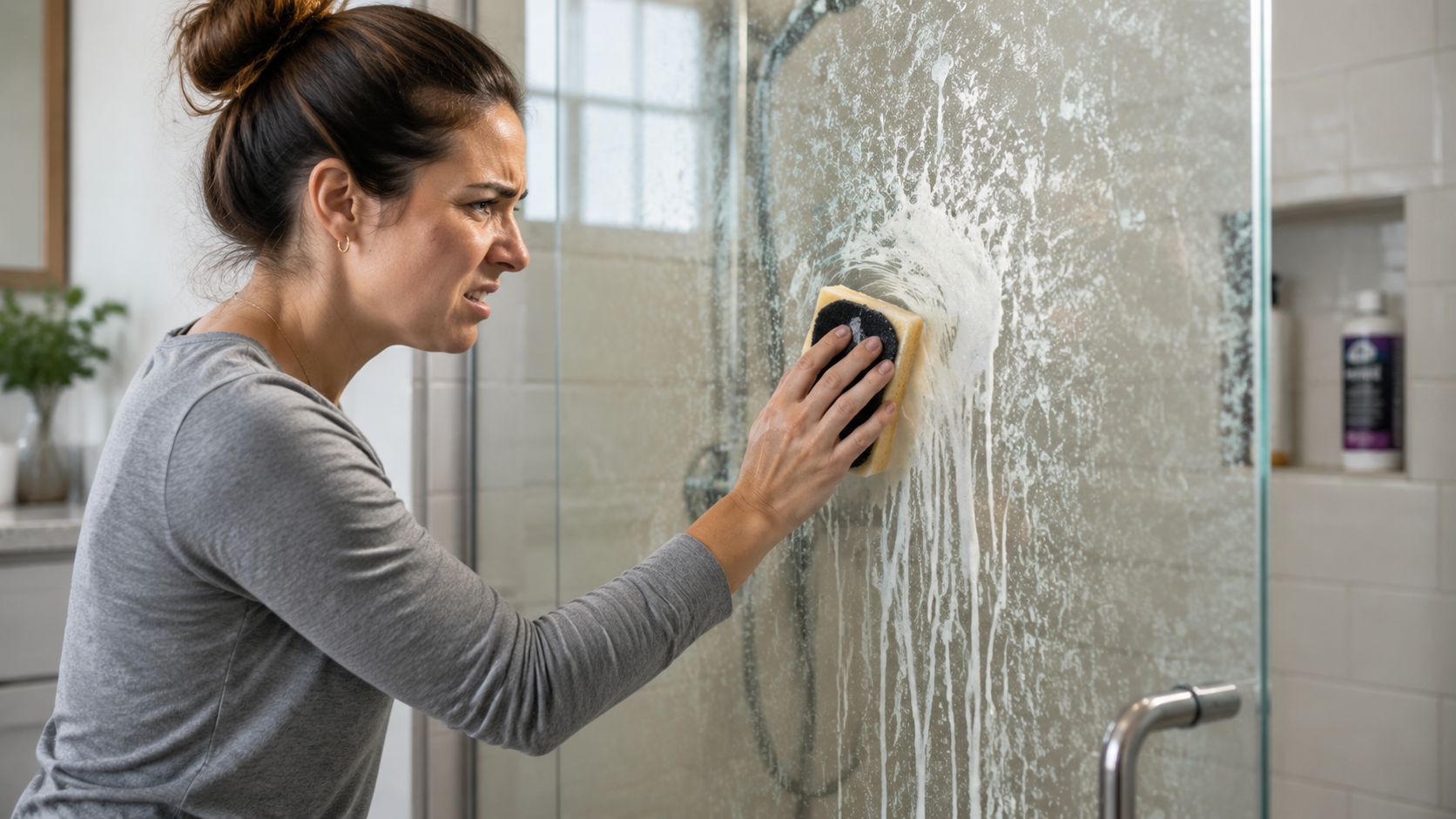
Research discussed in this explanation of the science behind hard water stains points out a cleaning paradox. Mineral layers can entrap dirt and soap scum, which makes aggressive scrubbing ineffective. The buildup needs chemical dissolution first, then mechanical removal.
That's why a shower wall can still feel rough after repeated cleaning. The soap scum you're seeing may be trapped inside a mineral layer, not lying loose on top.
A good way to judge the problem is simple:
| Surface look | What it usually means | Better response |
|---|---|---|
| Chalky white film | Surface mineral deposit | Vinegar soak, then wipe |
| Gray or dingy grout | Mineral film holding grime | Dwell time, then soft brush |
| Spotting that won't change | Possible etching or baked-on deposit | Escalate method carefully |
How to slow the return
You probably won't stop buildup completely in South Florida, but you can slow it down.
- Squeegee shower glass: This matters more here because surfaces stay damp longer in bathroom humidity.
- Wipe coastal fixtures weekly: Salt air and mineral residue together are rough on chrome and brass.
- Dry faucet bases: Water pooling around handles turns into rings fast.
- Watch sprinkler direction: Exterior glass near irrigation takes a beating.
- Consider water treatment: If your home has persistent heavy spotting, a water softener can help reduce recurring mineral buildup over time.
The biggest prevention mistake is cleaning the stain and leaving the water behind.
When DIY Is Not Enough Call Sunset Shine
There comes a point when the stain isn't a Saturday chore anymore. It's a scale problem across multiple bathrooms, cloudy shower glass, spotted mirrors, and fixtures that need the right product, the right dwell time, and enough detail work to get the room looking clean again.
That point shows up fast in local rentals. In Palm Beach County Airbnb and vacation rental properties, hard water stains on bathroom mirrors and tile grout must be removed within 45-minute turnover windows between guests, requiring professional-grade rust and stain removal solutions that eliminate both calcium and iron deposits in under 15 minutes to meet guest expectations, as noted in this Palm Beach County turnover example.

What's included
For homes and rentals dealing with hard water buildup, the work usually overlaps with deep cleaning. Common focus areas include:
- Bathrooms: Shower glass, tile, grout, mirrors, sinks, counters, and fixtures
- Kitchen wipe-down: Sink surrounds, faucet bases, counters, cabinet exteriors
- Floors and baseboards: Especially where bathroom residue and dust collect together
- Dust removal: Vents, sills, and surfaces that hold year-round AC dust
- High-touch disinfecting: Handles, switches, and commonly used surfaces
- Add-ons when needed: Inside oven, fridge, cabinets, wall spot cleaning, pet hair areas, interior window cleaning
A lot of move-out jobs in West Palm Beach look manageable until the bathroom light hits the glass and chrome. Then the issue shows up around grout lines, fixture bases, and mirror edges where moisture sits longest.
For glass that needs extra attention beyond bathrooms, a dedicated window cleaning service can help with the spotting and haze that standard interior cleaning won't fully solve.
Schedule Clean Inspect Enjoy
The process should be simple.
- Schedule: Book online or call. You'll get a confirmation window so you know when to expect the team.
- Clean: Cleaners arrive with supplies and work from a checklist-based plan.
- Inspect: A quick quality check catches missed spots before the job wraps.
- Enjoy: You come back to a cleaner home without chasing cloudy glass and crusted fixtures yourself.
Pricing depends on bedrooms, bathrooms, square footage, condition, and add-ons. Most clients request a custom estimate.
Micro FAQ
How long does hard water stain removal take?
It depends on how many surfaces are affected and how long the buildup has been sitting.
Are supplies included?
Yes. Cleaners arrive with their own supplies and tools.
Can you help with Airbnb turnovers?
Yes. Tight turnaround work is common in Palm Beach County rentals.
What if I have pets?
That can be accommodated. Just mention pets when booking so the visit is planned properly.
South Florida humidity shows up in grout lines and bathroom ceilings faster than expected. In coastal homes, salt air adds another layer to what already looks like a simple water spot problem.
Book your cleaning with Sunset Shine Home Cleaning – your trusted house cleaning service in West Palm Beach. Call 561-408-4020 or book online – sunsetshinehomecleaning.com