
How to remove musty odor from washing machine problems in Palm Beach County often point to a common scenario we encounter: a front-load washer in a humid laundry room, garage, or condo closet that never seems to dry out fully. In South Florida, that stale smell doesn't usually come from the water itself. It comes from residue, trapped moisture, and hidden buildup that hangs on longer in our climate.
For homeowners, renters, Airbnb hosts, and property managers in West Palm Beach, Jupiter, Boca Raton, and nearby areas, this matters because a smelly washer quickly turns into musty towels, guest complaints, and laundry rooms that feel dirty even when the rest of the home is clean.
Table of Contents
- Why Your Washing Machine Smells (And Why It's Worse in Palm Beach)
- A 4-Point Attack on Washing Machine Odors
- Quick Fixes vs. A True Deep Clean
- Preventing Future Odors with a Simple Maintenance Schedule
- When to Skip the DIY and Call in the Pros
Why Your Washing Machine Smells (And Why It's Worse in Palm Beach)
Open a washer in a Palm Beach County garage after a wet August week, and the smell tells you the machine never really dried out. I see it all the time in local homes where the laundry setup sits in a garage, a narrow utility room, or an interior closet with poor air movement.
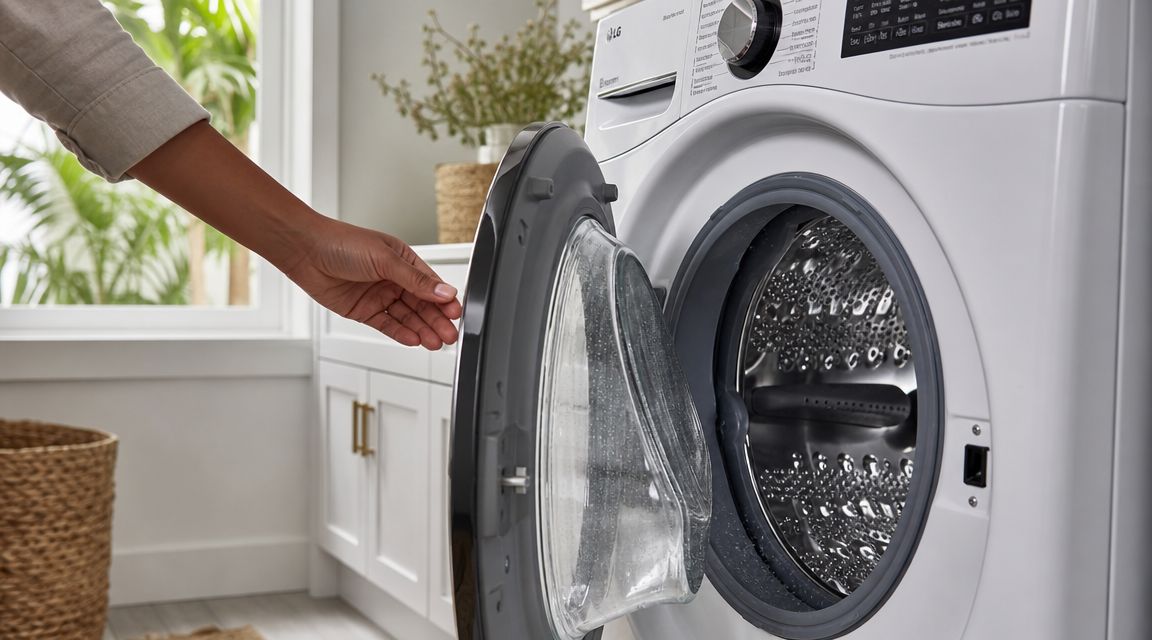
The smell usually starts with two things working together. Soap residue stays behind, and moisture hangs around long enough for mildew and bacteria to feed on it. The worst spots are rarely the shiny part of the drum. They are the places with low airflow and leftover grime, especially the rubber gasket, dispenser drawer, filter area, and the outer tub areas you cannot see without taking parts apart.
Front-load washers have the biggest problem because the door seal is built to hold water in. In a dry climate, that leftover moisture may evaporate fast enough to keep odors under control. In South Florida, it often does not. Add heavy detergent use, fabric softener buildup, sandy towels, sweaty workout clothes, and closed laundry doors, and the machine turns into a damp holding area for residue.
Palm Beach conditions make the problem stick around longer. High humidity slows drying inside the washer. Salt air near the coast leaves surfaces feeling tacky, and that tacky film grabs lint and detergent residue faster than people expect. Older homes and garage laundry areas can make it worse because they often have weaker ventilation and warmer room temperatures. If your house already feels damp inside, this guide on what causes humidity in a house helps explain why the washer keeps getting musty again.
A musty washer quickly leads to towels and clothes that never smell fully clean, even right out of the cycle.
Practical rule: If the washer smells musty, the odor is usually living in the hidden moisture pockets first, not just in the drum.
A 4-Point Attack on Washing Machine Odors
A musty washer usually has more than one odor source. In Palm Beach County, the problem hangs on because the machine dries slowly between loads, especially in garage laundry setups, older utility rooms, and tight closets with weak airflow. A lasting fix starts with the parts that stay damp the longest, then uses heat to flush out what hand-cleaning loosened.
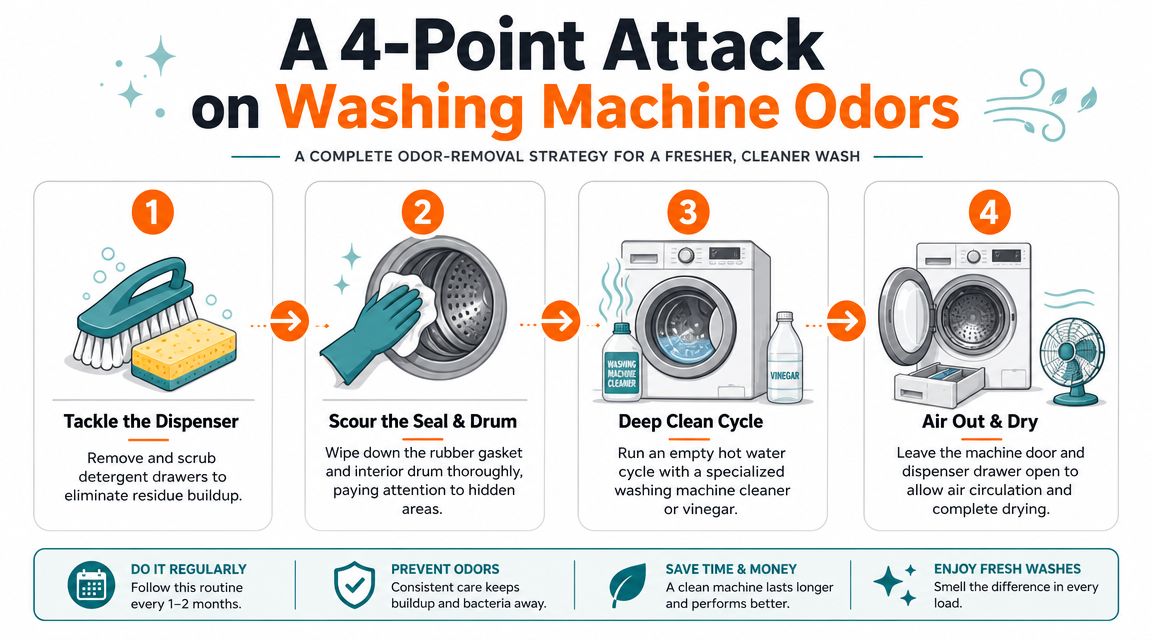
Start with the rubber gasket
Pull back every fold of the door seal and check the full circumference, not just the section at eye level. That gasket traps wash water, lint, skin oils, and fine grit. Near the coast, I also see a tacky film build faster on rubber and plastic surfaces, which gives residue more to cling to.
Use a cloth first so you can see what is sitting in the folds. Then scrub the creases and lower edge where slime and dark spotting tend to collect. If the gasket still feels slick after wiping, keep cleaning until the rubber feels clean to the touch.
On front-load machines, the gasket often holds the smell even when the drum looks fine.
Clean the detergent dispenser
Take the dispenser tray out if your washer allows it. Wash the tray, then scrub inside the housing where detergent, softener, and stagnant rinse water collect.
This step matters more in humid South Florida homes than people expect. Powder detergent can harden into paste. Liquid products leave a film that stays wet longer in muggy air. Fabric softener makes the problem worse because it coats the drawer and gives mildew more residue to feed on.
A field-tested method for front-load machines recommends cleaning the gasket, dispenser tray, and filter before the hot-cycle wash because buildup often hides in those low-flow areas. That same process also recommends unplugging the washer, draining trapped water near the filter, removing and washing the filter, scrubbing gasket creases, and then running two empty hottest-temperature cycles, one with sodium bicarbonate and one with white vinegar, as described in this step-by-step washer cleaning method.
After you've cleaned those hidden zones, this walkthrough may help if you want to see the process in action.
Wash the drum the right way
Run the washer empty on the hottest setting available after you finish the hand-cleaning. If you are using the two-cycle method above, do both cycles back to back so loosened residue does not sit in the machine again.
Order matters here. Pouring vinegar into a washer that still has buildup in the seal, drawer, or filter usually leaves the main odor source behind. The cycle can rinse internal surfaces, but it cannot remove packed grime from tight corners you did not clean first.
Use this order:
- Clean by hand first: Gasket, dispenser, and reachable interior surfaces.
- Run the empty hot cycles next: Heat and water help flush the areas you cannot reach.
- Dry the machine last: Wipe moisture from the drum, seal, and door glass, then leave the door open.
Don't skip the filter
The drain pump filter is often the difference between a washer that smells a little stale and one that smells sour every time it drains. Unplug the machine first. Put down towels or a shallow pan before opening the filter compartment because trapped water usually comes out fast.
In family homes, beach houses, and short-term rentals, this filter can hold hair, lint, sand, pet fur, and murky water that has been sitting for weeks. Clean it fully, reinstall it correctly, and wipe the filter housing dry before closing it up.
If the odor keeps returning after you clean all four areas, the issue is usually deeper buildup inside the machine or room conditions that keep feeding moisture back into it. That is common here, especially in laundry spaces that never fully dry out.
Quick Fixes vs. A True Deep Clean
Sometimes you just need to knock down a light smell before it turns into a bigger issue. Other times, especially in a Delray Beach rental or a Boynton Beach move-out, a surface-level fix won't hold.
Here's the difference.
| Action | Quick Fix (5 Mins) | Deep Clean (45 Mins) |
|---|---|---|
| Air out the machine | Open the door and drawer | Open the machine after full cleaning and drying |
| Wipe visible moisture | Quick pass on seal and glass | Detailed wipe of folds, edges, compartment, and surrounding surfaces |
| Detergent drawer | Exterior wipe only | Remove, wash, and scrub tray and housing |
| Drum | Single empty cycle | Empty hot cycles after hand-cleaning odor hotspots |
| Filter | Usually skipped | Open, drain carefully, remove debris, clean, reinstall |
| Result | Helps with mild damp smell | Better for recurring musty odor |
A quick fix can calm the smell for the day. It usually won't remove the source if buildup is hiding in the machine.
A quick approach makes sense if the washer only smells slightly stale and you caught it early. A deep clean is the better move when towels already come out smelling off, the gasket feels slimy, or the machine sits in a garage or closed laundry closet that stays humid most of the year.
Preventing Future Odors with a Simple Maintenance Schedule
In Palm Beach County, a clean washer can start smelling off again fast. The machine sits in humid air, many laundry rooms have limited ventilation, and salt in the air does no favors for damp rubber and residue inside the washer.
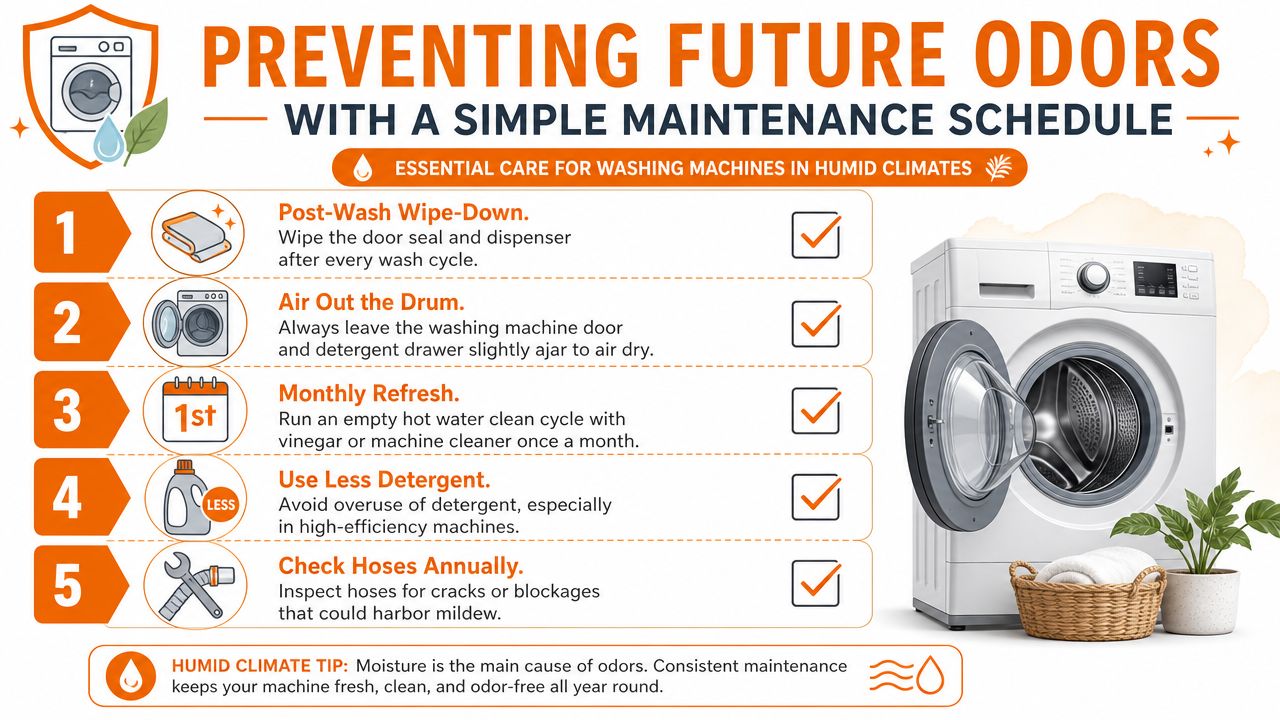
A simple routine keeps that moisture from turning back into odor.
After every load
Dry the gasket, the glass, and the detergent drawer area. On front-load machines, pay attention to the folds in the seal. That is where water, lint, and detergent film tend to sit.
Leave the door and dispenser cracked open for a few hours so trapped moisture can escape.
This matters even more in condo laundry closets, garage setups, and tight utility rooms where the air stays heavy most of the year.
Monthly or every few dozen loads
Put a recurring reminder on the calendar and treat washer care like any other house chore. If the machine handles beach towels, sweaty gym clothes, kids' sports gear, or frequent guest turnover laundry, clean it more often because that load mix leaves behind more residue and organic material.
Focus on the spots that get missed during normal use. Wipe the gasket thoroughly, remove and wash the dispenser tray, and run the machine's cleaning cycle or a hot empty cycle based on the manufacturer's instructions. Then let the interior dry out fully before closing it up again.
If you wash a lot of bedding and bath items, better load planning also helps cut down on damp laundry sitting too long between cycles. This guide on washing sheets and towels together the right way can help you keep those heavier loads cleaner and easier to dry.
Occasional checks that prevent the smell from coming back
A few small checks save a lot of re-cleaning later.
- Inspect the filter: If your washer has an accessible filter, check it when drainage slows, debris builds up, or the smell starts creeping back.
- Look at the dispenser drawer: Sticky softener residue and caked detergent are early warning signs.
- Check the room, not just the machine: If the laundry area feels damp, the washer will keep fighting an uphill battle. I see this often in older homes with closed laundry alcoves and in garages that never fully dry out.
- Watch how long wet laundry sits: Even a clean washer can pick up odor again if damp towels stay packed inside for hours.
The goal is simple. Keep moisture from lingering, keep residue from building up, and adjust the routine to South Florida conditions instead of following a generic once-in-a-while cleaning habit.
When to Skip the DIY and Call in the Pros
Sometimes DIY works. Sometimes the smell returns right away, even after you've cleaned the obvious spots. That's usually the sign that the washer isn't the only issue, or the buildup has spread into the laundry room, nearby baseboards, floors, and surrounding surfaces.
This comes up a lot in Palm Beach County move-outs and rental turnovers. A washer tucked into a hallway closet can make the whole area smell stale. In Royal Palm Beach apartments, the machine may be only one part of what a landlord notices during a final walkthrough. In Boca Raton seasonal rentals, a musty laundry area can affect the way the entire property feels to incoming guests.
A professional clean makes sense when:
- The odor keeps coming back: You clean it, run a cycle, and the smell returns almost immediately.
- You see grime you can't fully reach: Deep in the gasket folds, behind the washer, or around the laundry area.
- The washer problem is part of a bigger reset: Move-out, move-in, deep clean, post-guest refresh, or property management turnover.
- You don't have the time: That's common with busy families, short-term rental hosts, and property managers juggling same-day prep.
If the washer area needs to be part of a broader home reset, a detailed professional deep cleaning checklist helps show what should get handled beyond the appliance itself.
For people searching how to remove musty odor from washing machine, the honest answer is this: if you've cleaned the gasket, dispenser, drum, and filter correctly and the smell still lingers, it's time to stop guessing and tackle the larger cleaning environment around it.
If your laundry room, rental, or whole home needs a reset, book your cleaning with Sunset Shine Home Cleaning. We help homeowners, renters, Airbnb hosts, and property managers across West Palm Beach and Palm Beach County handle the kind of humidity-driven buildup that keeps coming back. Call 561-408-4020 or book online at sunsetshinehomecleaning.com.