
A candle spill on a tablecloth is annoying until you're staring at a dinner-ready room in West Palm Beach, a guest turnover in Boca Raton, or a move-out in Wellington and need the fabric clean now. The right how to remove candle wax from a tablecloth method depends on the cloth, the wax, and whether you're dealing with just hardened wax or a greasy, colored stain that still won't let go.
If you want the safest result, treat the tablecloth like fabric first, stain second. Cool it, lift the solid wax, then decide whether the cloth can handle heat, residue treatment, or a professional hand.
Table of Contents
- A Local Guide to Candle Wax Spills
- Start With the Freezing Method
- Lift Remaining Wax With an Iron
- Choose the Safest Method by Fabric
- Treat Colored Wax and Oily Residue
- Troubleshoot Wax Removal Mistakes
- Palm Beach County Scenarios and Final Help
A Local Guide to Candle Wax Spills
A candle tipping over at dinner in Jupiter or a wax drip during an Airbnb reset in Delray Beach isn't a big crisis if you move fast and stay calm. The issue is that candle wax is oil-based, so the solid chunk is only the obvious part of the mess, and residue can stay behind in the fibers even after the surface looks better, as outlined in the tablecloth wax removal guidance from FCDryCleaners.

Start with the cloth, not the drama
In Palm Beach County homes, I'd handle how to remove candle wax from a tablecloth by asking three things first. Is the fabric sturdy, delicate, or dry clean only? Is the wax plain, colored, or scented? Did the spill happen on a cotton dinner cloth, a linen runner, or a lace piece you can't afford to scorch?
Practical rule: If the label is strict or the fabric is fragile, don't rush to heat. Heat fixes some wax problems and ruins some tablecloths.
Sunset Shine Home Cleaning sees this kind of mess in real homes across West Palm Beach, Palm Beach Gardens, and Boca Raton, especially where guests, candles, and tight schedules collide. The safest outcome isn't brute force. It's choosing the right sequence for the cloth in front of you.
The first job is always to protect the fabric before the next dinner, checkout, or landlord walkthrough. That means no rubbing while the wax is soft, no steam, and no guesswork on delicate textiles.
The image tells the story
A wax spill on a white cloth looks simple from across the room, but the cleanup is about what's hidden in the weave. If the wax has already hardened, the question becomes whether the cloth can take a cold scrape, a short heat transfer, or both.
Start With the Freezing Method
Cooling is the cleanest first move. Let the wax cool completely, then harden it further with a freezer step or a sealed ice bag if the fabric can handle it. Consumer and cleaning guidance consistently recommends freezing or icing the wax until it turns brittle, then lifting it with a dull edge like a butter knife or credit card, not a sharp blade.
Harden first, then lift
Put the tablecloth flat under good light. Once the wax is hard, work from the outside edge inward so you're not stretching fibers or digging into the cloth. A brittle wax chip pops off more cleanly than a soft smear, which is why this stage matters before you touch an iron.
Don't scrape by feel. Look for a dry, brittle surface. If it still bends or smears, it's not ready.
Keep the motion light. You're removing the top layer, not sanding the fabric. On a sturdy cotton or linen cloth, that first pass may clear most of the mess before you ever use heat.
The point of this stage is simple, and it's the same logic used in freezing wax off glass jars when you want wax to release cleanly instead of smearing. Wax behaves better when it's hard.
Check before you heat
After scraping, look for any wax that still clings to the weave. If the cloth is delicate, dyed, or textured, stop and reassess before moving on. If it's sturdy and the label allows it, the next step is absorbent-paper heat transfer, not more scraping.
The freezer method is the safest place to begin because it separates the visible solid wax from the deeper residue. That saves you from pressing wax deeper into the cloth before the job is even started.
Lift Remaining Wax With an Iron
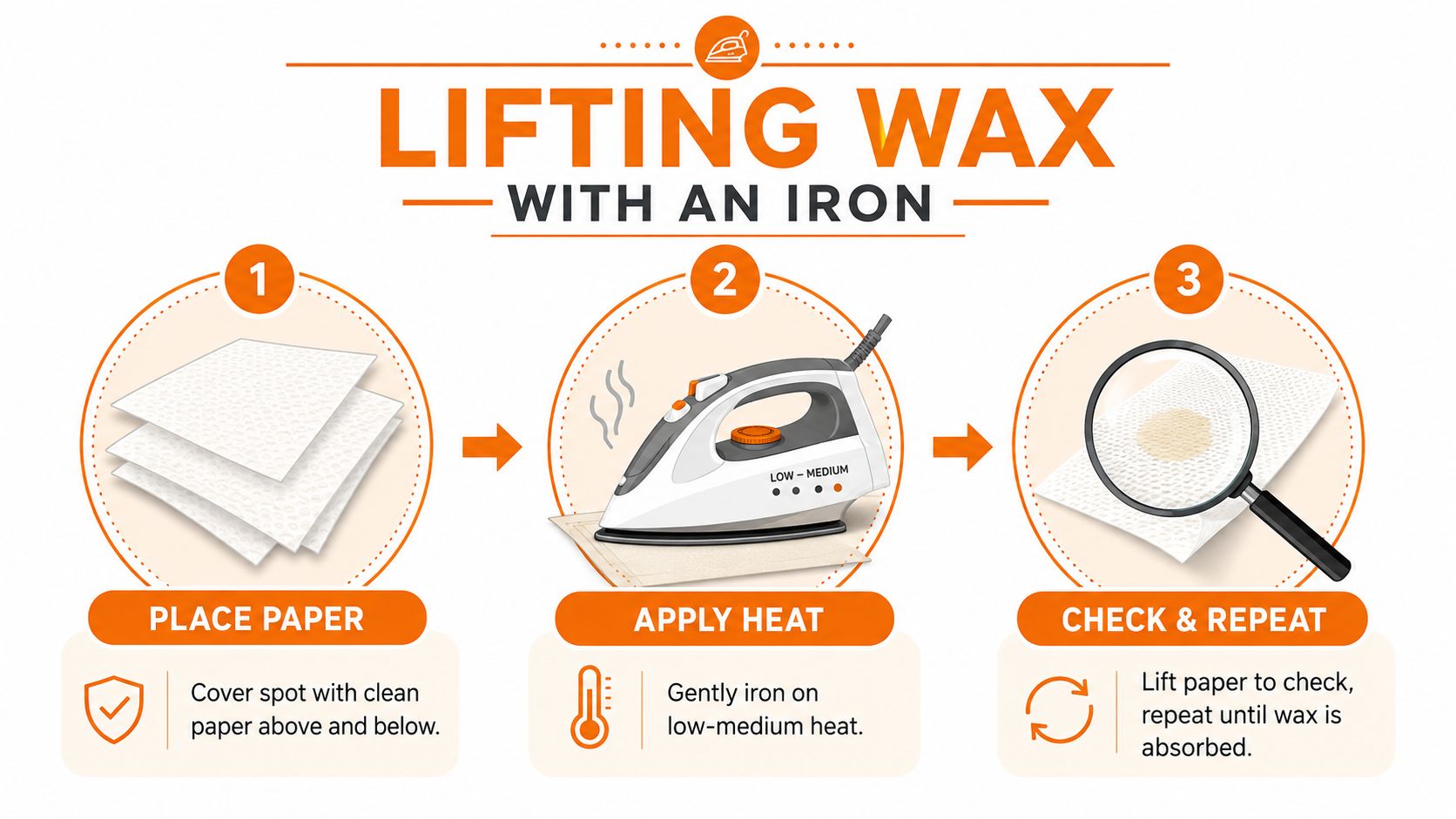
Once the loose wax is gone, the job changes. Now you're pulling the leftover wax out of the fibers with low to medium heat and absorbent paper, not melting it into the cloth. Multiple cleaning guides back a short-contact method, usually 3 to 5 seconds or brief 10 to 15 second passes, because short heat intervals are safer than holding a hot iron in one place.
Use the paper sandwich
Place clean paper towels, plain paper, or a brown paper bag both above and below the stain. Set the iron to low or medium heat with no steam. Move it slowly or press briefly, then lift the paper and check the transfer. When the paper darkens with wax, replace it before it gets saturated.
The goal is simple. You want the melted wax to migrate into the paper, not deeper into the weave. If the paper is already full, it can redeposit wax back onto the cloth, which is why fresh absorbent paper matters more than extra pressure.
Stop when fresh paper stays clean
Keep repeating short passes until new paper stops picking up wax. That's the finish line. Don't crank the heat higher just because the stain is stubborn, and don't press hard to force the issue.
Practical rule: No steam, no hard pressure, no marathon ironing session. Short, controlled passes beat aggressive heat every time.
For a sturdy tablecloth, this is usually the point where the visible wax is gone and only residue remains. For delicate cloths, this is also the point where you should decide whether to stop and protect the fabric.
Choose the Safest Method by Fabric
Not every tablecloth should get the same treatment. A cotton holiday cloth can handle more than lace, dyed linen, or a piece labeled dry clean only, and that's where most DIY mistakes happen. The first move in every case is reading the care label and, when practical, testing a hidden spot before you commit to heat.
| Fabric Safety Guide | Preferred approach | Important caution |
|---|---|---|
| Cotton or linen | Freeze, scrape gently, then use the paper-and-iron method | Keep heat moderate and stop if the cloth starts to look stressed |
| Synthetic fabric | Start cold, then use the lowest safe heat setting with brief passes | Too much heat can distort the fibers |
| Lace or embroidered cloth | Be cautious with cold lifting only, then reassess | Loose weaves can snag, scorch, or lose shape |
| Dyed or richly colored cloth | Test in a hidden area before any heat or stain treatment | Color bleeding is a real risk |
| Dry clean only | Stop early and consider professional help | Heat-based DIY cleanup can make the damage worse |
Read the label before the iron comes out
The brief tells you why timing and fabric care instructions matter more than force. A tablecloth that looks sturdy may still react badly if the dye runs or the weave distorts under heat. If the label says dry clean only, or if the fabric is lace, embellished, or clearly fragile, I'd rather see you stop early than create a bigger repair job.
If you need a broader stain-care reference for fabric decisions, this stain removal guidance for linens is useful context.
Make the call based on risk, not pride
Use the freezer-and-scrape step on most fabrics first. Use the paper-and-iron method only when the cloth can tolerate it. If the fabric is delicate or the wax has already left a visible colored shadow, that's a good time to slow down and avoid forcing the issue.
For related residue problems on textiles, our internal guide on baking soda for couch stain follows the same fabric-first logic.
Treat Colored Wax and Oily Residue
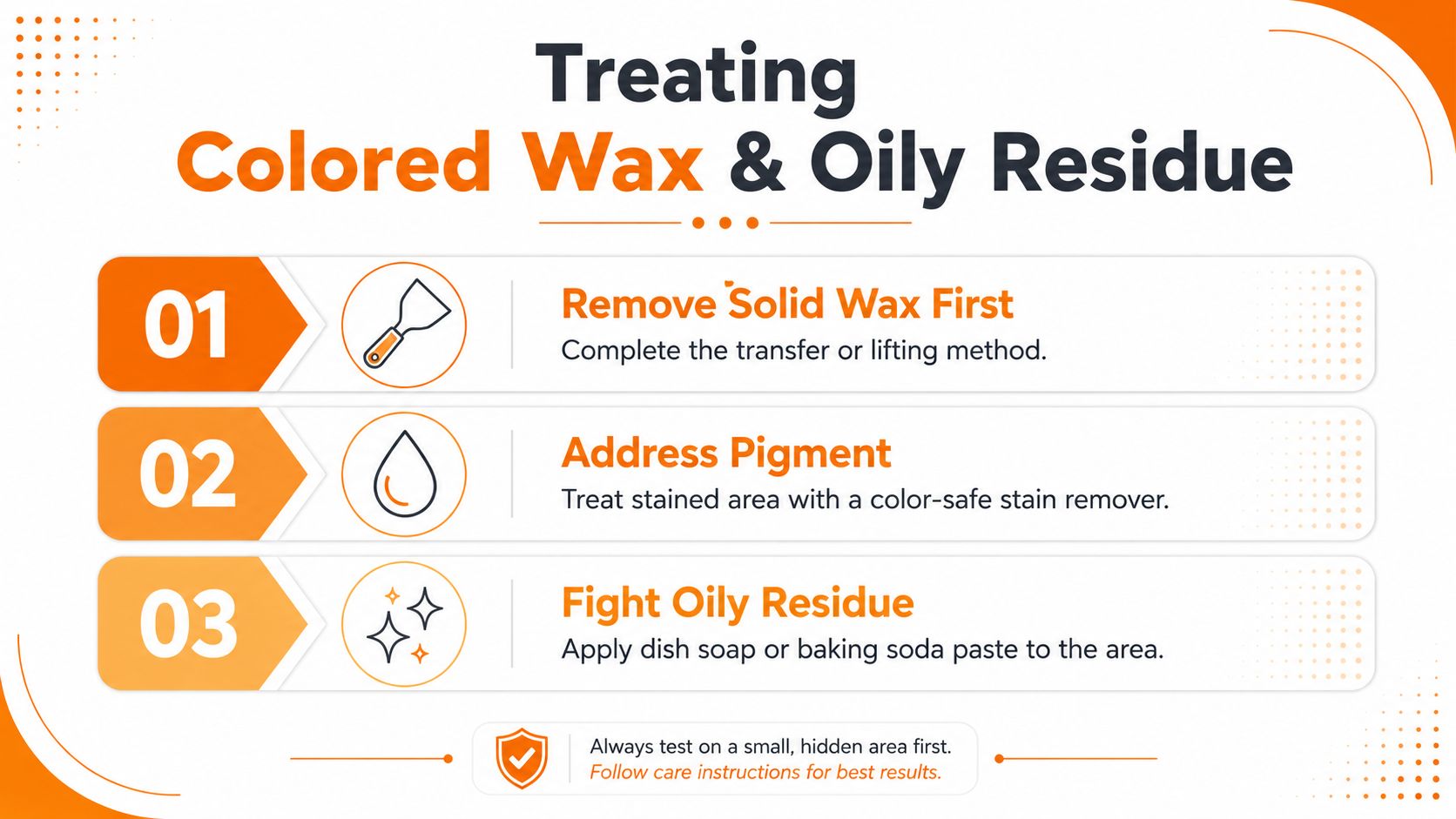
Once the solid wax is gone, don't assume the stain is finished. Colored candles can leave pigment, and all wax can leave an oily film. The fix is a two-part cleanup, first remove what's still physically in the cloth, then treat the leftover residue with a gentle cleaning product the fabric can handle.
Clean the residue without overworking the fabric
After the wax has been transferred or lifted, use liquid detergent on the spot and let it sit for 15 to 20 minutes. Then rinse under warm water and scrub both sides gently if the fabric allows it. If residue remains, repeat the treatment and keep the cloth out of the dryer until the mark is gone.
That repeat step matters because heat can set leftover wax or color deeper into the fibers. A delicate laundering cycle is appropriate for some cloths after the spot treatment, and cleaning guidance also points to wash temperatures such as 40 to 60 °C once the wax has been absorbed, but only if the care label permits it.
Use the mildest route that works
For colored wax, gentle spot treatment is the right next move after the wax is removed. For oily residue, detergent is the most straightforward option, and some guides also mention vinegar or rubbing alcohol for stubborn marks. Test a hidden area first, especially on dyed fabric, and don't mix aggressive heat with stain treatment before you understand what's left in the cloth.
If you want a broader fabric-care reference that covers lingering oil smell and textile residue, our internal note on how to get oil smell out of clothes is a useful companion.
If the cloth looks clean but still feels greasy, it isn't done. Drying too early is what turns a manageable stain into a permanent one.
Troubleshoot Wax Removal Mistakes
Wax removal goes wrong fast when you treat the spill like a single problem instead of two separate ones. Solid wax needs to be removed first. Colored dye and oily residue need their own treatment after that. If you rush those steps, you press wax deeper into the fibers, stain the tablecloth, or damage a fabric that should have stayed in good shape.
Fix the common errors fast
- If you scraped wet wax: stop, leave the cloth alone, and let the spill harden before you touch it again.
- If you used a sharp blade: inspect the fabric for snags or pulled threads, then switch to a dull edge only.
- If the iron was too hot or steamy: back off at once. Steam works against absorption, and too much heat can scorch the cloth or drive color deeper.
- If the paper stayed in place too long: replace it. Saturated paper stops absorbing and can put wax back into the fabric.
- If the cloth went into the dryer early: stop using heat, then re-treat the residue before you wash it again. For a full spill cleanup sequence, see how to clean spilled wax.
The cutoff point is simple. Fresh absorbent paper should stop pulling up wax, and the cloth should be clean enough for laundering without leaving a greasy patch or colored shadow. If the mark is still there, the job is not finished.
Use short passes, not brute force
Short heating passes beat long, aggressive ones every time. Keep the iron moving, use light pressure, and check the transfer often. That approach protects table linens that need to stay presentable for dinner service, a rental turnover, or a formal event.
A delicate tablecloth, dyed fabric, or dry-clean-only linen deserves a slower, safer hand. If the wax is still stubborn after a controlled pass, stop before you create a permanent set-in stain. That is the point where cleaning help is the safer choice.
Palm Beach County Scenarios and Final Help
In Wellington, a family with a cotton tablecloth usually just needs the clean sequence, cool it, scrape it, transfer the wax with low heat, then treat any residue before washing. In Jupiter, a vacation-rental host dealing with colored wax during a tight turnover may need to stop earlier if the cloth is delicate or the care label limits heat.
The order is simple. Cool, scrape, transfer with low heat, treat residue, then launder only when permitted. Wet wax should not be rubbed, paper should be replaced when it gets saturated, and a pro is the safer call when the fabric is delicate, dyed, or dry clean only.
FAQ
Why shouldn't I rub wet wax? Rubbing spreads liquid wax deeper into the fibers and makes the stain larger.
Do I need to replace the paper? Yes. Saturated paper can't absorb more wax and can put it back into the cloth.
When should I stop and call a professional? Stop if the fabric is delicate, the label says dry clean only, the dye starts to move, or the stain still looks risky after the first cold-and-low-heat pass.
Book your cleaning with Sunset Shine Home Cleaning, your trusted house cleaning service in West Palm Beach. Call 561-408-4020 or book online at Sunset Shine Home Cleaning for help with table linens, move-out details, and guest-ready spaces across Palm Beach County.