
If you're standing in a nearly empty apartment in West Palm Beach, staring at scuffed baseboards, a damp bathroom ceiling, and sand still hiding in the sliders, you're probably asking the same question most renters ask at move-out: how to get your security deposit back without a fight. In Palm Beach County, that answer isn't just legal. It's practical. Landlords notice mildew in grout, salt film on fixtures, AC dust on vents, and kitchens that look clean until the light hits the cabinet fronts.
A full refund usually comes down to four things. Know the deadline rules, document everything, clean to a landlord standard instead of a lived-in standard, and hand over the unit in a way that leaves a paper trail.
Table of Contents
- Your Guide to a Full Security Deposit Refund in Palm Beach County
- Know Your Rights Under Florida Law
- Your Pre-Move-Out Strategic Checklist
- Executing a Landlord-Ready Clean for South Florida Homes
- The Final Walkthrough and Key Handover
- What to Do If Your Landlord Withholds Your Deposit
Your Guide to a Full Security Deposit Refund in Palm Beach County
End-of-lease stress hits differently in South Florida. You're packing, changing utilities, watching the weather, and trying to leave a place spotless before a landlord walkthrough. At the same time, approximately 18% of tenants still face delays or disputes regarding their refunds, often because landlords don't provide the required itemized deduction lists on time.
That matters here because Palm Beach County rentals turn fast. Condos in West Palm, townhomes in Palm Beach Gardens, and beach-area units in Juno Beach or Delray often go straight from one tenant to the next. When a property manager is trying to prep the next move-in, anything left undone becomes a deduction target.
Practical rule: Don't treat deposit recovery as one final cleaning day. Treat it like a short project with records, deadlines, and evidence.
A strong deposit strategy has four parts:
- Know the legal process: You need to recognize what a landlord can claim and when.
- Use documentation early: Pre-move-in records can protect you from getting blamed for older issues.
- Clean for inspection, not comfort: A unit can feel tidy and still fail a landlord walkthrough.
- Keep communication written: Notice, forwarding address, objections, and key return all work better in writing.
In Palm Beach County, small things become big deductions fast. Humidity can leave mildew shadows around caulk. Salt air dulls chrome and glass near the coast. Rainy season foot traffic leaves grime at entries and grout lines. If you handle those details before handoff, you're in a much better position.
Know Your Rights Under Florida Law
Florida law gives both sides a timeline. If you know that timeline, you stop guessing and start acting on dates.
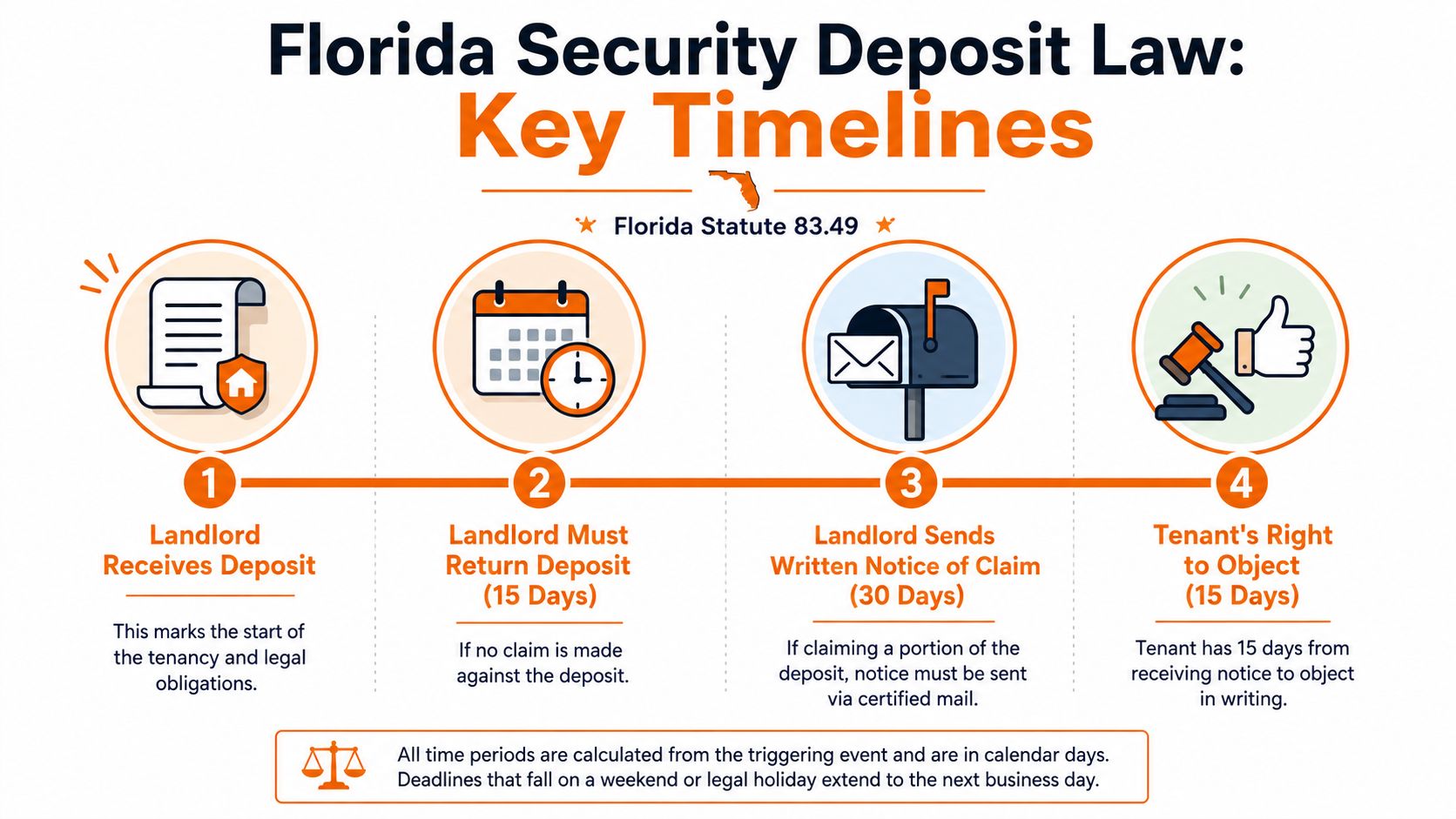
The deadlines that matter
Under Florida's deposit procedure, the key dates are straightforward:
Landlord return window: If no claim is made, the landlord must return the deposit within 15 days.
Landlord claim window: If the landlord intends to impose a claim, they must send written notice within 30 days by certified mail.
Tenant objection window: After receiving that notice, the tenant has 15 days to object in writing.
Those dates shape your advantage. If a landlord misses the notice process, that can affect their ability to keep the deposit. If you miss your response window, you make your own position weaker.
What you must do first
One part tenants overlook is the forwarding address. A critical, mandatory technical requirement for securing a full deposit return is to provide a forwarding address in writing, and in markets like Florida, failing to do that can forfeit your right to demand a detailed itemization of damages.
That isn't a side detail. It's one of the first things I tell renters around West Palm Beach and Lake Worth because too many people assume a text message or verbal handoff is enough. It isn't the way I'd handle it.
Use this approach:
- Send your forwarding address in writing: Email is useful, but certified mail gives you a cleaner record.
- Keep a copy of the notice: Save the letter, receipt, and tracking.
- Include your unit and move-out date: Make it easy for the landlord or manager to match your file.
- Ask where keys should go: Don't leave that step vague.
Florida disputes also turn on the difference between actual damage and normal wear and tear. Minor scuffs, faded paint, and ordinary aging don't automatically become tenant damage just because a landlord wants to refresh a unit between leases. That's why your photos matter. They help show whether something is aging normally or occurred during your tenancy.
Your Pre-Move-Out Strategic Checklist
The best move-outs don't start on the last weekend. They start while you still have enough time to fix small problems without rushing.
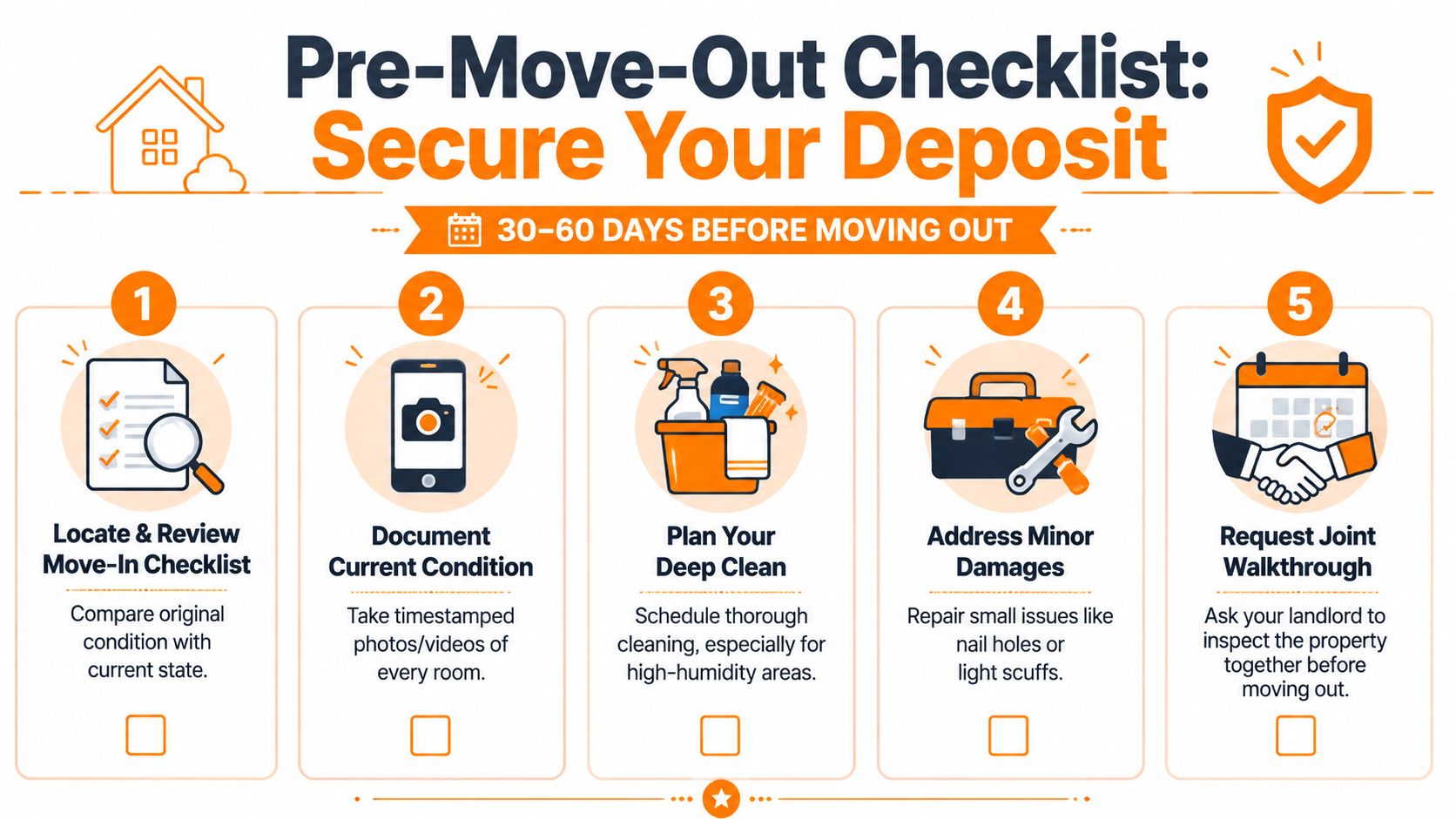
Start with your original records
If you saved your move-in checklist, bring it back out now. If you took move-in photos, compare them room by room. That old documentation may be the strongest protection you have because 30% of deposit disputes arise from undocumented pre-existing conditions that renters can't prove weren't their fault, as noted in Wawanesa's move-in documentation guidance.
In Palm Beach County, this comes up constantly with older condo bathrooms, balcony door tracks, and cabinets that already had swelling from moisture or wear before the tenant moved in. Without a dated baseline, those conditions can get pinned on the last person in the unit.
Pre-move-in photos aren't just nice to have. They're your before file.
A smart Palm Beach County checklist
Use a checklist that covers repairs, records, and inspection prep. If you want a room-by-room reference, this move-out cleaning checklist for renters is a useful starting point.
- Pull your lease and addenda: Check cleaning language, notice terms, key return instructions, and any appliance requirements.
- Review your move-in notes: Match current condition against the original record.
- Take fresh timestamped photos: Get wide shots and close-ups. Include floors, walls, blinds, inside appliances, bathroom tile, under sinks, and window tracks.
- Handle minor repairs: Replace burnt-out bulbs, tighten loose hardware, patch small nail holes if your lease allows it, and remove command strips carefully.
- Watch the moisture zones: In South Florida, inspect bathroom ceilings, grout lines, cabinet toe-kicks near sinks, and AC vents for mildew or dust buildup.
- Request a joint walkthrough: Ask while you're still in possession, not after you've already left.
A quick comparison helps:
| Area | Usually worth doing yourself | Better to document carefully |
|---|---|---|
| Nail holes | Small patching | Larger wall damage |
| Light bulbs | Replace if burned out | Fixture issues tied to wiring |
| Soap scum | Scrub thoroughly | Etching or older glass wear |
| Cabinet grime | Degrease fronts and handles | Swelling from older moisture damage |
| Baseboard scuffs | Wipe and photograph | Warping or pre-existing chips |
In West Palm Beach apartments, I often see tenants spend time on obvious surfaces and miss the spots that trigger deductions. The oven door edge, fridge seals, behind toilet bases, closet shelf dust, and sliding door tracks are common examples. Those aren't hard to fix. They just get missed when people are packing at the same time.
Executing a Landlord-Ready Clean for South Florida Homes
A regular tidy-up doesn't usually protect a deposit in Palm Beach County. A landlord-ready clean is more detailed, more targeted, and built around the exact spots that read dirty during a walkthrough.
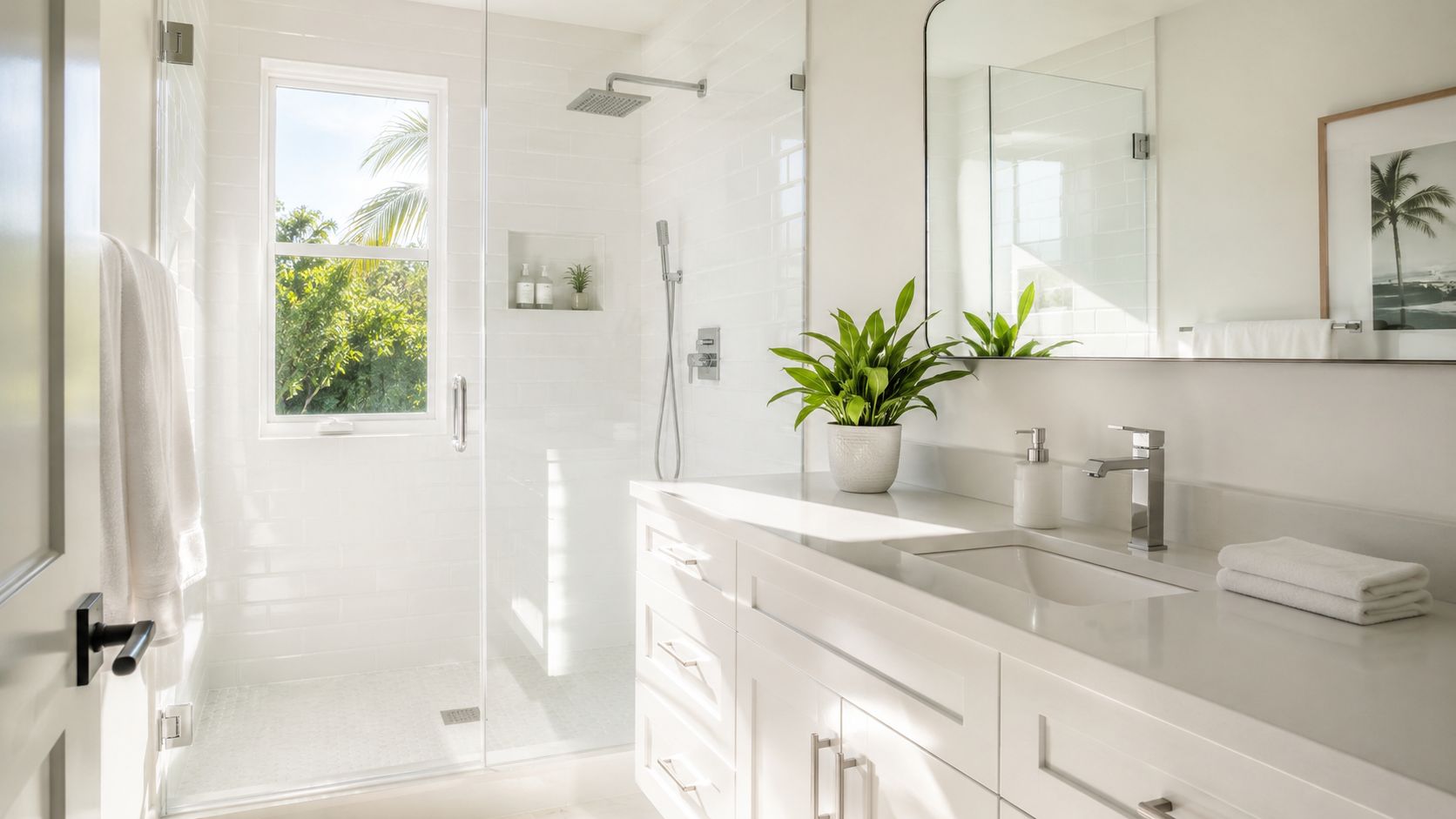
What landlords notice in this market
Cleaning fees are the single largest category of deposit withholding, affecting nearly 65% of move-out disputes, with landlords often charging $150-$400 for a standard clean. That tracks with what shows up in South Florida units. The issue usually isn't one disastrous room. It's the buildup left behind in places people stop seeing after living there for a year.
In Palm Beach County, the local trouble spots are predictable:
- Bathrooms: Humidity feeds mildew in grout lines, around caulk, and on ceiling corners.
- Coastal fixtures: Salt air leaves a film on chrome, shower glass, and mirrors in Juno Beach, Boca Raton, and other coastal areas.
- Floors and tracks: Sand works into tile edges, baseboards, and sliding door channels.
- Air movement areas: AC vents gather dust fast because systems run year-round.
- Kitchen fronts: Grease settles on cabinet exteriors, especially in smaller condos with less ventilation.
A place can smell clean and still look chargeable under bright daylight.
What a real move-out clean includes
For a sharper room-by-room standard, this professional deep cleaning checklist helps separate routine cleaning from move-out cleaning.
A landlord-ready clean usually includes:
- Bathrooms: scrub shower walls, grout, tubs, toilets, sink bowls, faucet bases, mirrors, vanity fronts, and floor edges
- Kitchen: degrease cabinet exteriors, wipe backsplash, clean countertops, sink, fixtures, appliance exteriors, and often the inside oven and fridge
- Floors: vacuum, mop, and detail corners, edges, and under movable furniture
- Dusting: hit baseboards, window sills, blinds, vents, door frames, and closet shelves
- Touch points: light switches, handles, remotes, and thermostat covers
- Glass and tracks: clean interior glass where needed and remove debris from window and slider tracks
For renters who don't have the time or want a checklist-based option, Sunset Shine Home Cleaning offers move-in and move-out cleaning in Palm Beach County that includes the deep-clean areas landlords commonly inspect.
This short video gives a good visual reminder of the level of detail move-out cleaning takes before inspection:
The Final Walkthrough and Key Handover
The walkthrough is where your preparation turns into proof. If the landlord will meet you, great. If not, document the unit as if a dispute might land in a file later.
Build a condition timeline on move-out day
One thing most guides miss is how to rebut vague damage claims with a condition timeline. Renters in Florida often don't have a framework for pushing back when landlords misclassify normal wear and tear such as minor scuffs, fading paint, or small nail holes, as discussed by Bay Area Legal Services.
Use this sequence:
- Take a slow video first: Narrate the date, address, and that the unit is vacant.
- Open everything on camera: Cabinets, closets, oven, fridge, dishwasher, and shower doors.
- Photograph the usual dispute zones: Baseboards, toilet base, sink cabinets, appliance interiors, window sills, and entry flooring.
- Show wear clearly: If paint is faded or flooring is aged, get close and wide shots so it looks like wear, not a mystery mark.
If the landlord says something is damage, ask whether it was documented at move-in or whether it's ordinary aging from normal use.
Hand over keys like it could end up in a file
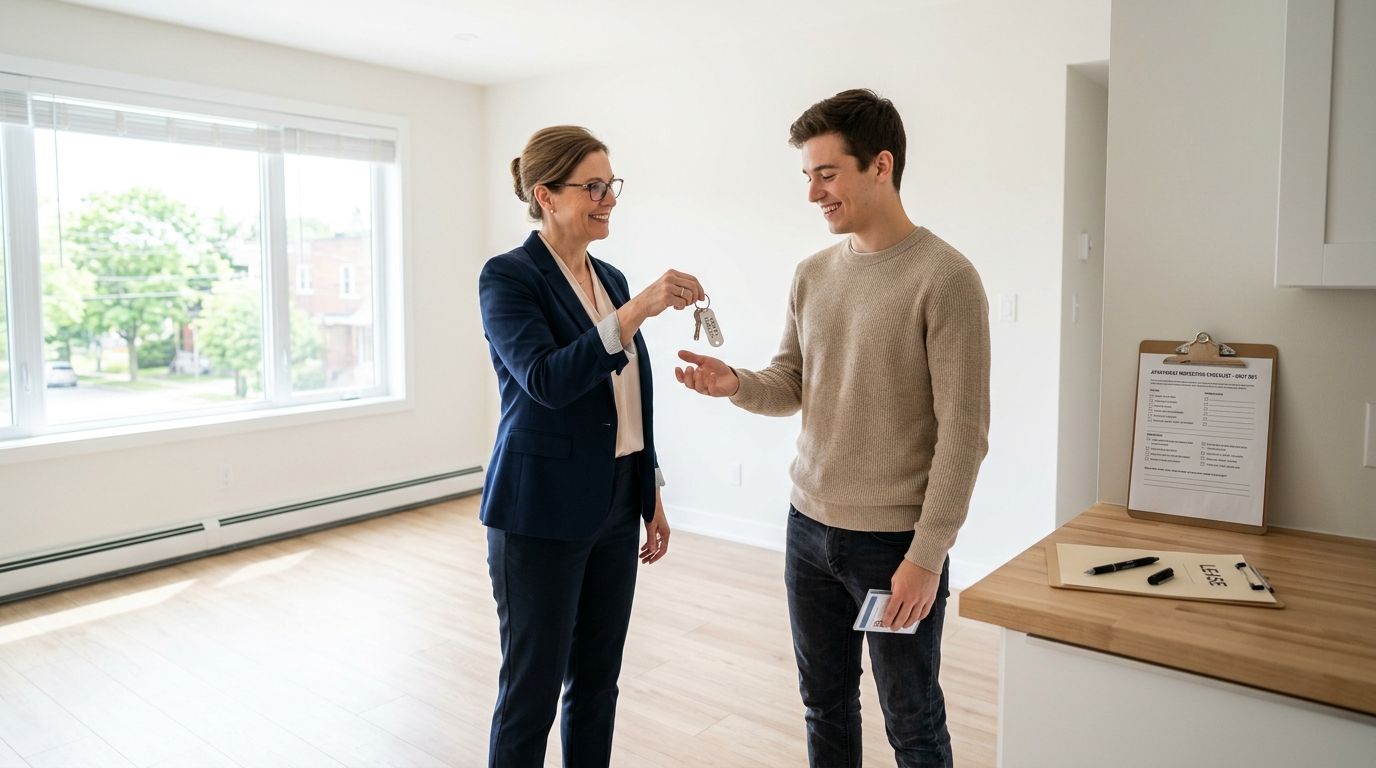
Don't just leave keys on a counter unless that's been confirmed in writing. If you hand them over in person, ask for a receipt or written acknowledgment. If you return them by another approved method, photograph that step too.
For renters who want the unit inspection-ready before this handoff, this move-in and move-out cleaning service page shows the kind of detailed cleaning scope that supports a cleaner walkthrough.
In West Palm Beach move-outs, kitchens and bathrooms usually decide the conversation. If those are sharp, floors are detailed, and the unit is empty and dry, the walkthrough tends to go smoother.
What to Do If Your Landlord Withholds Your Deposit
If a landlord sends a claim notice and you disagree, respond in writing within the objection window. Keep it short, specific, and professional. Reference the deductions you dispute, state why, and attach photos if you have them.
A simple certified letter can say:
I object to the claimed deductions from my security deposit for the following reasons: the condition shown in my attached photographs reflects normal wear and tear and/or conditions existing before move-out. Please provide supporting documentation for any claimed damage and return the disputed amount.
If that doesn't resolve it, the next step is usually Palm Beach County small claims court. Bring your lease, forwarding address notice, photos, move-in records, cleaning receipts, and key return proof. Judges tend to focus on timelines, written communication, and documentation quality.
If you want the cleaning side handled before the walkthrough, Sunset Shine Home Cleaning provides move-out, deep cleaning, Airbnb turnover, and property management cleaning across West Palm Beach, Palm Beach Gardens, Jupiter, Juno Beach, North Palm Beach, Riviera Beach, Royal Palm Beach, Lake Worth, Boynton Beach, Delray Beach, Boca Raton, Wellington, Westlake, Loxahatchee, Loxahatchee Groves, and The Acreage. For a deposit-ready clean built around South Florida issues like humidity, mildew, salt air film, AC dust, and sand in tracks, call 561-408-4020 or book online.