
Sweep or vacuum first, then wet-clean with a mild detergent solution, rinse with clean water, and dry thoroughly with a microfiber cloth to help prevent mold and water spots. That simple routine works especially well in South Florida bathrooms, where humidity, sand, and tracked-in dirt make tile floors look tired fast.
If you're trying to get a bathroom floor back to spotless for a landlord walkthrough, a guest arrival, or just a home that doesn't feel sticky underfoot, the details matter. I've cleaned enough Palm Beach County bathrooms to know the problem usually isn't the tile itself, it's the residue, grout, and leftover moisture that build up when people rush the job.
Table of Contents
- Why Your Bathroom Tile Floor Needs More Than a Quick Mop
- Gathering the Right Supplies and Prepping Your Space
- Cleaning Ceramic, Porcelain, and Natural Stone Tile Differently
- Tackling Grout Lines and Mildew Without Damaging the Surface
- Drying, Sealing, and Setting Up a Maintenance Routine
- When to Call a Professional Cleaning Service
Why Your Bathroom Tile Floor Needs More Than a Quick Mop
After a beach day in Jupiter or a sweaty afternoon in West Palm Beach, bathroom tile gets hit with more than water. Soap film, hair, sand, and humidity settle into the same floor, and if you just push a mop around, you usually move the mess instead of removing it.
The part most people skip
Major cleaning guidance is consistent on the basics, dry debris removal first, wet-cleaning second, and full drying last. One tile-care guide recommends wet cleaning once a week and sweeping or vacuuming a few times a week before mopping, because loose grit can scratch the finish and make grout buildup harder to remove later, while a small amount of detergent, commonly 1 to 2 tablespoons in a bucket of water, helps avoid residue that attracts dirt Flooring Inc tile-care guide. The same routine is echoed by bathroom cleaning guidance that stresses rinsing and drying so moisture doesn't hang around on the surface Southern Living bathroom tile guide.
Practical rule: if the floor still feels slick after mopping, it's not clean enough for a bathroom.
That matters in Palm Beach County because bathrooms stay damp longer than people think. In high humidity, leftover moisture can turn into streaks, water spots, and the kind of mildew that shows up along grout and around fixtures. A quick mop may make the room look better for an hour, but routine maintenance with mild cleaners and complete drying keeps the tile looking right longer.
I see the same pattern in coastal homes, townhomes, and Airbnb turnovers. The floor looks fine at first glance, then the light hits it and you can see the dull film, especially near the toilet, tub edge, and vanity front. That's usually the sign the job needed more than a pass with a mop.
Gathering the Right Supplies and Prepping Your Space
The right tools make the job easier, but prep matters just as much. Before any cleaner touches the tile, get the bathroom ready so you're not dragging grime from one corner to another.
What to set out before you start
A solid bathroom floor kit usually includes a microfiber mop, a stiff-bristle brush for grout, a bucket, a mild or pH-neutral cleaner, and a clean dry towel. Professional cleaning guidance also stresses using a soft-to-medium bristle brush, avoiding dirty mop water, and finishing with a rinse and full drying so you don't leave behind streaks or slippery residue Super Clean SG bathroom tile techniques.
| Item | Purpose | Notes |
|---|---|---|
| Microfiber mop | Wet-cleans tile without pushing grit around | Better than a dirty string mop for most bathroom floors |
| Stiff-bristle brush | Scrubs grout lines and edges | Use on grout, not as a heavy scrubber on glossy tile |
| Bucket | Holds cleaning solution and rinse water | Keep clean water separate if possible |
| Mild cleaner | Lifts soap film and everyday soil | Use a small amount, not a sudsy mix |
| Dry towel or microfiber cloth | Removes leftover moisture | Essential in humid bathrooms |
Prep the room before mopping
Pull out bath mats, trash cans, scales, and anything else blocking the floor. Then sweep or vacuum thoroughly, because dry debris is what scratches tile and drags dirty particles into grout lines when the floor gets wet Flooring Inc tile-care guide.
If you're using a new product, test it in a small hidden corner first. That's especially important in homes with mixed tile, because glazed ceramic, porcelain, and stone don't all react the same way.
Open the exhaust fan or a window before you start. In West Palm Beach and along the coast, air movement helps the floor dry faster and cuts the chance of lingering moisture.
If you want a non-toxic option for routine floors, this cleaner guide from Sunset Shine Home Cleaning is a useful starting point for what to look for in a tile-safe product.
Cleaning Ceramic, Porcelain, and Natural Stone Tile Differently
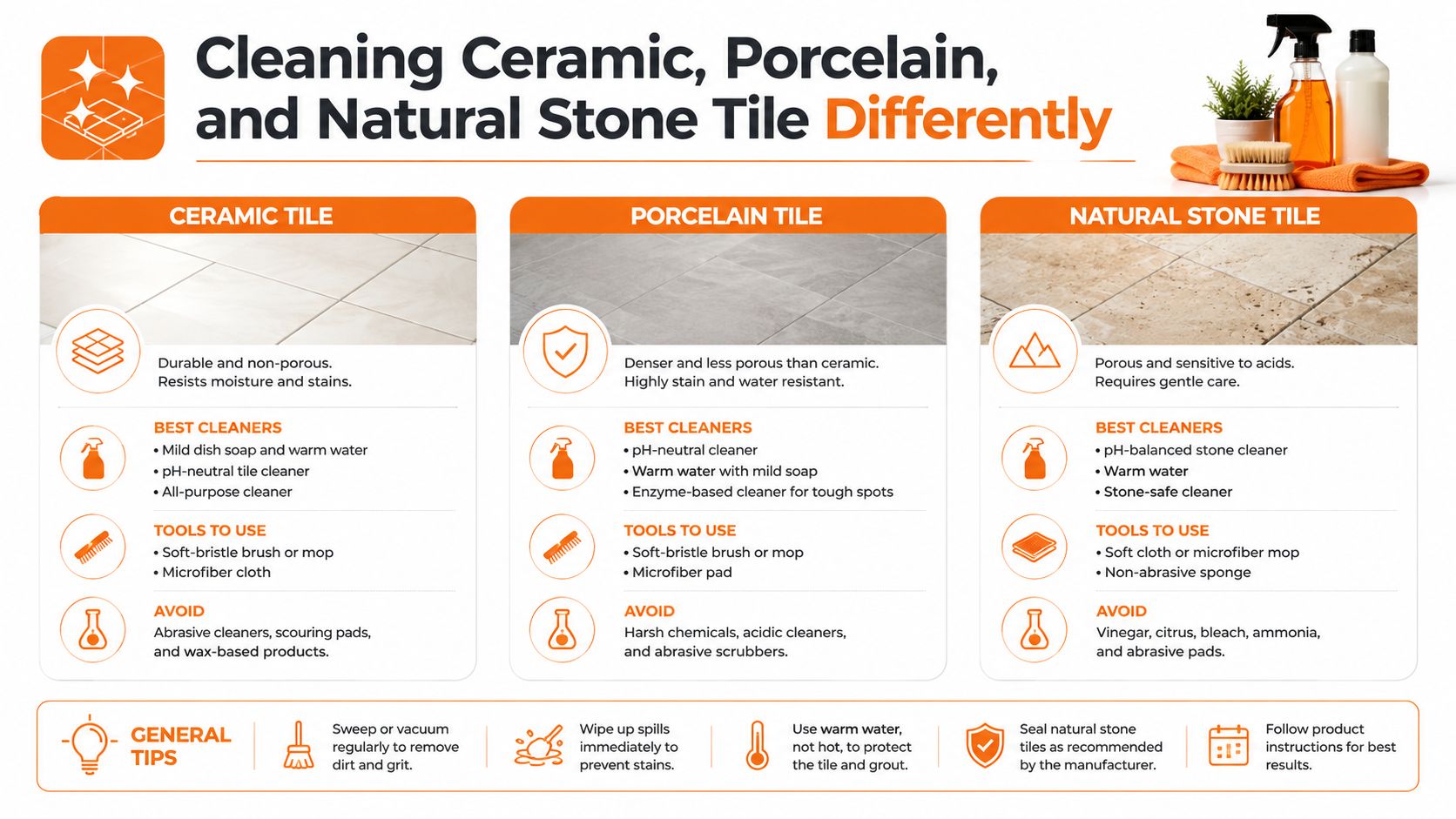
A lot of bathroom-cleaning advice treats tile like it's one material. That's where people get into trouble. Ceramic, porcelain, and natural stone may all look similar from a standing position, but they don't tolerate the same cleaner or the same amount of scrubbing.
Ceramic and porcelain are the forgiving ones
Glazed ceramic usually handles mild, non-abrasive cleaners well, and porcelain is denser and more water-resistant, which is why it shows up so often in bathrooms Apollo Tile bathroom tile guide. That doesn't mean you can attack it with harsh chemicals, though. Abrasive pads and dirty water still leave a dull film.
Porcelain is a little tougher in practice, but it still benefits from the same routine. Vacuum or sweep first, then mop with a solution that doesn't leave much behind, and rinse if the product calls for it. That's the cleanest way to handle textured porcelain in a shower room or a busy guest bath.
Natural stone needs the most caution
Stone is where the wrong advice causes expensive mistakes. Guides on bathroom tile care repeatedly warn against acidic cleaners like vinegar on marble, travertine, and limestone, and instead point toward a pH-neutral stone cleaner followed by rinse and drying Apollo Tile bathroom tile guide. That's the key decision rule: if the floor is stone, stay away from the “one-size-fits-all” vinegar routine.
Good rule for Palm Beach County homes: if you're not sure the floor is glazed ceramic or porcelain, stop and check before you clean hard.
A natural stone floor in a Boca Raton condo or a Wellington primary bath may look sleek, but it'll punish the wrong product fast. Test first, use less product than you think, and never keep scrubbing once the surface starts looking cloudy or dull.
Video walkthrough:
Tackling Grout Lines and Mildew Without Damaging the Surface
Grout is where bathroom floors win or lose the battle. Tile can look clean while the seams stay dark, and in humid homes, that's often the first place mildew settles in.
Clean the seam, not the tile by force
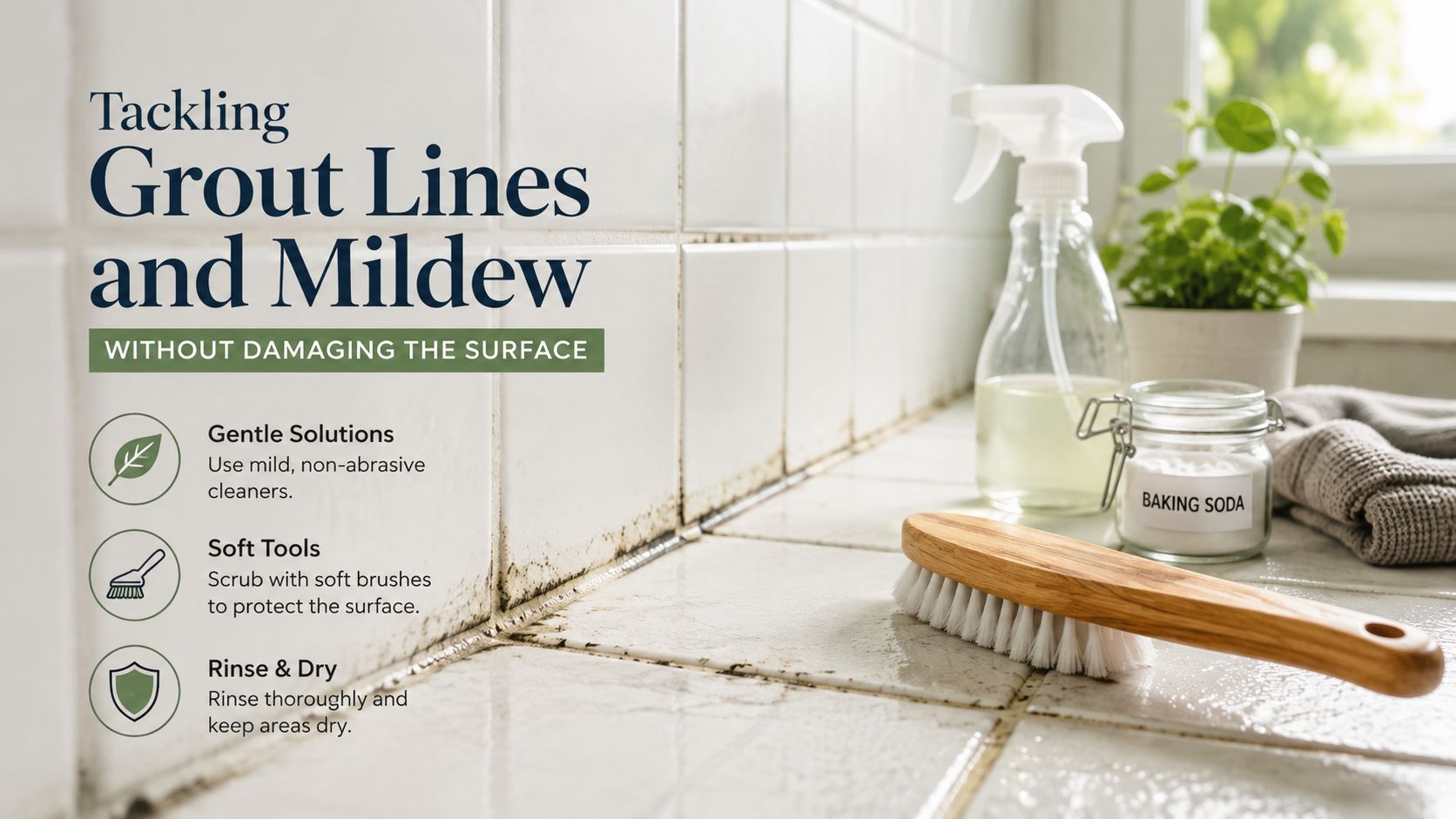
Grout is porous, so it traps soap residue, dirt, and moisture faster than the tile around it. A practical workflow is to apply a grout cleaner or a baking soda paste, let it sit for about 5 minutes, then scrub with a stiff brush and rinse well Mr. Proper bathroom tile professional guide. That dwell time matters because it gives the cleaner a chance to break down body oils and soap scum before you start agitating.
Avoid wire brushes. They're too aggressive for regular maintenance and can chew up the grout edge. A deck brush or grout brush gives you control without tearing up the joint.
Deal with mildew the right way
When mildew is stubborn, a stronger product may be needed, but only if the surface can handle it. The safest move is still to check the material first, rinse thoroughly afterward, and dry the floor completely. If you use a bleach-based or peroxide-based cleaner, don't leave it sitting in the seams and don't let dirty rinse water dry back on the floor.
I've seen plenty of grout lines in Loxahatchee and Jupiter homes that looked “dirty” when they were really holding old residue. That's where a careful scrub does more than repeated mopping ever will.
If you want a more detailed step-by-step for grout-only work, this bathroom grout guide from Sunset Shine Home Cleaning covers the same material-aware approach in more depth.
Drying, Sealing, and Setting Up a Maintenance Routine
Drying is not a finishing touch in a bathroom, it's part of the cleaning. Leave water behind and the floor can spot, streak, and stay damp long enough for mildew to come back.
Dry the floor like it matters
Bathroom tile guides repeatedly recommend rinsing after mopping and then drying with a clean microfiber cloth, towel, or dry pad to prevent water spots and reduce mold risk Southern Living bathroom tile guide. That last pass matters most near toilets, tubs, and shower edges, where water lingers the longest.
A dry floor also feels better underfoot. It doesn't leave that tacky, slightly slick finish that tells you soap residue is still on the tile.
Build a routine that fits South Florida
For most bathrooms, the rhythm is simple:
- Dry sweep or vacuum often to keep grit off the floor.
- Wet-clean weekly with a mild detergent solution.
- Deep-clean grout and corners when buildup starts showing.
Natural stone and unglazed tile may also benefit from sealing once the surface is completely dry, because sealers help block moisture and make later cleaning easier. That's especially useful in condo bathrooms and rental units where the same floor gets constant use.
In a humid Palm Beach County bathroom, the fastest way to protect tile is to remove grit early and dry the floor completely every time.
For Airbnb hosts in Delray Beach or property managers in Boca Raton, that routine matters because guest-ready floors have to look clean fast, not after a restoration project. A quick, repeated maintenance cycle beats occasional aggressive scrubbing almost every time.
When to Call a Professional Cleaning Service
Some bathroom floors get past the point where a homeowner should keep grinding away at them. If the grout is discolored, the stone looks etched, or soap scum has bonded around fixtures and baseboards, a professional clean is usually the smarter move.
Signs the DIY route has hit its limit
A cleaning team has the right tools for situations that take too long with a mop and brush. That includes move-out bathrooms, Airbnb turnovers, post-construction dust, and floors that need a detailed reset before a landlord, buyer, or guest walks through. Professional cleaners also know how to work around material risks, which matters when a bathroom has mixed tile, stone accents, or old grout that's already worn down.
Commercial-safe products and better equipment help, but the core value is speed without damage. If a floor needs careful agitation, repeated rinse passes, or a full checklist across the bathroom, that's a job where experience saves time and avoids mistakes.
For a deeper view of what a structured service clean includes, this professional checklist from Sunset Shine Home Cleaning is a good reference point.
What a professional clean solves in Palm Beach County
In West Palm Beach, Lake Worth, Boynton Beach, and the surrounding neighborhoods, the common problems are the same, humidity in grout, sand on tile, sticky residue after turnovers, and floors that need to be ready on a deadline. That's where a recurring maid service, a deep clean, or a move-out clean earns its keep.
Sunset Shine Home Cleaning handles bathrooms, floors, baseboards, sinks, counters, mirrors, cabinet exteriors, and high-touch areas, which is exactly what most homeowners and property managers need when the floor alone isn't the whole problem. If the bathroom tile is part of a larger cleanup, the work usually goes faster when the same team handles the full room instead of one isolated surface.
Book your cleaning with Sunset Shine Home Cleaning, your trusted house cleaning service in West Palm Beach. Call 561-408-4020 or visit Sunset Shine Home Cleaning to get a bathroom floor clean that holds up in South Florida humidity, not just until the next shower.