If you're standing in a West Palm Beach kitchen staring at sandy footprints, paw prints, and a floor that still feels sticky after mopping, you're not overthinking it. Finding the best non toxic floor cleaner matters more in South Florida because humidity, salt air, and tracked-in grit can turn the wrong product into a residue problem fast.
For homeowners, renters, Airbnb hosts, and property managers in Palm Beach County, the goal isn't just a nice label on the bottle. It's a floor that looks clean, dries well, doesn't leave film, and feels safer for kids and pets day after day.
Table of Contents
- Finding the Best Non-Toxic Floor Cleaner for Florida Floors
- Decoding Non-Toxic and Eco-Friendly Labels
- The Right Cleaner for Every Palm Beach County Floor
- Safe and Effective DIY Floor Cleaner Recipes
- When DIY Is Not Enough for a South Florida Clean
- Get a Spotless Home with Sunset Shine Home Cleaning
Finding the Best Non-Toxic Floor Cleaner for Florida Floors
In Palm Beach County, floors take a beating. Beach sand gets ground into grout lines in Juno Beach homes, summer rain leaves muddy entryways in Wellington, and AC runs year-round, which means dust collects fast and then sticks to any leftover mop film.
That last part is where a lot of people go wrong. The best non toxic floor cleaner isn't just one that sounds gentle. It has to clean well without leaving surfactant residue behind, because residue can increase re-soiling and slip risk on hard floors, especially when humidity stays high. Guidance cited in this discussion around low-residue floor care also stresses proper dilution and dry mopping as key day-to-day habits for safer use on hard floors in humid climates, as noted in this floor-cleaning residue guidance.
Practical rule: If a floor looks clean for an hour and then starts grabbing footprints again, the product or dilution is usually the problem.
A few local patterns matter when choosing a cleaner:
- Beach homes and coastal condos need something that lifts fine grit without creating a slick film.
- Family homes with pets need low-odor options because dogs and cats spend more time on the floor than we do.
- Short-term rentals need quick-drying results. Nobody wants guests walking into a lemony haze and tacky tile.
- Older Palm Beach County homes often have mixed surfaces, like tile in common areas and laminate in bedrooms, so one aggressive cleaner can create damage or haze.
The smartest approach is simple. Match the cleaner to the surface, keep water use controlled, and care more about actual cleaning performance than marketing language. That's especially true in South Florida, where the climate punishes shortcuts.
Decoding Non-Toxic and Eco-Friendly Labels
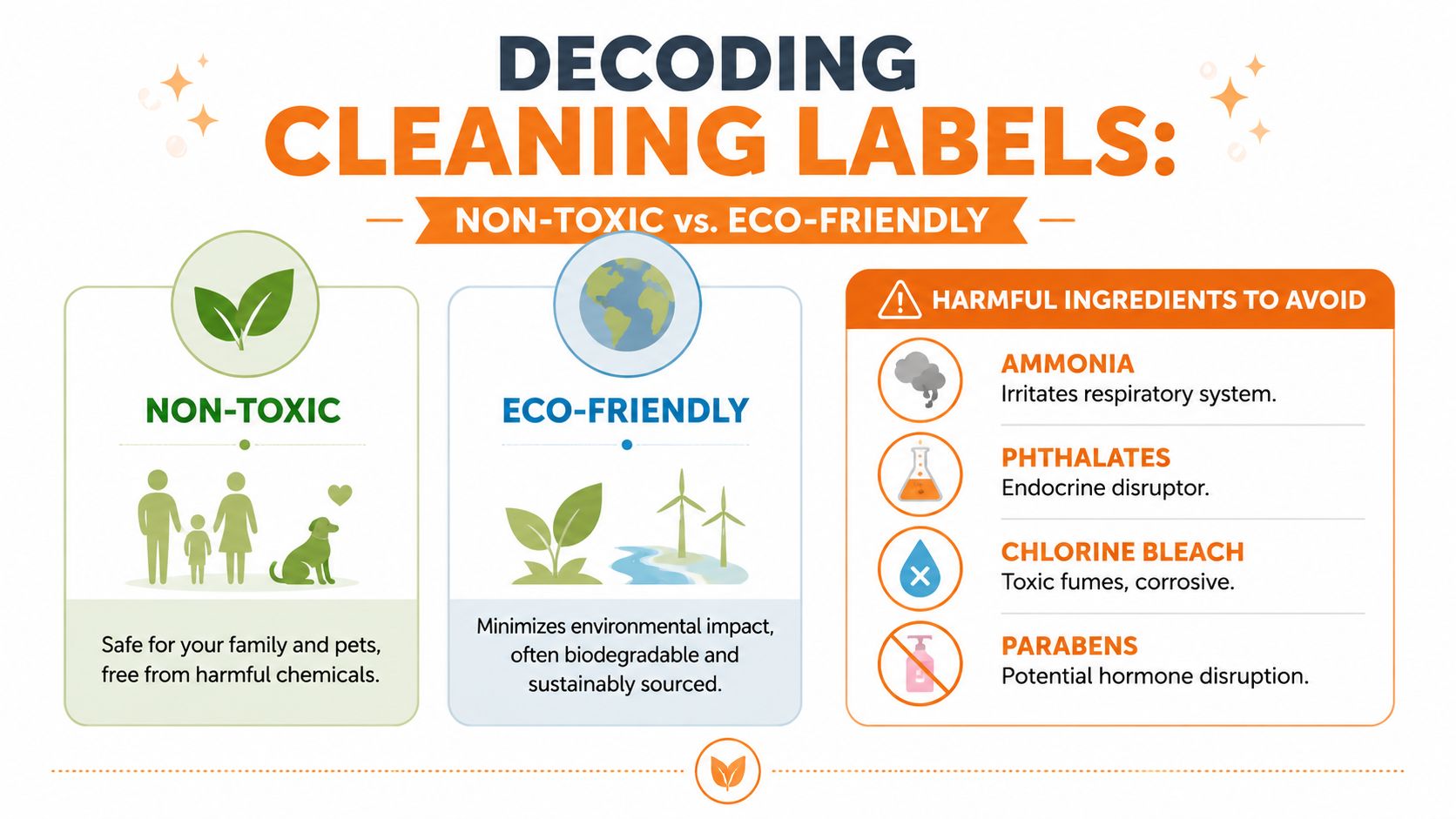
You grab a bottle that says natural, pet safe, and eco-friendly, then mop the kitchen after a rainy afternoon in West Palm Beach. An hour later, the floor feels tacky, the dog tracks in more grit from the patio, and the scent is still hanging in the air. That is the problem with label-first shopping in South Florida. Marketing claims do not tell you how a cleaner handles sand, salt residue, humidity, or bare feet on tile.
Retail listings often lean on phrases like "EPA certified," "baby and pet safe," or "natural," but they rarely explain ingredient disclosure, surfactant strength, residue risk, or fragrance load in a way that helps you compare products for real home use, as seen in these retail examples of non-toxic floor cleaner marketing.
What the label should tell you
A useful label answers practical questions fast. What surface is it made for. Does it need dilution. Is it safe only for sealed floors. Does the brand tell you what creates the scent and what is left behind after drying.
Those details matter more here than many national articles admit. Fine beach sand acts like an abrasive. Salt air leaves residue on entries and balconies. High humidity slows drying, which gives heavy formulas more time to sit on the surface and collect fresh dirt.
Look for products with:
- Clear surface guidance for tile, sealed wood, laminate, vinyl, or stone
- Specific dilution directions so you do not end up overapplying soap
- Ingredient transparency instead of vague feel-good wording
- Low-odor or fragrance-free options for homes with pets, kids, or scent-sensitive adults
Skip any cleaner that hides the basics. If a brand will not tell you what it is for or how to use it, it is hard to trust it on expensive flooring.
What usually works better in South Florida homes
In Palm Beach County homes, simpler formulas usually perform better. Strong fragrance does not help with cleaning, and in a closed house with the AC running all day, it can feel even heavier by evening.
The better everyday cleaner is usually one that dries clean, uses a small amount per bucket or spray bottle, and does not leave a film that grabs sandy footprints. That matters on tile, but it also matters on laminate edges, sealed wood finishes, and natural stone that can haze if the wrong product builds up over time.
A floor should feel clean under bare feet, not coated.
Third-party review programs can help, but only if you read past the badge. For example, the U.S. Environmental Protection Agency explains what the Safer Choice label means, including how products are reviewed for safer chemical ingredients. That is more useful than a front-label promise by itself. It still does not replace checking whether the cleaner fits your floor type, your ventilation, and the way South Florida homes get dirty.
If tile already looks dull or grout is holding onto grime, the product choice may only be part of the problem. At that point, a more targeted professional tile floor cleaning service often gets better results than switching to a stronger bottle from the store.
The Right Cleaner for Every Palm Beach County Floor
One cleaner for every surface sounds convenient. In real homes from Boca Raton to Jupiter, it's usually a mistake. The right choice depends on the floor itself and on what South Florida is throwing at it that week.
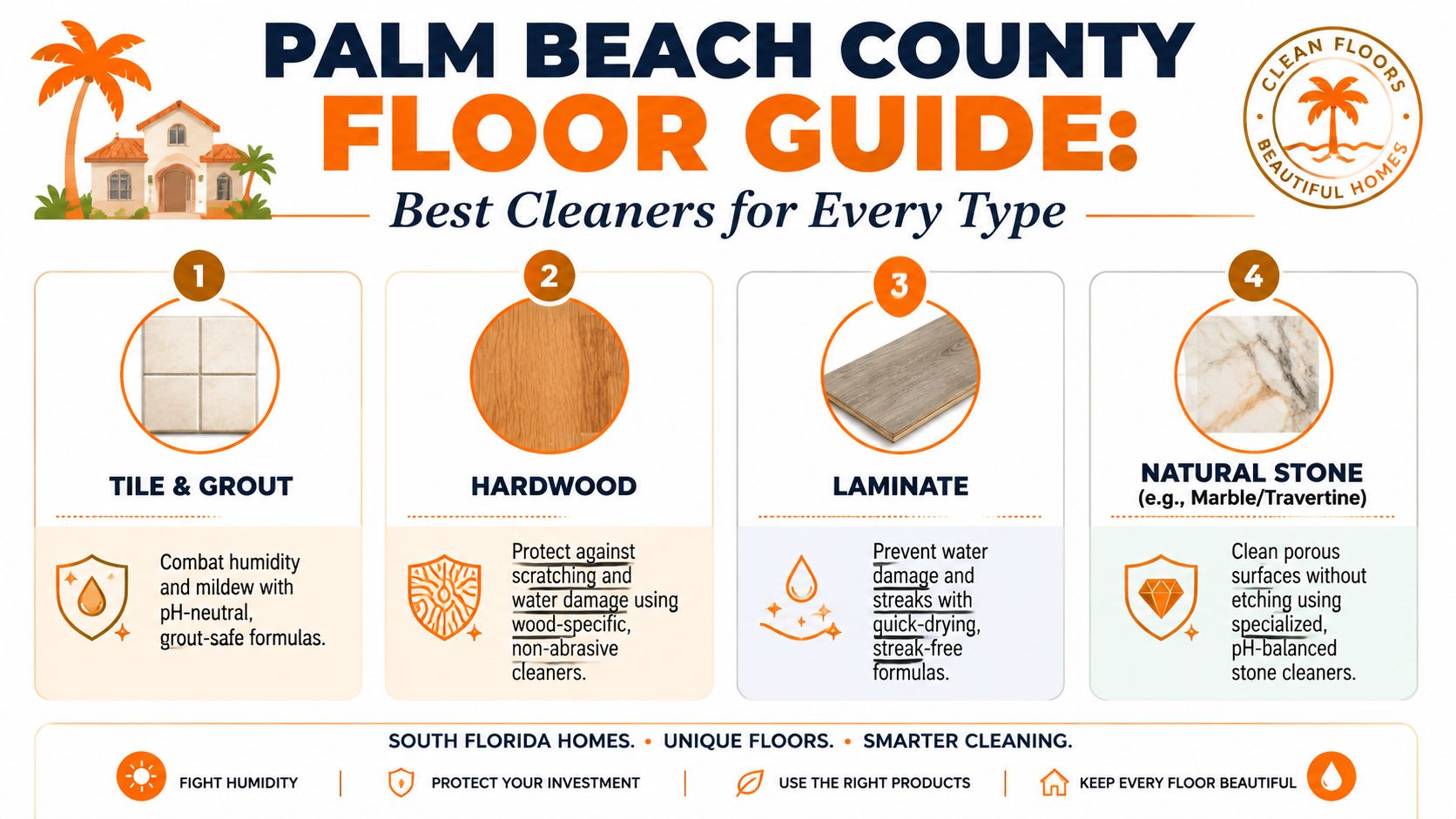
To make that easier, here's a quick visual guide.
Tile and grout
Tile is everywhere in Palm Beach County because it handles heat, wet feet, and sandy traffic well. But grout is where trouble starts. In humid homes, especially bathrooms and first-floor living areas, grout grabs dirt, holds moisture, and starts looking dingy long before the tile does.
For tile, the best non toxic floor cleaner is usually a low-residue formula used with a microfiber mop and controlled water. Too much soap leaves haze. Too much water pushes grime into grout lines and corners.
A few local realities:
- beach sand acts like fine abrasive dust
- rainy season tracks mud into textured tile
- pet bowls and back doors create repeat moisture spots
If your tile has gone beyond routine mopping, targeted help makes more sense than stronger chemicals. For surface-specific service, this tile floor cleaning page is a useful next step.
A short demo can help if you're comparing techniques at home.
Sealed hardwood and laminate
These floors show every bad mop habit. In West Palm Beach condos and newer suburban homes, the common problems are streaking, edge swelling from too much moisture, and a dull finish caused by product buildup.
Use less liquid than you think you need. Damp mop, don't wet mop. If the pad is leaving visible moisture behind, it's too wet.
For these surfaces, avoid anything that feels oily, waxy, or extra glossy. In humid air, that finish can turn into a dust magnet.
Local note: In homes near the coast, salt air and fine dust settle fast. Any tacky residue on wood-look floors starts showing traffic patterns almost immediately.
Natural stone
Travertine and marble are common in Palm Beach County, especially in older upscale homes and coastal properties. They look great, but they're less forgiving than tile.
Stone needs a pH-balanced approach and gentle application. The biggest mistake is using acidic DIY solutions on the wrong surface. If the cleaner is too harsh for stone, the floor can lose its clean, polished look even when it isn't technically dirty.
A simple comparison helps:
| Floor type | Main local issue | Better approach |
|---|---|---|
| Tile | Sand, grout discoloration, moisture | Low-residue cleaner, microfiber, controlled water |
| Hardwood | Humidity, streaking, swelling risk | Light damp mopping, fast drying |
| Laminate | Edge damage, film, repeat footprints | Minimal moisture, streak-free formula |
| Natural stone | Etching risk, dullness | pH-balanced stone-safe cleaner |
The best cleaner is the one that fits the floor and the climate, not the one with the prettiest front label.
Safe and Effective DIY Floor Cleaner Recipes
DIY can work well if you keep expectations realistic. Some messes need a simple maintenance solution, not a miracle mix. And as Consumer Reports' floor-cleaner testing makes clear, the best-performing products aren't always the ones with the greenest branding, which is why it's smart to judge a cleaner by results, not just the bottle.
For tile floors
For sealed tile, a light vinegar dilution is a practical option for routine mopping on appropriate surfaces.
- Mix warm water with a small amount of distilled white vinegar
- Use a microfiber mop, not a soaking string mop
- Finish with a dry microfiber pass so moisture and film don't linger
Palm Beach pro tip: if your home has hard water, distilled water helps reduce spotting on darker tile.
For sealed wood and laminate
Keep this one simple.
- Mix warm water with a very small amount of gentle plant-based soap
- Mist the mop pad, not the floor
- Dry immediately with a clean microfiber pad
If the floor feels slick after drying, the solution was too strong. Back it down.
For stone floors
Skip vinegar and other acids. Use plain warm water or a stone-safe pH-balanced cleaner made for sealed natural stone.
A good DIY routine for stone usually looks like this:
- dry dust mop first
- damp mop lightly
- buff dry to avoid streaks
Less product usually gives a better finish than more product on South Florida floors.
DIY works best for upkeep. It works less well when grime has settled into grout, edges, or textured surfaces over time.
When DIY Is Not Enough for a South Florida Clean
You mop the floor after a rainy week in West Palm Beach, and an hour later it still looks dull. Walk across it barefoot and you feel grit along the edges, tackiness in the traffic lanes, and residue that keeps coming back no matter what bottle you try.
That usually points to a buildup problem, not a basic maintenance problem. In South Florida homes, sand acts like fine sandpaper, salt air leaves film near entries and sliders, and humidity slows drying enough for grime to hang on in grout lines, textured tile, and laminate seams.
I see the same pattern after long wet summers, tenant turnovers, and remodeling work. Floors can look decent from eye level but still feel dirty underfoot because the problem is stuck-in soil, leftover product film, or moisture that kept debris from lifting cleanly.
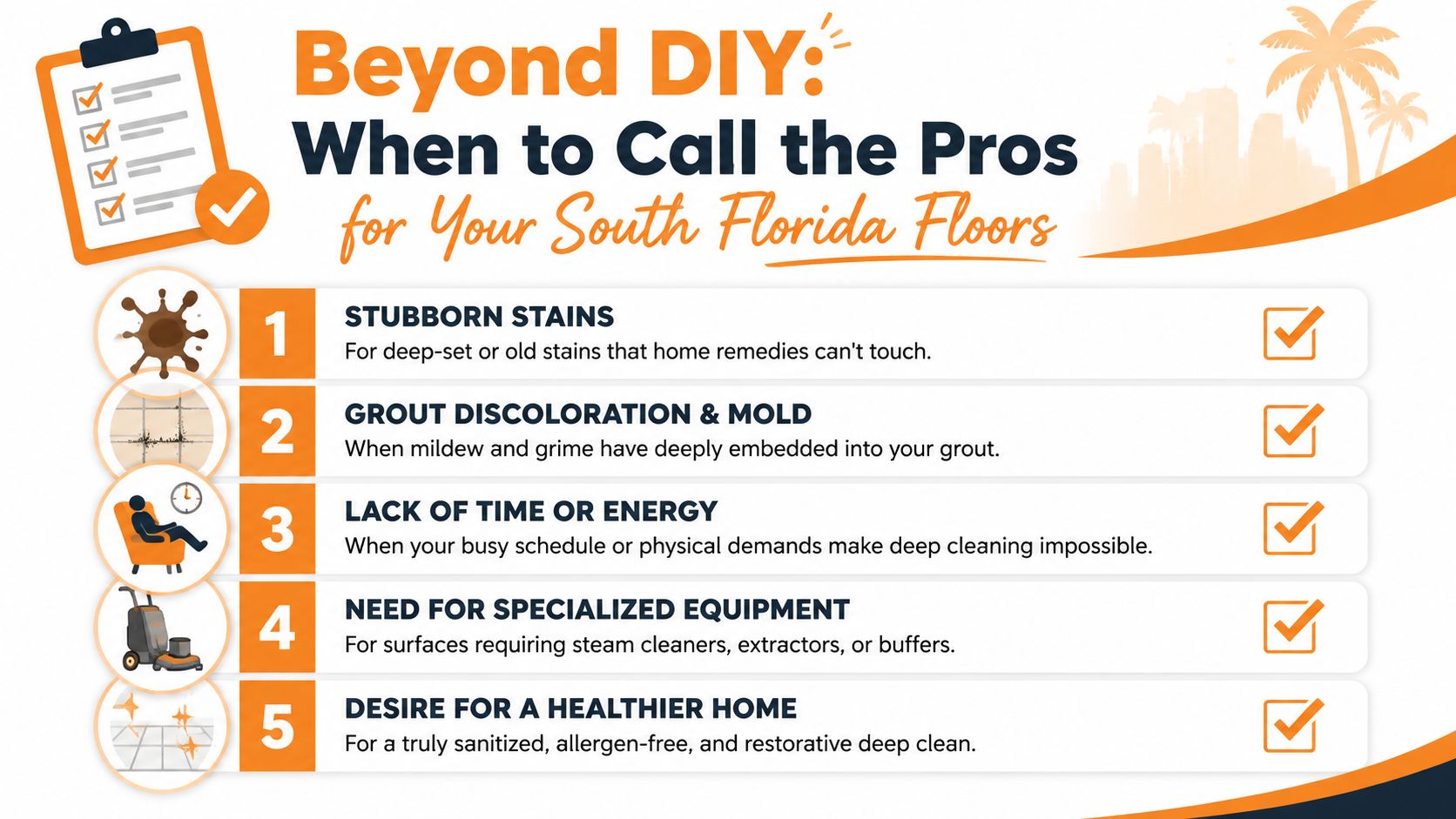
Professional help usually makes sense in a few specific situations:
- Fast rental turnovers near the beach, where sand is packed into corners, baseboards, and grout before the next guest arrives
- Move-out cleans in places like Delray Beach or Boynton Beach, where floors need to hold up under a landlord or property manager walkthrough
- Heavy grout discoloration that regular mopping keeps wet but never cleans
- Post-construction cleanup in Loxahatchee or Westlake, where fine dust keeps settling and dulling the floor
- Mixed flooring layouts with tile, laminate, and stone in the same home, each needing a different cleaner and moisture level
The difference is not just extra hands. It is using the right chemistry in the right amount, then removing suspended soil completely instead of pushing it around. That matters more here than many homeowners expect, because high humidity and beach debris can turn a mild residue issue into a floor that always looks hazy.
Laminate deserves extra caution. Too much water, repeated scrubbing, or the wrong cleaner can swell edges and leave a streaky finish that is hard to correct. If that is the surface giving you trouble, review this guide on deep cleaning laminate floors before trying a stronger DIY mix.
Floors often look worse after aggressive DIY cleaning when the actual issue was buildup, trapped grit, or the wrong chemistry for the surface.
A clean floor in Palm Beach County should dry fast, feel residue-free, and stay that way for more than a few hours. If your routine is leaving haze, sticky traffic paths, or dirty grout that keeps returning, it is usually time for a deeper reset.
Get a Spotless Home with Sunset Shine Home Cleaning
Palm Beach County floors deal with conditions that national cleaning advice often ignores. Sand from beach traffic, humidity that slows drying, salt air near the coast, muddy entryways during rainy season, and pet hair that clings to baseboards all change what "clean" entails.
That's why local experience matters. A condo in West Palm Beach, a family home in Royal Palm Beach, and a vacation rental in Jupiter don't have the same floor problems. The right approach depends on surface type, traffic pattern, and how quickly the home needs to be ready again.
For households that want safer products without guessing through store shelves, eco-friendly house cleaning services can take that off your plate. That's especially helpful for homes with pets, young kids, frequent guests, or busy schedules where floors need to stay consistently presentable.
Sunset Shine Home Cleaning serves West Palm Beach, Palm Beach Gardens, Jupiter, Juno Beach, North Palm Beach, Riviera Beach, Royal Palm Beach, Lake Worth, Boynton Beach, Delray Beach, Boca Raton, Wellington, Westlake, Loxahatchee, Loxahatchee Groves, and The Acreage.
If you're trying to find the best non toxic floor cleaner, the key is to choose the right cleaner for the floor, use less product than you think, and don't let residue build up in a humid house. When that still isn't enough, getting professional help is often the fastest way back to a home that feels clean the moment you walk in.
Book your cleaning with Sunset Shine Home Cleaning if you need a safer, more reliable way to handle Palm Beach County floors. Call 561-408-4020 or book online to get expert help with sand, humidity, pet messes, and the day-to-day buildup that makes South Florida homes harder to keep clean.