
If you're staring up at a dusty popcorn ceiling in West Palm Beach, Wellington, or a condo near the coast and wondering how to clean textured ceiling surfaces without knocking half of it down, you're not alone. In Palm Beach County, ceilings collect more than plain dust. They catch AC-blown lint, humidity-heavy grime, and in some homes, mildew spotting that shows up fastest in bathrooms and around poor airflow.
Table of Contents
- Why Palm Beach County Ceilings Need Special Attention
- Prepare Your Space for a Mess-Free Clean
- Start with Dry Methods for Dust and Cobwebs
- Tackling Stains and Mildew Spots
- When to Repair Repaint or Call a Professional
Why Palm Beach County Ceilings Need Special Attention
A textured ceiling in Palm Beach County gets dirty in its own way. In inland neighborhoods like Royal Palm Beach or The Acreage, year-round AC keeps fine dust moving. In coastal spots like Juno Beach, Jupiter, and Boca Raton, salt air and sandy residue can settle into the texture and make the ceiling look dingy faster than homeowners expect.

Why local buildup looks worse
Textured ceilings hold onto debris because they aren't smooth. In South Florida homes, that means dust from vents, cobwebs in ceiling corners, and bathroom moisture that helps grime cling instead of brushing off cleanly.
In homes near the water, the problem can look patchy rather than obviously dirty. You see gray shadows near AC vents, faint yellowing in kitchens, or tiny dark specks on bathroom ceilings after a stretch of humid weather.
Practical rule: If a textured ceiling looks stained, always assume part of the problem is trapped dust until you've done a gentle dry clean first.
This comes up a lot before move-ins and refresh cleans. If you're already getting a property ready, it's smart to handle overhead dust before the rest of the room. That's the same mindset we use with pre-move cleaning prep for Palm Beach County homes, because once ceiling dust drops, everything below needs attention too.
What makes textured ceilings tricky
The main issue isn't getting the ceiling clean. It's getting it clean without damaging the texture. Popcorn and other acoustic finishes are fragile, especially in older homes where age and moisture have already weakened the surface.
A key historical shift in textured-ceiling care is that older ceilings may need hazard-aware handling, since many ceilings installed before the late 1970s may contain asbestos, which changes the approach from simple dust removal to cautious maintenance, as noted in this textured ceiling cleaning overview.
That means the job starts with restraint. Homeowners often make the ceiling worse by spraying too much liquid, pressing too hard, or trying to scrub out a stain like they would on a painted wall. On textured ceilings, that usually creates a bare spot, a soggy patch, or a rain of white debris on the floor.
Prepare Your Space for a Mess-Free Clean
Preparation matters more than people think. In Palm Beach County homes with tile, wood-look floors, or polished surfaces, falling grit can spread farther than the ceiling dust itself if you start cleaning without protecting the room first.
Contain the fallout before you start
Start by clearing what you can. Move lightweight furniture, wall decor, and anything fabric-covered away from the work area. If you're in a furnished condo or an Airbnb turnover, cover larger pieces instead of dragging them across the floor.
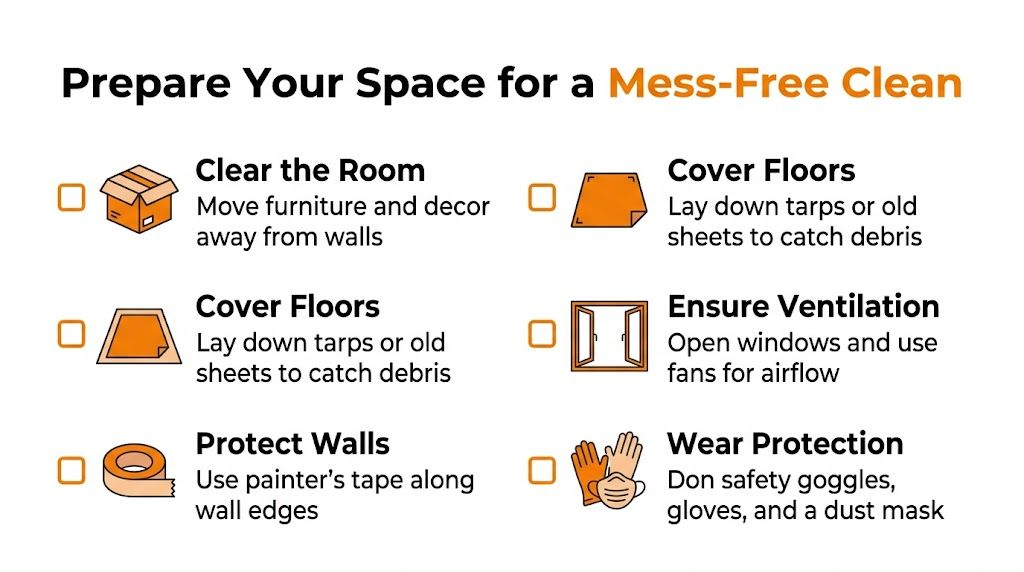
Use plastic, drop cloths, or old towels on the floor. In South Florida homes, fine sandy dust can act like grit underfoot, so catching it early helps you avoid tracking it into bedrooms and hallways.
A simple prep list works best:
- Cover floors first so falling dust and loose texture don't spread through the house.
- Protect furniture with sheets or plastic if moving it out isn't practical.
- Tape off wall edges if you're working near corners and want cleaner lines.
- Keep a trash bag nearby for cobwebs, used cloths, and any loose debris.
Set yourself up safely
Wear safety glasses. Ceiling debris falls straight down, and even a light dusting can irritate your eyes. A dust mask is also a smart call, especially in older homes or rooms that haven't been cleaned overhead in a while.
Give the room airflow if possible, but don't blast the ceiling with a strong fan while you're dusting. You want air moving out, not a swirl that redistributes dust onto vents, blinds, and bedding.
Here's a good visual checklist before you begin:
The best prep jobs feel a little excessive at first. Then you finish, pull up the floor covering, and realize you avoided turning one ceiling task into a full-house cleanup.
Start with Dry Methods for Dust and Cobwebs
This is the essential first step in how to clean textured ceiling surfaces safely. If you start wet, loose dust turns into paste, cobwebs smear, and the texture is more likely to break off.
The safest first pass
For textured ceilings such as popcorn, standard cleaning guidance recommends starting with dry, low-aggression tools like a soft-bristle brush, vacuum with a soft brush attachment, or a microfiber duster before any liquid cleaning. The same guidance notes that if stains remain, a mild warm water and dish soap solution should be applied gently rather than scrubbed because vigorous rubbing can damage the texture, according to this textured ceiling cleaning guide.
In practical terms, that means working slow and keeping pressure light. Go section by section. Let the tool do the lifting instead of pressing into the ceiling.
A good sequence looks like this:
- Start in the corners where cobwebs collect.
- Make overlapping passes across the ceiling.
- Work in one direction so you can see what you've already cleaned.
- Stop if you notice texture falling away easily.
Dry removal is usually the cleanest win. In a lot of homes, once the loose dust comes off, the ceiling already looks dramatically better.
Tools that work and tools that don't
A vacuum with a soft brush attachment is often the easiest option because it removes dust as you go. A long-handled microfiber duster also works well for light maintenance, especially in living rooms and bedrooms where the buildup is mostly surface dust.
Another dry option mentioned in cleaning guidance is a lint roller for lifting dust without adding moisture, paired with gentle spot-cleaning only when needed, as noted in this article on cleaning ceiling corners and textured surfaces.
What usually doesn't work well:
- Stiff brooms because they catch and knock texture loose
- Dripping cloths because moisture spreads dirt before the dust is removed
- Aggressive scrubbing pads because they flatten or strip the finish
- Disposable dusters with snaggy fibers if they pull on rough texture
If the room has a ceiling fan, clean that first or right after the ceiling pass so you don't re-drop dust across the room. For homeowners dealing with both at once, this guide on how to clean a ceiling fan without spreading dust pairs well with textured ceiling maintenance.
For routine upkeep, a light dry pass now and then is far easier than waiting until the ceiling looks gray. That's especially true in Palm Beach Gardens and Wellington homes where AC runs most of the year and keeps dust circulating upward.
Tackling Stains and Mildew Spots
Once the loose dust is gone, you can judge what is stained. In Palm Beach County, the most common problem spots are bathroom ceilings with light mildew speckling, kitchen ceilings with faint grease film, and water marks that show up after roof or AC drain issues.
A controlled spot-cleaning method
For popcorn and other textured ceilings, a practical stain workflow is to protect the floor with plastic or towels, test your solution in a hidden area, then dab with a barely damp sponge or paint roller instead of scrubbing. Guidance on this method stresses slow, controlled passes because aggressive pressure can dislodge the texture and create a bigger mess, as described in this popcorn ceiling stain-cleaning guide.
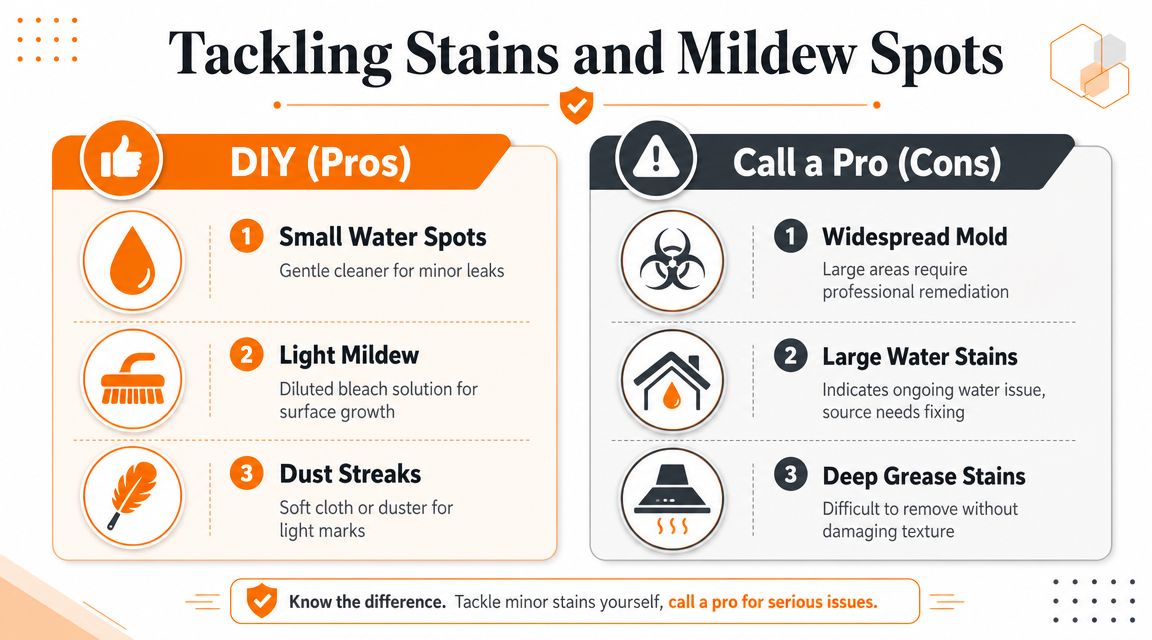
For small stains, use a mild solution of warm water plus dish soap and keep the sponge or microfiber cloth only lightly damp. Dab. Blot. Let it dry fully before deciding whether it needs another pass.
A few ground rules help:
- Test first in a closet corner, above a door, or another less-visible area.
- Use very little moisture because over-wetting is a common way people damage popcorn texture.
- Work the stain only instead of broad-wiping the whole ceiling.
- Pause between passes so you can see the true result after drying.
If the stain lightens but the texture stays intact, you're on the right track. If the ceiling starts softening or shedding, stop.
When a stain is more than a stain
Not every mark should be cleaned away and forgotten. A yellow or brown spot can point to an active leak. Reappearing dark specks in a bathroom often mean the ventilation problem hasn't been fixed, so the ceiling keeps getting fed moisture.
In local homes, this often lines up with what we see elsewhere in the same room. A bathroom ceiling with mildew usually isn't the only clue. The grout, caulk line, exhaust fan cover, and upper corners are often showing the same humidity stress. If that sounds familiar, this guide on how to clean bathroom grout in humid homes helps address the source areas around the room too.
One practical option, if you don't want to DIY the overhead work, is using a detailed home cleaning service that already handles ceiling-level dusting as part of a deeper reset. Sunset Shine Home Cleaning includes overhead dust removal in deep-cleaning routines where accessible ceiling buildup is part of the room condition.
For mildew, some instructional guidance mentions a bleach-and-water mix for certain smoke or mildew stains, but that's not the place to experiment heavily. If the area is spreading, keeps returning, or covers a larger section, the underlying problem may be moisture control rather than surface dirt.
When to Repair Repaint or Call a Professional
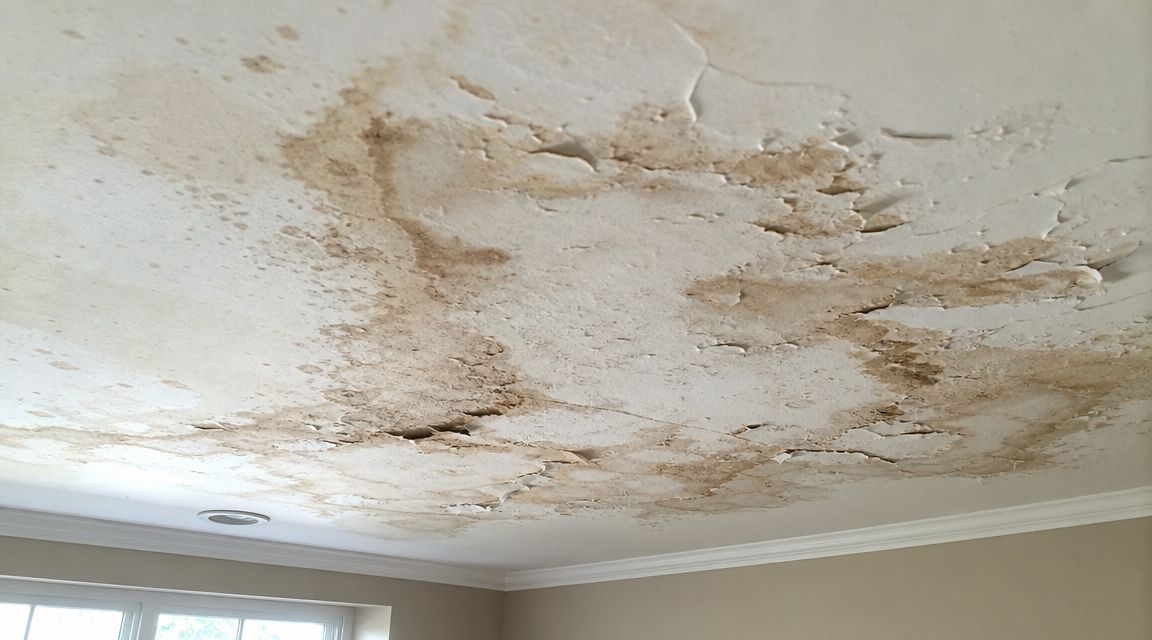
Some ceilings just need a gentle clean. Others are telling you the finish is failing, the stain is permanent, or the issue behind the stain is still active.
Good DIY candidates
DIY makes sense when the problem is limited and the ceiling is stable. Light dust, cobwebs, a small bathroom mildew spot, or one minor mark near an AC vent are all reasonable if the texture isn't flaking off at the slightest touch.
This also works best when you're not under pressure. If you're doing regular upkeep in your own home, you can clean slowly, let areas dry, and stop the moment something doesn't look right.
A quick decision guide helps:
| Situation | Best next move |
|---|---|
| Light dust and cobwebs | Dry clean gently |
| Small surface stain | Spot clean with a barely damp tool |
| Reappearing stain | Find and fix the moisture source |
| Soft, crumbling texture | Stop cleaning and assess damage |
When to stop and bring in help
Call a professional when the ceiling has broad staining, active water damage, repeated mildew, or fragile texture that breaks off easily. The same goes for older homes where disturbing the ceiling may be risky because ceilings installed before the late 1970s may contain asbestos and shouldn't be treated like a routine cleaning project.
This comes up often in Palm Beach County turnover situations. A renter in Royal Palm Beach may need a deposit-ready unit fast. An Airbnb host in West Palm Beach may notice ceiling spotting right before guest arrival. A homeowner in Boynton Beach may discover a water stain after a storm and not know whether it needs cleaning, sealing, or repair.
Some ceilings don't need more effort. They need a different fix.
If you're comparing whether to keep trying or hand it off, the trade-off is risk. A careful cleaning can help appearance. A bad cleaning can leave bare patches, streaks, and extra cleanup below. When the ceiling already looks compromised, repainting or repair is usually the better path after the source problem is handled.
If your ceiling looks dingy, spotted, or too fragile to tackle on your own, Sunset Shine Home Cleaning can help with detailed overhead dusting and deep-clean support across West Palm Beach, Palm Beach Gardens, Jupiter, Boca Raton, Wellington, and the rest of Palm Beach County. Call 561-408-4020 or book online to get a cleaner home without turning a ceiling job into a bigger mess.