
A chocolate bar melts into a cream sectional during a child's birthday party, and a quick wipe can turn a small mark into a wide, greasy smear. If you're searching for how to clean chocolate from upholstery, start with the fabric code, not the cleaning product. Palm Beach County homes deal with heat, humidity, sandy feet, and heavily used family-room furniture, so the right method matters.
Sunset Shine Home Cleaning helps homeowners, renters, Airbnb hosts, and property managers with upholstery-related cleaning, deep cleaning, move-out preparation, and guest-ready turnovers across West Palm Beach, Palm Beach Gardens, Jupiter, Juno Beach, North Palm Beach, Riviera Beach, Royal Palm Beach, Lake Worth, Boynton Beach, Delray Beach, Boca Raton, Wellington, Westlake, Loxahatchee, Loxahatchee Groves, and The Acreage. The immediate goal may be a spotless sofa before guests arrive, a deposit-ready apartment, or a clean sectional after a busy family gathering.
Table of Contents
- Why the Cleaning Code on Your Sofa Matters Most
- First Moves That Work on Every Upholstery Type
- Matching the Method to Microfiber, Leather, and Synthetics
- The Dish Soap and Oxygen Bleach Recipe That Actually Lifts Chocolate
- When the Stain Won't Budge, Troubleshooting Dried and Set-In Chocolate
- Drying, Odor Control, and Restoring the Fabric
- When to Stop and Call a Professional in Palm Beach County
Why the Cleaning Code on Your Sofa Matters Most
A Weston family-room sectional once came in with a half-melted chocolate bar pressed into a cream cushion after a child's birthday party. The stain looked manageable, but the first question wasn't which soap to use. It was what cleaning code was on the manufacturer's tag.
Look under the seat cushion or on the platform beneath it. You'll typically find one of these codes:
- W: Water-based cleaning is permitted.
- S: Use solvent-based cleaning only. Water can damage the upholstery.
- W/S or WS: Water or solvent methods may be suitable.
- X: Home cleaning products should be avoided, and professional care is the safer route.
An S-coded silk-blend or viscose sofa can develop water rings, distorted fibers, dye bleed, or shrinkage when treated with a wet cloth. That's why the label dictates the entire cleaning approach. A product that works on a polyester cushion can permanently mark a delicate blend.
Practical rule: Find the code before any liquid, solvent, steam, or oxygen product touches the visible stain.
If you've got children, pets, or frequent guests, removable protection can also reduce repeat accidents. Meliusly's guide to install clear couch protectors offers a practical prevention option for high-use seating.
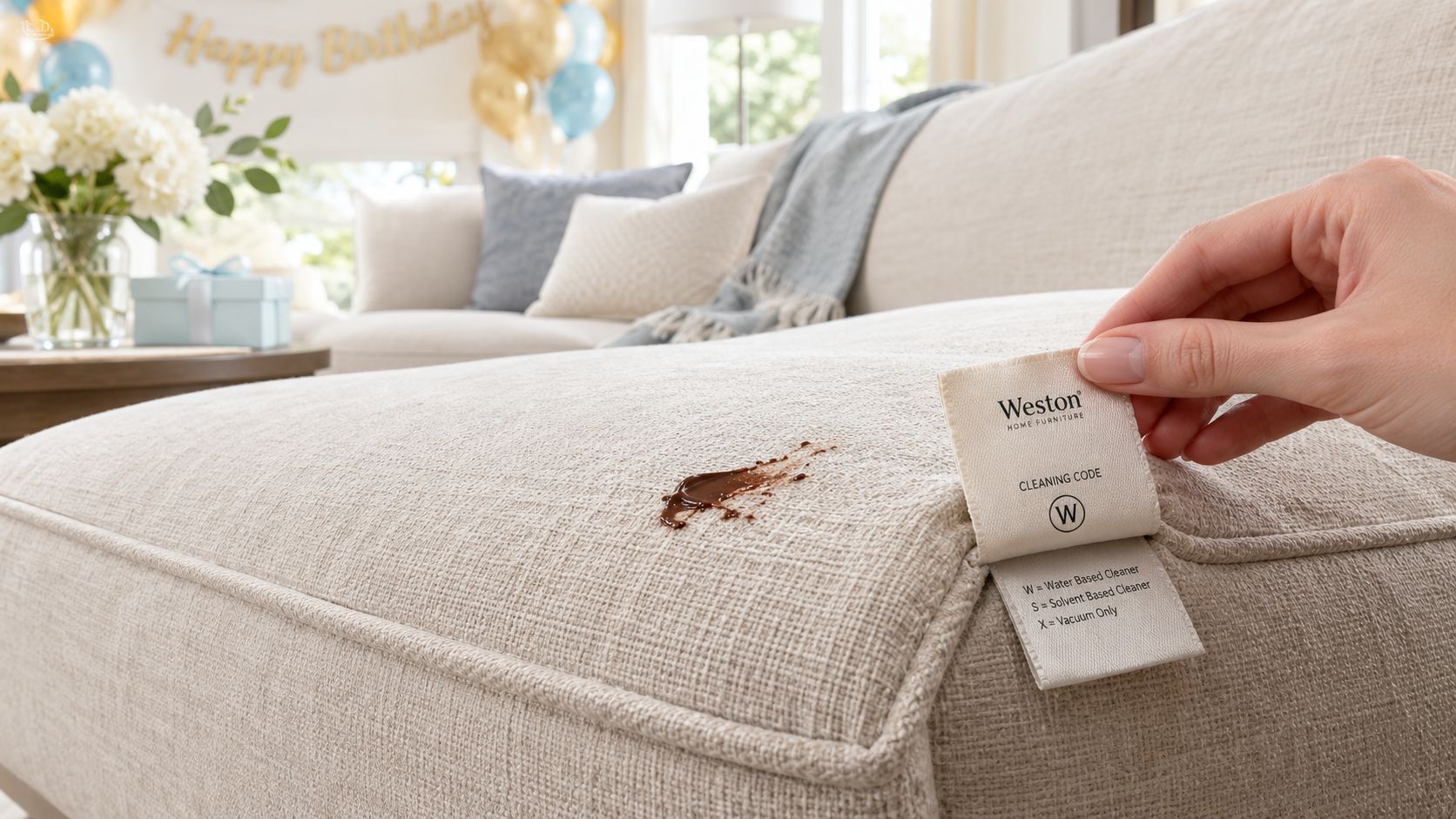
The code check is what prevents a manageable spot from becoming a costly upholstery repair. Treat the tag as the starting point, not a detail to review afterward.
First Moves That Work on Every Upholstery Type
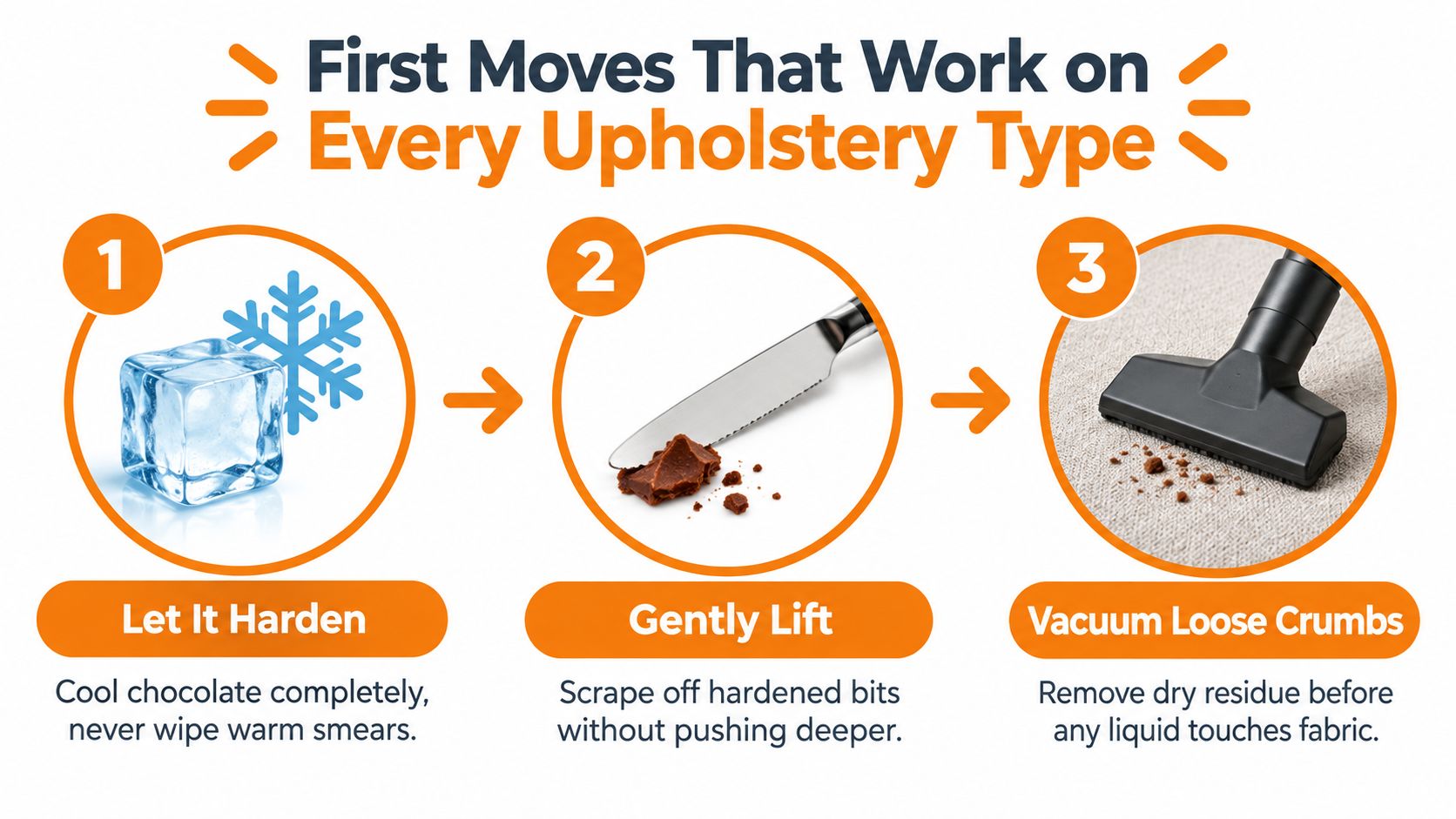
Warm chocolate is the worst version to clean. Wiping it immediately presses softened cocoa solids and fats farther into the weave, especially on pale fabric where every smear shows under South Florida daylight.
Let the chocolate cool and harden first. If it's still soft, place a cold pack or ice inside a plastic barrier over the area briefly. Keep moisture away from the upholstery while you're hardening the residue.
Lift before you blot
Use a dull butter knife, spoon edge, or plastic scraper. Hold the tool nearly flat and lift the chocolate gently rather than pushing down. Work toward the center so you don't enlarge the mark or crush the fabric pile.
After removing the solid pieces, vacuum loose crumbs with a soft brush attachment. Don't drag a hard nozzle across delicate fabric or leather. Dry residue should leave before any damp cloth arrives.
Blot from the outside inward
Use a clean white microfiber cloth and press, lift, and rotate to a clean section. Never scrub. Rubbing spreads pigment, embeds cocoa butter, and can roughen or distort the fibers.
These first moves buy you time and reduce the amount of material that needs treatment. For broader upholstery-care context, Lewis and Sheron Textiles provides 2026 upholstery cleaning advice.
Matching the Method to Microfiber, Leather, and Synthetics
Different upholstery materials respond differently, even when their colors look similar. Microfiber, leather, polyester, olefin, acrylic, rayon, and silk blends shouldn't be treated as one category.
Microfiber often tolerates controlled moisture, but check the code first. Use a barely damp cloth, keep the area small, and restore the nap with a soft brush once dry. Our guide to cleaning a microfiber couch covers that fabric's texture-specific concerns.
Leather needs a separate path. Avoid casual water treatment and oily household products. Use a dedicated leather cleaner or suitable saddle soap according to the manufacturer's care guidance, then condition the surface lightly after cleaning so it doesn't feel dry.
Synthetic upholstery usually gives you more flexibility, but the blend still matters. Polyester, olefin, and acrylic commonly tolerate a controlled water-based method when marked W or WS. Rayon or silk in the blend can change the decision completely, particularly when the tag carries an S code.
| Fabric Type | Safe Cleaner | Avoid | Post-Clean Care |
|---|---|---|---|
| Microfiber | Code-approved, lightly damp method | Heavy saturation and aggressive brushing | Restore the nap with a soft brush |
| Leather | Dedicated leather cleaner or suitable saddle soap | Water-heavy cleaning and oily products | Apply compatible conditioner |
| Polyester, olefin, or acrylic | Mild water-based solution when code allows | Hot water, soaking, and scrubbing | Blot dry and air-dry fully |
| Rayon or silk blend | Solvent method when marked S | Unchecked water treatment | Leave delicate finishes to a professional when uncertain |
The safest cleaner is the one compatible with both the material and the code. If either is unclear, stop before testing the visible cushion.
The Dish Soap and Oxygen Bleach Recipe That Actually Lifts Chocolate
For water-safe upholstery, use a mild solution, limited moisture, and repeated blotting. Consumer upholstery guidance commonly uses one tablespoon of liquid dish soap mixed with two cups of cool water for chocolate stains (The Spruce). Another upholstery-specific method describes a similarly controlled approach, including rinsing by blotting and drying with a towel (COIT's upholstery chocolate-stain guidance).
Mix the solution in a clean bowl. Dip a white microfiber cloth, wring it until damp rather than wet, and work from the outer edge toward the center. Use overlapping passes, changing to a clean part of the cloth as chocolate transfers.
Keep the cushion from getting soaked
Apply the solution to the cloth, not directly to the sofa. Excess liquid can reach the cushion pad, leave rings, or change the fabric's texture. After the soap pass, blot with a separate cloth dampened with cool water to remove residue, then press with a dry towel.
For older or heavier marks, one follow-up recommendation uses one tablespoon of powdered oxygen bleach in one cup of warm water, followed by blotting and full air-drying (The Spruce's upholstery guidance). Use this only when the fabric code and manufacturer's instructions permit it, and make a fresh mixture rather than storing leftovers.
| Step | Solution | Ratio | Dwell Time |
|---|---|---|---|
| Lift residue | Cool water and liquid dish soap | One tablespoon soap to two cups water | Short, controlled blotting passes |
| Remove soap | Cool water on a clean cloth | Lightly damp, never saturated | Blot until residue is reduced |
| Follow-up | Powdered oxygen bleach and warm water | One tablespoon to one cup water | Follow the product directions and monitor closely |
For additional guidance on safe home stain solutions, compare the product instructions with your upholstery code before proceeding.
When the Stain Won't Budge, Troubleshooting Dried and Set-In Chocolate
A stain that remains after drying isn't always a sign that you need more pressure. It may mean the chocolate's oily portion has moved deeper, the pigment has bonded with the fiber, or the first treatment left a ring around the original spot.
Dried chocolate should be re-hardened and lifted again before another cleaning pass. If the surface feels raised or crusty, residue is still sitting on top. If the fabric looks evenly discolored with no raised material, the remaining pigment may have penetrated the fiber.
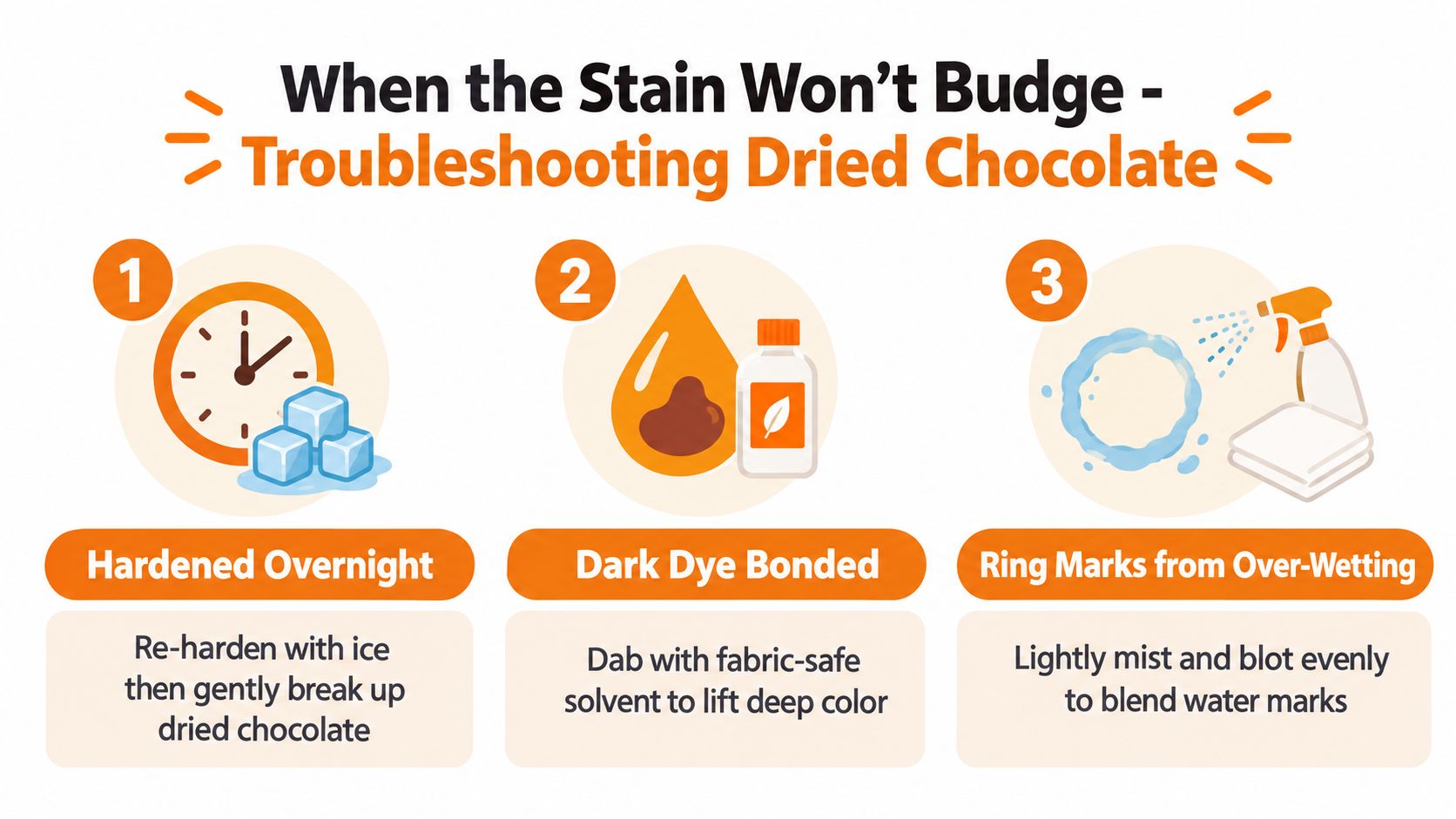
Three stubborn problems
- Hardened overnight: Break up the dry residue gently, vacuum the crumbs, then repeat the code-approved method.
- Dark dye bonded to fabric: A compatible solvent may be necessary, but test it on a hidden seam first. Never improvise on silk, viscose, or an unknown blend.
- Ring marks from over-wetting: Don't keep adding soap to the center. Light, even blotting around the affected area may be needed to blend the moisture boundary.
A solvent-only sofa may require a small amount of dry-cleaning fluid applied to a white cloth rather than water. Water-safe upholstery may need a fresh oxygen-bleach follow-up when soap alone hasn't lifted the residual color. Every added pass increases moisture and chemical risk, so the fabric should be dry and inspected before you repeat anything.
Don't use hydrogen peroxide casually. It can change color, so any spot treatment must be tested in a concealed area first. If a ring deepens after each re-wetting, further home treatment is likely causing more harm than the original chocolate. See our guide on baking soda for couch stains before using powders or household remedies.
Drying, Odor Control, and Restoring the Fabric
The cleaning isn't finished when the brown mark disappears. A damp cushion can wick residue back toward the surface as it dries, leaving a faint outline that wasn't visible during treatment.
Press the area with a dry microfiber towel. Use airflow from a fan or open windows when conditions allow, but don't place the sofa against a heater or use concentrated heat. South Florida humidity can slow drying, especially in closed rooms with the AC running and little air movement.
Finish according to the material
Microfiber often needs its nap reset. Once the fabric is fully dry, use a soft-bristle brush in the original direction. Brush gently, because force can create a new texture difference that looks like another stain.
Leather requires compatible finishing care after cleaning. A thin layer of pH-balanced conditioner can help maintain the surface, but only use a product approved for that leather finish. Avoid adding conditioner to fabric upholstery.
Chocolate can leave odor even after the visible residue is gone. A light sprinkle of baking soda can absorb residual smell before you vacuum it thoroughly later. Keep powder out of seams and mechanical parts, and don't use it as a substitute for removing the greasy residue.
Check the cushion in bright, indirect light after it dries. Wicking often appears as a soft-edged outline rather than a new central spot.
When to Stop and Call a Professional in Palm Beach County
DIY treatment has reached its limit when chocolate has soaked through to the padding, household solvent begins lifting color from light leather, or the sofa is velvet, silk-blend, or marked X. Recurring odor after repeated drying, and ring marks that deepen with each re-wetting, are also clear stop signs.
A professional can choose controlled methods based on the fabric and soil. Depending on the upholstery, that may include hot-water extraction, enzyme pre-soaks, or controlled solvent work. Those methods require extraction equipment, moisture control, and a way to evaluate how the backing and cushion respond.
Palm Beach County conditions raise the stakes. High humidity slows drying, south-facing lanais expose oily stains to strong sun, and coastal homes can collect salt air and sand on furniture surfaces. Condo and HOA residents may also need a scheduled visit that fits building access rules rather than an open-ended DIY project.
Sunset Shine Home Cleaning provides professional stain removal service alongside deep cleaning, move-in and move-out work, Airbnb turnover cleaning, and property-management maintenance. Recurring upholstery attention can fit quarterly deep-clean routines in Boca Raton, Wellington, or Jupiter, especially where children, pets, vacation guests, or frequent showings keep sofas in constant use.
The cheaper decision is often to stop before the fabric finish fails. A professional visit can protect the cushion from replacement when the alternative is a much larger furniture repair.
For chocolate-stained sofas in Palm Beach County, Sunset Shine Home Cleaning can help identify the right treatment path and handle the surrounding deep-clean work, from dusty vents and window sills to sand-tracked floors and high-touch surfaces. Visit Sunset Shine Home Cleaning or call 561-408-4020 to request a quote and schedule service in West Palm Beach, Palm Beach Gardens, Jupiter, Boca Raton, Wellington, and nearby communities.