
A true eco friendly floor cleaner must balance effective soil removal with low VOC content, especially in humid Palm Beach County homes where indoor air quality matters. Professional concentrates can also clean daily soils at a 0.2% to 1% dilution, or 2 to 10 mL per liter of water, when the product is designed for that use.
You may be comparing products before a move-out inspection, an Airbnb turnover, or a recurring cleaning visit. The right choice should leave floors clean without adding a heavy fragrance, sticky residue, or unnecessary chemical exposure to an occupied South Florida home.
Sunset Shine Home Cleaning provides floor care and full-home cleaning across West Palm Beach, Palm Beach Gardens, Jupiter, Juno Beach, North Palm Beach, Riviera Beach, Royal Palm Beach, Lake Worth, Boynton Beach, Delray Beach, Boca Raton, Wellington, Westlake, Loxahatchee, Loxahatchee Groves, and The Acreage. The service fits homeowners, renters, Airbnb hosts, landlords, and property managers who need spotless, guest-ready, deposit-ready, or move-in-ready spaces.
Table of Contents
- Understanding Eco-Friendly Floor Cleaners in Palm Beach Homes
- Ingredients to Seek and Avoid for Healthy Floors
- Compatibility with Local Flooring Types
- Professional Formulas Versus DIY Recipes
- Certifications That Actually Matter
- Why Choose Sunset Shine for Your Home
Understanding Eco-Friendly Floor Cleaners in Palm Beach Homes
A Palm Beach County floor deals with more than ordinary household dust. Beach sand enters through sliders and front doors, salt air settles on coastal fixtures, tropical pollen collects on window sills, and high humidity keeps bathroom grout and entryway soil damp longer than many homeowners expect.
That makes an eco friendly floor cleaner a practical maintenance choice, not just a label on a bottle. A formula that rinses clean can help prevent the tacky film that catches sand and footprints. Harsh or poorly diluted products may leave floors looking glossy for a short time while creating residue that becomes more noticeable under Palm Beach sunlight.
Federal purchasing policy began pushing agencies toward products with reduced effects on human health and the environment in 1993, the EPA launched its Environmentally Preferable Purchasing program by 1995, and federal procurement rules were amended in 1997 to support greener products and services, as documented by the EPA's greener-products guidance.
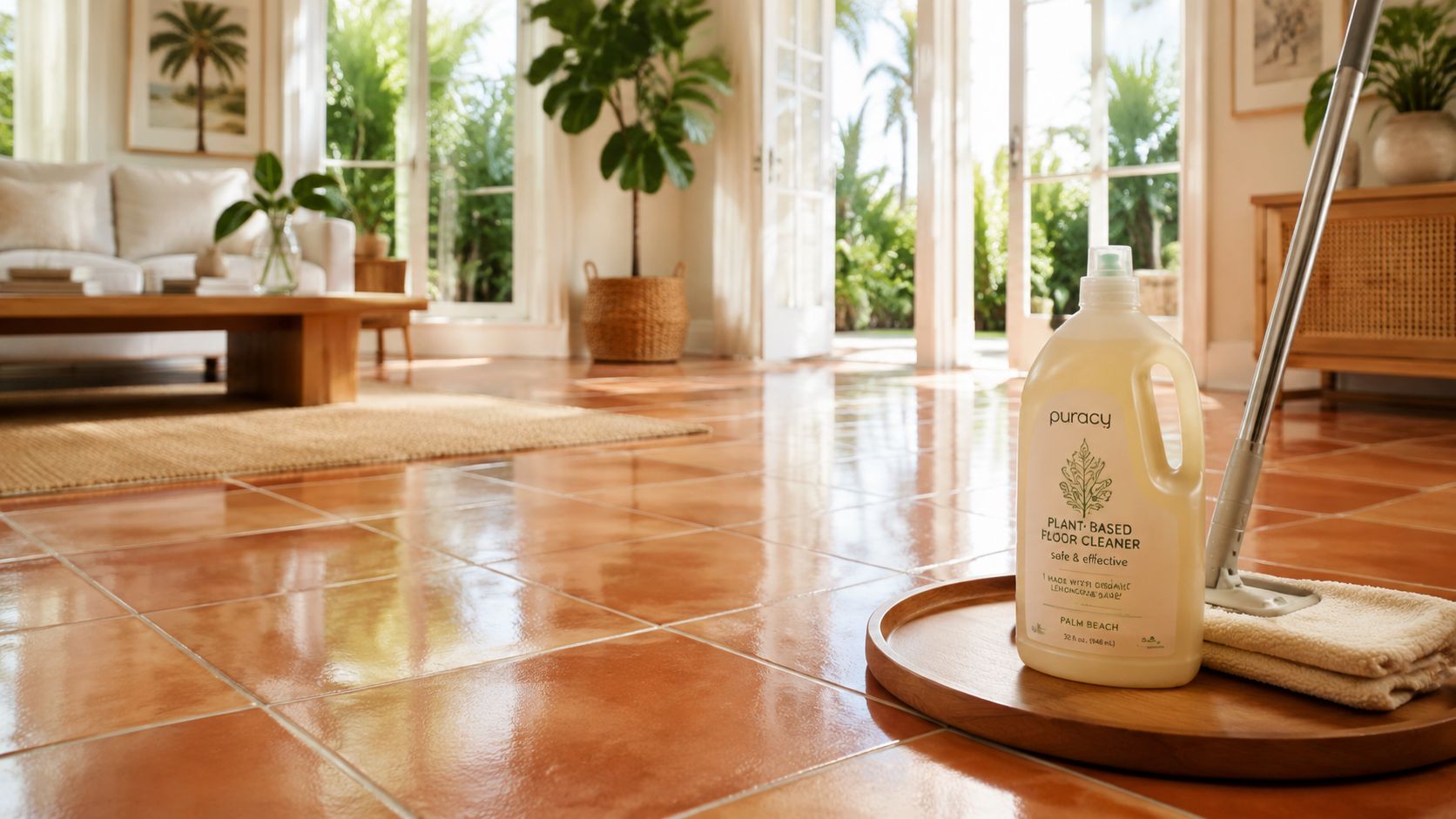
Why residue matters locally
On tile floors near a beach entrance, a thin film can hold fine sand and make the surface feel dirty again soon after mopping. In an air-conditioned condo, fragrance and VOC content also deserve attention because the home may remain closed while the floor dries.
The green-cleaning market reflects a wider shift toward products positioned as safer for families, pets, workplaces, and the environment. One industry estimate values the global market at USD 2.4 billion in 2024 and projects USD 13.5 billion by 2034, with floor cleaners identified as a major category in that market (Prophecy Market Insights).
For broader household ideas, these eco cleaning tips from Simply Hospitality can help you reduce product waste and simplify daily care.
Ingredients to Seek and Avoid for Healthy Floors
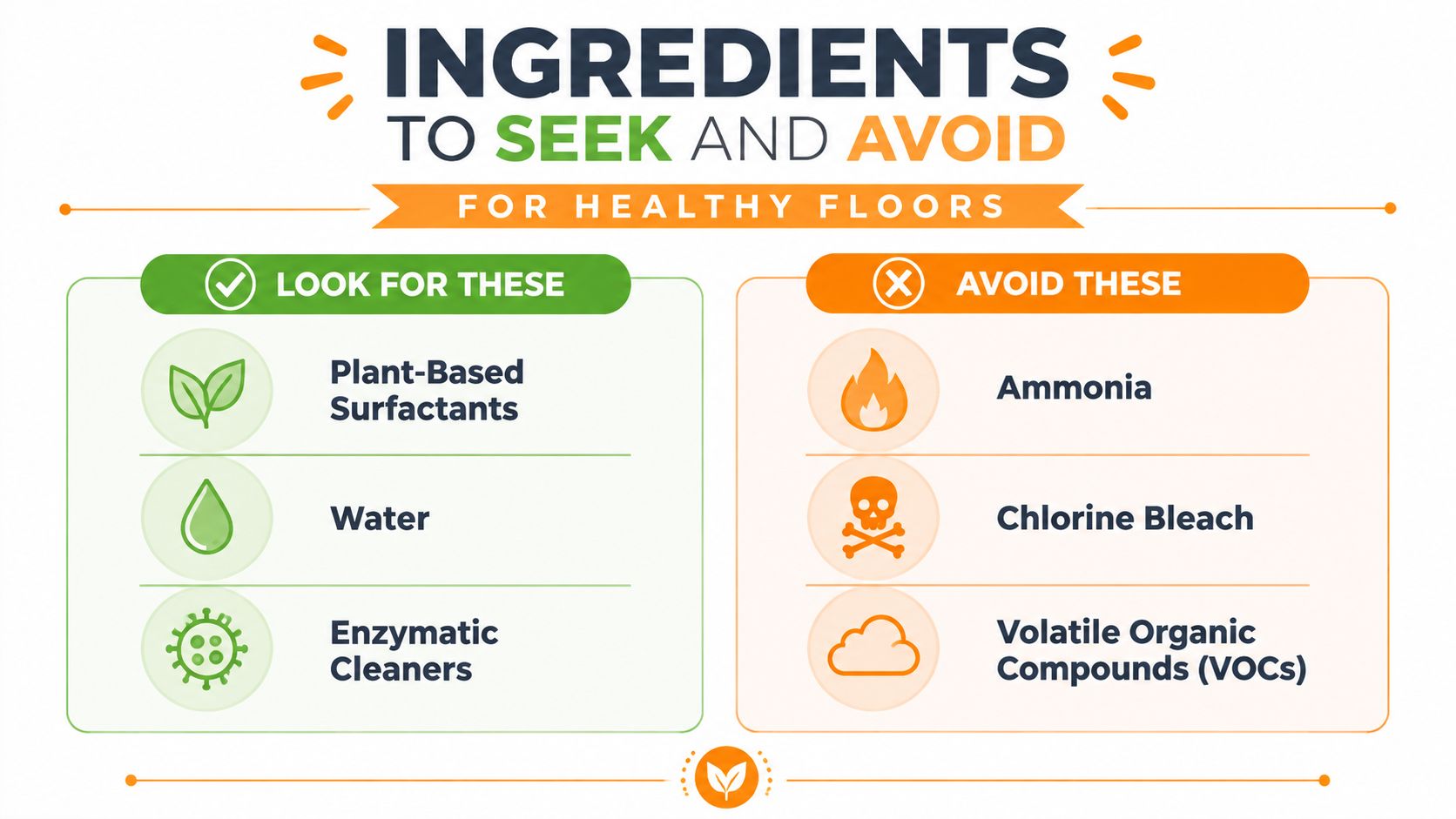
“Plant-based” and “natural” don't automatically mean low-emission. A scented product can still release compounds into indoor air, and a cleaner marketed as green may not provide the ingredient review found in a third-party certification.
Research discussed by The New LeDe found nearly 200 hazardous VOCs across common household cleaning products, while products labeled green or fragrance-free were less likely to contain VOCs (The New LeDe's cleaning-product review). For homes with children, pets, or asthma concerns, fragrance-free is often a more useful starting point than a vague “non-toxic” claim.
What to look for on the label
- Low VOC or fragrance-free language: This is particularly helpful in sealed homes where AC runs much of the year.
- Biodegradable surfactants: Capryl/caprylyl glucoside is one example used in an ingredient disclosure for an eco-friendly floor detergent.
- Milder builders: Tetrasodium glutamate diacetate can support soil removal without relying on conventional phosphate-heavy systems.
- Transparent ingredients: Water, plant-derived glucosides, mild acids, and suitable preservation systems are easier to evaluate than undisclosed fragrance blends.
- Third-party certification: EPA Safer Choice reviews ingredients as well as product performance, unlike many self-declared environmental claims.
An ingredient review of a Safer Choice floor cleaner lists water, alcohol denat., caprylyl/myristyl glucoside, potassium sorbate, acetic acid, and gluconic acid (ECOS Safer Choice products). Essential oils can add scent, but they aren't automatically safer for every occupant or pet. If you're considering tea tree oil, review this tea tree oil cleaning guide before adding it to a homemade mixture.
For a practical buying checklist, see Sunset Shine's guide to low VOC cleaning products.
Compatibility with Local Flooring Types
An eco label doesn't make one formula safe for every floor. Sealed hardwood, ceramic tile, laminate, and vinyl each respond differently to moisture, acidity, alkalinity, and residue.
Sealed hardwood and laminate
Use a lightly damp microfiber mop, never a soaking one. A neutral-pH product is the safer routine choice for glossy finishes and sealed wood. Product documentation describes a concentrate around pH 8.0 to 8.5 that dilutes to about pH 7.5 to 8.0, and states that its neutral-pH formulation won't harm floor finishes (Envirox neutral floor cleaner documentation).
That mildly alkaline range may suit routine maintenance, but always follow the flooring manufacturer's instructions. Fine sand can scratch finishes, so vacuum or dry-mop before using liquid cleaner. This matters in beach homes where sand collects beneath furniture and along sliding-door tracks.
Ceramic tile and grout
Tile usually tolerates more cleaning variation than sealed wood, but grout lines collect soap residue, pollen, and damp soil. A low-foaming cleaner helps prevent extra rinse work, while excessive product can leave grout looking dull or sticky.
For bathroom floors, cleaning the grout is separate from treating active mold or mildew. A floor cleaner can remove soil, but it isn't a substitute for correcting leaks, poor ventilation, or persistent moisture.
Vinyl and resilient floors
Use a damp mop and a product approved for resilient flooring. Avoid oil-based formulas that can create a slippery surface, and don't assume a strongly alkaline cleaner is suitable just because it is labeled plant-based.
Floor-care rule: Remove sand first, use the least product that gets the job done, and test an unfamiliar formula in a hidden area.
Professional Formulas Versus DIY Recipes
DIY vinegar mixtures can be useful for limited light cleaning, but they aren't a universal answer for Palm Beach floors. Vinegar is acidic, essential oils add fragrance without proving low VOC emissions, and too much liquid is risky around wood seams and laminate edges.
Professional concentrates solve a different problem. Low-foaming formulas can work for manual mopping and machine cleaning, and one cited EU Ecolabel product specifies a maintenance dilution of 0.2% to 1%, equal to 2 to 10 mL per liter of water (Kärcher FloorPro eco product details). Concentration means less ready-to-use liquid to ship and store, with less packaging and lower residue risk when mixed correctly.
| Feature | DIY Vinegar-Based | Professional Concentrate |
|---|---|---|
| Best use | Light, occasional soil | Routine maintenance and larger floor areas |
| Main concern | Acidity, scent, overuse | Correct dilution and surface compatibility |
| Foam control | Inconsistent | Often designed for low foaming |
| Palm Beach fit | Small touch-ups | Sand, tracked mud, and recurring service |
| Floor protection | Requires careful testing | Follow label and manufacturer guidance |
| Waste profile | Small-batch ingredients | Concentrated product reduces ready-to-use volume |
In a West Palm Beach move-out clean, the challenge is often not one dramatic stain. It's sand in corners, sticky kitchen residue, soap film near bathroom fixtures, and baseboard dust that becomes obvious during a landlord walkthrough. A measured professional formula paired with vacuuming and a damp microfiber mop is more dependable than repeatedly adding vinegar until the floor feels clean.
Sunset Shine Home Cleaning uses non-toxic, eco-friendly products on its cleaning jobs, with floor methods adjusted for the surface and condition. DIY works for an informed homeowner maintaining a lightly soiled room. It doesn't replace a checklist-based deep clean, post-construction cleanup, or tight Airbnb turnover.
Certifications That Actually Matter
In Palm Beach homes, a “green” label does not automatically mean clean indoor air. Fragrance, volatile ingredients, and residue can remain noticeable in a closed, air-conditioned room, especially after a damp mop dries slowly in South Florida humidity. Certification gives homeowners a more reliable starting point than a green leaf printed on packaging.
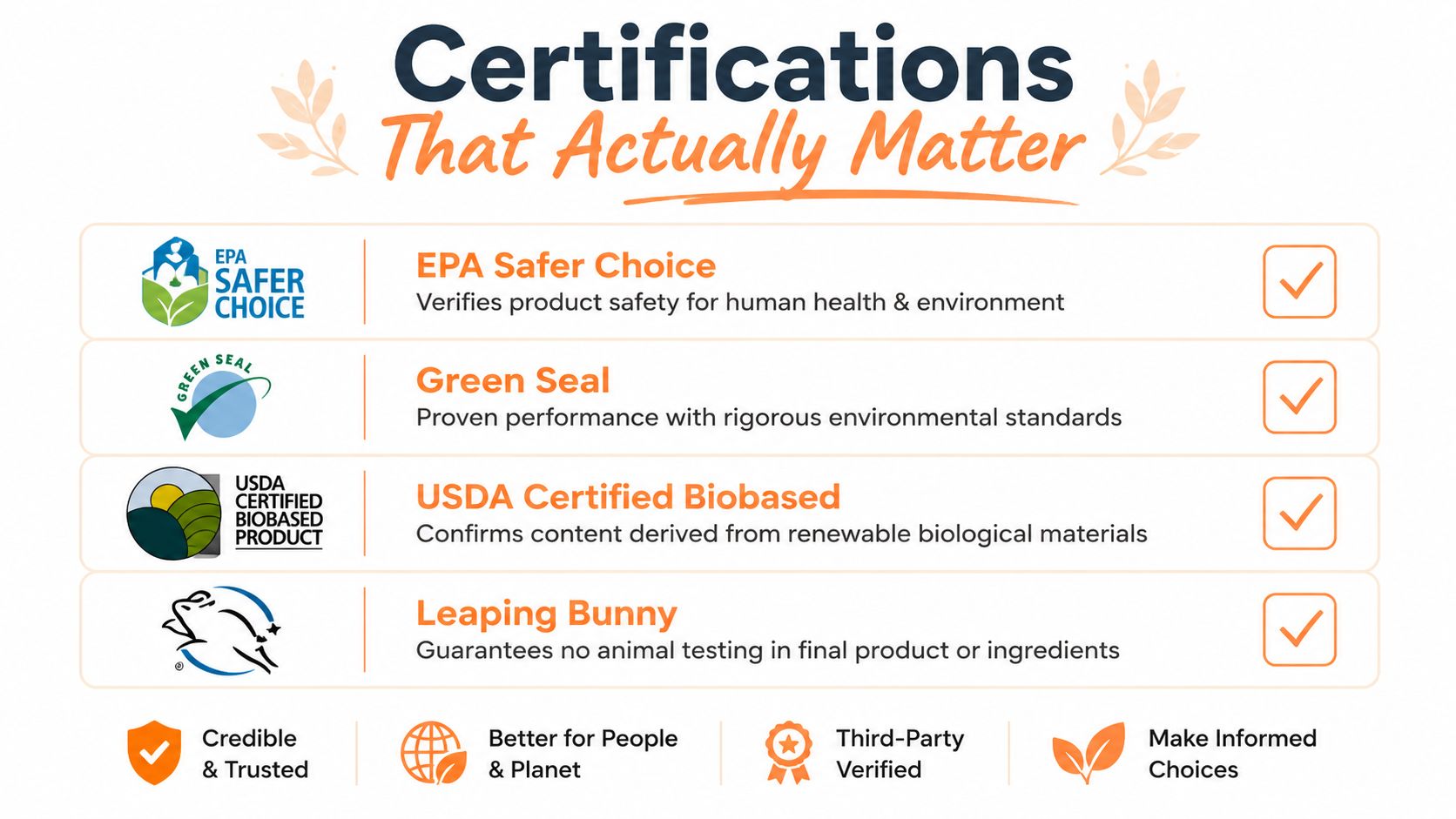
The EPA's Safer Choice program identifies products that perform while using ingredients reviewed by the agency for safer human health and environmental characteristics (EPA Safer Choice). The EPA directory lets shoppers filter certified products by properties such as fragrance free and outdoor use (Safer Choice product search). Those filters help when selecting a cleaner for a nursery, pet area, condo, or occupied rental where lingering scent can affect comfort.
How we apply the standard
During West Palm Beach move-out cleans, bathrooms may look presentable while grout lines, fixture edges, and baseboards hold soap scum and moisture-related buildup. A low-odor certified product can reduce unnecessary exposure, but ventilation, dilution, and drying time still matter.
We remove beach sand before mopping, control moisture on sealed floors, and separate floor cleaning from mold remediation when mildew has penetrated grout or caulk. Certification supports ingredient confidence. Surface judgment determines whether the floor dries cleanly without a sticky film.
Look for EPA Safer Choice, Green Seal, USDA Certified Biobased, and Leaping Bunny labels, then verify the specific product. Sunset Shine explains green cleaning certification for comparing product claims for homeowners who want a clearer standard.
Why Choose Sunset Shine for Your Home
Palm Beach homes need a cleaning plan built around local conditions. A Jupiter beach rental may need sand removal and a fast guest-ready reset, while a Royal Palm Beach family home may need recurring floor care, pet-hair attention, and AC vent dust removal.
Sunset Shine Home Cleaning offers recurring standard cleaning, deep cleaning, move-in and move-out cleaning, post-construction cleanup, Airbnb and vacation rental turnover, and property-management service. The team brings supplies, follows a checklist, and can address kitchens, bathrooms, floors, baseboards, mirrors, fixtures, window sills, and high-touch areas.
What's included
- Core cleaning: Bathrooms, kitchen degreasing, floors, baseboards, dust removal, mirrors, sinks, counters, fixtures, cabinet exteriors, window sills, and high-touch disinfecting.
- Useful add-ons: Inside the oven, refrigerator, cabinets, wall spot cleaning, pet-hair focus areas, and interior windows.
- Specialized visits: Post-construction service for drywall dust, grout haze, adhesive residue, and debris, plus property-management checklists and maintenance issue flagging.
South Florida humidity shows up in grout lines and bathroom ceilings faster than many homeowners expect. Rainy-season mud at entryways, salt air on coastal fixtures, and tight Airbnb turnover windows all reward a cleaner who knows the property rather than treating every floor the same.
Pricing depends on bedrooms, bathrooms, square footage, condition, and add-ons. Most clients request a custom estimate.
Micro-FAQ
How long does a clean take? It depends on the home's size, condition, floor types, and requested add-ons.
Are supplies included? Yes, cleaners arrive with their own supplies.
Can you clean during rainy season? Yes. Entryway mud and tracked moisture are handled as part of the floor-care plan.
What about pets? Request pet-hair focus areas when booking, and mention any fragrance sensitivities.
Book Sunset Shine Home Cleaning for recurring, deep, move-in and move-out, post-construction, or Airbnb cleaning across Palm Beach County. Call 561-408-4020 to request a custom estimate and have your floors cleaned with a low-residue approach suited to humidity, sand, pets, and your specific flooring.