You've got a crawling toddler, a curious cat, or an Airbnb guest arriving before sunset, and the cleaning cabinet is full of products that all claim to be “safe.” In Palm Beach County, that decision gets harder because humidity keeps bathroom residue damp, year-round AC moves dust through the home, and beach sand carries whatever is on the floor back onto little hands.
For families, renters, landlords, and vacation-rental hosts, child safe cleaning products should reduce exposure without leaving mildew, sunscreen film, pet hair, or greasy kitchen buildup behind. Here's the practical standard I'd use in a West Palm Beach home, condo, townhouse, or coastal vacation property.
Table of Contents
- What Child Safe Cleaning Products Actually Mean for Families
- The Cleaning Products That Pose the Most Risk to Young Children
- Reading Labels and Trusting Certifications the Right Way
- Safer Cleaning Routines for Palm Beach County Homes
- Simple DIY Recipes and Smart Storage Habits
- What to Do if a Child Is Exposed to a Cleaning Product
- How Sunset Shine Home Cleaning Delivers Child Safe Service
What Child Safe Cleaning Products Actually Mean for Families
Child safe cleaning products aren't edible, scent-free by default, or completely inert. They're products selected and stored to reduce three separate problems: poisoning from a single exposure, irritation from repeated low-level contact, and residue left on surfaces children touch, crawl across, or put in their mouths.
That matters in South Florida. Humid air can keep residue wet on tile, grout, tub edges, and countertops. AC systems cycle indoor air year-round, while sand from Palm Beach beaches gets tracked across floors and into play areas.
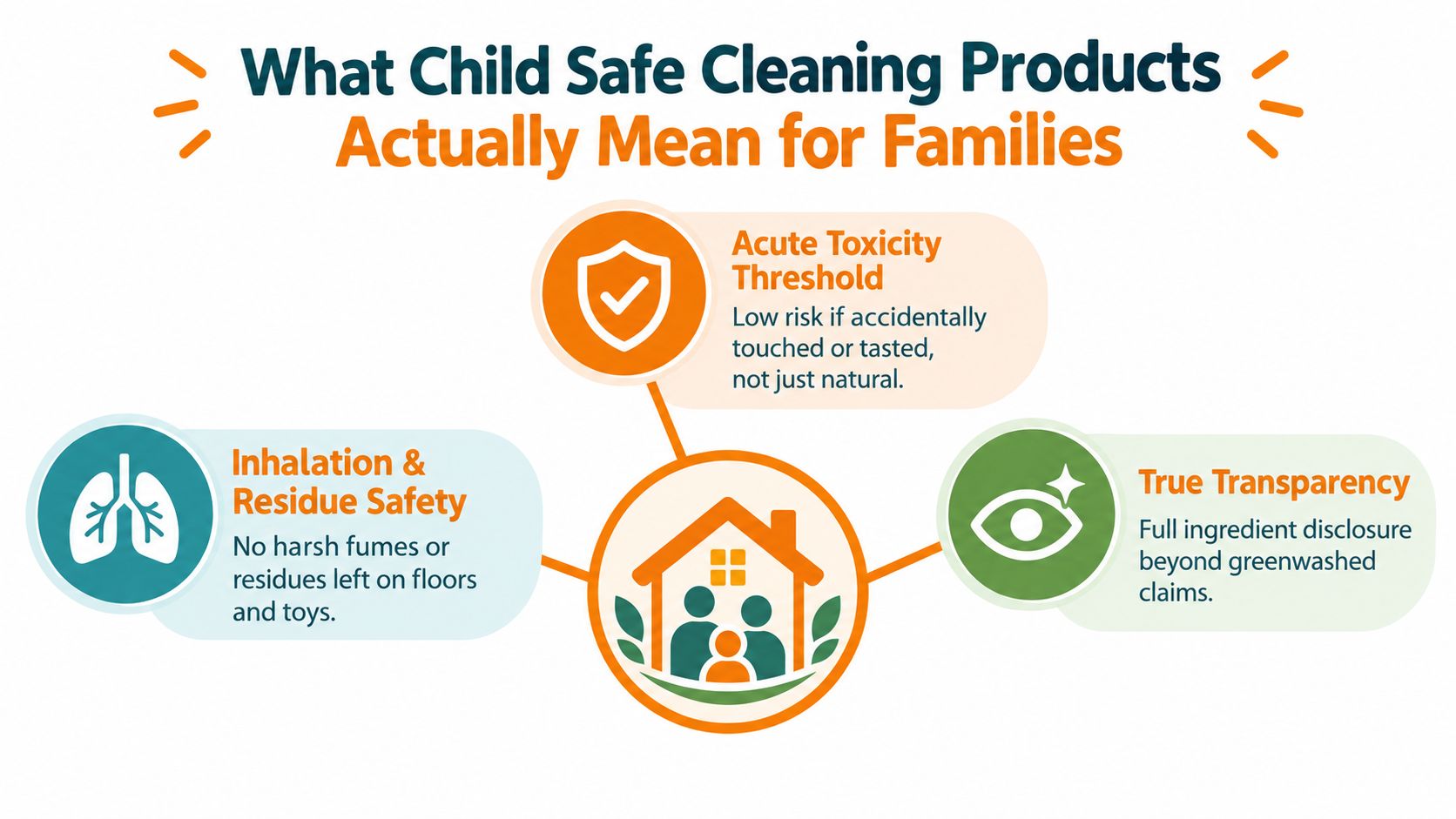
The three safety checks I use
- Acute toxicity: Avoid products that can cause serious harm from a taste, splash, or short inhalation. Concentrated pods, drain openers, and oven cleaners deserve the strictest controls.
- Chronic exposure: Developing lungs and skin can be more sensitive to repeated fumes, aerosols, and residues. A review of early childhood facilities found cleaning and personal-care products produced the highest indoor VOC concentrations, with some exposures exceeding California Safe Harbor cancer levels in every facility tested. Read the facility VOC review.
- Residue behavior: A cleaner that leaves a strong film on floors or toy surfaces isn't my choice for a crawling child or a pet that licks its paws.
“Natural,” “plant-based,” “green,” and “gentle” aren't safety certifications. I prefer full ingredient disclosure and a recognized standard. The EPA says children are more sensitive to chemicals and cleaning supplies than adults, and its Safer Choice program evaluates safer ingredients, performance, packaging, and disclosure. Families comparing disinfectant wipes can also use these VirusFAQ.com prevention resources to think through when disinfecting is necessary instead of spraying every surface by habit.
The Cleaning Products That Pose the Most Risk to Young Children
Not every bottle under the sink carries the same danger. The highest priority is keeping concentrated, caustic, or visually appealing products locked away, especially in homes where grandparents visit, vacation-rental cabinets get opened during turnovers, or post-storm cleanup happens in closed rooms.
In 2023, household cleaning products represented 10.1% of poison exposures among U.S. children age 5 and younger. During January through March 2020, poison-center data recorded 45,550 cleaner and disinfectant exposure calls, with cleaner exposures up 20.4% and disinfectant exposures up 16.4% from the same period in 2019. Review the CDC analysis.
Cleaning Product Risk Tiers for Young Children
| Product Category | Risk Tier | Primary Hazard | Typical Injury | Florida-Specific Scenario | Storage Priority |
|---|---|---|---|---|---|
| Dishwasher pods, laundry packets, drain openers, oven cleaners | Highest | Concentrated chemicals and caustic ingredients | Chemical burns, poisoning, serious eye or skin injury | Unlocked laundry room, rental turnover, or toddler climbing near a utility cabinet | Locked, high, and inaccessible |
| Bleach solutions, toilet bowl tablets, aerosol sprays | High | Corrosive liquid, fine droplets, reactive chemicals | Eye injury, respiratory irritation, burns | Enclosed bathroom or post-hurricane cleanup using bleach near other cleaners | Locked and separated |
| All-purpose sprays, glass cleaners, dish liquids | Lower, not harmless | Irritants and surfactants | Eye irritation, skin irritation, stomach upset | Bottle left on a kitchen counter during a rushed Airbnb reset | Stored away immediately |
Bleach becomes especially dangerous when mixed with ammonia, because the combination can create toxic chloramine gas. The CDC ammonia safety guidance says not to mix household cleaners and to leave the area for fresh air if ammonia is released.
Historical injury data reinforces the priority. More than 240,000 children age 5 and under were treated for cleaning-product injuries from 2007 to 2022, with poisoning accounting for 64% of diagnoses. Detergent packets and bleach were among the most common products involved. See the Nationwide Children's safety analysis.
Reading Labels and Trusting Certifications the Right Way
A front label can make a bottle look reassuring while the back label tells a different story. I'd spend less than a minute checking four things before bringing a new cleaner into a home with toddlers, crawling babies, or pets.
Start with the front, then turn the bottle around
Look for EPA Safer Choice first. The EPA standard covers safer ingredients, product performance, packaging, and ingredient disclosure, and the program's database includes roughly 2,500 certified products, mostly in cleaning and laundry categories. Check the official Safer Choice standard.
USDA Certified Biobased and EWG Verified can offer useful information, but they don't automatically mean a product is safe for every use, surface, child, or pet. Confirm what the certification covers and whether the product appears in the certifier's official database.
On the back, signal words matter:
- Caution: Lower hazard classification, though it still requires safe handling.
- Warning: More serious hazard potential.
- Danger: Highest concern and a reason to keep the product fully inaccessible.
I skip added fragrance in nurseries, playrooms, and pet zones. Sprays can place chemicals in the breathing zone, and fragrances may not disclose every component. I also look carefully at quaternary ammonium compounds, phthalates, optical brighteners, 1,4-dioxane concerns, and full-strength chlorinated bleach.
Thirty-second check: Certification, signal word, ingredient disclosure, spray format, and child-resistant packaging.
Packaging matters because many household cleaners aren't universally child-resistant. Some products may only carry a statement that they aren't child-resistant, so never assume the cap replaces a locked cabinet.
For families also reviewing fragrance exposure in personal-care products, Healtsy's baby lotion guide offers helpful context about fragrance-free choices. For home cleaning details, see low-VOC cleaning products.
Safer Cleaning Routines for Palm Beach County Homes
Product choice only works when the routine prevents buildup. In a Jupiter condo near the coast, I'd handle sand and salt differently from a shaded Wellington home where AC dust settles on vents and tropical pollen gathers on window sills.
Start with a daily reset. Sweep or vacuum beach sand before it scratches tile and luxury vinyl, wipe sunscreen smears from doorknobs and counters, and dust visible AC vent edges with a microfiber cloth. Use a damp cloth after dry dusting so you collect particles instead of pushing them into the air.
Match the task to the product
Use a spray-and-wipe method for light fingerprints and kitchen film. Use a soak-and-rinse method for soap scum, but keep children and pets out of the room until surfaces are rinsed and dry. Dilute concentrates exactly as the label says. More product doesn't mean a safer or cleaner floor.
Weekly, focus on shower grout, bathroom corners, lanai thresholds, and the underside of toilet rims. Rainy-season mud at entryways needs prompt removal, while damp towels and bath mats should dry fully so mildew doesn't gain a foothold.
Monthly, clean fan blades, vents, baseboards, window tracks, and areas under furniture. For an Airbnb, use the same top-down checklist after checkout, then inspect for residue before the next family arrives.
South Florida humidity shows up in grout lines and bathroom ceilings faster than most people expect.
For pet-safe floors, remove hair first, use a properly diluted cleaner, and rinse when the product label requires it. Sealed wood, tile, and luxury vinyl each need the right amount of moisture, especially in coastal homes where salt air already works on fixtures and flooring finishes.
Simple DIY Recipes and Smart Storage Habits
For light soil, simple mixtures keep the cabinet manageable. Use 50/50 white vinegar and water on glass and fingerprints, baking soda paste for tub rings and grout scrubbing, and properly diluted castile soap for spot mopping. For details, follow this guide to vinegar and baking soda cleaning. Keep lemon essential oil and every other essential oil away from children and pets.
DIY recipes have limits. Mildew that has penetrated bathroom grout may require an EPA-registered fungicide, while stubborn mineral buildup may need a proper descaler. Never mix vinegar with bleach, and skip vinegar on acid-sensitive surfaces. In South Florida humidity, grout lines and bathroom ceilings can show mildew within days during the rainy season, so act early.
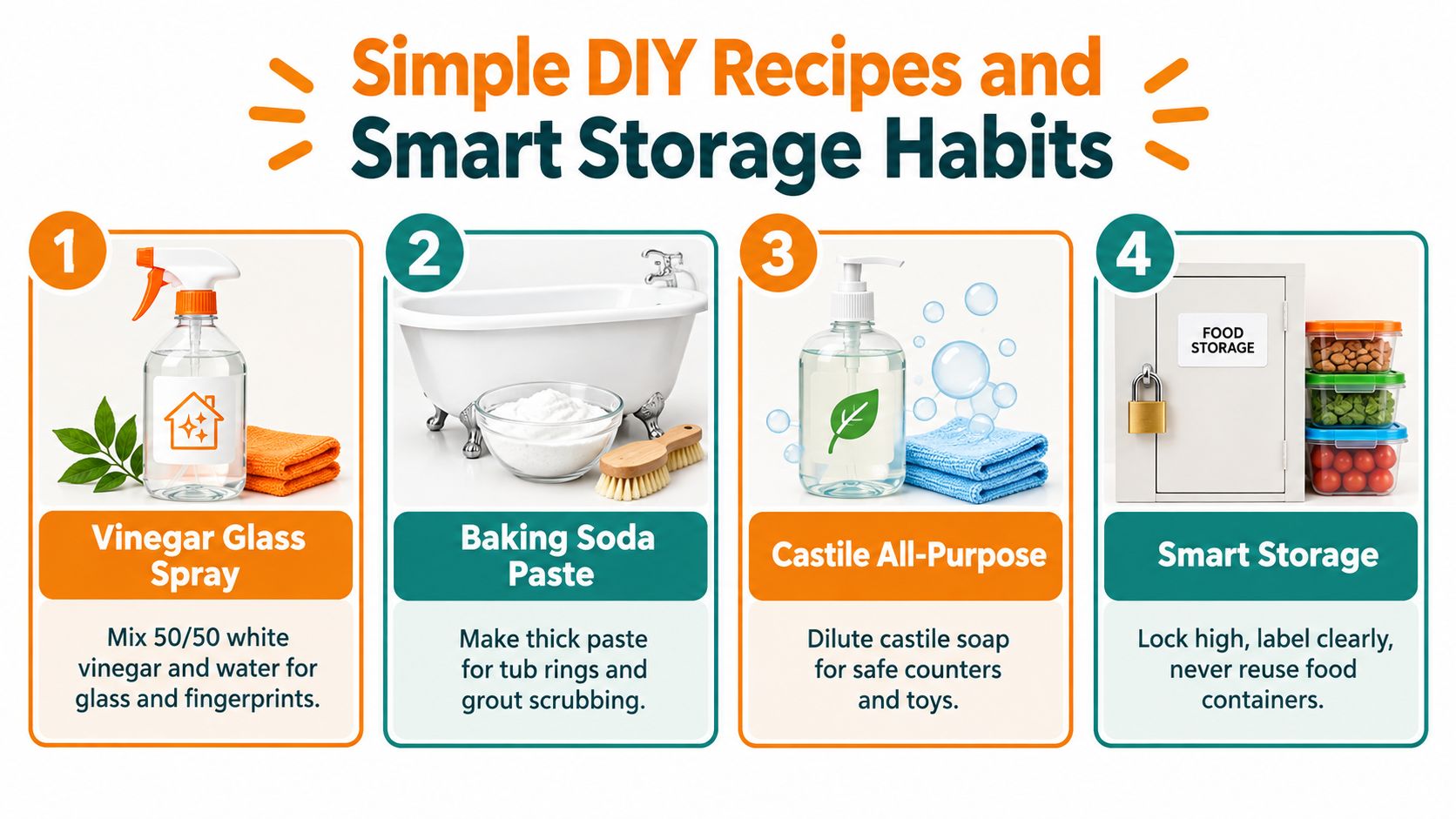
Keep every product in its original labeled bottle. Never transfer cleaner to a juice bottle, spray bottle, or food container. That rule matters in family homes and tight Airbnb turnovers, where another child or guest may handle the container.
- Lock it: Use a magnetic cabinet strap or locked utility cabinet.
- Keep it dry: Store supplies high, away from warm AC closets and humidity.
- Separate products: Keep bleach and ammonia-based products apart.
- Label your caddy: A printed ingredient card helps caregivers identify products quickly.
The Ocodile childproofing guide covers cabinet access and other household hazards. Use DIY for light soil and fingerprints. Buy a properly labeled certified product for disinfection, mildew, or heavy grease, especially when cleaning must be fast without leaving residue for the next family.
What to Do if a Child Is Exposed to a Cleaning Product
Treat an exposure as urgent, even if the child seems fine. Keep the container or label nearby so you can provide the exact product name and ingredients.
For skin contact, remove contaminated clothing and rinse with lukewarm water for 15 to 20 minutes. For an eye splash, flush steadily with water for the same period, directing water from the inner corner outward.
If fumes were inhaled, move everyone to fresh air immediately and loosen tight clothing. If a child swallowed a product, don't induce vomiting. Call Poison Control at 1-800-222-1222 right away.
Call 911 for emergency symptoms
Call 911 for difficulty breathing, seizures, loss of consciousness, or burns around the mouth. Tell dispatchers the child's age, the exposure route, the product name, the amount if known, and the time it happened.
The Florida Poison Information Center network serves Palm Beach County, so program Poison Control into every caregiver's phone. Keep a printed emergency card on the refrigerator with the hotline, your address, and the location of the cleaning cabinet.
How Sunset Shine Home Cleaning Delivers Child Safe Service
A child-safe cleaning visit depends on more than a bottle labeled green. Sunset Shine Home Cleaning uses eco-friendly, pet and kid-safe products on every job, with fragrance-free options for sensitive households and clearly labeled containers that aren't decanted into unmarked spray jars.
The crew's written checklist prioritizes low-VOC cleaning in nurseries, playrooms, and pet zones. Products aren't left unattended while cleaners move through the home, which matters in open-plan Palm Beach Gardens houses, apartment units, and homes with toddlers who can reach a surprising number of surfaces.
A practical service process
- Schedule: Book online or call, with timing coordinated around naps, school pickups, tenant access, or a tight Airbnb checkout window.
- Clean: Cleaners arrive with supplies and work through bathrooms, kitchens, floors, baseboards, vents, fans, window sills, and high-touch surfaces.
- Inspect: The team completes a checklist-based quality check and flags visible maintenance concerns for property managers.
- Enjoy: You return to a cleaner home, a guest-ready rental, or a move-in-ready space without managing a cabinet full of harsh products yourself.
Services include recurring standard cleaning, deep cleaning, move-in and move-out cleaning, post-construction dust removal, vacation-rental turnovers, and property-management make-ready work. Move-out cleaning adds inside the oven, refrigerator, and cabinets, which are the areas landlords often inspect during a final walkthrough.
Sunset Shine serves West Palm Beach, Palm Beach Gardens, Jupiter, Juno Beach, North Palm Beach, Riviera Beach, Royal Palm Beach, Lake Worth, Boynton Beach, Delray Beach, Boca Raton, Wellington, Westlake, Loxahatchee, Loxahatchee Groves, and The Acreage. Families comparing options can review eco-friendly house cleaning services and request a custom estimate based on bedrooms, bathrooms, condition, square footage, and add-ons.
South Florida homes need a cleaning plan that handles humidity-driven mildew, salt air, sand, AC dust, tropical pollen, and rainy-season mud without leaving unnecessary fragrance or residue behind. A recurring visit also gives busy families, landlords, and Airbnb hosts a consistent checklist instead of a rushed reset.
Sunset Shine Home Cleaning offers recurring, deep, move-in and move-out, post-construction, Airbnb, and property-management cleaning with family- and pet-conscious products. Book your next Palm Beach County clean through Sunset Shine Home Cleaning, or call 561-408-4020 to arrange a cleaner, guest-ready, child-conscious home.