
You're comparing the best eco friendly cleaning products because you want a home that feels clean without leaving heavy fragrance or harsh residue behind. In Palm Beach County, that choice also has to stand up to humid bathrooms, salty coastal air, sand, pet hair, AC dust, and the tight turnaround windows of vacation rentals.
Table of Contents
- What Makes a Cleaning Product Truly Eco Friendly
- What We See in Palm Beach County Homes
- The Core Criteria for Choosing Eco Friendly Products
- Comparing Eco Friendly Product Types for Real Messes
- Reading Certifications and Labels Without Getting Fooled
- Task by Task Guide for South Florida Homes
- Why a Non-Toxic Cleaning Service Fits West Palm Beach
- Bringing It All Together and Booking in Palm Beach County
What Makes a Cleaning Product Truly Eco Friendly
“Natural,” “green,” and eco friendly aren't interchangeable. Natural usually means an ingredient comes from plants or minerals, but it doesn't tell you how concentrated the formula is, how it's processed, or how it behaves after it goes down the drain. Green is often just a marketing description.
A stronger standard looks at the full product:
- Ingredients: The formula should disclose what's inside and use surfactants designed to break down safely.
- Packaging: Concentrates, refill systems, aluminum, and glass can reduce dependence on single-use plastic.
- Indoor air: Fragrance-free options matter in homes running AC most of the year, especially around children, pets, and sensitive occupants.
- Environmental release: Cleaning products eventually enter wastewater systems, and South Florida waterways such as the Lake Worth Lagoon make responsible formulation relevant beyond the kitchen sink.
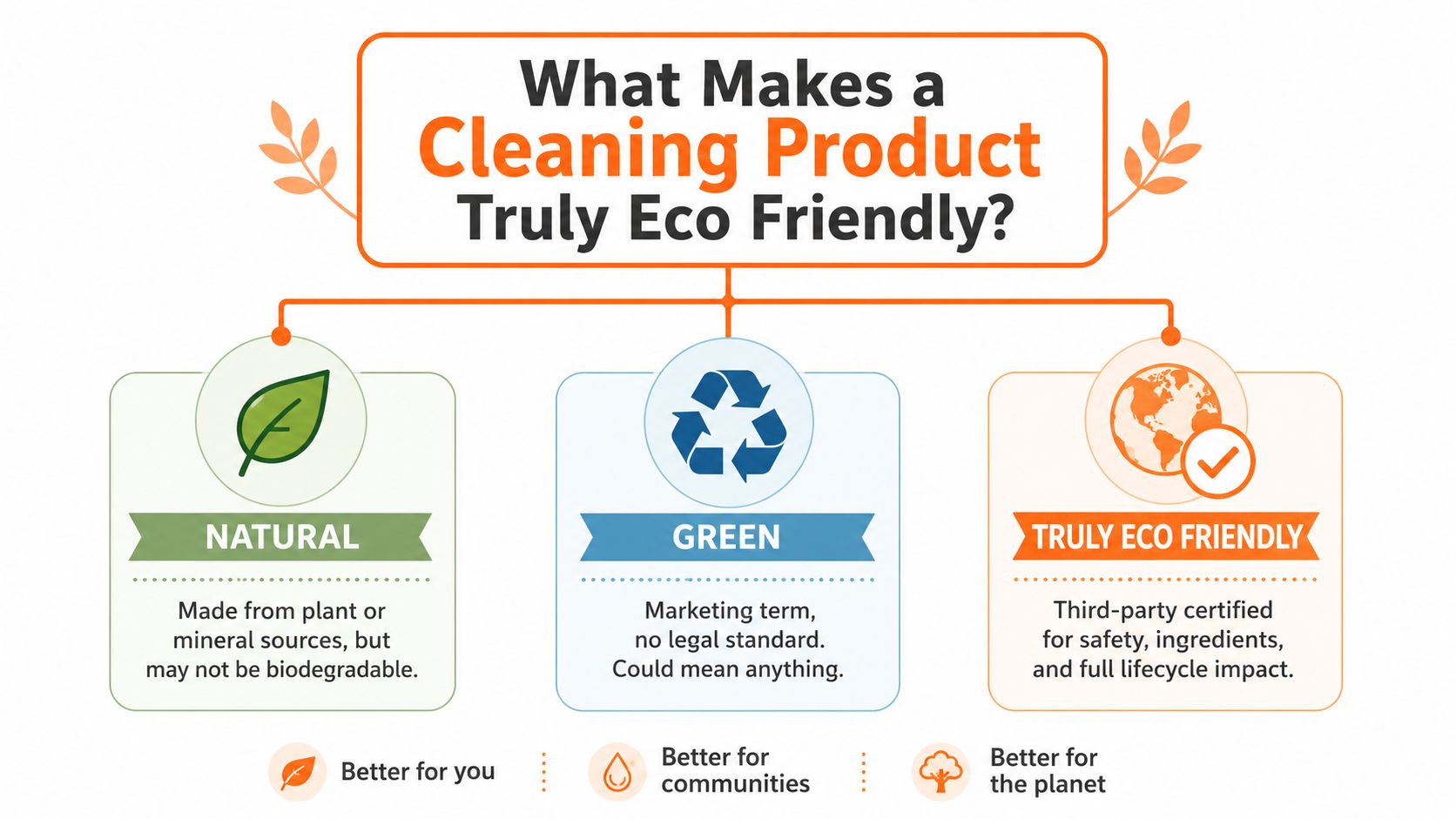
A product can be plant-derived and still contain irritants. A bottle can show leaves and still hide a vague fragrance blend. For a useful starting point on safer household choices, home cleaning without harsh chemicals offers practical context without treating every natural ingredient as automatically harmless.
The market is no longer a tiny specialty aisle. The global eco-friendly cleaning products market was estimated at USD 13.2 billion in 2025, projected to reach USD 14.3 billion in 2026 and USD 33.6 billion by 2035, with a projected 10% compound annual growth rate over that forecast period, according to the EPA's greener cleaning product guidance. That growth gives shoppers more choices, but it also makes label literacy essential.
What We See in Palm Beach County Homes
A Wellington master bathroom can look tidy until you inspect the grout above the shower. That's where black mildew often starts. On a Singer Island condo balcony, salt air leaves a dull film on chrome fixtures, while a Lake Worth Beach Airbnb may have fine beach sand tracked across tile just hours before the next guest arrives.
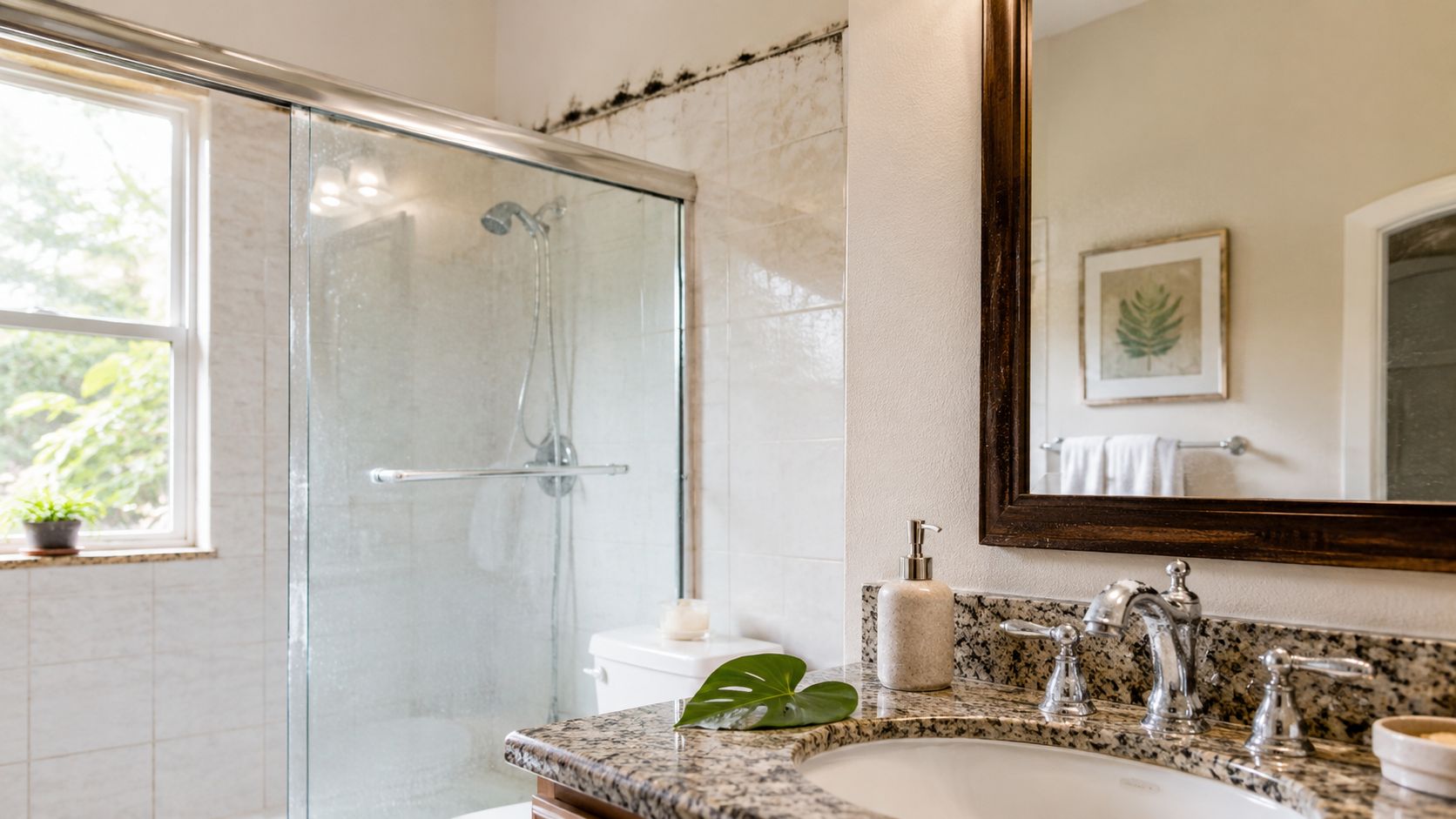
Those conditions expose weak formulas quickly. Humid bathrooms need dwell time and agitation, not just a scented spray. Salt residue needs careful wiping and rinsing so it doesn't streak across metal or glass. Sand requires thorough vacuuming before mopping, otherwise it gets pushed into grout and textured tile.
Indoor air is another practical concern. Independent testing of 30 cleaning products identified 530 unique VOCs, and green-labeled products still emitted VOCs, although they released about half as many as conventional products on average. Fragrance-free green products performed best in that analysis, producing nearly eight times fewer VOC emissions than conventional products and four times fewer than green products with fragrance labels, as reported by the Environmental Working Group.
South Florida reality: A cleaner that works beautifully in a dry climate may need more dwell time, wiping, and ventilation in a humid coastal home.
The Core Criteria for Choosing Eco Friendly Products
Start with the ingredient panel, not the front label. Plant-based surfactants such as decyl glucoside can be useful for routine soil, while chlorine, ammonia, quaternary ammonium compounds, phthalates, and synthetic fragrance deserve closer scrutiny. Ingredients ending in “-eth,” or those containing PEG, may signal processing choices some buyers prefer to avoid.
Look for full disclosure rather than “proprietary blend.” Fragrance-free means no added masking perfume, not that the product has no scent at all. Raw ingredients can still have a mild smell.
Use certifications as a filter
EPA Safer Choice, USDA BioPreferred, EWG Verified, Green Seal, and Cradle to Cradle can provide more useful screening than a leaf graphic. None replaces reading the actual label, but third-party review gives you a better starting point. The low-VOC cleaning products guide explains why airborne residue deserves attention in occupied homes.
Choose packaging and performance together
Concentrates and refill pouches can reduce packaging, but only if you dilute them correctly. A strong formula used at the wrong dilution can clean poorly or leave residue. Enzyme blends can help with food, pet, and other organic messes, while biodegradable surfactant systems can perform effectively under suitable treatment conditions. One technical study reported at least 98% surfactant removal when oxygen delivery was sufficient, showing that environmental performance depends on formulation and treatment conditions, not the word “plant-based” alone. See the technical research on biodegradable surfactants for the underlying discussion.
Comparing Eco Friendly Product Types for Real Messes
Ready-to-use sprays are convenient for Airbnb wipe-downs and daily kitchen maintenance. Concentrates make more sense for larger homes, recurring service, and refill stations. Enzyme cleaners are better suited to pet accidents and food residue than to mineral scale.
| Product Type | Soap Scum & Hard Water | Mildew & Grout | Greasy Rental Kitchen | Salt & Mineral Residue |
|---|---|---|---|---|
| Ready-to-use spray | Good for light buildup, may need repeated passes | Useful for maintenance, not deep growth | Convenient, moderate cutting power | Good for quick wiping |
| Concentrate | Strong when diluted correctly | Depends on formula and dwell time | Good for routine degreasing | Good with a clean rinse |
| Refillable cleaner | Practical for repeat jobs | Varies by active ingredients | Useful for regular turnover | Good for frequent wiping |
| Enzyme cleaner | Limited on mineral scale | Not the first choice | Helpful on food residue | Poor match for salt film |
| DIY vinegar or baking soda | Vinegar helps mineral deposits, baking soda adds gentle abrasion | Limited on established mildew | Baking soda helps small spots | Vinegar can help residue, but test surfaces first |
For shower glass, a lactic-acid cleaner or diluted vinegar can outperform a mild all-purpose spray, but it still needs dwell time. For greasy stovetops after a rental turnover, a citrus-based eco degreaser is usually the better green option. If grease has been baked onto a range hood, a conventional degreaser may still work faster, although it brings a different ingredient and ventilation trade-off.
Avoid vinegar on natural stone such as marble or some limestone surfaces. For product-selection ideas, Fillaree's all purpose cleaner recommendations are a useful comparison point, especially when deciding between refillable and ready-to-use formats.
Reading Certifications and Labels Without Getting Fooled
A certification is helpful only when you understand its scope. USDA BioPreferred focuses on bio-based content, while EPA Safer Choice evaluates ingredients against human-health and environmental criteria. EWG Verified screens for chemicals of concern. Cradle to Cradle considers material health, circularity, and social responsibility, while Green Seal applies a broader environmental standard.
A seal doesn't mean a cleaner is ideal for every surface. Bio-based content doesn't automatically mean biodegradable, and a safer-ingredient certification doesn't guarantee that a product will remove heavy soap scum without scrubbing.
Scan the label quickly:
- Reject vague fragrance language: “Fragrance” or “parfum” can conceal a mixture you can't evaluate.
- Check the active ingredients: Watch for quaternary ammonium compounds if you're trying to reduce disinfectant residue.
- Separate scent from cleanliness: Essential oils can smell pleasant but still irritate sensitive people or pets.
- Look for directions: Dwell time, dilution, and surface restrictions tell you more about real use than a green bottle.
- Question broad claims: “Plant-powered” and “eco” are not substitutes for ingredient disclosure or independent verification.
Fragrance-free green products also performed better in the VOC analysis described earlier, so a neutral-smelling product is often the safer choice for bedrooms, nurseries, and homes with pets. For a local service perspective on verification, see the green cleaning certification resource.
Task by Task Guide for South Florida Homes
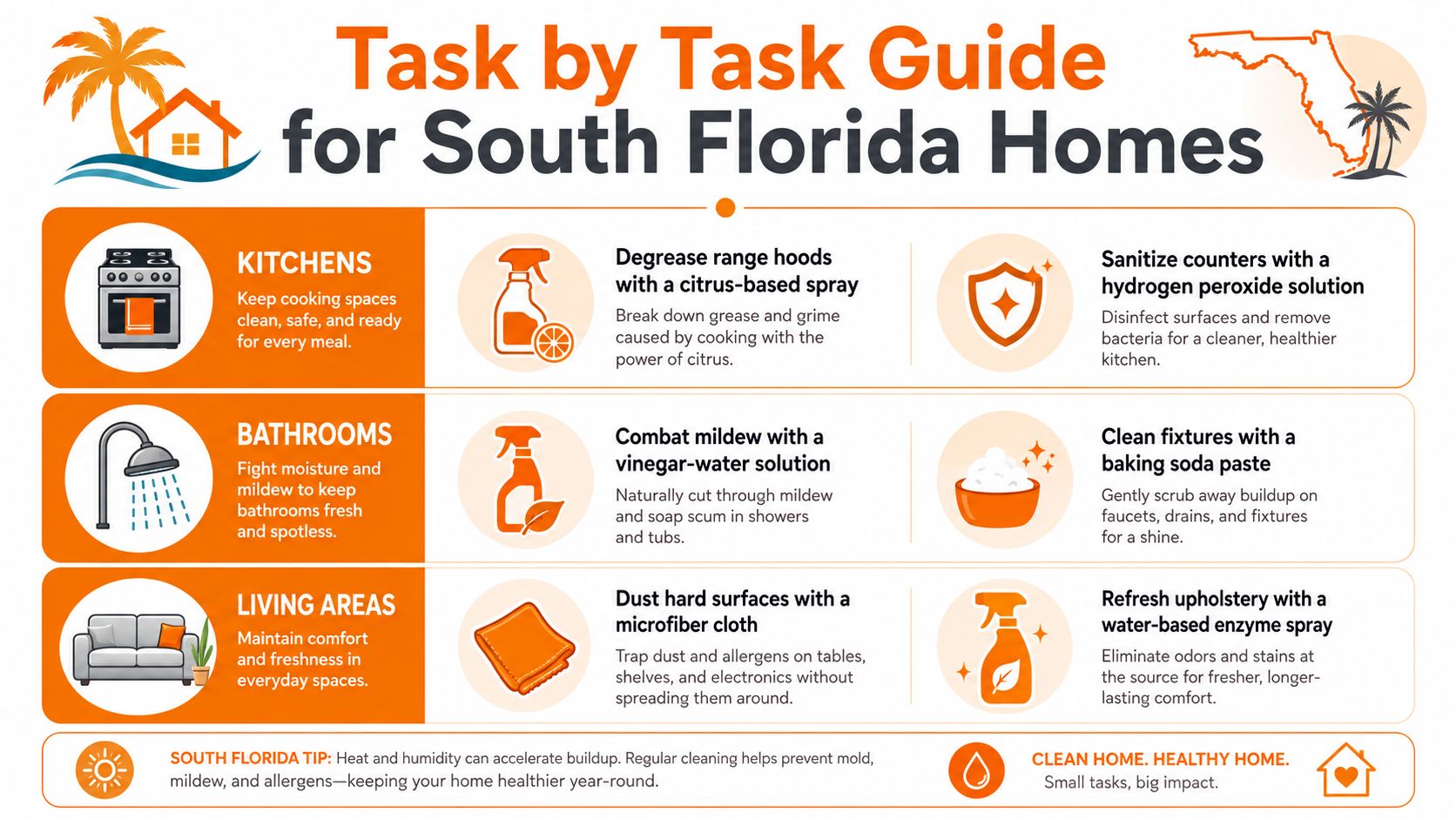
Match the product to the soil, then give it enough time to work. Rushing a mild formula across a damp bathroom is how people conclude that eco cleaners “don't work.”
Kitchens and bathrooms
- Range hoods and stovetops: Use a citrus-based eco spray, leave it briefly, then agitate with a non-scratch pad. Rental kitchens often need a second pass after a weekend checkout.
- Counters: Use a food-safe enzyme or hydrogen-peroxide-based product when appropriate for the surface, then follow the label's contact and rinse directions.
- Trash cans: Deodorize and wipe the lid, rim, and surrounding cabinet during Airbnb turnovers.
- Grout: Pre-treat mildew staining with a suitable peroxide gel, scrub grout lines, and dry the area thoroughly.
- Shower glass: Use a lactic-acid cleaner for soap scum, especially where hard-water residue has built up.
- Fixtures: A refillable cleaner and microfiber cloth work well on chrome when you remove salt film rather than spreading it.
Floors and touch points
Use a neutral-pH concentrate on tile and sealed surfaces. Steam can be useful on sealed hardwood when humidity spikes, but vinegar is a poor choice for natural stone. During pool season and rainy weather, vacuum sand and mud before mopping.
Door handles, light switches, remotes, and rental lockboxes need a fragrance-free disinfecting product approved for the surface. The natural cleaning product recipes can help with simple DIY jobs, but never mix cleaning chemicals, especially acids with bleach.
Why a Non-Toxic Cleaning Service Fits West Palm Beach
A non-toxic cleaning service earns its place when the issue isn't just product choice. It's consistent application. Families with toddlers, cats, and dogs that sleep on tile need floors cleaned without a heavy fragrance cloud. Seasonal residents need a dependable reset after the home has sat closed with AC running and dust collecting on vents.
Airbnb hosts in West Palm Beach, Wellington, Lake Worth, and Palm Beach Gardens face a different pressure. A cleaner has to reset bathrooms, kitchens, floors, linens, high-touch areas, and visible surfaces inside a tight checkout window. Mild products can work, but only when the crew understands dwell time, dilution, microfiber separation, and when a second pass is necessary.
Property managers also benefit from a consistent checklist. A trained team can flag damaged grout, leaking fixtures, sticky cabinet hardware, or unusual odors while cleaning instead of leaving those issues for a later inspection.
Salt air, lanai screens, pool splash-out, tropical pollen, and year-round AC dust all require different techniques. Non-toxic protocols and locally stocked supplies are most useful when they're paired with experienced judgment, not treated as a magic substitute for scrubbing.
Bringing It All Together and Booking in Palm Beach County
The best eco friendly cleaning products meet three tests. First, verify the ingredients, certifications, and packaging. Second, match the format to the mess, because an enzyme cleaner, mineral remover, and kitchen degreaser don't serve the same purpose. Third, use professional application when humidity, sand, mold-prone grout, salt film, or a short rental turnover leaves no room for missed detail.
For homeowners, renters, Airbnb hosts, and property managers, the practical solution is a repeatable cleaning plan. That can mean recurring standard cleaning, a deep reset, move-in or move-out service, post-construction cleanup, or vacation-rental turnover support across West Palm Beach, Palm Beach Gardens, Jupiter, Juno Beach, North Palm Beach, Riviera Beach, Royal Palm Beach, Lake Worth, Boynton Beach, Delray Beach, Boca Raton, Wellington, Westlake, Loxahatchee, Loxahatchee Groves, and The Acreage.
Pricing depends on bedrooms, bathrooms, square footage, condition, and add-ons. Most clients request a custom estimate. Ask about inside-oven, refrigerator, cabinet, wall-spot, pet-hair, and interior-window add-ons when preparing for a landlord walkthrough or guest arrival.
Sunset Shine Home Cleaning offers recurring standard cleaning, deep cleaning, move-in and move-out service, post-construction cleanup, Airbnb turnovers, and property-management support using family- and pet-conscious products. For house cleaning in West Palm Beach, call 561-408-4020 or visit Sunset Shine Home Cleaning to request your estimate and schedule a cleaner home.