
If you've just finished mopping in West Palm Beach and the place still feels sticky, you're not imagining it. Air out house routines in Palm Beach County have to fight humidity, mold risk, pollen, and salt air at the same time, which is why the right cleaning move isn't always just cracking a window.
For homeowners, renters, Airbnb hosts, and property managers, the goal is the same, a spotless, guest-ready, move-out-ready home that doesn't trap stale air, pet odors, or bathroom moisture. In South Florida, that outcome matters because the outdoor air can help, or it can make the problem worse.
Table of Contents
- Why Airing Out Your House Matters More Than You Think
- Cross-Ventilation Techniques That Actually Work
- When to Open Windows and When to Keep Them Closed
- Removing Odors and VOCs After Cleaning or Construction
- Fans, Dehumidifiers, and Air Purifiers Compared
- Common Mistakes and When to Call Professionals
Why Airing Out Your House Matters More Than You Think
A lot of Palm Beach County homeowners know the routine after a deep clean. They open the sliders, let the breeze move through, and expect the house to smell fresh by dinner. Then the air feels heavier, the bath towels pick up dampness again, and the windowsills start catching pollen before the cleaning scent is even gone.
That's the South Florida trade-off. Indoor air quality is affected by what stays trapped inside the house, and by how much outside air the home can bring in. The U.S. EPA notes that indoor pollutants in homes commonly include combustion byproducts, particulate matter, environmental tobacco smoke, radon, pet dander, mold, pesticides, lead, asbestos, ozone from some air cleaners, and VOCs, with indoor sources and limited ventilation driving a lot of the problem EPA indoor air quality guidance. In local homes, that usually means stale air is not just a smell problem, it is part of the exposure problem.
Practical rule: if the home smells “closed up” after cleaning, the issue may be trapped pollutants, not the cleaning product itself.
A useful benchmark for homes is at least 0.35 air changes of outdoor air per hour, and the American Lung Association also says opening doors and windows for 15 minutes each day is one of the best ways to improve ventilation. In Palm Beach County, that advice runs into a real limitation fast, because rainy-season air can bring in more moisture than you want to add indoors. A house in Lake Worth or Royal Palm Beach can feel better for an hour after airing out, then turn damp again if the outdoor conditions are wrong.
That is why the better approach is a deliberate air out house routine that weighs fresh-air exchange against humidity, pollen, and the day's coastal weather. Local moisture problems often start with the same pattern, a home that gets opened at the wrong time and then holds onto that extra dampness. For homeowners trying to understand why certain rooms stay muggy even after cleaning, this local humidity guide helps connect the dots, what causes humidity in a house.
Cross-Ventilation Techniques That Actually Work
The fastest way to move stale air out is cross-ventilation. Open windows or doors on opposite sides of the home, open interior doors so air can travel through the layout, and place a box fan near one opening blowing outward so it actively exhausts the old air. That setup beats cracking one window and hoping for the best.

In a single-story Royal Palm Beach ranch, that often means front and back openings with every bedroom door propped open. In a two-story Jupiter home, the better move is usually to create a path from a lower window to an upper one, then use the fan to pull air out of the room that holds the worst odor, often a bathroom or laundry area.
Openings matter more than perfection. If you can make one clean path for air to enter and one path to exit, the house starts flushing itself instead of just stirring the same air around.
Short, intense airing sessions usually work better than leaving windows cracked all day. In the sources reviewed, that tends to mean about 5 to 10 minutes in wide-open conditions, or up to 15 to 20 minutes when the room has been closed up for a long time or the weather is warmer house burping guidance. For VOC off-gassing, a separate remediation guide recommends 2 to 3 air exchanges per day plus 10 to 20 minutes of opening windows or doors per cycle VOC mitigation guidance.
Security and pets matter too. If you're stepping out, use locked openings that still allow airflow where possible, keep screens intact, and don't leave a ground-floor entry wide open in a neighborhood with foot traffic. For homes with dusty vents or lingering airflow problems, this vent-cleaning guide is a useful companion, how to clean vents.
When to Open Windows and When to Keep Them Closed
In Palm Beach County, the first question is what the air is doing outside. A breeze can help a house dry out after cleaning or a damp night, but warm outdoor air can also push indoor humidity up, especially around cool AC surfaces in bathrooms, closets, and near supply vents. That is the part generic advice leaves out.
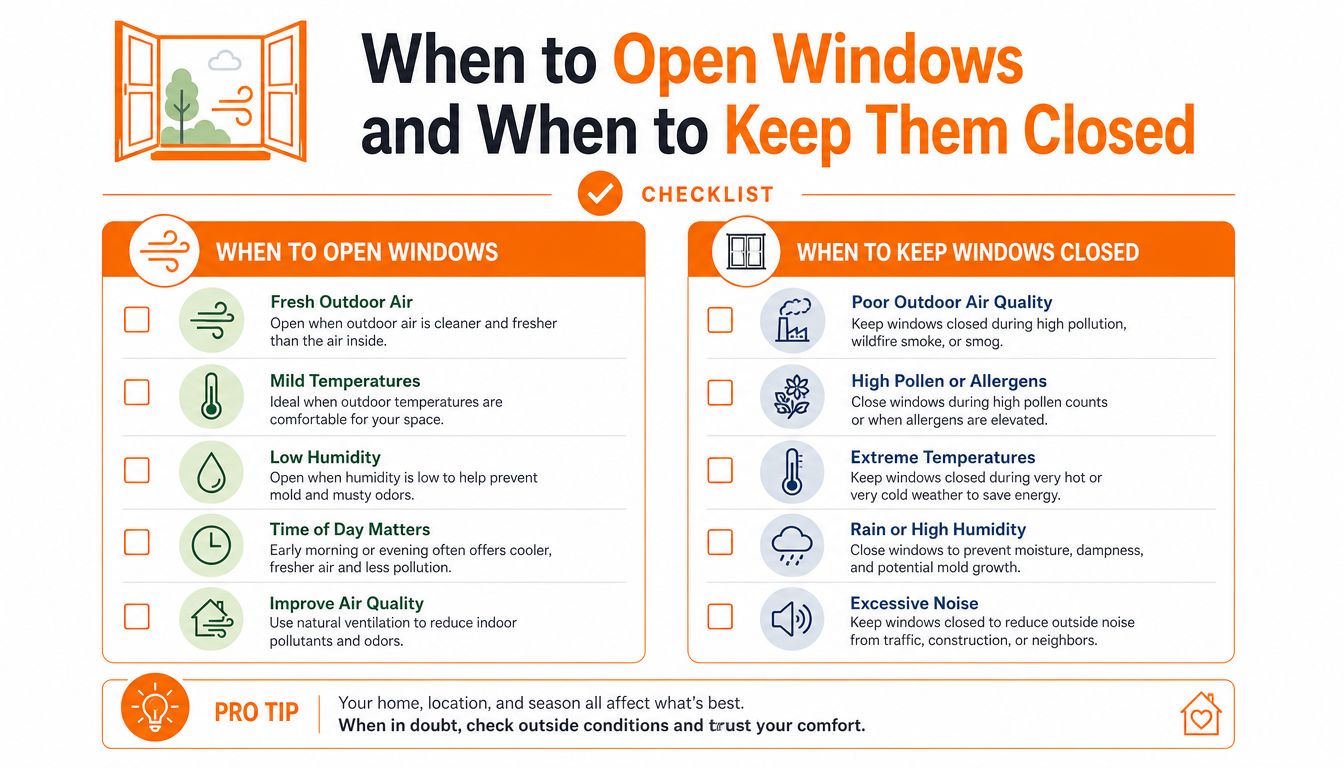
A practical way to judge it is to look for dry, clear conditions. Open windows when the outside air feels relatively dry, the temperature is comfortable, and pollen or dust is not coating your car, patio furniture, or screens. Keep them closed when rain is heavy, outdoor air quality is poor, or the air feels sticky enough to leave mirrors fogged and cool surfaces damp.
In Palm Beach County, the “fresh air” test is not how nice the breeze feels. It is whether that breeze helps the house dry or makes the walls work harder.
Indoor air can still be dirtier than people expect even when a house looks clean, so source control, filtration, and ventilation need to work together EPA-based indoor air summary. That same summary also points to the broader cost of indoor air pollution, including health and productivity losses tied to buildings and enclosed spaces.
The local pattern is clear during rainy season, after storms, and through pollen-heavy stretches. In those weeks, I would rather see a homeowner run the AC, dehumidify, and clean up the moisture source than throw every window open just to air the place out. Windows help only when the outdoor air is the cleaner, drier choice.
For stubborn household smells, a targeted routine works better than guessing, and a practical guide like how to eliminate household odors is more useful than leaving the house open and hoping for the best.
Removing Odors and VOCs After Cleaning or Construction
Fresh paint, new flooring, adhesive, and even some heavy-duty cleaners can leave a home smelling sharp long after the job is done. In Palm Beach County, those smells linger longer when the house is sealed tight and the air stays warm and damp. That's when a simple open-window approach becomes too slow.
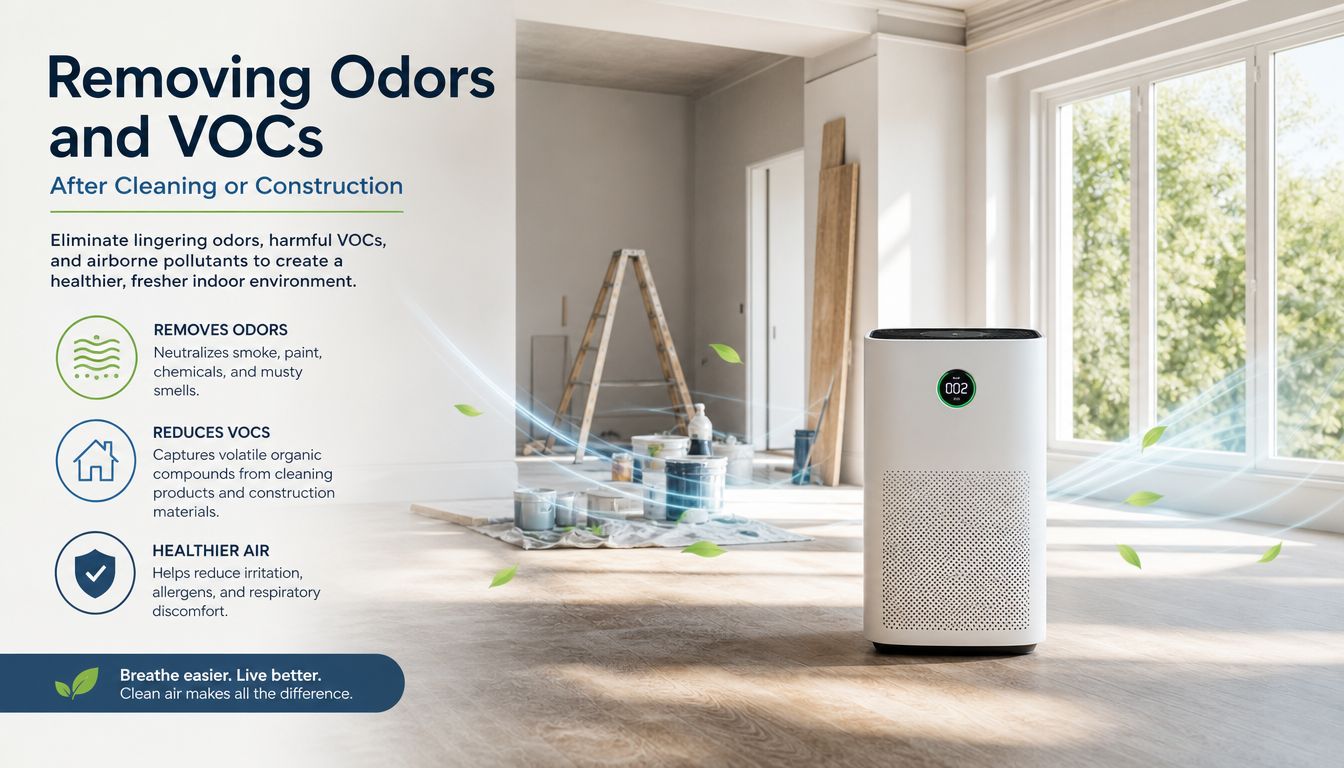
The most effective odor and VOC routine is a controlled one. Use 2 to 3 air exchanges per day, open windows or doors for 10 to 20 minutes per cycle, and if conditions allow, run the process for 3 to 5 days at a higher temperature, around 85 to 90 F, to speed volatile compound release after painting or new construction VOC mitigation guidance. That doesn't mean overheating the house all day. It means using warm, moving air in short bursts when the outdoor conditions cooperate.
Closed interior doors are a common failure point. If the guest bath stays shut while the hall windows are open, the odor stays trapped. Humidity control matters too, because too much moisture can damage materials and reduce the effectiveness of drying and ventilation VOC mitigation guidance.
For homes that just went through a renovation, I'd always pair ventilation with a full surface reset. Construction dust settles in corners, inside cabinets, on trim, and on horizontal ledges where people never look during a quick walk-through. If the odor is coming from built-up residue instead of the air itself, this cleanup guide helps reduce the source, how to eliminate household odors.
Fans, Dehumidifiers, and Air Purifiers Compared
When the weather outside is working against you, the tools have to do different jobs. Fans move air. Dehumidifiers pull moisture out of the air. Air purifiers capture particles and, with carbon filtration, can help reduce some odors and VOCs. In South Florida, the right mix depends on whether you're fighting moisture, dust, smoke, pet hair, or all of it at once.
| Air Management Tools for South Florida Homes | Best For | Ideal Rooms | Humidity Rating |
|---|---|---|---|
| Box fan | Fast air exchange during short airing sessions | Bedrooms, living rooms, garage entries | Best with low outdoor humidity |
| Ceiling fan | Keeping air moving day to day | Open-plan living areas, primary bedrooms | Neutral, helps comfort more than drying |
| Dehumidifier | Moisture control in damp spaces | Bathrooms, laundry rooms, closets | Strong, especially in humid climates |
| Air purifier with HEPA and carbon | Particles, dust, and some odors | Bedrooms, nurseries, pet-heavy rooms | Useful, but it does not remove moisture |
A beachfront condo in Delray Beach often needs a dehumidifier more than a window left open to salt air and pollen. A family home in Wellington with pets may get more value from a purifier in the bedrooms and a box fan strategy in the living area. The right choice depends on the room, the problem, and how long you need relief.
For concrete ventilation mechanics, a home ventilation benchmark used in tight-building guidance is 0.03 cfm per square foot of living area plus 7.5 cfm per occupant, and a related benchmark for commercial buildings, schools, and offices is 0.35 ACH or 15 cfm per person, whichever is greater healthy air for tight homes. That's a reminder that “fresh air” is a measurable thing, not just a feeling.
Common Mistakes and When to Call Professionals
The biggest mistake is assuming more open windows always means better air. In South Florida, that can backfire fast. If the air outside is wet, smoky, or packed with pollen, you can pull more problems into the house than you push out.
Another common miss is ignoring the source. Air fresheners don't remove pet odor in carpet, mold in grout lines, or dust packed into AC returns. They just layer smell over smell, and the original issue stays put.
When a bathroom still smells musty after ventilation, the odor usually lives in the surfaces, not the air.
That's the point where professional cleaning earns its keep. Deep cleaning reaches the baseboards, tile edges, vents, and damp-prone spots that hold odor in Palm Beach County homes. Post-construction cleaning matters even more when drywall dust or adhesive residue keeps circulating after the job is “done.”
Move-out cleans, Airbnb turnovers, and mold-prone bathrooms are where homeowners usually feel the difference fastest. If the goal is a clean walkthrough, a guest-ready reset, or a home that stops fighting you every time the humidity climbs, airing out alone won't solve it.
Book your cleaning with Sunset Shine Home Cleaning, your trusted house cleaning service in West Palm Beach. Call 561-408-4020 or book online at Sunset Shine Home Cleaning for a cleaning that tackles the grime, odor, and humidity-heavy buildup that South Florida homes collect so fast.