
You've got a dog-hair mess in the car, and in West Palm Beach that usually means two things are working against you, static cling and South Florida humidity. If you're trying to figure out how to get pet hair out of car seats, carpets, and cargo areas without wasting a Saturday, the answer is a sequence, not brute force.
Table of Contents
- Why Pet Hair Sticks to Car Interiors in the First Place
- The Four Tools That Actually Work and When to Use Each
- A Surface-by-Surface Method for Seats, Carpets, Mats, and the Trunk
- Tackling the Spots Everyone Skips Seat Tracks, Vents, and Headliner
- Why Your First Pass Failed and How to Fix It
- A Five-Minute Cleanup for In-Between Outings
- Keeping Pet Hair From Coming Back
Why Pet Hair Sticks to Car Interiors in the First Place
A black SUV after one beach run with a shedding Lab is a good way to see the problem up close. Hair doesn't just sit on top of the fabric, it grabs onto the interior and refuses to let go, especially on synthetic seats and woven carpet.
Static and weave are the two enemies
Pet hair clings to synthetic upholstery because static electricity makes it stick and resist airflow, so even strong suction can lose when the pull from the fabric wins. On woven cloth, the hair also gets mechanically trapped in the under-weave, which is why vacuuming alone often leaves a gray haze behind. A practical field guide on pet hair removal notes that a slightly damp rubber glove can remove 94 to 98 percent of loose hair from fabrics in under 90 seconds, and it beat vacuum attachments and sticky rollers by 37 to 62 percent in single-pass efficiency. That test lines up with what detailers see in real cars.
South Florida humidity changes the game a little. It can reduce static for a moment, but it also makes dander and dust clump, so hair can bind into damp carpet instead of floating free. That's why a rainy-week car in Lake Worth or Boca often looks worse than a dry, dusty one in another state.
Practical rule: If the hair is on cloth, fight the static first. If it's buried in weave, fight the weave first.
Smooth leather and vinyl behave differently. Hair usually migrates across them instead of embedding, so a damp microfiber wipe can outperform endless suction on those surfaces. For a cleaner walkthrough on the same basic problem, this pet hair removal car guide is a useful comparison point.
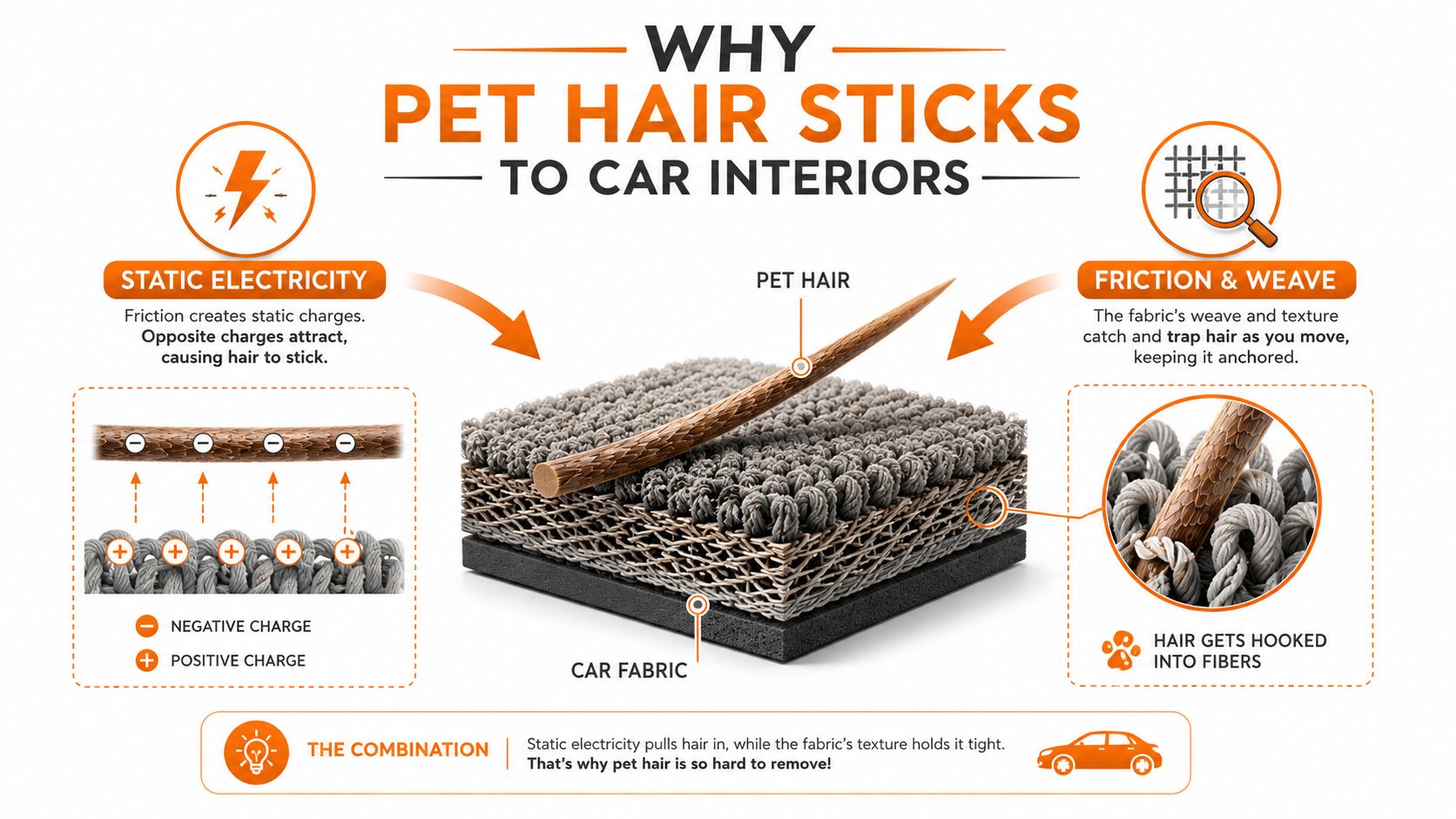
Beating two things at once, electrostatic adhesion on smoother surfaces and mechanical anchoring in looped fabrics, is the core task. That's why the order of your tools matters more than how hard you work.
The Four Tools That Actually Work and When to Use Each
The internet loves the same old list, lint roller, vacuum, glove, repeat. In the shop, that's too vague. The surface decides the tool, and the wrong tool just burns time.
Pet Hair Removal Tools Compared
| Tool | Cloth Seats | Carpet | Leather/Vinyl | Static Control |
|---|---|---|---|---|
| Rubber glove | Strong | Strong | Fair | Strong |
| Damp microfiber towel | Fair | Fair | Strong | Fair |
| Stiff-bristle pet hair brush | Strong | Strong | Fair | Fair |
| Rubber-edged squeegee | Fair | Fair | Strong on smooth panels | Fair |
A rubber glove is the first-pass winner on cloth seats because palm friction lifts loose hair and gathers it into clumps. A damp glove also fits the reality of pet hair removal in cars, the same friction-and-lift method that keeps showing up in field tests and detailing guides. The glove is not magic on its own, though. It's a pre-lift tool, then the vacuum finishes the job.
A damp microfiber towel belongs on leather, vinyl, and hard trim. It's what I reach for on doors, center consoles, and any surface where suction can't grab much. It also keeps you from grinding hair deeper into grain or stitching.
The stiff-bristle pet hair brush and vacuum combo is what makes sense on embedded carpet hair. The brush loosens the fibers, then the vacuum catches what moved. On a trunk liner or rear cargo floor, that combo saves more time than trying to drag a bare hose over stubborn weave.
A rubber-edged squeegee is a niche tool, not a miracle. It's useful on tight plastic trim, door pockets, and flat synthetic surfaces where the edge can gather hair into a line.
What wastes time: a bare vacuum hose on upholstery, a lint roller on deeply woven carpet, and any tool you keep using on the wrong material because it felt satisfying once.
If the car has a microfiber couch at home too, the same friction logic applies, and the breakdown in this microfiber couch cleaning guide helps make sense of why hair grabs so hard.
A Surface-by-Surface Method for Seats, Carpets, Mats, and the Trunk
A clean car starts when you stop treating the whole interior like one surface. Seats, carpets, mats, and cargo areas need different moves, or the hair just relocates and comes back later.
Seats and carpets need different hands
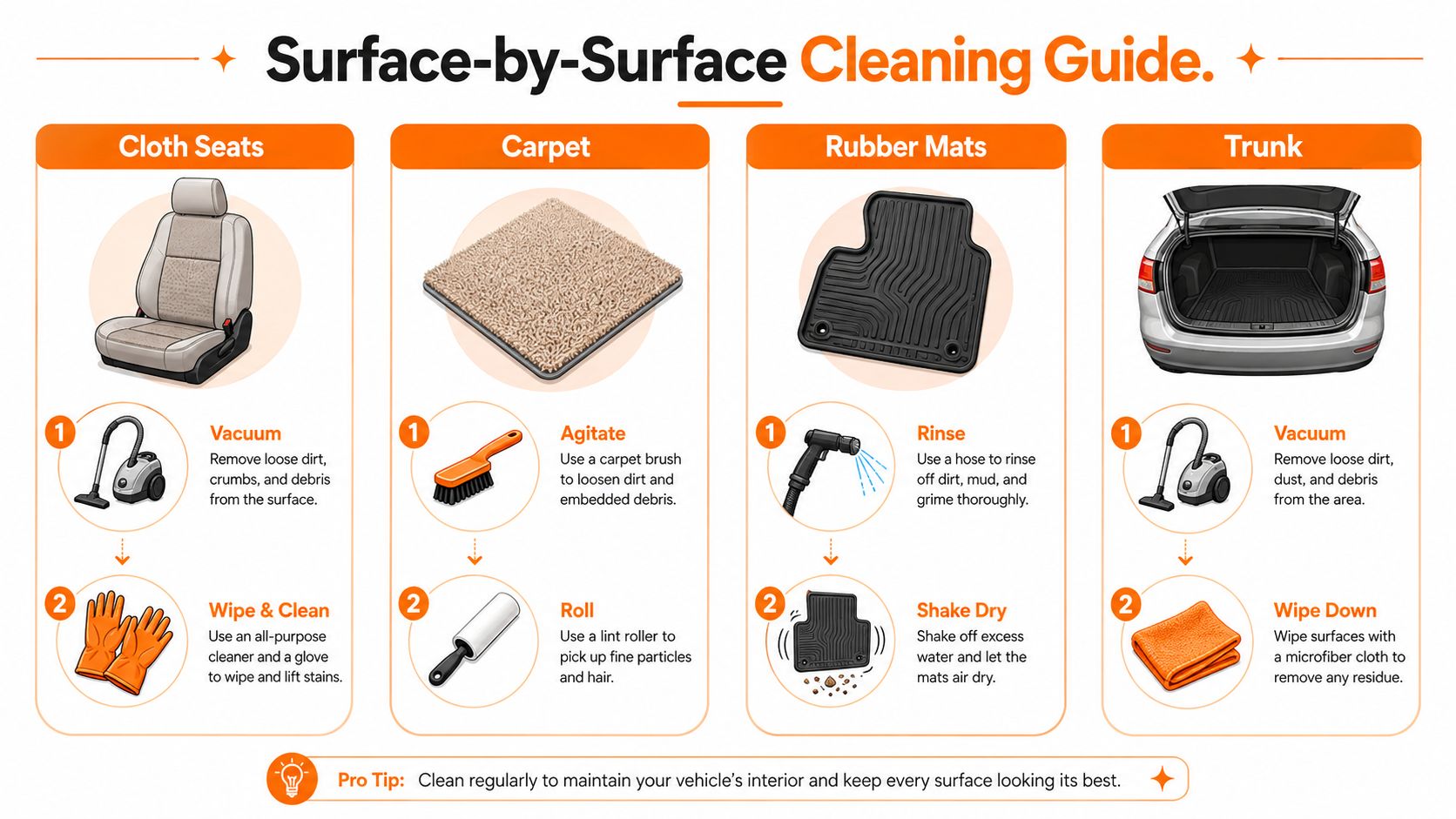
For cloth seats, vacuum first with a brush attachment to lift loose hair, then sweep a lightly damp rubber glove in one direction so the hair bunches up instead of spreading. That order matters because suction works better once the loose strands are already moving.
For carpet, use a stiff-bristle brush in cross-hatch strokes before vacuuming. The first direction loosens hair that's laying flat, and the second direction catches the strands you missed on the first pass. A lot of people skip the agitation step and wonder why the carpet still looks fuzzy.
For floor mats, pull them out completely, shake them off outside, then brush and vacuum both sides while they're leaned against the bumper. That keeps the loose fur from falling back into the footwell. Rubber mats are easier, but the edges still collect hair where the texture changes.
For the trunk or cargo area, start with the crevice tool along plastic seams and the rear trim, then run the rubber glove across the carpeted floor. Finish with a damp microfiber on the side panels, because cargo areas often mix carpet, hard plastic, and storage pockets in the same zone.
A lot of South Florida drivers ask about the same basic tools, and these pet hair removal tips are a decent reference point if you want another view of the glove-and-vacuum sequence. The detailer's job is still the same, though, loosen first, extract second, then wipe the surfaces that don't hold suction.
Tackling the Spots Everyone Skips Seat Tracks, Vents, and Headliner
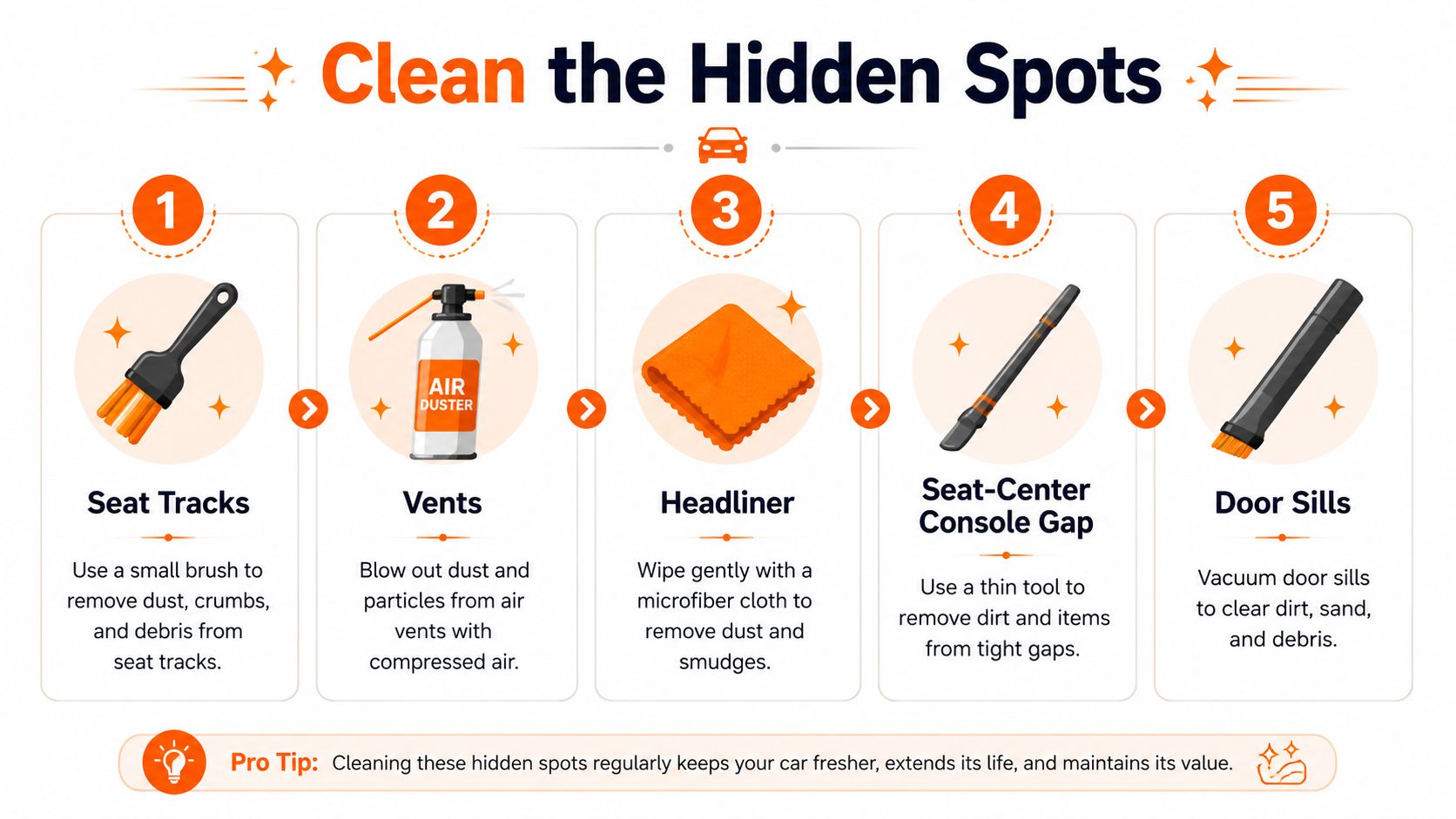
The mess you see is rarely the whole mess. Seat tracks, seat-belt receivers, vents, the gap between the seat and console, door sill pockets, and the headliner are where hair hides after the easy surfaces look done.
Hidden zones need a different sequence
These spots trap hair mechanically more than by static. That means a vacuum pass alone usually misses the strands that are wedged in by shape, edge, or foam-backed fabric. I've pulled fur out of seat rails in Palm Beach Gardens that looked spotless from standing height, then found a full second layer under the seat slide.
Compressed air helps here because it pushes hair out of the crevice first. After that, a narrow crevice tool can pull the hair forward instead of trying to suck it out of a dead corner. On plastic trim, a damp microfiber wipe usually works better than suction because hair clings to the grain.
The headliner needs the lightest touch of the whole job. Use a soft brush attachment, low suction, and don't press hard enough to stress the foam-backed fabric. If you're cleaning around the roof liner, light passes beat aggressive scrubbing every time.
Detailer's note: If you're chasing hair in vents or seat rails, move the seat all the way forward and back. Half the problem is access, not suction.
The trunk latch and spare-tire well also collect more than you might expect. If those areas are ignored, hair and grit settle into corners and stay there. For a deeper look at vent and crease cleanup, this vents cleaning guide is a practical companion.
Why Your First Pass Failed and How to Fix It
Most failed pet-hair cleanups come down to four mistakes. The fix is usually simpler than the frustration makes it feel.
Four common failure modes
| Failure Mode | Symptom You See | The Fix |
|---|---|---|
| Skipping agitation | Hair stays anchored in the weave | Rub with a glove for about 30 seconds before vacuuming |
| Over-wetting | Damp smell, clumping, hair matting deeper | Use only a light mist or dry microfiber |
| Wrong vacuum head | Streaky seats, weak pickup | Switch to a brush-tipped hand tool |
| One-pass thinking | Hair comes back after a few minutes | Vacuum in perpendicular strokes and repeat |
The most common mistake is going straight to suction. The vacuum can't lift hair that never got loosened, so the fabric still looks dusty after the first pass. A quick round with a rubber glove changes the texture of what the vacuum sees next.
Over-wetting makes the job slower, not easier. On fabric, hair can mat down and wick back to the surface after it dries. On carpet, a heavy spray can also leave the interior smelling stale, which is the last thing anyone wants in a car that already sat through a humid week.
Using the wrong vacuum head is another time sink. A wide floor nozzle doesn't create the same focused pull on upholstery that a brush-tipped hand tool does. In minivans and SUVs, that shows up as rows of hair left behind even after a full sweep.
If the hair comes back after five minutes, you did not agitate enough.
One-pass thinking is the final trap. Cross-hatch strokes are slower on paper, but they beat a single direction when the pile is messy and the weave is deep.
A Five-Minute Cleanup for In-Between Outings
Not every mess needs a full detail. For dog-park pickups, beach runs, and quick errands around Jupiter or Boynton, a short reset keeps the car from turning into a fur locker.
Keep it tight and skip the extras
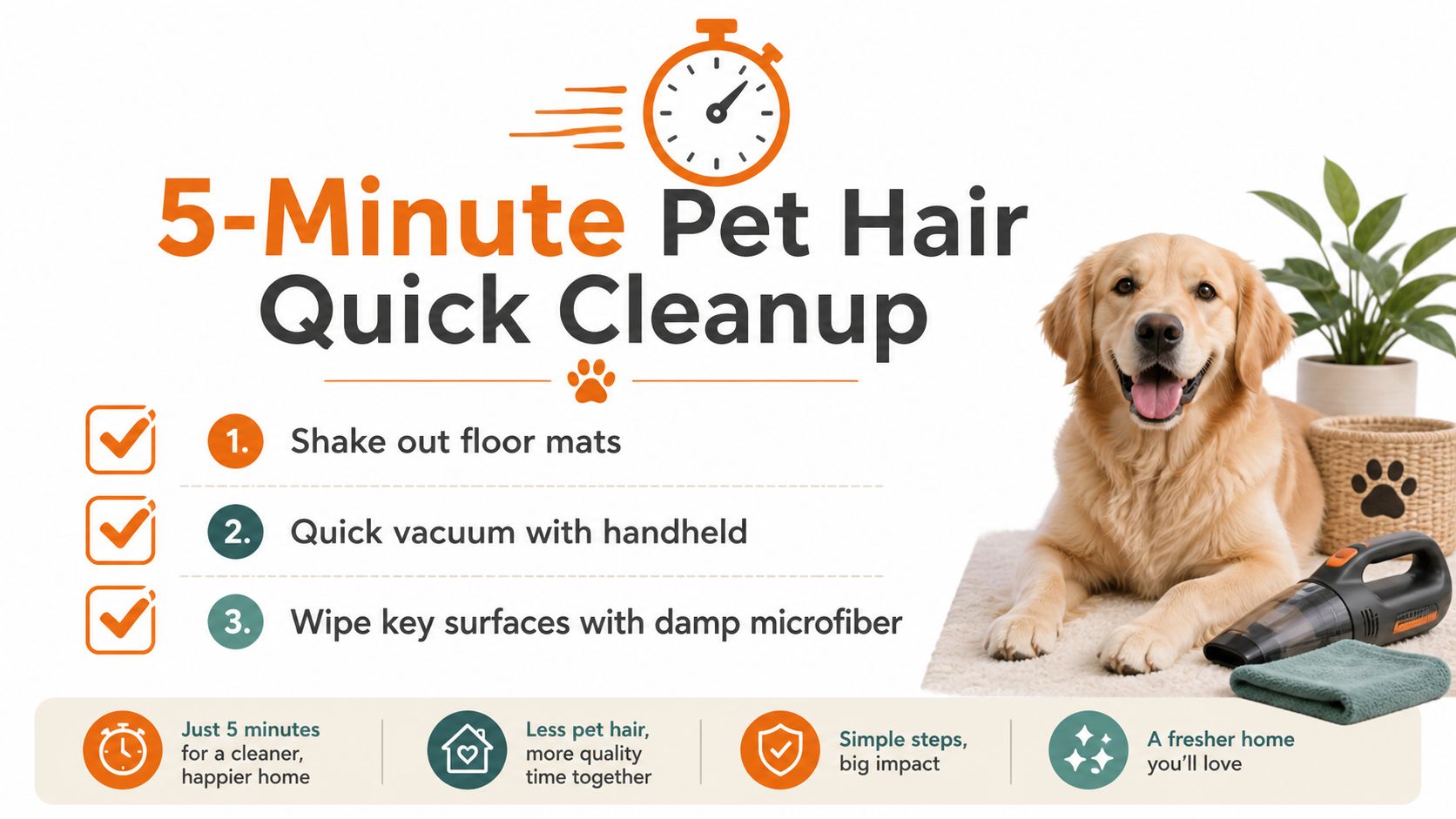
- Shake the floor mats out first. Pull them, shake them outside the car, and drop them back only after the loose fur is gone.
- Run a lightly damp rubber glove over the bench and seatbacks. A small mist on the glove helps the hair clump instead of sliding around.
- Hit the seat belt and door pocket with a lint roller. Those spots trap loose strands fast, and a quick roll is enough between full cleanings.
- Vacuum the footwells with a crevice tool only. Skip the brush head if you're trying to stay within five minutes.
What to skip matters just as much. Skip shampooing, skip compressed air, and skip detail spray between full cleans. The goal here is maintenance, not restoration, and the fastest routine is the one you'll repeat in a South Florida parking lot.
The damp-glove move does most of the work. If you only have time for one step, make it that one, then follow with the crevice tool where the hair likes to settle.
Keeping Pet Hair From Coming Back
Prevention is what saves the next Saturday. Once hair gets into foam, seams, and cargo corners, the job gets longer and more expensive every time.
Build a three-layer habit
Start with surface protection. Seat covers and hammock-style backseat protectors make sense for shedders, and washable cargo liners help in trunks that see dogs, luggage, or grocery runs. The point is to catch the fur before it reaches cloth or carpet.
Next, brush the dog before loading. A quick outdoor brush keeps a lot of loose hair out of the cabin before it starts drifting into seams and vent gaps. Pair that with a fast shake of the cover after the ride, and you've already cut down the next cleanup.
Finish with a weekly micro-cleanup. Brush outside, shake the cover, vacuum with a crevice tool, and do a quick rubber-glove wipe on the bench. That loop usually takes less than the time spent waiting in line for coffee, and it stops embedded hair from turning into a shop-level extraction.
For pet owners who want a cleaner product setup around the house and car, these dog-safe cleaning products are worth checking before you start spraying anything around upholstery or paws.
When the vehicle has chronic heavy shedding, multiple pets, or hair that's already worked deep into the fabric, weekend maintenance stops being enough. That's when a professional extraction and detail makes more sense than another round of sticky rollers and frustration.
Sunset Shine Home Cleaning handles detailed home cleaning across West Palm Beach and Palm Beach County, and that includes the kind of pet hair mess that migrates from the car into the garage, entryway, and living room. If you're ready for a cleaner reset in your home and want help from a local team that knows South Florida routines, visit Sunset Shine Home Cleaning and book the service that fits your schedule.