
You're heading out of a West Palm Beach condo, preparing an Airbnb turnover, or facing a landlord walkthrough, and the black shirt you just washed is already collecting cat fur again. The right cat hair clothes remover isn't one magic gadget. It's a practical routine that matches the tool to the fabric, removes loose hair before laundry, and keeps South Florida dust, sand, and humidity from making the mess harder.
For homeowners, renters, Airbnb hosts, and property managers, the goal is simple: clean clothing, guest-ready rooms, and less time spent redoing laundry. In Palm Beach County, year-round air conditioning, tropical pollen, coastal moisture, and tight same-day turnover windows make prevention just as important as the final lint-roller pass.
Table of Contents
- Why Cat Hair Sticks to Everything You Own
- Quick Hacks You Can Use in Five Minutes
- Dry Removal Tools Compared Side by Side
- The Laundry Sequence That Lifts Stubborn Fur
- Matching Your Method to the Fabric
- Prevention Habits That Keep Fur Off Clothes
- When to Call in a Professional Cleaning Service
Why Cat Hair Sticks to Everything You Own
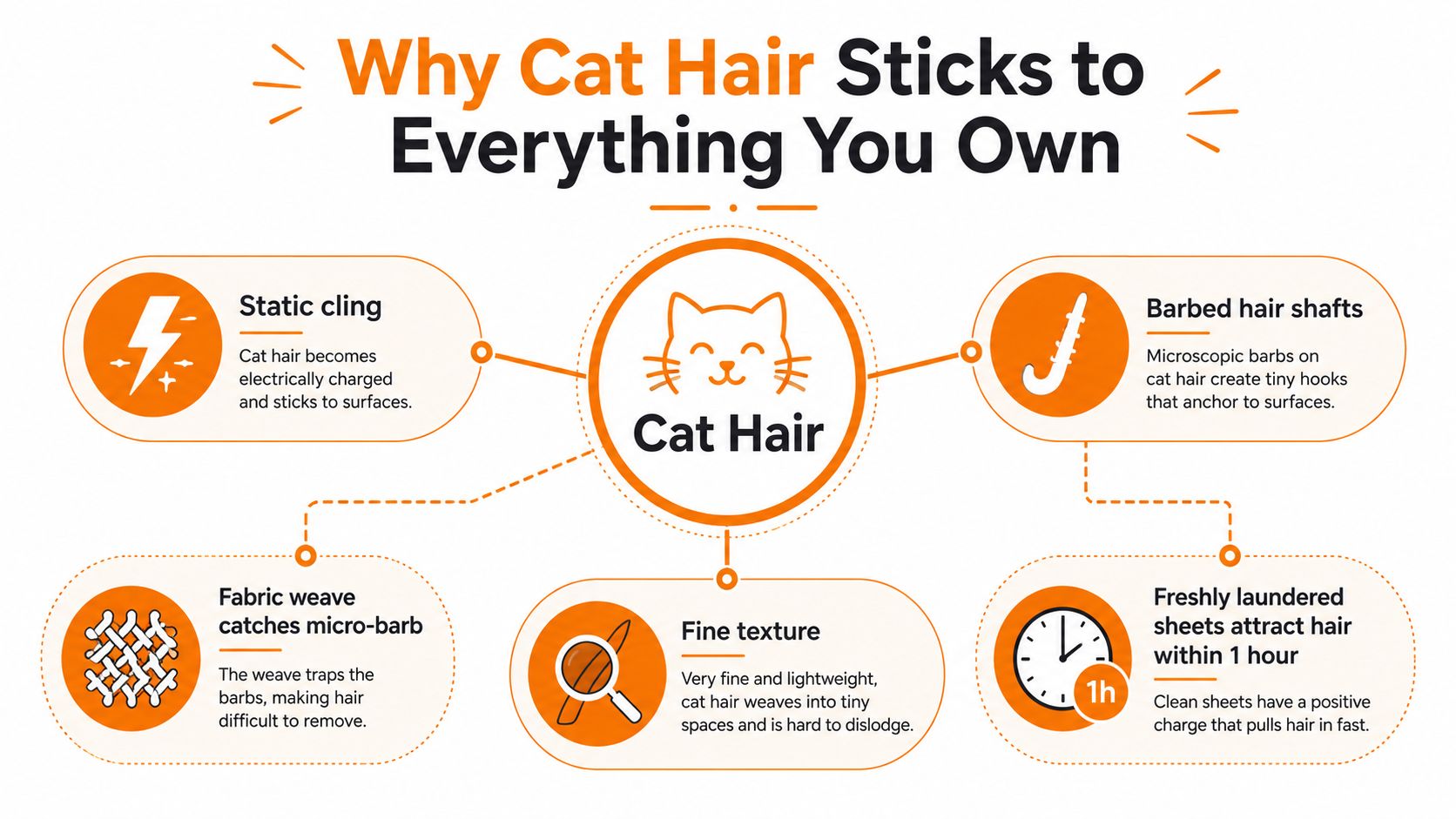
Cat fur clings because fabric isn't perfectly smooth. Tiny surface irregularities, static, body oils, and residue give loose hair places to catch. A black knit pulled from a closet can pick up visible fur before you reach the front door, while freshly laundered sheets can attract floating hair again soon after folding.
Long-haired cats, including Persians and Maine Coons, often leave thicker undercoat clumps that work deeper into loops. Short-haired cats spread finer strands across a larger surface, making coverage easy to miss on dark trousers or navy bedding. In an air-conditioned South Florida home, dry indoor air can increase static cling even when outdoor humidity is high.
Practical rule: Remove visible fur while it's dry. Water can mat loose strands into the weave and make the wash cycle less effective.
Sweat, skin oils, and fabric-softener residue can leave a slightly tacky surface that encourages cling. A practical resource on understanding normal vs. problem shedding can also help cat owners distinguish routine coat loss from shedding that deserves veterinary attention.
On turnover days, this is why a quick visual check matters. Fur hiding along collars, cuffs, closet shelves, and linen-cabinet edges can transfer straight onto clean bedding or a guest's clothing. The most dependable approach starts with mechanical pickup, then uses the laundry sequence only for what remains.
Quick Hacks You Can Use in Five Minutes
Start with the least aggressive method and increase effort only where the fabric needs it.
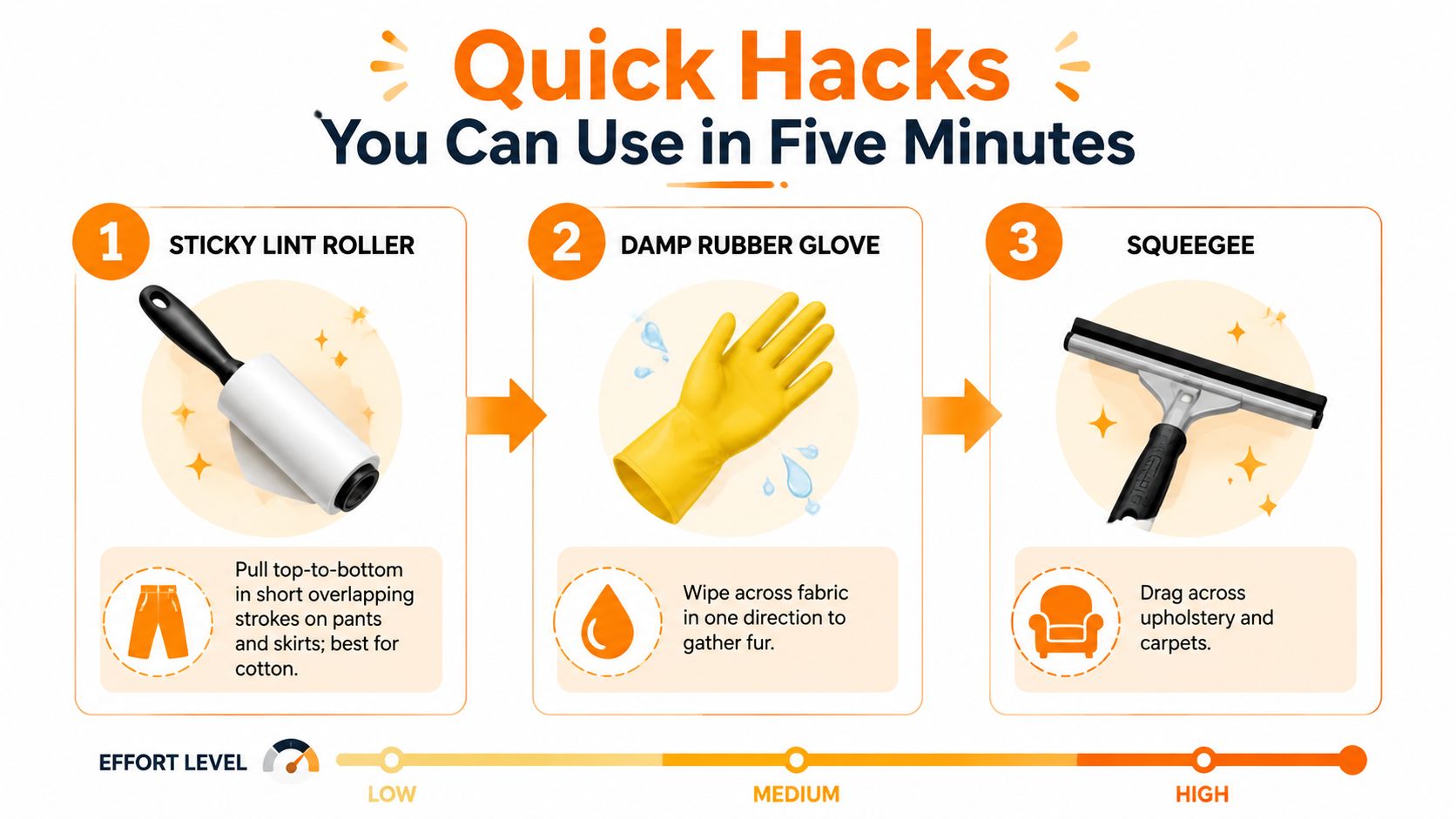
Sticky lint roller: Pull the roller from top to bottom in short, overlapping strokes. It's a fast choice for cotton shirts, denim, trousers, skirts, and structured blazers. Rollers work well on surface hair, though heavily furred items may need repeated passes, especially when the fabric is a deep knit. Guidance on lint rollers for smooth fabrics explains why they're better as a quick-fix tool than a universal remover.
Damp rubber glove: Slightly dampen a dishwashing glove, shake off excess water, and wipe in one direction. The rubber's texture and light moisture create friction that gathers embedded fur into clumps. This works especially well on sofas, car seats, fleece, and upholstery where adhesive sheets can run out quickly. This rubber-glove method is reusable and particularly useful for stubborn coverage.
Painter's tape: Wrap low-tack painter's tape around your hand with the adhesive facing outward. Press and lift rather than dragging across wool or knits. It's useful for isolated patches, but test first because delicate fibers can snag.
Damp microfiber cloth: Sweep gently in one direction across a dress shirt or smooth woven fabric. Use light pressure so the cloth collects fine hairs without roughing up the surface.
Low-heat air movement: Hold the garment several inches away from a bathroom hand dryer on low heat for a brief blast, then shake it over a hard floor and finish with a roller. Avoid high heat, which can affect delicate fibers or set stains.
The same principle works on linen couches in beach homes. Gather the bulk first, then use a narrow tool around seams and cushion edges.
Dry Removal Tools Compared Side by Side
A laundry-room kit doesn't need every specialty product. Choose based on fabric, hair load, and whether you'll reuse the tool.
Dry Cat Hair Removal Tools at a Glance
| Tool | Best Fabric | Hair Load | Cost Per Use |
|---|---|---|---|
| Sticky lint roller | Cotton, denim, smooth woven fabrics | Light to medium | Higher with frequent use |
| Rubber glove | Upholstery, fleece, car seats | Medium to heavy | Low and reusable |
| Pumice or sweater stone | Durable knits and selected wool | Medium | Low, with careful use |
| Velour hairbrush | Wool and cashmere | Light to medium | Low and reusable |
| Silicone pet-hair remover | Knits and synthetic activewear | Medium to heavy | Low after purchase |
The sticky roller wins when you need to leave quickly and the fur is sitting on the surface. It loses efficiency when adhesive sheets become coated or when hair is buried in a thick weave. Refresh or replace the surface as soon as pickup drops.
A rubber glove is the workhorse for heavy shedding. It costs little per use, gathers fur into visible rolls, and handles upholstery better than a small adhesive sheet. Velour brushes are gentler on wool and cashmere, while silicone tools suit stretch fabrics where rollers may leave residue or slide over static-charged fibers.
For readers comparing a reusable roller for pet hair buildup, the main trade-off is convenience versus cleanup. Reusable tools reduce disposable waste, but they still need to be emptied and cleaned after a heavy pass.
Keep a lint roller and rubber glove within reach. Add a soft brush if wool is common in your closet, and skip specialty gadgets unless your household has persistent, heavy shedding.
The Laundry Sequence That Lifts Stubborn Fur
The washer shouldn't be the first stop for fur-covered clothing. Begin with a dry shake outdoors or over a hard floor, then use the dryer's no-heat or air-fluff setting for 10 minutes. Consumer Reports recommends a 10-minute no-heat dryer cycle before washing so loose hair can move toward the lint trap instead of becoming wet and embedded.
Clean the lint screen before the next stage. Then wash according to the garment label using controlled cold-water agitation. The lab-tested protocol summarized by this pet-hair removal guide reported over 92% removal across cotton, polyester, and cotton-poly blends from 147 garment samples, with the strongest results coming from pre-treatment followed by dryer-ball finishing rather than washing alone.
The sequence that works best
- Pre-lift: Shake the garment, glove off clumps, or use a roller on collars and seams.
- Air-fluff: Run the no-heat dryer cycle, then clean the lint trap.
- Wash carefully: Use cold water where the care label allows and avoid overcrowding.
- Dry and finish: Use low heat when appropriate, then inspect cuffs, hems, and collars.
Skip fabric softener. The cited protocol reports that it can increase surface adhesion by 37%, which helps explain why softener may encourage redeposition instead of releasing fur. Don't add vinegar automatically to every load, either. Fabric care labels, machine guidance, and the garment's material should control the wash choice.
If the washer develops a musty smell after repeated pet-laundry loads, follow this guide on how to remove musty odor from a washing machine. A clean machine supports the workflow, but it won't replace pre-treatment.
Matching Your Method to the Fabric
The best cat hair clothes remover depends on the weave. Hold the garment taut and use controlled strokes rather than scrubbing hard.
Best Removal Tool by Fabric Type
| Fabric | Best Tool | Technique |
|---|---|---|
| Knits and wool | Damp rubber glove | Sweep downward in short strokes |
| Denim and heavy cotton | Stiff clothes brush | Pull firmly along the fabric surface |
| Fleece and synthetic activewear | Velour brush or silicone remover | Use light, repeated passes |
| Silk, satin, and fine weaves | Low-tack painter's tape | Press and lift at a flat angle |
| Linen blends | No-heat dryer pass | Let air movement loosen surface fur first |
Knits and wool need friction without aggressive scraping. A lightly damp glove gathers hair while reducing the risk of pilling. Denim can handle a firmer brush, especially around pocket edges and belt loops.
Synthetic activewear often holds static-charged fur on the surface. A soft velour brush or silicone tool can lift it without leaving adhesive residue. For delicate silk or satin, test tape on a hidden area and stop if threads rise.
Microfiber upholstery needs the same restraint. Use the appropriate tool and review how to clean a microfiber couch before treating a large visible area.
Prevention Habits That Keep Fur Off Clothes
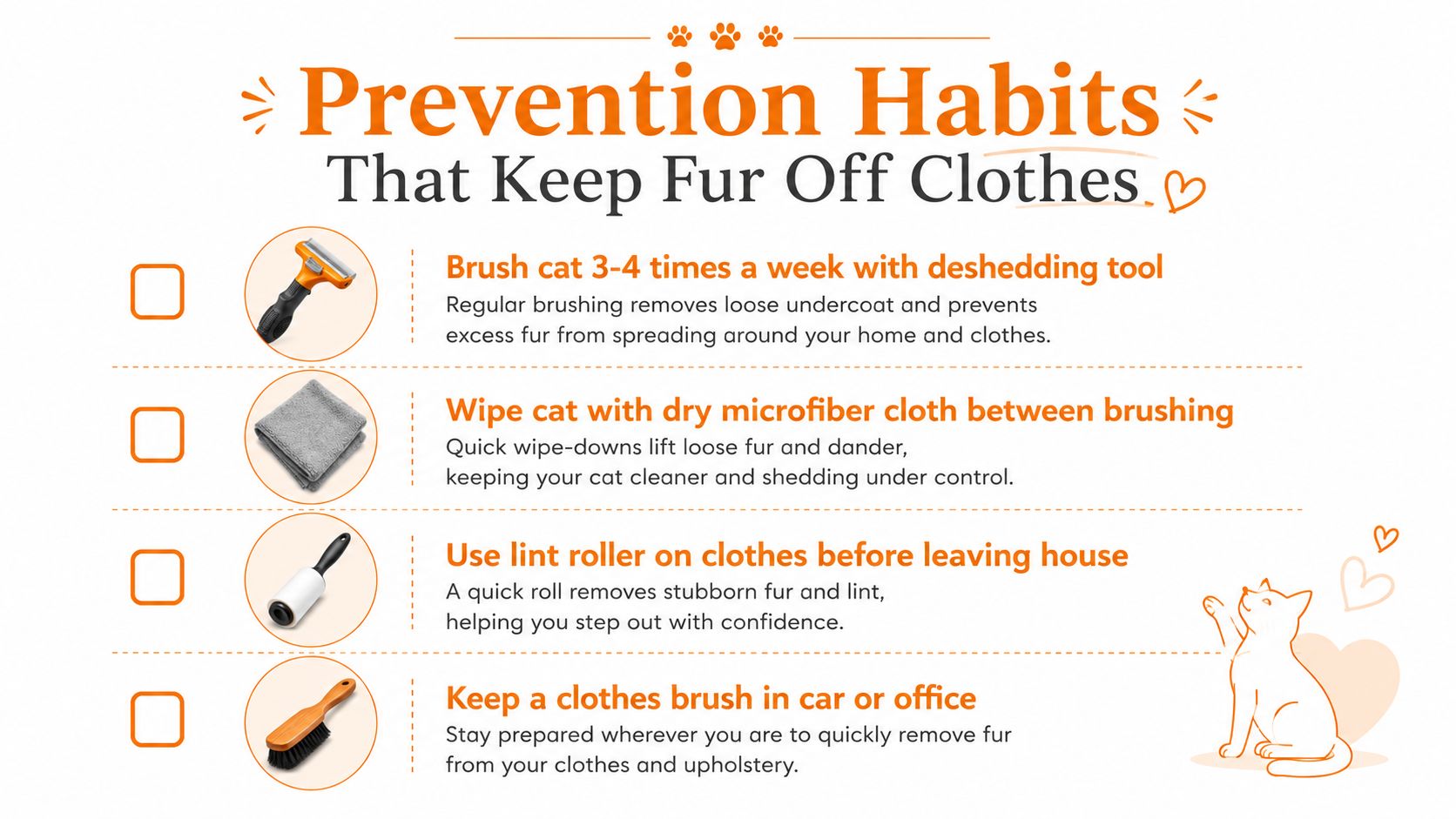
Removal takes less time when loose fur is captured before it reaches the closet. Brush the cat outdoors or in a designated easy-clean area with a deshedding tool, then wipe the coat with a dry microfiber cloth between grooming sessions.
Keep clean clothing in closed closets or garment bags rather than open shelving. That matters in Palm Beach County rooms where AC dust, tropical pollen, and floating fur settle on exposed surfaces.
Small habits with a large payoff
- Create a laundry zone: Keep cat bedding, gloves, rollers, and hampers together so fur-covered items don't travel through bedrooms.
- Mount a roller by the closet: A quick pass before leaving catches hair before it reaches the car or an Airbnb guest room.
- Wash cat bedding regularly: Separate heavily furred bedding from everyday clothing and remove loose hair before laundering.
- Protect upholstery: Washable throws on sofas reduce hair collection in seams and cushion gaps.
- Check ventilation: Replace HVAC filters on the schedule recommended for your system and household conditions.
For a broader room-by-room approach, use this practical guide to the best way to clean dust. Dusting window sills and AC vents helps reduce the material that combines with fur on shelves and fabric.
When to Call in a Professional Cleaning Service
DIY tools handle clothing well, but they don't solve fur bonded into upholstery seams, closet shelving, baseboards, and AC-vent dust. It's time to bring in help when daily lint rolling no longer keeps up, family members are reacting to accumulated dander, or a same-day Airbnb turnover leaves no time for a full reset.
DIY vs Professional Cleaning Service
| Situation | DIY Approach | Professional Service |
|---|---|---|
| Light clothing fur | Roller or glove | Not usually needed |
| Hair in sofa seams | Manual tool and vacuum | Detailed vacuuming and upholstery attention |
| Guest-ready turnover | Spot cleanup | Checklist-based whole-home reset |
| Multiple cats or heavy shedding | Repeated maintenance | Recurring visits plus focused pet-hair areas |
| Move-out inspection | Surface pass | Bathrooms, kitchen, floors, baseboards, and add-ons |
In West Palm Beach move-out cleans, bathrooms often look acceptable at first glance. The primary challenge is in grout lines, behind fixtures, and baseboards where humidity and soap residue collect before the final walkthrough. Coastal homes also bring in sand, while rainy-season entryways add mud that traps fur along tile edges.
A recurring clean can include bathrooms, kitchen degreasing, floors, baseboards, mirrors, sinks, counters, fixtures, cabinet exteriors, window sills, dust removal, and high-touch disinfecting. Deep cleaning adds overdue buildup and vents, fans, and other commonly missed areas. Move-in and move-out service can add the inside of the oven, refrigerator, and cabinets, while Airbnb turnover service is organized around tight checkout windows.
Pricing depends on bedrooms, bathrooms, square footage, condition, and add-ons. Most clients request a custom estimate.
How long does it take? It depends on size, condition, pet-hair concentration, and whether the home needs a standard, deep, move-out, or turnover clean.
Are supplies included? A professional team should confirm what it brings when you book. Ask specifically about pet-safe products and focused hair removal.
Can you book same-day? Availability changes, especially during busy turnover periods and after storms. Call early with the property size and deadline.
South Florida humidity shows up in grout lines and bathroom ceilings faster than many residents expect. Around coastal Palm Beach County, salt air, sand, and AC dust can turn a small fur problem into a whole-home cleaning issue.
Book Sunset Shine Home Cleaning for recurring, deep, move-in, move-out, or Airbnb turnover cleaning that includes focused attention to pet-hair areas, floors, bathrooms, kitchens, baseboards, and window sills. Call 561-408-4020 or visit the website to request a custom estimate for homes in West Palm Beach, Palm Beach Gardens, Jupiter, Juno Beach, North Palm Beach, Riviera Beach, Royal Palm Beach, Lake Worth, Boynton Beach, Delray Beach, Boca Raton, Wellington, Westlake, Loxahatchee, Loxahatchee Groves, and The Acreage.