A homeowner in West Palm Beach may spray a kitchen counter after a dog tracks in sandy paws, then wonder whether the surface is safe before the next meal or before the pet climbs back up. Choosing a pet-friendly disinfectant spray helps, but the label, wet contact time, ventilation, and complete drying matter just as much in Palm Beach County's humid, air-conditioned homes.
Table of Contents
- Why Pet Friendly Disinfectant Spray Matters in South Florida Homes
- What Pet Friendly Disinfectant Sprays Actually Are
- Safe and Risky Active Ingredients for Homes With Pets
- How Contact Time and Drying Affect Pet Safety
- Where to Disinfect Pet Gear Versus Home Surfaces
- Reading Labels and Choosing the Right Product
- When to Call a Professional Cleaning Service Instead
Why Pet Friendly Disinfectant Spray Matters in South Florida Homes
In Palm Beach County, a wet dog can cross a floor before the air conditioner has finished drying it. Cats track residue from treated floors onto their paws, while coastal condos collect salt on fixtures and AC dust on nearby surfaces. High humidity keeps bathrooms damp, slows evaporation, and leaves disinfectant residue easier to miss on tile, laminate, and stainless steel.
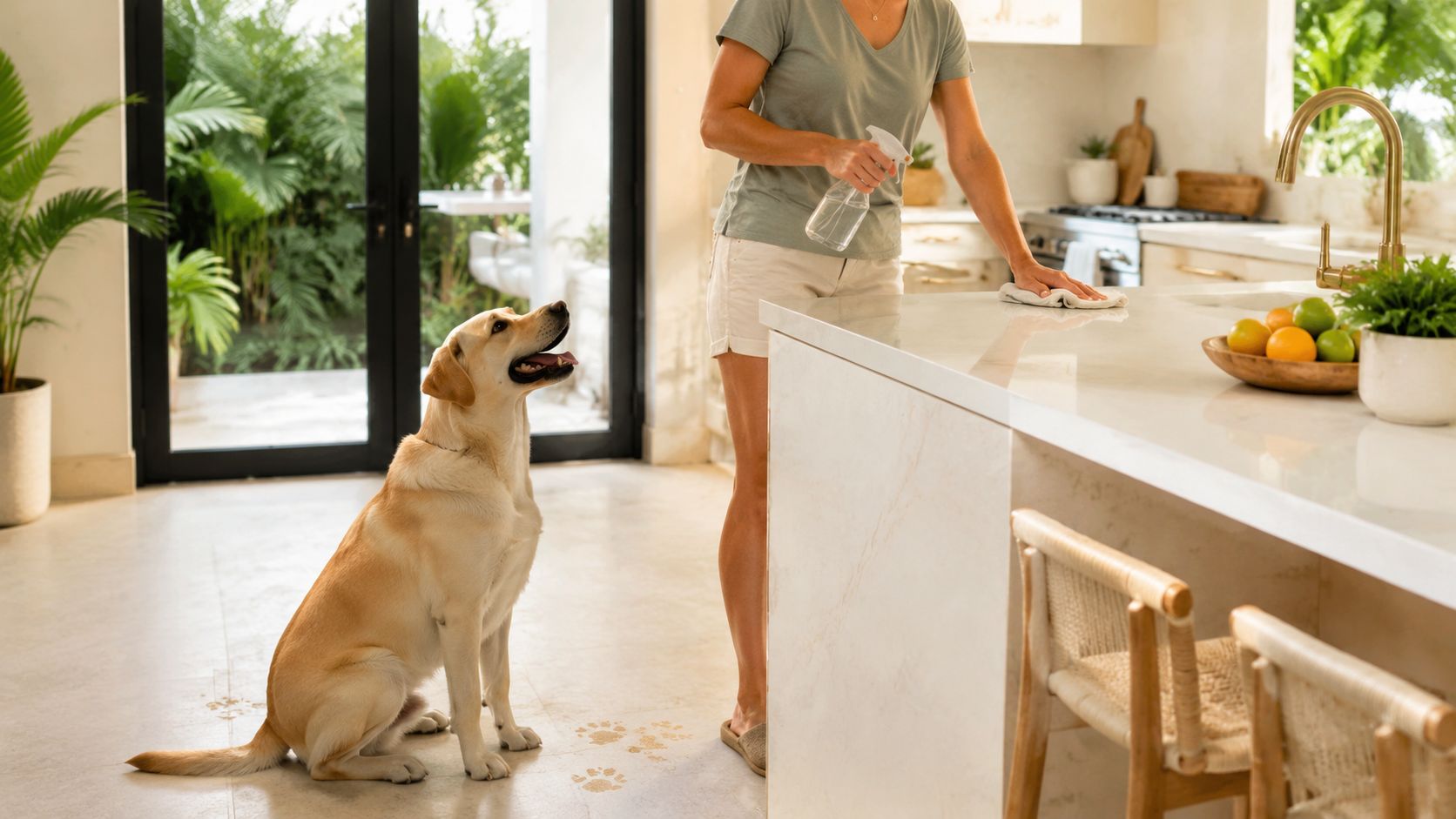
A pet friendly disinfectant spray still needs its stated wet contact time. Keep pets away during application and until the surface dries fully, following CDC guidance for cleaning and disinfecting pet supplies. In year-round AC homes, airflow can dry the top layer quickly while moisture remains in grout lines or textured surfaces, so do not judge readiness by appearance alone.
Short-term control also protects the finish. Wipe away residue when the label permits, especially where pets eat, sleep, or rub against furniture.
Practical rule: Close off the room, follow the label exactly, and include full drying and permitted residue removal in the cleaning task.
These steps matter in beach homes and vacation rentals, where sand, pet hair, salt, and moisture return quickly. Furniture covers can reduce buildup between cleanings, including these durable covers for cat claws.
What Pet Friendly Disinfectant Sprays Actually Are
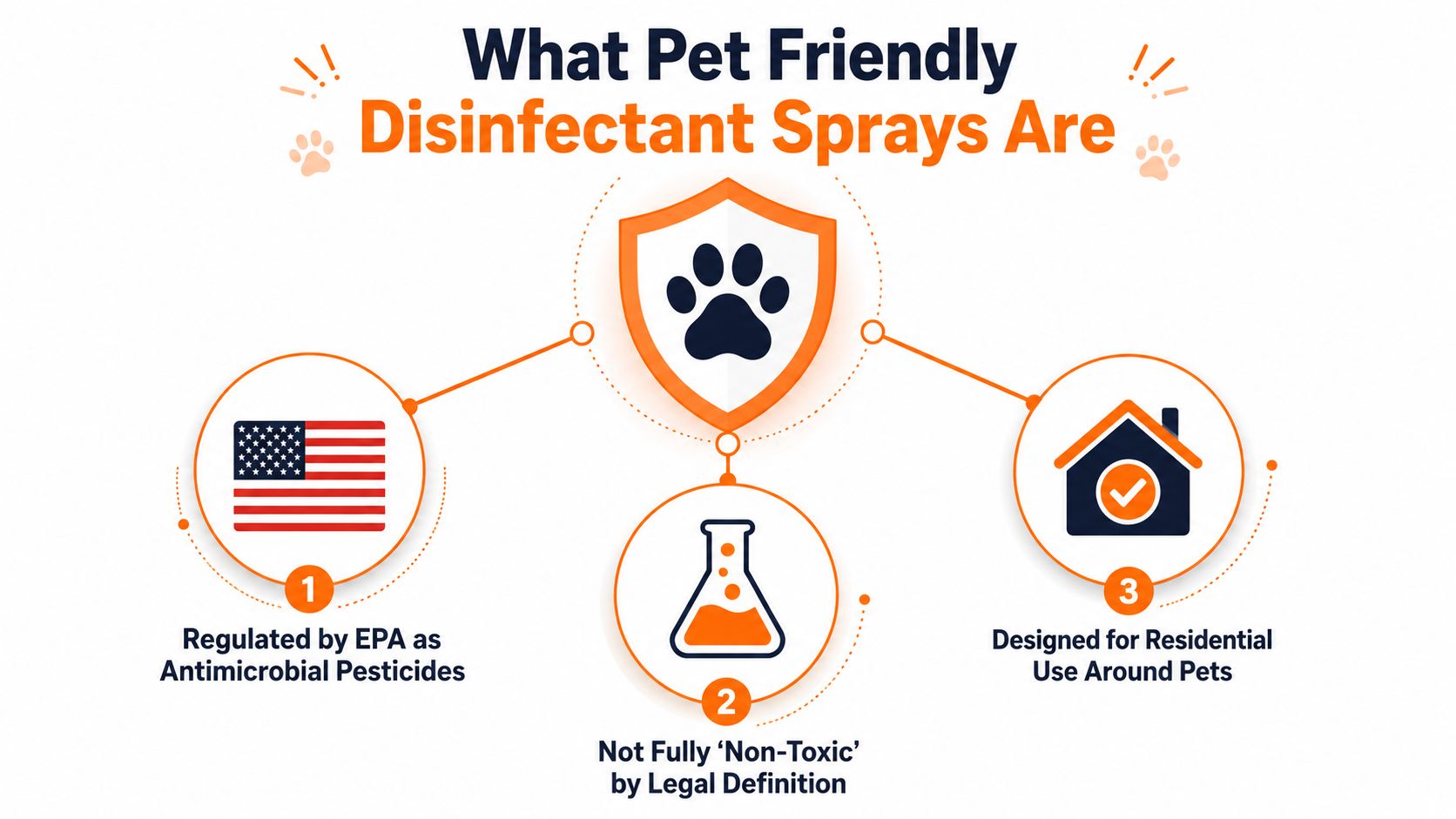
In the United States, disinfectant sprays are regulated as antimicrobial pesticides, including products marketed for use around pets. EPA guidance tells consumers to read the label before buying, storing, or using household cleaners or pesticide products, and to keep them away from pets and children. The label isn't decorative packaging. It defines the approved surfaces, organisms, application method, contact time, and safety directions. EPA product guidance explains this regulatory framework.
The Design for the Environment logo adds a useful screening signal. EPA says a disinfectant carrying the DfE logo meets stringent criteria for human health and environmental effects while performing as claimed. That doesn't make a product harmless or suitable for every surface, but it gives shoppers more information than a vague “natural” or “pet-safe” phrase.
What to verify before buying
- EPA registration: Look for a registration number and approved use directions.
- Pet-area instructions: Confirm that the label addresses surfaces your pets contact.
- DfE marking: Use it as an additional environmental and human-health screening point.
- Surface compatibility: Check tile, sealed stone, counters, floors, bowls, or toys separately.
The category has moved from older corrosive veterinary products toward label-guided, EPA-registered consumer disinfectants intended for use around pet areas, not directly on animals. For broader household product choices, Sunset Shine also discusses natural cleaning products for the home.
Safe and Risky Active Ingredients for Homes With Pets
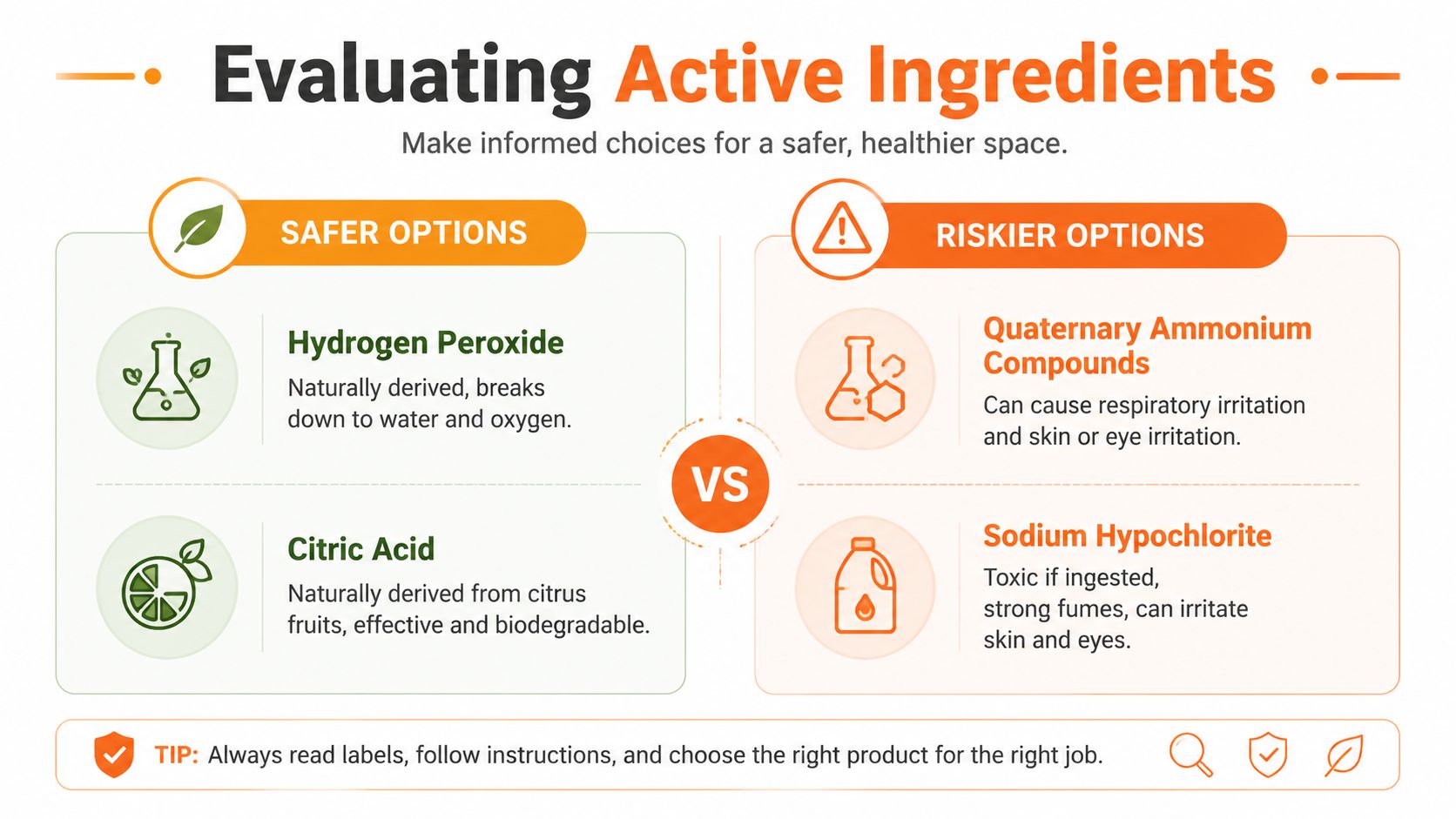
The active ingredient deserves more attention than the front label. Quaternary ammonium compounds, often called quats, are common in household and veterinary disinfectants. Pets may encounter residues by licking treated surfaces, breathing spray mist, or contacting damp areas with paws and fur. A veterinary safety discussion of disinfectants and pets explains why exposure route, concentration, ventilation, and label compliance all matter. Read the veterinary guidance on disinfectant risks.
Some formulations use low quat concentrations alongside ethanol or surfactants. That doesn't create a universal safety guarantee. Over-application, poor ventilation, spraying near food dishes, or releasing a pet before drying can remove the margin the label assumes.
A practical label comparison
- Hydrogen peroxide: Often breaks down more readily than persistent surface residues, but the product still needs approved directions.
- Citric acid: Can suit some cleaning tasks, though acidity may damage sensitive materials.
- Quats: Common and effective when used under validated conditions, but require strict residue and exposure control.
- Sodium hypochlorite: Strong fumes and ingestion hazards make ventilation, separation, and rinsing especially important.
No ingredient is automatically safe because it sounds familiar or plant-derived. Before buying, compare labels and browse pet-safe cleaning guidance for additional household considerations. Sunset Shine's dog-safe cleaning products page also provides a local service perspective for homes where dogs move between floors, furniture, and patios.
How Contact Time and Drying Affect Pet Safety
Contact time is the controlling mechanic. EPA and CDC guidance require the treated surface to stay visibly wet for the full period printed on the label. EPA examples show contact times ranging from 10 seconds to 1.5 minutes in its conversion table, while other registered products may specify 1 minute or 10 minutes, depending on the claim and organism. See the EPA registered disinfectant guidance.
Spraying a counter and wiping it immediately may make the surface look clean without allowing the disinfectant to work as claimed. If the product dries early, the EPA says to apply more product so the surface stays wet for the required duration.
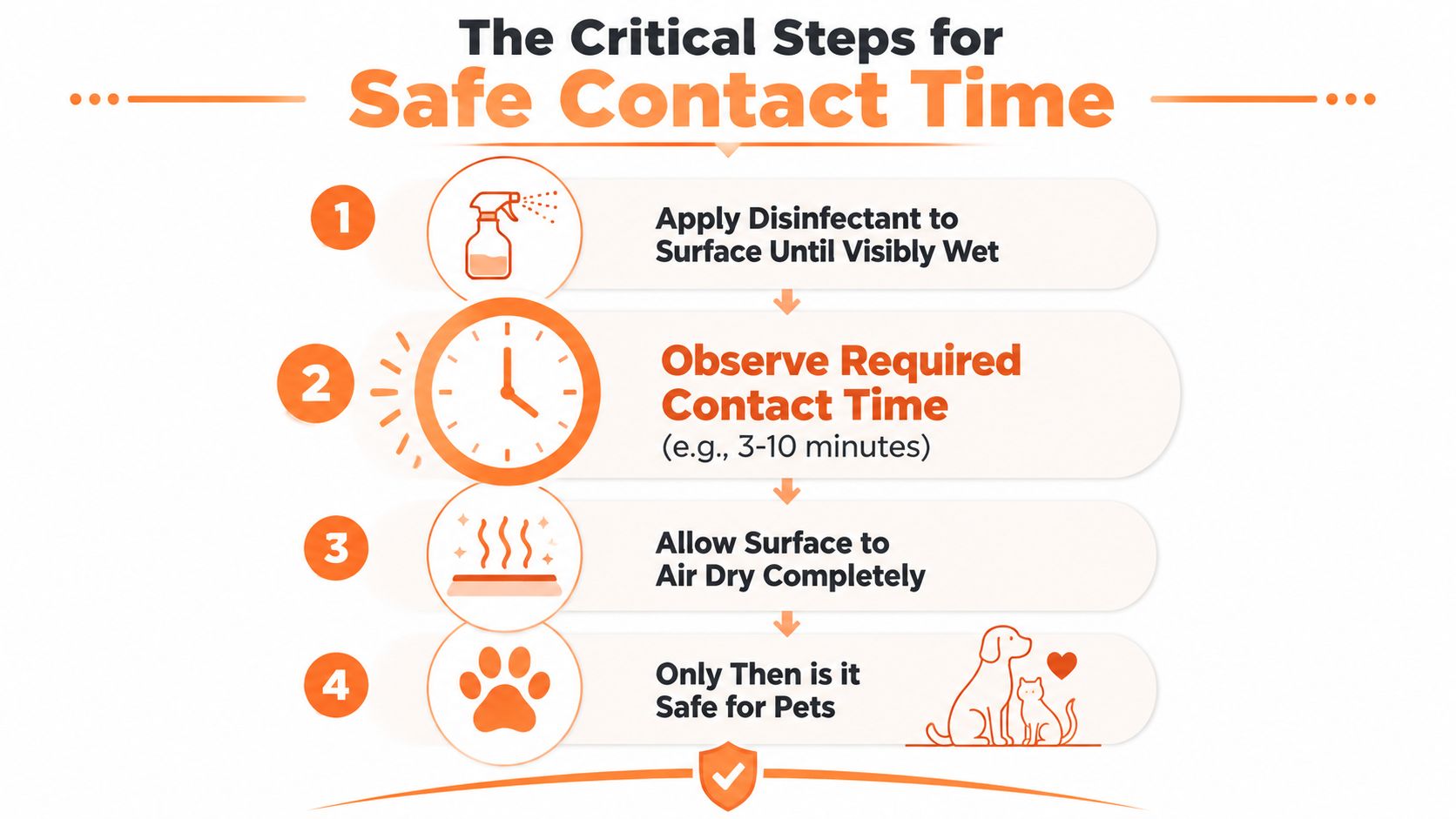
The Palm Beach County routine
- Remove food bowls, toys, and pets from the area.
- Apply enough spray to make the surface visibly wet.
- Watch the label clock, especially on porous grout or fast-drying surfaces.
- Allow complete drying, then wipe dry or rinse when the label and surface permit.
Humidity doesn't make every surface dry at the same speed. Strong AC airflow can dry an exposed counter quickly, while shaded bathroom grout may stay damp longer. CDC guidance also supports wiping surfaces dry or rinsing with water after disinfection to reduce exposure from residues.
Where to Disinfect Pet Gear Versus Home Surfaces
In a Palm Beach County rental, a damp crate mat may sit near an AC vent while sand collects under the crate and hair clings to a feeding station. Treating those items like a countertop can spread residue and soil into food-preparation areas. Pet gear needs a separate workflow.
Bowls, crates, toys, bedding, and habitats hold saliva, food particles, hair, and moisture. CDC guidance recommends cleaning pet supplies outdoors when possible, rather than in the kitchen sink, food-preparation areas, or bathroom sink. That separation matters during a quick pet-friendly Airbnb reset.
Keep the tasks separate
For home surfaces, remove visible soil first. Apply an EPA-registered product according to its label, keep the surface wet for the stated contact time, and allow it to dry before pets return.
For pet supplies, use an outdoor or designated utility area when available. Follow the label's rinsing directions, keep food and water dishes away from chemical residue, and wash your hands after handling bowls, habitats, supplies, or pet waste.
South Florida humidity can slow drying in shaded utility areas, while year-round AC airflow may dry exposed surfaces quickly. Check the surface rather than assuming humidity controls the timing. Remove sand and debris before disinfecting, since soil can interfere with the product's intended use.
For soft flooring or lingering odor, a separate pet-friendly carpet deodorizer service may fit better than repeated disinfectant spraying.
Reading Labels and Choosing the Right Product
A useful label gives you enough information to compare products on EPA registration, contact time, approved surfaces, target organisms, ventilation, and pet-specific directions. Check for the DfE logo if environmental and human-health screening matters to your household.
Contact times range from 10 seconds to 10 minutes, depending on the product and claim, as shown in EPA antimicrobial product materials. In a Palm Beach County home, that timing affects product choice. Year-round AC can dry an exposed surface before the required wet period ends, while high humidity can slow drying in shaded rooms and leave residue if the label calls for wiping or rinsing.
Read the entire use section, especially directions for pet-accessible areas, re-entry, ventilation, and post-treatment cleanup. A front-label promise gives limited guidance for tile, sealed wood, plastic crates, or feeding areas.
DfE labeling may help households compare environmental and human-health screening criteria. Storage and handling instructions deserve the same attention. A practical reference is this pet medication dosage and storage guide, where small label details affect safe use.
Choose the product whose directions fit the surface, room conditions, and available cleaning time. If staff cannot keep a surface wet for the stated period during an Airbnb turnover, a different labeled product or workflow may be more suitable. Fresh air, correct dilution, and complete drying also matter in humid homes.
When to Call a Professional Cleaning Service Instead
DIY disinfecting works for controlled, limited tasks. It becomes less practical when a Palm Beach County home has weeks of AC dust on vents, pet hair packed along baseboards, mildew in bathroom grout, sand across tile, or sticky residue left behind during an Airbnb turnover.
A professional cleaning service can follow a room-by-room checklist instead of chasing visible spots. The work may include:
- Deep cleaning: Baseboards, window sills, vents, fans, cabinet exteriors, bathrooms, floors, and high-touch surfaces.
- Move-in and move-out cleaning: Inside the oven, refrigerator, and cabinets, with attention to landlord walkthrough priorities.
- Airbnb turnover: Fast bathroom resets, kitchen wipe-downs, floor care, and guest-ready surfaces within a tight checkout window.
- Post-construction cleaning: Fine drywall dust, grout haze, adhesive residue, and debris in corners before occupancy.
- Property management support: Consistent checklists across units, make-ready cleans, and maintenance issue flagging.
Post-hurricane moisture deserves extra caution. A spray can't resolve hidden water damage or established mold concerns, and repeated misting may leave more residue without solving the underlying condition.
South Florida humidity shows up in grout lines and bathroom ceilings faster than many expect. Move-out cleans around West Palm Beach often come down to kitchens, bathrooms, floors, and baseboards, the areas landlords inspect first.
Sunset Shine Home Cleaning serves West Palm Beach, Palm Beach Gardens, Jupiter, Juno Beach, North Palm Beach, Riviera Beach, Royal Palm Beach, Lake Worth, Boynton Beach, Delray Beach, Boca Raton, Wellington, Westlake, Loxahatchee, Loxahatchee Groves, and The Acreage. The team handles recurring standard cleaning, deep cleaning, move-in and move-out work, post-construction cleaning, Airbnb and vacation-rental turnovers, and property-management cleaning with supplies brought to the home.
Book Sunset Shine Home Cleaning for a detailed clean that accounts for pet hair, humid bathrooms, sandy floors, AC dust, and disinfectant residue. Call 561-408-4020 or visit the website to arrange a recurring, deep, move-out, Airbnb, or property-management service in Palm Beach County.