Most advice about green cleaning certification makes it sound like one green label fixes everything. In Palm Beach County homes, that's not how it works. A certified bottle can help, but it doesn't guarantee the crew was trained correctly, the dilution was right, or the service will hold up against humidity, mold, move-out stress, pet hair, and landlord walkthroughs in South Florida.
For homeowners, renters, Airbnb hosts, and property managers in West Palm Beach, Palm Beach Gardens, Jupiter, Juno Beach, North Palm Beach, Riviera Beach, Royal Palm Beach, Lake Worth, Boynton Beach, Delray Beach, Boca Raton, Wellington, Westlake, Loxahatchee, Loxahatchee Groves, and The Acreage, the question is simpler. What does the certification cover, and what does it leave out when a cleaner shows up at the door?
Table of Contents
- What Green Cleaning Certification Covers
- Major Certification Programs Compared
- Why Certification Matters for South Florida Homes
- How Cleaning Companies Get Certified
- What We See in Palm Beach County Homes
- Is Full Certification Worth It for Small Operations
- How to Verify Green Claims and Use Them in Marketing
What Green Cleaning Certification Covers
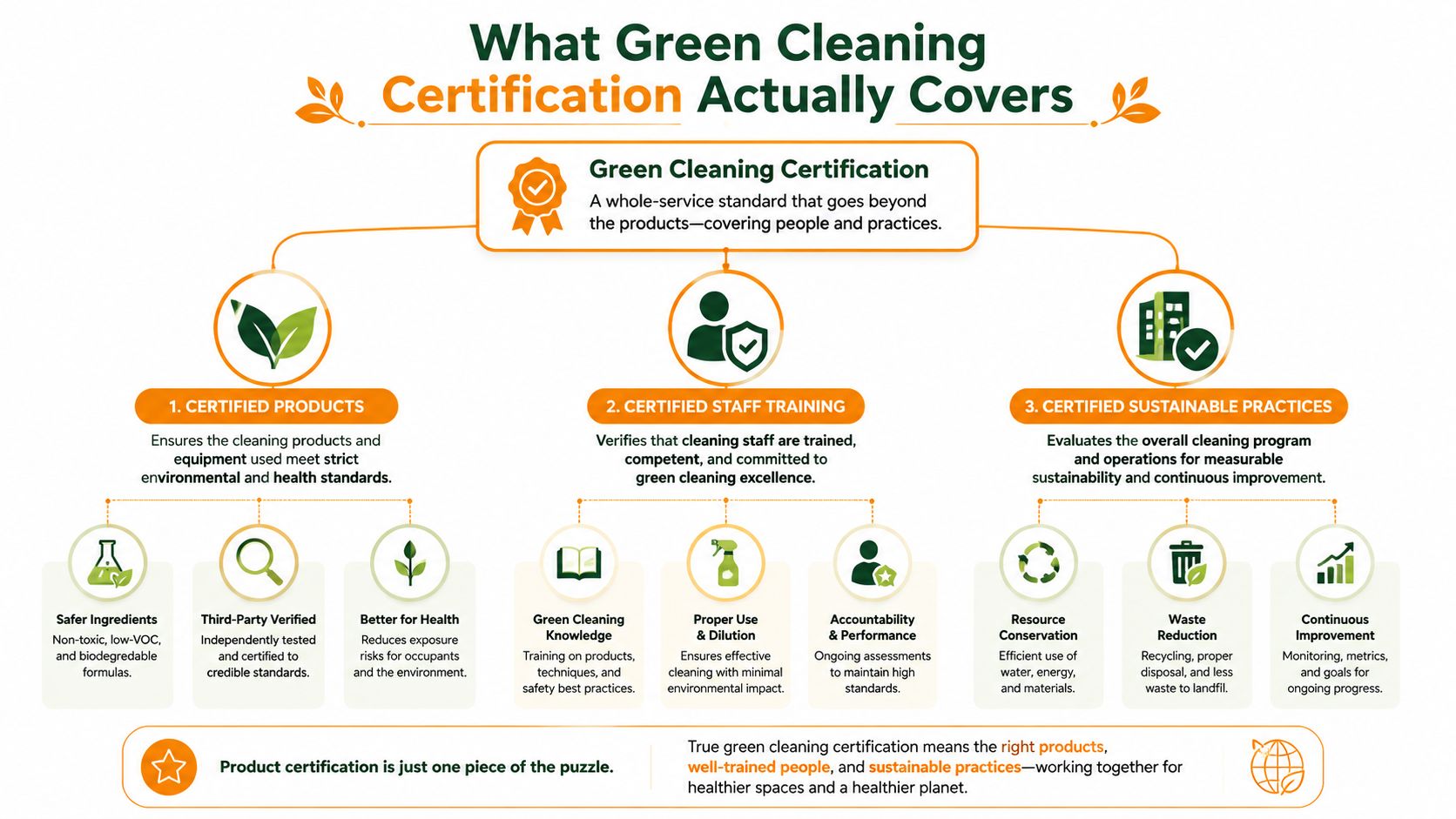
A green label on a bottle does not mean the whole cleaning visit is certified. That is the first thing many buyers get wrong. Product certifications, service certifications, and building programs are different categories, and mixing them up is where greenwashing usually slips in.
Product, service, and building are not the same thing
A product certification evaluates one formula, like a restroom cleaner or glass cleaner. A service certification looks at the company's cleaning process, including training, procedures, and product selection. A building program goes wider still, because it looks at facility-wide policies and documentation. Green Seal's GS-42 guide ties certification to the service process, while Green Seal GS-37 focuses on measurable cleaning performance for products, not just claims on the package GS-37 performance criteria summary.
That difference matters in a real home. A bottle can be certified, but the cleaner can still over-dilute it, skip dwell time, or use the wrong cloth on a sticky kitchen surface. A homeowner buying service wants the whole job handled correctly, not just a nice label on the supply shelf.
Practical rule: ask whether the certification applies to the product, the service company, or the building. If the answer is vague, the claim is probably broader than the proof.
For product claims, the bottle or refill container may carry the label, but that tells you only what the formula was reviewed for. It does not tell you how a crew mixes it, sprays it, wipes it, or stores it once it reaches a Palm Beach County home. That gap is why buyers should separate the chemistry from the service standard.
If you are comparing ingredients, the same logic applies to browse Living Air cleaning solution. The product can be part of a green routine, but the label still does not cover the full visit, the worker's technique, or whether the cleaner uses it in the right setting.
For Palm Beach County buyers, that distinction is why the details on a cleaner's process matter. A service can say it uses eco-conscious products, but that does not tell you whether the team has documented training, repeatable procedures, or equipment discipline. If you want a closer look at ingredient-focused claims, see our low-VOC cleaning products guide.
Major Certification Programs Compared
Not every green badge checks the same boxes. Some programs screen ingredients. Some test cleaning performance. Some also require process controls. The fastest way to compare them is to ask what each one proves and what it leaves untouched.
What the main labels do
Green Seal is the most useful anchor for cleaning buyers because it combines performance and environmental criteria. Green Seal says a product has to achieve an average of 80% soil removal to qualify as effective, which tells you the label is not just about sounding eco-friendly Green Seal performance threshold. EPA Safer Choice is different, because it screens ingredients for carcinogenicity, reproductive and developmental toxicity, aquatic toxicity, and environmental persistence EPA Safer Choice ingredient screening. EU Ecolabel shows how mature the field has become, with more than 102,000 goods and services, 3,248 awarded licenses, and 8,129 certified hard surface cleaning products by April 15, 2025 EU Ecolabel statistics.
ECOLOGO and the Green Clean Institute are names buyers may see in the market, but the key question is still the same. Does the program certify a formula, a service process, or both? If it only speaks to ingredients, you still need to know who trained the crew and how the job is documented.
| Program | What It Certifies | Key Testing Criteria | What It Does Not Cover |
|---|---|---|---|
| Green Seal | Products and services, depending on the standard | Performance thresholds, ingredient restrictions, packaging and process controls | It does not mean every part of a company is certified |
| EPA Safer Choice | Individual products | Ingredient screening for health and environmental risks | It does not certify the whole cleaning service |
| EU Ecolabel | Goods and services across many categories | Broad environmental and product criteria | It does not automatically prove local service quality |
| ECOLOGO | Products and some service categories | Category-specific environmental criteria | It does not guarantee the same standard across all cleaning tasks |
| Green Clean Institute | Training or service-oriented claims | Program-specific standards and education | It does not replace product testing by itself |
A local buyer should read the label like a mechanic reads a dashboard. One light tells you something, but not everything. If a company can't explain what its certification covers, the badge is probably doing more marketing work than quality control.
Why Certification Matters for South Florida Homes
Palm Beach County homes put cleaning products under real stress. High humidity speeds up bathroom buildup, salt air hits coastal fixtures, sand gets tracked through tile, and year-round AC dust settles on vents and returns. A certified cleaner matters here because the product has to work, not just sound safe.
The local conditions are rough on weak products
In humid bathrooms, a product that's “green” but weak on soil removal won't keep up with grout lines, soap scum, or mildew-prone corners. That's where measurable performance helps. A restroom cleaner that's been tested for soil removal is more useful than a vague eco claim, because the work in South Florida bathrooms is repetitive and unforgiving. For more on moisture control around the house, see our mold prevention strategies guide.
Coastal homes add another layer. Salt residue on metal finishes and shower glass can make cheap products streak, haze, or leave a film behind. In those homes, the cleaner needs enough strength to remove buildup without chewing up finishes or leaving the room smelling harsh.
Certified service standards matter because they reduce variation. When the team follows the same dilution, training, and equipment rules every visit, recurring cleaning gets more predictable.
That consistency is a bigger deal in Airbnb turnovers and rental move-outs than many think. A one-time miss on a vent, baseboard, or glass door can tank the impression fast. In that setting, the value of certification isn't the logo itself, it's the system behind the logo, especially when the schedule is tight and the property has to look guest-ready the same day.
For property managers, the upside is even clearer. Certified products and documented service practices make it easier to keep unit quality consistent across different cleaners, different dates, and different conditions. That doesn't mean the certificate guarantees perfection. It does mean the process is less likely to fall apart when the weather turns wet, the entryway tracks in sand, or the bathroom needs more than a surface wipe.
How Cleaning Companies Get Certified
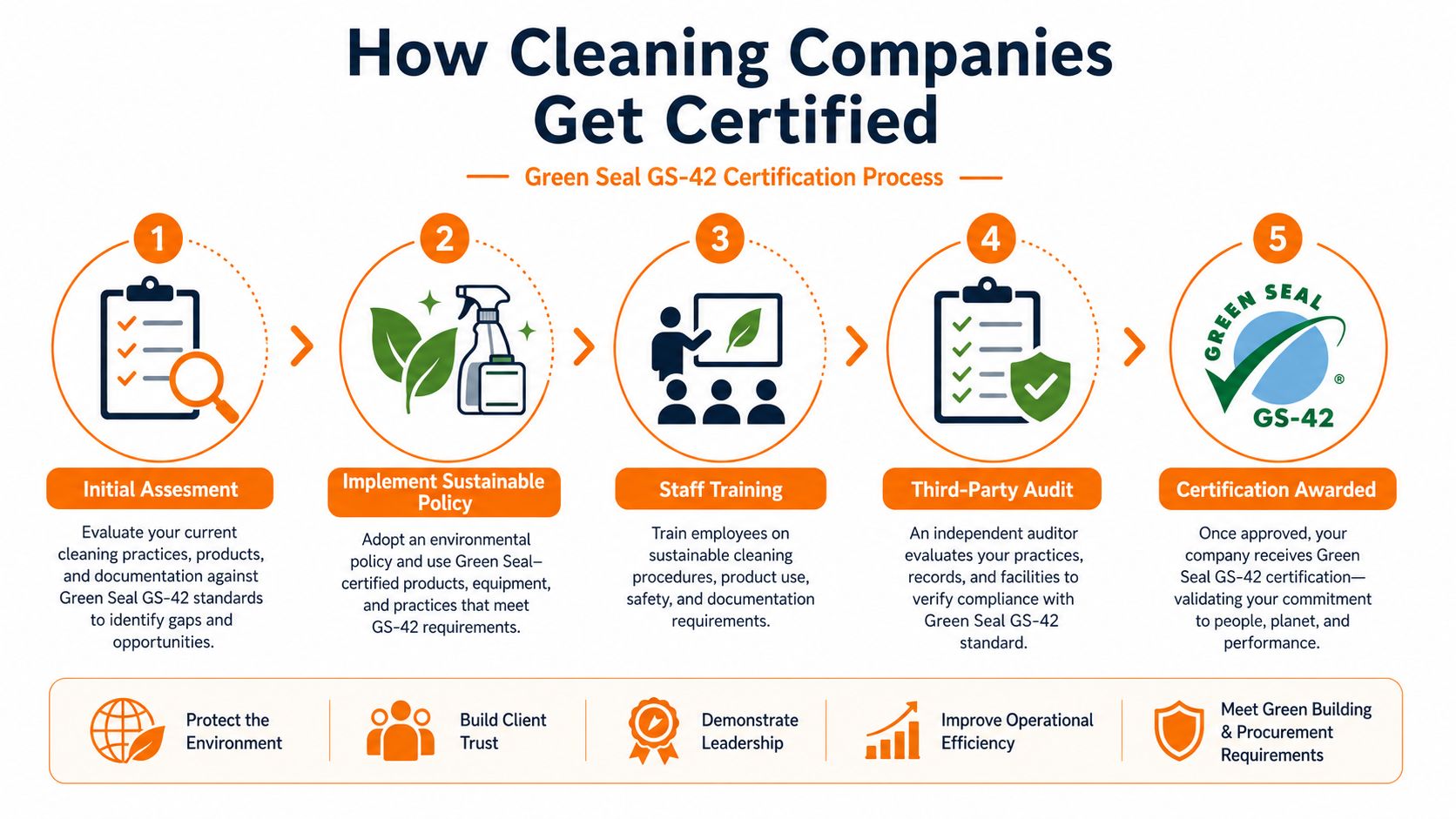
A better bottle does not make a service certified. The work is building a cleaning system that can stand up to an audit. Green Seal's GS-42 is the clearest example because it evaluates the service process, not only the chemicals on the cart.
The paperwork is part of the standard
The company has to show approved product selection, formal training, documented procedures, and waste-reduction controls. That usually starts with a gap analysis, where the business compares current practices against the standard and identifies what has to change. Then comes the part that feels tedious but matters most to auditors, training records, standard operating procedures, product lists, and proof that staff follow the system.
If the team can't document it, the certifier can't trust it.
The operational reality is straightforward. A small residential company can often improve quality by adopting certified products and training first, but a full service certification adds ongoing administrative work. The lift is not only on the floor, it is in the back office, where records, checklists, and audit prep live.
For local cleaning owners, that is the judgment call. If your clients are mostly homeowners who want a reliable, non-toxic clean, the certificate can help sales, but the underlying system is what changes results. If you serve larger facilities or want to support building programs, the certification label matters more because it fits procurement and compliance language.
What We See in Palm Beach County Homes
The same problem shows up in different ways depending on the property. In West Palm Beach condos, it might be shower glass with soap scum that reappears fast because of humidity. In Jupiter and Juno Beach homes, salt air can leave fixtures looking dull even after a basic wipe-down. In Boynton Beach and Delray Beach rentals, sand and sticky kitchen residue show up together after back-to-back guest turnover.
Real rooms reveal the difference
Bathrooms are where certification claims get tested first. A restroom cleaner with a measurable soil-removal standard is more useful in grout lines, around faucets, and on shower walls than a generic “green” spray that smells nice and fades fast. When a company skips proper dwell time, mildew spots stay put and the room still looks tired.
Kitchens are the other stress point. In Airbnb turnovers, the sticky film on counters, fingerprints on appliance fronts, and crumbs in corners tell you whether the service used the right process, not just the right marketing. That's where product performance, trained staff, and sequence matter together.
Here's what that looks like on the ground:
- Bathrooms: Shower glass, grout lines, fixtures, sinks, mirrors, and toilets need real soil removal, not a fragrance cover-up.
- Floors: Tile and grout pick up sand fast, especially near entries and patios.
- Vents and sills: AC dust, pollen, and fine debris settle where the eye misses first.
- Kitchens: Cabinets, backsplash edges, and appliance fronts collect grease and fingerprints after busy weeks or turnovers.
If a cleaner knows Palm Beach County, they know the pattern. Homeowners don't complain about a label on a bottle, they complain when the baseboards still look dusty, the mirror still streaks, or the shower door still feels grimy the next morning. Certification helps only when it supports the work people can see.
Is Full Certification Worth It for Small Operations
For a small cleaning company, full service certification isn't always the smartest first move. The business case depends on who you serve. A company chasing building credits or facility contracts may need the label, but a local residential crew may get more value from certified products, documented training, and consistent checklists before spending money on a formal audit.
What the buyer really pays for
LEED-oriented guidance shows why this matters. For existing buildings, the Products and Materials path requires that at least 75% of the building's cleaning products and materials be Green Seal-certified, plus a Green Cleaning Policy prerequisite, a Custodial Effectiveness Assessment, and separate equipment requirements LEED green cleaning credit guidance. That tells you building programs often care about systems and product thresholds, not a dramatic rewrite of every routine.
For a smaller operation, the question is whether the certification label changes the customer experience enough to justify recurring compliance costs. Sometimes it does, especially when you sell to property managers or commercial clients who want paperwork they can file. Sometimes it doesn't, because homeowners care more about whether the bathroom is clean, the floors are even, and the crew showed up on time.
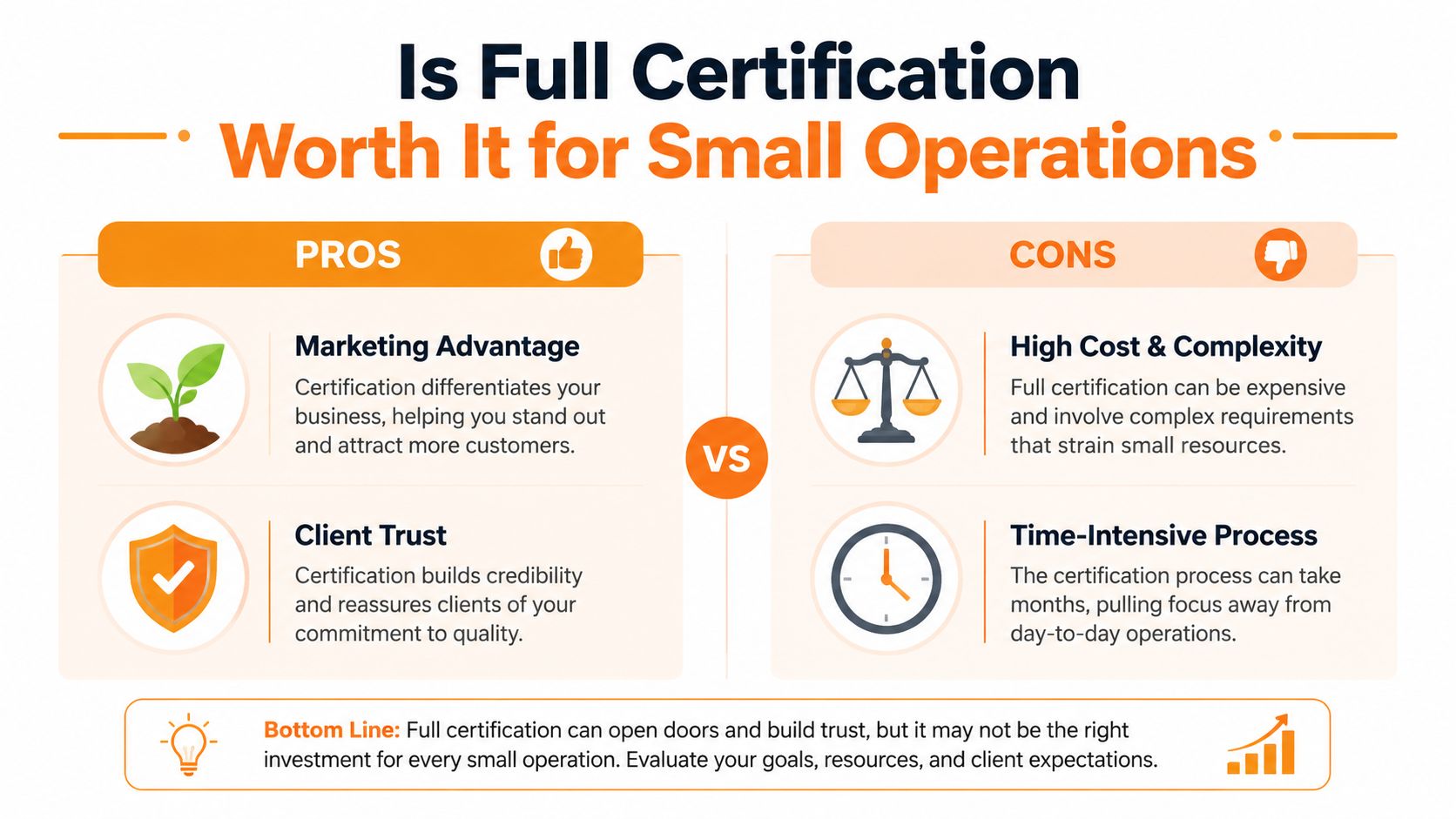
A practical framework is easy to use. If your business serves a lot of recurring residential clients, start with certified products and training. If you need access to procurement-driven accounts, full certification may be worth the admin load because it supports bids and trust. In both cases, the thing that changes daily service is not the plaque, it's the discipline behind the process.
How to Verify Green Claims and Use Them in Marketing
Homeowners should ask for proof, not adjectives. A company saying it is “green” is not the same as a company saying it uses EPA Safer Choice products, follows a Green Seal GS-42 service process, or meets a specific building standard. The wording matters because each claim points to a different thing.
Simple checks before you book
Start with the certification number or standard name. Then ask whether the claim applies to the product, the service, or both. If the company can't explain what's covered, it probably hasn't separated training from product choice very well.
- Ask for the exact certification name: Green Seal, EPA Safer Choice, or another specific label.
- Ask what is certified: one cleaner, the whole service, or the building program.
- Ask about training: who trained the staff, and how often procedures are refreshed.
- Ask what's documented: checklist, product list, or service plan should be easy to describe.
For businesses, honest marketing wins more trust than vague eco language. Say which products are certified, which service standards are followed, and what that means for the customer in plain English. If you need a clean example of how to frame that responsibly, see our eco-friendly house cleaning services page.
The strongest message is specific. “We use certified products and follow a documented cleaning process” tells a homeowner more than “we're green.” That is the difference between a label that sounds good and a claim a buyer can verify. It also keeps the conversation grounded in what matters inside a Palm Beach County home, product choice, crew training, and whether the service follows through the same way every visit.
Book your cleaning with Sunset Shine Home Cleaning, your trusted house cleaning service in West Palm Beach. If you're comparing certified products, trained crews, and real-world results in Palm Beach County, we can help you choose a cleaning plan that fits your home and your schedule. Call 561-408-4020 or book online today.