
A piled-up garage after a remodel, storm branches blocking the side yard, or a move-out that needs to be cleared before noon, that's when a debris removal service in Palm Beach County stops being a convenience and starts being the fastest way to get your property back under control. In West Palm Beach, Palm Beach Gardens, Jupiter, Juno Beach, North Palm Beach, Riviera Beach, Royal Palm Beach, Lake Worth, Boynton Beach, Delray Beach, Boca Raton, Wellington, Westlake, Loxahatchee, Loxahatchee Groves, and The Acreage, the underlying problems are usually the same, humidity, mold stress, landlord walkthroughs, and the mess left after renovations or storms.
Table of Contents
- Why Palm Beach County Homeowners Need Professional Debris Removal
- Types of Debris Removal Services for Residential Properties
- The Debris Removal Process From Booking to Final Disposal
- What Happens to Mixed Debris After Pickup
- Debris Removal Costs and Post-Storm Pricing Realities
- How to Prepare Your Property and Choose the Right Provider
- Schedule Your Debris Removal With Sunset Shine Home Cleaning
Why Palm Beach County Homeowners Need Professional Debris Removal
A weekend cleanup can turn into a weeklong headache fast. In Palm Beach County, the pile usually starts small, a few renovation scraps, a broken patio set, some palm fronds, then the truck bed fills before the yard is even halfway done.
Why DIY hauling breaks down fast
The work is harder than it looks because debris hauling is physical, messy, and unforgiving. The U.S. Bureau of Labor Statistics reported 3.5 total recordable cases per 100 full-time workers in NAICS 562 in 2024, with 2.7 cases involving days away from work, job restriction, or transfer and 1.6 cases involving days away from work, which is one reason professional handling matters in this field (BLS). In practice, that means lifting sharp, heavy, awkward material in heat and humidity is not just inconvenient, it's a real injury risk.
A homeowner also loses time trying to figure out where the debris can legally go. Some loads mix drywall, wood, yard waste, roofing material, and broken household items, and those mixed piles don't always belong at the same facility. When the job requires multiple dump runs, the “cheap” DIY option usually costs more in fuel, wear, and lost hours than people expect.
Practical rule: if the pile has mixed material or came from a storm, a remodel, or a turnover, the smarter move is usually one crew, one truck, one documented disposal path.
Why local service coverage matters
That's where a professional debris removal service becomes the practical solution. A local crew already knows how to work through tight driveways, gated communities, HOA access rules, and fast-turn properties from West Palm Beach to Boca Raton. If you want a storm-specific example of how cleanup gets handled at scale, AMPM Restoration Services storm cleanup shows the kind of coordination disaster debris often demands.
In this market, speed matters, but so does compliance. Disposal rules, sorting requirements, and local access conditions can affect turnaround time just as much as the size of the load.
Types of Debris Removal Services for Residential Properties
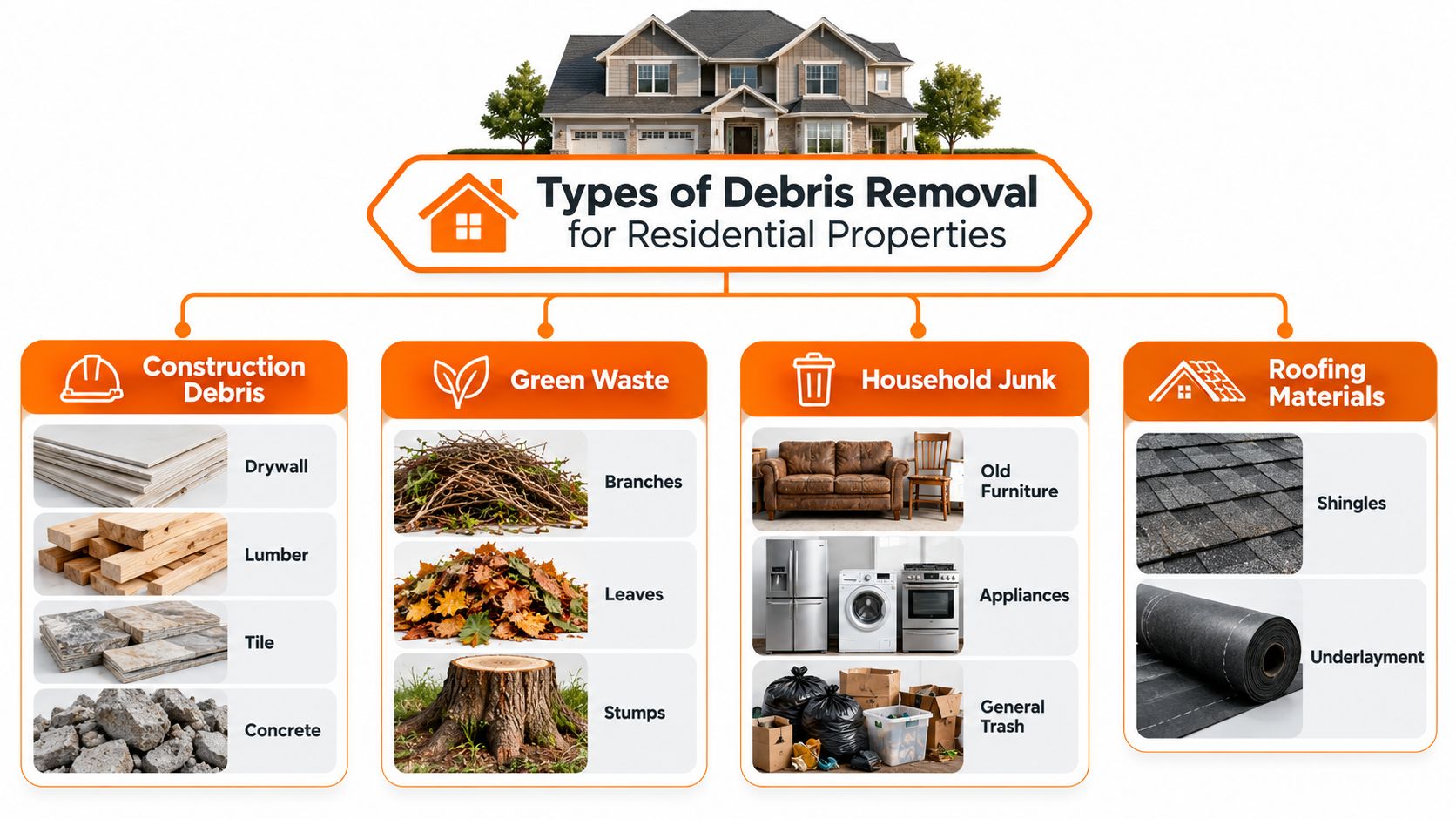
Most homeowners don't need a general lecture about “junk.” They need to know what kind of pile they have, what a crew can haul, and what needs separate handling.
Construction debris
This is the material that shows up after kitchen, bath, garage, and whole-house updates. Think drywall scraps, lumber offcuts, tile fragments, and concrete chunks, especially common in remodel-heavy pockets like Wellington and Westlake. These loads usually move well when they're kept clean and separated, and they're exactly the kind of work tied to our construction debris removal page.
Yard and storm debris
Palm fronds, fallen branches, fence pieces, and loose roofing material show up after windy weather or a heavy rain cycle. In hurricane season, this is the load that fills driveways and side yards before anyone has time to sort it. A service can usually handle it, but roofing material and anything contaminated by floodwater may need more careful processing.
Household junk and cleanouts
Old furniture, broken appliances, mattresses, and general clutter fall into this bucket. These are common during estate clearouts, tenant turnovers, and foreclosure cleanups. The practical issue isn't just volume, it's whether the load contains electronics, chemicals, or other items that need special disposal.
Post-renovation fine debris
This is the mess people miss. Drywall dust, grout haze, adhesive residue, and packaging waste can linger after the visible debris is gone, and that's where a clean space stops feeling clean. A good crew knows the difference between simple hauling and the finer cleanup needed before a room is livable again.
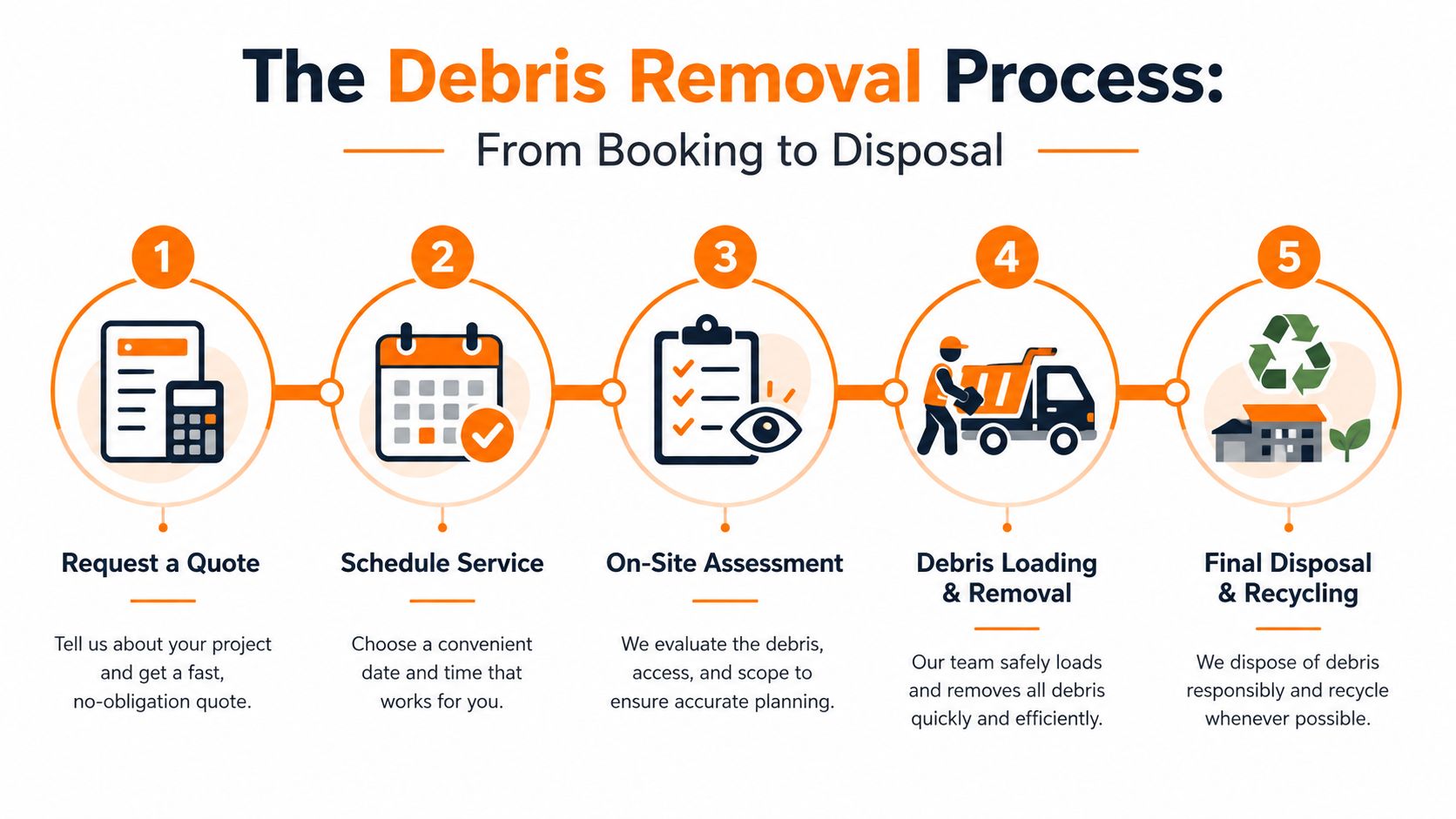
The Debris Removal Process From Booking to Final Disposal
The best debris removal service doesn't just show up and load. It documents what it takes, how it's handled, and where it goes, because large-scale cleanup lives or dies on records.
Schedule, assess, document
Booking usually starts with photos, a rough volume estimate, and a description of the material mix. In disaster work, FEMA requires monitoring from collection to final disposal and documentation of estimated or actual quantities removed, reduced, disposed, and recycled, along with load tickets and tower logs when contracted (FEMA debris removal guidance). That same chain-of-custody mindset helps homeowners too, especially when they need proof of what was removed.
Load, contain, and unload
Public-sector specs often require debris trucks to unload quickly without auxiliary equipment, keep tailgates secure, and be filled to capacity, with trip tickets measured by truck or trailer bed volume (Rockwall County RFP). That matters because standardized loading reduces spillage and gives everyone a clearer billing basis. It also makes the job faster on tight residential streets where nobody wants a half-loaded truck making extra passes.
Disposal and records
On the back end, the debris is sorted through transfer or disposal channels based on material type and site rules. FEMA-aligned documentation should include the type and quantity of debris, where it came from, where it went, and any environmental compliance items such as permits, hazardous waste tracking, invasive species restrictions, and floodplain or wetland rules (Oneida County debris fact sheet).
Keep the paperwork. If the load was part of an insurance claim, HOA turnover, or storm response, records matter almost as much as the labor.
What Happens to Mixed Debris After Pickup
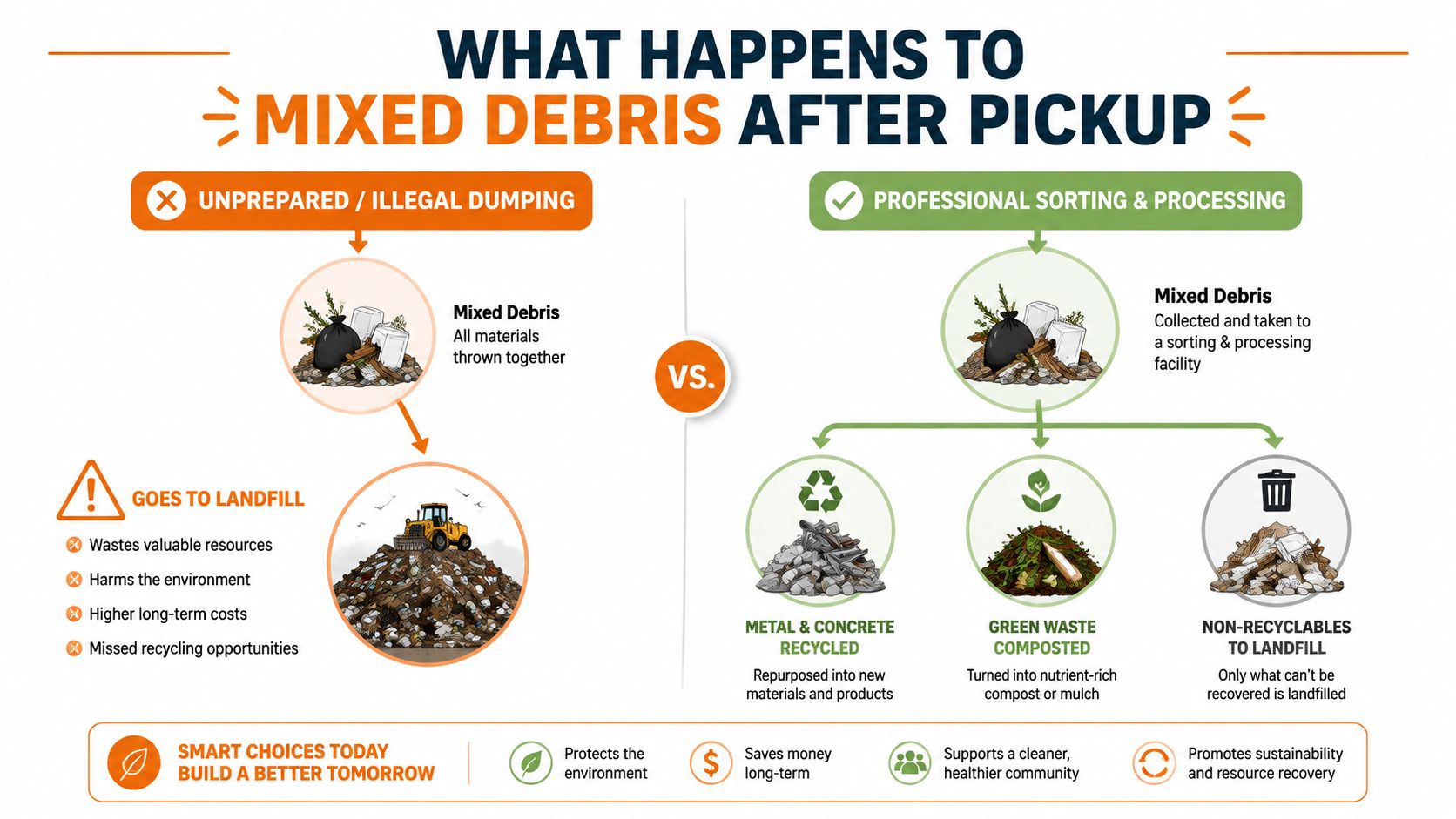
A mixed load is where the sorting work begins. One pile can contain construction waste, green waste, roofing pieces, and household junk, and the way that pile is handled can decide whether anything gets recycled at all.
Why source separation changes the outcome
When debris is sorted at the source, recovery improves. When it's mixed, contamination spreads quickly. One bag of household trash in a clean load of concrete can push the whole truck toward landfill disposal instead of a recycling stream, which is why source separation is so important in practical terms.
Local transfer-station rules also shape what can be accepted together, especially when a load includes material that needs separate handling. A service that understands those rules can split the load before it leaves the property instead of gambling on a rejection later.
Why mixed loads cost more to process
Mixed material takes more labor to sort, more room to stage, and more judgment at the facility gate. That's why a service that markets itself as eco-friendly still needs to explain what it can divert, what it can't, and what gets downgraded by contamination.
In plain terms, the cleaner the load, the better the recycling outcome. The messier the load, the more likely it is that the truck ends up at the landfill with only a small part of the material recovered. That's the hidden part of debris removal most homeowners never hear about until the pickup is already done.
Debris Removal Costs and Post-Storm Pricing Realities
Pricing is usually driven by the size of the load, what the material is, how easy it is to access, and whether the crew has to sort or special-handle anything. Narrow driveways, gated entry, second-story carryouts, and mixed-material cleanup all affect the final quote.
Typical Debris Removal Cost Factors
| Factor | Impact on Cost | Example Scenario |
|---|---|---|
| Volume | More material means more labor, more truck space, and more disposal fees | A half-garage cleanout costs less than a full-house purge |
| Material type | Clean yard waste is easier than mixed construction debris or roofing scraps | Bathroom remodel debris usually needs more handling than bagged leaves |
| Access | Tight driveways, stairs, and gated entries slow the crew down | A townhouse with limited truck access takes longer than a curbside pickup |
| Sorting needs | Mixed loads can require separate handling and extra labor | A pile with wood, tile, and junk mixed together needs more work |
| Storm conditions | Demand spikes can delay pickup and stretch turnaround times | After a hurricane, the same job may need earlier booking |
The same factors show up in renovation work too. For people comparing cleanout costs, our construction clean-up pricing page is a useful reference point for what drives the estimate.
Storm timing changes everything. Demand spikes can create labor shortages, route congestion, and disposal bottlenecks, which means even a simple cleanup may take longer to schedule than it does in a normal week. If an outage or damaged fixture is part of the jobsite, immediate electrical repair service is often the next call homeowners make before anyone can safely resume work.
How to Prepare Your Property and Choose the Right Provider
A clean pickup starts before the truck pulls up. If the driveway is blocked, the pile is mixed with questionable material, or the access route is tight, the crew loses time sorting out basics instead of loading debris.
What to do before the crew arrives
- Clear access paths: Move cars, bikes, potted plants, and anything else blocking the driveway or side gate.
- Separate hazardous materials: Paints, fuels, propane, chemicals, and unknown containers need special handling.
- Bundle loose material: Tie branches, bag small debris, and keep light material from blowing around in the breeze.
- Document the pile: Photos help with insurance, landlord disputes, and HOA questions.
- Secure pets: Open gates and active loading zones are stressful for animals and unsafe for crews.
Mixed piles are where homeowners run into trouble. A load with lumber, drywall, tile, and yard waste can still go, but contamination changes what can be recycled and what has to be treated as disposal-only material. If you know the load is mostly renovation debris, our post-construction cleaning calculator can help you think through the size and scope before booking.
For larger exterior cleanups, Florida hurricane fence preparation is a good reminder that access and enclosure issues can affect the job before pickup even starts.
Questions worth asking any provider
- Do you provide disposal documentation?
- How do you handle mixed loads and recyclable material?
- What items won't you take?
- Are you insured and licensed for this kind of work?
- How do you handle post-storm scheduling and priority routing?
Ask how they sort loads after pickup. Some crews separate metal, clean wood, green waste, and construction debris at the yard or transfer station, while contaminated material gets routed to landfill because it can't be recovered cleanly. In Palm Beach County, that difference matters after storms, when roofing scraps, soaked drywall, and yard debris often land together and the disposal line gets busier fast.
In gated communities across Jupiter, Palm Beach Gardens, and Boca Raton, HOA rules can change how and when pickup happens. Some communities also need curb placement or right-of-way placement to follow local permission rules, so it's better to ask early than to guess wrong on service day.
Schedule Your Debris Removal With Sunset Shine Home Cleaning
When the pile is too big for a pickup truck, too mixed for a quick dump run, or too time-sensitive to leave sitting in South Florida heat, a professional crew is the fastest clean solution. Sunset Shine Home Cleaning serves West Palm Beach, Palm Beach Gardens, Jupiter, Juno Beach, North Palm Beach, Riviera Beach, Royal Palm Beach, Lake Worth, Boynton Beach, Delray Beach, Boca Raton, Wellington, Westlake, Loxahatchee, Loxahatchee Groves, and The Acreage.
The process is simple. Book online or call 561-408-4020, get a confirmation window, let the crew arrive with supplies, and have the debris cleared with a checklist-based approach and quick quality check before the job wraps. That's the kind of help homeowners want after renovations, storms, move-outs, and mixed cleanups that don't fit neatly into a single trash bin.
Sunset Shine Home Cleaning backs the work with a 100% satisfaction guarantee, and the goal is straightforward, clear the property, handle the hauling, and leave you with one less thing to manage.
If you're ready to clear out mixed debris, storm leftovers, or post-renovation mess without the dump runs and guesswork, Sunset Shine Home Cleaning can help. Call 561-408-4020 or book online today, and get a local debris removal service that's built for Palm Beach County homes, tight timelines, and clean results.