
If you're looking up how to clean light switches because the ones by your entryway, kitchen, or bathroom look grimy, you're probably not dealing with dust alone. In Palm Beach County homes, humidity, salt air, sand, and fast guest turnover leave a thin layer of hand oils and residue that sticks to switches fast, especially in busy homes, rentals, and move-outs. For homeowners and property managers who want a cleaner, safer finish without risking the hardware, how to clean light switches starts with the right method, not more pressure.
Table of Contents
- What We See in Palm Beach County Homes
- Safety First Before You Touch a Switch
- Matching the Method to the Switch Type
- Getting the Grime Out of Crevices and Edges
- How Often to Clean and When to Disinfect
- Quick Checklist and When to Call a Pro
What We See in Palm Beach County Homes
A switch can look fine from across the room and still fail the close-up test. In a West Palm Beach move-out or a Jupiter Airbnb turnover, the giveaway is usually the same, finger shine on the rocker, dark buildup along the plate edge, and grime packed into the seam where the toggle or rocker meets the wallplate.
That matters because light switches are one of the most touched spots in the house. One frequently cited home-hygiene reference says they can carry about 217 bacteria per square inch, compared with roughly 50 bacteria per square inch on a toilet seat, and people touch them about 10 to 15 times per day. That's why they're treated as high-touch surfaces in the home, not just cosmetic details. Realtor.com's breakdown of contaminated light switches makes the point plainly, and the CDC also lists light switches as surfaces that should be cleaned regularly and after visitors have been in the home.
Why they look worse here
South Florida humidity changes the way grime sits on plastic and painted plates. Dust clings, hand oils stay tacky longer, and in beach homes you'll often see fine sand ground into the edges near entry switches. In rentals, that buildup shows up faster because guests use the same switches repeatedly, but they don't notice the detail work a resident would.
Practical rule: if the switch feels sticky or looks shadowed around the edges, it needs more than a quick swipe across the center.
That's the part most generic cleaning tips skip. A flat wipe can make the middle look better while leaving the seam, screw recesses, and plate edges dirty, which is exactly what landlords, guests, and homeowners notice during a final walkthrough. For a local humidity angle that keeps showing up in these homes, see what causes humidity in a house.
Safety First Before You Touch a Switch
The safest routine is simple. Turn off power at the breaker if you're doing anything beyond a light surface wipe, make sure your hands are dry, and never spray liquid directly onto the switch. Manufacturers and electrical-product guidance say cleaner should go on the cloth first, because moisture can travel into the opening and create an electrical hazard. Eaton's cleaning instructions for wiring devices are clear on that point.
The setup that keeps you out of trouble
For a deeper clean, remove the wallplate only if you're comfortable doing it and the power is off. A flathead or Phillips screwdriver is enough for most standard plates, but the screws should stay in a safe spot so nothing gets lost under a cabinet or vanishes into a mop bucket. If you only need routine maintenance, skip the plate removal and keep the cloth slightly damp, not wet.
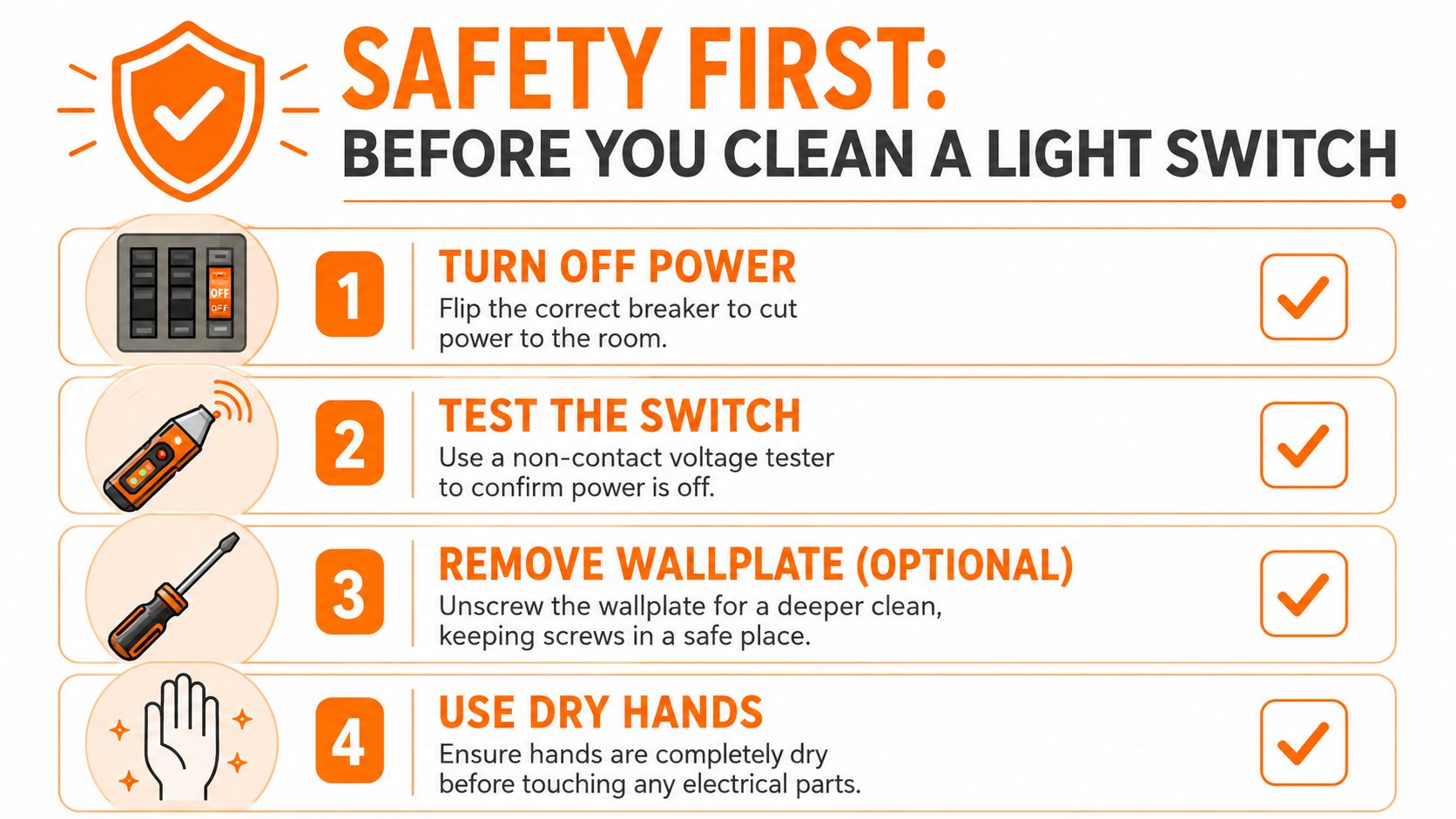
A barely damp microfiber cloth is the default for a reason. It lifts everyday residue without letting water wick into seams, and it's the same basic approach recommended by multiple cleaning guides. If you want a ready-made product choice for routine maintenance, a non-abrasive cloth and an approved wipe are safer than anything that foams, drips, or leaves a heavy film. For families who prefer plant-based supplies, natural cleaning products for home is the right direction to follow, as long as the product still stays cloth-applied and lightly used.
Turn the breaker off first when you're cleaning beyond the face of the switch. That small step protects both the finish and the mechanism.
Matching the Method to the Switch Type
Not every switch should be treated the same way. A plastic rocker can handle a mild cleaner on a cloth, but brushed metal, painted finishes, and smart switch surfaces need a lighter touch so you don't streak the finish or leave residue in the wrong place.
Quick Guide to Cleaner and Cloth by Switch Type
| Switch Type | Safe Cleaner | Cloth or Tool | Avoid |
|---|---|---|---|
| Plastic rocker or toggle | Mild detergent and water, or an approved wipe | Microfiber cloth, cotton swab | Direct spray, abrasive pads |
| Brushed metal | Mild, non-abrasive cleaner | Barely damp microfiber cloth | Harsh solvent, scouring cloth |
| Painted or satin finish | Lightly damp cloth only | Soft microfiber | Scrub sponge, heavy moisture |
| Smart switch or dimmer with touch surface | Electronics-safe wipe used lightly | Soft lint-free cloth | Liquid near edges, over-wetting |
The biggest mistake is treating every plate like plain plastic. Metal shows streaks fast in coastal homes, especially when salt air leaves a film on exterior-facing rooms, while painted plates can lose their finish if someone uses an aggressive cleaner and keeps rubbing. Smart switches are the most unforgiving because fluid near the edge can go where you don't want it, so the cloth has to stay controlled and nearly dry.
What works and what doesn't
For regular cleaning, a mild detergent solution or approved wipe is usually enough. Strong solvents can discolor older plates, and rough pads can scratch the surface in a way that catches dust even faster later. On newer homes in Wellington or Boca Raton, I see a lot of overconfidence with glossy plates, people assume they're durable because they look hard, then end up with streaks that only show in daylight.
If the finish is delicate, the cloth matters as much as the cleaner.
That's also where a service like Sunset Shine Home Cleaning fits naturally. Their standard, deep, and move-in or move-out cleans cover high-touch areas like switches as part of the broader surface reset, which helps when a whole home needs the same careful finish.
Getting the Grime Out of Crevices and Edges
The dirt that makes a switch look neglected accumulates in the seam. In Palm Beach County homes, that buildup shows up fast around entryways, kitchen switches, and bathroom plates, where humidity and hand oils settle together and leave a dull edge around the hardware.
The stepped method for clearing detail work
Start with dry dusting so loose grit does not get rubbed into the surface. Then use a barely damp microfiber cloth across the face, follow with a cotton swab for the seam around the rocker or toggle, and use a soft brush for screw heads and the plate edge. Finish with a dry microfiber cloth to lift the last film and keep moisture out of the corners. This stepped method is the same one detailed in the cleaning guide for hidden grime.
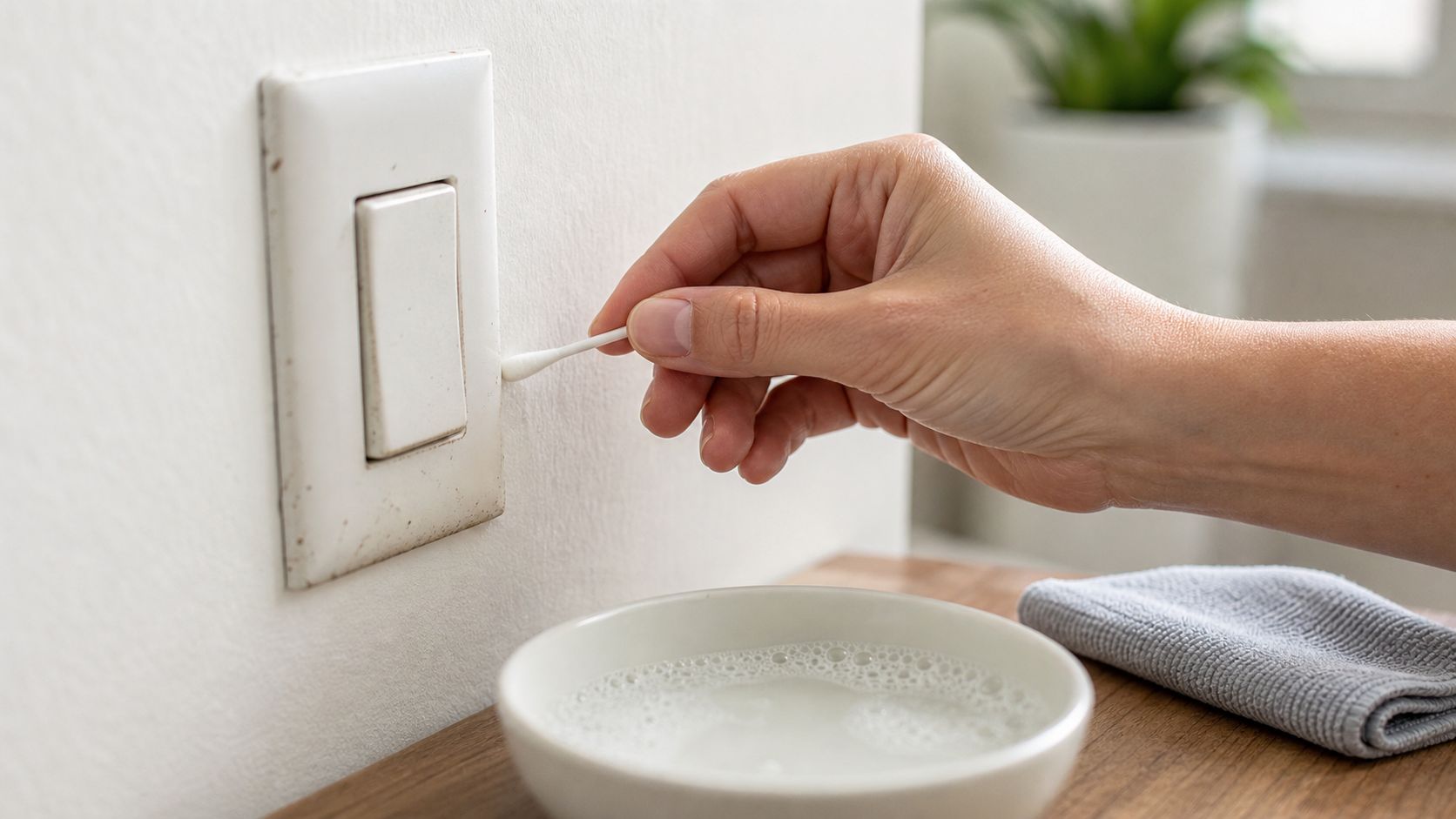
If you find paint specks or sticky residue near the wall edge, keep the area dry as you work. Use the swab first, then lift anything stubborn with a cloth that is only lightly damp. That protects the drywall paint and keeps cleaner on the surface instead of letting it run behind the plate.
Why the detail tools matter
Cotton swabs, a soft toothbrush, or a cloth wrapped around a thin card can reach the hidden spots that a flat cloth misses. That helps on older switches in Palm Beach Gardens, Riviera Beach, and Lake Worth, where years of skin oils and dust settle into the tiny creases. Better contact matters more than extra product.
A deeper clean like this takes a few extra minutes per switch, but it separates a surface that only looks wiped from one that is clean. That matters in Airbnb kitchens, on move-out baseboards, and at the front entry where guests and buyers notice the small details fast.
How Often to Clean and When to Disinfect
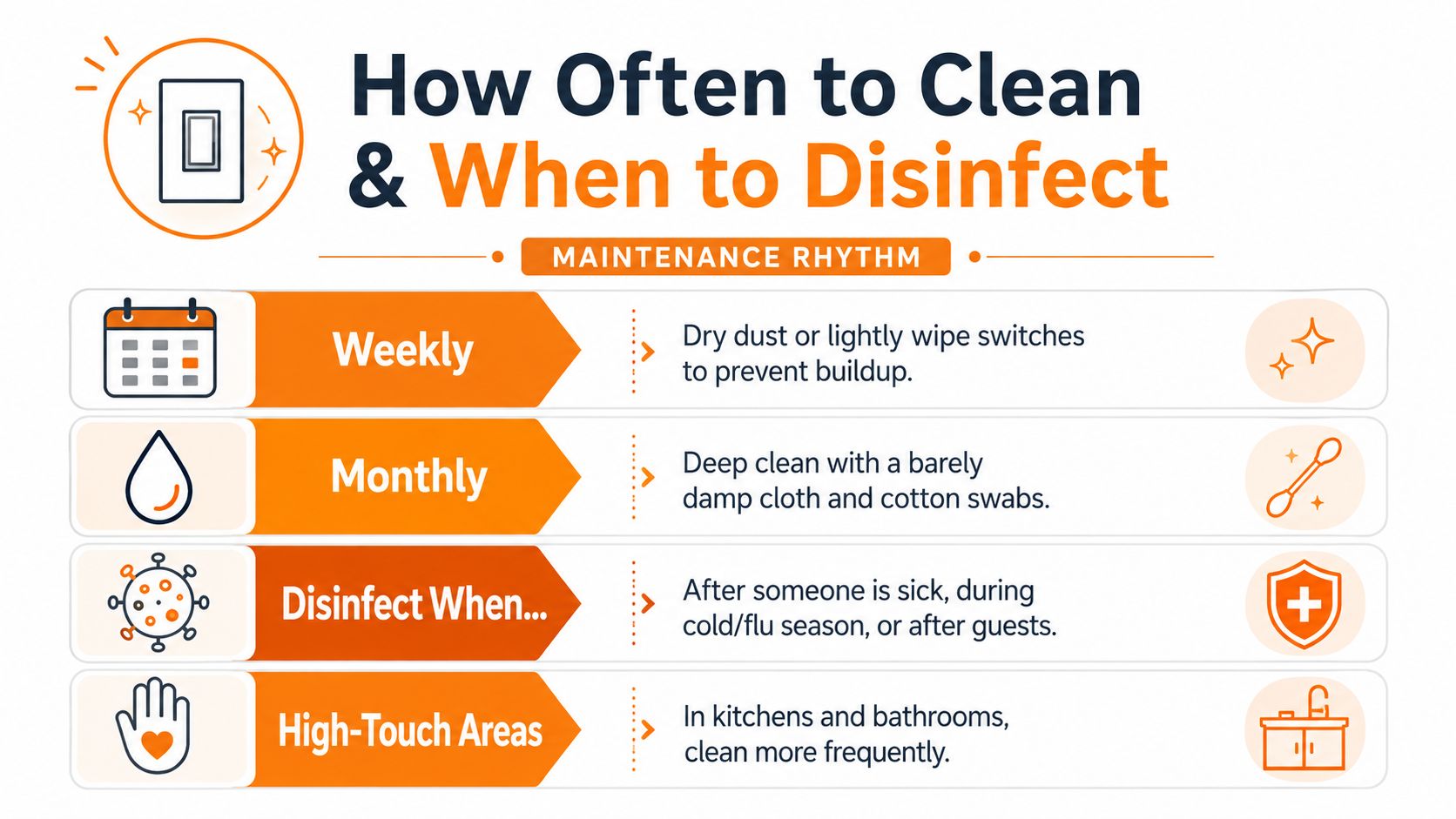
For most homes, light switches should be part of the regular cleaning rhythm, not a separate project. The CDC identifies them as high-touch surfaces and says they should be cleaned regularly and also after visitors have been in the home, which lines up with the reality of family traffic, guests, and shared spaces. CDC hygiene guidance for home cleaning puts switches in the same practical category as other surfaces people touch all day.
A realistic maintenance rhythm
For routine upkeep, a quick dry dust or lightly damp wipe works well each week. Add a more detailed clean when the plate starts collecting grime in the seam, around the screws, or near the rocker edge, especially in kitchens, bathrooms, and entryways where hands are on and off the switch constantly. In rental turnovers, disinfecting makes sense between guests, after someone has been sick, or when a house has just gone through a busy stretch of visitors.
What local homes need more often
Beach homes collect more fine grit, and humid rooms hold onto residue longer. That means switches near sliders, laundry rooms, bathrooms, and mud-entry points tend to need attention sooner than switches in low-traffic bedrooms. In vacation rentals, the cleanup window is tighter, so switch cleaning belongs in the same pass as bathrooms, kitchen fronts, and door handles.
Quick Checklist and When to Call a Pro
A good light-switch clean is simple, but it still needs a checklist:
- Turn power off if you're doing a deeper clean.
- Apply cleaner to the cloth, not directly to the switch.
- Use a barely damp microfiber cloth for the face.
- Use cotton swabs or a soft brush for seams, screws, and edges.
- Dry the plate completely before restoring power.
If you're seeing cracked plates, buzzing, scorch marks, or a switch that feels warm, stop there and call an electrician. Those are electrical issues, not cleaning jobs. If the switch is just dirty but the rest of the room needs attention too, it's usually easier to bundle the detail work into a broader home cleaning visit. For homeowners comparing options, professional maid service near me is often where the search starts, especially when the whole house needs a reset.
Move-out cleans around West Palm Beach usually come down to what people touch first, and switches are high on that list. Same thing with Airbnb turnovers in Jupiter and Boca Raton, the room can look staged, but a grimy switch still gives the game away.
Book your cleaning with Sunset Shine Home Cleaning, your trusted house cleaning service in West Palm Beach. We handle detail work like light switches as part of recurring, deep, and move-out cleans across Palm Beach County. Call 561-408-4020 or book online at Sunset Shine Home Cleaning when you want the grime handled the right way.