
Moving in Palm Beach County? Your deposit depends on this move in move out checklist. Between South Florida humidity, mold in bathroom corners, sand on tile, and landlord walkthroughs that seem to notice every baseboard, a rushed clean can cost you more than the hassle of moving. If you want a spot that feels move-in ready, guest-ready, or deposit-ready, start here.
This move in move out checklist is for renters, homeowners, Airbnb hosts, and property managers who need the place to pass a final look without drama. Around West Palm Beach, Boca, and the coastal towns in between, the key difference is in the details, the stuff inspectors notice first and guests notice right away.
Table of Contents
- 1. Bathroom Grout Lines and Soap Scum Inspection – The Hidden Culprit in Palm Beach County Move-Outs
- 2. Kitchen Degreasing and Cabinet Exterior Inspection – The Sticky Residue Test
- 3. Baseboards and Low-Level Dust Inspection – Where Sand and Grit Hide
- 4. High-Touch Surface Disinfection – Doorknobs, Light Switches, and Remote Controls
- 5. Window Sills and Interior Glass Inspection – Tropical Pollen and Salt Air Buildup
- 6. Flooring Condition Assessment – Sand, Stains, and Finish Integrity
- 7. Appliance Interior and Exterior Inspection – Oven, Refrigerator, and Microwave Details
- 8. Ceiling, Walls, and Trim Inspection – AC Vent Dust and Mold Spots
- 9. Entryway, Hallway, and Traffic Area Deep Assessment – Sand Pathways and Wear Patterns
- 10. Closet and Storage Area Inspection – Hidden Mold, Odors, and Dust Accumulation
- 10-Point Move-In/Move-Out Inspection Comparison
- When to Call the Pros for Your Move-Out Clean
1. Bathroom Grout Lines and Soap Scum Inspection – The Hidden Culprit in Palm Beach County Move-Outs
Bathroom grout is where a lot of move-out trouble starts. In coastal Palm Beach County homes, humidity keeps moisture around longer, and that means soap scum, mildew, and discoloration show up faster in shower grout, tub surrounds, and the corners behind fixtures. A quick wipe can make the room look fine from the doorway, but landlords and property managers usually check the lines up close.
What landlords notice first
The inspection usually starts with the shower tile, then moves to the tub edge, faucet base, and ceiling corners. If you want a stronger DIY pass, use a grout brush instead of relying on mop friction, and let the area dry fully before the final walkthrough. For a deeper step-by-step on grout care, this bathroom grout cleaning guide is a practical reference.
Practical rule: If grout still looks damp or patchy under bright light, it is probably not ready for inspection.
A move-out clean in West Palm Beach often fails in spots that look harmless at first glance, like behind the faucet base or along the bottom row of shower tile. On coastal properties, salt residue can leave a chalky film that standard bathroom wiping misses, so the final pass needs both attention and patience.
- Check grout at different angles: Use bright light so discoloration stands out.
- Inspect behind fixtures: Faucets and tub corners trap buildup.
- Document before and after: Photos help if there's a dispute later.
- Allow drying time: Wet grout can hide problems and invite new mildew.
2. Kitchen Degreasing and Cabinet Exterior Inspection – The Sticky Residue Test
Kitchen cleanup is rarely about what you can see from across the room. It's about what a landlord feels when they run a finger along the cabinet edge, light switch plate, or range hood trim. In West Palm Beach and the rest of Palm Beach County, humidity can make grease stay tacky longer, which is why cabinet exteriors and appliance fronts need a real degreasing pass, not just a damp cloth.
A lot of move-out problems start with the spots people skip. Cabinet handles, the tops of cabinets, the side of the refrigerator, and the area around the stove collect fingerprints, cooking spray, and dust in a way that looks clean until someone touches it. For greasy buildup, this kitchen grease cleaner guide is a useful starting point.
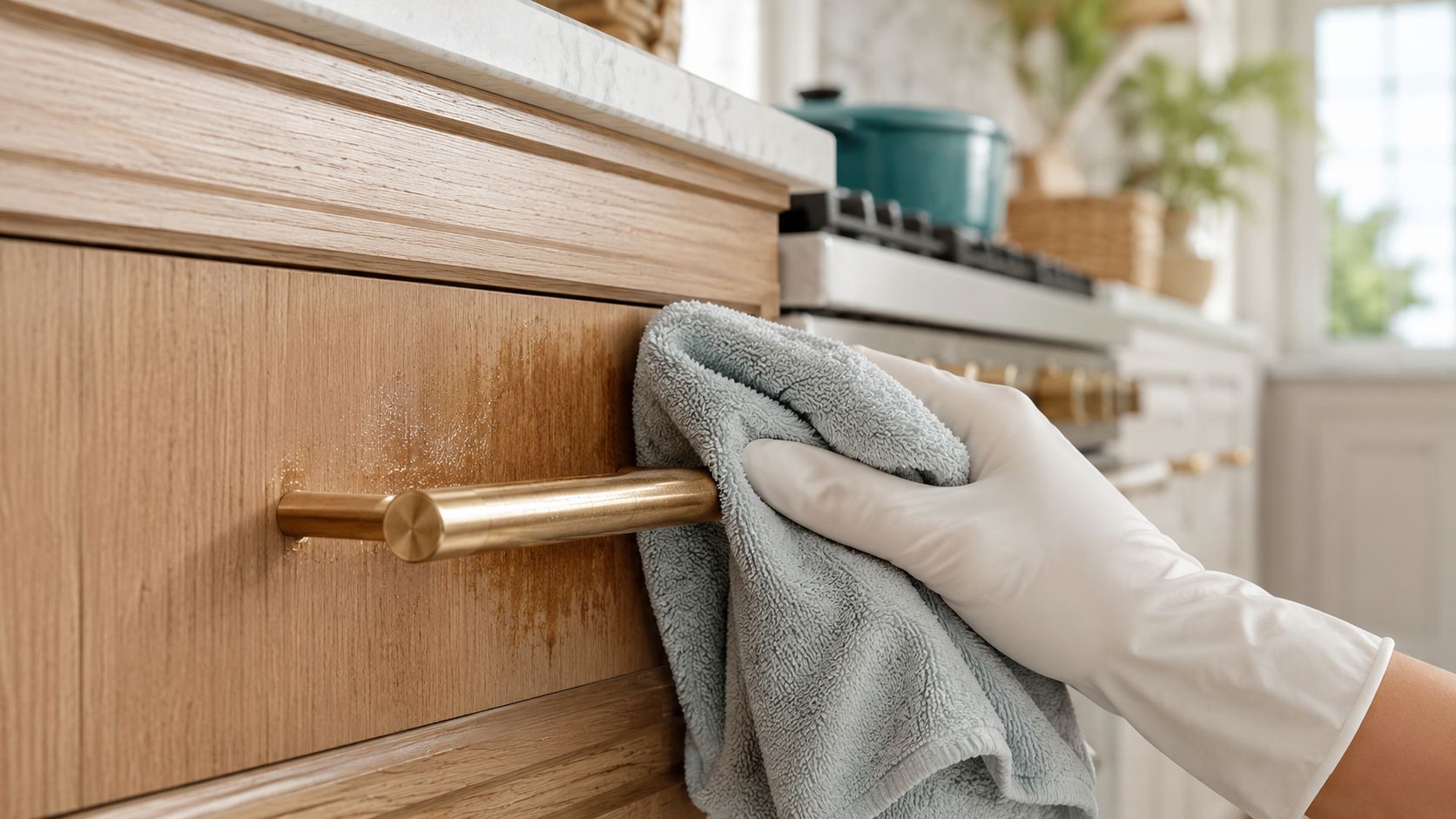
Where the sticky film hides
Check beyond the stove top. Look at the light fixture above the counter, the switch plates, the range hood filter, and the inside lip of cabinet doors. If cabinet interiors have shelf liner residue or water staining, that gets noticed too, especially in humid rentals.
Move-in and move-out cleaners in Boynton Beach and Royal Palm Beach see the same thing over and over, cabinets look fine from a few feet away, then fail once someone touches the edges. A strong final pass means wiping all faces, sides, tops, and hardware, then checking again with clean hands or a dry microfiber cloth. A soft brush attachment can help lift dust from grooves and trim before you wipe, and a final vacuum pass keeps loose grit from settling back onto clean surfaces.
Cabinet fronts are not the whole job. The edges, handles, and metal trim are what usually give the condition away.
For Airbnb turnovers, this matters even more because the next guest sees the kitchen immediately. A sticky microwave handle or grimy light switch can undo an otherwise solid clean.
3. Baseboards and Low-Level Dust Inspection – Where Sand and Grit Hide
Baseboards tell the truth about a home. In Palm Beach County, they collect sand, AC dust, and tropical pollen at floor level, especially near entryways, bedrooms, and windows. Even when the floor looks decent, that thin line of grit along the wall can make the whole place feel unfinished.
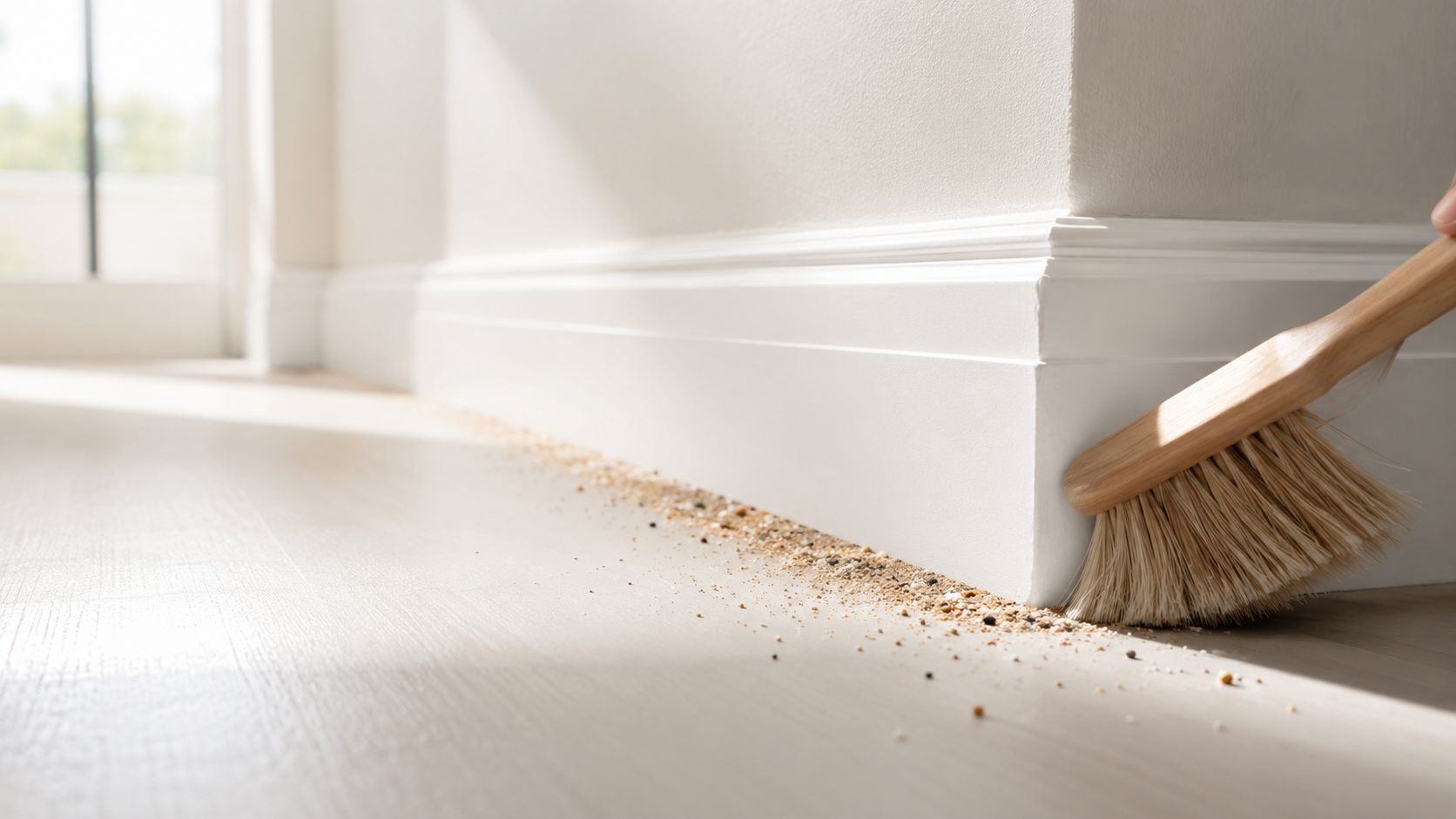
A move-out clean in West Palm Beach usually lives or dies on what sits at ankle height. Landlords notice the baseboard line fast because it shows whether the place was maintained with care, not just vacuumed on the surface. In humid rentals, dust clings a little harder, and along the coast, sand keeps showing up in the same spots even after a quick pass.
Why this fails walkthroughs
A clean-looking room can still fail a walkthrough if the edge work is missed. After the main debris is gone, the leftover dust becomes more visible, especially near AC vents and along hallway runs where airflow keeps pushing it back to the wall.
Beach homes bring a different problem. Sand settles at the wall-floor junction and in the corners behind doors, then gets left behind by fast sweeping. The fix is simple, but it has to be done with care, a soft brush attachment, a dark cloth, and a final vacuum pass usually make the difference in South Florida homes.
- Inspect with a dark cloth: White dust and sand show up fast.
- Work the corners: Baseboard ends and wall-floor seams trap debris.
- Vacuum after wiping: This keeps loose grit off clean floors.
- Check near vents and doors: Those spots collect the fastest.
The cleaner the baseboards, the better the first impression when the door opens. If they still look dusty, the rest of the home feels like a gamble.
4. High-Touch Surface Disinfection – Doorknobs, Light Switches, and Remote Controls
High-touch surfaces can make a clean home feel uncared for in seconds. Doorknobs, light switches, thermostat screens, cabinet pulls, and remote controls pick up fingerprints and grime quickly, and in South Florida the humidity makes residue feel sticky faster than commonly expected. That's especially important in Airbnb turnovers, where the next guest is judging the place almost immediately.
This is one of those parts of the move in move out checklist that seems minor until it isn't. A spotless bathroom doesn't matter much if the entryway light switch is visibly smudged. The same goes for a thermostat screen or refrigerator handle that still shows a print trail.
Keep the pass systematic
Start at the front door and work through every room in a set pattern. Entry doors, bedroom doors, bathroom switches, cabinet hardware, and appliance handles all need the same attention, and the cleaner should let the disinfectant sit for the proper contact time before drying.
- Doorknobs and handles: Wipe all sides, not just the front.
- Switches and thermostat screens: Use products that won't damage the finish.
- Remote controls: Clean between buttons, where dust gathers.
- Appliance touch points: Refrigerator and microwave handles matter during walkthroughs.
In Boca Raton and Palm Beach Gardens, landlords often notice fingerprints on switches and hardware before they notice anything else. That's because these spots tell them whether the home got a serious final pass or a rushed one.
5. Window Sills and Interior Glass Inspection – Tropical Pollen and Salt Air Buildup
Window sills in South Florida do not stay clean for long. Tropical pollen, coastal salt, and moisture settle into the grooves, especially in homes near the water or in places that stay open to breezes. A window can look clear from the couch and still fall short in a close inspection because the sill corners and frame edges were left behind.
A big issue is the buildup that hides in the tracks. In Jupiter and Juno Beach, it is common to find salt residue or a pale dust line in the sill groove, and that is the kind of detail a landlord or incoming guest notices as soon as they step up to look outside. If the track is gritty, the room reads as unfinished, even when the glass itself looks fine from a distance.
Clean the edges, not just the pane
Use bright light and a small brush or cloth to work into the corners. Interior glass should be streak-free, and the frame corners should be checked for mold or discoloration, especially in humid rooms where moisture hangs around longer.
If a window looks clean in normal light but hazy under sun glare, it still needs another pass.
Beachfront properties need extra attention because salt spray can leave a film that does not respond well to a basic wipe. Bedrooms and less-visible rooms get inspected too, so do not put all the effort into the living room and stop there.
Salt, pollen, and moisture leave their own trail. Once the sills and glass are clean at the edges, the whole home feels more finished during a walkthrough.
6. Flooring Condition Assessment – Sand, Stains, and Finish Integrity
Floors are usually the first thing people trust and the first thing they stop trusting if sand or stains show up under bright light. In Palm Beach County, tile, laminate, vinyl, and carpet all face a mix of beach grit, humidity, and daily traffic, so the final look depends on more than a quick mop. The key is separating normal wear from actual damage.
A good move in move out checklist treats flooring like evidence. That means checking corners, grout, furniture gaps, traffic paths, and the edges near baseboards. In Lake Worth and Boynton Beach, we often see tile that looks fine from standing height but shows grit or grout discoloration when the light hits it at an angle.
What to look for before handoff
Vacuum first, then mop, because sand will scratch and smear if it gets dragged around. On laminate or vinyl, watch for swelling or buckling near sinks and kitchen edges. On carpet, hidden spots often show up after furniture is moved, so don't skip under-bed or behind-sofa areas.
- Check under strong light: Stains and texture changes show up better.
- Watch the grout: Tile joints can look dirty even when the tile itself is clean.
- Inspect edges and thresholds: Sand settles where rooms connect.
- Look for moisture damage: Swelling or buckling usually means repair, not cleaning.
Flooring tells the landlord whether the unit was maintained or merely passed through.
If the floor passes close inspection, the whole property feels more move-in ready. If it doesn't, every other room has to work harder to recover that impression.
7. Appliance Interior and Exterior Inspection – Oven, Refrigerator, and Microwave Details
Appliances are where move-out cleaning gets real. An oven with grease inside, a fridge with moisture stains, or a microwave with old steam residue can sink an otherwise decent walkthrough. In humid Palm Beach County homes, appliance interiors hold onto moisture and odors longer, so the inside counts just as much as the outside.
A lot of renters get tripped up here. The appliance front may look polished, but if the oven walls, fridge shelves, or microwave ceiling still show buildup, the landlord knows the job was incomplete. That is why a move-out clean often has to include inside oven cleaning, refrigerator shelves, and even cabinet interiors, especially in homes where salt air and humidity keep residues from drying out fast.
Open the oven with a flashlight and check the racks, door edges, and walls. Look for baked-on grease near the lower corners, then run a quick scan around the seal where grime tends to hide. In the refrigerator, pull the drawers and inspect the corners for moisture staining or sticky spots. Microwave interiors need a close look at the ceiling and side walls, where steam residue often clings.
In West Palm Beach and Boynton Beach, refrigerator interiors are a common problem in move-outs because humidity makes hidden moisture more obvious. Handles and side panels still need fingerprints removed, and the coil area should be dusted if it is accessible. If the unit smells off after cleaning, the landlord will notice that right away. That usually points to residue inside, not a surface-only issue.
Airbnb turnovers run into the same problem. Guests do not give extra credit for a shiny door if the inside still smells musty or looks neglected. A clean exterior helps, but the walkthrough usually turns on what opens, what smells, and what shows under a flashlight.
8. Ceiling, Walls, and Trim Inspection – AC Vent Dust and Mold Spots
Ceilings and upper walls are easy to ignore until the light catches them. In South Florida, year-round AC use pushes dust out of vents and onto trim, while humidity can leave faint staining or mold spots in bathroom corners and around ceiling edges. If you've ever cleaned a Palm Beach County home after a long rental period, you know how fast those upper surfaces stop looking fresh.
The inspection needs to be close enough to catch what floor-level cleaning misses. That means looking at vent covers, corner seams, paint condition, and any water marks that suggest something bigger than dirt. In Delray Beach and Boca Raton, small bathroom corner spots are often the first thing that makes a room feel not quite done.
Use the right angle
A step stool helps because dust often hides above eye level. Check the trim around doors and windows too, since those edges collect fine debris that gets missed in routine cleaning. If a stain looks like water damage, that's not a cleaning issue, it's a repair flag.
- Inspect vent covers: Dust builds quickly with constant AC use.
- Check bathroom corners: Moisture can leave mold spots there first.
- Scan for cobwebs: Upper corners catch them fast.
- Note paint or water marks: Those belong in a repair conversation.
This part of the move in move out checklist matters because it separates a maintained space from one that just had the obvious surfaces wiped.
9. Entryway, Hallway, and Traffic Area Deep Assessment – Sand Pathways and Wear Patterns
Entryways and hallways show how people lived in the home. In Palm Beach County, they also show where the sand came in. A clear path from the front door to the living room, or a dusty threshold around the patio door, usually means the property got regular foot traffic and not enough detailed cleanup.
These are the places landlords and property managers notice first because the pattern tells a story. In Lake Worth, a sand line from the front door through the hallway can make the whole unit feel missed, even if the rest of the cleaning looks decent. In Jupiter, entry mats often hide the worst of it, but the floor edge around them still needs a careful pass.
Clean the travel route, not just the visible spots
Vacuum the whole path more than once. Wipe the baseboards, clean the thresholds, and check the floor where people naturally turn, pause, or set bags down. Hallway carpet edges and tile transitions need special attention because grit settles there and stays there.
The cleanest homes in South Florida usually look best right where people come in.
If there are stains or wear patterns, those should be noted rather than disguised. That distinction matters to property managers and landlords, and it protects everyone from arguing later about what was cleaning and what was damage.
10. Closet and Storage Area Inspection – Hidden Mold, Odors, and Dust Accumulation
Closets are the forgotten test of a move-out. Open the door, and you'll know quickly whether the space was kept dry, aired out, and cleaned with care. In South Florida humidity, enclosed storage can develop musty odors, dust, and even mold faster than expected, especially in older apartments and homes with limited airflow.
That's why closets belong on every serious move in move out checklist. Shelves, walls, floor corners, and the back of the closet all need a look, not just a quick sweep. If there's a smell when the door opens, the next tenant will notice it immediately.
What to check before closing the door
Look for dust on the upper shelf, moisture marks on the back wall, and any discoloration along the base. If the closet has sliding doors or bifold doors, check the tracks and edges too, because that's where dust and mildew tend to collect.
For rentals near the coast, closet air can feel stale if the unit sat closed up during rainy season. That's not unusual, but it does mean the final clean has to do more than look good from the hallway. It has to smell clean, feel dry, and open without that damp note.
10-Point Move-In/Move-Out Inspection Comparison
| Item | Complexity 🔄 | Resources & Speed ⚡ | Expected Quality ⭐ | Ideal Use Cases 💡 | Key Impact 📊 |
|---|---|---|---|---|---|
| Bathroom Grout Lines and Soap Scum Inspection | High, close visual/tactile inspection; possible re-grouting | Specialized grout brushes, mold cleaners, extended drying (2–4 hrs); time-intensive | High, removes mold/discoloration, improves walkthrough pass rate | Coastal bathrooms, move-outs with humidity/mold risk | Reduces deposit deductions; prevents rapid mold recurrence when ventilated |
| Kitchen Degreasing and Cabinet Exterior Inspection | Medium–High, multiple passes, finish-sensitive techniques | Strong/non-abrasive degreasers, test areas, extra wipe passes; moderate–long | High, restores appearance and hygiene, removes sticky films | High-use kitchens, Airbnb turnovers, rental move-outs | Eliminates hygiene flags; prevents mold on cabinet surfaces |
| Baseboards and Low-Level Dust Inspection | Medium, manual detail work in corners and junctions | Baseboard brush, vacuum, cloths; multiple passes required | Medium–High, removes sand/grit and visible dust lines | Beach-adjacent homes, entryways, allergy-sensitive properties | Improves first impression; reduces allergen tracking and sand spread |
| High-Touch Surface Disinfection | Medium, systematic checklist and proper dwell times | EPA-approved disinfectants, microfiber cloths; must allow contact time (slower) | High, documented sanitation, visible hygiene improvement | Airbnb, vacation rentals, post-pandemic priority properties | Boosts guest/landlord confidence and reduces health risks |
| Window Sills and Interior Glass Inspection | Medium–High, grooves and mineral deposits require targeted care | Small brushes, acidic cleaners for salt, squeegee/lint-free cloths; careful, time-consuming | High, removes pollen/salt, restores clarity and sill condition | Coastal properties, bright-interior listings, move-outs | Prevents salt/pollen staining and mold; enhances natural light appearance |
| Flooring Condition Assessment | High, multi-surface inspection under angled lighting for damage | Vacuum, spot treatments, specialty grout/floor products; may need repairs/refinishing | High, distinguishes normal wear vs. damage that affects deposits | Any move-out where deposit/repair are concerns, high-traffic homes | Determines deposit outcomes; identifies repairs before next tenancy |
| Appliance Interior and Exterior Inspection | High, ovens/refrigerators/microwaves need deep, safe cleaning | Oven degreasers, food-safe cleaners, coils/tools; lengthy detail work | High, prevents deposit holds and food-safety issues | Rentals with included appliances, long-term tenancies | Protects health, documents condition, avoids landlord disputes |
| Ceiling, Walls, and Trim Inspection | Medium–High, ladder work, vent and mold spot checks | Ladder/extension tools, vent brushes, possible remediation referrals; moderate time | Medium–High, improves air quality appearance, flags repairs | AC-heavy homes, older rentals, properties with leaks | Identifies ventilation/leak issues; improves overall move-in impression |
| Entryway, Hallway, and Traffic Area Deep Assessment | Medium, multi-pass cleaning and threshold detail | Heavy-duty vacuum, mats, multiple passes; moderate time | High, removes visible sand pathways and wear evidence | High-traffic rentals, beach homes, shared properties | Eliminates sand trails; signals well-maintained property to landlords |
| Closet and Storage Area Inspection | Medium, enclosed-space mold/odor checks and shelf detail | Odor neutralizers, moisture treatments, small brushes; time-consuming detail | Medium–High, prevents musty odors and hidden mold growth | Long-term rentals, humid-region properties, storage-heavy units | Prevents health complaints, improves tenant satisfaction and scent profile |
When to Call the Pros for Your Move-Out Clean
Feeling overwhelmed? You're not alone. A proper move-out clean in Palm Beach County is a serious job, and the humidity, sand, and salt air create problems that a quick wipe-down won't solve. If this move in move out checklist feels like too much to handle between packing, keys, and final walkthroughs, calling a professional can save a lot of stress.
That's especially true when the home has bathrooms with mildew-prone grout, a kitchen that needs real degreasing, or floors that keep showing sand no matter how many times you sweep. Local landlords and property managers tend to focus on kitchens, bathrooms, floors, and baseboards first, and those are exactly the spots that need the most detailed work in South Florida homes. Sunset Shine Home Cleaning handles move-in and move-out cleanups across West Palm Beach and Palm Beach County, with service that fits rentals, homes, and turnovers that need to be ready fast.
A professional cleaning team also makes sense when the schedule is tight. If you're handing off a property, setting up a new one, or getting an Airbnb ready for the next guest, the difference between a basic clean and a walkthrough-ready clean can come down to the final inspection details. That's where a local crew with the right tools, the right process, and experience in humid coastal homes earns its keep.
Book your cleaning with Sunset Shine Home Cleaning, your trusted house cleaning service in West Palm Beach. Call 561-408-4020 or book online, and let a local team handle the move-out pressure while you focus on the move itself.
Sunset Shine Home Cleaning handles move-in and move-out cleans for homes, rentals, and Airbnb turnovers across Palm Beach County. If you want help with the checklist, visit Sunset Shine Home Cleaning to book a cleaning that's built for South Florida humidity, sand, and landlord walkthroughs.