
If you're dealing with basement moisture control in West Palm Beach, you're probably not looking for theory, you want the damp smell gone, the walls dry, and the room usable again. In Palm Beach County, humidity, rainy-season runoff, and AC condensation can turn a small moisture issue into mold, musty odors, move-out stress, or a guest-ready space that still feels off.
This is the kind of problem that shows up after a summer storm, during a landlord walkthrough, or when a beach house starts collecting sand, mildew, and stale air all at once. The right fix depends on whether you're fighting hidden humidity, surface dampness, or bulk water around the foundation.
Table of Contents
- Identifying and Measuring Basement Moisture
- Short-Term Fixes and Quick Wins
- Long-Term Structural Solutions
- Seasonal Maintenance Plan
- Safety Measures and Mold Prevention
- Estimating Costs Timelines and Professional Help
Identifying and Measuring Basement Moisture
In West Palm Beach, dampness doesn't always announce itself with a leak. More often it shows up as musty odors, condensation on cold pipes, efflorescence on block walls, or a basement that feels sticky long after the AC kicks on.
Survey data suggest this isn't rare, 60% of U.S. homes face wet basements and 38% are at risk of mold according to the homeowner survey summary cited by Erie Home's moisture guide (Erie Home moisture survey). That lines up with what many local homeowners notice after a few rainy weeks, the room starts to smell different before anyone sees water.
What to check first
Start with your senses, then confirm with a hygrometer. A basement can feel “fine” upstairs while still sitting in the moisture range that supports deterioration below grade, especially because basements are naturally cooler and hit the dew point more easily.
Practical rule: If the air feels cool, smells stale, or leaves a film on fixtures, don't wait for visible water before you start checking RH.
Use a hygrometer in more than one spot. Compare the reading with the practical target range of 30% to 50% relative humidity cited in basement moisture-control guidance (basement humidity guide). In cooler months, readings near 60% RH are a warning sign, even if the room doesn't look wet.
A simple field checklist
- Walls and slab edges: Look for white mineral deposits, peeling paint, or darkened spots.
- Pipes and ducts: Check for beads of condensation, especially on exposed metal.
- Stored items: Cardboard, fabric, and wood tend to show dampness before finished surfaces do.
- After-rain pattern: Recheck the room after a storm, because recurring moisture is often tied to runoff or drainage issues.
For a broader home-wide humidity source check, this West Palm Beach humidity guide helps narrow down where indoor moisture usually starts.
Short-Term Fixes and Quick Wins
A dehumidifier helps fast, but only when the room setup supports it. Industry guidance warns that a dehumidifier only works correctly when paired with a vapor barrier, otherwise it can pull moisture through concrete and worsen efflorescence (Budget Basement).
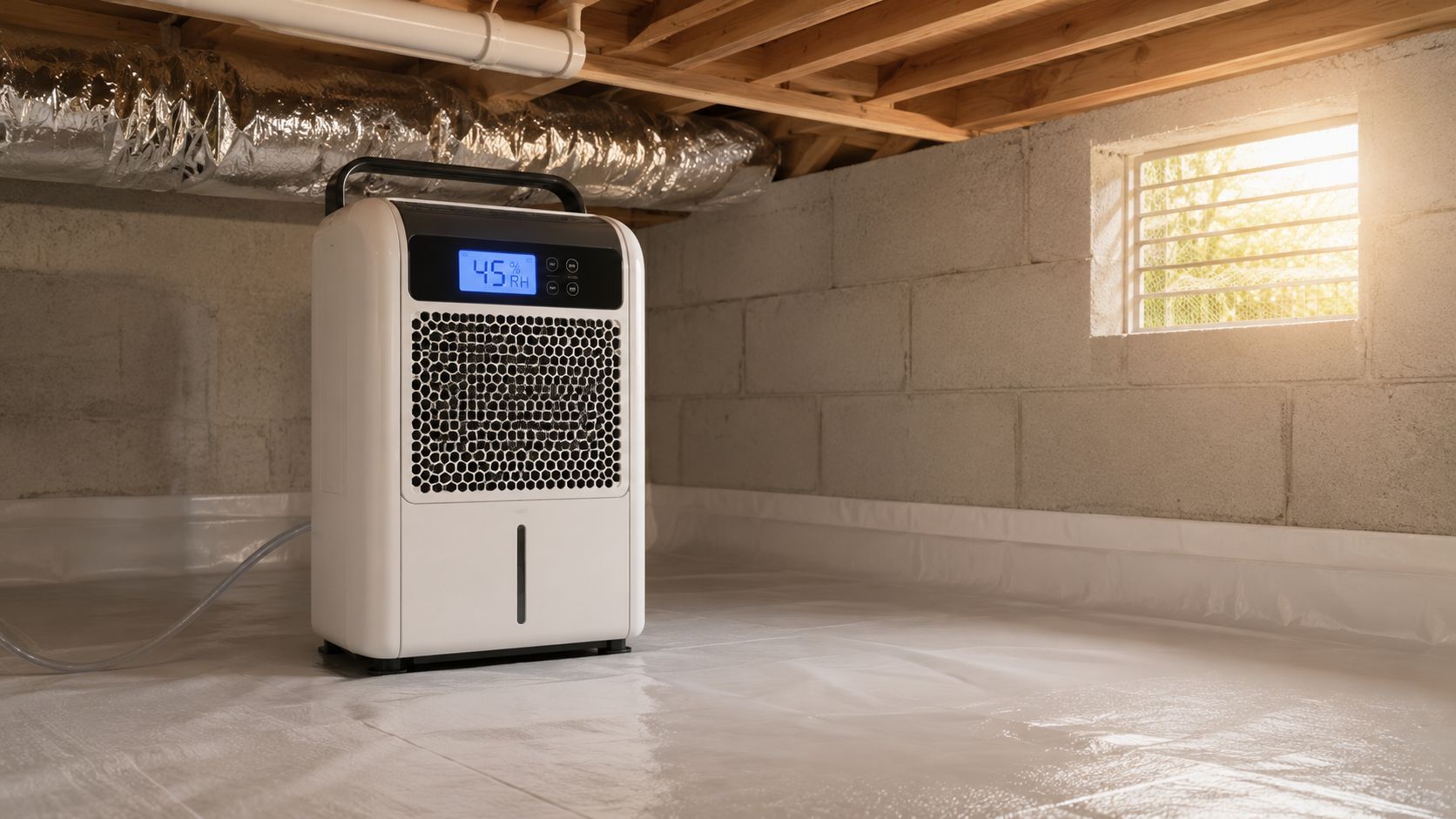
The quickest gains come from controlling indoor humidity and air movement together. In West Palm Beach, opening windows can feel like the easy answer, but warm outdoor air often adds moisture instead of removing it, especially during the wet season.
Use the right short-term tools
Set a portable dehumidifier to hold the basement in the practical 30% to 50% RH range, and tighten that target in summer if the space still smells damp. Moisture-control guidance also points to a hygrometer, a dehumidifier, better ventilation, sealing foundation cracks, and insulating pipes as useful short-term tools (Emergency Restoration Sciences).
A few quick wins matter in local homes and rentals:
- Clean AC drip pans: Standing water here often becomes the first odor source.
- Run exhaust in laundry alcoves: Dryer and washer zones can feed humidity fast.
- Wipe damp surfaces immediately: Quick-dry microfiber work beats letting moisture sit on tile, trim, or fixtures.
- Close off wet exterior air: If the outdoor air feels heavier than the basement, keep windows shut.
Budget Basement also notes that a vapor barrier helps keep the dehumidifier from working against moisture moving through the concrete. That matters in coastal and rainy-season conditions, where the room can seem dry at first but still keep drawing humidity from the slab and walls.
If the space stays damp after those fixes, the next question is whether outside water is still pushing toward the foundation. That is usually what turns a temporary fix into a repeat problem.
Long-Term Structural Solutions
Short-term drying helps, but basement moisture control only holds when bulk water is managed outside the foundation. In practice, the order matters. Fix drainage and slope first, then address damp-proofing or waterproofing, because a wet basement is difficult to correct from the inside alone.
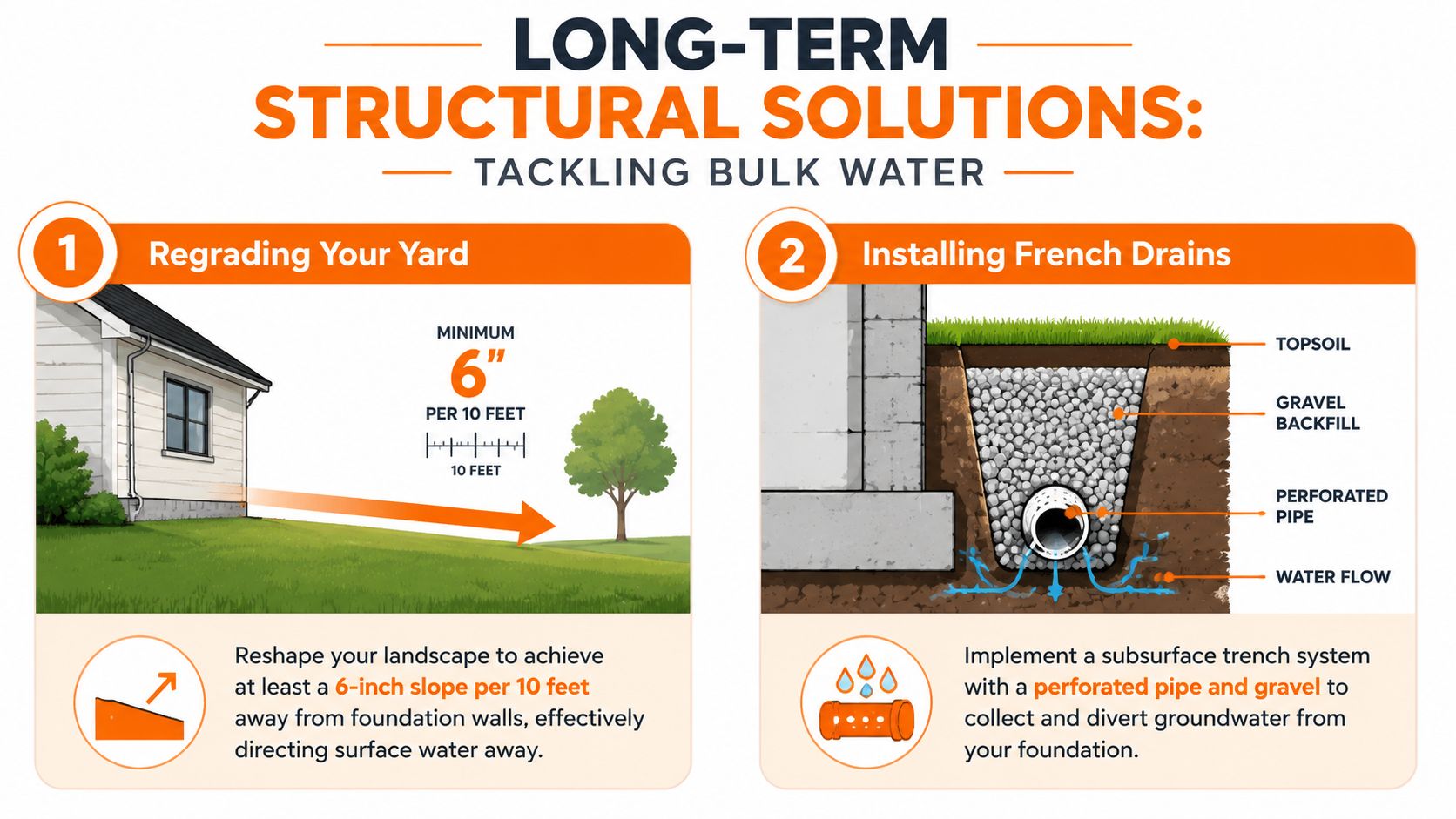
Regrade before you waterproof
A strong retrofit starts at the soil line. Keep the yard pitched so water moves away from the wall, and where possible leave exposed foundation above the final grade. The NRC publication also points to slope and site drainage as the first line of defense.
French drains come next when surface grading alone still leaves water collecting near the slab, which is common on flat South Florida lots after heavy rain. Downspout extensions matter for the same reason. Roof runoff that dumps close to the wall keeps feeding the problem, especially in West Palm Beach yards that stay saturated through the rainy season.
Water management outside the wall usually saves more damage than interior patching ever will.
For older Palm Beach ranch homes, the decision is often between damp-proof coating and full exterior waterproofing. Coatings can help with light moisture, but they are not the same as a membrane system that keeps returning water from reaching the foundation. If the basement already shows visible intrusion, the stronger exterior fix is usually the better trade-off.
Decide based on the source
- Surface runoff: Regrade the yard and extend downspouts first.
- Groundwater pressure: Add perimeter drainage or a French drain system.
- Chronic intrusion: Move to exterior waterproofing, not another interior paint-on fix.
- High-water-table situations: Include sump pump placement and sizing in the plan.
For homeowners who want a practical home care routine between major repairs, this guide to reduce humidity in the house can help keep indoor moisture from building on top of the structural work.
The trade-off is simple. A small patch may look cheaper this month, but recurring moisture usually costs more in finishes, storage, and cleanup.
Seasonal Maintenance Plan
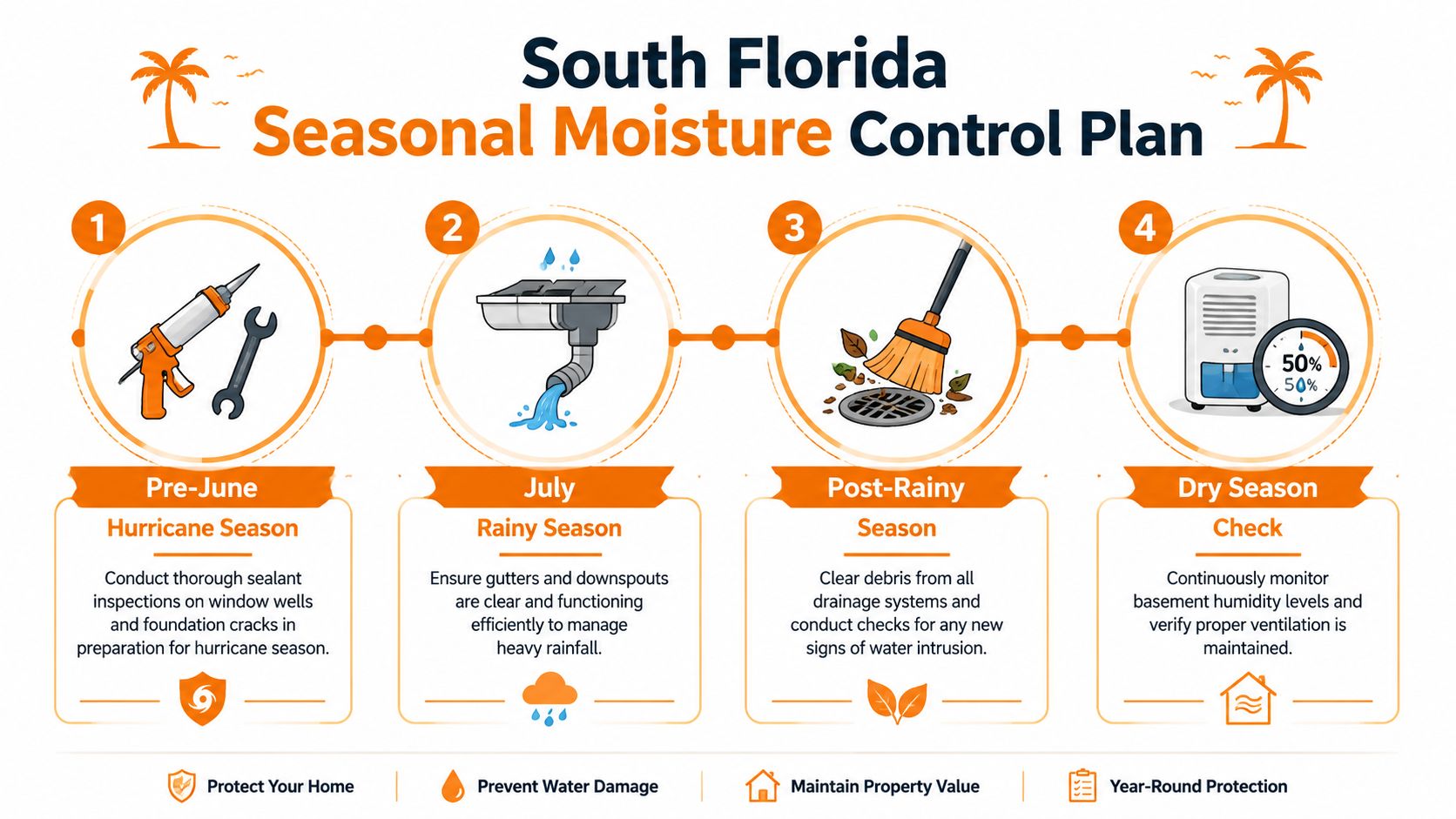
In Palm Beach County, the calendar matters as much as the repair itself. Moisture control changes with hurricane prep, rainy season, and the drier months, when a house can still hold hidden dampness even after the weather feels calmer.
Humidity targets matter because warm indoor air can keep feeding mold and material wear. Guidance from Emergency Restoration Sciences points to keeping basement humidity in the 30% to 40% range in summer to limit that risk. In a West Palm Beach home, that means seasonal checks are not just housekeeping, they help stop the next round of stains, odors, and cleanup.
A practical year-round rhythm
- Pre-June hurricane season: Inspect sealants around window wells, cracks, and wall penetrations before the first heavy storm pushes moisture into the structure.
- July rainy season: Clear gutters and downspouts, especially in Jupiter and Riviera Beach where roof runoff can overwhelm neglected lines and keep the soil wet near the foundation.
- Post-rainy season: Sweep debris from drainage paths, then check for fresh stains, odors, or damp trim that point to moisture still active behind the finish work.
- Dry season check: Clean dehumidifier coils, confirm the hygrometer is still reading steadily, and compare the room conditions to a practical guide for reducing indoor humidity if the air still feels sticky.
For homes that host guests or turn over often, that dry-season check is the one that gets skipped. In vacation rentals, a room can look clean and still hold hidden humidity after back-to-back occupancy, especially if doors stay closed and the AC runs unevenly.
The trade-off is simple. Regular attention takes a little time, but it is far easier than dealing with swollen trim, musty storage, or cleanup after the next wet stretch.
Safety Measures and Mold Prevention
Mold is what keeps moisture control from stopping at “dry enough.” In West Palm Beach, hidden humidity can keep feeding growth even after the obvious leak is fixed, especially when leaky ductwork, uninsulated pipes, and dryer vents keep adding damp air behind walls and around finishes.
Clean safely, not aggressively
If you're scrubbing moldy grout or drywall, wear nitrile gloves and an N95 mask, then keep the area contained. Aggressive scrubbing without containment can push spores into nearby rooms, which is a poor trade in finished basements and rental spaces where air can move through open doorways and returns.
Use EPA-approved mold cleaners on hard surfaces, and avoid soaking porous material that should be removed instead. Small spots on tile lines are one thing, but hidden growth behind cabinets or under trim usually means the cleanup has to stop and the moisture path has to be found. The NRC publication explains how indoor moisture issues can show up in overlooked building components, not just on the visible surface.
If the smell comes back after cleaning, the moisture source is still active.
These mold prevention strategies are a practical next step when the problem keeps returning. Visible mold is only part of the issue if the room is still getting wet from vents, pipes, or humid air that settles in during warm, rainy stretches.
Watch for hidden sources
- Duct leakage: Cold supply air hitting warm surfaces can create condensation that never shows up as a drip.
- Uninsulated plumbing: Sweating pipes often leave just enough moisture to feed growth along framing and finishes.
- Dryer vent placement: Poorly vented moist air can keep a laundry area damp and help mold settle nearby.
- Cabinet cavities: Tight kitchen and Airbnb layouts can trap humidity behind panels, where it lingers after the visible room feels dry.
When mold keeps returning, cleanup is only part of the fix. Moisture management, airflow, and the hidden paths water uses to stay in the space have to be addressed together.
Estimating Costs Timelines and Professional Help
Homeowners usually want a clear answer before they commit. The honest one is that costs depend on whether you're buying a portable fix or paying for excavation, drainage, and waterproofing work that changes the structure.
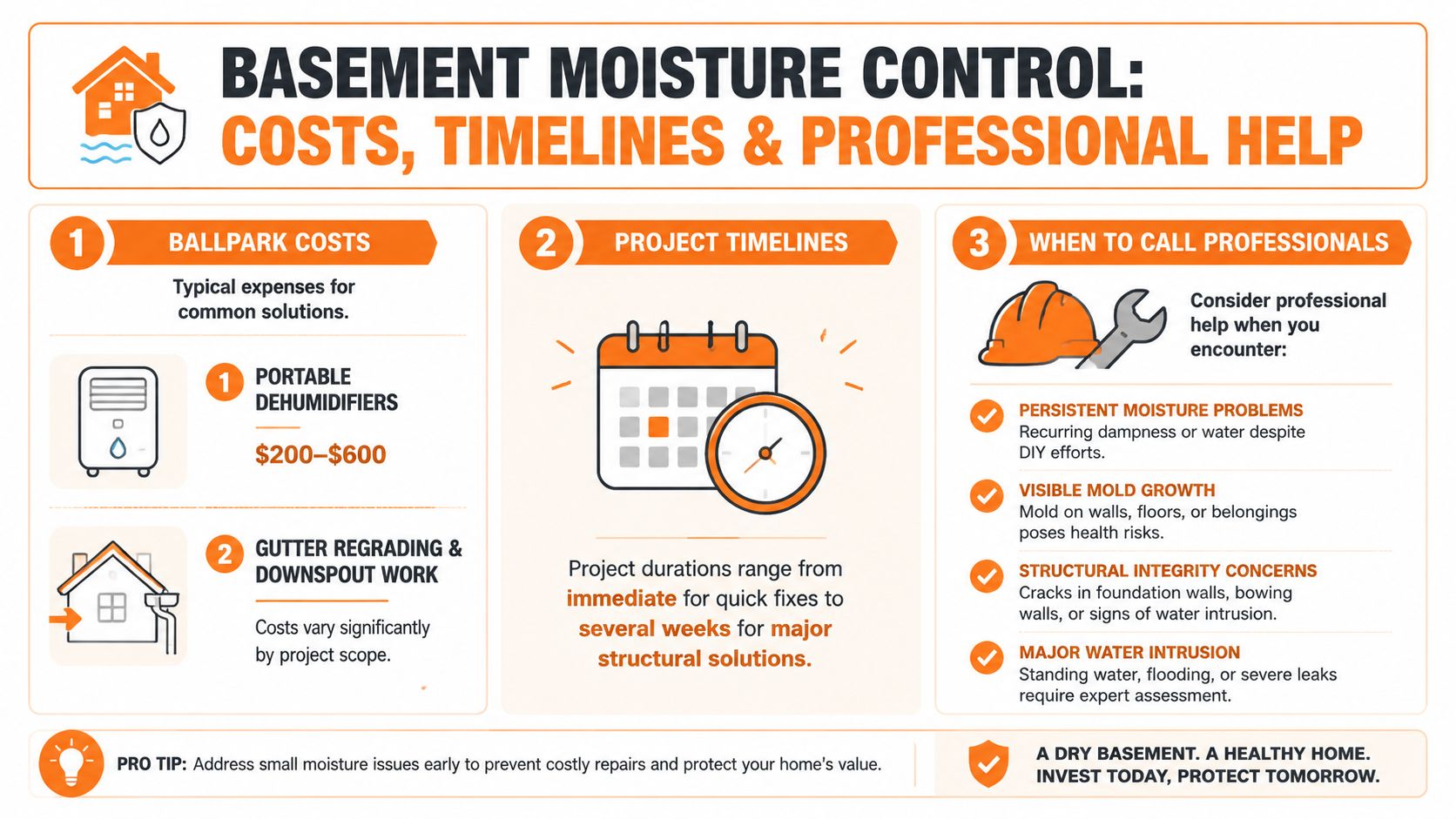
What pushes a project up the ladder
- Portable dehumidifiers: Often the quickest purchase when humidity is the main issue.
- Gutter and downspout work: Usually the first structural step when runoff is the culprit.
- Sump pump installation: Needed when groundwater or repeated flooding is part of the pattern.
- Full exterior waterproofing: The heavier lift when moisture keeps coming back.
The timeline can be a weekend for basic cleanup and monitoring, or several weeks if trenching, concrete cutting, or exterior membrane work is involved. A licensed moisture-control specialist makes the most sense when the problem repeats after rain, when cracks are visible behind finishes, or when insurance and flood history are already part of the picture.
When to stop DIY
- Persistent dampness: If RH won't stay in range, the room still has a source.
- Visible mold growth: If it spreads, the cleanup scope gets bigger fast.
- Structural concern: Cracks, bowing, or repeated seepage need more than patching.
Pricing depends on bedrooms, bathrooms, square footage, condition, and add-ons. Most clients request a custom estimate.
For a cleaner, drier home after the moisture work is done, book your cleaning with Sunset Shine Home Cleaning – your trusted house cleaning service in West Palm Beach. Call 561-408-4020 or book online – sunsetshinehomecleaning.com