
Your microfiber couch looked fine when you bought it. Then South Florida got to it. A damp swimsuit left a ring, sunscreen found the armrest, AC dust settled into the fabric, and now you're searching how to clean microfiber couch without making it worse. In Palm Beach County, that last part matters because humidity turns a small cleaning mistake into a lingering odor or a stiff, blotchy cushion fast.
Microfiber can usually be saved, but only if you clean it the right way for its tag code and keep moisture under control. If your routine gets derailed halfway through, a simple room-by-room reset can help you catch up before the couch becomes one more unfinished project on the list. This ADHD cleaning list is a practical way to get traction.
Table of Contents
- Introduction
- Your First Step Decode Your Couch's Cleaning Tag
- Cleaning Water-Safe Microfiber (Code W or W/S)
- The Method for Solvent-Only Microfiber (Code S)
- Drying and Restoring That Soft Microfiber Feel
- When to Call a Professional Cleaning Service
Introduction
Around West Palm Beach, microfiber sofas take a quiet beating. Beach sand grinds into the seat seams, year-round AC pushes dust into the nap, and a little extra moisture from a DIY cleanup doesn't dry as quickly as people expect. That's why so many homeowners look up how to clean microfiber couch after one spill turns into rings, dull patches, or a musty smell.
The good news is microfiber usually responds well to careful cleaning. The bad news is people often jump straight to a spray bottle without checking what the fabric can handle. That's where damage starts.
Practical rule: The first product you use matters less than the fabric code on the couch tag.
A solid cleanup comes down to a few decisions. Read the tag. Remove grit before you add any liquid. Use the right chemistry for the code. Then dry the fabric all the way and brush the texture back up.
Your First Step Decode Your Couch's Cleaning Tag
Before you touch a stain, find the manufacturer's label. It's usually under a cushion or along the platform. This is the step often skipped, and it's the one that prevents the ugly mistakes.
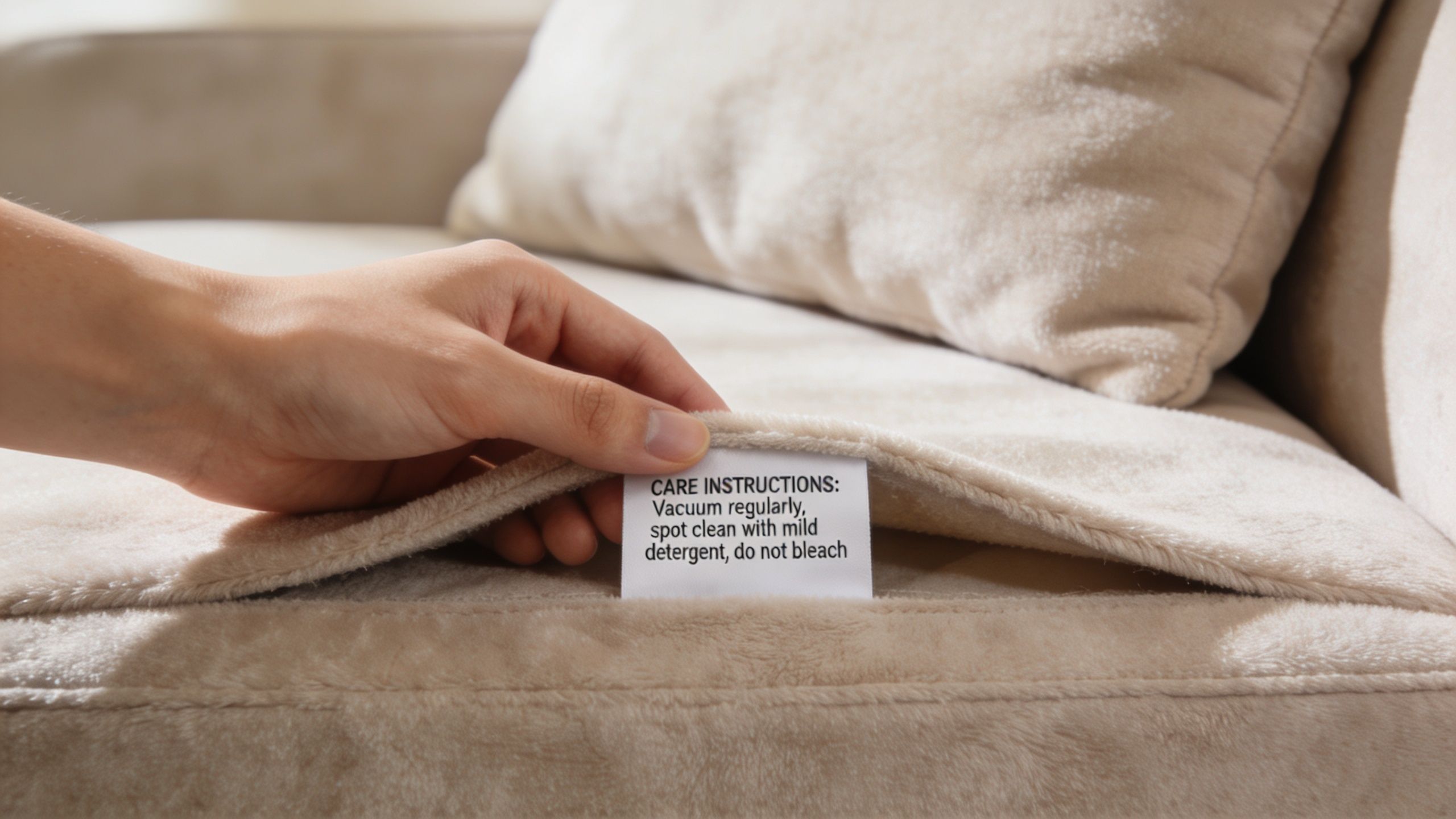
Good Housekeeping notes that the four main upholstery codes are W, W/S, S, and X, with W for water-based cleaner, W/S for either water- or solvent-based cleaner, S for solvent only, and X for vacuum or light brushing only. It also warns that the wrong chemistry can cause water spotting or permanent damage, as outlined in this microfiber cleaning code guide from Good Housekeeping.
What each code means
- W means the fabric can handle a water-based cleaner.
- W/S gives you more flexibility. Water-based or solvent-based methods may be used.
- S means stay away from water-based cleaning and use a solvent approach instead.
- X means no liquid cleaner. Vacuuming or light brushing only.
Why this matters more in Palm Beach County
On an S-coded couch, using water can leave marks that don't lift cleanly. In coastal and high-humidity homes from Juno Beach to Boca Raton, extra moisture can also hang around inside the cushion longer than expected. That's when a quick spot treatment turns into a bigger upholstery problem.
If you can't find the tag, don't guess. Guessing is how microfiber goes from dirty to damaged.
A lot of couches look similar, but they don't clean the same. The right answer starts with the code, not the stain.
Cleaning Water-Safe Microfiber (Code W or W/S)
A Palm Beach County couch usually looks dirtiest where people sit, but the bigger problem often sits deeper. Humid air, body oils, sunscreen, and fine sand from a quick run back in from the patio can turn a simple cleanup into a damp, streaky mess if too much water goes into the fabric.
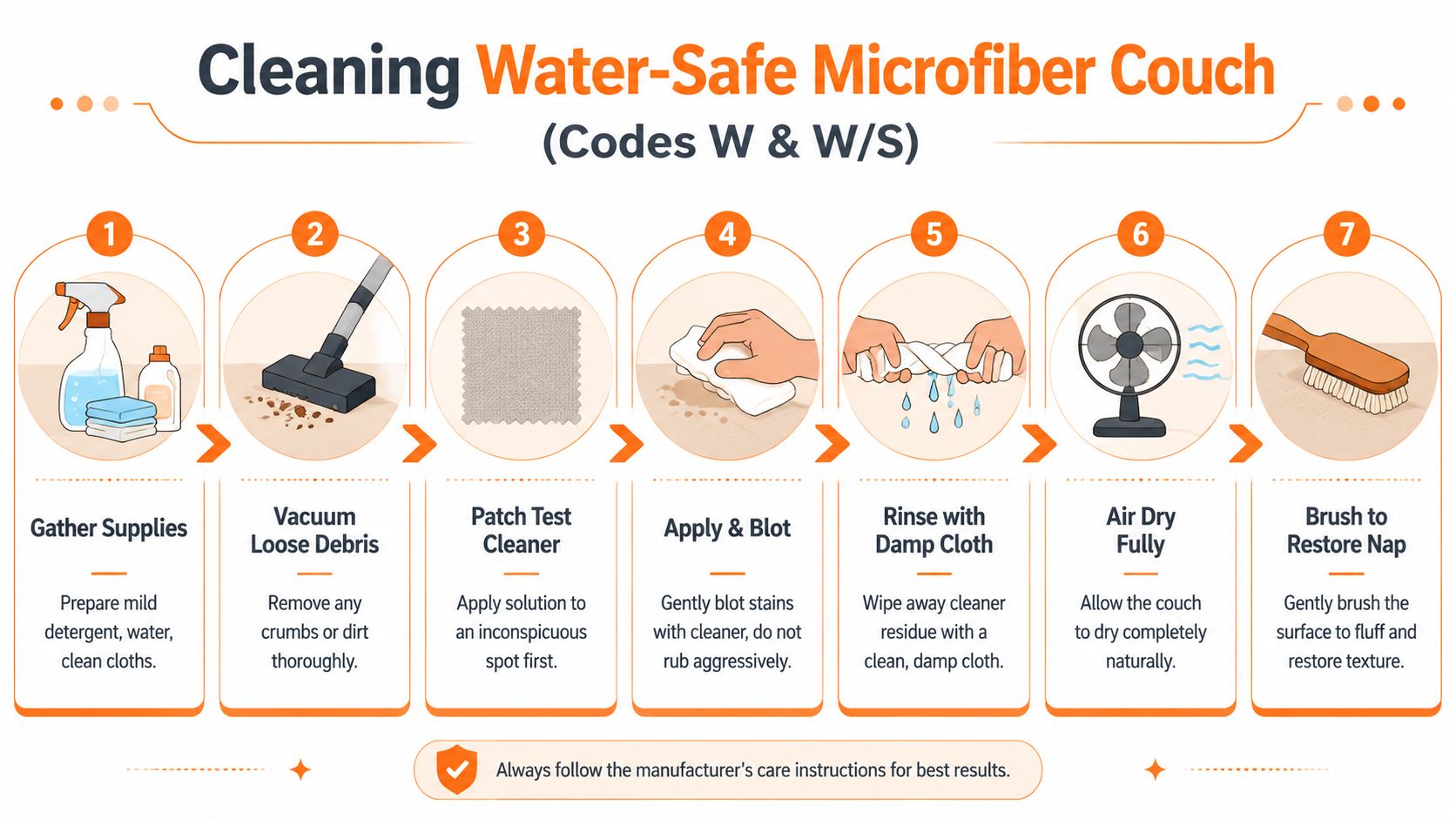
Rug Doctor advises checking the code first, then vacuuming to lift grit. For water-safe microfiber, the guidance is to apply cleaner sparingly, make dry passes to reduce water spotting, and use a soft-bristle brush after drying to restore the nap, as described in this Rug Doctor microfiber couch cleaning workflow.
Start with grit removal
On water-safe microfiber, the first real cleaning step is still dry. If sand, pet hair, lint, and cracker dust are sitting in the nap, any moisture can turn that debris into mud and push it farther into the weave. I see this a lot in coastal homes where people assume the stain is the issue, but the trapped grit is what keeps the couch looking dull after they finish.
Use:
- An upholstery attachment on seats, backs, and arms
- A crevice tool along welting, seams, and cushion edges
- A soft brush attachment if the fibers already look pressed down
Take your time around the front rail and arm tops. Those spots collect the most skin oils and blown-in dust.
A safer cleaning routine
Water-safe does not mean soak it. It means controlled moisture.
- Vacuum thoroughly first.
- Test a hidden area. Try the back edge, under a cushion, or a low side panel.
- Lightly dampen a clean cloth or apply a small amount of water-based cleaner. Avoid spraying the cushion until it feels wet.
- Blot or gently work one small section. Short, controlled passes leave a better finish than broad scrubbing.
- Follow with a dry cloth right away. Press and lift moisture out before it settles deeper into the cushion.
- Let the area dry completely before deciding whether it needs another pass.
This video gives a useful visual for the process:
A couch can feel dry on top while the fill underneath is still holding moisture. In South Florida, that is where DIY jobs go sideways. Closed-up rooms, afternoon rain, and constant humidity slow drying enough for musty odor and mildew risk to creep in, especially on thick seat cushions.
What usually works, and what creates bigger problems
| Approach | Usually works | Usually causes trouble |
|---|---|---|
| Moisture level | Light, controlled application | Saturating the fabric or cushion |
| Soil removal | Full vacuuming before any cleaner | Rubbing wet grit into the fibers |
| Technique | Blotting, small sections, repeat as needed | Hard scrubbing across a large panel |
| Drying | Dry cloth passes, airflow, patience | Putting cushions back before the interior dries |
| Finish | Brushing the nap after drying | Leaving the pile stiff, darkened, or matted |
Portable spot cleaners can help on a small spill if the tag allows a water-based method, but they also leave behind more moisture than homeowners expect. In a dry climate, that may be manageable. In Boca, West Palm, Jupiter, and anywhere near the coast, leftover dampness is a real trade-off. If the stain spreads, the fabric dries with rings, or the cushion starts to smell sour, it usually makes sense to stop before a favorite couch turns into a mildew job.
The Method for Solvent-Only Microfiber (Code S)
S-coded microfiber is where people get in trouble fast. The couch may look sturdy, but water isn't the answer here. For this type of fabric, rubbing alcohol is widely recommended because it evaporates quickly and helps limit water marks.
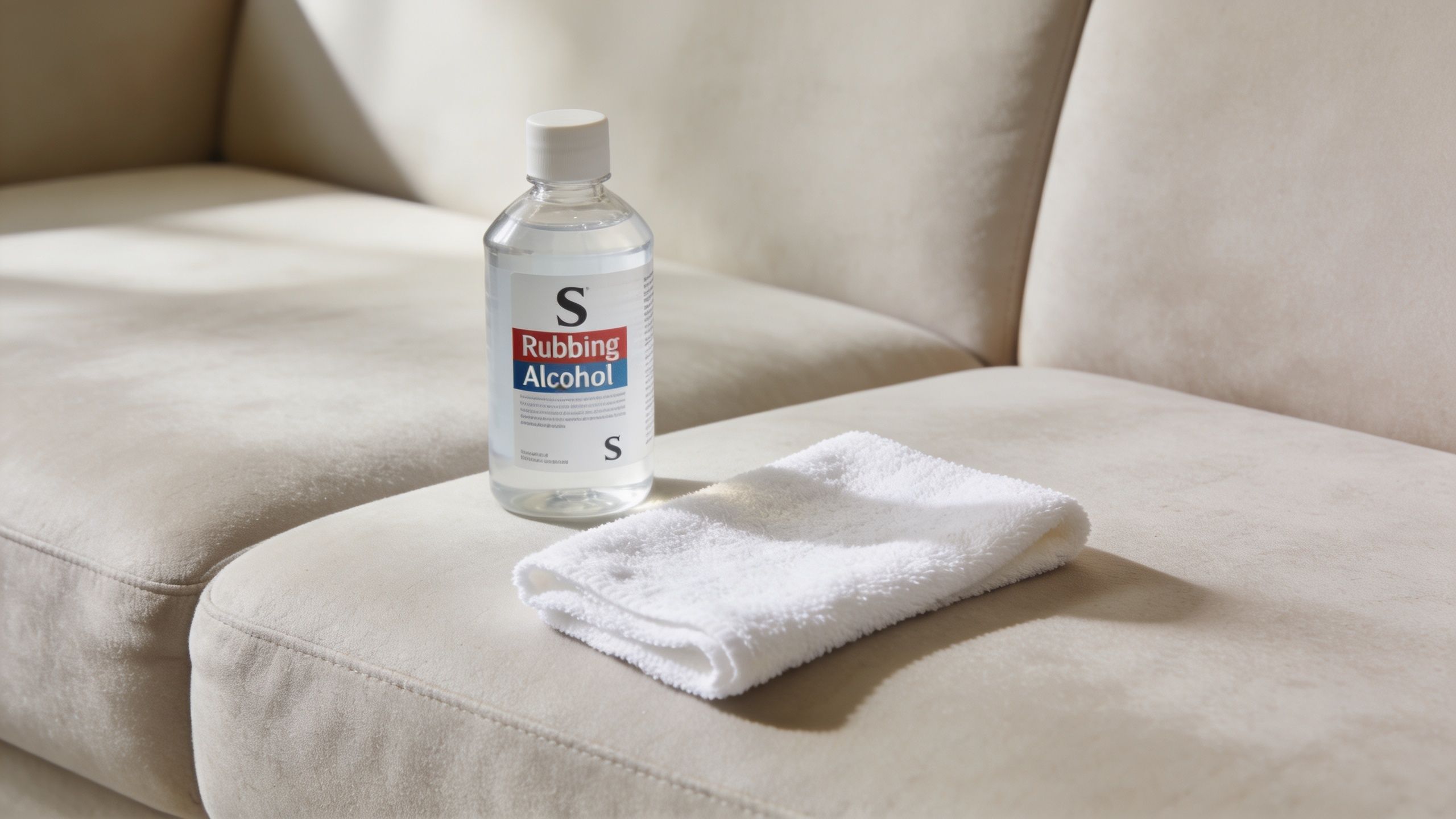
A practical method for solvent-safe microfiber is to spray a section with rubbing alcohol, scrub with a clean sponge until the soil transfers, and let it dry fully before brushing the fibers, according to this solvent-safe microfiber spot-cleaning method.
The safest way to handle it
Open windows if you can and keep the room ventilated. Then work in small patches.
- Use a light-colored sponge or cloth. Dark applicators can transfer color.
- Spray a section, not the whole couch. Small zones are easier to control.
- Scrub gently until soil lifts. You want transfer onto the sponge, not damage to the fabric.
- Let it dry fully. Then brush the texture back up.
In a Jupiter rental or Delray Beach condo, this is often the better method for greasy spots from takeout food, body oils, or a mystery armrest stain. If the stain has an odor attached to it, that's a separate issue. This guide on how to get oil smell out of clothes explains why oily residue can linger even after the visible mark looks better.
Solvent-safe doesn't mean flood it with product. Fast evaporation helps, but over-application still creates uneven results.
If your S-coded couch has large affected areas instead of one or two spots, DIY gets much riskier.
Drying and Restoring That Soft Microfiber Feel
Stopping too early is a common mistake. The couch looks cleaner, so it is tempting to sit on it before it is fully dry. That is where texture problems start.
Stanley Steemer warns that over-wetting is one of the most common DIY upholstery cleaning mistakes and that it can lead to mold, mildew growth, and irreversible fiber damage, including a permanent loss of softness. It also notes that this risk is higher in high-humidity climates where moisture lingers longer, which matters here in South Florida, as explained in these microfiber upholstery dos and don'ts from Stanley Steemer.
Why drying matters so much here
A microfiber cushion can feel dry on top and still hold moisture deeper in the fabric. In Palm Beach Gardens, Wellington, and other homes running AC all day, airflow indoors isn't always enough to dry upholstery quickly after a heavy DIY cleaning.
Watch for signs the couch stayed too wet:
- A stiff or crunchy patch
- A darkened area that doesn't even out
- A musty smell after the spot should be dry
- Flattened nap that won't brush back cleanly
How to bring the texture back
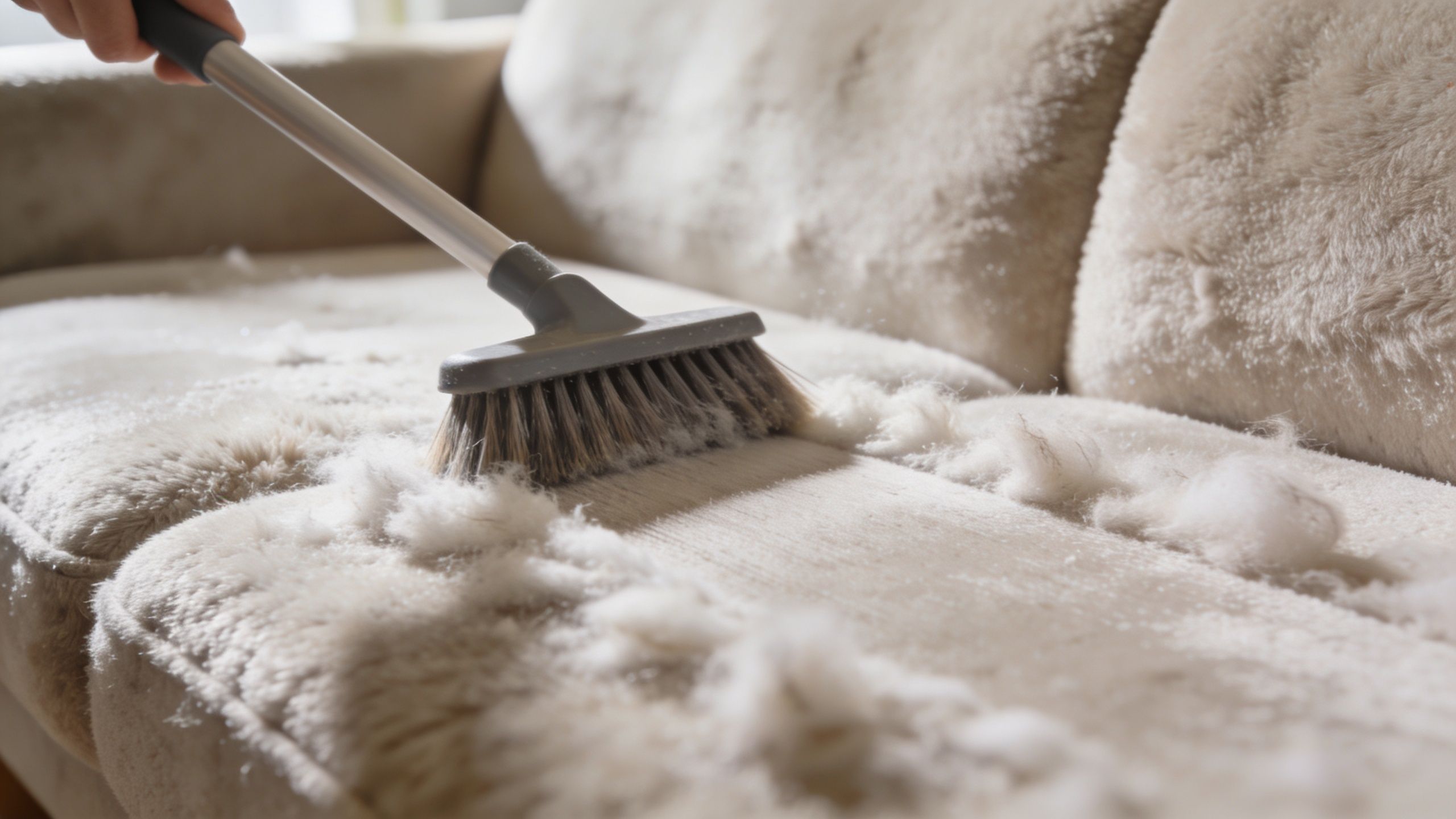
Once the area is completely dry, use a soft-bristle brush and lightly work the fabric to lift the nap. Short circular motions usually do the job better than hard back-and-forth scrubbing.
For routine upkeep in beach-area homes:
- Vacuum after sandy weekends
- Handle sunscreen or body oil spots early
- Brush high-use armrests before they get shiny and matted
If the couch keeps drying stiff or smelling off, the problem usually isn't surface dirt anymore.
When to Call a Professional Cleaning Service
A microfiber couch can go from "needs a quick cleanup" to "needs professional equipment" in one bad weekend. In Palm Beach County, I see it after houseguests, vacation rental turnovers, summer storms, and DIY cleanings that left the fabric damp longer than the owner realized. Once odor settles into the cushion, or a stain spreads beyond one seat, home methods stop being a safe bet.
The biggest red flags are the ones that point to moisture below the surface. A couch may look fine by evening and still hold enough dampness inside the padding to create a mildew problem in South Florida's humidity. That risk is higher in homes near the coast, in places with doors opening often, and in busy households where the couch gets used again before it is fully dry.
Professional help makes sense when:
- The cleaning tag is missing or unreadable
- A stain has spread across multiple cushions or deep into the arms
- The couch smells sour, musty, or "wet" a day later
- DIY cleaning left water rings, stiff sections, or blotchy color
- Pet accidents, spilled drinks, or body oils have soaked past the fabric
- You want the couch cleaned without gambling with the nap or the cushion fill
There is also a time factor. Airbnb owners in Delray Beach and Jupiter usually cannot afford a trial-and-error cleaning job between guests. Families in West Palm Beach often need the sofa dry, usable, and not smelling like cleaner by the same evening. In those cases, a professional deep cleaning service in West Palm Beach can help you get the home under control while you decide whether the upholstery itself needs a dedicated upholstery specialist.
If your couch is a favorite piece, this is usually the point where caution saves money. Repeated DIY attempts often set the stain, rough up the texture, or trap more moisture in the cushion than the original spill did.