
You step out of the shower in West Palm Beach, wipe the mirror with your hand, and somehow it looks worse. Part of that is steam. Part of it is the film already sitting on the glass. In South Florida bathrooms, those two problems team up fast.
If you've been wondering how to clean foggy mirrors without leaving streaks, lint, or that cloudy haze that comes back the next day, the fix is usually simpler than people think. The trick is matching the method to the kind of fog you're dealing with. Fresh steam needs one approach. Hard water film, hairspray, and soap residue need another.
Table of Contents
- Why Your South Florida Mirrors Are Always Foggy
- Quick Fixes for Post-Shower Steam and Smudges
- Deep Cleaning a Stubbornly Hazy or Cloudy Mirror
- The Best Cleaners and Tools for a Flawless Finish
- How to Prevent Mirrors from Fogging Up in the Future
- When to Call a Professional Cleaning Service
Why Your South Florida Mirrors Are Always Foggy
In Palm Beach County, a bathroom mirror rarely deals with just one issue. After a hot shower, you get the temporary fog from steam. Then, even after the room clears, you may still see a dull or blotchy look on the glass. That's the part people mistake for “just more steam,” but it usually isn't.
The first kind of fog is normal condensation. The second is a residue problem. Hard water minerals, soap splash, toothpaste mist, and hair product overspray leave a thin film on the mirror. Once that film builds up, moisture grabs onto it more easily, so the mirror fogs faster and looks dirty longer.
That’s why a quick wipe with a hand towel often disappoints. You remove some moisture, but you also smear around lint, body oils, or cleaner residue. In humid homes from West Palm Beach to Palm Beach Gardens, that shortcut usually turns a clear mirror into a streaky one.
Practical rule: If your mirror still looks cloudy after the steam disappears, you’re not dealing with steam anymore. You’re dealing with buildup.
A lot of homeowners focus on the glass and forget the room. If the exhaust fan is dusty or underperforming, the bathroom holds onto moisture longer and every surface pays for it. A cleaner fan can help the mirror stay clear longer, which is why regular bathroom exhaust fan cleaning makes more difference than generally thought.
Two kinds of fog that need different fixes
- Temporary steam comes right after a shower and usually clears with airflow, a squeegee, or a microfiber wipe.
- Persistent haze stays behind when the mirror is dry and often looks filmy, patchy, or dull in daylight.
- Mixed problems are common in South Florida bathrooms. Steam lands on residue, then that residue holds onto more moisture the next day.
Once you know which one you have, cleaning gets easier. You stop overusing glass spray, stop rubbing harder, and start using methods that fit the problem.
Quick Fixes for Post-Shower Steam and Smudges
When the mirror is just steamed up and you need it clear right now, speed matters. This is the part of how to clean foggy mirrors that should take seconds, not a whole cleaning session.
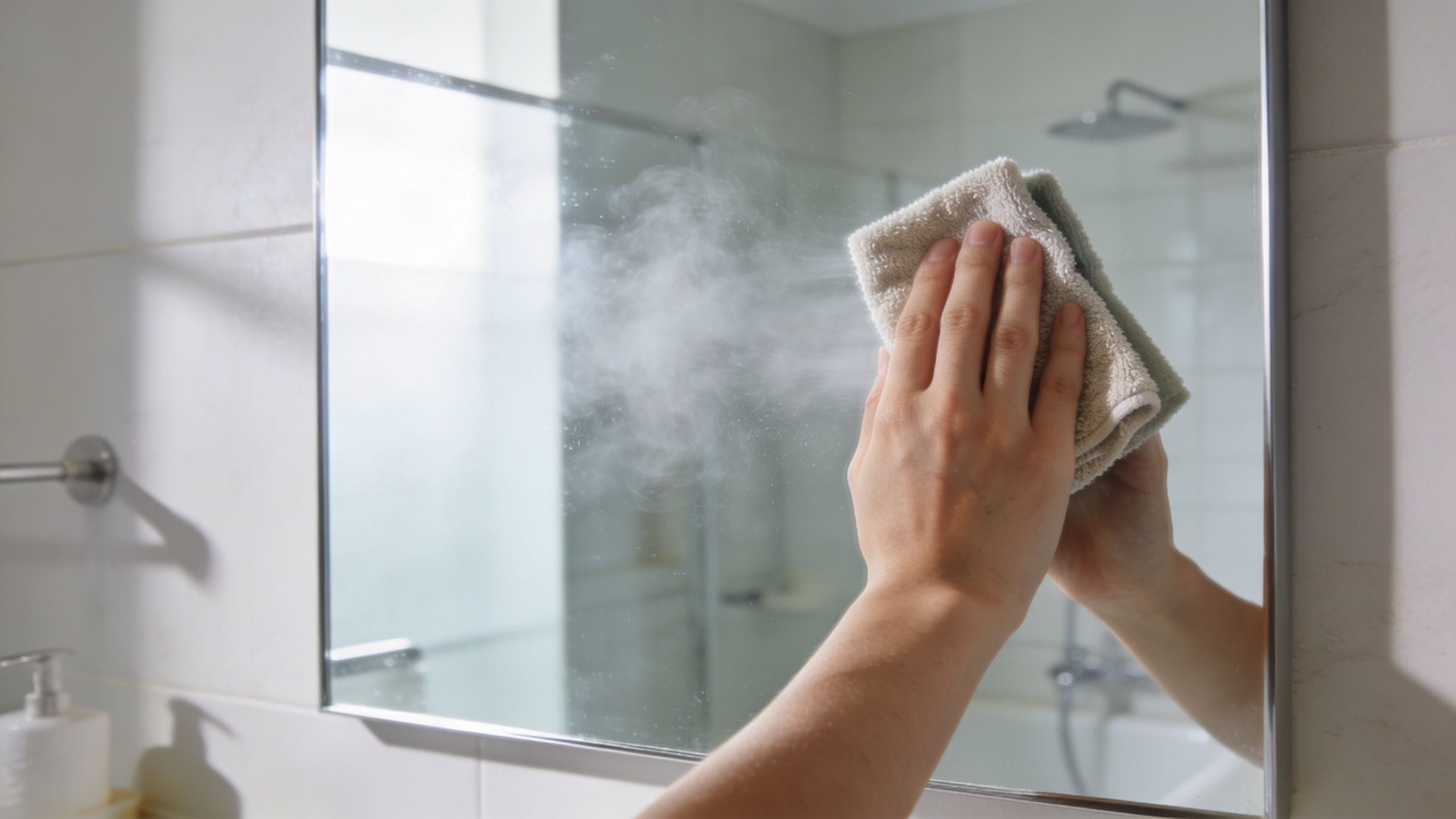
Use a dry microfiber cloth the right way
A clean microfiber cloth is the best first move for everyday steam and fingerprints. The mistake is rubbing in circles or using the same damp cloth that already cleaned the sink. That just spreads moisture and residue.
Use a dry cloth and wipe in an S-pattern from top to bottom. That keeps you moving moisture off the glass instead of dragging it back over areas you just cleaned. It also helps you spot any leftover streaks before they dry in place.
For small vanity mirrors, this is usually enough. For a larger mirror wall, it works best as a quick touch-up after another tool does the heavier clearing.
Keep a small squeegee near the sink
A compact shower squeegee is one of the most underrated bathroom tools. It clears fresh condensation fast, doesn’t leave lint behind, and works especially well if several people are using the bathroom back to back.
Use it from the top edge down in straight passes. Wipe the blade between passes if it starts to drag. On a big mirror, this is often faster than cloth-only cleaning and leaves less chance for those side streaks that show up once the room cools down.
The fastest routine is simple. Ventilate the room, clear the moisture, then do a quick buff only where needed.
Use disinfecting wipes when you want speed and sanitizing
If the mirror has fingerprints, splash marks, or toothpaste dots and you also want to disinfect, wipes are a practical option. Lysol’s bathroom mirror guidance states that Lysol Disinfecting Wipes eliminate 99.99% of viruses and bacteria on foggy bathroom mirrors when used as directed, while also giving a quick, streak-free clean.
That can be useful in busy family homes, guest baths, vacation rentals, and shared condo bathrooms around West Palm Beach where mirrors get touched often. The key is to wipe evenly and not overwork the surface after the wipe has done its job.
Daily habits that help more than people expect
- Turn on the exhaust fan first: Start it before the shower if you can, not after the room is already full of steam.
- Don’t use a bath towel on the mirror: Towels leave lint and often carry fabric softener residue.
- Use a dedicated mirror cloth: Once a microfiber cloth starts picking up makeup, dust, or cleaner residue, retire it from mirror duty.
- Handle edges gently: Mirror edges collect grime fast, but over-wetting them can create bigger problems over time.
For everyday fog and smudges, don’t overcomplicate it. If the mirror clears easily with a squeegee or microfiber, save the stronger methods for true haze.
Deep Cleaning a Stubbornly Hazy or Cloudy Mirror
You wipe the steam off after a shower, step back, and the mirror still looks cloudy. In West Palm Beach bathrooms, that usually means the problem is not fog anymore. It is buildup.
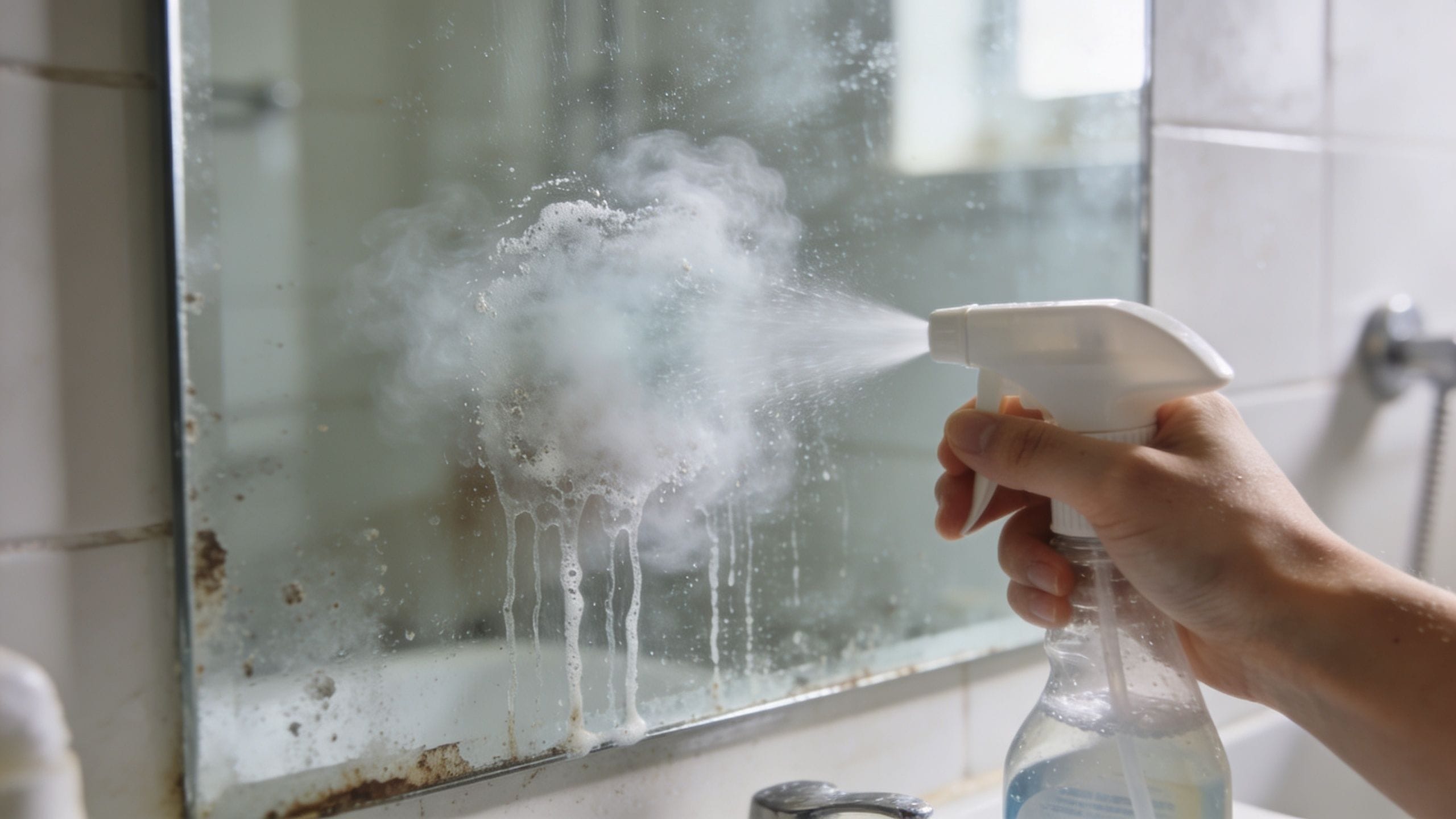
South Florida mirrors deal with two common troublemakers at once. High humidity keeps residue soft and sticky, and hard water leaves a light mineral film that regular glass cleaner often just smears around. Add hairspray, toothpaste mist, and soap splash, and you get that stubborn hazy look people scrub at for weeks.
How to tell what kind of haze you have
Start by looking at where the cloudiness sits.
A white or chalky film near the sink side or lower half of the mirror usually points to mineral spots and soap residue. An even, greasy dullness across the middle often comes from hair products, face oils, or aerosol overspray. If the haze gets worse when the bathroom is humid, that is another clue that Florida moisture is holding residue on the glass instead of letting it dry clean.
Do a quick test with a dry microfiber cloth. If the film smears, treat it like residue. If it barely changes, you are probably dealing with mineral buildup.
Vinegar method for mineral film and soap residue
For mineral haze, a simple vinegar mix is still one of the most reliable options. The key in Florida is using distilled water, not tap water, so you do not add more minerals while you clean.
Use this process:
- Wipe off dry dust first. Grit on the glass can drag and make buffing harder.
- Mix equal parts white vinegar and distilled water in a spray bottle.
- Mist the cloth, not the mirror. That gives you better control and helps protect the edges.
- Wipe from top to bottom in straight passes. Keep pressure light and consistent.
- Buff right away with a second dry microfiber cloth. This is the step that clears the haze.
If the mirror has months of buildup, let the dampened cloth sit against the cloudy area for a minute before wiping. That softens the film so you are dissolving it instead of grinding at it.
Vinegar does have limits. It works well on mineral residue and soap film, but it will not always cut through layered hairspray or heavy cosmetic buildup. If you clean carefully and the mirror still looks flat, change methods instead of repeating the same one.
For readers who like a visual walkthrough before tackling the job, this short demo can help with technique and pacing:
Magic Eraser method for stubborn product buildup
Some cloudy mirrors are coated with product film, not water spots. I see this a lot in bathrooms where people use hairspray, dry shampoo, setting spray, or beard products near the sink. In that case, melamine foam can do a better job than liquid cleaner alone.
This cleaning demonstration on melamine foam use shows the technique clearly. Keep the foam only slightly damp, use light pressure, and finish with a dry microfiber buff.
Use it carefully:
- Dampen the eraser lightly. It should not drip.
- Work in small sections. A few straight passes are enough to test the surface.
- Use a gentle hand. Melamine foam is mildly abrasive.
- Buff with a dry microfiber cloth as soon as you finish each area.
This method is useful for mirrors that stay dull no matter how many times you spray them. It is not something I would use every week.
A few mistakes that keep the haze coming back
People usually run into trouble in one of four ways:
- They use too much cleaner. Extra liquid creates runoff and more smearing.
- They use the same cloth for counters and glass. That transfers residue right back onto the mirror.
- They scrub harder instead of changing products. Mineral film and hairspray need the right cleaner, not more force.
- They ignore nearby dust. In humid bathrooms, dust from trim, vents, and even neglected baseboards can mix with moisture and settle back onto the glass. A quick pass while cleaning dusty bathroom baseboards and edges helps the mirror stay clear longer.
When a mirror stays hazy after a proper deep clean, check the edges and backing. In older bathrooms, black spots, edge failure, or damage behind the glass can look like dirt but will not clean off. That is a different problem from ordinary Florida bathroom haze.
The Best Cleaners and Tools for a Flawless Finish
A mirror doesn’t need a cabinet full of products. It needs the right few tools and a cleaner that won’t fight the climate. In West Palm Beach bathrooms, that usually means avoiding anything that flashes off too fast or leaves residue behind.
What works well in humid bathrooms
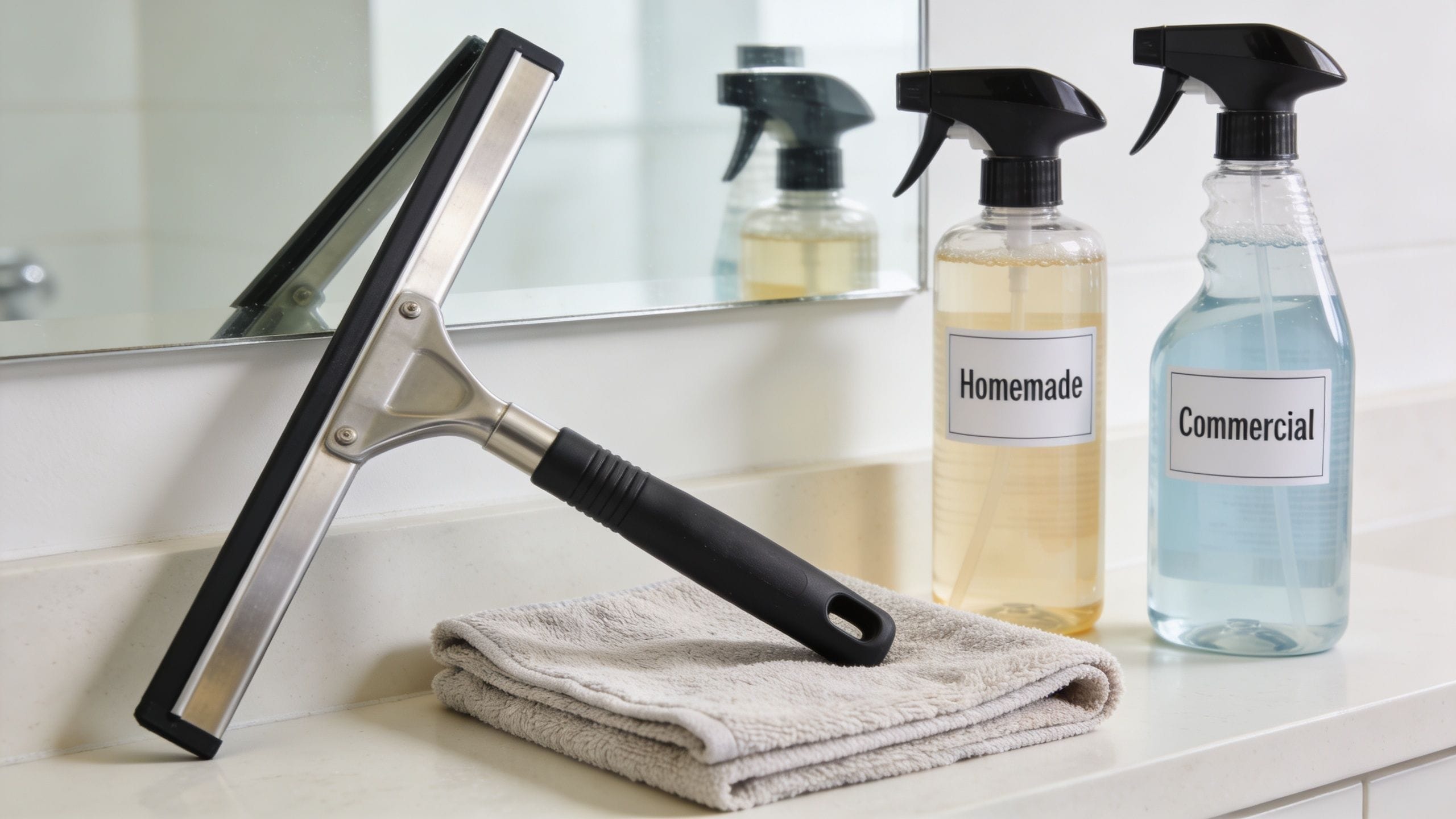
A simple kit handles most mirror problems:
| Tool or cleaner | Why it earns a spot | Best use |
|---|---|---|
| Microfiber cloth | Lint-free wiping and buffing | Daily touch-ups and final polish |
| Distilled water | Helps avoid mineral spotting | DIY cleaner mixes |
| White vinegar | Good for film and hard water residue | Deep cleaning cloudy mirrors |
| Small squeegee | Fast removal of fresh condensation | Post-shower steam |
| Melamine foam | Helps on stubborn product film | Occasional deep clean |
| Spray bottle with fine mist | Better control and less dripping | Applying DIY cleaner |
If you keep just one “wash” cloth and one separate “buff” cloth, results improve right away. The buff cloth is what people skip, then they blame the cleaner.
A bathroom mirror kit also stays cleaner when it’s stored away from hair products. If your cloth sits beside hairspray, lotion mist, and powder residue, it won’t stay mirror-safe for long.
What usually causes streaks and haze
A lot of store-bought glass cleaners look like the easy answer, but in humid bathrooms they often disappoint. Speed Cleaning’s guidance on mirror cleaning notes that ammonia is present in up to 80% of store-bought glass cleaners and dries too quickly, leaving a hazy film that causes 70% of post-cleaning fog reports. The same guidance recommends switching to ammonia-free options such as vinegar solutions, especially in hard water areas like Palm Beach County.
That lines up with what many homeowners see in real life. The mirror looks fine for a minute, then a cloudy cast shows up once the room light hits it from the side.
Here’s a practical breakdown:
- Homemade vinegar solution: Best for mineral film, routine haze, and anyone who wants an ammonia-free option.
- Commercial ammonia cleaner: Fast on light fingerprints, but often disappointing in bathrooms with persistent moisture.
- Disinfecting wipes: Convenient for quick cleaning when sanitizing matters too.
- Melamine foam: Useful for selective problem areas, not full-time maintenance.
Good mirror cleaning is less about “stronger” products and more about cleaner evaporation, less residue, and better buffing.
If you’re already dialing in bathroom detail work, the same attention to edges and buildup helps with trim and lower-wall dust too. These easy ways to clean baseboards follow the same basic principle. Dry-remove debris first, then clean with control instead of flooding the surface.
How to Prevent Mirrors from Fogging Up in the Future
You step out of a hot shower in West Palm Beach, reach for the towel, and the mirror is white again before you can even check your hair. In South Florida, that keeps happening because the bathroom air stays loaded with moisture, and any leftover film on the glass gives condensation more to cling to.
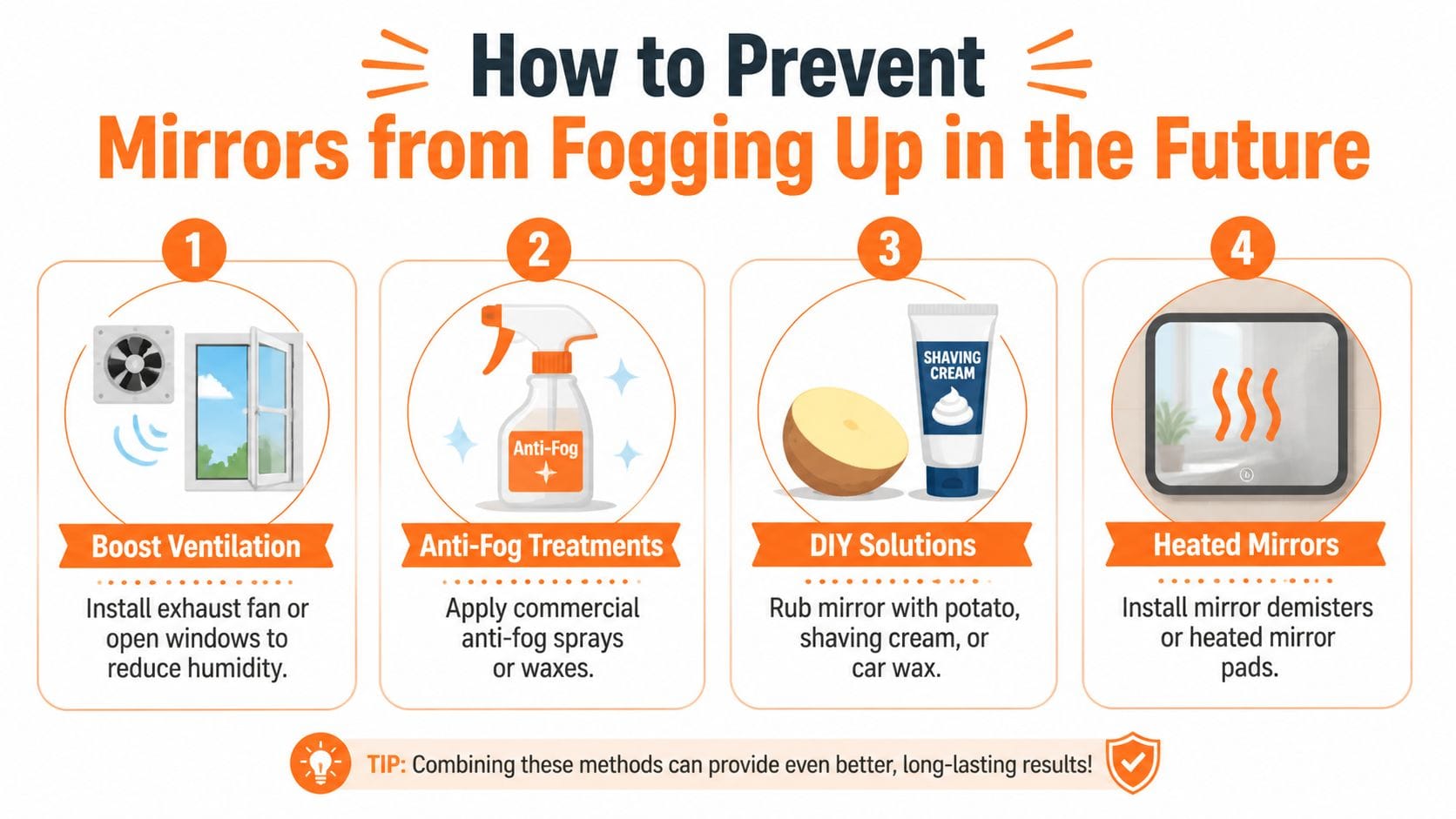
Ventilation does the heavy lifting
If your fan starts after the mirror has already fogged, you are late. Turn it on before the shower, keep the door cracked if the layout allows, and let the fan run for a while after you finish. That early airflow matters more in Florida than in drier climates because the room starts humid and takes longer to dry out.
A window helps too, but only when outside air is not just as wet as the bathroom. On many summer mornings in Palm Beach County, opening the window adds more humidity than it removes. In that case, the exhaust fan is the better tool.
Comparing anti-fog options that actually make sense
Some prevention methods are cheap and quick. Others last longer but need more effort or a remodel budget.
| Method | How well it works in humid Florida bathrooms | How long it lasts | Best fit |
|---|---|---|---|
| Better ventilation | Strong daily control if used consistently | Ongoing | Primary bathroom, kids' bathroom, everyday use |
| Shaving cream | Helps for a short stretch, but can leave smears if overapplied | Short-term | Fast fix before guests or a busy morning |
| Commercial anti-fog spray | Mixed results in high humidity, especially on mirrors with existing residue | Varies by product | People willing to reapply and test products |
| Very thin dish soap film | Reliable if buffed almost completely clear | Temporary, with reapplication as needed | Rentals, guest baths, low-cost upkeep |
| Heated mirror or demister | Best long-term fix because it stops condensation from settling | Ongoing once installed | Renovations and higher-use bathrooms |
The dish soap method works better than many homeowners expect, but only if the layer is extremely thin. If you can see the product, you used too much. In bathrooms with hard water, a heavy coat often turns into streaks once minerals and steam hit it for a few days.
Commercial anti-fog products can help, but they are not all built for a coastal bathroom. Some leave a slick residue that catches dust, hairspray, and lint. That trade-off matters in homes where the mirror gets wiped often or sits close to the sink.
Pick the method that matches the real problem
If the mirror fogs during every shower, fix airflow first.
If the mirror stays cloudy even when dry, deal with residue before adding any anti-fog treatment. Prevention products trap hard water film and soap haze under the coating, which is why so many DIY fixes look worse after a week.
For daily-use bathrooms, I usually recommend this order:
- Get the mirror fully clean.
- Improve fan habits and airflow.
- Test a light anti-fog barrier only if the mirror still fogs too fast.
- Consider a heated mirror if the bathroom is being updated anyway.
That sequence saves money and avoids chasing the wrong fix. A lot of homeowners buy a spray when the underlying issue is mineral buildup plus Florida humidity.
If the whole bathroom holds moisture, not just the mirror, a full reset often works better than spot-treating the glass. A deep cleaning service in West Palm Beach for moisture-prone bathrooms can remove the residue that keeps condensation sticking around.
Clean glass fogs less, dries faster, and responds better to every prevention method.
When to Call a Professional Cleaning Service
Sometimes the issue is cleaning. Sometimes it’s the mirror itself. If you’ve removed the steam, deep-cleaned the film, and the mirror still looks blotchy or dark around the edges, the problem may not be on the surface anymore.
Signs the mirror may be damaged, not dirty
Watch for edge darkening, black spots, or a cloudy look that doesn’t change no matter what method you use. That can point to desilvering, where the reflective backing has started to break down. In humid bathrooms, especially older ones, that damage is common.
Surface haze usually changes when you clean it properly. Backing damage doesn’t. If the mirror looks worse near corners and edges and the marks seem to sit underneath the glass, replacement may be the only real fix.
When outside help saves time and frustration
Professional cleaning makes the biggest difference when the mirror problem is part of a larger bathroom buildup issue. That’s common before open houses, after move-outs, in vacation rental turnovers, or when a deep clean has been overdue for a while.
A trained cleaner won’t just spray glass and hope for the best. They’ll identify whether the mirror needs residue removal, careful buffing, or a lighter maintenance clean to keep the clarity from slipping again. For homes dealing with constant moisture, that consistency matters more than heroic one-time scrubbing.
The deep-clean standard that works well in humid spaces is straightforward. This professional mirror-cleaning method uses a 1:1 white vinegar to distilled water solution with a microfiber cloth in an S-pattern, restoring clarity in under 5 minutes and cutting fog events with weekly upkeep. That kind of repeatable method is what separates a real maintenance routine from random trial and error.
If you’re looking at a bathroom that needs more than mirror work alone, a full deep cleaning service in West Palm Beach can reset the whole space at once. That’s often the smarter move when mirrors are only one symptom of bigger humidity and residue buildup throughout the room.
A clear mirror should not feel like a daily battle. If it does, the problem usually isn’t your effort. It’s the method, the buildup, or the condition of the mirror itself.
If you’d rather skip the trial and error, Sunset Shine Home Cleaning helps homeowners across West Palm Beach and Palm Beach County tackle the kind of bathroom buildup that keeps mirrors looking foggy, streaky, and dull. Whether you need a one-time reset or recurring service to stay ahead of humidity, our local team uses non-toxic, eco-friendly products and detail-focused cleaning that leaves bathrooms fresh, clear, and ready for real life.