
You've got a polyester sofa carrying beach sand, sunscreen, pet hair, and year-round AC dust, and you need it clean without creating water rings or a musty cushion. Polyester sofa cleaning in Palm Beach County works best when you match the method to the care code, control moisture, and treat the stain chemistry instead of scrubbing harder.
This guide is for homeowners, renters, Airbnb hosts, and property managers who need a spotless living room, guest-ready rental, deposit-ready apartment, or move-in-ready space. South Florida humidity, salt air, rainy-season mud, and tight vacation-rental turnovers leave little room for trial and error.
Table of Contents
- Start With Your Polyester Sofa's Cleaning Code
- What We See on Polyester Sofas Across Palm Beach County
- Spot Test and Vacuum the Right Way Before Anything Else
- Homemade Mixes vs Commercial Cleaners for Polyester
- How to Clean a Polyester Sofa Without Damaging the Fabric
- Drying, Deodorizing, and Mildew Prevention in Humid Homes
- When to Call a Professional Polyester Sofa Cleaner
Start With Your Polyester Sofa's Cleaning Code
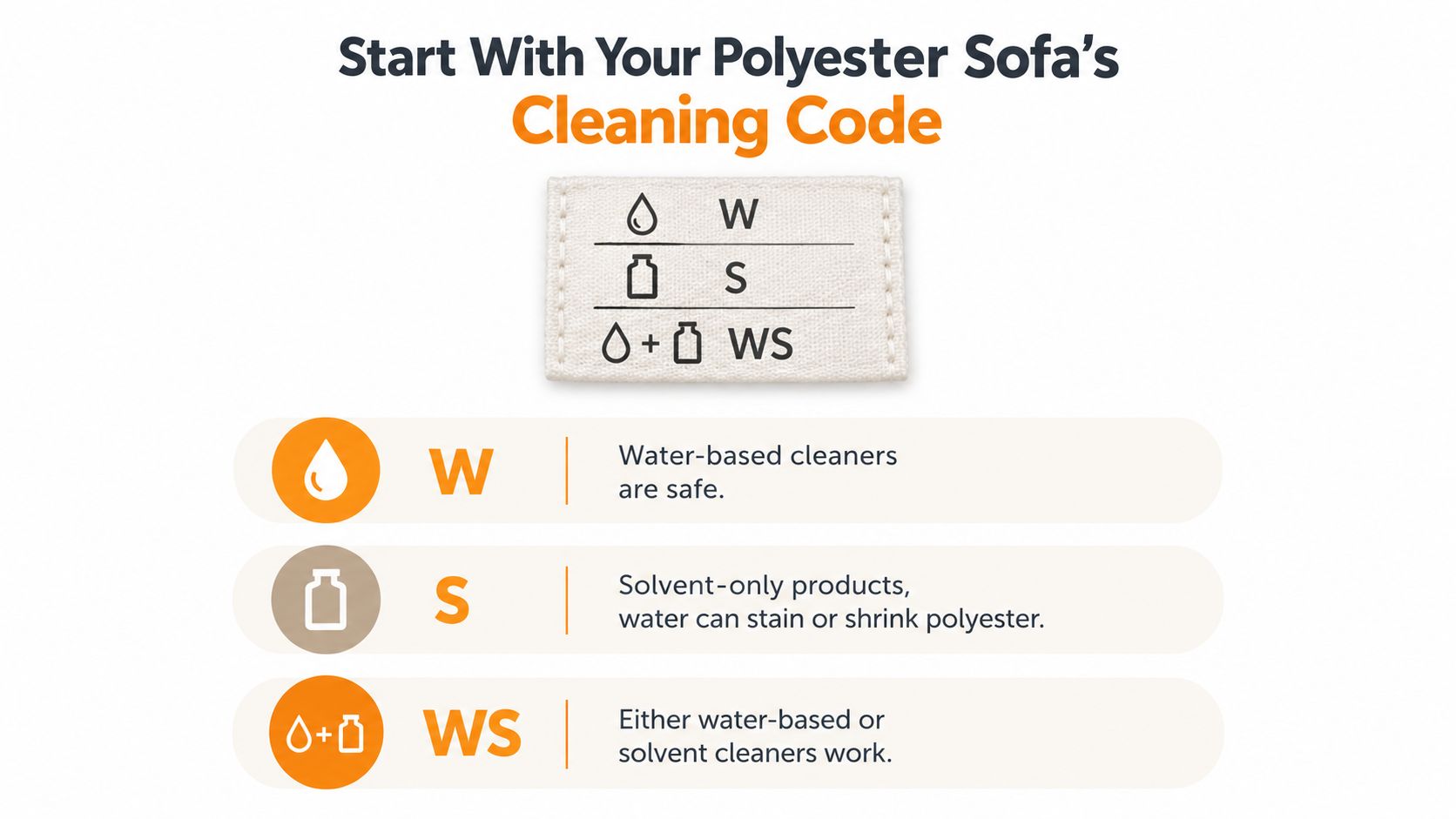
The small care tag under a cushion or attached to the frame determines what you can safely use. Polyester furniture is commonly marked W, S, WS, or X, and each code points to a different cleaning route. Polyester upholstery care guidance also separates water-based stains from oil-based soils, which matters because polyester is a synthetic, plastic-based fiber that handles those soils differently.
- W: Water-based cleaning is acceptable. Mild soap and water can work for many food, drink, and sweat marks.
- S: Use solvent-based products only. Water may create permanent rings, shrinkage, or discoloration.
- WS: Either water-based or solvent-based cleaning is permitted, making this the most flexible code.
- X: Vacuum only. Don't apply liquid cleaners or steam.
Why the tag matters locally
A mismatched cleaner is one of the fastest ways to damage a polyester sofa in a West Palm Beach home. High indoor humidity makes drying slower, so an unsuitable water treatment can leave a ring or damp cushion long after the surface appears dry.
Care labels turn sofa maintenance into a repeatable decision rather than guesswork. If the tag is missing, faded, or impossible to interpret, stop before applying moisture and have an upholstery professional identify the fabric and finish.
What We See on Polyester Sofas Across Palm Beach County
Beach homes in Jupiter, Delray Beach, and Boca Raton often have fine sand packed into cushion seams and the weave itself. That grit acts like an abrasive when someone drags a cushion or attacks it with a rotating brush, so loose debris needs to come out gently before any damp treatment.
Coastal AC runs constantly, and its dust settles into the channels of textured polyester. On light gray or cream sectionals, the result is a dull band along the seat front, arms, and back cushions. Salt-air residue can leave a faint crust on furniture near open doors and patios, attracting more grime until the sofa feels tacky.
Juno Beach and other rental properties can develop small mildew spots when the AC cycles off overnight and humid air sits against cushions. Airbnb sectionals also see a familiar rotation of red wine, sunscreen, chlorine residue, pet hair, and food spills, especially after pool days and beach checkouts. Each problem needs a response based on the care code, not an all-purpose spray.
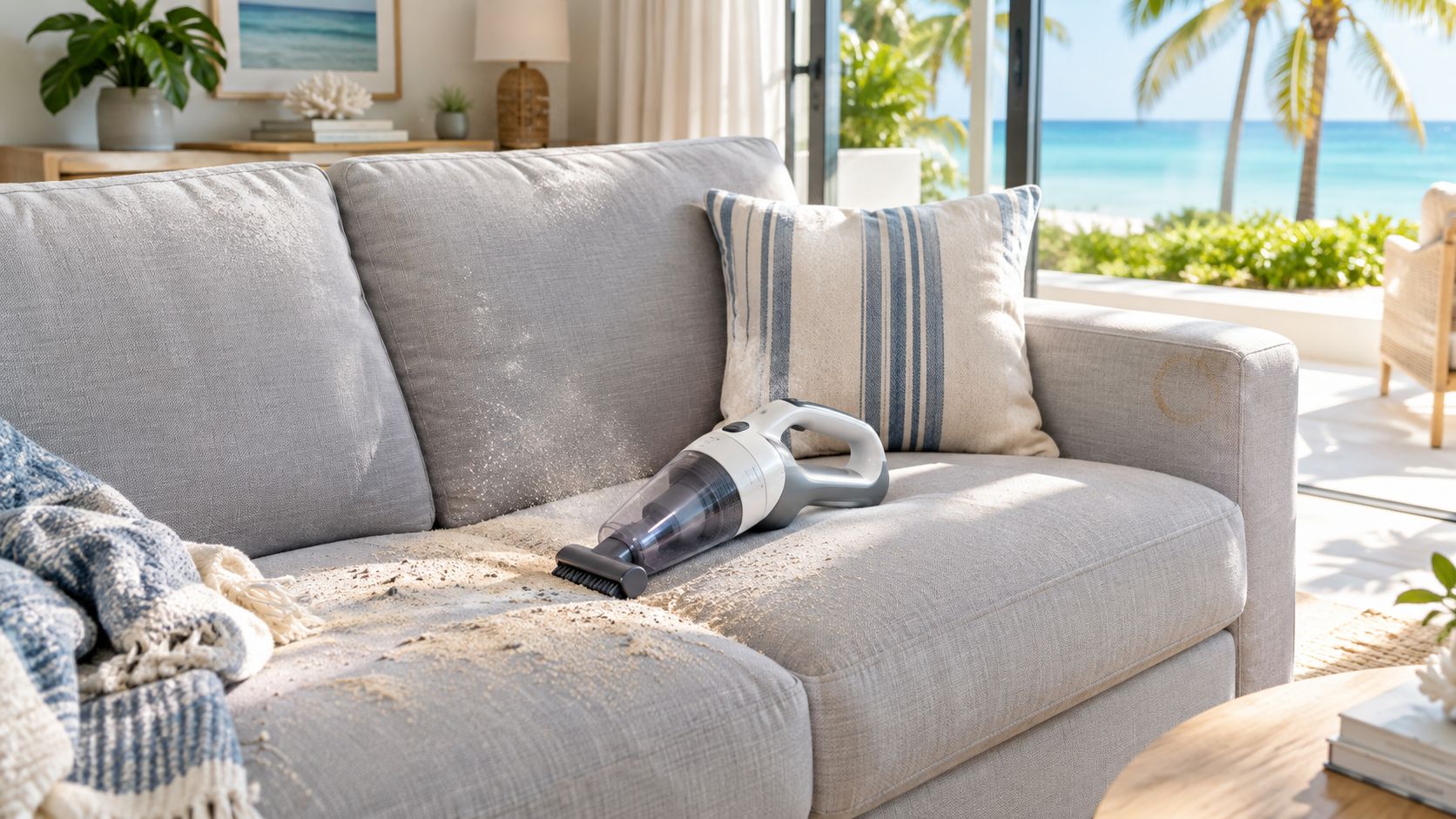
Local field note: Sand and AC dust should be removed before moisture enters the picture. Wet-cleaning over grit turns a surface problem into a texture problem.
Spot Test and Vacuum the Right Way Before Anything Else
Start with a hidden seam, not the center of the cushion. For a W or WS sofa, make a mild test mix using 1 teaspoon of dish soap per 2 cups of lukewarm water, a ratio also reflected in polyester couch spot-cleaning guidance. Dip a white microfiber cloth, wring it until damp, and press it into the hidden area for about 60 seconds. Blot it dry and check for color transfer, a ring, stiffness, or a change in texture.
If anything looks different, stop. A hidden test gives you a chance to catch a reaction before a cleaner spreads across a visible seat.
Remove dry debris first
Vacuum with an upholstery attachment and gentle suction. Work in overlapping rows along the weave direction, paying attention to:
- Seat seams: Sand, crumbs, and pet hair collect where cushions meet.
- Arm fronts: Sunscreen and skin oils combine with dust here.
- Back cushions: AC dust settles into raised textures.
- Under cushions: Loose grit can grind into the fabric during normal use.
Skip the rotating brush on loose or delicate weaves. It can pull fibers, flatten the nap, or encourage pilling. Routine vacuuming is a core part of polyester care because embedded dirt becomes harder to remove once moisture and oils bind it to the fibers. Technical polyester care instructions recommend regular vacuuming with a soft brush attachment and professional cleaning when ordinary vacuuming can't reach the deeper soil.
In coastal homes, a weekly pass is more useful than waiting until the sofa looks dirty. Vacuum first, inspect the care code, and only then choose a spot treatment.
Homemade Mixes vs Commercial Cleaners for Polyester
Homemade solutions are useful for fresh water-based spills on W and WS fabrics, but they aren't automatically safer. Commercial products win when the stain is oily, aged, biological, or likely to spread with water.
| Stain Type | Best Homemade Mix | Best Commercial Option | Avoid On |
|---|---|---|---|
| Juice, sweat, and food | Mild dish soap and lukewarm water | Polyester-safe upholstery foam | S or X fabrics |
| Pet urine and organic messes | Water-based enzyme cleaner, after testing | Enzyme upholstery treatment | X fabrics and untested finishes |
| Sunscreen, lotion, and pizza grease | Limited DIY treatment, never water alone | Synthetic-safe solvent upholstery cleaner | Water-only mixes on oily stains |
| Light odor | Baking soda, then thorough vacuuming | Fabric deodorizer labeled for upholstery | Wet application on X fabrics |
| Set-in grease or dye transfer | Don't keep experimenting | Professional solvent or extraction treatment | Bleach and abrasive products |
Water-based stains usually respond to a light application of mild soap solution followed by blotting. A diluted vinegar mix may suit some W or WS fabrics, but it can still alter a finish, so test it first. For greasy residue from poolside sunscreen or body lotion, water alone can spread the soil across the weave.
Baking soda has a place for dry odor and limited surface grime. This baking soda couch stain guide is useful when you're deciding whether a dry treatment is appropriate before introducing moisture.
Commercial cleaners are the better choice for heavy mildew, dye transfer from throw pillows, and cooking grease that has oxidized into the fabric. Whatever the label says, test the product on a concealed area and never mix cleaning chemicals.
How to Clean a Polyester Sofa Without Damaging the Fabric
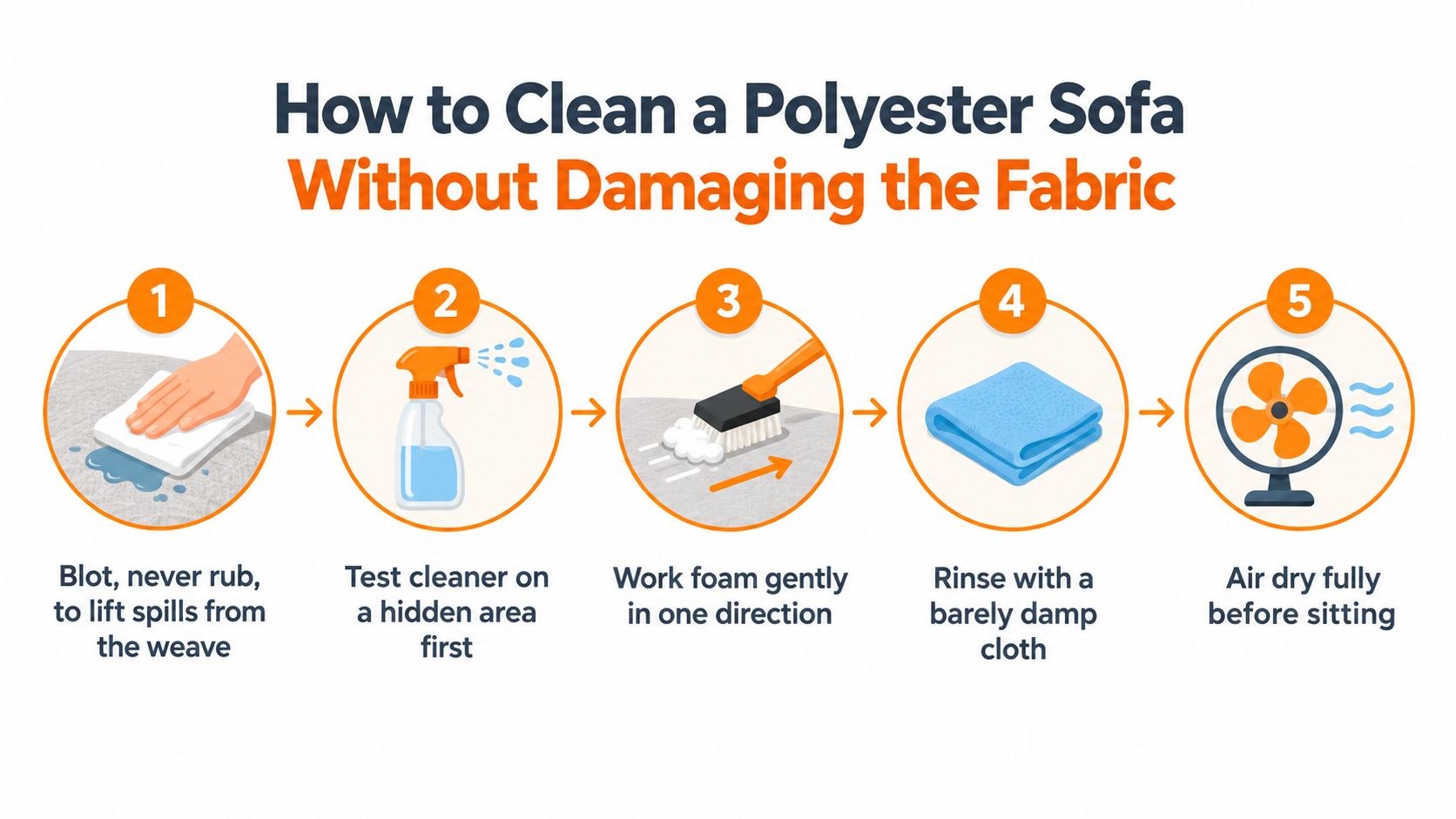
Fresh spills need immediate blotting. Use a clean white microfiber cloth and press from the outside toward the center, keeping the liquid from spreading through the weave. Rubbing feels productive, but it can abrade the finish, push soil deeper, and create pilling, as polyester upholstery cleaning guidance warns for delicate fabric handling.
Once the care code permits the product, mist a small area lightly until it's damp, not soaked. Polyester may shed many water-based spills because it's hydrophobic, but oil-based soils interact more strongly with the fiber, so the cleaner must match the stain rather than just add more water. Technical guidance on polyester's hydrophobic behavior also favors blotting over scrubbing.
Work one small section at a time with a soft-bristled brush. Use light circular motions or follow the fabric's direction, depending on the weave, and stop if the texture begins to lift or fuzz.
Extract instead of saturating
Press a dry cloth firmly over the treated area to pull out moisture and loosened soil. Repeat the mist, gentle agitation, and extraction cycle no more than two or three times. Overwetting is risky in Boca Raton and other humid homes because moisture can migrate into cushion fill, where mildew and odor become harder problems.
Never use bleach or harsh abrasive products on polyester. Don't steam an S-coded sofa, and don't wet-clean an X-coded sofa. Wet methods may be suitable for W or WS fabrics only when the tag permits them, and industry steam-cleaning guidance recommends the lowest possible heat with an upholstery attachment.
For broader fabric-care context, this resource on cleaning polyester rugs Birmingham explains why controlled moisture and gentle agitation matter across synthetic textiles. For related upholstery care, see how to clean a microfiber couch.
Drying, Deodorizing, and Mildew Prevention in Humid Homes
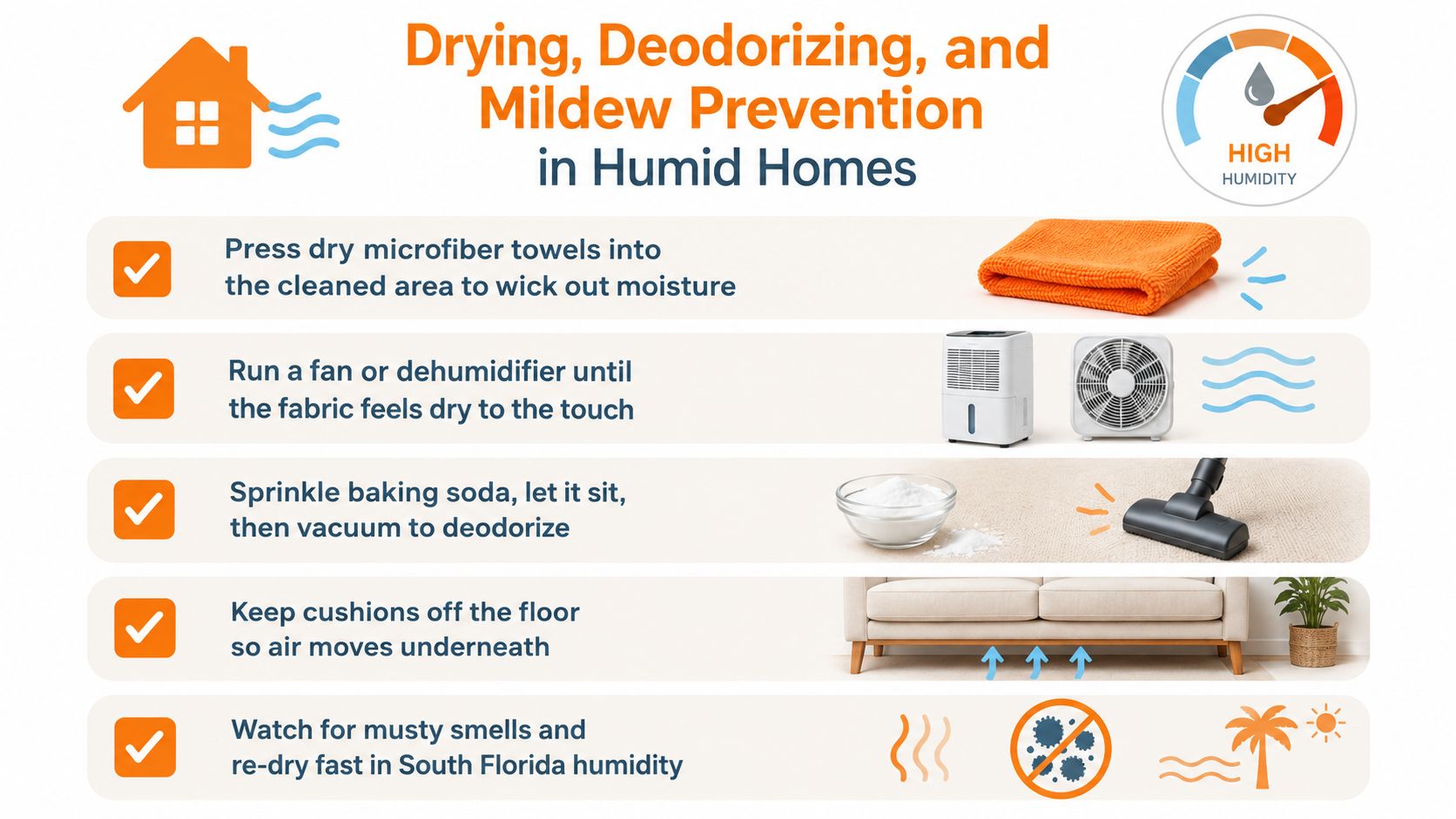
Cleaning isn't finished when the stain disappears. Press dry microfiber towels into the area to wick out moisture, then run the AC and open windows when outdoor conditions allow. Ceiling fans move air, but they don't remove enough moisture by themselves during a Wellington summer.
Aim a box fan at the sofa for two to four hours and don't sit on the cushions until they feel dry and room-temperature throughout. In humid seasons, the inside can remain damp for eight to twelve hours, even when the surface feels acceptable. A guide to reducing humidity in your house can help address the room conditions that slow upholstery drying.
Deodorize without adding more moisture
Once the fabric is fully dry, sprinkle baking soda across the surface. Let it sit for 20 minutes, then vacuum it thoroughly with the upholstery attachment. This is useful for musty smells in Jupiter Island homes near the Intracoastal, but baking soda won't correct a cushion that remains damp inside.
Keep cushions off the floor so air can move underneath, rotate them for more even airflow, and leave space between the sofa and wall. Early mildew spots need prompt attention, especially if the smell returns after drying.
For homes with pets, children, or frequent beach traffic, waterproof sofa covers can reduce the amount of liquid reaching the upholstery, but covers don't replace cleaning or proper drying.
When to Call a Professional Polyester Sofa Cleaner
Call a professional when the tag is S-coded, the oil stain has set into the weave, mildew covers an area larger than a dinner plate, or an Airbnb turnover leaves no time for a failed experiment. A pro can use controlled extraction equipment, polyester-safe solvent products, and enzyme treatments for biological soil without flooding the cushion.
A cleaning visit may not be worthwhile if the color is permanently altered, the fabric has melted or heavily pilled, or the cushion structure is damaged. Cleaning removes soil, but it can't restore a permanently bleached fiber or a collapsed insert.
Questions to ask before booking
- Insurance: Can the company provide proof of current coverage?
- Fabric knowledge: Do the technicians understand W, S, WS, and X upholstery codes?
- Products: Are the cleaners approved for synthetic fibers?
- Drying: What equipment and drying-time guidance do they provide?
- Inspection: Will they identify permanent staining or structural damage before starting?
A facility manager comparing vendors may also benefit from this facility manager's upholstery guide when evaluating documentation, process control, and service expectations.
South Florida humidity shows up in polyester cushions long before the sofa looks obviously wet. Move-out and vacation-rental cleans around Palm Beach County often come down to the details guests and landlords notice first, including sofa seams, odor, sand, and visible rings.
Pricing depends on the number of seats, sofa condition, care code, stain type, and access. Most clients request a custom estimate rather than relying on a one-size-fits-all price.
Micro-FAQ
How long does polyester sofa cleaning take?
The work depends on the sofa's size, soil, and drying conditions. Tight Airbnb windows should be discussed before booking.
Are cleaning supplies included?
A professional upholstery service should arrive with the appropriate tools and products for the fabric code.
Can you clean a sofa during rainy season?
Yes, but indoor airflow and drying equipment matter more when windows must stay closed.
What if I have pets?
Mention pet hair, urine, and odor when requesting an estimate so the cleaner can plan the right treatment.
Sunset Shine Home Cleaning handles polyester sofa cleaning alongside recurring standard cleaning, deep cleaning, move-in and move-out work, Airbnb turnovers, and property-management make-ready services across Palm Beach County. Book a local visit through Sunset Shine Home Cleaning, call 561-408-4020, or visit sunsetshinehomecleaning.com to request an estimate for your home or rental.