
You're probably looking at a cooktop that still seems dirty after you've already wiped it twice. In Palm Beach County kitchens, that's common. Humidity, salty air in coastal homes, and sticky cooking residue can leave a glass stove top cloudy fast, especially in busy family homes, Airbnb properties, and condos that don't get a full kitchen reset as often as they should.
If you're trying to figure out how to restore a glass stove top, the biggest mistake is treating every mark like the same problem. Haze, burnt-on spills, light scratches, and cracks need different responses. That's where most DIY attempts go sideways.
Table of Contents
- Why Your Glass Stove Top Looks Worn Out
- Supplies You Need Before You Start
- Prep the Surface and Build a Daily Habit
- Removing Burnt-On Residue the Safe Way
- Polishing Out Haze and Light Scratches
- Mistakes That Make Glass Cooktops Worse
- Keeping It Shiny After the Restoration
Why Your Glass Stove Top Looks Worn Out
A lot of homeowners start in the same place. Dinner's done, the kitchen is finally quiet, and the cooktop looks dull even though it was just cleaned. In West Palm Beach and nearby coastal areas, I see this often in homes where fine salt film settles on surfaces and mixes with cooking grease. What looks like “old glass” is usually something sitting on top of the surface.

Four different problems that get lumped together
Most worn-looking cooktops fall into one of these buckets:
- Cloudy haze from cleaner residue, grease film, or mineral buildup
- Burnt-on spots from sauce, soup, or sugary spills that cooked onto the glass
- Fine scratches from grit, rough pan bottoms, or dragging cookware
- Cracks or chips that are structural damage, not a cleaning issue
That distinction matters. A haze problem can often be polished away. Burnt-on residue usually needs cleaner plus careful scraping. Light scratches may look better after polishing, but they won't disappear. A crack changes the whole conversation. Current safety guidance says a cracked glass-ceramic cooktop should be turned off and replaced, not patched with glue or resin, because that's a safety issue, not a cosmetic one, as explained in this overview of why glass stove tops crack.
Practical rule: If the mark changes when the surface is wet, you may be dealing with residue or haze. If it catches light the same way dry or wet, it may be a scratch.
Don't confuse the stove top with the counters around it
Another place people get mixed up is comparing cooktop wear to countertop wear. They're not restored the same way. If you're also weighing bigger kitchen updates, this guide on whether to replace kitchen counters yourself gives useful context on what belongs in the DIY lane and what doesn't.
In older Palm Beach County condos, I also see residue collect around burner outlines and front edges where people wipe quickly but don't buff dry. That edge dullness can make the whole top look damaged when it's really buildup.
Supplies You Need Before You Start
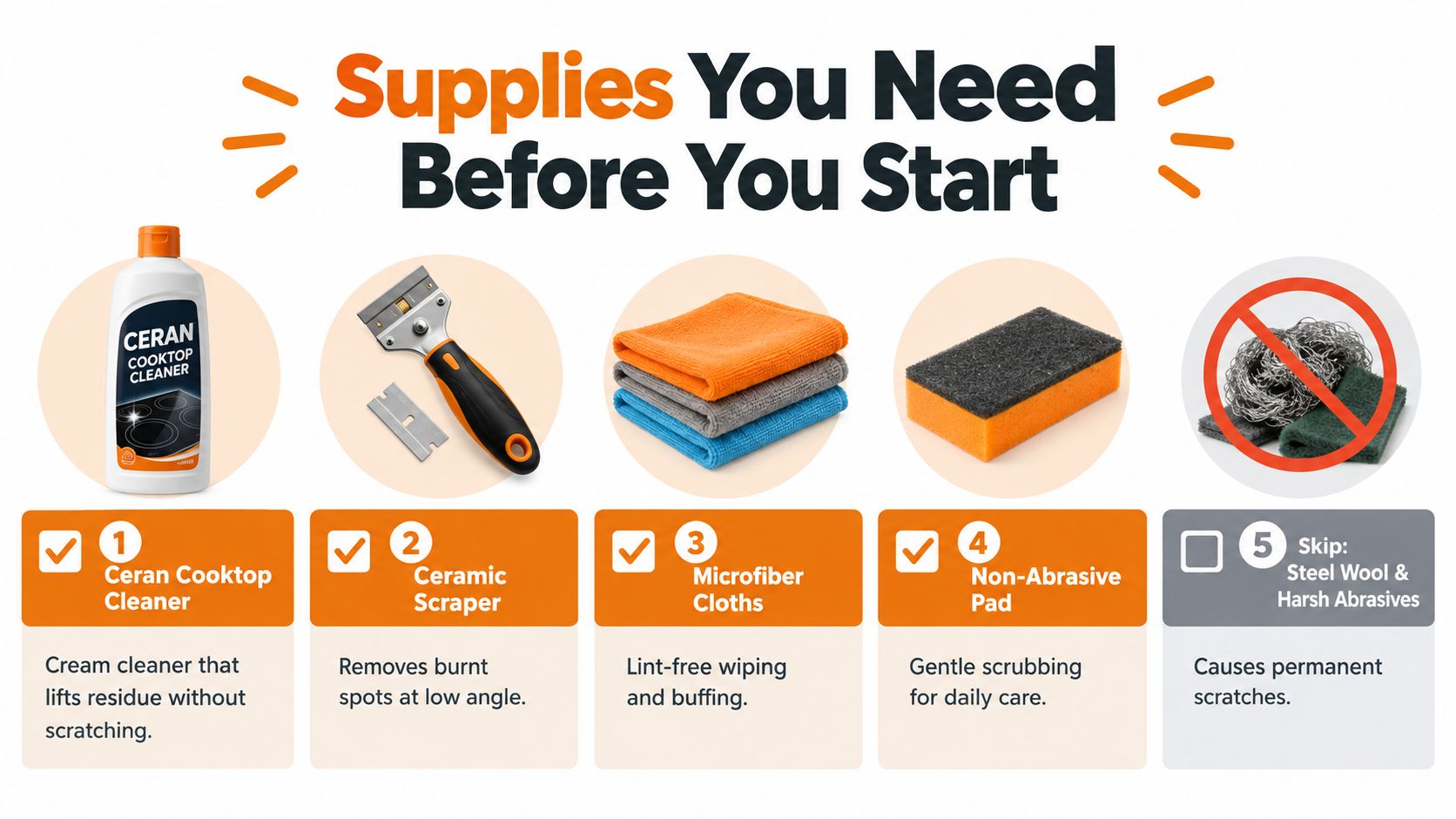
Before you touch the glass, get everything within reach. That matters more than people think. Walking away mid-clean with cleaner drying on the surface is how streaks and haze get worse.
What to set out on the counter
Use a small clean towel as your staging spot and gather:
- Cooktop cleaning cream for lifting surface film without harsh abrasion
- Soft microfiber cloths for wiping, applying, and final buffing
- A scraper made for ceramic glass cooktops with a fresh razor blade
- Paper towels for cleaner removal if the surface is especially greasy
- A spray bottle of water to lightly wet stuck residue when needed
- A second dry microfiber for the final polish
For shallow scratch work, some guides recommend a baking soda paste mixed in a 2:1 ratio of powder to water or to a thick toothpaste-like consistency, then rubbed gently with a soft cloth and wiped clean. One warning from that same guidance matters. Leftover paste can leave a chalky film once the stove heats up, so remove it fully with care in the final wipe using this scratch and stain restoration guide.
What to skip
These cause more harm than help:
- Steel wool because it can permanently scratch the glass
- Abrasive powders because they can worsen the surface finish
- Harsh chemical cleaners that aren't meant for cooktops
- Scouring pads with heavy grit
- Steam or high-pressure cleaning tools
A safe routine for routine restoration is to work only on a cool surface, use a thin layer of cooktop-safe cream cleaner or baking soda paste, buff with light pressure, then wipe and dry completely, as outlined by Glass Doctor's cooktop scratch guidance.
If you're already rethinking the whole kitchen instead of just the glass, broader St. Charles kitchen services can help frame what belongs to cleaning, repair, or renovation.
You can also keep a simple product shortlist handy with these home cleaning products so you're not testing random cleaners from under the sink.
Prep the Surface and Build a Daily Habit
Restoration starts before any polishing. The prep decides whether you're removing residue or dragging grit across the glass.
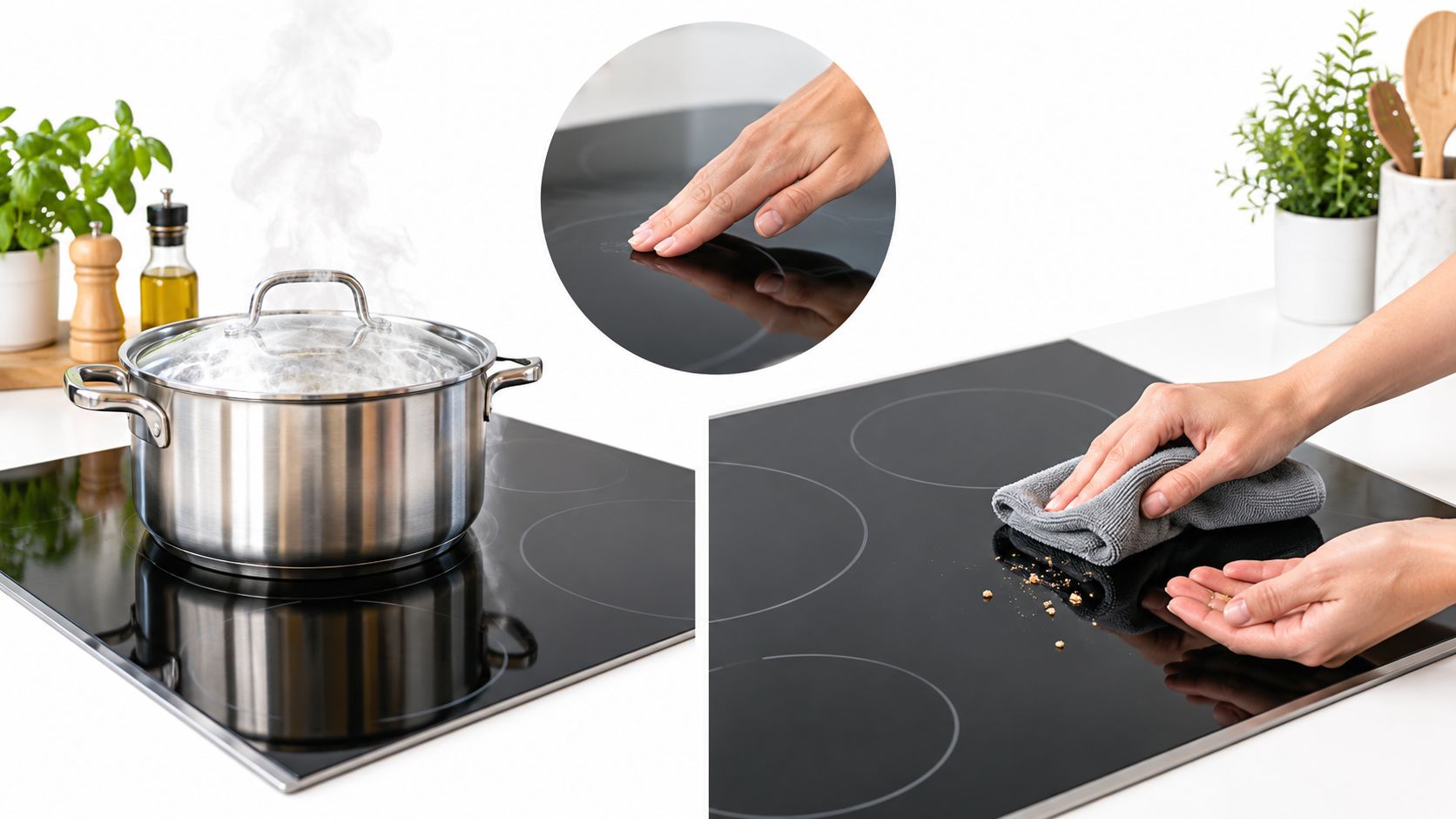
Start with a cool surface
A glass stove top should be cleaned only after the surface is cool. One manufacturer manual also says to switch power off at the wall before removing stuck-on soil with a razor blade scraper made for ceramic glass cooktops, then hold the blade at about a 30° angle and move the spill to a cool area of the cooktop to reduce gouging risk, according to this ceramic glass cooktop care manual.
Once it's cool, remove loose crumbs and dry debris first. Use a microfiber cloth so nothing gritty gets trapped under your hand or scraper.
Daily habit beats heavy restoration
The win is keeping small messes from becoming hard crust.
- After each use: wipe away spills once the surface has cooled
- Before the next meal: give it a dry buff so no residue bakes on
- Keep one dedicated cloth nearby: don't use the same rag you used on counters or floors
- Treat restoration as maintenance: not a once-a-year rescue
GE's care guidance says to clean the surface after each use and use only a small amount of cooktop cleaning cream. It specifies applying just a few drops, using a damp paper towel or cleaning pad, scraping burned-on soil at about a 45° angle while the cooktop is warm but not hot to the touch, then buffing dry and removing all residue because leftover cleaner can leave haze and reduce the protective finish that helps prevent future scratches in the future, as shown in GE cooktop cleaning instructions.
If you leave cleaner behind, the next round of heat can bake that film onto the surface. That “mystery cloudiness” often comes from the cleanup, not the cooking.
In Palm Beach County vacation rentals, kitchens usually fall off. Turnovers move fast, someone wipes the top quickly, and residue stays behind until the next guest notices it under bright morning light.
Removing Burnt-On Residue the Safe Way
Burnt-on residue is where people usually panic and grab the wrong tool. Don't. This part is about angle, pressure, and patience.
The method that matches manufacturer guidance
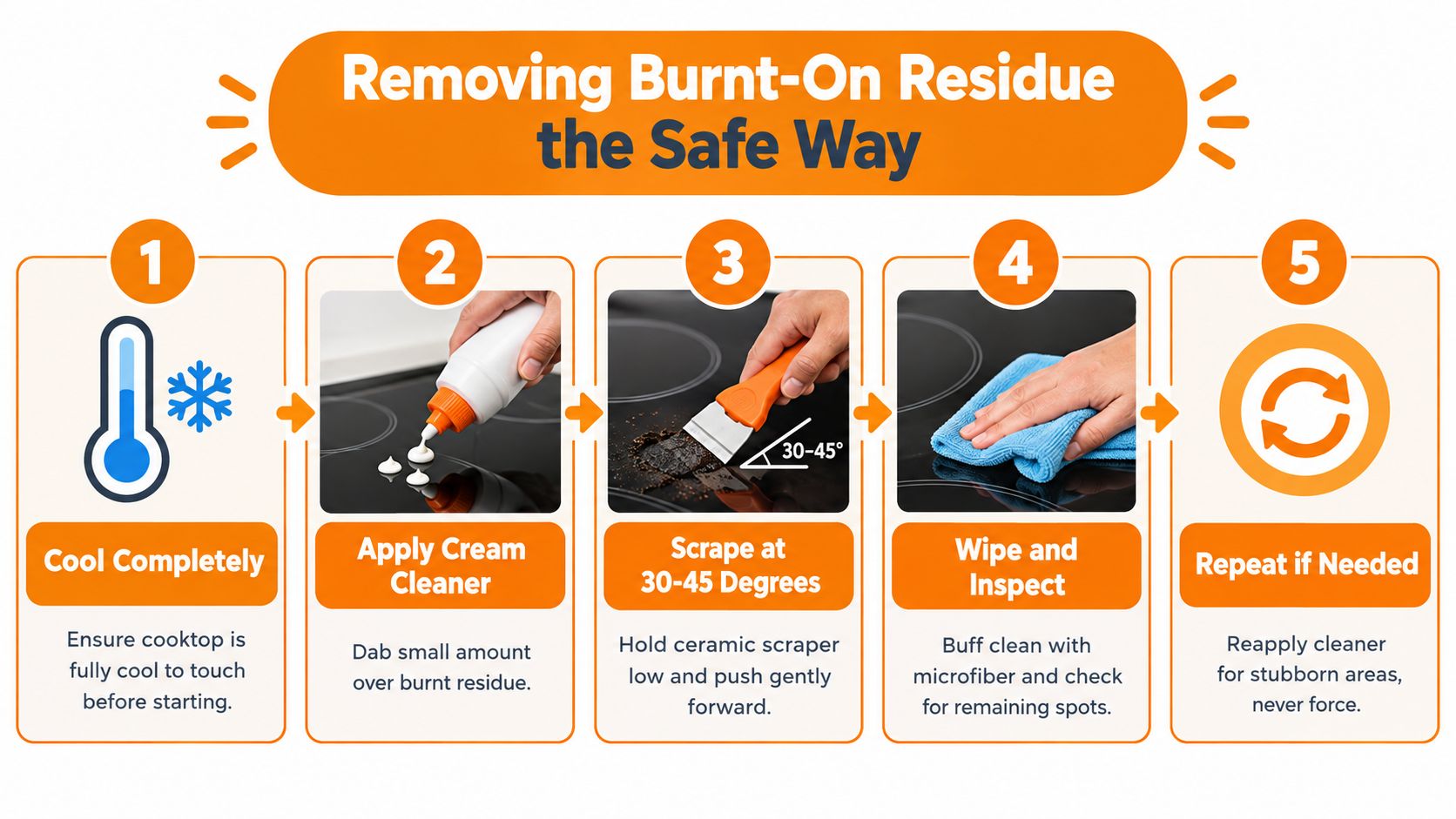
Across major-brand manuals, the care method stays remarkably consistent: cool the surface, use a specialized cream, remove debris with a scraper, then polish dry. Older and newer guides repeat the same idea, including holding a scraper at roughly a 30° to 45° angle and repeating the process for stubborn stains. That long-running standard is outlined in this LG ceramic-glass cooktop manual.
Step by step
Make sure the cooktop is fully cool.
If you're unsure, wait longer. Rushing here causes most scraper mistakes.Apply a small amount of cooktop cream.
Spread it over the burnt area in overlapping circles with a microfiber cloth. Keep the layer thin.Let the cleaner sit briefly on stubborn residue.
A short dwell time helps the cleaner loosen what's fused to the glass.
Before you scrape, this video gives a useful visual for the motion and pressure:
Scrape in one direction with the blade low and flat.
For burn marks or residue that won't wipe away, one repair guide recommends using a razor blade scraper on a wet surface, not dry. It says to wet the area with warm water or white vinegar, hold the blade at a 30-45° angle, keep it flat, and never use the corners or hold it vertically because that can gouge the glass, as described in this guide to cleaning burnt-on glass stove top residue.Wipe, inspect, and repeat only if needed.
If a spot is thinning, repeat. If nothing changes after careful passes, stop forcing it.
Know when to stop
Stop immediately if you notice:
- Pitting that looks like missing material
- Flaking
- A chip at the edge of the damaged spot
- Anything that looks like a crack line, not residue
For greasy film around the cooktop frame or backsplash area, a stronger kitchen-specific cleaner may help on surrounding surfaces, but keep it off the glass unless it's cooktop-safe. This guide to the best cleaner for kitchen grease is useful for everything around the stove that isn't the glass itself.
Polishing Out Haze and Light Scratches
Haze and scratches look similar from across the room, but they don't behave the same way up close. If the cooktop looks cloudy all over, you're usually dealing with residue or cleaner film. If one line catches the light every time you move your head, that's more likely a scratch.
Haze usually responds well
For general dullness, work with a dedicated cooktop polish on a clean, dry surface. Use a microfiber cloth and slow circular motions. Then switch to a dry cloth and buff until the finish looks even.
This is the part many people skip. The final buff isn't cosmetic fluff. It's how you catch leftover product before heat turns it into another layer of haze.
Small warning: If you can still see smears from one side of the room, there's probably residue still on the surface.
Light scratches can sometimes be softened
For deeper scratch mitigation, specialist guidance recommends a glass-ceramic polish or repair compound mixed to a heavy cream-like slurry, applied only after the surface is perfectly clean and dry. The compound should be worked over the area with a soft microfiber cloth or low-speed buffing pad using repeated short polishing passes, because over-polishing can create a bright spot or uneven finish. That same guidance says only very light, shallow scratches are realistically improvable, while cracks and deep gouges generally require replacement rather than restoration, as explained in this glass cooktop scratch repair overview.
If you want a broader look at how professionals think about surface clarity and polishing, these South Mountain glass restoration articles are helpful background reading.
A similar principle shows up on other reflective surfaces too. If you've ever cleaned a bathroom mirror in a humid South Florida house and still seen a film after wiping, you already know the issue isn't always dirt. This guide on how to clean foggy mirrors explains that well.
Cracks are a hard stop
Don't polish over a crack. Don't keep cooking on it to “see if it spreads.” A crack is not a blemish. It's damage.
Turn the unit off and move toward replacement or professional assessment. That's the line between restoration and risk.
Mistakes That Make Glass Cooktops Worse
Most cooktop damage doesn't happen during cooking. It happens during cleanup, usually when someone gets impatient.
Shortcuts that leave permanent marks
- Steel wool and abrasive pads: These create fine scratches that trap future residue and make the glass look older faster.
- Scraping carelessly: A blade used too upright or on dry debris can gouge the surface instead of lifting residue.
- Leaving product behind: Cleaner residue can bake into a haze the next time the burner heats up.
- Using harsh chemical cleaners: These can leave films or damage the finish over time.
- Dragging heavy cookware: Cast iron and rough-bottom pans can scuff the top, especially if there's a grain of salt or sand underneath.
The warm-surface mistake
Authoritative manuals consistently advise cooling the surface before cleaning, avoiding steel wool, scourers, steam cleaners, and high-pressure cleaning equipment, and using a scraper nearly flat against the glass only for stubborn residue. They also warn against heating the cooktop until cleaning residue has been fully removed, as noted in this Electrolux ceramic cooktop care guide.
That matters in local homes near Juno Beach, Jupiter, and Boca Raton where bright coastal light makes every streak show. People often think the surface still needs “more scrubbing” when the issue is leftover cleaner.
If it would scratch a phone screen, don't use it on a glass cooktop.
Another common one in beach homes is grit. Sand gets everywhere in Palm Beach County. If even a tiny bit ends up under a pan or cloth, you can drag it right across the glass without noticing until the sun hits it.
Keeping It Shiny After the Restoration
Once the cooktop looks better, the job changes. You're not restoring anymore. You're protecting the finish from the same buildup that made it look worn out in the first place.
A simple routine that actually sticks
Think in four beats:
- After each use: wipe once the surface is cool
- Every so often: use a small amount of cooktop cream for a deeper clean
- Occasionally: polish lightly to keep the surface clear
- Seasonally: inspect for chips, pitting, or anything that looks structural
The key is keeping the routine small enough that you'll do it. In busy Palm Beach Gardens family kitchens and Delray Beach rentals, the cooktop that stays clean isn't the one with the fanciest cleaner. It's the one that gets a calm, consistent wipe before residue hardens.
What success looks like
A restored cooktop should feel smooth, look even under side light, and buff dry without smeary patches. You may still see faint wear if there are shallow scratches. That's normal. Restoration improves appearance. It doesn't make used glass brand new again.
If you're seeing deep scratches, pitting, chips, or any crack that catches a fingernail, DIY stops there. At that point, cleaning harder won't fix it.
For local homeowners, renters, and hosts, this matters more than it sounds. In South Florida, kitchens show wear quickly because they get used hard year-round. Add humidity, AC dust, beach sand, and fast Airbnb turnovers, and small residue problems turn into big visual ones in a hurry.
If your kitchen needs more than a quick wipe-down, Sunset Shine Home Cleaning helps homeowners, renters, Airbnb hosts, and property managers across West Palm Beach and Palm Beach County keep kitchens looking polished and guest-ready. From deep cleaning around greasy cooktop buildup to full home resets before move-outs, walkthroughs, or turnovers, Sunset Shine Home Cleaning handles the detail work that makes the whole space feel clean again.