
You've finished making caramel, the pan has cooled, and now there's a hard, glossy layer welded to the bottom. If you're searching for how to remove baked-on sugar from a pan, start with water and controlled heat, not a metal scraper. The right approach can save stainless steel, nonstick cookware, cast iron, or enamel without turning cleanup into a bigger repair.
Sunset Shine Home Cleaning handles kitchen buildup for homeowners, renters, Airbnb hosts, landlords, and property managers across Palm Beach County. In humid South Florida homes, sticky kitchen residue joins AC dust, tropical pollen, sand, and rainy-season grime, especially during a rushed vacation-rental turnover or move-out clean.
Table of Contents
- Understanding Caramelized Sugar and Thermal Shock
- The Baseline Simmer and Soak Method
- Material-Specific Cleanup Strategies
- Escalating to Baking Soda and Salt Scrubs
- Prevention Tactics and Quick Kitchen Hacks
Understanding Caramelized Sugar and Thermal Shock
A pan can look clean while it's warm, then become a glassy disaster once the caramel cools. That happens because caramel begins forming around 320°F (160°C) and reaches peak caramelization near 340°F (170°C), according to Cook's Illustrated's caramel guide. Once the sugar cools, it hardens into a stubborn layer that a normal sponge usually can't touch.
The first impulse is often to carry the hot pan to the sink and fill it with cold water. Don't. A sudden temperature change can warp cookware, particularly stainless steel or cast iron, and may damage enamel.
Practical rule: Let the pan cool to a safe handling temperature before adding water. Controlled cooling protects the pan before cleaning even begins.
Why force makes the job worse
Hard sugar feels like burnt stone, but it's still water-soluble. Scraping aggressively with a knife can gouge a finish, while high heat can make deposits harder and put nonstick coatings at risk. Reintroducing water gradually gives the residue a chance to soften instead of asking the cookware surface to absorb all the abuse.
A caramel-coated saucepan from a West Palm Beach kitchen may need a different response from a seasoned cast-iron skillet or an enamel baking dish. The residue is similar, but the pan's surface determines how much heat, soaking, and abrasion it can tolerate.
The local kitchen reality
In Palm Beach County homes, cleanup often happens late, after cooking for guests or preparing an Airbnb unit between checkouts. That rushed timing is when people pour cold water into a hot pan, reach for a steel scrubber, and create damage that lasts longer than the sugar.
The Baseline Simmer and Soak Method
The safest starting point is rehydration. Fill the pan about one-third full with water, then bring it to a gentle simmer over medium heat for up to 10 minutes, as recommended by Cook's Illustrated's sticky-pan method. The water dissolves the sugar back into the liquid, while moderate heat loosens the bond without relying on force.
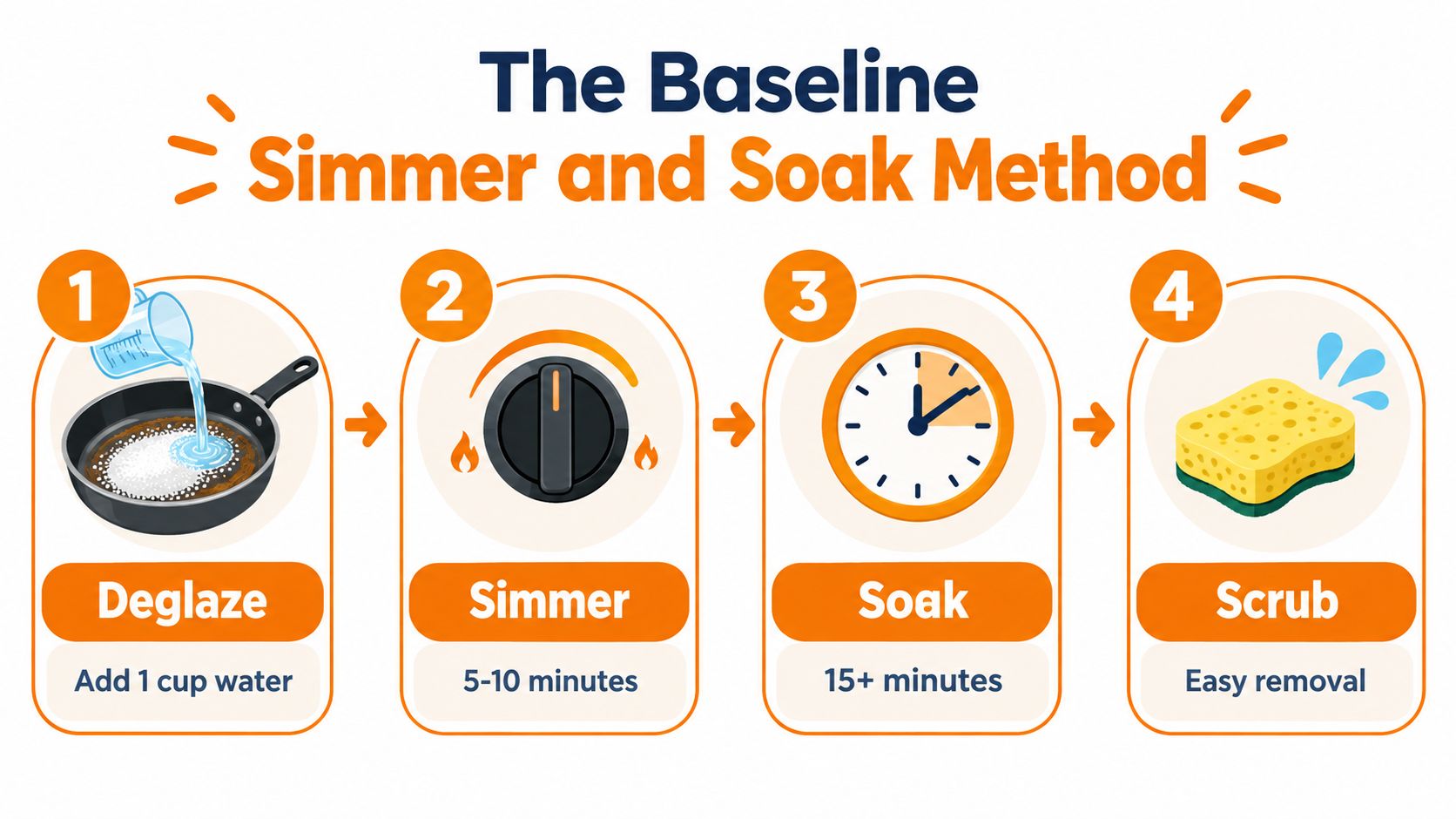
Gentle simmering
- Cool first. Set the pan aside until it's safe to handle.
- Add water. Cover the baked-on sugar and fill the pan roughly one-third full.
- Simmer gently. Keep the heat moderate. Avoid a rolling boil or high heat.
- Lift softened residue. Use a plastic or wooden utensil, never a knife or metal blade.
- Repeat if needed. Thick buildup may require another cycle.
High heat isn't a shortcut. It can harden sugar deposits further and increase the chance of damaging a nonstick surface. The goal is to let warm water do the work.
Watch the pan while it simmers, and don't leave it unattended. Once the water cools, wash with dish soap and a soft sponge. If a sticky patch remains, repeat the process instead of escalating immediately to harsh scrubbing.
The overnight option
If you don't need the pan right away, fill it with water and let it soak overnight. Cook's Illustrated describes this as the easiest method for sticky caramel residue. The next day, wipe away softened bits with a soapy sponge.
For a busy family kitchen, this passive method is often more sensible than spending the evening attacking a hard coating. In a vacation rental, though, a gentle simmer may be more practical when the next guest is arriving and the kitchen has to be reset quickly.
For a visual walkthrough, this video demonstration of removing baked-on sugar shows the same basic principle in action.
Material-Specific Cleanup Strategies
The universal water method needs boundaries. A durable stainless-steel pot can tolerate more work than a coated skillet, and cast iron needs a different routine because prolonged soaking can affect its seasoning.
Cookware Material Cleanup Guide
| Material | Safe Tools | What to Avoid |
|---|---|---|
| Stainless steel | Warm water, gentle simmer, plastic scraper, soft sponge, baking soda | Knives, uncontrolled high heat, sudden cold-water cooling |
| Nonstick | Warm water, mild dish soap, soft sponge, plastic utensil | Metal tools, abrasive pads, high heat, forceful scraping |
| Cast iron | Short warm soak, nylon brush, plastic scraper, immediate drying | Long soaking, dishwasher cleaning, harsh abrasives that strip seasoning |
| Enamel | Gradual warming, warm soapy water, soft sponge, plastic utensil | Thermal shock, metal scraping, aggressive scouring |
| Glass bakeware | Gradual cooling, warm soak, nonmetallic scraper, soft sponge | Cold water on hot glass, sudden temperature changes, metal blades |
Nonstick pans need the lightest touch. Use warm water and dish soap first. If simmering is appropriate for the manufacturer's care instructions, keep it gentle, then lift softened sugar with plastic or wood. If the coating is scratched, bubbling, or peeling, stop trying to restore it.
Stainless steel is the most forgiving option here. It can usually handle repeated water-based cycles and careful baking-soda assistance, but thermal shock still matters. A pan that has warped won't become flat again through better scrubbing.
Cast iron should never sit submerged for an extended period. Soften the patch with a short warm soak, lift it with a nylon brush or plastic scraper, dry the pan immediately, and restore its protective seasoning according to the cookware maker's guidance.
Enamel and glass can handle soaking, but they don't handle abrupt temperature swings. For related care of heat-sensitive baking surfaces, Hans Grill stone care offers useful guidance on gradual handling and avoiding damaging cleaning habits. If sugar has also splattered onto a glass cooktop, use the material-specific precautions in this guide to restoring a glass stovetop.
Escalating to Baking Soda and Salt Scrubs
If a gentle simmer softens the outer layer but leaves a thick patch behind, add a mild abrasive or alkaline helper. Escalate gradually. A scratched coating costs more trouble than a second cleaning cycle.
Salt for controlled abrasion
For a medium saucepan, add warm water, a small amount of dish soap, and 1-3 tablespoons of salt, enough to cover the caramel patch in a thin layer. Let the mixture sit, then scrub in small circles with a soft sponge, following the method described in this salt-scrub guide for stuck caramel.
Salt works through gentle mechanical action, not brute force. Use it on appropriate uncoated surfaces, and avoid it on nonstick coatings or delicate enamel unless the cookware manufacturer allows mild abrasives.
Baking soda for stubborn buildup
Another option is to add about 1 tablespoon of baking soda per pan, cover the residue with water, and simmer at bare heat for 8-10 minutes. Let the pan cool completely before scraping. This approach helps reduce steam-splash risk and limits the chance of warping from abrupt handling.
Some household methods use 2 tablespoons of baking soda to 1 cup of water, followed by boiling, while another recommends a few tablespoons and a 15-minute simmer, as outlined in this baking-soda cleaning guide. Because exact cookware care varies, start with the gentler amount and avoid combining strong heat with a fragile coating.
Don't mix cleaning products casually. For guidance on using household ingredients safely, see Sunset Shine's vinegar and baking soda cleaning guide.
If the pan is still coated after simmering, allow it to cool, loosen only what lifts easily, and repeat. A hot soak in sudsy water can also soften very stubborn caramel before scrubbing, as described by The Daily Meal's caramel cleanup advice.
Prevention Tactics and Quick Kitchen Hacks
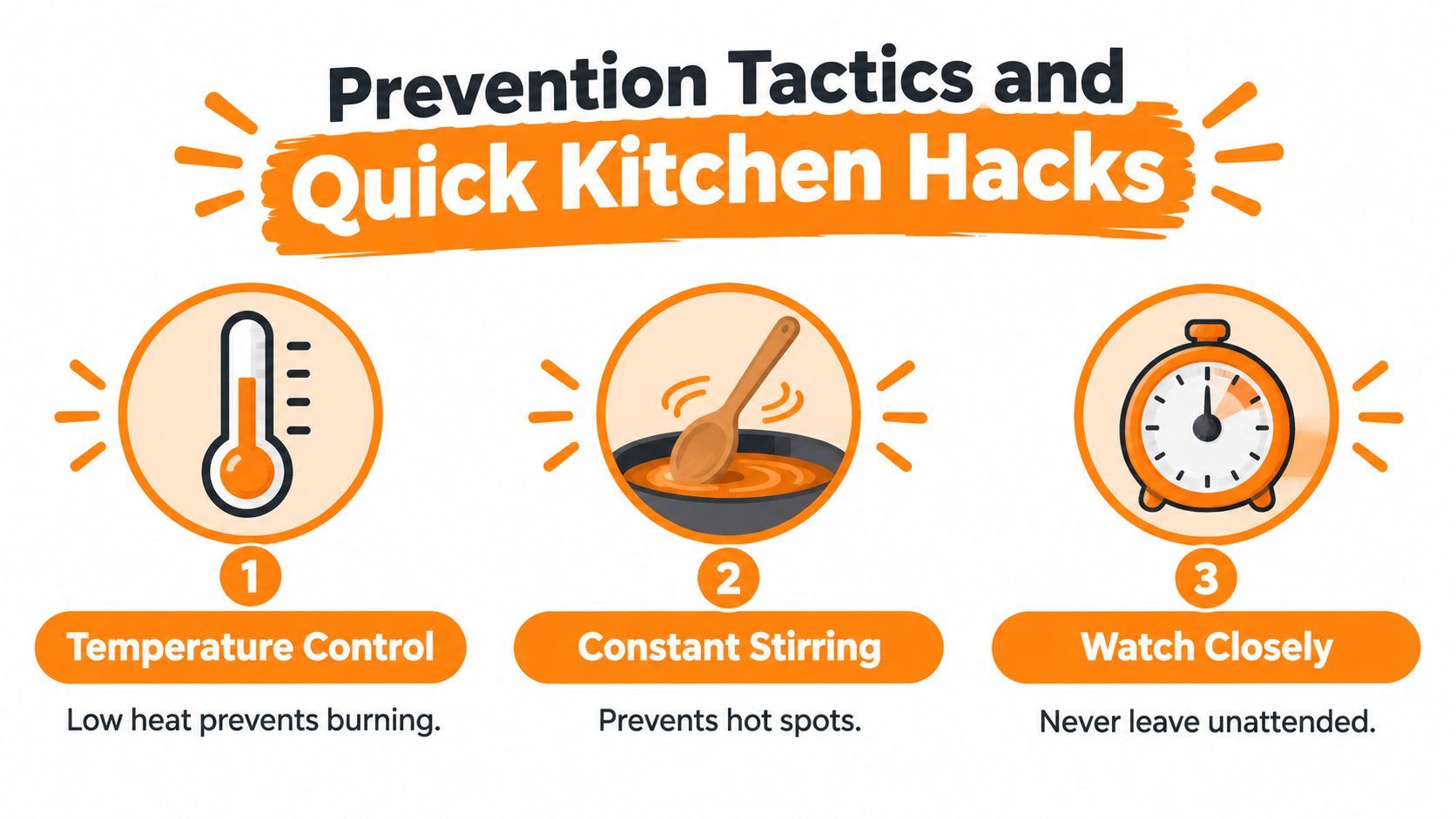
The easiest baked-on sugar cleanup happens before the residue cools. Keep a kettle or heat-safe container of warm water nearby when making caramel, and deglaze the pan as soon as cooking is finished, once the cookware has cooled enough for safe handling.
A damp cloth can remove fresh sticky residue while the pan is still warm. Parchment paper or a silicone mat can catch drips during baking, and constant stirring over controlled heat reduces hot spots that burn sugar onto the surface.
If the coating is peeling, the enamel is cracked, the glass is damaged, or cast iron has developed serious rust, replacement may be safer than continued recovery. For broader low-toxicity household routines, these natural cleaning product recipes can help with everyday kitchen maintenance.
In Palm Beach County, sticky residue often sits beside sand tracked through beach-home kitchens, AC dust on nearby vents, and tropical pollen on window sills. Sunset Shine Home Cleaning can address kitchen surfaces, appliance exteriors, floors, baseboards, and other buildup during recurring, deep, move-out, or Airbnb turnover cleaning.
Book Sunset Shine Home Cleaning when a sticky kitchen needs more than a quick wipe, especially before a landlord walkthrough or a tight Airbnb turnover. The team serves West Palm Beach, Palm Beach Gardens, Jupiter, Juno Beach, North Palm Beach, Riviera Beach, Royal Palm Beach, Lake Worth, Boynton Beach, Delray Beach, Boca Raton, Wellington, Westlake, Loxahatchee, Loxahatchee Groves, and The Acreage. Call 561-408-4020 or visit sunsetshinehomecleaning.com to arrange service.