
Your fridge usually tells on itself before it looks dirty. In Palm Beach County homes, that faint sour smell, damp gasket edge, or sticky line under a crisper drawer often shows up fast because our heat and humidity don't give moisture much time to disappear.
If you're looking up how to deep clean a fridge, you probably want one of three things right now: safer food storage, a fridge that stops smelling “off,” or a reset after a seasonal rental turnover, storm outage, or overdue kitchen deep clean. Around West Palm Beach, Jupiter, and the coastal side of the county, we also see salt air, heavy AC use, and long humid stretches make neglected seals and hidden moisture worse than generic cleaning guides suggest.
Table of Contents
- Why Your Fridge Needs More Than a Quick Wipe-Down
- Pre-Clean Prep and Eco-Friendly Solutions
- Your Professional Fridge Cleaning Checklist
- Banish Odors and Reorganize for Better Performance
- Solving Palm Beach County's Unique Fridge Problems
- When to Skip the DIY and Call a Professional
Why Your Fridge Needs More Than a Quick Wipe-Down
A quick shelf wipe helps with crumbs. It doesn't solve the hidden places where odor and mold start. In South Florida, the problem usually sits in folds, seams, and damp corners long before the main compartment looks bad.
We see this in Palm Beach County all the time. A homeowner in Jupiter says the fridge “just smells old,” but the shelves look clean. A rental in Delray Beach turns over between guests, and the interior got wiped, yet the door seal still has grime packed deep in the grooves. A family in West Palm Beach restocks too soon after cleaning, and moisture stays trapped under bins and along the gasket.
That matters because a true deep clean is a food safety task, not a cosmetic one. Residual moisture left after cleaning accelerates mold spore adhesion by 370%, and biofilm in the rubber door gasket crevices is responsible for 68% of recurring refrigerator odors, according to guidance cited in this fridge deep-cleaning reference. In plain terms, if you clean but don't dry thoroughly, you can set the stage for the next problem.
Practical rule: If a fridge still smells bad after a basic wipe-down, stop focusing on open shelves and start checking the gasket, drawer tracks, and the area under removable bins.
That's especially true in homes near the water. In Juno Beach and North Palm Beach, warm air and everyday kitchen humidity can leave rubber seals damp longer than people expect. In seasonal properties and Airbnb kitchens, the issue often comes from spills that ran under drawers weeks ago and hardened in place.
A proper fridge deep clean takes more patience than force. The goal is to remove buildup, dry every surface completely, and put the appliance back into service without trapping moisture or overhandling food.
Pre-Clean Prep and Eco-Friendly Solutions
A fridge deep clean gets messy fast if the setup is sloppy. In West Palm Beach and Jupiter homes, we see the same problem over and over. Food comes out before the cooler is packed, condensation starts forming on containers, and the kitchen gets warmer by the minute.
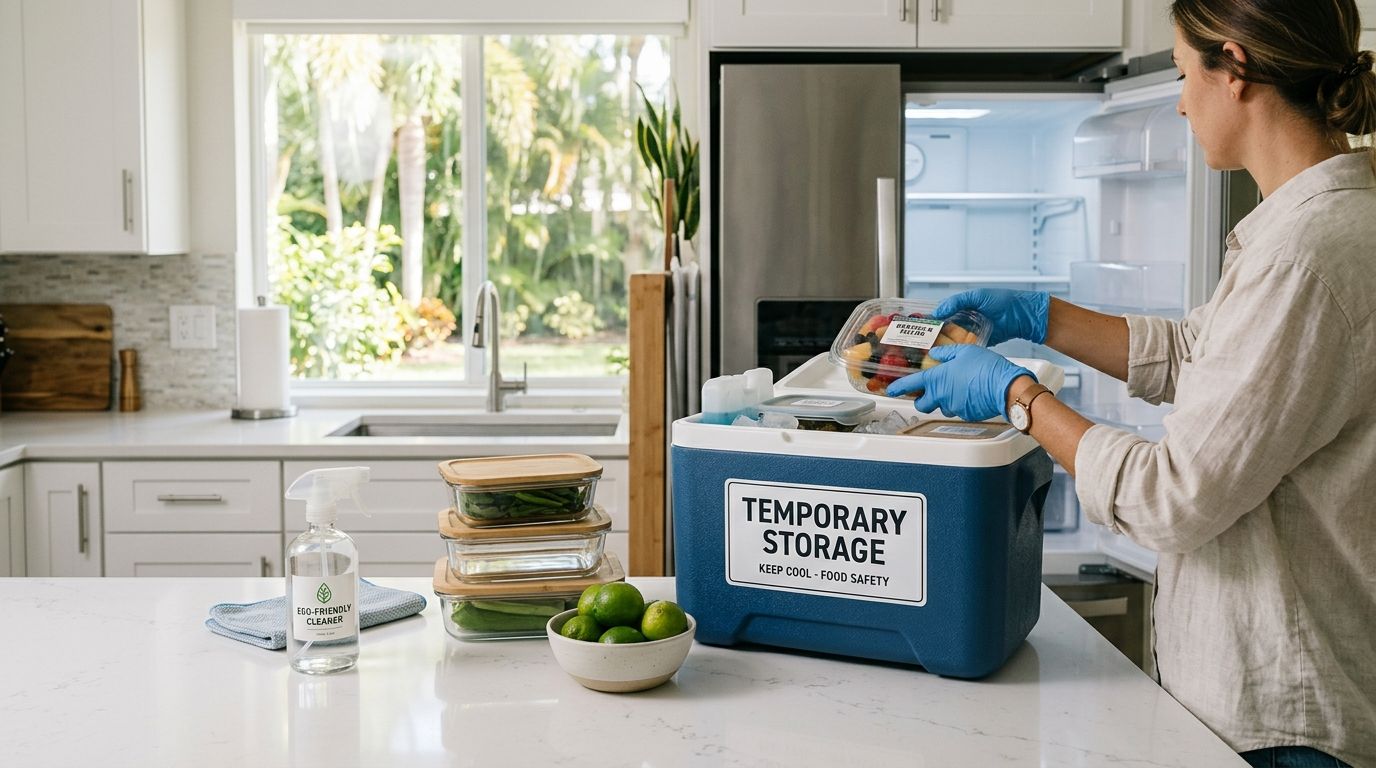
Set up food storage first
Start with the holding area, not the fridge. In Palm Beach County, counter time matters because heat and humidity shorten the window for safe handling, especially with dairy, cooked rice, deli meat, and leftovers from a packed family fridge.
A segmented clean works best. Clear one zone, clean it, dry it, and move food back only when that area is ready. If you are doing a full reset, load perishables into a cooler with ice packs before the first shelf comes out. Seasonal rentals need extra care here because items are often overpacked, and containers may already be damp underneath.
Gather supplies before you open the doors:
- Cooler and ice packs: Keep cold food cold while you work.
- Microfiber cloths and lint-free towels: Use separate ones for washing and drying.
- Soft nylon brush or old toothbrush: Good for gasket folds, shelf trim, and drawer tracks.
- Mild dish soap and white vinegar: Enough for most food-contact surfaces.
- Trash bag: Get rid of expired food as you go.
If your model allows it and you plan to clean every interior surface, unplugging the unit can make the job easier. Stay with the task once the door is open. In a South Florida kitchen, a long pause turns cold surfaces wet in a hurry.
Choose cleaners that fit a food space
Use the mildest product that will remove the soil in front of you. For most fridges, that means warm soapy water first, then a light vinegar solution on non-porous interior surfaces if you want a simple final wipe. We use that approach often in Palm Beach County homes because it cuts sticky residue without leaving behind a heavy scent.
Skip harsh sprays inside the fridge unless the manufacturer specifically allows them. Strong chemicals can linger on shelves, and they do not solve the South Florida issue, which is trapped moisture in corners, under bins, and inside the gasket folds.
A practical setup looks like this:
- Warm soapy water first for grease, juice rings, and dried spills
- A vinegar-water mix for a follow-up wipe on non-porous surfaces
- Dry towels reserved for the fridge so you are not spreading moisture back onto clean areas
If you prefer simple, food-safe basics, our guide to cleaning with vinegar and baking soda explains where each one helps and where people often misuse them.
Here's a quick visual if you want to see the process before you start:
Don't use a dripping sponge. In humid kitchens, extra water creates more cleanup and gives mold more time to return.
Your Professional Fridge Cleaning Checklist
A proper fridge deep clean is methodical. In Palm Beach County, that matters because heat and humidity turn a small missed spill into odor, sticky buildup, or mold in the gasket much faster than people expect.
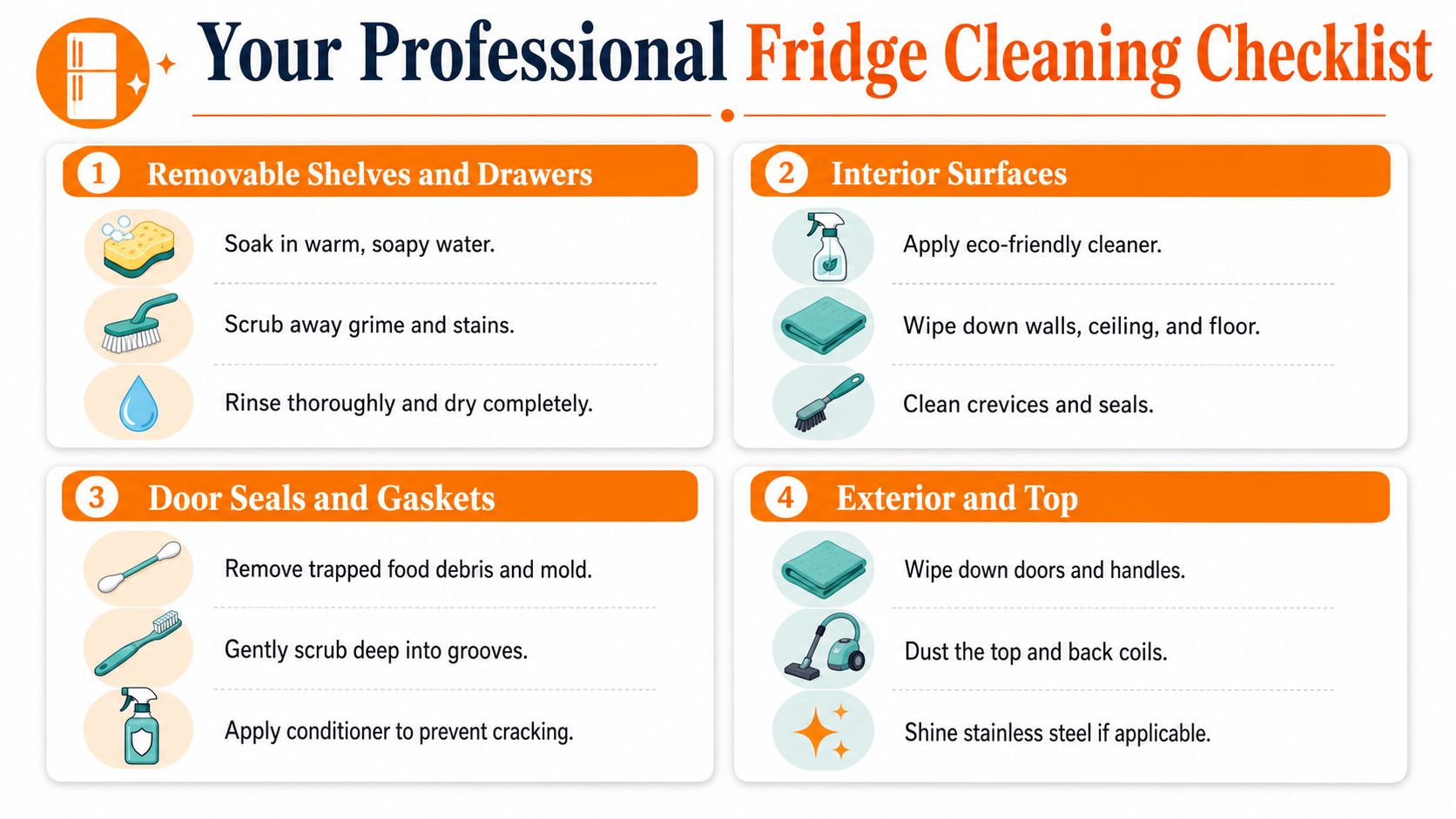
A full home reset follows the same logic. Detailed work in the right order prevents re-cleaning the same area twice. If you want a broader reference point, this professional deep cleaning checklist shows how those steps fit into a full-house service.
Removable shelves and drawers
Start by taking out shelves, bins, and crispers. Let cold glass sit for a few minutes before it meets warm water. That small pause lowers the chance of cracks and makes the parts easier to handle safely at the sink.
Clean them in this order:
- Soak first: Use warm soapy water to loosen dried spills and sticky rings.
- Scrub edges and undersides: Buildup collects under the front lip and around trim.
- Rinse well: Leftover soap can hold odor and leave a film.
- Dry by hand: In South Florida kitchens, air-drying often leaves moisture in corners and tracks.
In West Palm Beach condos and Jupiter seasonal rentals, we often find grime under drawer rails, in molded crisper corners, and along the underside of shelves where juice runs out of sight.
Interior walls, floor, and corners
With the fridge empty, remove loose crumbs first. A handheld vacuum works well, but a dry paper towel does the job if the debris is light. Then wipe the ceiling, side walls, back panel, floor, and drawer channels with a damp cloth and soapy water.
Keep the cloth damp, not wet. Extra water tends to settle in seams and low spots, especially under the bottom drawer where spills harden and smells linger.
Pay close attention to these trouble areas:
- Under the lowest drawer: Leaks collect here and get missed for weeks.
- Shelf support notches: Syrup and sauce dry inside the little ledges.
- Seams and drain areas: Moisture sits here longer, which is a common problem in humid homes.
- Back corners: Fine crumbs and produce scraps slide back and stay hidden.
If you are cleaning after a storm outage or a vacation rental turnover, inspect the floor of the fridge with a flashlight. We find more dried residue in those situations because spoiled liquids often run farther than they first appear.
Door gaskets and seals
The gasket deserves slow, careful work. In our area, this is one of the first places mold shows up because the folds trap moisture and food residue while warm kitchen air hits the cold rubber every time the door opens.
Use a soft brush or folded cloth to clean inside each groove. Pull the seal back gently and wipe the inner channel, especially along the bottom edge. Dry each section as you finish it.
If you are dealing with visible mold, match the cleaner to the surface. For metal surfaces, a 70% ethanol solution is recommended, while non-metal surfaces can be disinfected with a 1:10 bleach solution, according to this fridge mold cleaning reference.
A gasket can look clean from the front and still hold grime deep in the fold.
Coils, drip pan, and exterior
The back and bottom of the fridge affect how well it runs. Dust on coils makes the unit work harder, which is a bigger issue in hot South Florida garages, rental units, and kitchens that already run warm.
Vacuum the condenser coils with a brush attachment if your model gives you safe access. Check the drip pan, if your fridge has one, then empty, wash, and dry it fully before putting it back. Finish with the exterior. Wipe doors, handles, side panels, and the top surface where grease and dust settle together.
For units with ice makers or water lines, follow the manufacturer instructions before disconnecting or flushing anything. Those parts need more than a surface wipe, and forcing them can create a leak that turns a cleaning job into a repair call.
Banish Odors and Reorganize for Better Performance
You finish scrubbing, close the door, and by the next afternoon the fridge smells like sour produce again. We see that a lot in West Palm Beach and Jupiter, especially in homes where the kitchen runs warm and humid most of the year. The problem is usually simple. Moisture went back in, or one forgotten item brought the smell right back.
Get rid of odor at the source
A fridge that smells clean for only a few hours still has a cause inside it. In our experience, the repeat offenders are hidden drips under crispers, sticky jar bottoms, damp produce bags, and condiments nobody plans to finish.
Before anything goes back in, check these spots:
- Bottle and jar bottoms: Wipe off syrup, oil, and sauce rings before restocking.
- Door bins: Toss old dressings, expired sauces, and anything leaking around the cap.
- Produce containers: Dry them fully. Even a little trapped moisture can start a musty smell fast in South Florida.
- Small compartments: Butter and deli doors collect crumbs and smears that get missed on the first pass.
- Leftovers you are avoiding: If nobody wants it now, it does not need shelf space.
Skip scented deodorizers. They cover the problem for a day and make it harder to tell whether the smell is gone. A dry, clean fridge should smell like almost nothing.
If your kitchen already feels damp, it helps to understand what causes humidity in a house, because that same moisture load affects how quickly odors return inside the fridge.
Restock for airflow and easy access
Organization should help the fridge hold temperature, not just make the shelves look neat. Leave space between containers, keep large platters away from the back wall, and avoid packing every shelf after a big grocery run. Cold air needs room to circulate.
We tell Palm Beach County clients to stock the fridge in zones they will use. Drinks together. Breakfast items together. Grab-and-go foods at eye level. That cuts down on door-open time, which matters more here because warm air and humidity rush in fast every time someone stands there deciding.
Return bins and drawers only after they are fully dry. Then check that the fridge settles back to about 37°F. If it struggles to get there after restocking, the unit may be overfilled, the door may be opening too often, or the fridge may need service.
A well-organized fridge does two jobs at once. It reduces odor problems and helps the appliance run with less strain.
Solving Palm Beach County's Unique Fridge Problems
Generic cleaning advice misses the stuff that shows up here over and over. Palm Beach County homes deal with long humid stretches, storm disruptions, seasonal occupancy, and a lot of built-in ice and water systems.
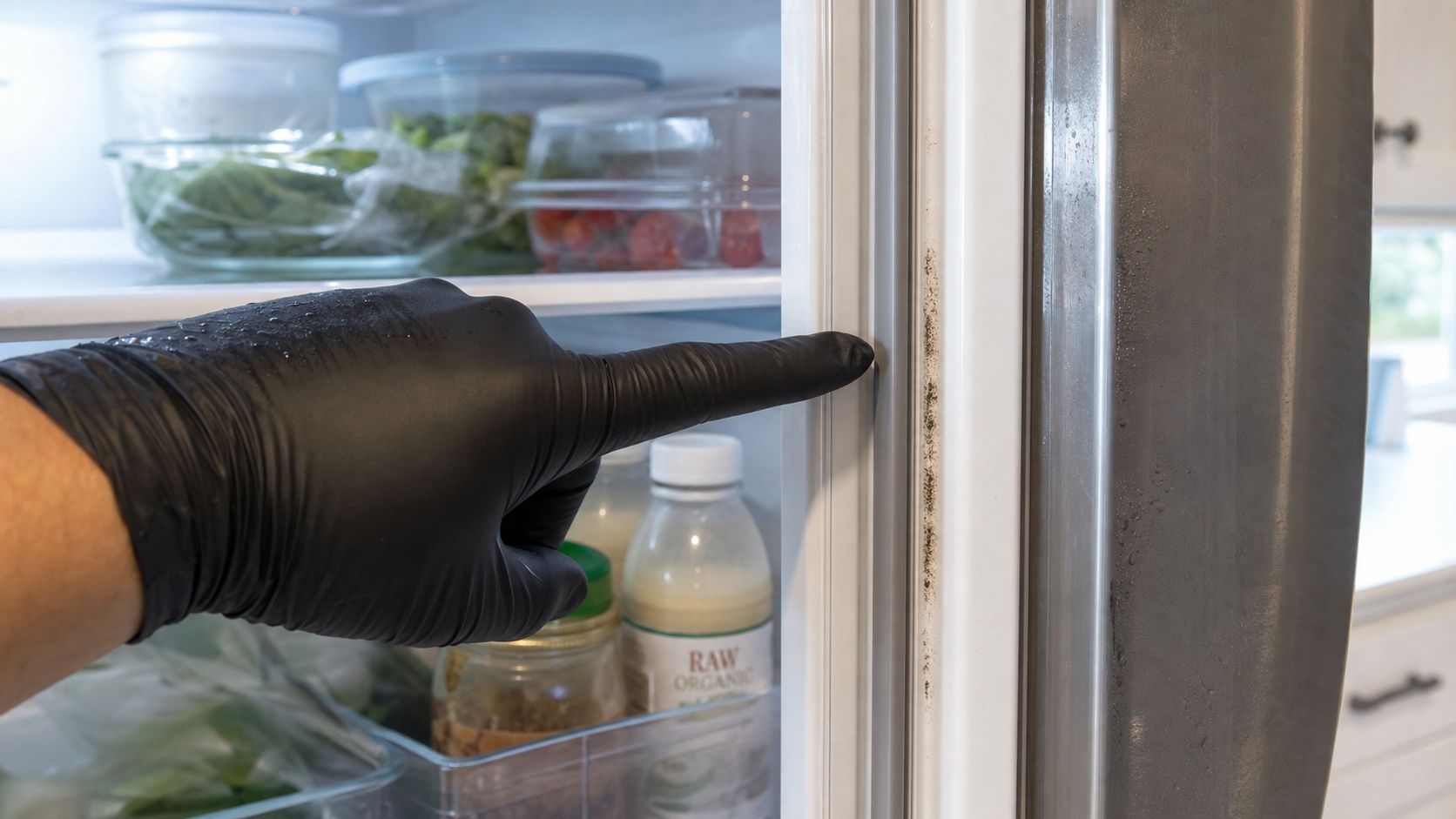
The gasket problem gets worse in rainy season
In summer and during rainy stretches, gasket folds stay damp longer. That's why they're often the first place we check in homes from Lake Worth to Boca Raton. In Florida conditions, door gaskets should be deep cleaned every two weeks during summer and monthly in cooler seasons.
That schedule sounds aggressive until you see the underside of a bottom gasket in a busy family kitchen or a part-time occupied condo. Seasonal properties are especially tricky because the fridge may sit lightly used, then get packed all at once.
If humidity is a recurring issue in your home, this breakdown of what causes humidity in a house helps connect the dots.
Ice makers and water lines get skipped too often
This is one of the biggest blind spots in fridge cleaning. A 2024 study found that 68% of refrigerators with ice makers contained detectable Listeria or E. coli in the water line, and most consumer guides barely mention it, according to this deep-clean fridge article discussing the study.
That tracks with what we see in Palm Beach County rentals and family homes. The exterior dispenser looks clean, but the hidden line hasn't been flushed in a long time.
For units with built-in water systems, include these tasks in your maintenance routine:
- Flush the line with white vinegar
- Rinse thoroughly with water
- Replace the water filter
- Run the dispenser several times before normal use
After a storm outage clean with caution
After a tropical storm or hurricane outage, don't treat the fridge like a normal weekly clean. Start by clearing spoiled food safely, then wash and disinfect interior surfaces before restocking anything fresh.
Homes in Royal Palm Beach, Wellington, and The Acreage often deal with longer cleanup chains after storms because muddy entry traffic, power disruption, and packed coolers all hit at once. In those situations, the fridge usually needs a full reset, not a quick wipe. Check the seals, bins, underside of drawers, and any water or ice components before you trust the appliance again.
When to Skip the DIY and Call a Professional
Some fridge cleanouts are manageable. Some are the kind people put off for months because they know exactly what's waiting under the bottom drawer.
If the fridge has heavy buildup, mold in the gasket, spoiled food after an outage, pet hair packed around the lower vent area, or neglected coils behind a tight built-in unit, hiring help can save time and reduce the mess you spread through the kitchen.
Who usually benefits most from help
This tends to be the practical choice for:
- Busy homeowners: The fridge gets reset without giving up half a Saturday.
- Airbnb hosts in Jupiter and Juno Beach: Tight turnovers don't leave room for surprise odor issues.
- Property managers and landlords: Move-out kitchens need detail work where walkthroughs catch grime first.
- Families after storm season: The cleanout is bigger than a normal maintenance task.
Most deep-cleaning visits in Palm Beach County also uncover related kitchen issues. Think grease on cabinet faces, dust on vents from year-round AC use, and sandy grit along baseboards in coastal homes.

Schedule Clean Inspect Enjoy
The process should be simple:
| Step | What happens |
|---|---|
| Schedule | Book online or call. You get a confirmation window that works for your home, rental, or turnover timing. |
| Clean | Cleaners arrive with supplies and follow a checklist-based deep clean. |
| Inspect | A quick quality check catches missed residue, streaks, or damp spots before the job wraps. |
| Enjoy | You come back to a cleaner kitchen and a fridge that feels reset instead of questionable. |
For broader kitchen and home service, what's usually included can cover bathrooms, kitchen degreasing, floors, baseboards, dust removal, mirrors, high-touch disinfecting, cabinet exteriors, sinks, counters, fixtures, and window sills. Common add-ons include inside oven, inside fridge, inside cabinets, wall spot cleaning, pet hair focus areas, and interior window cleaning.
A specific example from the field: in West Palm Beach move-out cleans, the fridge often looks acceptable when the door first opens. The main issue is usually the lower gasket fold, the syrup line under the crisper, and the sticky bottle residue transferred back onto “clean” shelves during restocking.
Pricing depends on bedrooms, bathrooms, square footage, condition, and add-ons. Most clients request a custom estimate.
Quick answers before you book
How long does it take?
It depends on buildup, appliance size, and whether the clean is part of a larger deep-clean or move-out visit.
Are supplies included?
Yes, professional cleaners typically arrive with their own supplies and tools.
Can you work around pets or kids at home?
Usually yes, as long as access to the kitchen is clear and food can be managed safely.
Is professional fridge cleaning worth it for performance too?
It can be. As noted earlier, clogged condenser coils can reduce cooling efficiency by up to 30%, based on the appliance care details already cited above.
South Florida humidity shows up in gasket folds, drawer tracks, and fridge odors faster than expected. In Palm Beach County homes, what looks like a minor kitchen task can turn into a mold and moisture problem fast.
Book your cleaning with Sunset Shine Home Cleaning – your trusted house cleaning service in West Palm Beach. Call 561-408-4020 or book online at sunsetshinehomecleaning.com.