
A glass shower enclosure can look clean at first glance, yet still have white hard-water scale around the hinges, dark grout in the corners, and a damp smell that returns after the next hot shower. In Palm Beach County, the best non-toxic bathroom cleaner depends on whether you're dealing with soap scum, mineral deposits, mildew, or toilet-bowl hygiene.
For homeowners, renters, Airbnb hosts, and property managers, the right choice should deliver a spotless, guest-ready, deposit-ready bathroom without filling a small humid room with harsh fumes. South Florida bathrooms need a practical plan for humidity, hard water, coastal salt air, and tight turnover windows.
Table of Contents
- What Makes a Bathroom Cleaner Non Toxic
- Ingredients to Avoid and Why They Linger in Bathrooms
- Matching the Cleaner to the Mess in Your Bathroom
- Reading Labels and Choosing Safer Products to Buy
- DIY Non Toxic Bathroom Cleaner Recipes That Actually Work
- Store Bought Versus DIY for Palm Beach County Homes
- When a Professional Non Toxic Clean Makes More Sense
What Makes a Bathroom Cleaner Non Toxic
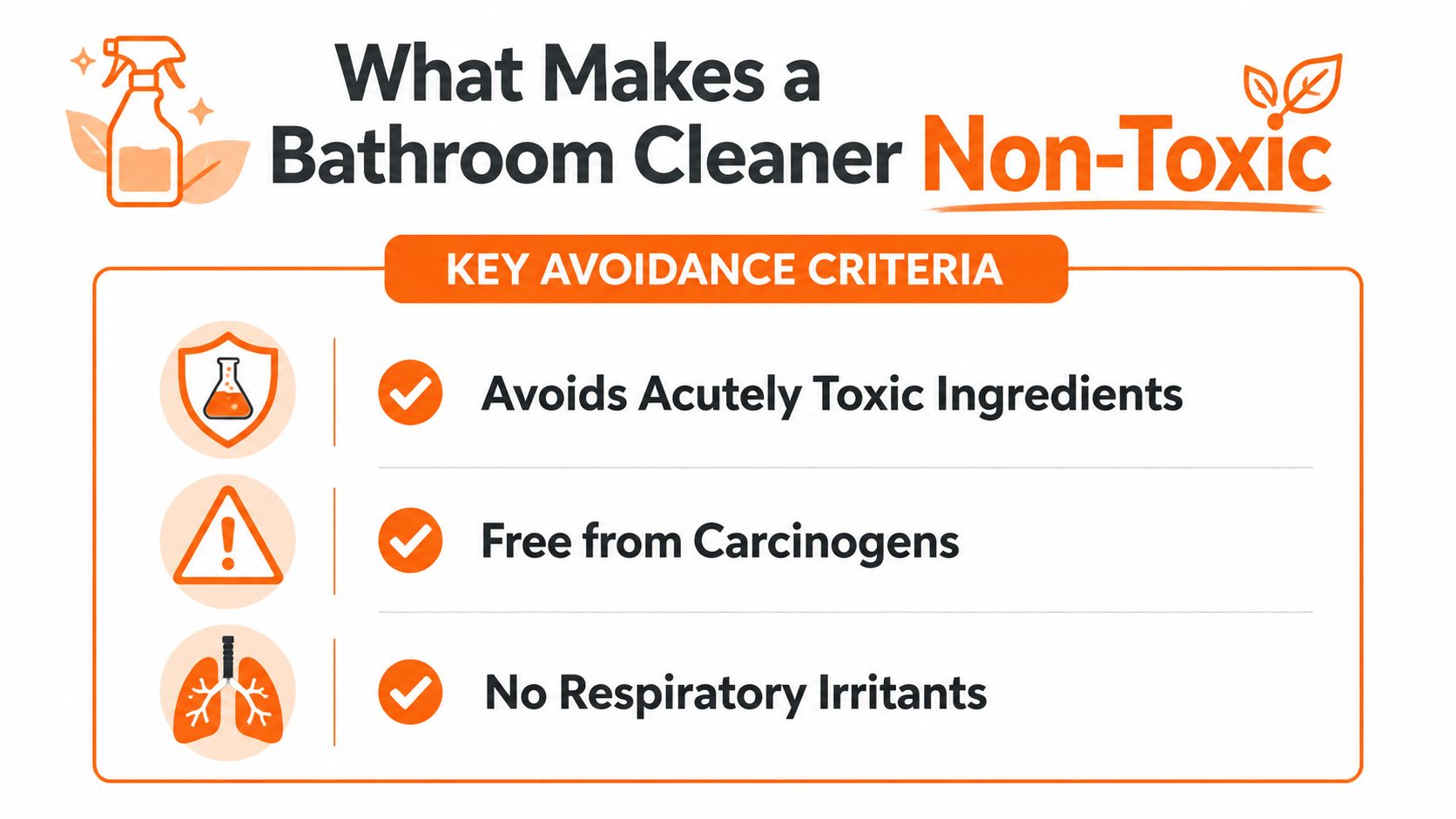
“Non-toxic” should mean more than a green label or a pleasant citrus scent. In homeowner terms, it means choosing a formula that avoids ingredients classified as acutely toxic, carcinogenic, or unnecessarily irritating to breathing and skin, while still cleaning the actual surface.
A safer formula isn't automatically natural, and a natural ingredient isn't automatically harmless. Look for clear ingredient disclosure, fragrance transparency, and a product designed for the surface and soil you're treating.
Labels that deserve attention
The EPA Safer Choice program evaluates products for performance and ingredients that meet safety criteria covering carcinogenicity, reproductive and developmental toxicity, aquatic toxicity, and environmental persistence. That makes the label more useful than an unsupported “eco-friendly” claim. EPA Safer Choice is a helpful starting point for households and cleaning businesses comparing products.
USDA BioPreferred relates mainly to biobased agricultural ingredients. EWG Verified focuses on ingredient transparency and screening. Green Seal and ECOCERT may assess broader environmental or manufacturing standards. Each certification answers a different question, so read what the badge covers.
If you're comparing disinfecting wipes for fixtures or high-touch areas, visit WipesBlog.com for disinfectant wipes guidance for a useful discussion of safer product selection.
A quick bottle check
Before buying, ask:
- Ingredients: Are the active and inactive ingredients clearly listed?
- Fragrance: Does “fragrance” hide an undisclosed blend?
- Purpose: Is it a cleaner, descaler, mildew treatment, or disinfectant?
- Directions: Does the label explain dwell time, ventilation, dilution, and surfaces?
- Certification: Is a recognized program reviewing the formula?
The best non toxic bathroom cleaner is the one with a transparent formula that matches the bathroom problem, not the one with the most reassuring front label.
Ingredients to Avoid and Why They Linger in Bathrooms
Bathrooms create a difficult exposure environment. Steam raises moisture, warm fixtures hold residue, and limited ventilation can leave vapors in the room while someone is showering. That doesn't mean every conventional product causes the same risk, but it does mean ingredient choice matters more in a compact, humid space.
VOC rules show that bathroom cleaners are treated as a formal air-quality issue. Canada lists VOC limits for bathroom and tile cleaners at 7% by weight for aerosols and 5% for other forms, while Hong Kong's proposed 2023 update listed 7% for aerosols and 1% for non-aerosols. New York lists 5% VOC for non-aerosol bathroom cleaners. These limits are summarized in ISSAs overview of VOC limits.
| Ingredient | Health concern | Why it lingers in bathrooms |
|---|---|---|
| Chlorine bleach | Can irritate the respiratory system, especially when misused | Vapors remain noticeable in warm, poorly ventilated rooms |
| Quaternary ammonium compounds | May irritate airways and skin | Residue can remain on frequently touched fixtures |
| Sodium hydroxide and strong acids | Can burn skin and damage eyes | Splashing is more likely during close tub and toilet cleaning |
| Synthetic fragrance and phthalates | Fragrance blends can hide irritants | Warm steam can carry scent compounds through the room |
| VOCs | May contribute to indoor air pollution | Sprayed products can off-gas after application |
California's air-quality agency explains that consumer cleaning products can contribute VOCs, toxic air contaminants, and greenhouse gases. Reactive VOCs, including terpenes and glycol ethers, can also help form ground-level ozone. For broader household context, Covenant Aire Solutions explains where VOCs hide in your home.
Practical rule: Never combine bleach with vinegar, ammonia, hydrogen peroxide, or another disinfectant. A “stronger” mixture can create a dangerous chemical reaction.
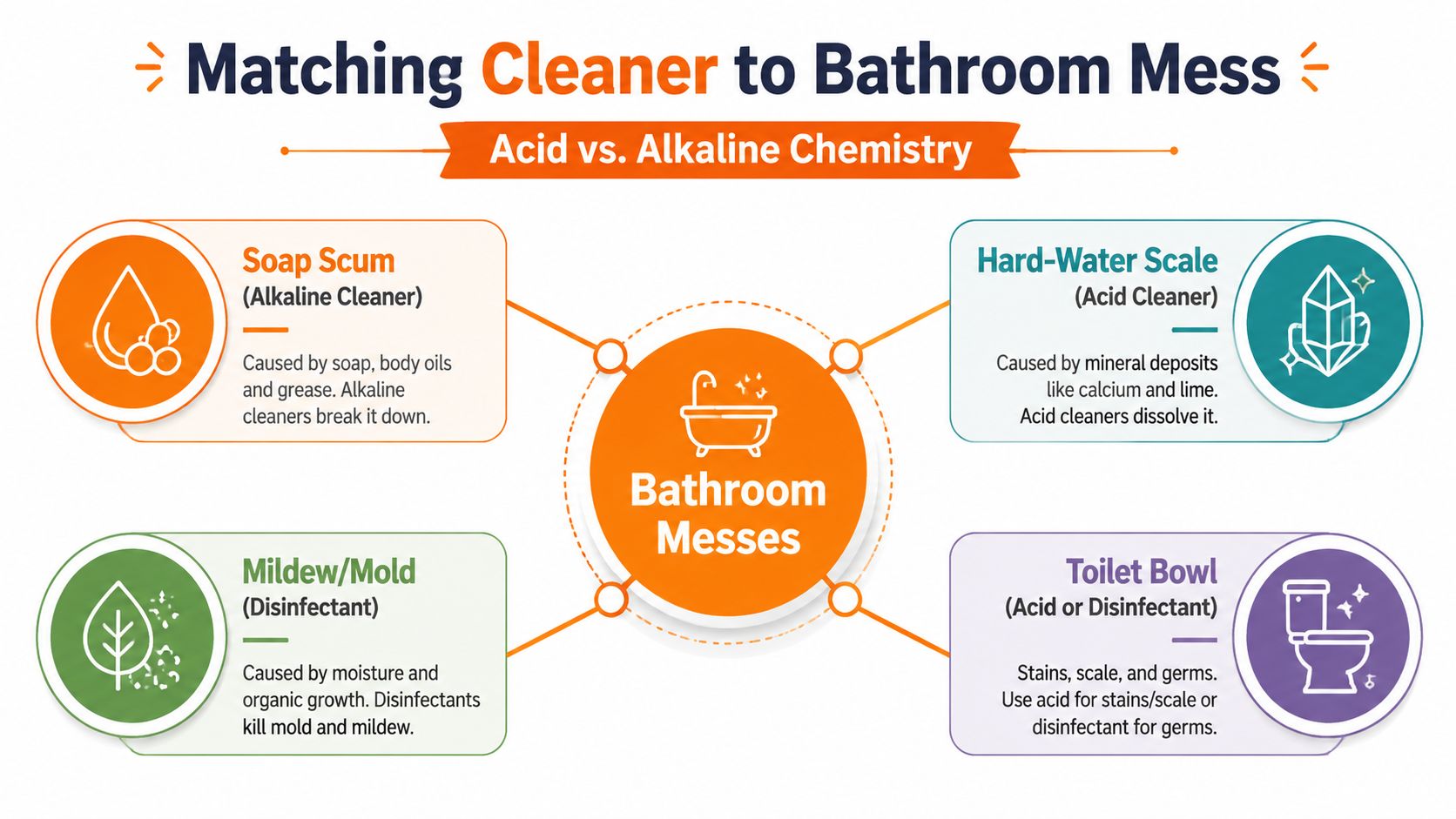
Soap scum and hard-water scale also respond to different chemistry. Alkaline products and surfactants help lift oily residue, while acids dissolve mineral deposits. Using the wrong product often leaves Palm Beach County shower glass cloudy and encourages more aggressive scrubbing around chrome, grout, and fiberglass.
For prevention, see how to prevent mold in bathrooms, especially if dark grout returns quickly after cleaning.
Matching the Cleaner to the Mess in Your Bathroom
The useful question isn't “Which bottle cleans everything?” It's “What deposit am I looking at?” A white crust near a Palm Beach Gardens shower valve needs a different approach from a greasy soap film on a tub wall or mildew in a Jupiter condo's grout.
Use the deposit as your decision rule
- Soap scum: Choose a mild alkaline cleaner or plant-based surfactant. These help loosen body oils, soap residue, and everyday grime.
- Hard-water scale: Choose an acid-based cleaner, such as citric or lactic acid, when the surface is compatible. Acids dissolve mineral deposits such as calcium carbonate, limescale, and some rust staining.
- Mildew and mold: Cleaning removes visible growth, but a disinfectant claim requires an EPA-registered product and exact label directions. In Florida homes, recurring mold also requires fixing leaks or water intrusion. UF/IFAS notes that most molds do best above 60% relative humidity, making bathrooms a common trouble spot in humid homes. Florida mold-management guidance explains why moisture control comes first.
- Toilet bowls: Use a purpose-made bowl cleaner for scale, or an EPA-registered disinfectant when the label claim matches your goal. Oxalic acid is EPA-registered for disinfectant and sanitizer use in toilet bowls and bathroom premises.
Why one spray falls short
An all-purpose spray may handle fresh grime but won't necessarily dissolve established scale. A descaler may damage natural stone or sensitive metal if used carelessly. Even a gentle cleaner needs enough dwell time to work before wiping.
For bathrooms prepared for guests, the finish matters too. Clean glass, fresh textiles, and compatible fixtures make a space feel maintained, which is why hosts often review luxury bathroom essentials for guest-ready details alongside their cleaning routine.
Reading Labels and Choosing Safer Products to Buy
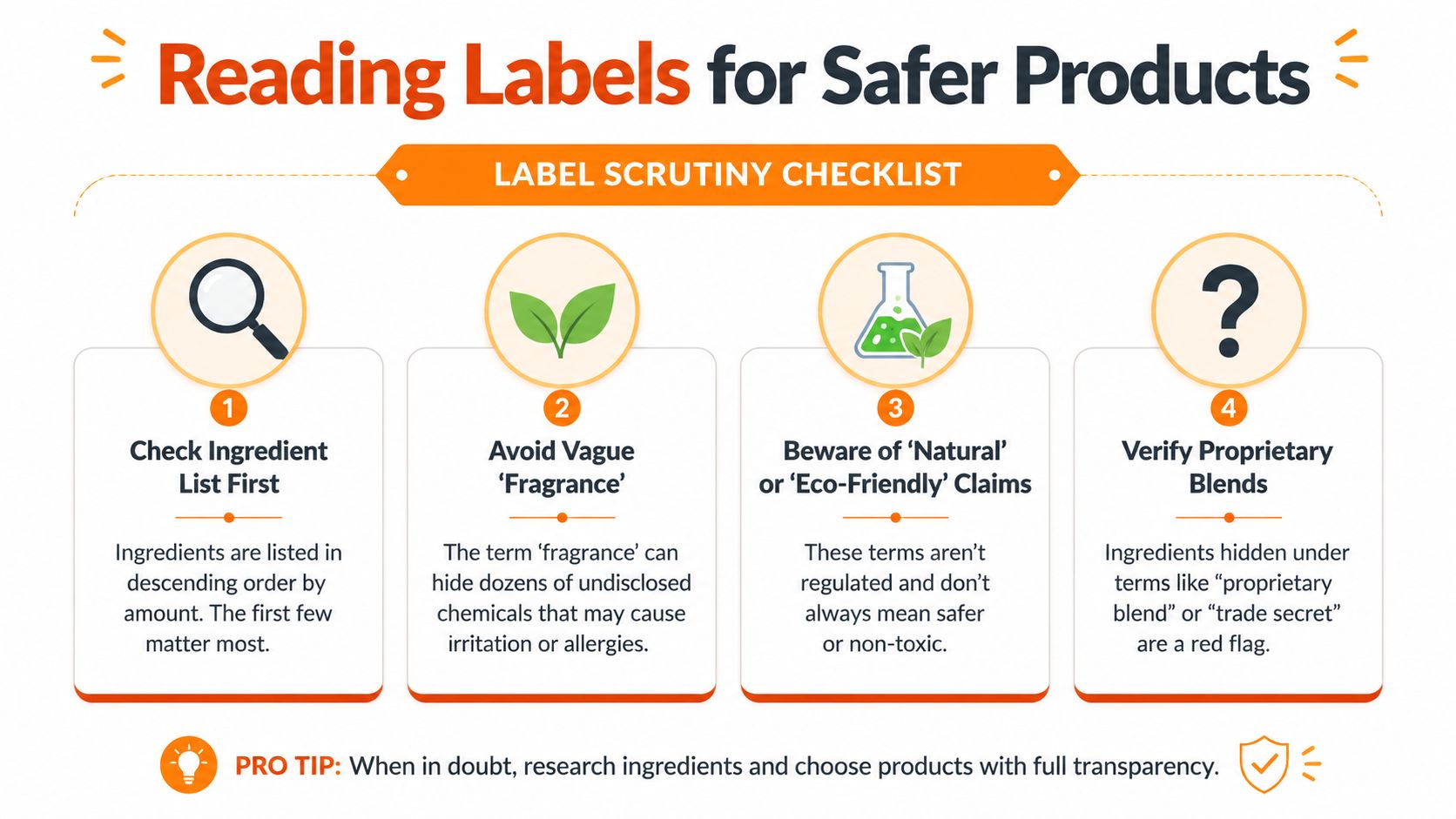
Treat “natural,” “non-toxic,” and “eco-friendly” as claims to verify, not proof by themselves. Start at the ingredient panel, then check the product's exact purpose.
Read the back before the front
Prefer formulas that clearly identify ingredients such as citric acid, lactic acid, sodium citrate, plant-based surfactants, sodium bicarbonate, or disclosed essential oils. “Fragrance” and “proprietary blend” deserve extra caution because they can make it difficult to identify potential irritants.
A product should also tell you whether it's a degreaser, scale remover, mildew treatment, or disinfectant. If it says “antimicrobial” or “disinfecting,” look for an EPA registration number and follow the directions exactly. EPA guidance says a disinfectant surface must remain visibly wet for the entire labeled contact time. Depending on the organism and claim, EPA examples range from 10 seconds to 10 minutes or more. EPA's selected disinfectants guidance explains why wiping immediately can invalidate the claim.
Check the surface and method
In coastal homes, salt air can dull or corrode fixtures over time, while hard water leaves mineral residue around faucets. Check pH, dilution, storage, ventilation, expiration, and compatibility with chrome, colored grout, fiberglass, acrylic, brass, and natural stone.
Test first in an inconspicuous area. Never use an acidic cleaner on marble, travertine, limestone, terrazzo, or another acid-sensitive stone.
Shelf-check: A clear label with a specific job, surface list, dwell time, and safety directions is more valuable than a vague promise of “pure” cleaning.
DIY Non Toxic Bathroom Cleaner Recipes That Actually Work
DIY can work well for light buildup when the recipe is simple, labeled, and used on the right surface. It won't replace every specialized cleaner, especially where you need a validated disinfectant claim.
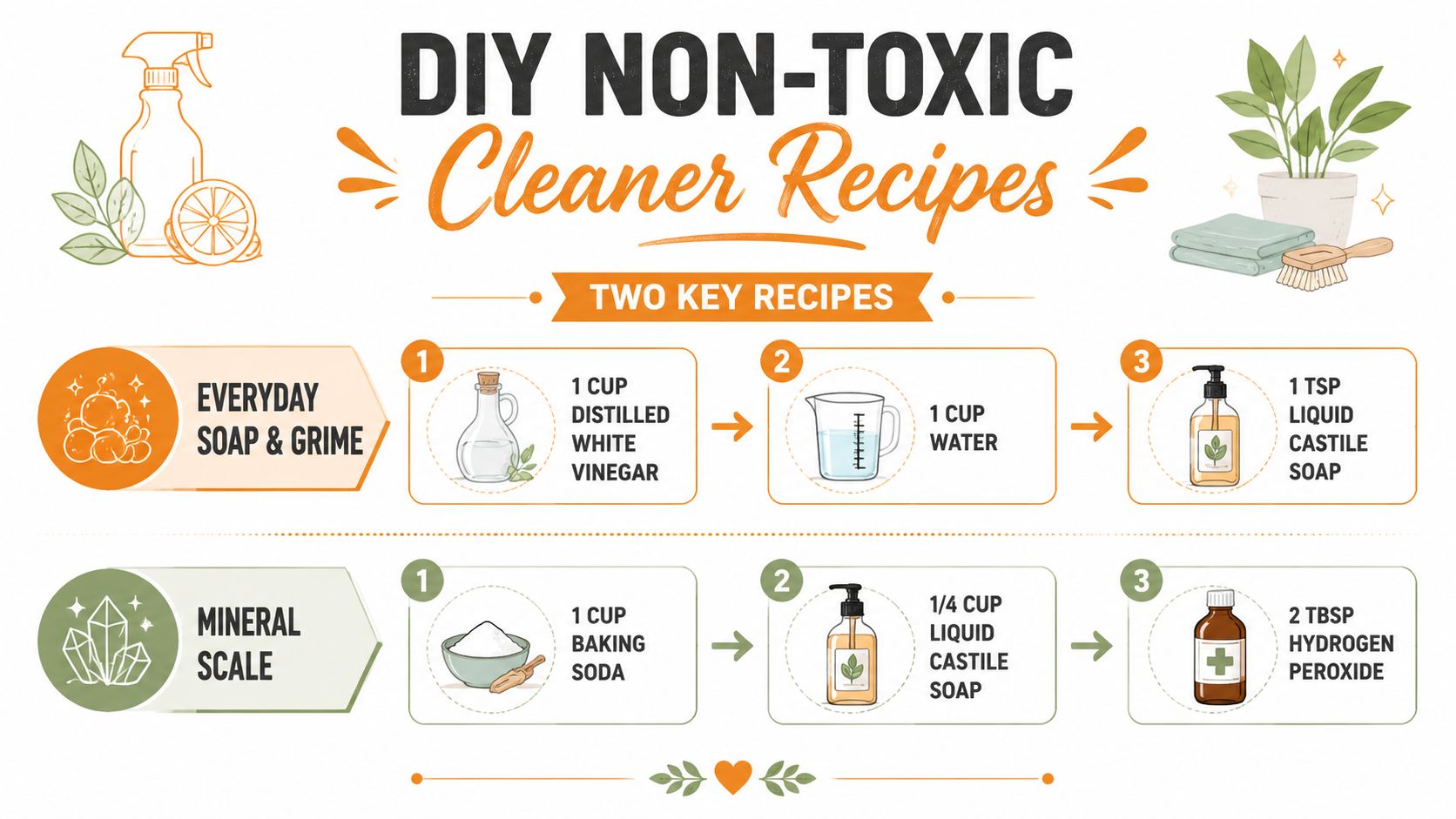
Everyday soap and grime spray
Mix 1 cup distilled white vinegar, 1 cup water, 1 teaspoon unscented liquid castile soap, and 10 to 15 drops of tea tree oil in a labeled spray bottle. Use it on nonporous tile, glass, chrome, and most porcelain fixtures.
Apply, let it sit for 3 to 5 minutes, scrub gently, and rinse. Test first on grout and fixtures. Skip tea tree oil around pets or anyone sensitive to fragrance.
Mineral-scale treatment
For chrome, glass, or ceramic shower buildup, combine 1 part distilled white vinegar with 1 part water in a nonreactive container. Spray the deposit, allow 10 to 15 minutes, work with a nylon brush, and rinse thoroughly.
Never use vinegar on marble, travertine, limestone, terrazzo, or other natural stone. A neutral stone-safe cleaner is the safer choice.
DIY vinegar can clean light mildew, but it isn't a dependable disinfectant. Improve ventilation, wear gloves, never mix products, and replace porous liners or badly affected grout when growth repeatedly returns. Label every bottle with its contents and date, keep it away from children, and make fresh batches because homemade mixtures have limited preservation.
For more formulas and surface-specific ideas, see natural cleaning product recipes.
Store Bought Versus DIY for Palm Beach County Homes
DIY cleaners are practical for weekly maintenance in a lightly used guest bathroom. They give you ingredient control, refill easily, and handle fresh soap film when the bathroom is dried after use.
The weakness is consistency. Homemade mixtures can vary in strength, have limited shelf life, and don't provide validated disinfectant performance. Concentrated vinegar, essential oils, and baking soda can still irritate skin, eyes, or lungs when misused.
Store-bought products make more sense for established scale, recurring mildew, toilet disinfection, and multi-surface work. Measured concentrations, stated dwell times, compatibility directions, and longer shelf life reduce guesswork, although the bottle may cost more. Compare cost per diluted use rather than the sticker price.
| Factor | Store-bought | DIY |
|---|---|---|
| Light soap scum | Convenient and consistent | Effective when buildup is fresh |
| Mineral scale | Purpose-made acids often perform better | Vinegar can help on compatible surfaces |
| Disinfection | May carry an EPA registration and label claim | Not automatically disinfecting |
| Ingredient control | Depends on label transparency | Full control over ingredients |
| Storage | Longer shelf life | Label and replace batches carefully |
| Natural stone | Choose a labeled neutral formula | Vinegar is unsuitable |
In South Florida, a mixed approach works best. Use a gentle routine cleaner for maintenance, then bring in a purpose-made descaler or professional service when white scale, mildew-darkened grout, or neglected ventilation has pushed the job beyond a quick wipe-down. For shower-specific product selection, compare the best product to clean a shower.
When a Professional Non Toxic Clean Makes More Sense
A 1990s Jupiter condo once had the familiar combination of years of hard-water scale, mildew-darkened grout, and weak bathroom ventilation. The shower looked serviceable from the doorway, but scale had collected behind the fixtures and along the glass tracks, while damp residue sat where routine spray-and-wipe cleaning couldn't reach.
That situation calls for diagnosis before scrubbing. A professional should identify the surface, deposit, and suitable dwell time rather than attack everything with one aggressive product.
Signs the bottle isn't enough
- Mold returns within days: Check humidity, leaks, water intrusion, exhaust performance, and porous materials instead of repeatedly spraying the same spot.
- The home needs a reset: Move-in, move-out, post-illness, renovation, and landlord walkthrough cleans require more detailed coverage than weekly maintenance.
- Time or mobility is limited: A trained crew can reach behind toilets, around pedestal sinks, along baseboards, and inside shower tracks without turning the job into an exhausting weekend.
- Several bathrooms need the same standard: Property managers and Airbnb hosts benefit from a consistent product lineup and checklist across units.
A careful non-toxic service pairs suitable safer products with microfiber cloths, HEPA vacuums, controlled agitation, and correct dwell times. That approach protects grout, tile glaze, stone, chrome, and fiberglass better than repeated reactive scrubbing. For Palm Beach County homes, it also accounts for sand tracked through coastal properties, year-round AC dust on vents, tropical pollen on sills, and the fast turnaround expected between Airbnb guests.
Sunset Shine Home Cleaning provides recurring standard cleaning, deep cleaning, move-in and move-out service, post-construction cleanup, vacation-rental turnovers, and property-management support across West Palm Beach, Palm Beach Gardens, Jupiter, Juno Beach, North Palm Beach, Riviera Beach, Royal Palm Beach, Lake Worth, Boynton Beach, Delray Beach, Boca Raton, Wellington, Westlake, Loxahatchee, Loxahatchee Groves, and The Acreage.
Pricing depends on bedrooms, bathrooms, square footage, condition, and add-ons. Most clients request a custom estimate. Supplies are included, and add-ons can include inside the oven, refrigerator, cabinets, wall spot cleaning, pet-hair focus areas, and interior windows.
How long does a clean take? It depends on the home's size and condition. Can you book same-day? Call to discuss current availability. Do you clean during rainy season? Yes, and the team can address the mud, moisture, and mildew that often follow wet weather.
South Florida humidity shows up in grout lines and bathroom ceilings faster than expected. If the cleaner isn't matched to the deposit, the surface usually pays for the mistake through extra scrubbing, dullness, or recurring buildup.
Sunset Shine Home Cleaning uses family- and pet-conscious products and detailed checklists for bathrooms affected by humidity, hard-water scale, mildew, and coastal residue. Visit Sunset Shine Home Cleaning to request a quote for recurring, deep, move-in or move-out, Airbnb turnover, or property-management cleaning, or call 561-408-4020 to schedule service.